# Biotech Articoli collegati

Il Centro Notizie HTX fornisce gli articoli più recenti e le analisi più approfondite su "Biotech", coprendo tendenze di mercato, aggiornamenti sui progetti, sviluppi tecnologici e politiche normative nel settore crypto.

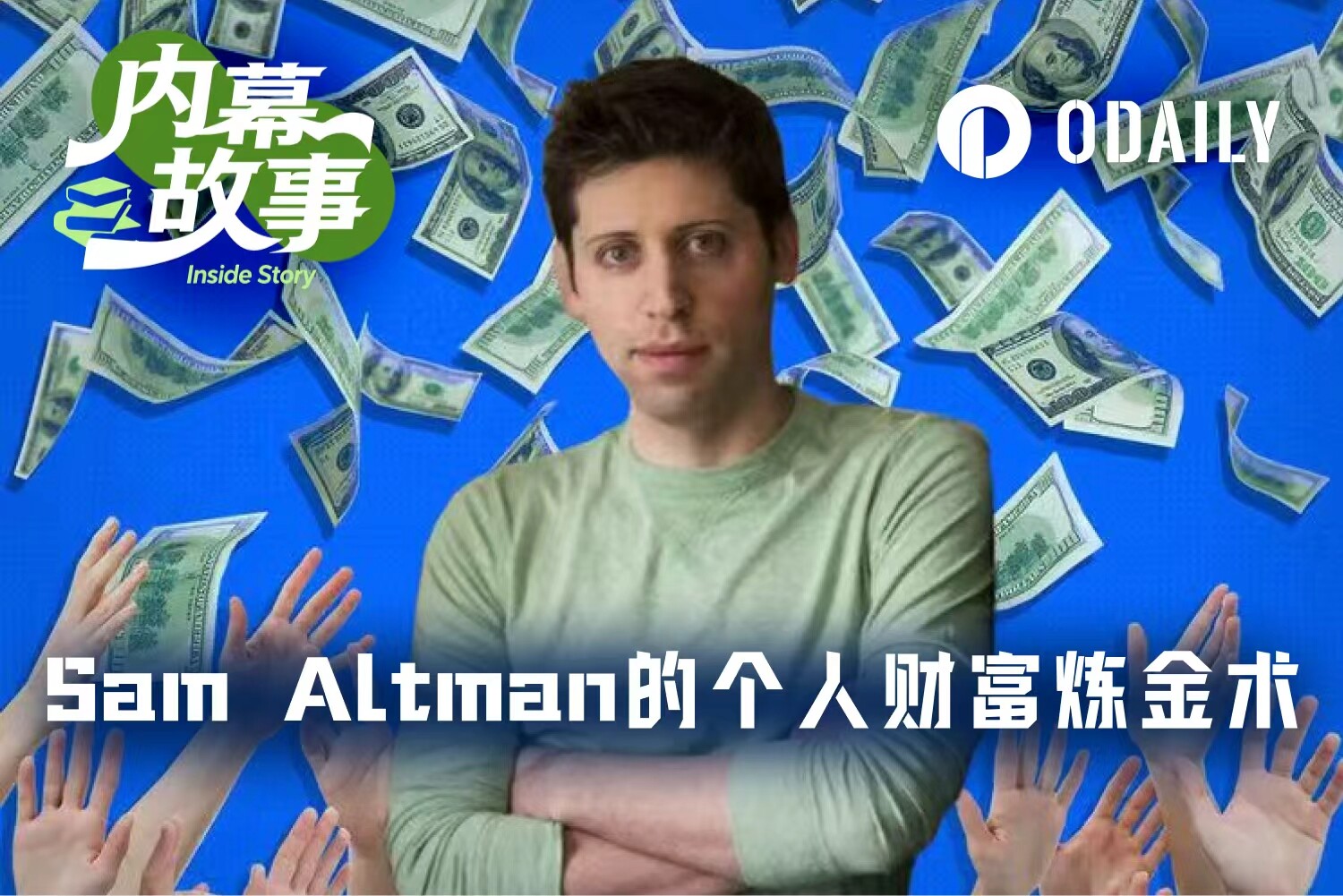
Sam Altman's Personal Alchemy of Wealth: Investing in 400 Companies, Over 10 Deeply Tied to OpenAI

The article investigates Sam Altman's personal wealth strategy, centered around his investments in approximately 400 companies while serving as OpenAI's CEO. Despite not holding direct equity in OpenAI, Altman has built a vast portfolio, with at least 10 of his investments having commercial ties or ongoing negotiations with OpenAI. This creates a complex network of potential conflicts of interest, drawing scrutiny from U.S. congressional committees and state attorneys general. Key investments highlighted include the anti-aging startup Retro Biosciences (valued at $258 million for his stake as of late last year) and the chipmaker Cerebras, whose value soared following an OpenAI procurement deal. His most significant financial gain is linked to the nuclear fusion company Helion, where a recent funding round reportedly increased his stake's value to at least $4.1 billion. The article details a decade-long relationship between Altman, Helion, and OpenAI, including a controversial non-binding power purchase agreement and Altman's efforts to secure investments from OpenAI and its backer SoftBank for Helion. Other points include internal investigations at Tools for Humanity (developer of Worldcoin) and OpenAI's massive contracts with tech giants like Nvidia. According to Forbes, Altman's net worth is around $3.4 billion, ranking him 1251st globally—a rise of over 1400 places since 2024. OpenAI's board states that Altman's external dealings are transparent and potential conflicts are carefully managed.

Odaily星球日报06/25 09:41

Sam Altman's Personal Alchemy of Wealth: Investing in 400 Companies, Over 10 Deeply Tied to OpenAI

Odaily星球日报06/25 09:41

Exclusive | ByteDance's AI Drug Discovery Unit Initiates Spinoff and Funding, AI4S Enters Industrialization Phase

Exclusive | ByteDance’s AI Drug Discovery Unit Initiates Spin-off for Financing, Signaling Industrialization Phase for AI4S. ByteDance’s AI drug discovery business line has begun the process of spinning off as an independent entity to raise outside funding, marking a key step toward industrializing its AI for Science (AI4S) efforts. Post-spin-off, ByteDance will remain the controlling shareholder. The new company will inherit the core team, algorithms, technology platform, and existing pipeline assets. It will also continue to receive computing power support from ByteDance's Volcano Engine. The AI drug discovery team, established in 2021 and led by Liu Kai with a core team of about 50 AI and pharmaceutical experts, has been responsible for foundational model research and industrialization. It has consolidated ByteDance's protein structure prediction model team and launched several key technologies. These include the molecular structure prediction models Protenix and Seedfold, the protein design tool PXDesign, and the AI drug discovery platform "Anew Labs." Anew Labs has produced research covering protein-ligand dynamics, molecular generation, and free energy calculation, and has developed early-stage drug pipelines like IL-17 and IL4R inhibitors. Notably, its IL-17 small molecule program, presented in April 2026, demonstrated the first small-molecule blockade of three IL-17 dimers, a significant step in autoimmune disease research. This progress demonstrates ByteDance’s AI capabilities have advanced from model development to validating specific drug targets and molecules. The company believes the opportunity to transition from research to industry is now ripe. The spin-off aims to establish an organizational structure better suited to the business's unique needs—long R&D cycles and complex validation processes involving wet labs and clinical trials—to attract top talent and drive deeper integration of AI with the pharmaceutical industry. The move responds to the pharmaceutical industry's pressing need to improve efficiency amid high R&D costs, long timelines, and high failure rates. The field of AI4S is rapidly advancing, as seen with tools like AlphaFold evolving from protein prediction to modeling complex biological interactions and the emergence of multimodal molecular generation models for drug design. ByteDance has been building its AI4S capabilities for years, exploring areas like computational biology, molecular simulation, and materials science. This spin-off represents its first major attempt to industrialize AI4S. An insider stated the company attaches great importance to this move, hoping that an independent entity with greater decision-making flexibility can pioneer a viable industrial path for AI4S in China.

marsbit06/10 06:26
Exclusive | ByteDance's AI Drug Discovery Unit Initiates Spinoff and Funding, AI4S Enters Industrialization Phase

marsbit06/10 06:26

Two Acquisitions in One Day: OpenAI Buys 'Narrative', Anthropic Buys 'Barriers'

On April 2, OpenAI and Anthropic each announced an acquisition, reflecting their divergent strategies as both target an IPO by late 2026. OpenAI acquired tech talk show TBPN to shape public AI discourse and support its revenue base, which is 60% consumer-driven from ChatGPT subscriptions. In contrast, Anthropic purchased AI biotech startup Coefficient Bio for approximately $400 million in stock, continuing its focused strategy of deepening enterprise capabilities, particularly in high-switching-cost sectors like life sciences. Over the past three years, OpenAI completed 15 acquisitions across diverse fields including hardware, media, and healthcare, spending over $7.7 billion on disclosed deals, such as the $6.5 billion purchase of Jony Ive’s AI hardware firm. Anthropic made only three acquisitions, each precisely strengthening its product stack: Bun for coding infrastructure, Vercept for autonomous agents, and now Coefficient Bio for biotech R&D pipelines. Anthropic’s enterprise-focused revenue (80% of total) drives its strategy to lock in clients with vertical integration, as seen in its sequenced moves into life sciences and healthcare. Meanwhile, with a higher reliance on consumer subscriptions, OpenAI is investing in narrative influence—TBPN aims to boost ad revenue and steer public AI conversation. Both companies are on accelerated IPO paths: Anthropic eyeing a $60+ billion offering led by Goldman Sachs and JPMorgan, and OpenAI targeting a ~$1 trillion valuation. Their acquisitions underscore distinct priorities—Anthropic builds industry-specific moats, while OpenAI amplifies its public story.

marsbit04/03 10:07

Two Acquisitions in One Day: OpenAI Buys 'Narrative', Anthropic Buys 'Barriers'

marsbit04/03 10:07

OpenAI Bets on 'Robot Army': 23-Year-Old Prodigy Wins Favor from Sam Altman

While OpenAI adjusts its video strategy, Sam Altman is setting his sights on the more ambitious field of "multi-agent systems." According to The Wall Street Journal, OpenAI has secretly invested in Isara, an AI startup founded by 23-year-old researchers Eddie Zhang and Henry Gasztowtt. Despite being established only in June last year in San Francisco, Isara has already recruited over a dozen top researchers from Google, Meta, and OpenAI itself, forming a highly skilled technical team. Isara’s core vision is to develop a system that enables thousands of AI agents to collaborate efficiently. While individual AI assistants are powerful, they often struggle with large-scale industrial challenges such as biotech R&D or complex financial modeling. Isara aims to solve this by creating a framework where diverse AI agents can communicate, align goals, share data, and tackle interconnected problems—functioning like a coordinated "robot army." This multi-agent approach is seen as a critical step toward Artificial General Intelligence (AGI). OpenAI’s endorsement signals industry recognition of distributed intelligence. In biopharma, the system could simulate thousands of protein-folding pathways, with specialized agents identifying patterns. In finance, it could perform real-time stress tests using global market data. Led by young innovators, this shift suggests the next breakthrough in AI lies not in building larger models, but in enabling smarter collective intelligence.

marsbit03/26 02:32

OpenAI Bets on 'Robot Army': 23-Year-Old Prodigy Wins Favor from Sam Altman

marsbit03/26 02:32

活动图片