Sam Altman Names Him: The Most Important Researcher in AI, But Almost No One Knows Him
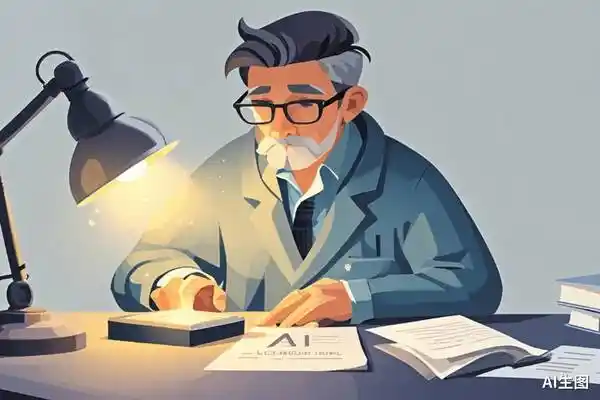
In a recent interview, Sam Altman gave a rare and high praise, calling Alec Radford "perhaps the most important, yet least known, researcher in AI history." Widely regarded as the true father of GPT, Radford is the lead author of foundational papers including GPT-1, GPT-2, CLIP, and Whisper, and contributed significantly to GPT-3, DALL·E, Scaling Laws, and GPT-4.
Despite this monumental impact, Radford remains highly private, holds no PhD, and rarely gives interviews. Altman credits OpenAI's rise to hiring the then-23-year-old in 2016. Radford's early experiments, like training a model on Amazon reviews, led to the discovery of the "unsupervised sentiment neuron," revealing that models can learn unintended capabilities from simple next-token prediction.
His pivotal move was applying the Transformer architecture to language modeling, creating GPT-1 in 2018. This established the "scaling" direction—focusing on increasing model size, data, and compute—which became OpenAI's core strategy, leading to GPT-2, GPT-3, and beyond.
Radford later applied the same principles beyond text. His early work on DCGAN laid groundwork for image generation. At OpenAI, he contributed to Image GPT, DALL·E, and CLIP, demonstrating that a simple, scalable training task (like matching images to text) could yield powerful, general capabilities. His work on Whisper applied this to robust speech recognition.
Described by colleagues as a "once-in-a-generation genius" and exceptionally kind, Radford is known for his low profile. In late 2024, he left OpenAI for independent research. His latest project, "Talkie," is a 13-billion parameter language model trained *only* on texts published before 1931. This experiment tests if a model with no modern knowledge can quickly learn new skills (like basic Python) from few examples, probing the boundary between memorization and true learning. True to form, as the world catches up, Radford is likely already working on the next big question.
marsbit08/17 08:13