# AI Efficiency Articoli collegati

Il Centro Notizie HTX fornisce gli articoli più recenti e le analisi più approfondite su "AI Efficiency", coprendo tendenze di mercato, aggiornamenti sui progetti, sviluppi tecnologici e politiche normative nel settore crypto.

The Art of Saving in the AI Era: How to Spend Every Token Wisely

In the AI era, tokens are the new currency, and efficiency is paramount. This article outlines strategies to minimize token usage while maximizing value. Key principles include prioritizing high signal-to-noise ratio inputs by removing unnecessary content like greetings, repetitive context, or verbose instructions before processing. Converting files (e.g., PDFs to clean Markdown) and compressing images drastically reduce token consumption. Avoid conversational, multi-turn interactions; instead, provide clear, concise, and complete instructions upfront to prevent costly back-and-forth. Output costs are higher than input, so eliminate AI pleasantries and enforce structured responses (e.g., JSON) over verbose explanations. Use system prompts to mandate direct answers and disable unnecessary features like "extended thinking" for simple tasks. Manage context efficiently: start new conversations for new tasks, compress long histories, and leverage prompt caching to reuse fixed instructions at lower costs. Employ model tiering—assigning complex tasks to premium models (e.g., Claude Opus) and simpler subtasks to cheaper ones (e.g., Claude Haiku)—to optimize cost and performance. Ultimately, the most effective saving is questioning whether a task requires AI at all. Human judgment remains a critical filter to avoid unnecessary token expenditure, ensuring that AI complements rather than replaces human efficiency.

marsbit04/03 03:22
The Art of Saving in the AI Era: How to Spend Every Token Wisely

marsbit04/03 03:22

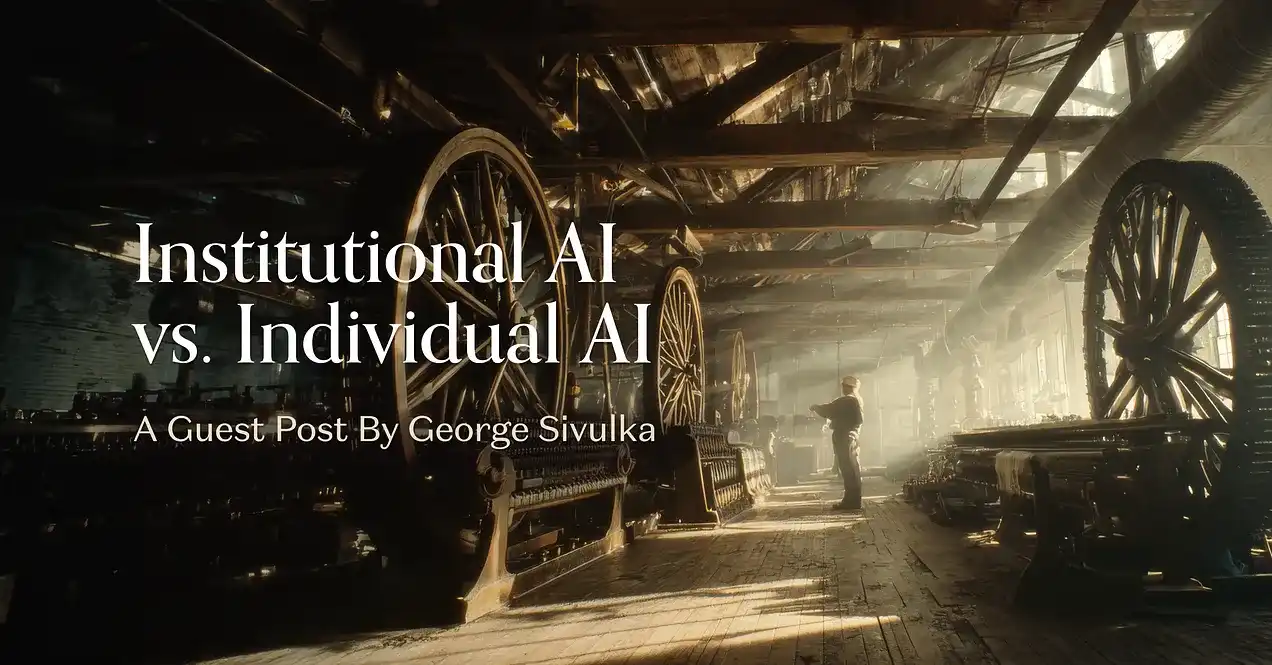
a16z: AI Makes Everyone 10x More Efficient, But No Company Becomes 10x More Valuable

a16z investor George Sivulka argues that while AI has dramatically increased individual productivity by 10x, it hasn’t translated into a 10x increase in company value. The core issue is not the technology itself, but the failure to redesign organizations around it—much like factories in the 1890s initially replaced steam engines with electric motors but didn’t see real gains until they fully redesigned assembly lines decades later. Sivulka distinguishes between “Personal AI” (e.g., ChatGPT) and “Organizational AI,” outlining seven key dimensions where they differ: 1. **Coordination:** Personal AI creates chaos; Organizational AI coordinates teams and agents toward unified goals. 2. **Signal:** Personal AI generates noise and low-quality output; Organizational AI filters noise to find valuable signals. 3. **Bias:** Personal AI reinforces user bias; Organizational AI introduces objectivity and challenges assumptions. 4. **Edge Advantage:** Personal AI optimizes for general usage; Organizational AI leverages domain-specific expertise for competitive advantage. 5. **Outcome:** Personal AI saves time; Organizational AI drives revenue growth. 6. **Enablement:** Personal AI gives a tool; Organizational AI embeds processes and enables organizational change. 7. **Promptless:** Personal AI requires human prompts; Organizational AI acts autonomously without human intervention. True value, Sivulka concludes, will come from rebuilding organizations and processes around AI—not just adopting the technology. The future belongs to companies that build “Organizational AI” systems that integrate deeply with institutional workflows.

marsbit03/13 04:40

a16z: AI Makes Everyone 10x More Efficient, But No Company Becomes 10x More Valuable

marsbit03/13 04:40

活动图片