Who Controls the Revenue Lifeblood of the Crypto Industry?

marsbitDipublikasikan tanggal 2026-01-14Terakhir diperbarui pada 2026-01-14

Abstrak

The article analyzes the revenue dynamics of the crypto industry, which generated over $16 billion in revenue in 2025—double that of 2024. The largest revenue drivers are stablecoin issuers like Tether and Circle, which account for 60% of total industry revenue. However, decentralized perpetual exchanges (perp DEXs) such as Hyperliquid, EdgeX, Lighter, and Axiom emerged as a significant new sector, collectively contributing 7-8% of total revenue—more than established DeFi sectors like lending and staking combined. Three key factors drive crypto revenue: spread income (e.g., interest from stablecoin reserves), transaction execution (e.g., perp DEXs enabling high-frequency trading), and distribution channels (e.g., token launch platforms like pump.fun). The article notes that perp DEXs, with their frictionless trading and liquidity advantages, are the only sector potentially challenging stablecoin issuers' dominance. Additionally, the industry is shifting toward value transfer to token holders via mechanisms like buybacks, burns, and fee sharing. In 2025, $33.6 billion (58% of total fees) was returned to token holders, reinforcing tokens as economic ownership claims rather than mere governance tools. This trend is expected to accelerate in 2026, especially as falling interest rates reduce the appeal of spread-based revenue.

Written by: Prathik Desai

Compiled by: Chopper, Foresight News

I love the seasonal traditions in the crypto industry, like Uptober and Recktober. People in the community always bring out a ton of data around these events, and humans are naturally drawn to such anecdotes, right?

The trend analysis and reports around these events are even more interesting: "This time, ETF flows are different," "Crypto financing has finally matured this year," "Bitcoin is poised for a rally this year," and so on. Recently, while browsing the "2025 DeFi Industry Report," a few charts about how crypto protocols generate "substantial revenue" caught my attention.

These charts listed the top crypto protocols with the highest annual revenue, confirming a fact many in the industry have discussed over the past year: the crypto industry is finally making revenue attractive. But what exactly is driving this revenue growth?

Behind these charts lies another lesser-known question worth exploring: Where do these fee revenue ultimately flow?

Last week, I delved into DefiLlama's fee and revenue data (Note: Revenue refers to fees retained after paying liquidity providers and suppliers) to find answers. In today's analysis, I will add more detail to this data, dissecting how and where funds flow within the crypto industry.
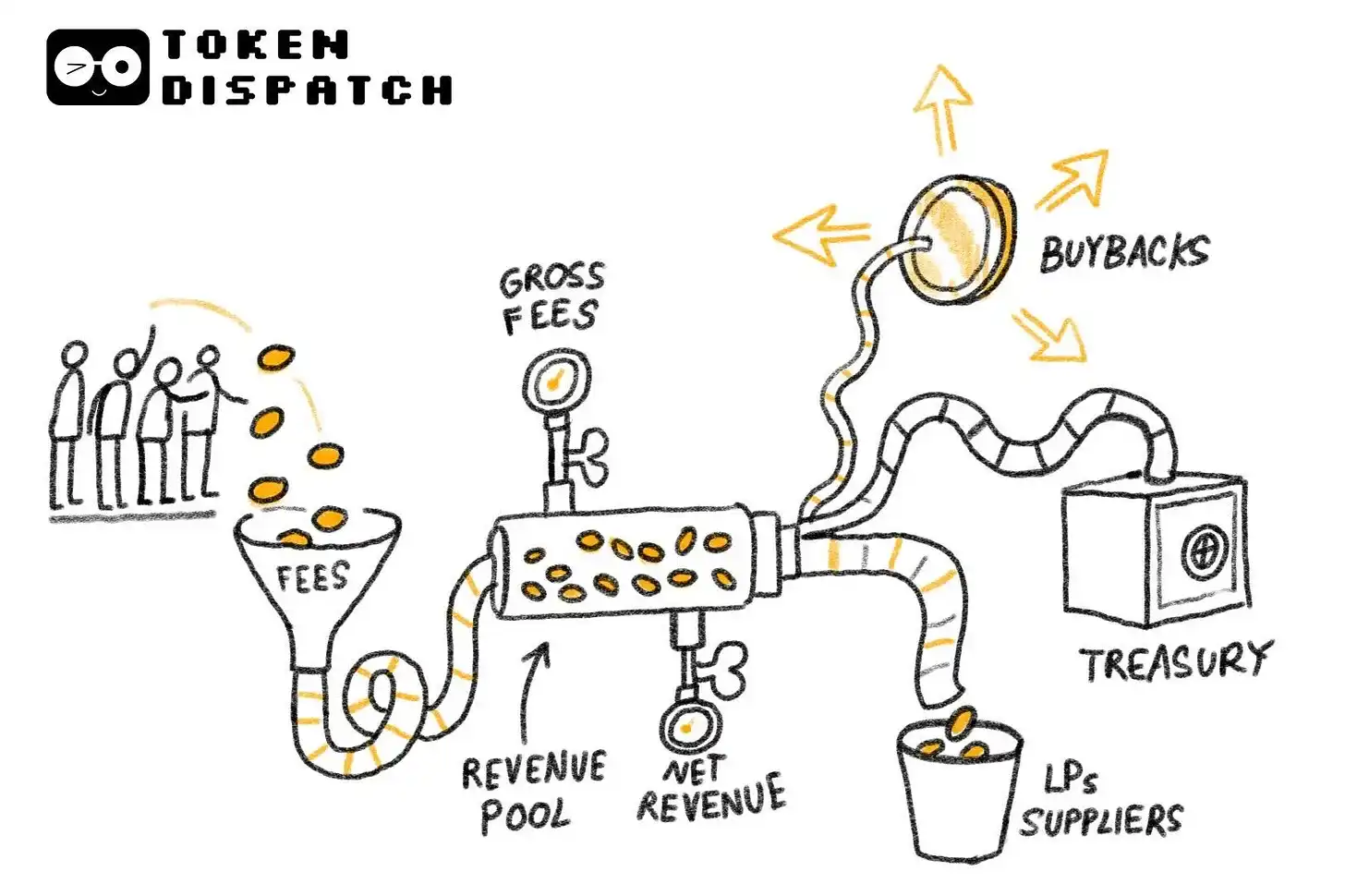
Crypto protocols generated over $16 billion in revenue last year, more than double the approximately $8 billion in 2024.

The value capture ability of the crypto industry has improved comprehensively. Over the past 12 months, many new tracks have emerged in the decentralized finance (DeFi) space, such as decentralized exchanges (DEX), token issuance platforms, and decentralized perpetual contract exchanges (perp DEX).

However, the profit centers generating the highest revenue are still concentrated in traditional sectors, with stablecoin issuers being the most prominent.
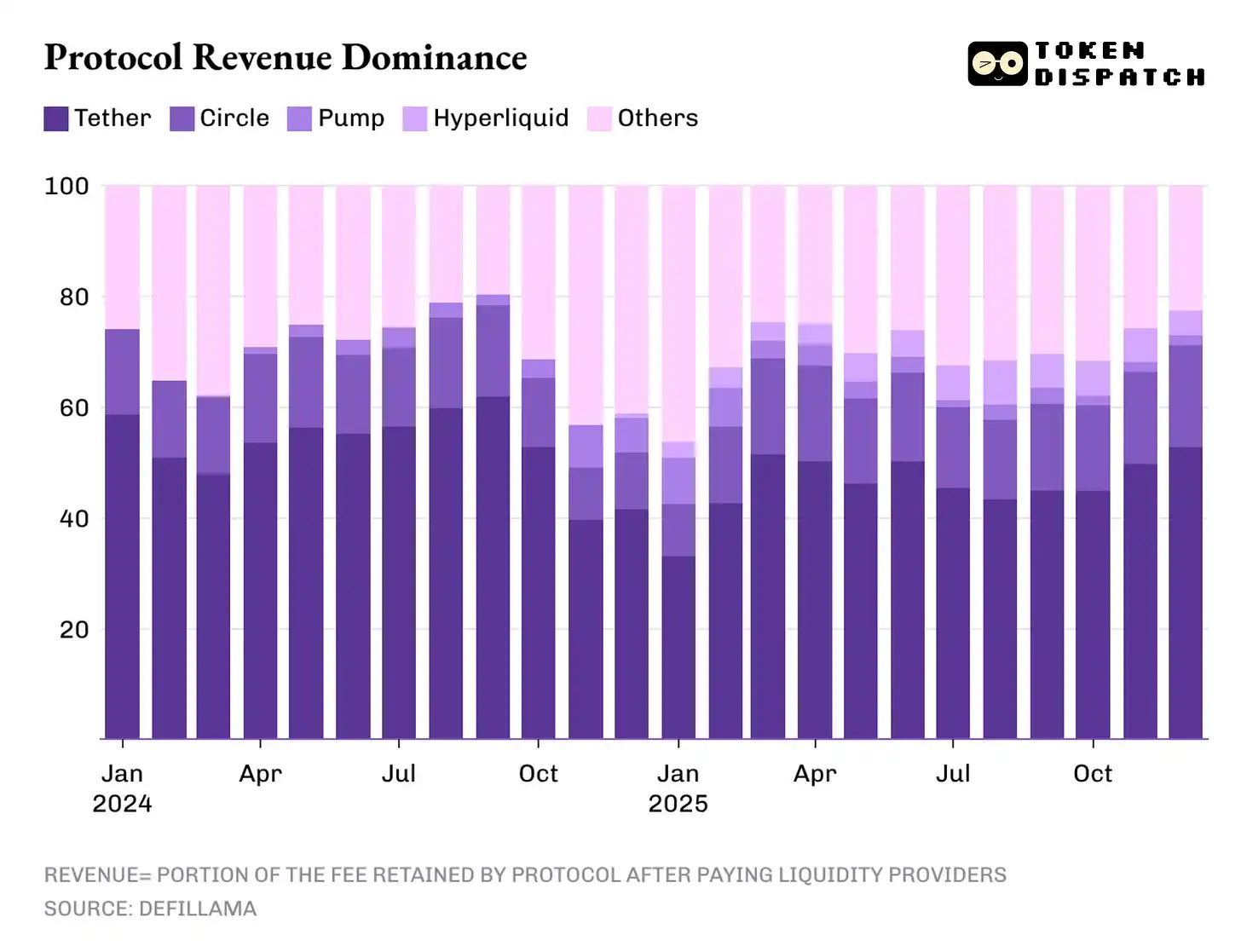
The top two stablecoin issuers, Tether and Circle, contributed over 60% of the crypto industry's total revenue. In 2025, their market share slightly decreased from about 65% in 2024 to 60%.

But the performance of decentralized perpetual contract exchanges in 2025 cannot be underestimated; this sector was almost insignificant in 2024. Four platforms—Hyperliquid, EdgeX, Lighter, and Axiom—collectively accounted for 7% to 8% of the industry's total revenue, far exceeding the combined revenue of protocols in mature DeFi sectors like lending, staking, cross-chain bridges, and decentralized exchange aggregators.
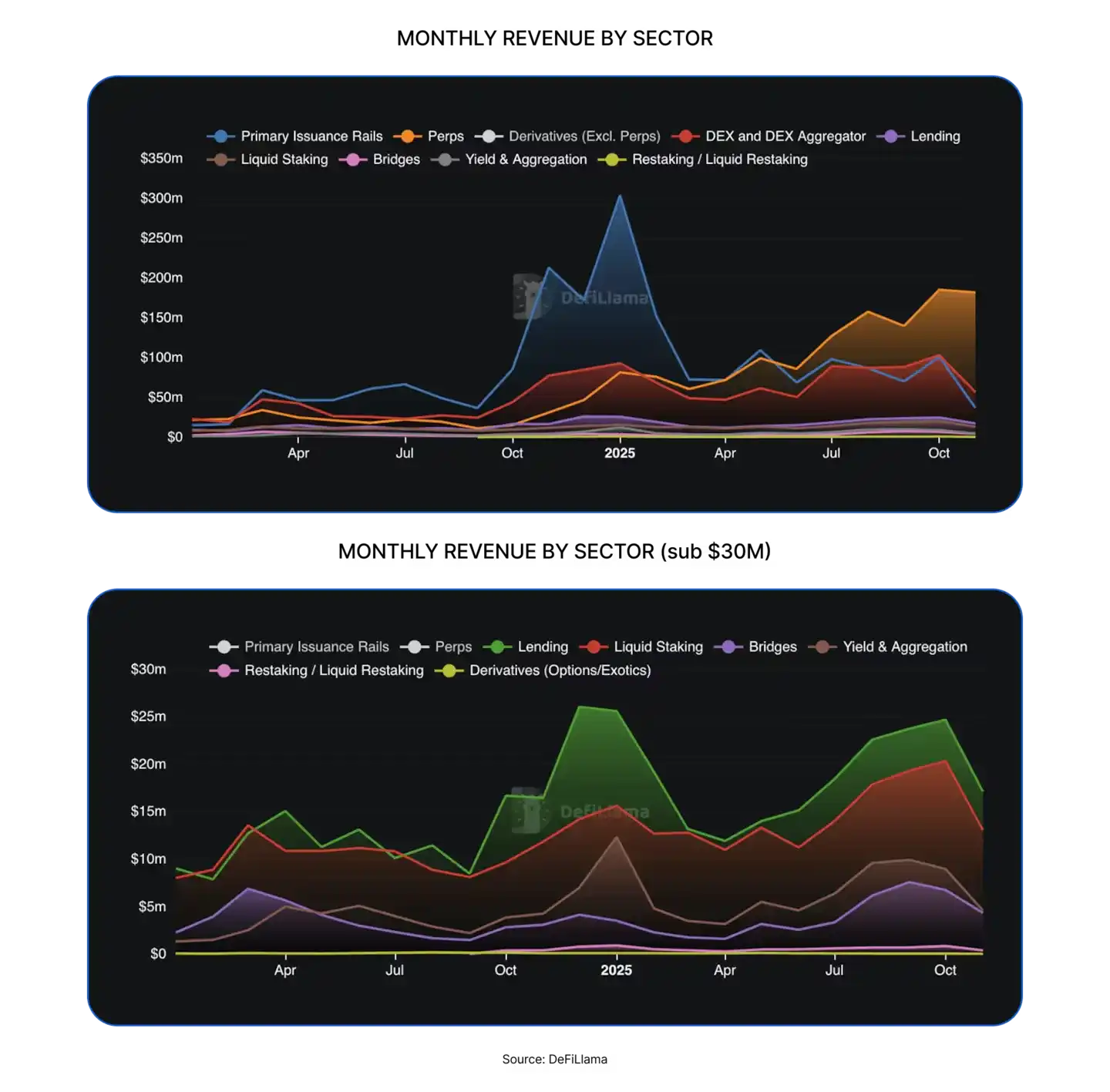
So, what will drive revenue in 2026? I found the answer in the three major factors that influenced the crypto industry's revenue landscape last year: spread income, trade execution, and distribution channels.

Spread trading means that whoever holds and transfers funds can profit from the process.

The revenue model of stablecoin issuers is both structural and fragile. Its structural nature is reflected in the fact that revenue scales simultaneously with the supply and circulation of stablecoins; every digital dollar issued by the issuer is backed by U.S. Treasury bonds and generates interest. The fragility lies in the fact that this model relies on macroeconomic variables that the issuer has almost no control over: the Federal Reserve's interest rates. Now, the monetary easing cycle has just begun. As interest rates are further reduced this year, the dominant revenue position of stablecoin issuers will also weaken accordingly.

Next is the trade execution layer, which is also the birthplace of the most successful DeFi sector in 2025: decentralized perpetual contract exchanges.

The simplest way to understand why decentralized perpetual contract exchanges quickly captured a significant market share is to see how they help users complete trading operations. These platforms have created low-friction trading venues, allowing users to enter and exit risk positions on demand. Even if market volatility is flat, users can still hedge, add leverage, arbitrage, adjust positions, or build positions early for future layouts.

Unlike spot decentralized exchanges, decentralized perpetual contract exchanges allow users to conduct continuous, high-frequency trading without the hassle of transferring underlying assets.

Although the logic of trade execution sounds simple and the operation speed is extremely fast, the technical support behind it is far more complex than it appears. These platforms must build stable trading interfaces that do not crash under high load; create reliable order matching and liquidation systems that remain stable during market chaos; and also provide sufficient liquidity depth to meet traders' needs. In decentralized perpetual contract exchanges, liquidity is the key to victory: whoever can continuously provide ample liquidity will attract the most trading activity.

In 2025, Hyperliquid dominated the perpetual contract decentralized trading sector by having the largest number of market makers providing ample liquidity within the platform. This also made the platform the decentralized perpetual contract exchange with the highest fee income for 10 of the 12 months last year.

Ironically, the success of these DeFi sector perpetual contract exchanges is precisely because they did not require traders to understand blockchain and smart contracts, but instead used the familiar operational model of traditional exchanges.
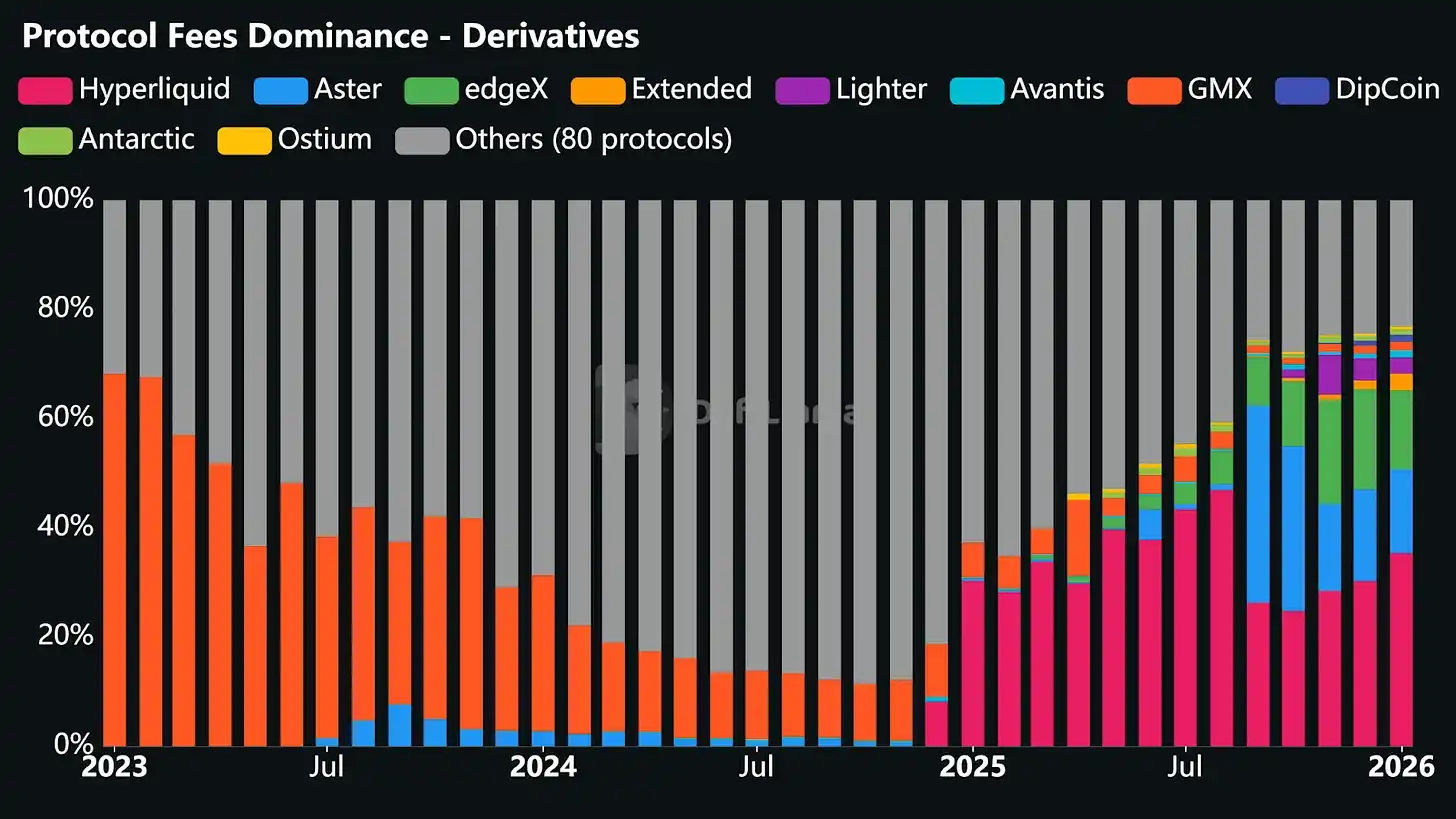
Once all the above issues are resolved, the exchange can achieve automated revenue growth by charging small fees for traders' high-frequency, large-volume trades. Even if the spot price moves sideways, revenue can continue because the platform provides traders with a wealth of operational choices.

This is also why I believe that although decentralized perpetual contract exchanges only accounted for a single-digit percentage of revenue last year, they are the only sector that could potentially challenge the dominance of stablecoin issuers.

The third factor is distribution channels, which bring incremental revenue to crypto projects like token issuance infrastructure, such as pump.fun and LetsBonk platforms. This is not much different from the model we see in Web2 companies: Airbnb and Amazon do not own any inventory, but with their massive distribution channels, they have long surpassed the definition of aggregation platforms and also reduced the marginal cost of new supply.

Crypto token issuance infrastructure similarly does not own the crypto assets—Meme coins, various tokens, and micro-communities—created through its platform. But by creating a frictionless user experience, automating the listing process, providing ample liquidity, and simplifying trading operations, these platforms have become the preferred choice for people to issue crypto assets.

In 2026, two questions may determine the development trajectory of these revenue drivers: Will the industry revenue share of stablecoin issuers fall below 60% as interest rate cuts impact spread trading? Can perpetual contract trading platforms break through the 8% market share as the landscape of the trade execution layer becomes more concentrated?

Spread income, trade execution, and distribution channels—these three factors reveal the source of revenue in the crypto industry, but this is only half the story. Equally important is to understand what proportion of the total fees is distributed to token holders before the protocol retains net revenue.

Value transfer achieved through token buybacks, burns, and fee sharing means that tokens are no longer just governance credentials, but represent economic ownership of the protocol.
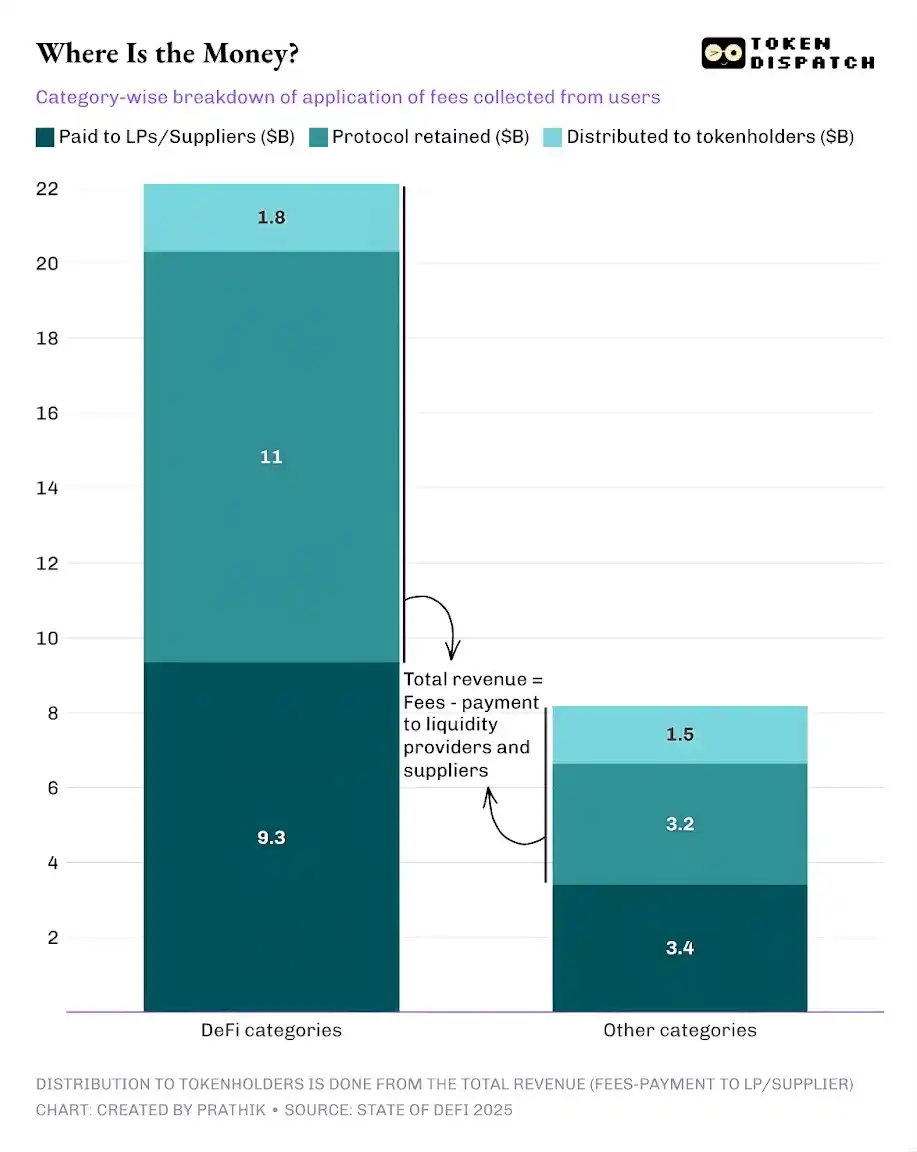
In 2025, the total fees paid by users of decentralized finance and other protocols amounted to approximately $30.3 billion. Of this, the revenue retained by the protocols after paying liquidity providers and suppliers was about $17.6 billion. From the total revenue, approximately $3.36 billion was returned to token holders through staking rewards, fee sharing, token buybacks, and burns. This means that 58% of the fees were converted into protocol revenue.

This is a significant shift compared to the previous industry cycle. More and more protocols are beginning to experiment with making tokens represent ownership claims on operational performance, providing real incentives for investors to continue holding and going long on the projects they believe in.

The crypto industry is far from perfect, and most protocols still do not distribute any earnings to token holders. But from a macro perspective, the industry has undergone considerable changes, and this signal indicates that everything is moving in a positive direction.
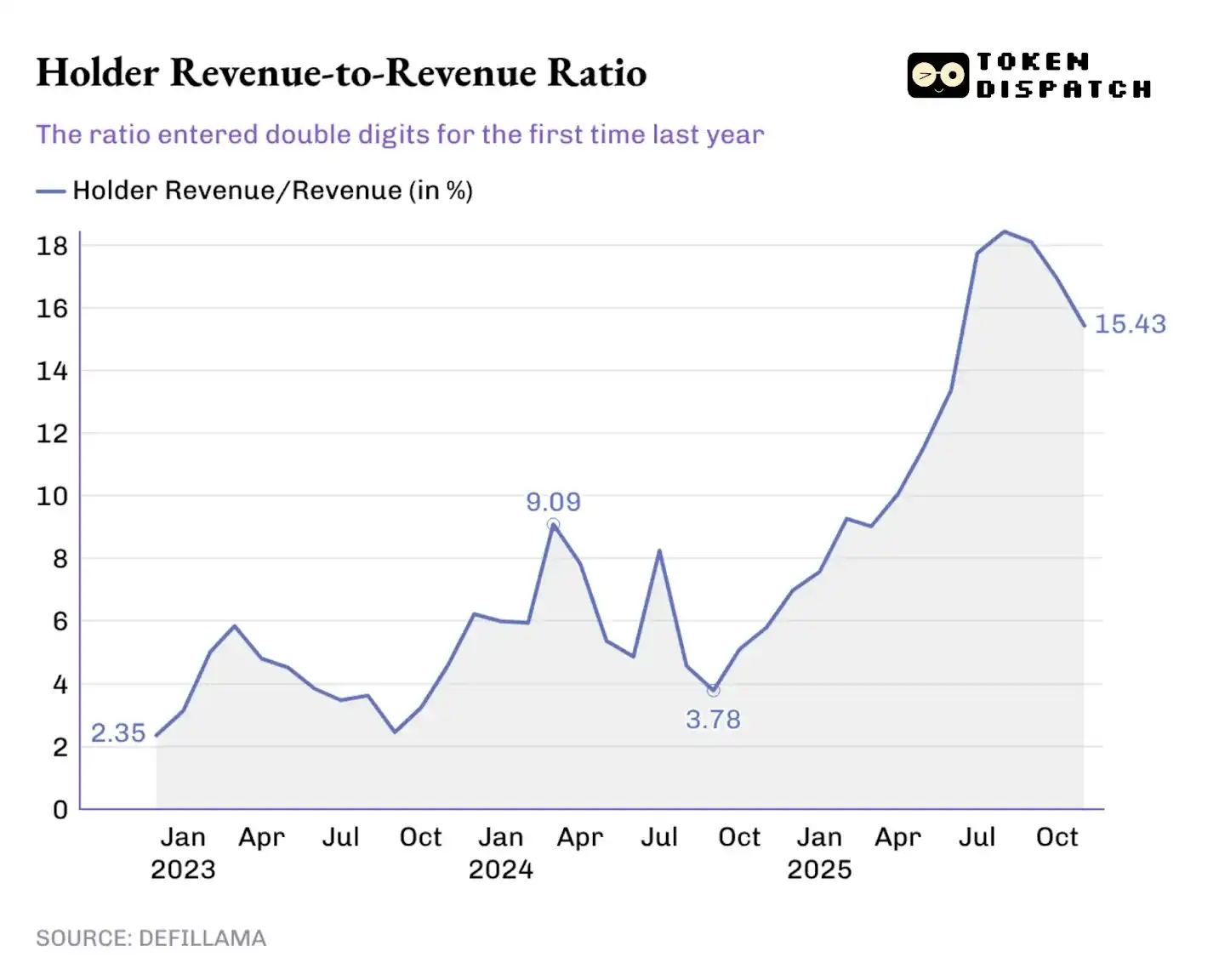
Over the past year, the proportion of token holder earnings to total protocol revenue has continued to rise, breaking the historical high of 9.09% early last year and even exceeding 18% at its peak in August 2025.

This change is also reflected in token trading: if the token I hold never brings any return, my trading decisions will only be influenced by media narratives; but if the token I hold can bring me returns through buybacks or fee sharing, I will regard it as an interest-bearing asset. Although it may not be safe and reliable, this shift will still affect how the market prices tokens, bringing their valuation closer to fundamentals rather than being swayed by media narratives.

When investors look back at 2025 and try to predict where revenue in the crypto industry will flow in 2026, incentive mechanisms will be an important consideration. Last year, project teams that prioritized value transfer did stand out.

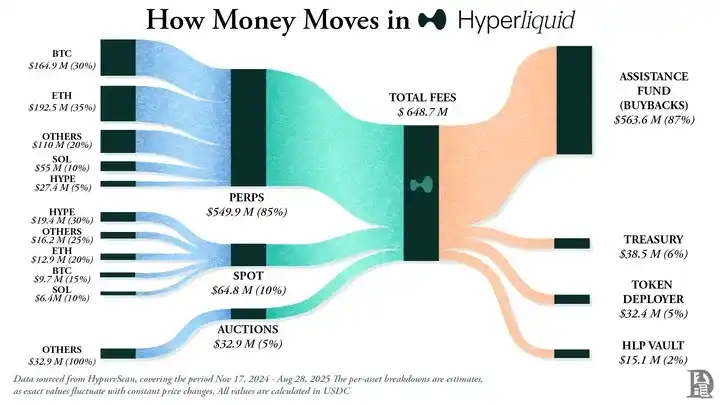
Hyperliquid built a unique community ecosystem, returning about 90% of its revenue to users through the Hyperliquid Aid Fund.
Among token issuance platforms, pump.fun reinforced the concept of "rewarding active platform users" and has already burned 18.6% of the circulating supply of its native token PUMP through daily buybacks.

In 2026, "value transfer" is expected to no longer be a niche choice but a necessary strategy for all protocols that want their tokens to trade based on fundamentals. Last year's market changes taught investors to distinguish between protocol revenue and token holder value. Once token holders realize that the tokens in their hands can represent ownership claims, returning to the previous model seems irrational.

I believe that the "2025 DeFi Industry Report" did not reveal a completely new nature of the crypto industry's exploration of revenue models; this trend has been hotly discussed in the past few months. The value of this report lies in using data to reveal the truth, and after digging deeper into this data, we can find the secret to the crypto industry's most likely path to revenue.

By analyzing the revenue dominance trends of various protocols, the report clearly points out: Whoever controls the core channels—spread income, trade execution, and distribution channels—will earn the most profits.

In 2026, I expect more projects to convert fees into long-term returns for token holders, especially as the appeal of spread trading declines amid the interest rate cut cycle, making this trend even more pronounced.


Pertanyaan Terkait

QWhich two stablecoin issuers dominate the crypto industry's revenue, and what is their combined market share?

ATether and Circle are the crypto industry's dominant stablecoin issuers, contributing over 60% of the total revenue.

QWhat are the three key factors driving revenue growth in the crypto industry as identified in the article?

AThe three key factors driving revenue from spread earnings, trade execution, and distribution channels.

QWhich type of decentralized platform emerged as a significant revenue generator in 2025, surpassing the combined revenue of several established DeFi sectors?

ADecentralized perpetual exchanges (perp DEXs), such as Hyperliquid, EdgeX, Lighter, and Axiom, collectively accounted for 7-8% of industry revenue, surpassing the combined total of lending, staking, bridges, and DEX aggregators.

QWhat percentage of the total fees collected by protocols in 2025 was returned to token holders, and through what mechanisms?

AApproximately $3.36 billion, or a portion of the total fees, was returned to token holders through mechanisms like staking rewards, fee sharing, token buybacks, and burns.

QAccording to the article, what is the expected trend for value transfer to token holders in 2026, and why?

AValue transfer to token holders is expected to become a standard strategy in 2026, not a niche choice, especially as lower interest rates reduce the appeal of spread trades, making revenue-sharing mechanisms more critical for token valuation.

Bacaan Terkait

"Gergaji Musim Panas" Berlanjut: Breakout $67.000 Akan Menjadi Awal Kenaikan Bitcoin

Harga Bitcoin terus terkonsolidasi dalam kisaran $58.000–$67.000 sejak awal Juni, dengan harga terkini di sekitar $62.217 pada 1 Agustus. Para analis pasar mempertimbangkan beberapa skenario kunci. Secara teknis, pergerakan di atas $66.000 dianggap penting untuk mengubah momentum. Beberapa trader seperti Crypto Candy memprediksi kemungkinan penurunan menuju $60.000 jika level $66.000 tidak tertembus. Trader lain, Jelle, menggambarkan situasi ini sebagai "gergaji musim panas" yang berkepanjangan dan mempertahankan strategi rata-rata biaya dengan pembelian berkala. Di sisi lain, skenario breakout ke atas tetap ada. Daan Crypto Trades menekankan bahwa keberhasilan menembus $67.000 sangat penting untuk menghindari fase konsolidasi yang berlarut-larut. Roman bahkan memperkirakan bahwa breakout dengan volume yang kuat dapat mendorong harga dengan cepat ke zona $70.000–$80.000. Dari perspektif jangka panjang, analis Gert van Lagen melihat fase ini sebagai periode akumulasi, dengan Bitcoin menguji pola grafik besar "cangkir dengan pegangan". Dia mencatat bahwa pemegang jangka panjang masih enggan menjual, yang ditunjukkan oleh metrik NUPL mereka yang masih jauh dari zona kapitulasi. Kesimpulannya, pasar Bitcoin saat ini berada dalam fase akumulasi yang menentukan. Level $60.000 dan $67.000 menjadi kunci, dan breakout dari level mana pun kemungkinan akan menentukan arah tren berikutnya. Skenario AI dalam artikel juga mempertanyakan apakah konsolidasi saat ini dapat membentuk fondasi yang lebih kuat, atau apakah setiap ujian di level $67.000 akan terus menghadapi hambatan psikologis yang sama dari pemegang aset jangka pendek.

cryptonews.ru1j yang lalu

"Gergaji Musim Panas" Berlanjut: Breakout $67.000 Akan Menjadi Awal Kenaikan Bitcoin

cryptonews.ru1j yang lalu

Perhatian Wajib Pekan Depan|Undang-Undang CLARITY Diperkirakan Akan Masuk ke Pemungutan Suara Senat; SpaceX dan Circle Umumkan Laporan Keuangan (3-9 Agustus)

**Ringkasan Acara Penting Pekan Depan (3-9 Agustus)** Pekan depan diwarnai sejumlah pengumuman keuangan penting dan perkembangan regulasi kripto di AS. **Laporan Keuangan & Acara Perusahaan:** * **SpaceX** akan merilis laporan keuangan Q2 2026 pada 4 Agustus, diikuti gelombang pencairan saham internal pertama (hingga 12%) pada 6 Agustus. * **Circle** (penerbit USDC) dan **Hut 8** (penambang Bitcoin) masing-masing akan mengumumkan laporan kuartalan pada 5 Agustus dan 4 Agustus. * **American Bitcoin (ABTC)**, perusahaan tambang kripto yang dikaitkan dengan keluarga Trump, merilis laporan Q2 pada 3 Agustus. * Perusahaan robotika **宇树科技 (Unitree Robotics)** akan melakukan penawaran saham perdana (IPO) di pasar STAR China, dengan hari penentuan harga awal pada 5 Agustus. **Regulasi Kripto AS:** * **CLARITY Act**, undang-undang kerangka kerja federal untuk aset kripto, berpeluang dilakukan pemungutan suara penuh di Senat AS minggu ini. Para negosiator harus merampungkan aturan tentang konflik kepentingan sebelum masa reses 7 Agustus. RUU ini memerlukan 60 suara untuk disetujui. **Pengumuman Data & Teknologi:** * **Laporan Non-Farm AS** untuk Juli akan dirilis pada 7 Agustus, menjadi fokus pasar. * **Grok AI** versi 4.6 (dengan 1,5 triliun parameter) diperkirakan diluncurkan sekitar 7 Agustus, diikuti versi 4.7 yang lebih kuat beberapa minggu setelahnya. * **XRP Ledger** versi 3.3.0 dengan lima fitur baru, termasuk transaksi batch, dijadwalkan rilis minggu depan. **Penutupan & Perubahan Layanan:** * Beberapa layanan kripto akan berhenti beroperasi: **Zapper** (pelacak portofolio DeFi) dan **Ctrl Wallet** pada 3 Agustus, serta **LayerZero** akan menghentikan relayernya untuk v1 pada tanggal yang sama. Bursa Korea **Upbit** akan menghapus perdagangan pasangan **AQT** dan **AERGO** pada 3 Agustus. **Acara Lainnya:** * **BIP-110**, sebuah proposal peningkatan jaringan Bitcoin, akan memulai fase pengiriman sinyal wajib sekitar 8 Agustus.

marsbit2j yang lalu

Perhatian Wajib Pekan Depan|Undang-Undang CLARITY Diperkirakan Akan Masuk ke Pemungutan Suara Senat; SpaceX dan Circle Umumkan Laporan Keuangan (3-9 Agustus)

marsbit2j yang lalu

Saham Jatuh Lebih Parah daripada Kripto, Ke Mana Uangnya Pergi?

Penulis: Cathy,白话区块链 Pada 28 dan 29 Juli di Seoul, indeks Kospi memicu *circuit breaker* dua hari berturut-turut, suatu peristiwa yang belum pernah terjadi dalam sejarah pasar saham Korea. Saham-saham semikonduktor global, termasuk SK Hynix yang turun sekitar 23% dalam dua hari, mengalami penurunan drastis. Penarikan dana (pullback) Kospi pada Juli mencapai 40% dari titik tertinggi Juni, menjadikannya bulan terburuk yang tercatat. Produk leverage seperti ETF 2x Long SK Hynix bahkan anjlok hingga 83%, menghapus lebih dari 1 triliun HKD dalam nilai pasar. Ironisnya, Bitcoin justru naik hampir 15% dari titik terendah Juli, menunjukkan perilaku yang tidak biasa: **saham yang jatuh seperti aset kripto, sementara Bitcoin relatif stabil.** Penurunan ini bukan kepanikan pasar luas, melainkan "peledakan tertarget" terhadap perdagangan yang paling ramai (*crowded trades*), dipicu oleh laporan keuangan SK Hynix yang meski mencetak rekor laba tetapi di bawah perkiraan, serta IPO besar-besaran ChangXin Memory (CXMT) dari China. Ditambah dengan potensi likuidasi posisi *carry trade* Yen Jepang yang masif, pasar mengalami de-leverage paksa. Lalu, apakah uang yang keluar dari saham mengalir ke Bitcoin? Jawabannya tidak. Bitcoin tampak "tahan jatuh" karena sudah mengalami koreksi lebih dulu—jatuh sekitar 21% selama periode arus keluar ETF berkelanjutan pada Mei-Juni. Uang yang mencari perlindungan justru mengalir ke emas, yang harganya naik lebih dari 20% secara tahunan. Koefisien korelasi Bitcoin dengan emas mencapai -0.88, mengindikasikan bahwa institusi kini memandangnya sebagai aset yang berbeda: **emas untuk perlindungan, Bitcoin untuk potensi pertumbuhan.** Agar aliran dana besar-besaran benar-benar masuk ke Bitcoin, diperlukan tiga kondisi: tekanan likuidasi global mereda, The Fed menurunkan suku bunga tanpa memicu resesi, dan disahkannya RUU CLARITY di AS untuk memberikan kejelasan regulasi. Meski RUU tersebut tertunda di Senat, arahnya sudah jelas. **Harga saham teknologi ditentukan oleh pengeluaran modal AI dan laba perusahaan, sedangkan harga Bitcoin ditentukan oleh likuiditas global.** Ketidakselarasan ini justru menciptakan daya tarik bagi institusi yang ingin mendiversifikasi portofolio mereka. Kesimpulannya, Bitcoin saat ini bukan tempat perlindungan (*safe haven*), melainkan aset yang sudah terkoreksi lebih dulu dan sudah berada di posisi yang siap. **Dana belum datang, tetapi posisinya sudah dipersiapkan.** Ketika badai berlalu dan modal global mencari tempat baru untuk dialokasikan, Bitcoin berada di urutan terdepan dalam antrian.

marsbit2j yang lalu

Saham Jatuh Lebih Parah daripada Kripto, Ke Mana Uangnya Pergi?

marsbit2j yang lalu

Dialog dengan Ray Dalio: Saat Ini Berada dalam Gelembung AI, 1% Portofolio Investasi Adalah Bitcoin

Sumber: The Diary Of A CEO Ray Dalio, pendiri Bridgewater Associates yang meramalkan krisis keuangan 2008, memperingatkan bahwa ledakan AI saat ini menunjukkan tanda-tanda klasik gelembung ekonomi yang dapat pecah dan memicu resesi. Dalam wawancara podcast, dia menjelaskan dinamika "siklus besar" yang didorong oleh ketimpangan kekayaan, defisit pemerintah, dan perubahan geopolitik. Dalio mengidentifikasi pola di mana antusiasme berlebihan terhadap teknologi revolusioner baru, seperti AI, menyebabkan harga aset melambung dan pinjaman berlebihan. Ketika kondisi berubah (seperti kenaikan suku bunga atau kebutuhan tunai), gelembung ini dapat pecah, menyebabkan penurunan harga aset, kerugian luas, dan kontraksi ekonomi. Untuk melindungi kekayaan di masa ketidakpastian, Dalio sangat menekankan pentingnya **diversifikasi portofolio**—termasuk saham, obligasi, emas, dan real estat—daripada mengandalkan uang tunai saja. Dia mengungkapkan bahwa sekitar **1% portofolionya adalah Bitcoin**, yang diakuinya sebagai aset keras, tetapi dia lebih menyukai **emas fisik** karena sejarahnya sebagai penyimpan nilai dan aset bebas liabilitas. Mengenai dampak AI, Dalio percaya bahwa teknologi ini akan menggantikan tidak hanya tenaga fisik tetapi juga kemampuan kognitif manusia, berpotensi memperlebar kesenjangan antara pemilik modal dan pekerja. Masa depan akan menguntungkan mereka yang dapat memadukan kecerdasan manusia (seperti emosi dan intuisi) dengan kemitraan AI. Secara geopolitik, Dalio menggambarkan dunia yang memasuki fase "penurunan" dalam tatanan global, dengan Amerika Serikat menghadapi tantangan internal dan eksternal, termasuk konflik seperti di Iran yang mengungkap kelemahannya. Dia memprediksi dunia mungkin menjadi lebih terregionalisasi di masa depan. Secara keseluruhan, kunci untuk navigasi melalui periode kompleks ini adalah pemahaman akan pola sejarah, adaptasi, dan diversifikasi yang cermat.

marsbit5j yang lalu

Dialog dengan Ray Dalio: Saat Ini Berada dalam Gelembung AI, 1% Portofolio Investasi Adalah Bitcoin

marsbit5j yang lalu

Trading

Spot
活动图片




