Warmonger Trump Has Forgotten the Americans Waiting in Airport Lines for Hours

marsbitDipublikasikan tanggal 2026-04-03Terakhir diperbarui pada 2026-04-03

Abstrak

A government shutdown at the Department of Homeland Security (DHS), which began on February 14, 2025, continues to cause severe disruptions across the United States. Over 100,000 DHS employees are unpaid, and nearly 11% of TSA workers are absent, leading to massive airport delays—some lines stretching into parking lots. Elon Musk offered to pay TSA salaries but was declined by the White House due to legal and conflict-of-interest concerns. In response, President Trump deployed Immigration and Customs Enforcement (ICE) agents to assist at airports. However, these agents lacked proper TSA skills, instead focusing on immigration enforcement, and delays persisted. Prediction markets like Polymarket indicate a 44% chance the shutdown ends between April 5–8, after Congress reconvenes. If missed, the stalemate may prolong. Another market suggests a 31% probability Republicans use the "nuclear option"—a procedural maneuver to bypass the 60-vote Senate threshold—to pass funding, though it carries political risks. Amid ongoing Iran tensions, the shutdown highlights domestic dysfunction, with essential services strained and political resolution uncertain.

Recently, international news has been dominated by the Iran situation and Trump's erratic stance on the war's direction.

Yet one event, which dominated headlines in 2025, is now rarely mentioned by mainstream media—on February 14, due to a deadlock between Democrats and Republicans over the Department of Homeland Security (DHS) funding bill, a partial shutdown of the DHS officially began.

As of now, the shutdown has not ended.

During this nearly two-month shutdown, over 100,000 DHS employees have been unable to receive their salaries, and nearly 11% of Transportation Security Administration (TSA) employees have been absent. In New Orleans, passengers waiting for security checks have formed lines winding from inside the terminal to the outdoors, even looping seven times in the parking lot before reaching the entrance.
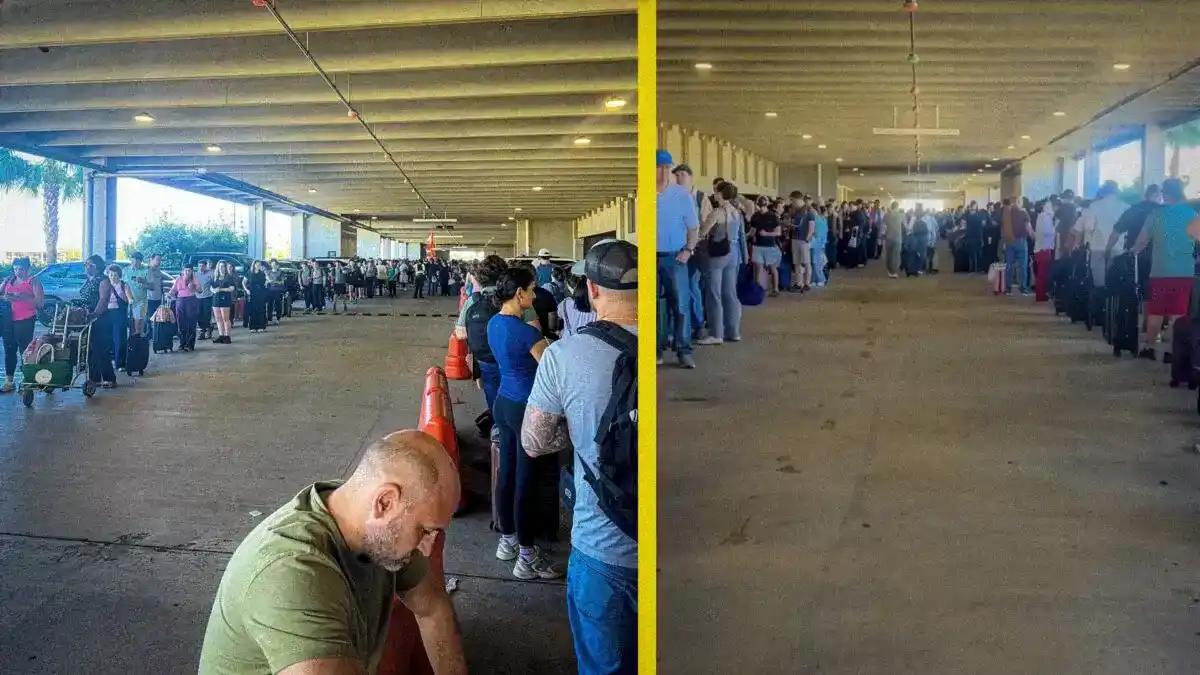
For the United States, which has almost no high-speed rail network and relies heavily on air travel, disruptions to the civil aviation system are crippling. Even Elon Musk publicly offered to pay the salaries of affected TSA employees out of his own pocket.

Also starting in March, the prediction market Polymarket launched a weekly updated prediction event for "number of U.S. flight delays this week"—traders can bet on how many flights will be delayed each week; predicting correctly earns money, while predicting wrong results in a total loss.
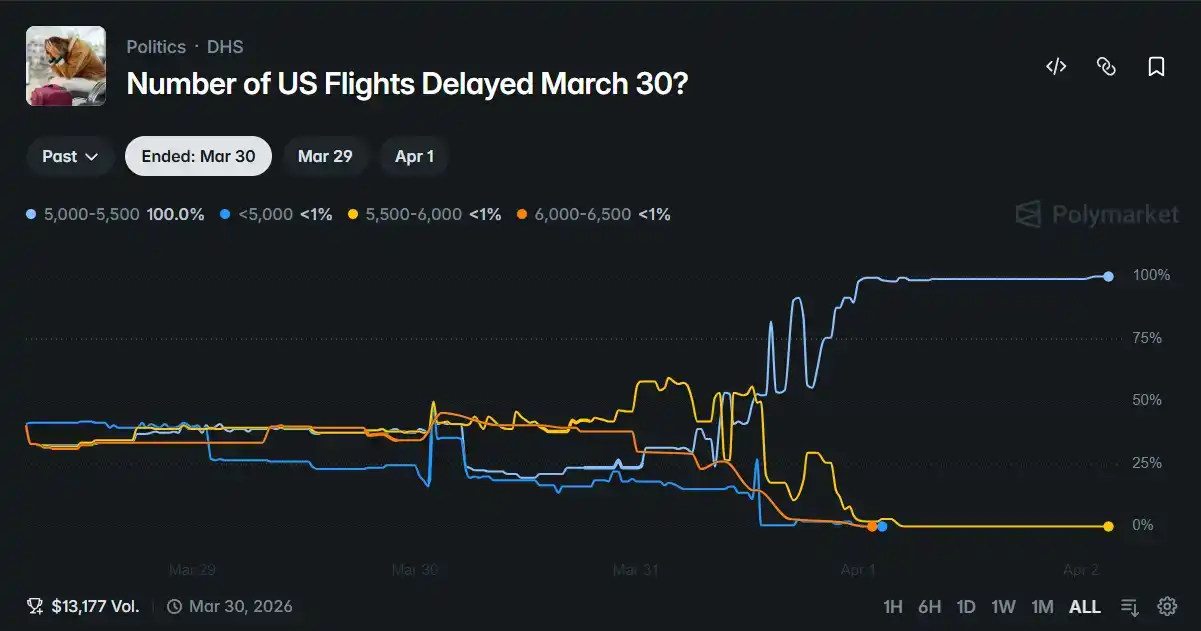
Beyond such purely entertainment-focused events, Polymarket has also listed several topics with considerable reference value. Through the probabilities reflected by these topics, we can attempt to interpret the true current state of the government shutdown and even U.S. domestic affairs.

The Shutdown Game Between the Two Parties

The duration of this shutdown has already broken the previous record of 35 days set by Trump. Amid the widespread flight delays and the near-collapse of the security screening system, when the shutdown will end is the most pressing question for those affected within the United States.

Polymarket currently has a related event: "DHS shutdown will end by ___." As of the time of writing, the probability of the shutdown ending between April 5 and 8 is 44%, while the probability that it will not end in April is 14%.
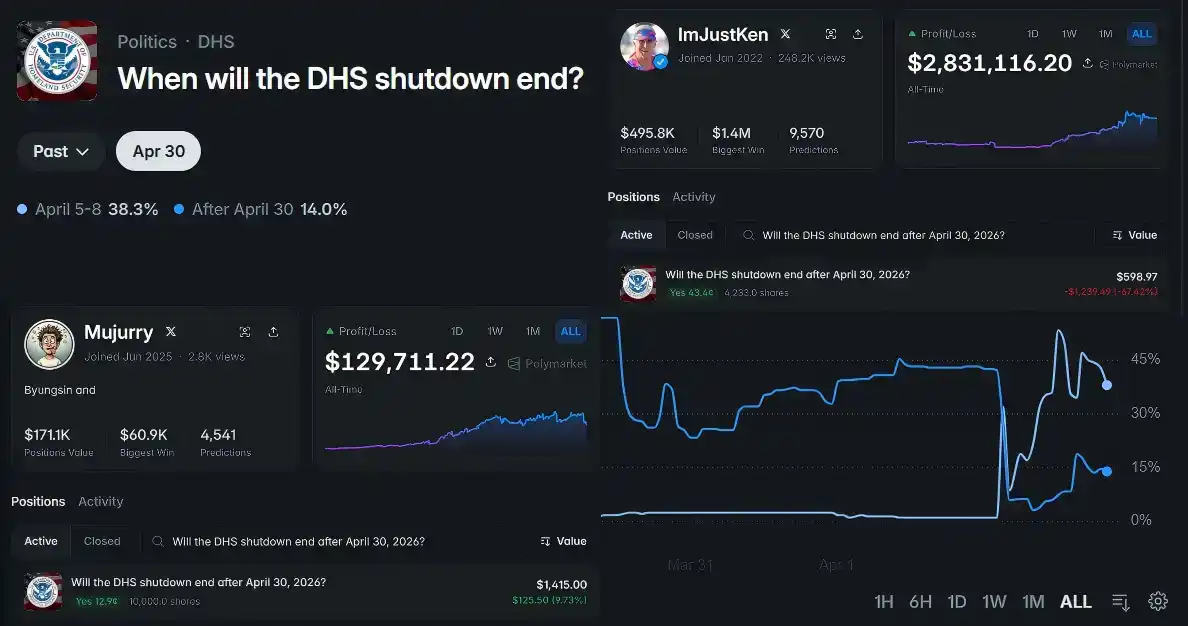
Betting on these two time nodes are many "smart money" traders—seasoned participants with high past prediction accuracy and strong profitability in the political sector. Behind such trading profiles lies a clear logic: if the shutdown does not end during the window of April 5 to 8, the likelihood of reaching an agreement within the month will significantly decrease.

April 5 to 8 coincides with Congress returning from recess, when both parties will once again place the funding bill on the table. If an agreement can be reached within a few days after returning, and the bill passes both the House and Senate before being signed, the shutdown will end.

However, if this window is missed again, the House and Senate will subsequently become engrossed in other agenda items. Without strong political pressure, the motivation for the two parties to return to the negotiating table will greatly diminish.

Musk's "Offer to Pay" and ICE's "Filling In"

Due to continuous TSA employee resignations causing severe delays at major airports, Elon Musk stated on March 21 that he was willing to pay TSA personnel's salaries, which led to the Polymarket trading event "Will Musk pay TSA employees' salaries?".
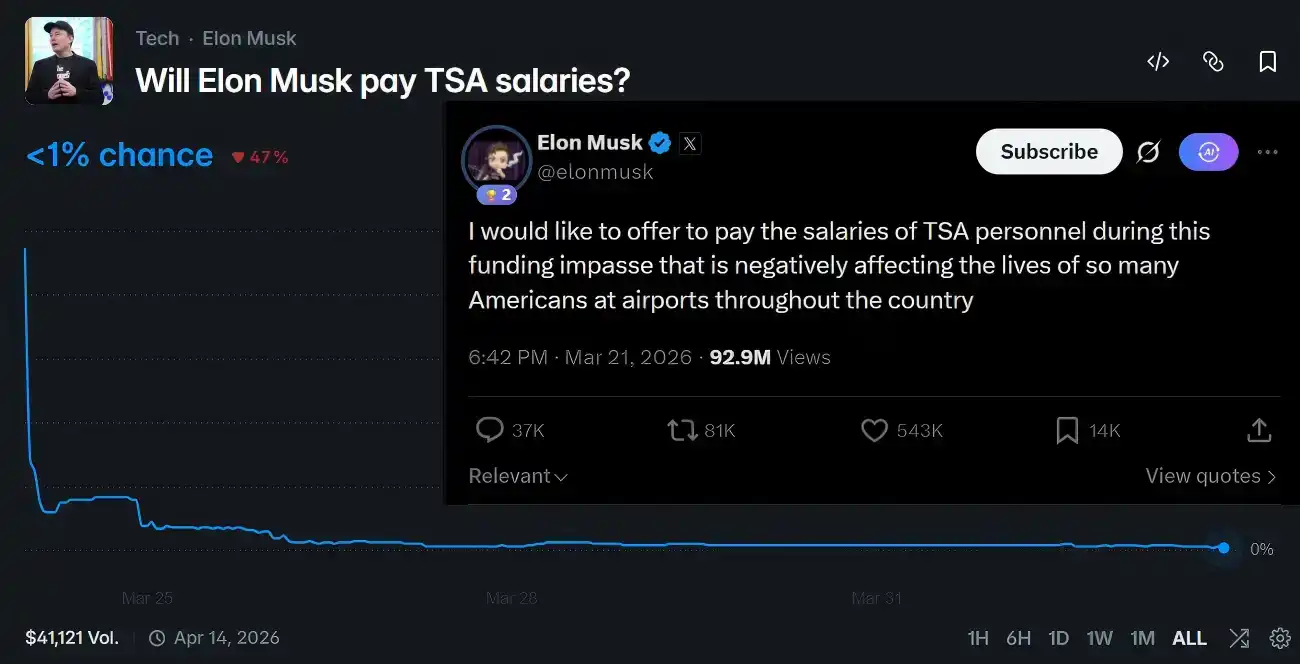
However, shortly after Musk's post, the White House declined the offer citing legal compliance and conflict of interest concerns: according to U.S. federal law, government employees cannot accept external compensation related to their official duties;加之 Musk's deep involvement in federal government contracts, direct payment of salaries faces serious conflict of interest challenges.

Although the refusal was legally justified, ordinary people still need to make a living. To minimize the impact of the aviation system's paralysis on the midterm elections, Trump ordered the deployment of Immigration and Customs Enforcement (ICE) agents to airports in March to replace TSA employees who had left due to unpaid salaries.

But the scene that unfolded once these ICE agents entered the airports made the entire shutdown event seem even more absurd.

After Trump took office, ICE, to meet the goal of "arresting 3,000 people daily and deporting a million people annually," has been drastically compressing recruitment and training processes—planning to hire ten thousand additional law enforcement officers and shortening the originally scheduled 16 weeks of in-person training to 8 weeks.

In short, the professional competence of these ICE agents themselves is already questionable.

TSA security work requires systematic training, covering core skills such as X-ray machine operation and explosive detection, for which ICE agents simply lack the qualifications.

Thus, a historic scene unfolded: TSA employees, while working unpaid, had to demonstrate security procedures to ICE agents and teach them how to maintain order. Most ICE agents did not actually conduct security checks but instead patrolled the terminals, using their law enforcement status to question and deport suspected illegal immigrants.
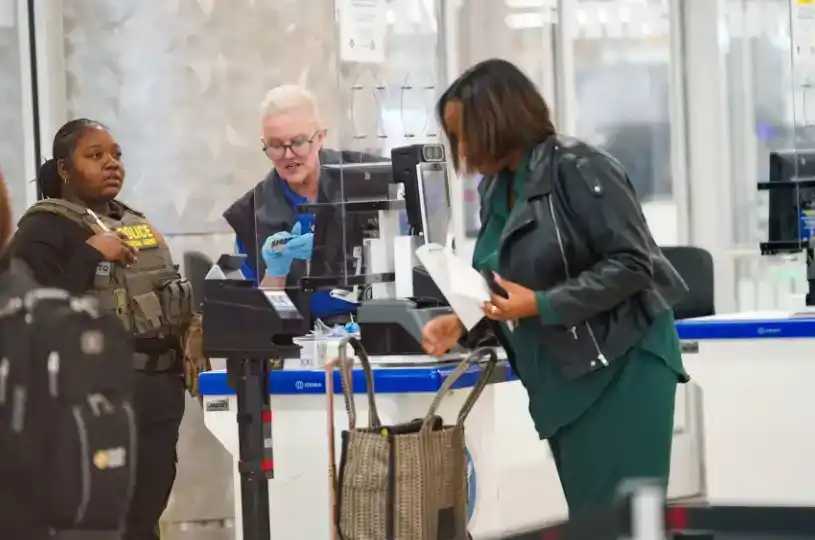
Data confirms the outcome of this farce: after ICE's deployment to airports, flight delay conditions did not significantly improve. By the end of March, the U.S. aviation system still experienced thousands of daily flight delays, with Atlanta Airport's TSA absenteeism rate nearing 40% and single-day flight delays exceeding 350. These numbers indicate that these ICE agents, who were supposed to act as a buffer for the shutdown, did not serve any expected purpose.

The "Nuclear Option" to Break the Deadlock

Another trading event related to this government shutdown is "Will Republicans use the 'nuclear option' to break the filibuster before December 31, 2026?", with a current probability of 31%.
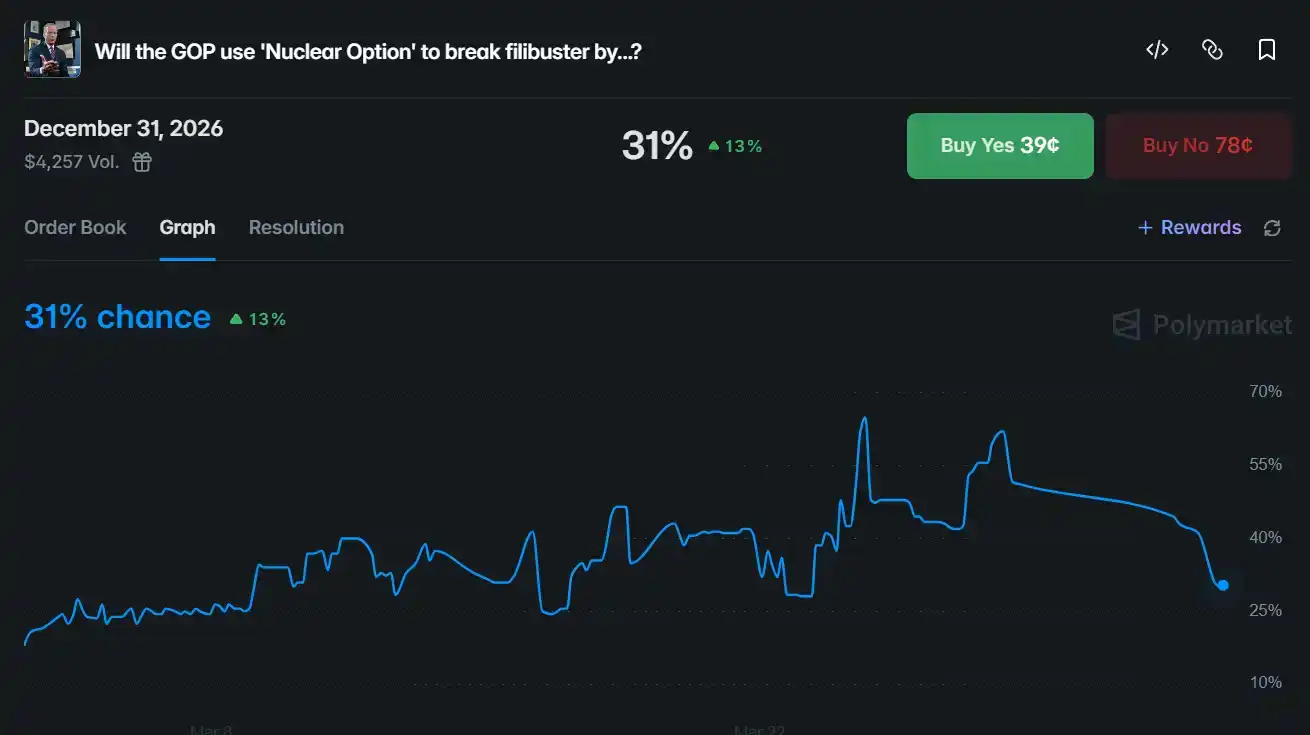
At first glance, the term "nuclear option" sounds intimidating; but in U.S. politics, it is not a literal nuclear weapon but rather one of the few yet highly destructive procedural trump cards available to Republicans.

In the U.S. legislative system, the House of Representatives is responsible for proposing and drafting appropriations bills, while the Senate is responsible for deliberation and voting. Typically, ending debate and proceeding to a vote in the Senate requires 60 votes—this means the minority party needs only 41 votes to block any bill by indefinitely prolonging debate through a filibuster.

The "nuclear option" provides a path to bypass this threshold: a senator raises a procedural appeal, and a simple majority (51 votes) overrules the presiding officer's decision, thereby forcibly lowering the vote threshold required to end debate from 60 votes.

Currently, Senate Republicans hold 53 seats; once the nuclear option is triggered, the Democrats' ability to obstruct will be nearly zero.

But the reason the "nuclear option" is called "nuclear" lies in the high cost it imposes on the user:破坏 Senate rules会被选民视为滥用权力; more crucially,一旦共和党未来失去多数席位, the same rules could be used by Democrats for retaliation.

The pit dug today might be filled by oneself tomorrow. The 31% probability is the market's true pricing of this dilemma.

Even as this shutdown deadlock remains unresolved, Trump must simultaneously deal with the escalating situation with Iran.

On one side is the high-pressure game of diplomacy and military action, on the other are airport lines, unpaid wages, and partisan bickering—the troubles this U.S. administration needs to manage simultaneously are far greater than what headlines suggest. Crises in domestic and foreign affairs never wait for the other to be resolved first.

Amid such turmoil, the rich array of political and current events prediction events on prediction markets will continue to serve as an objective mirror, helping us capture the true trajectory of these narratives.


Pertanyaan Terkait

QWhat is the main reason for the ongoing DHS shutdown mentioned in the article?

AThe shutdown is due to a stalemate between Democrats and Republicans over the Department of Homeland Security (DHS) funding bill.

QHow has the DHS shutdown affected airport operations in the United States?

AThe shutdown has caused significant disruptions, with over 10,000 DHS employees unpaid, nearly 11% of TSA staff absent, and passengers facing extremely long security lines, such as in New Orleans where queues extended to the parking lot.

QWhat was Elon Musk's proposed solution to the TSA payment issue, and why was it rejected?

AElon Musk offered to pay TSA employees' salaries, but the White House declined due to legal compliance issues and potential conflicts of interest, as federal law prohibits government workers from accepting external payments related to their duties.

QWhat is the 'nuclear option' in the context of U.S. Senate procedures, and what is its current probability of being used according to Polymarket?

AThe 'nuclear option' is a procedural tactic to bypass the 60-vote threshold for ending debate in the Senate, allowing legislation to pass with a simple majority. Polymarket estimates a 31% probability that Republicans will use it by December 31, 2026.

QHow effective was the deployment of ICE agents to replace TSA workers during the shutdown?

AThe deployment was largely ineffective. ICE agents lacked proper training for TSA duties, such as operating X-ray machines, and instead focused on patrolling and immigration enforcement. Flight delays remained high, with no significant improvement in airport operations.

Bacaan Terkait

Cara Menjadi Peneliti yang Baik: Melatih Kemampuan Sebenarnya yang Dapat 'Dilatih Secara Sengaja'

Tidak ada yang benar-benar mengajarimu cara melakukan penelitian. Kamu hanya mendapat meja kerja, masalah yang dipilih orang lain, dan instruksi samar untuk "menghasilkan sesuatu yang baru". Kebanyakan orang akhirnya belajar hanya bagaimana "terlihat" seperti peneliti, bukan menjadi peneliti yang sebenarnya. Kemampuan penelitian yang sesungguhnya adalah tumpukan keterampilan kecil yang hampir semuanya dapat dikembangkan melalui *deliberate practice*. **Pilihlah Masalahmu Sendiri:** Jangan hanya menyerap masalah dari mentor atau tren terkini. Ikuti metode John Schulman: pilih hasil yang benar-benar kamu inginkan, lalu rancang eksperimen untuk mencapainya. Ini menciptakan orisinalitas. "Selera" penelitian seperti otot; latihlah dengan memprediksi hasil eksperimen atau makalah sebelum melihat hasil aslinya, dan uji prediksimu dari waktu ke waktu. **Tingkatkan Input-mu:** Jika bacaanmu hanya dari arXiv atau grup diskusi tren, idemu akan sama dengan orang lain dan tidak berharga. Hargai sumber lama (misalnya, *The Bitter Lesson* dari Richard Sutton tahun 2019 atau pidato Claude Shannon tahun 1952). Kedalaman dan keluasan sama pentingnya. Pinjam pengetahuan dari bidang lain. Baca makalah asli, terutama bagian lampiran dan batasan, bukan sekadar ringkasannya. **Tuliskan Semuanya:** Seperti dikemukakan Paul Graham, sebuah ide baru terasa matang sampai kamu mencoba menuliskannya. Menulis adalah mekanisme pertahanan termurah untuk mengungkap celah dan asumsi yang tidak teruji. Terapkan prinsip Feynman: jangan menipu dirimu sendiri. Ikuti kebiasaan Darwin: catat segera fakta yang bertentangan dengan teorimu. Buatlah log eksperimen (hipotesis, pengaturan, prediksi, hasil, pemahaman baru). Membaca ulang catatanmu dari bulan lalu adalah pelajaran kerendahan hati yang paling efektif.

marsbit50m yang lalu

Cara Menjadi Peneliti yang Baik: Melatih Kemampuan Sebenarnya yang Dapat 'Dilatih Secara Sengaja'

marsbit50m yang lalu

Beralih Sepenuhnya ke Era AI, Alipay Bertaruh pada Percakapan, WeChat Mempertahankan Sosial

**Ringkasan: Era AI Penuh, Alipay Bertaruh pada Percakapan, WeChat Mempertahankan Sosial** Pada pertengahan 2026, Alipay dan WeChat, dua platform raksasa dengan miliaran pengguna, menunjukkan dua jalur berbeda dalam mengintegrasikan AI ke dalam layanan inti mereka. **Alipay: Menulis Ulang Antarmuka dengan Percakapan** Alipay sedang menguji versi AI radikal bernama "Proyek Bao". Alih-alih menambahkan asisten, pengguna dapat beralih ke antarmuka baru yang sepenuhnya digerakkan oleh percakapan. Tujuannya adalah mengompresi serangkaian tugas (misalnya memesan taksi dan kopi) menjadi satu perintah percakapan, di mana AI akan memahami maksud, memecah tugas, dan menjalankan layanan yang sesuai. Keputusan ini didasari oleh kegagalan aplikasi AI independen "Zhi Xiaobao" dan pertimbangan untuk memanfaatkan basis pengguna yang ada tanpa biaya migrasi. Untuk kompatibilitas dengan layanan yang belum diadaptasi, AI Alipay menggunakan teknik "membaca layar" untuk meniru klik pengguna, sambil mendorong pengembang untuk mengadopsi standar MCP/Skill. **WeChat: Menanamkan AI dalam Hubungan Sosial** Berbeda dengan Alipay, WeChat mengambil pendekatan yang sangat hati-hati. Menurut presiden Tencent, AI cerdas WeChat akan terintegrasi secara mendalam dengan hubungan sosial, kemampuan komunikasi, akun publik, dan Channels. AI akan beroperasi sebagai "agen" di dalam konteks yang ada (seperti obrolan grup), membantu pengguna tanpa menggantikan atau mengganggu antarmuka percakapan inti. Untuk memungkinkan AI mengoperasikan layanan mini-program, WeChat menawarkan dua mode kepada pengembang: "Mode Otomatis" (membutuhkan akses ke kode sumber mini-program) atau "Mode Pengembang" (membutuhkan pembungkusan ulang layanan ke dalam Skill standar). Pendekatan ini berpotensi memberatkan pengembang, terutama yang kecil. **Perbedaan Kunci & Dampaknya** * **Strategi Kompatibilitas:** Alipay mengandalkan "membaca layar" sebagai jembatan sementara, sementara WeChat meminta akses kode sumber atau upaya pengembangan ulang dari pengembang. * **Ekonomi Agen:** Alipay telah meluncurkan "Token Pay" dan "Dompet AI" untuk memfasilitasi pembayaran frekuensi tinggi dan otonom oleh AI, dengan lebih dari 300 juta transaksi AI yang divalidasi. WeChat belum mengungkapkan rencana serupa untuk pembayaran berbasis agen. * **Dampak Ekosistem:** Pendekatan Alipay dapat secara pasif "meng-AI-kan" banyak layanan panjang, mungkin memaksa adaptasi. Pendekatan WeChat berisiko meminggirkan pengembang kecil yang enggan atau tidak mampu memenuhi persyaratan akses kode sumber/pengembangan ulang. Pada akhirnya, kedua raksasa ini sedang memperebutkan kepercayaan pengguna untuk mendelegasikan tugas "bantu saya mengerjakan ini". Alipay menawarkan pintu masuk percakapan yang terpusat, sementara WeChat bertujuan untuk menyematkan bantuan AI ke dalam aliran sosial yang ada. Hasilnya akan ditentukan oleh bagaimana jutaan mini-program beradaptasi dan bagaimana miliaran pengguna akhirnya mengadopsi perintah "bantu saya" ini dalam kehidupan digital mereka.

marsbit1j yang lalu

Beralih Sepenuhnya ke Era AI, Alipay Bertaruh pada Percakapan, WeChat Mempertahankan Sosial

marsbit1j yang lalu

Rantai Pasokan, Energi, dan Pengelompokan Blok: Melacak Tema Inti Investasi AI 2026

Skenario investasi global pada tahun 2026 akan sangat dibentuk oleh pergeseran geopolitik besar-besaran, bergerak dari sistem global yang terintegrasi menuju formasi 'blok-blok' atau 'kubu' strategis yang lebih terdefinisi, dengan Amerika Serikat sebagai porosnya. Kerangka investasi utama harus beralih dari analisis siklus tradisional ke penilaian terhadap kubu strategis, penataan ulang rantai pasokan, dan arah belanja modal. Blok yang disukai AS akan mencakup ekonomi dengan aliansi strategis, stabilitas politik, dan kemampuan produksi yang kredibel, seperti Jepang, Korea Selatan, dan mitra di Eropa. Amerika Latin akan mendapatkan perhatian strategis sebagai 'halaman belakang' AS untuk keamanan dan integrasi rantai pasokan. **Energi dan jaringan listrik** menjadi hambatan fisik utama untuk relokasi manufaktur, sehingga akan mendorong investasi besar-besaran dalam energi terbarukan, nuklir, jaringan listrik, dan terutama **penyimpanan energi (baterai)**. Di Eropa, peluang investasi terletak pada perusahaan-perusahaan kelas dunia yang menyediakan 'sekop dan pacul' untuk siklus belanja modal global ini, seperti peralatan kelistrikan, otomasi industri, dan infrastruktur jaringan listrik, terlepas dari pertumbuhan makro regional yang lambat. **Kecerdasan Buatan (AI)** tetap menjadi medan persaingan inti AS-China, yang akan terus mendorong belanja modal besar-besaran dalam komputasi, listrik, jaringan, dan robotika, dengan fokus pada infrastruktur daripada profitabilitas aplikasi dalam jangka pendek. Implikasi portofolio menyarankan **rotasi keluar dari saham teknologi AS besar yang sudah ramai**, menuju aset global yang diuntungkan dari restrukturisasi ini: otomasi industri, infrastruktur kelistrik dan energi, bagian-bagian penting pertahanan, serta pasar non-AS yang diuntungkan dari desain ulang rantai pasokan.

marsbit1j yang lalu

Rantai Pasokan, Energi, dan Pengelompokan Blok: Melacak Tema Inti Investasi AI 2026

marsbit1j yang lalu

Trading

Spot
Futures
活动图片




