Understanding Theory ≠ Gaining Profit: 5 Common Math Mistakes Made by Highly Intelligent People

marsbitDipublikasikan tanggal 2026-03-14Terakhir diperbarui pada 2026-03-14

Abstrak

In the article "Knowing Theory ≠ Earning Returns: 5 Common Math Mistakes Made by Highly Intelligent People," crypto KOL darkzodchi explores why many highly educated individuals struggle financially despite their intellectual prowess, while less academically trained traders often succeed. The author identifies five key cognitive errors: 1. **Pursuing Precision Over Action**: Smart people often delay decisions to seek perfect accuracy, underestimating the cost of delay. The solution is to set deadlines and prioritize timely action over exhaustive research. 2. **Finding Patterns in Noise**: Intelligent individuals tend to overfit models by detecting false patterns in random data. The remedy is to apply statistical corrections (e.g., Bonferroni) and avoid complex strategies prone to noise. 3. **Misapplying Diversification**: Diversification is useful without an edge but harmful when one has a genuine advantage. The Kelly Criterion suggests concentrating bets based on the strength of the edge. 4. **Anchoring to Irrelevant Numbers**: People often fixate on past prices or values, impairing rational decision-making. Asking "Would I buy this today?" helps ignore sunk costs. 5. **Confusing Understanding with Action**: Knowledge alone doesn’t yield results; action and consistency are crucial. Small, real-world bets bridge the gap between theory and practice. The author emphasizes that markets reward simplicity, speed, and execution over complexity and perfection. Intelligent indiv...

Author: darkzodchi, Crypto KOL

Compiled by: Felix, PANews

There are many highly educated and intelligent people in the financial markets, but only a minority make money, and a significant portion of them are not highly educated. They have learned a lot of theory but cannot make money. What causes this "anomaly"? Based on personal experience and research, crypto KOL darkzodchi analyzed this phenomenon and proposed five common cognitive mistakes made by smart people. Details below.

I know someone who can mentally solve differential equations. He graduated with top honors and works at a top tech company you've definitely heard of, earning $180,000 a year. But his net worth is essentially zero. If you factor in his car loan, it might even be negative.

In stark contrast, most of my friends dropped out of school before they were 20, fully devoting themselves to entrepreneurship or trading, and now earn more than those with finance degrees. Half of them don't even understand basic economic terms; they just know when to act.

What's going on here?

I've seen this countless times: strategists almost never act. Have you ever wondered why university professors don't drive Ferraris? Because they know *how* to act in theory, but don't know *what* to do in practice.

Let's talk about 5 math mistakes that specifically plague smart people, and a "foolproof" solution for each.

Mistake 1: Pursuing Precision While Ignoring the Importance of Action

Smart people love pursuing absolutely correct answers. This pursuit is rewarded in school: on a math test, 97% accuracy is far worse than 100%.

But in the world of money? 97% accuracy achieved next month is far less valuable than 70% accuracy right now.

I watched a friend spend two years building a "perfect" liquidity provision project; he even raised funds for it. He used custom metrics and ran backtests spanning 15 years, covering three different volatility environments. Honestly, it was a remarkable piece of work.

But by the time he launched, the market environment had changed. His model was tailored for a market that no longer existed. Meanwhile, some unknown person on CT forums made $80,000 with three simple lines of heuristic code—"buy when funding rate is negative, sell when positive"—while my friend was still struggling.

There's actually a formula for this called the Value of Information (VoI), which tells you when more research is worth it:

VoI = EV(Decision with more info) - EV(Decision now) - Cost of Delay

If VoI < 0, stop researching and act immediately.

The cost of delay is something smart people consistently underestimate. They think it's zero because doing research "feels productive." It's not. Markets move, opportunities vanish, capital sits idle.

I've personally fallen for this. In August 2025, I spent a month thinking about how to structure a Polymarket project, trying to devise an extremely complex scheme, until I completely forgot about it.

By October, I switched my mindset and started coding daily. By November, the project was live.

I wasted more time "thinking about the idea" than actually creating it. Classic self-sabotage.

The Fix: Set a deadline *before* you start researching. "No matter how much information I have, I will decide by Friday." This single habit is more valuable than any formula.

Mistake 2: Finding Patterns in Noise (And Betting on Them)

This is a big one, and it's unique to smart people.

If you're smart, your brain is like a pattern recognition machine. This ability got you great grades and a dream job. You see structure where others see chaos.

The problem: Financial markets are mostly chaos. Your amazing pattern-matching brain will find patterns that aren't there. Then it will convince you they are real, you'll bet, and you'll lose.

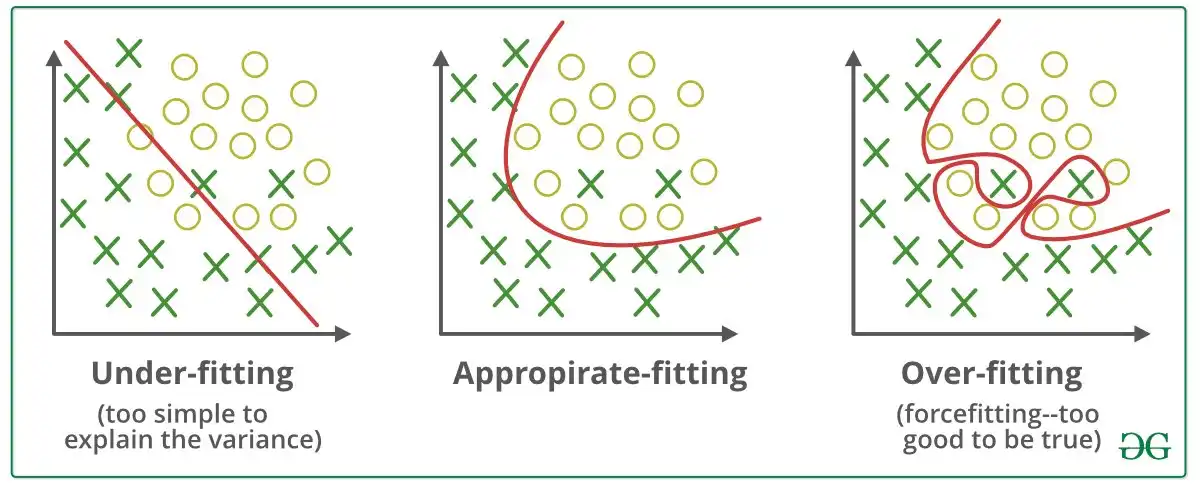
This is called "overfitting." Here's an example of how it works.

Take any random dataset: stock prices, temperature readings, anything. Run enough combinations of indicators, and you *will* find a formula that "predicts" the past with 95% accuracy. It looks amazing in backtests. But it's garbage; it found a pattern in the noise.

Overfitting Test:

  • If your model has N parameters and you tested K combinations:
  • Expected number of false discoveries = K × Significance level
  • Testing 100 indicators at p < 0.05 yields 5 "significant" results that are pure noise.

I fell for this hard. In 2022, I found a "pattern" in ETH that held for 3 months of data. Something about the Binance/Coinbase volume ratio. The backtest looked bulletproof, I got excited, and immediately put $2,000 into it.

Lost $400 the first week. The pattern was noise. I wasn't smart enough to realize that *being able to find it* was the problem.

The data from Polymarket confirms this powerfully. When I analyzed 112,000 wallets, those running the most complex strategies (10+ signals, fancy ML models) actually performed *worse* than those using just 2-3 simple rules. More complexity = more overfitting = more losses.

The Fix: Before believing any pattern, ask: "If I tested 100 random strategies, how many would look this good by pure luck?" If the answer is more than 1 or 2, your "discovery" is likely noise. The Bonferroni correction helps: divide your significance threshold by the number of strategies you tested.
Mistake 3: Diversifying When You Should Concentrate (And Vice Versa)

This one hits close to home, as I was running five different projects simultaneously a few years ago, and they all failed.

Every smart person knows "don't put all your eggs in one basket." It's like the first rule of finance: diversify. Modern Portfolio Theory, Markowitz, Nobel Prize.

Yet... the actual math reveals something more nuanced that most people miss.

Diversification protects you *when you have no edge*. If you're picking stocks randomly, sure, diversify. You don't actually know what will happen.

But when you actually have an edge (a genuinely mispriced opportunity), diversification *harms* your returns. You dilute your best idea with mediocre ones.

  • Kelly Criterion for Concentration: f* = Edge / Odds
  • If your edge is 15%, odds are 1:1: f* = 0.15 / 1.0 = 15% of bankroll
  • If your edge is 3%: f* = 0.03 / 1.0 = 3% of bankroll

This formula literally says: bigger edge, bigger bet; smaller edge, smaller bet. It does NOT say "spread your capital equally across 47 positions."

Warren Buffett (who is quite good at this) has said repeatedly that diversification is protection against ignorance. If you know what you're doing, it makes no sense.

I used to hold 5-10 different tokens during the SOL and BSC booms. The best performer went up 120%, but it was only 4% of my portfolio, netting me about $80 total. Meanwhile, my largest holding dropped 40%.

And the top Polymarket wallets I studied? They only have 3-5 positions open at any time, max, but each position is sized according to its edge.

The Fix: Ask yourself honestly: Do I have an edge in this trade? If yes, size up (within Kelly limits). If no, either skip it entirely or index. The "a little bit of everything" compromise is the graveyard of returns.

Mistake 4: Anchoring to Irrelevant Numbers

Smart people are especially susceptible to anchoring because they remember numbers, and remembered numbers become subconscious reference points for all future decisions.

"I bought ETH at $4800."

So what? The market doesn't care. That number is completely, utterly, 100% irrelevant to whether ETH is a good buy today. But your brain has welded $4800 to your self-esteem. Now, every price below feels like a "loss," every price above feels like "breaking even."

This isn't just a feeling. It measurably changes your behavior:

  • You hold losing positions too long (waiting to "break even")
  • You sell winning positions too early (fear of giving back profits).
  • You evaluate new opportunities based on past prices, not future value.

There's a very simple test for this. Daniel Kahneman calls it "Would I buy it today?"

  • You hold an asset, current price P.
  • You bought it at price P_0.
  • Ignore P_0 completely; it's a sunk cost.

Question: If you had cash right now, would you buy this asset at price P?

  • If yes → Hold
  • If no → Sell
  • If unsure → Your position is too large

I had to write this on a sticky note on my monitor: "Would I buy it today?" Because even knowing the bias, I'd still think, "But I'm only down 20%, let's wait for a bounce." Anchoring is that powerful.

This applies beyond trading. Salary negotiation? If you make $90k now, you anchor on that and ask for $100k. But the market rate for your role might be $130k. You're literally negotiating against yourself using an irrelevant anchor. Changing jobs? "I've been here 4 years." So what? The question is whether the next four years are better spent here or elsewhere. The past four are sunk regardless.

The Fix: Before any financial decision, write down the numbers influencing you. Then ask: "Is this number actually relevant to future outcomes, or am I just anchored to the past?" If it's the past, cross it out (literally, with a pen).

Mistake 5: Mistaking Understanding for Action

This is the cruelest one. Honestly, it's my biggest weakness too.

Smart people read about compound interest and nod along. They understand the Kelly Criterion, they can explain loss aversion at dinner parties, they've read *Thinking, Fast and Slow* (or at least the summary).

Then they think understanding equals action. It doesn't. Not even close.

Understanding compounding doesn't mean you're investing. Understanding Kelly doesn't mean you're sizing correctly. Understanding loss aversion doesn't mean you're immune to it.

There's research on this. It's called the "knowledge-action gap," and it's huge. One study found almost no correlation between financial literacy scores and actual financial outcomes. People scoring 95 on a financial literacy test were just as likely to carry credit card debt as those scoring 50.

Financial Outcome = Knowledge × Action × Consistency

No matter how vast the knowledge, if action is zero, the result is zero.

The formula is obvious, but smart people get stuck on the first term. They keep accumulating knowledge: one more book, one more course, one more podcast. Because learning feels safe and secure. Action feels risky and uncomfortable.

I know because I lived it. I read three books on investing before making my first trade. I could explain the Efficient Market Hypothesis, factor investing, options pricing—all of it. My first live trade? I panicked and lost 12% in three days. All that knowledge, and emotion still ruled everything.

You know what finally helped me? I was literally on the basketball court, pulled out my phone, and put $50 on a Polymarket bet, purely to try it. Not $5000, just $50. The stakes were low, real money was on the line, almost no chance to win—but I just wanted to feel what it was like to have skin in the game.

Suddenly, those probability formulas weren't abstract. They were tied to my money. That $50 bet taught me more about my biases than 11 books combined.

The Fix: After reading this, do *one* thing. Not five things. One thing. Place a small bet, calculate an expected value, test a hypothesis. The gap between knowing and doing is bridged by tiny acts of doing.

Why This Matters More Than You Think

What bothers me most about all this: These 5 mistakes aren't from being "stupid," but from being "smart in the wrong way." School trains us to be meticulous, precise, knowledgeable. The market rewards being fast, roughly right, and taking action.

The rules of the game changed, and nobody told us.

The good news is, once you see these traps, you can't unsee them. Every time you find yourself spending 3 hours researching a $200 decision—that's Mistake #1. Every time you find an exciting "pattern" in a crypto chart—that's Mistake #2. Every time you spread your capital across 20 positions because "diversification"—that's Mistake #3.

The smartest thing a smart person can do is get a little "dumber." Simpler strategies, fewer positions, faster decisions. Less research, more action.

The math supports it, the 112,000 wallets I studied prove it, the books prove it, my own expensive mistakes prove it.

Now stop reading and go do something.

Related reading: Must-Read for Beginners: Senior Trader Shares Five Trading "Secrets"

Kripto yang Sedang Tren

Pertanyaan Terkait

QWhat is the first common mathematical mistake that intelligent people make in financial markets, and what is the suggested solution?

AThe first mistake is pursuing precision over action. The solution is to set a deadline before starting research and make a decision by that time, regardless of how much information has been gathered.

QWhat is overfitting, and how does it particularly affect smart individuals in trading?

AOverfitting is finding patterns in noise that don't actually exist. It affects smart individuals because their pattern-matching brains are prone to seeing structures in random market chaos, leading them to place bets based on these false patterns and lose money.

QAccording to the Kelly Criterion, when should an investor concentrate their bets instead of diversifying?

AAn investor should concentrate their bets when they have a genuine advantage (a truly undervalued opportunity). The Kelly Criterion formula, f* = edge / odds, indicates that a larger edge warrants a larger bet, while a smaller edge warrants a smaller bet or no bet at all.

QWhat is the 'anchoring effect' and how can it negatively impact financial decisions?

AThe anchoring effect is the cognitive bias where an individual relies too heavily on an initial piece of information (an 'anchor') when making decisions. It negatively impacts finances by causing people to hold losing positions too long (waiting to 'break even'), sell winning positions too early, and evaluate new opportunities based on past prices instead of future value.

QWhat is the 'knowledge-action gap' and why is it a significant problem for intelligent people?

AThe 'knowledge-action gap' is the disconnect between understanding a concept theoretically and actually putting it into practice. It's a significant problem for intelligent people because they often mistake understanding for action, continually accumulating knowledge instead of taking the risky and uncomfortable steps required to achieve real financial results.

Bacaan Terkait

Dialog dengan Ray Dalio: Saat Ini Berada dalam Gelembung AI, 1% Portofolio Investasi Adalah Bitcoin

Sumber: The Diary Of A CEO Ray Dalio, pendiri Bridgewater Associates yang meramalkan krisis keuangan 2008, memperingatkan bahwa ledakan AI saat ini menunjukkan tanda-tanda klasik gelembung ekonomi yang dapat pecah dan memicu resesi. Dalam wawancara podcast, dia menjelaskan dinamika "siklus besar" yang didorong oleh ketimpangan kekayaan, defisit pemerintah, dan perubahan geopolitik. Dalio mengidentifikasi pola di mana antusiasme berlebihan terhadap teknologi revolusioner baru, seperti AI, menyebabkan harga aset melambung dan pinjaman berlebihan. Ketika kondisi berubah (seperti kenaikan suku bunga atau kebutuhan tunai), gelembung ini dapat pecah, menyebabkan penurunan harga aset, kerugian luas, dan kontraksi ekonomi. Untuk melindungi kekayaan di masa ketidakpastian, Dalio sangat menekankan pentingnya **diversifikasi portofolio**—termasuk saham, obligasi, emas, dan real estat—daripada mengandalkan uang tunai saja. Dia mengungkapkan bahwa sekitar **1% portofolionya adalah Bitcoin**, yang diakuinya sebagai aset keras, tetapi dia lebih menyukai **emas fisik** karena sejarahnya sebagai penyimpan nilai dan aset bebas liabilitas. Mengenai dampak AI, Dalio percaya bahwa teknologi ini akan menggantikan tidak hanya tenaga fisik tetapi juga kemampuan kognitif manusia, berpotensi memperlebar kesenjangan antara pemilik modal dan pekerja. Masa depan akan menguntungkan mereka yang dapat memadukan kecerdasan manusia (seperti emosi dan intuisi) dengan kemitraan AI. Secara geopolitik, Dalio menggambarkan dunia yang memasuki fase "penurunan" dalam tatanan global, dengan Amerika Serikat menghadapi tantangan internal dan eksternal, termasuk konflik seperti di Iran yang mengungkap kelemahannya. Dia memprediksi dunia mungkin menjadi lebih terregionalisasi di masa depan. Secara keseluruhan, kunci untuk navigasi melalui periode kompleks ini adalah pemahaman akan pola sejarah, adaptasi, dan diversifikasi yang cermat.

marsbit2j yang lalu

Dialog dengan Ray Dalio: Saat Ini Berada dalam Gelembung AI, 1% Portofolio Investasi Adalah Bitcoin

marsbit2j yang lalu

Rekor! Beli Bersih Asing 7,2 Triliun Won dalam Sehari, Wall Street: Tekanan Likuiditas di Pasar Saham Korea Telah Mereda

**Ringkasan: Rekor Pembelian Asing dan Peningkatan Likuiditas di Pasar Saham Korea** Aliran modal asing menunjukkan perubahan signifikan di pasar saham Korea (KOSPI). Pada 31 Juli, investor asing melakukan pembelian bersih rekor sebesar 7,2 triliun Won Korea dalam sehari, menandai pembalikan dari tren penjualan bersih besar-besaran dalam beberapa bulan terakhir. Secara bulanan, penjualan bersih asing menyusut drastis menjadi 9,8 triliun Won di Juli, turun dari 48,4 triliun dan 44,5 triliun Won pada Juni dan Mei. Tekanan penjualan dari lembaga domestik juga mereda. Dana pensiun dan reksa dana domestik justru menjadi pembeli bersih 1,0 triliun Won di Juli, setelah dua bulan sebelumnya menjadi penjual bersih. Faktor pendukung lainnya adalah peraturan baru dari Komisi Jasa Keuangan (FSC) yang memberlakukan syarat lebih ketat bagi investor ritel untuk masuk ke ETF leverage saham tunggal, yang langsung mengurangi volume perdagangan instrumen tersebut hingga sekitar 50%. Kebijakan ini diperkirakan dapat menekan volatilitas pasar. Citigroup mempertahankan target indeks KOSPI di level 10.000 poin, menyoroti memudarnya angin penentu likuiditas. Analis mereka menilai faktor fundamental seperti industri chip memori yang solid, valuasi historis yang rendah, fundamental ekonomi Korea yang kuat, dan dukungan kebijakan berpotensi menjadi pendorong bagi pasar.

marsbit2j yang lalu

Rekor! Beli Bersih Asing 7,2 Triliun Won dalam Sehari, Wall Street: Tekanan Likuiditas di Pasar Saham Korea Telah Mereda

marsbit2j yang lalu

Pembaruan! AI Generasi Berikut OpenAI Pecahkan 10 Masalah Kelas Medali Fields

**OpenAI Model Astra Pecahkan 10 Masalah Matematika Kelas Fields Medal!** OpenAI mengumumkan terobosan besar dari model internal terbarunya, Astra. Model ini dilaporkan telah membuat kemajuan signifikan dalam **10 masalah matematika yang belum terpecahkan**, dengan biaya komputasi hanya sekitar **$2000**. Hasilnya dipublikasikan dalam makalah setebal 249 halaman. Beberapa pencapaian utama meliputi: 1. **Menyelesaikan masalah "non-sofic group"** yang diajukan Mikhail Gromov tahun 1999, dengan membangun contoh kelompok yang tak hingga dan finitely presented yang bukan sofic. Ini dianggap sebagai kemajuan bersejarah. 2. **Memecahkan batas lama dalam masalah pengepakan bola berdimensi tinggi** (sphere packing), meningkatkan batas yang telah bertahan sejak 1978 untuk dimensi tak hingga. 3. **Menyangkal dugaan "Connes Rigidity"** dengan membangun keluarga tak terhitung dari kelompok berbeda yang menghasilkan aljabar von Neumann yang sama persis. Semua bukti telah diverifikasi menggunakan asisten pembuktian formal Lean 4, memastikan ketepatannya. Para ahli matematika menyebut temuan ini sebagai **momen bersejarah**, setara dengan prestasi penghargaan Fields Medal, dan menandai kemampuan AI untuk melakukan penalaran matematika mendalam di berbagai bidang. OpenAI juga membagikan proses penalaran model, menunjukkan langkah maju yang besar menuju AGI (Artificial General Intelligence).

marsbit4j yang lalu

Pembaruan! AI Generasi Berikut OpenAI Pecahkan 10 Masalah Kelas Medali Fields

marsbit4j yang lalu

Bagaimana Membuat Diri Sendiri Tak Tergantikan oleh Kecerdasan Buatan

**Ringkasan: Bagaimana Membuat Diri Anda Tak Tergantikan oleh AI** Artikel ini membahas ancaman nyata dalam era AI: bukan kehilangan pekerjaan, tetapi "perbudakan gaji"—ketergantungan pada sistem dan orang lain untuk bertahan hidup. Solusinya adalah menjadi "individu super" yang "tak bisa dipekerjakan" dengan membangun bisnis atau karya sendiri. Kunci untuk bertahan dan berkembang di masa depan bukan sekadar keterampilan teknis, tetapi menguasai lima elemen yang sulit digantikan AI: 1. **Otonomi (Agency):** Kemampuan bertindak tanpa menunggu perintah. 2. **Rasa (Taste):** Pengalaman untuk mengetahui apa yang bernilai untuk ditawarkan. 3. **Kemampuan Persuasi (Persuasion):** Keterampilan menarik perhatian dan pengakuan. 4. **Ketekunan (Persistence):** Memahami bahwa kegagalan adalah bagian dari proses. 5. **Iterasi (Iteration):** Kemampuan memperbaiki kesalahan berdasarkan umpan balik. Lima elemen ini dapat dikembangkan dengan **membuat konten** (media). Dibandingkan pemrograman (code), konten lebih unggul karena nilainya subjektif, membutuhkan penilaian manusia, dan merupakan alat distribusi yang ampuh untuk membangun koneksi dan otoritas. Untuk memulai transformasi: 1. **Ubah lingkungan** Anda secara drastis untuk memicu perubahan identitas. 2. **Gali "bahan mentah"** Anda: Identifikasi pengetahuan mendalam, masalah yang pernah Anda selesaikan, dan minat unik masa kecil Anda. 3. **Temukan "poros pemikiran balik"**: Tentukan pendapat kontra-intuitif atau keyakinan Anda yang bertentangan dengan arus utama dalam bidang Anda. 4. **Luncurkan ide pertama** Anda besok. Gabungkan jawaban dari langkah 2 dan 3, lalu publikasikan. Umpan balik nyata dari dunia adalah guru terbaik. Intinya, bangunlah *karier seumur hidup* yang autentik berdasarkan pengalaman dan sudut pandang unik Anda. Dengan memanfaatkan AI sebagai alat dan fokus pada pengembangan diri yang tak tergantikan, Anda dapat mengambil kendali atas hidup dan masa depan Anda.

marsbit4j yang lalu

Bagaimana Membuat Diri Sendiri Tak Tergantikan oleh Kecerdasan Buatan

marsbit4j yang lalu

Kunci Bitcoin Disimpan Offline Berkat Lemparan Dadu, Tetapi Tidak Semua Orang Akan Melakukannya

Berdasarkan insiden kerentanan generator angka acak pada perangkat hardware wallet Coldcard, artikel ini membahas metode pembuatan kunci Bitcoin menggunakan dadu untuk menghasilkan entropi mandiri. Claude Shannon mengukur ketidakpastian dengan konsep entropi, di mana satu lemparan dadu enam sisi setara dengan sekitar 2,585 bit. Praktik melempar dadu 50 hingga 99 kali dapat menghasilkan frasa pemulihan 12 kata yang aman (128 bit entropi), melampaui ketergantungan pada generator perangkat. Namun, insiden Coldcard mengungkap bahwa meskipun seed utama dibuat dari dadu aman, fungsi lain seperti dompet kertas, kunci kloning, dan password masih berpotensi menggunakan generator cacat. Peneliti keamanan Kevin Loaec menekankan bahwa perlindungan hanya berlaku untuk seed utama, bukan keseluruhan sistem. Proses manual ini membutuhkan ketelitian tinggi, rentan kesalahan, dan tidak praktis bagi kebanyakan pengguna baru. Oleh karena itu, meski kuat secara matematis, metode ini lebih cocok untuk pengguna berpengalaman. Artikel menyarankan pemilik Coldcard untuk memperbarui firmware, memeriksa fungsi yang pernah digunakan, dan mempertimbangkan skema multisignature dengan perangkat dari produsen berbeda untuk mitigasi risiko. Tujuan jangka panjang adalah perangkat yang dapat menghasilkan keacakan kuat secara mandiri, tanpa memerlukan prosedur rumit dari pengguna.

cryptonews.ru7j yang lalu

Kunci Bitcoin Disimpan Offline Berkat Lemparan Dadu, Tetapi Tidak Semua Orang Akan Melakukannya

cryptonews.ru7j yang lalu

Trading

Spot

Artikel Populer

Cara Membeli PEOPLE

Selamat datang di HTX.com! Kami telah membuat pembelian ConstitutionDAO (PEOPLE) menjadi mudah dan nyaman. Ikuti panduan langkah demi langkah kami untuk memulai perjalanan kripto Anda.Langkah 1: Buat Akun HTX AndaGunakan alamat email atau nomor ponsel Anda untuk mendaftar akun gratis di HTX. Rasakan perjalanan pendaftaran yang mudah dan buka semua fitur.Dapatkan Akun SayaLangkah 2: Buka Beli Kripto, lalu Pilih Metode Pembayaran AndaKartu Kredit/Debit: Gunakan Visa atau Mastercard Anda untuk membeli ConstitutionDAO (PEOPLE) secara instan.Saldo: Gunakan dana dari saldo akun HTX Anda untuk melakukan trading dengan lancar.Pihak Ketiga: Kami telah menambahkan metode pembayaran populer seperti Google Pay dan Apple Pay untuk meningkatkan kenyamanan.P2P: Lakukan trading langsung dengan pengguna lain di HTX.Over-the-Counter (OTC): Kami menawarkan layanan yang dibuat khusus dan kurs yang kompetitif bagi para trader.Langkah 3: Simpan ConstitutionDAO (PEOPLE) AndaSetelah melakukan pembelian, simpan ConstitutionDAO (PEOPLE) di akun HTX Anda. Selain itu, Anda dapat mengirimkannya ke tempat lain melalui transfer blockchain atau menggunakannya untuk memperdagangkan mata uang kripto lainnya.Langkah 4: Lakukan trading ConstitutionDAO (PEOPLE)Lakukan trading ConstitutionDAO (PEOPLE) dengan mudah di pasar spot HTX. Cukup akses akun Anda, pilih pasangan perdagangan, jalankan trading, lalu pantau secara real-time. Kami menawarkan pengalaman yang ramah pengguna baik untuk pemula maupun trader berpengalaman.

720 Total TayanganDipublikasikan pada 2024.12.12Diperbarui pada 2026.06.02

Cara Membeli PEOPLE

Diskusi

Selamat datang di Komunitas HTX. Di sini, Anda bisa terus mendapatkan informasi terbaru tentang perkembangan platform terkini dan mendapatkan akses ke wawasan pasar profesional. Pendapat pengguna mengenai harga PEOPLE (PEOPLE) disajikan di bawah ini.

活动图片













