The Stock Tokenization Revolution: A Panoramic Report on Market Dynamics, Product Architecture, and Regulatory Moats

marsbitDipublikasikan tanggal 2026-03-10Terakhir diperbarui pada 2026-03-10

Abstrak

Tokenized stocks are emerging as a breakthrough sector in the real-world asset (RWA) market, with a total value exceeding $800 million—a 30x increase since the start of the year—and monthly trading volume reaching $1.8 billion. The core value proposition is enabling global, 24/7 access to U.S. equities with near-instant settlement, bypassing geographic restrictions and delays inherent in traditional finance. Three primary architectures are competing for dominance: 1. Instant execution (e.g., Ondo, CyberAlpha): maximizes capital efficiency. 2. Inventory model (e.g., xStocks, Backed): uses Swiss debt structures for superior DeFi composability. 3. Direct ownership (e.g., Securitize): offers full legal rights but limited on-chain flexibility. The market is dominated by two players: Ondo (53% share) leverages liquidity engineering, while Backed/xStocks (23%) uses regulatory arbitrage via Swiss law. Regulatory licensing—not technology—is the key moat, with complex cross-jurisdictional compliance (U.S., EU, offshore) forming the highest barrier to entry. The sector faces a trilemma between liquidity/speed, regulatory safety, and DeFi composability, and is diverging into two paths: incremental integration with traditional systems (e.g., DTCC) and revolutionary on-chain issuance for full disintermediation. The convergence of the $150 trillion global equity market with blockchain infrastructure is already underway.

Authored by: Foresight Ventures

TL;DR

  • Tokenized stocks are the breakthrough sector in the current Real World Asset (RWA) cycle—the market has hit a new all-time high of $800 million, growing 30x year-to-date, with a monthly trading volume of $1.8 billion.
  • Core value proposition: Bypass geographical restrictions and settlement delays of traditional brokers, enabling 24/7 global access to US stocks with near-instant settlement.
  • Three architectures are vying for dominance:
  1. Instant Execution Model (Ondo, CyberAlpha)—leads in capital efficiency.
  2. Inventory Model (xStocks, Backed)—excels in DeFi composability through debt structures under Swiss law.
  3. Direct Ownership Model (Securitize)—offers the most complete legal rights but is constrained by transfer restrictions and has limited on-chain composability.
  • The market has effectively formed a duopoly: Ondo leads with a 53% share, driven by liquidity engineering; Backed/xStocks hold a 23% share, leveraging regulatory arbitrage.
  • Technology is no longer the moat—regulation is. Building a cross-border licensing system across the US, EU, and offshore jurisdictions is currently the most difficult-to-replicate competitive barrier.
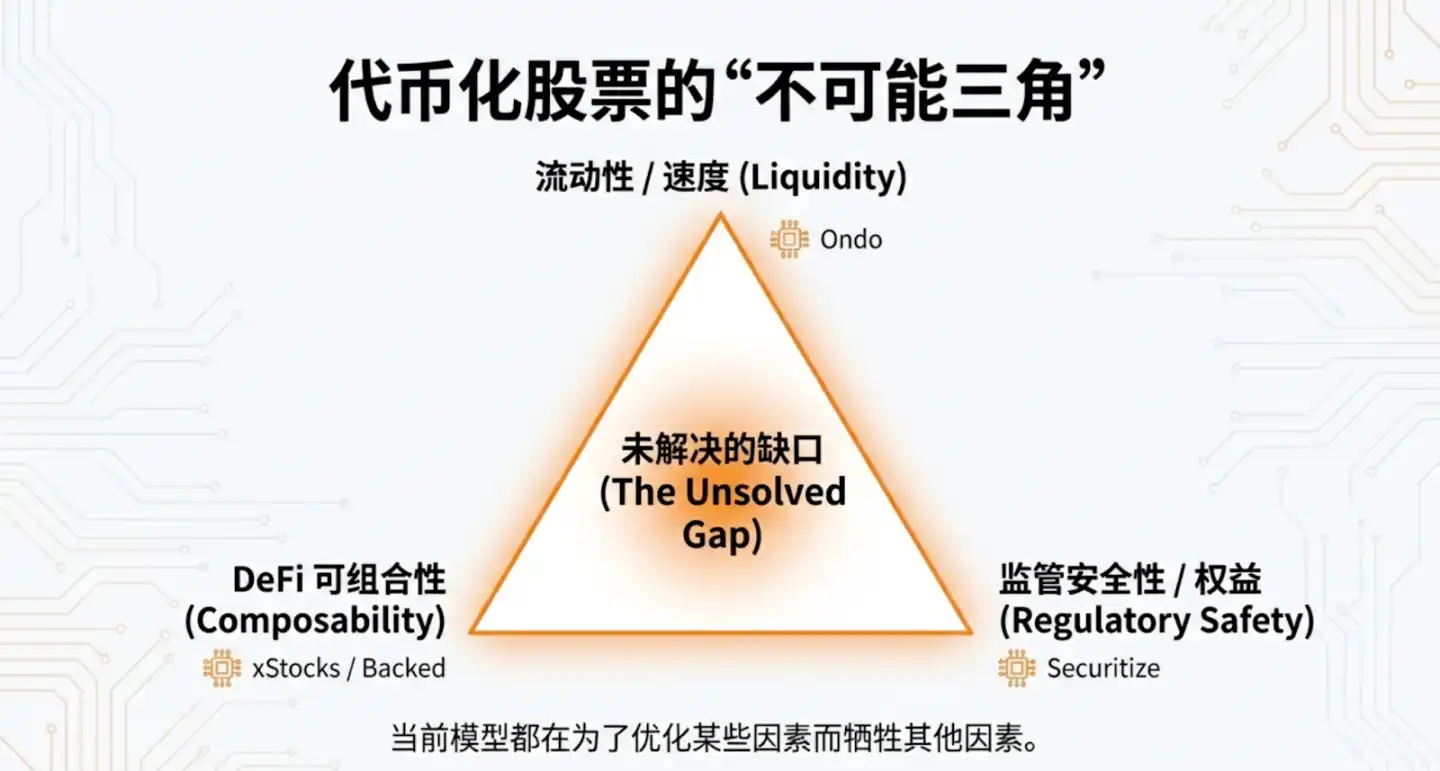
  • Platforms face a fundamental trilemma: they can only optimize two of the following three aspects simultaneously—Liquidity/Speed, Regulatory Security/Shareholder Rights, DeFi Composability.
  • The industry is bifurcating into two paths: Incremental (DTCC integration, increasing efficiency) and Revolutionary (direct on-chain issuance, full disintermediation).
  • Conclusion: The fusion of the $150 trillion global stock market with blockchain infrastructure is no longer just a thesis—it is happening.

1. Market Status Analysis: Deciphering the 'Silent Boom'

The Real World Asset (RWA) sector is undergoing structural transformation, with tokenized stocks emerging as the breakthrough sector of this cycle. The overall RWA ecosystem market cap has surpassed $800 million, growing 30x year-to-date. The integration of traditional equity assets with blockchain infrastructure signifies a fundamental shift in capital market design. This 'silent boom' is not merely an asset migration but a modernization of global liquidity—replacing fragmented traditional systems with a unified, programmable financial layer.

The following core data confirms this leap from experimental to institutional grade:

  • Market Cap Achievement: As of December 2025, the sector's market cap has reached a historic high of approximately $800 million.
  • Liquidity Velocity: Monthly trading volume has surged to $1.8 billion, indicating an active secondary market.
  • Adoption Density: The network currently supports 50,000 monthly active addresses and 130,000 total holding addresses.

This growth trajectory is fundamentally supported by blockchain eliminating the settlement friction and access barriers that have long plagued traditional finance (TradFi).
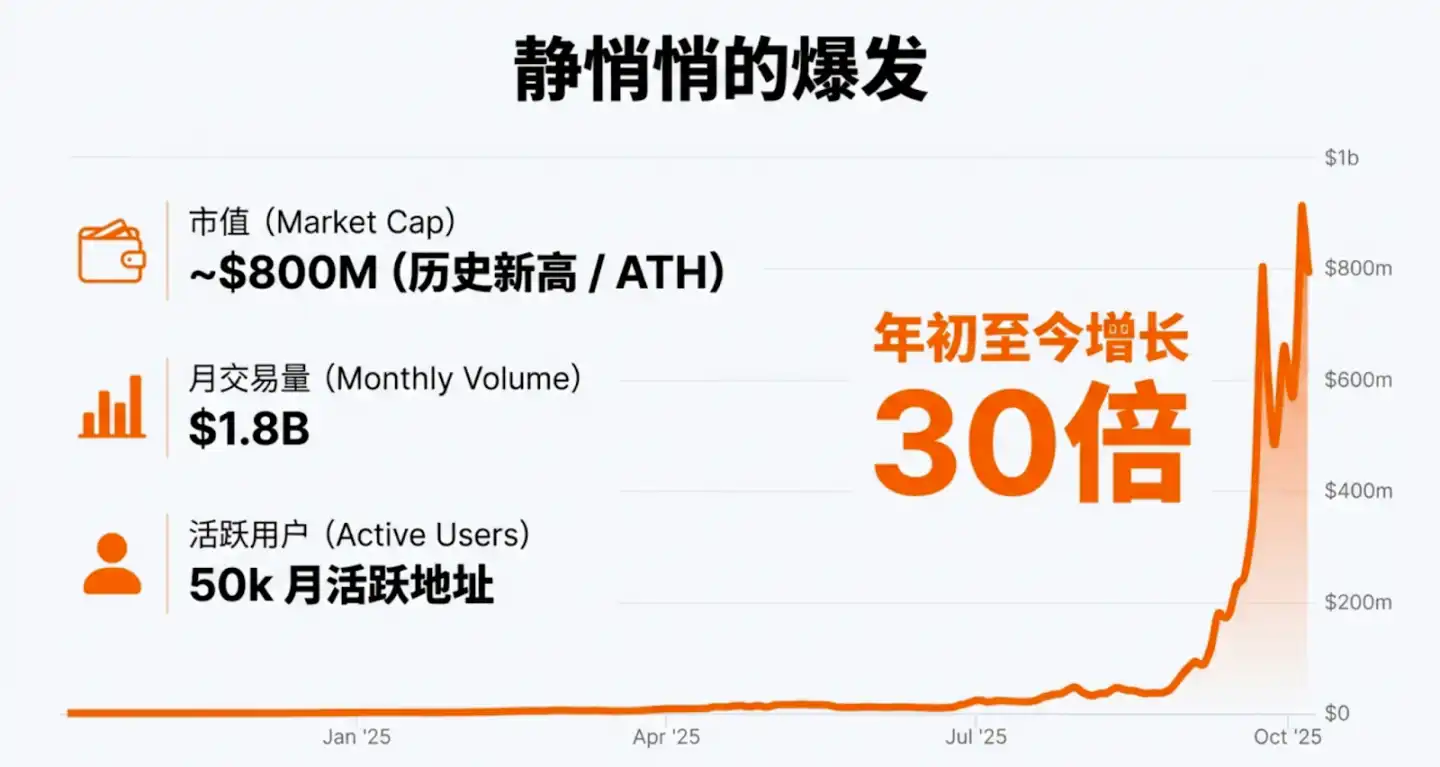
As the capital market's need for settlement efficiency becomes increasingly urgent, how tokenization addresses the chronic problems of TradFi through technological means has become the core of strategic competition in the industry.

2. Strategic Value Drivers: Solving TradFi's Friction Points

Traditional equity markets have long been constrained by the physical boundaries of legacy systems: geographical silos, restricted trading hours, and lengthy settlement cycles. The failure of the T+2 settlement system during the 2021 Robinhood/GME event, which forced brokers to restrict trading due to margin shortfalls, is a classic case study of TradFi's 'efficiency短板' (efficiency shortcoming).

Tokenization offers strategic premium through an 'Efficiency Triple-Threat':

  • 24/7 Trading: Traditional markets operate only 6.5 hours a day. Tokenization eliminates 'opening gap' risk, allowing investors to react in real-time to global macro events.
  • Global Accessibility: Completely breaks down geographical and broker barriers, providing non-US retail investors seamless access to high-demand US stock exposure, achieving 'borderless capital'.
  • Capital Efficiency: Enables T+0 settlement through digital infrastructure, reducing collateral tie-up and operational costs caused by settlement delays.
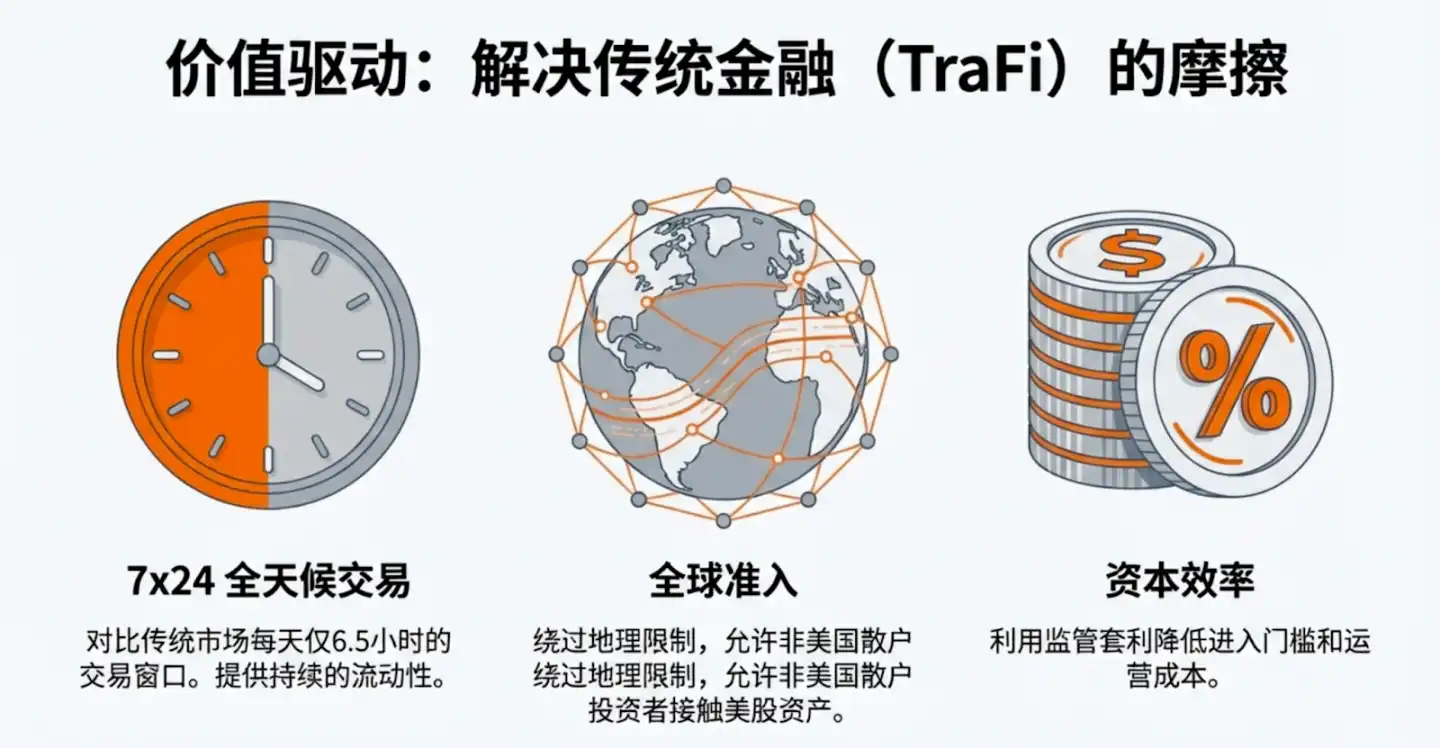
Tokenization is not just an optimization; it bypasses the administrative bottlenecks of traditional securities businesses by providing a global, 24/7 liquidity layer. In an era of 'capital efficiency scarcity', platforms that enable instant settlement and cross-border distribution will hold pricing power.

However, the path to realizing this value driver is not singular; different product architectures determine a platform's long-term moat and risk exposure.

3. Tokenization Architecture Comparative Analysis: Three Core Models

The choice of product architecture is a strategic pivot determining scalability, DeFi composability, and systemic risk characteristics.

Three-Model Framework

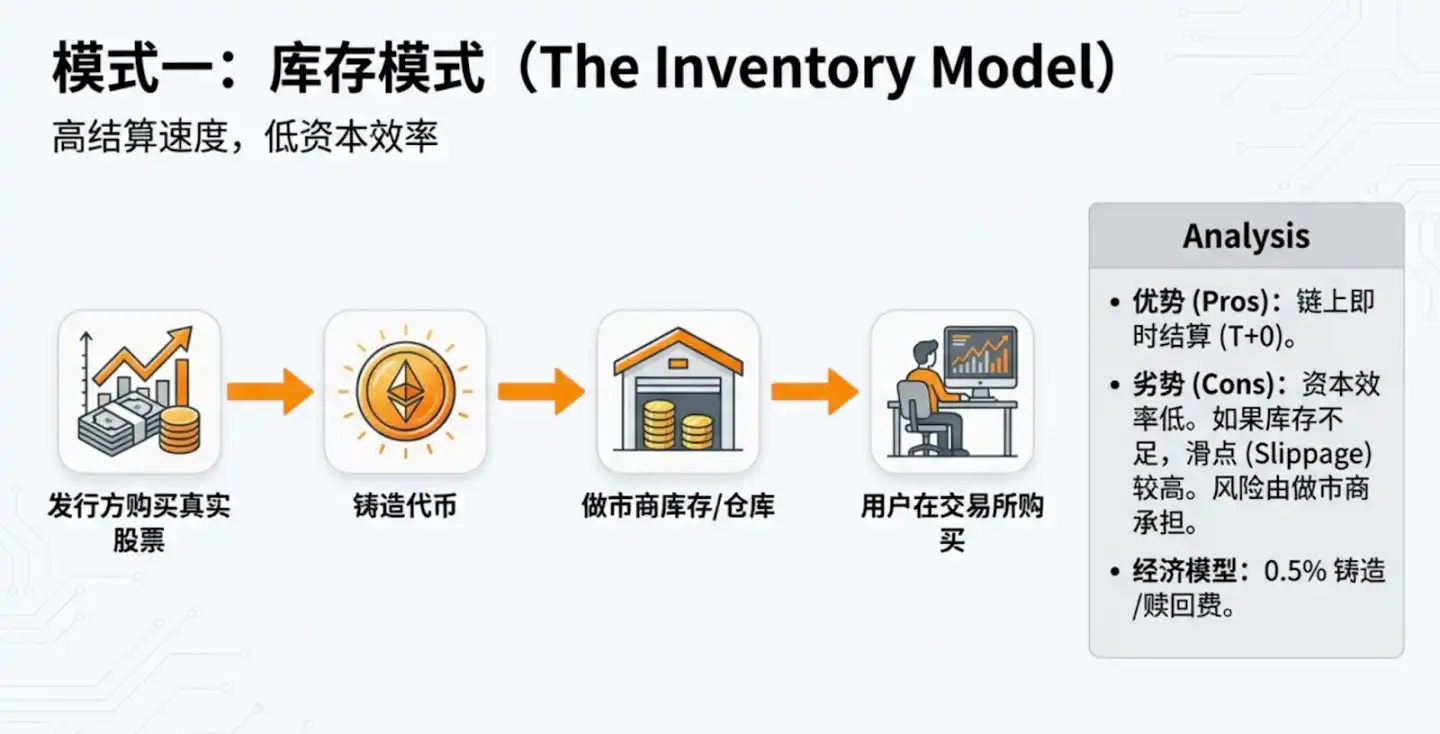
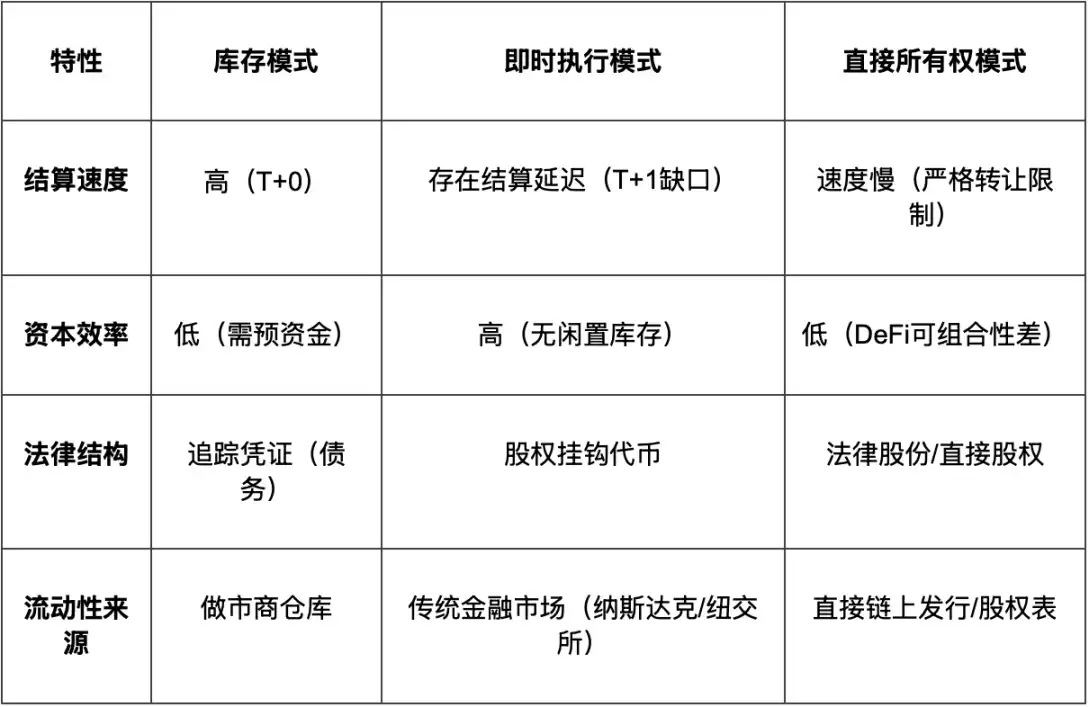
  • Inventory Model (e.g., xStocks, Backed): A 'pre-funded liquidity' solution. The issuer or market maker buys stocks in advance and mints tokens, depositing them in a warehouse ready for sale.
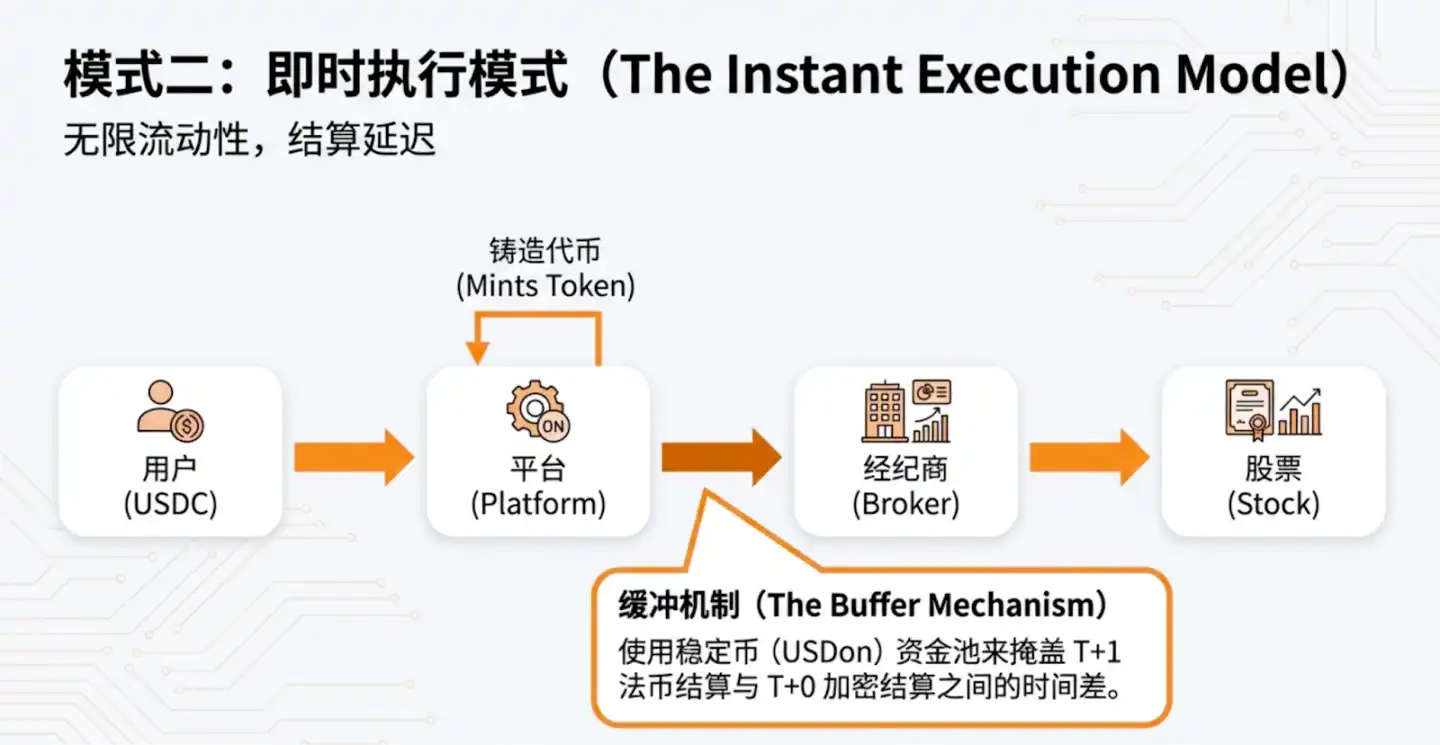
  • Instant Execution Model (e.g., Ondo, CyberAlpha): An 'on-demand liquidity' solution. Stock purchase and token minting are only triggered when a user confirms an order.
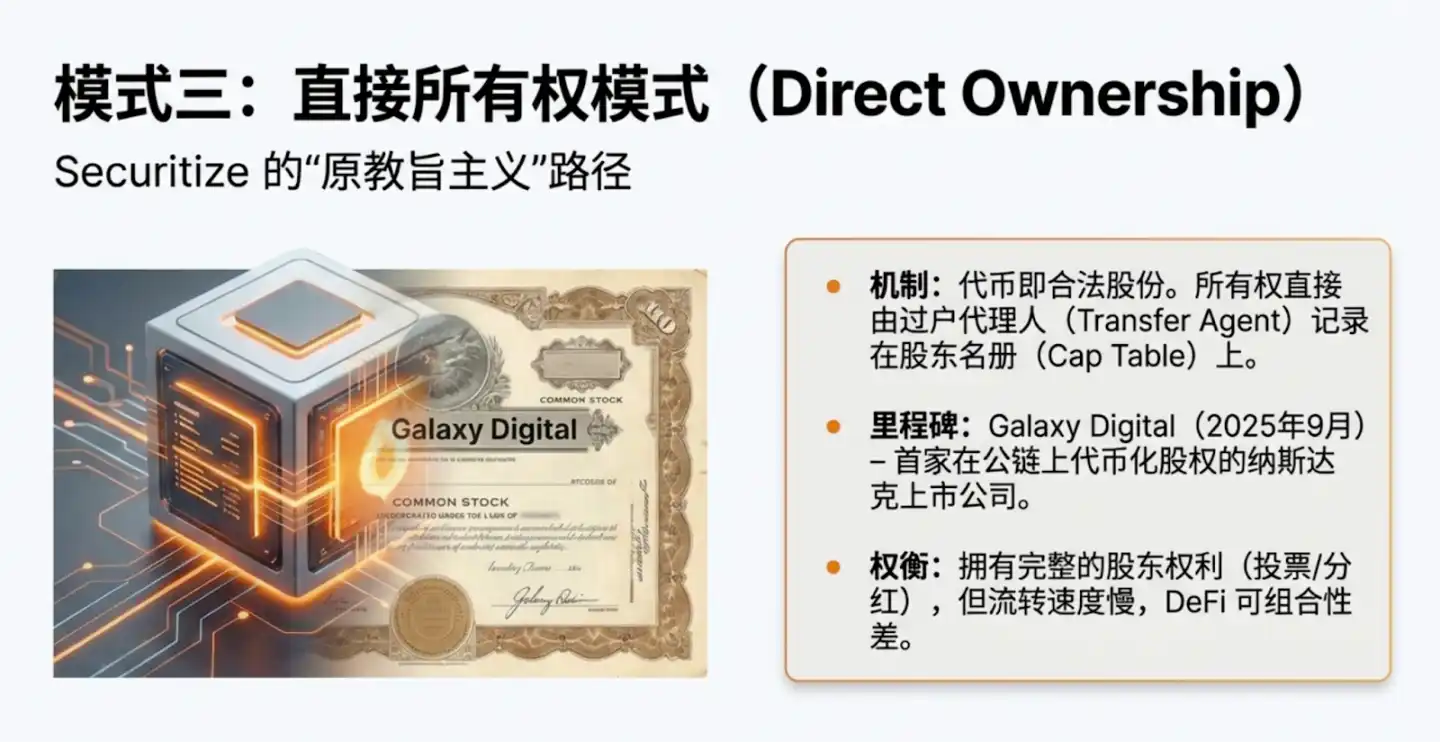
  • Direct Ownership Model (e.g., Securitize, Galaxy Digital): A 'purist' solution where the token *is* the legal share. Ownership is recorded directly on the company's cap table by a transfer agent, granting investors full shareholder rights including voting and dividends, but involves strict transfer restrictions.
Architectural Trade-off Comparison
As trading volumes advance to higher levels, the technical challenge shifts to effectively bridging the gap between traditional and digital settlement cycles.

4. Competitive Landscape: Market Leaders and Challengers

The current competitive landscape shows a clear 'duopoly' and 'strategic differentiation'.
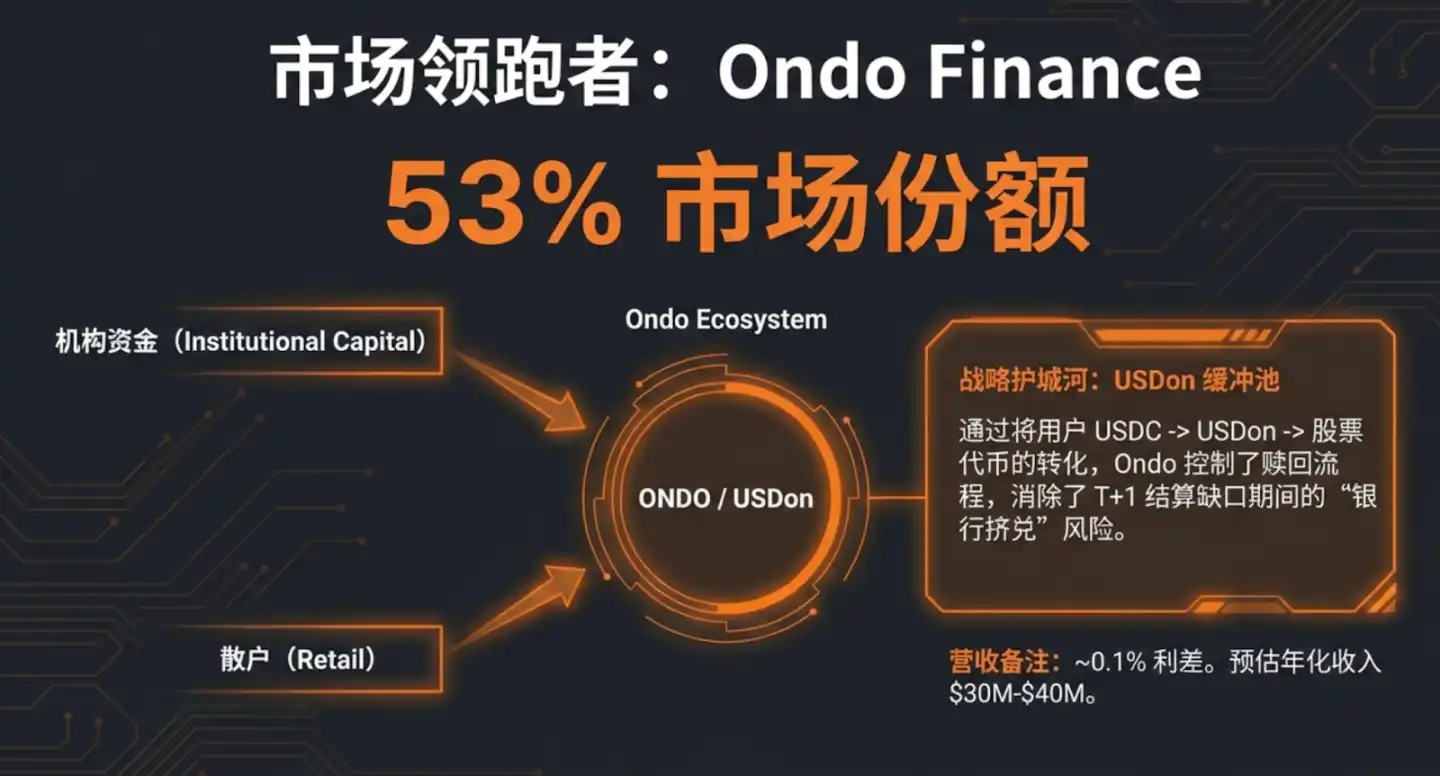
  • Ondo Finance (53% share): The absolute dominator. Its revenue engine relies on a ~0.1% trading fee spread, with estimated annualized revenue of $30M-$40M. Its core moat is a highly sophisticated USDon buffer pool and an extensive network of licensed institutional partners.
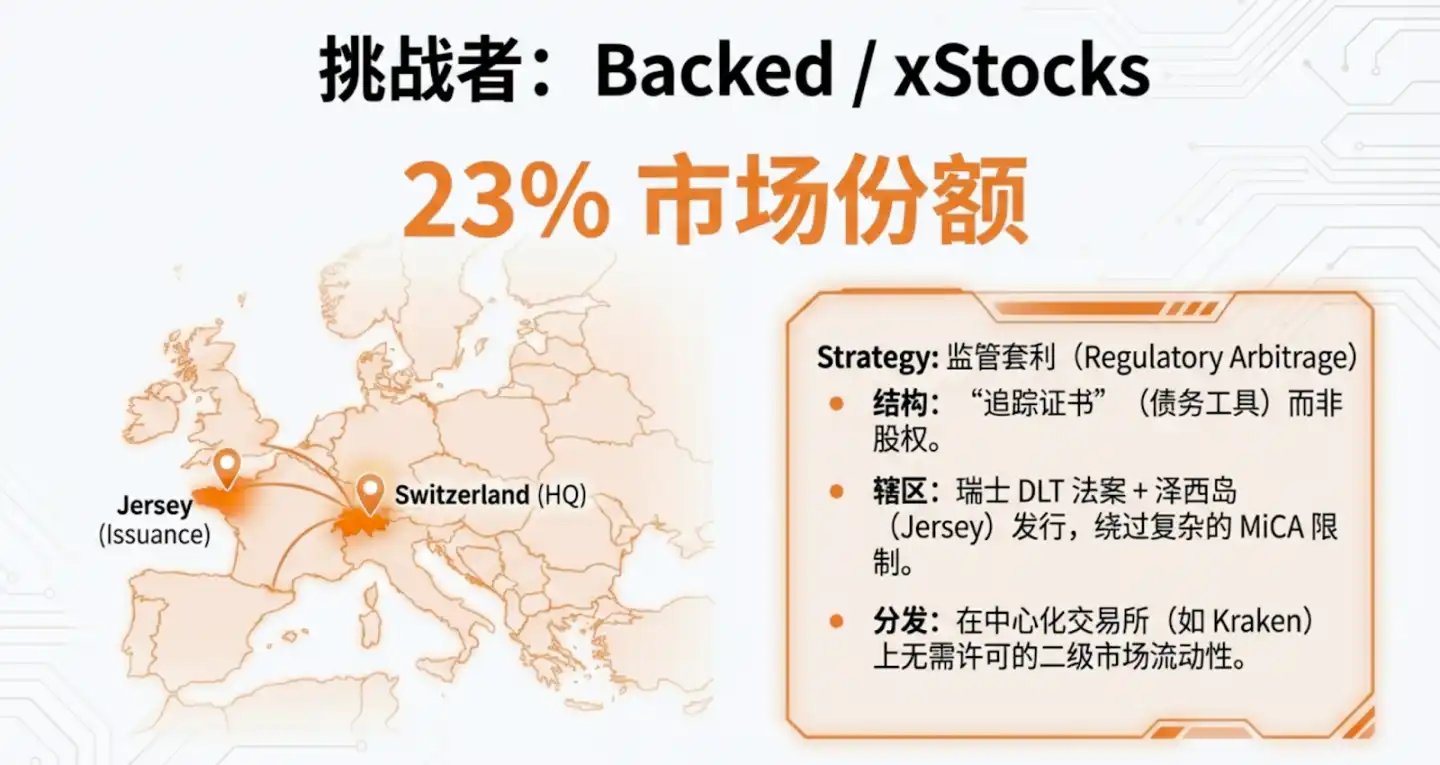
  • Backed / xStocks (23% share): Broke through using 'Legal Alpha'. By structuring products as tracker certificates (debt) under the Swiss DLT Act, they cleverly circumvented MiCA's restrictions on the transfer of direct equity tokens, enabling free flow and composition within the DeFi ecosystem.
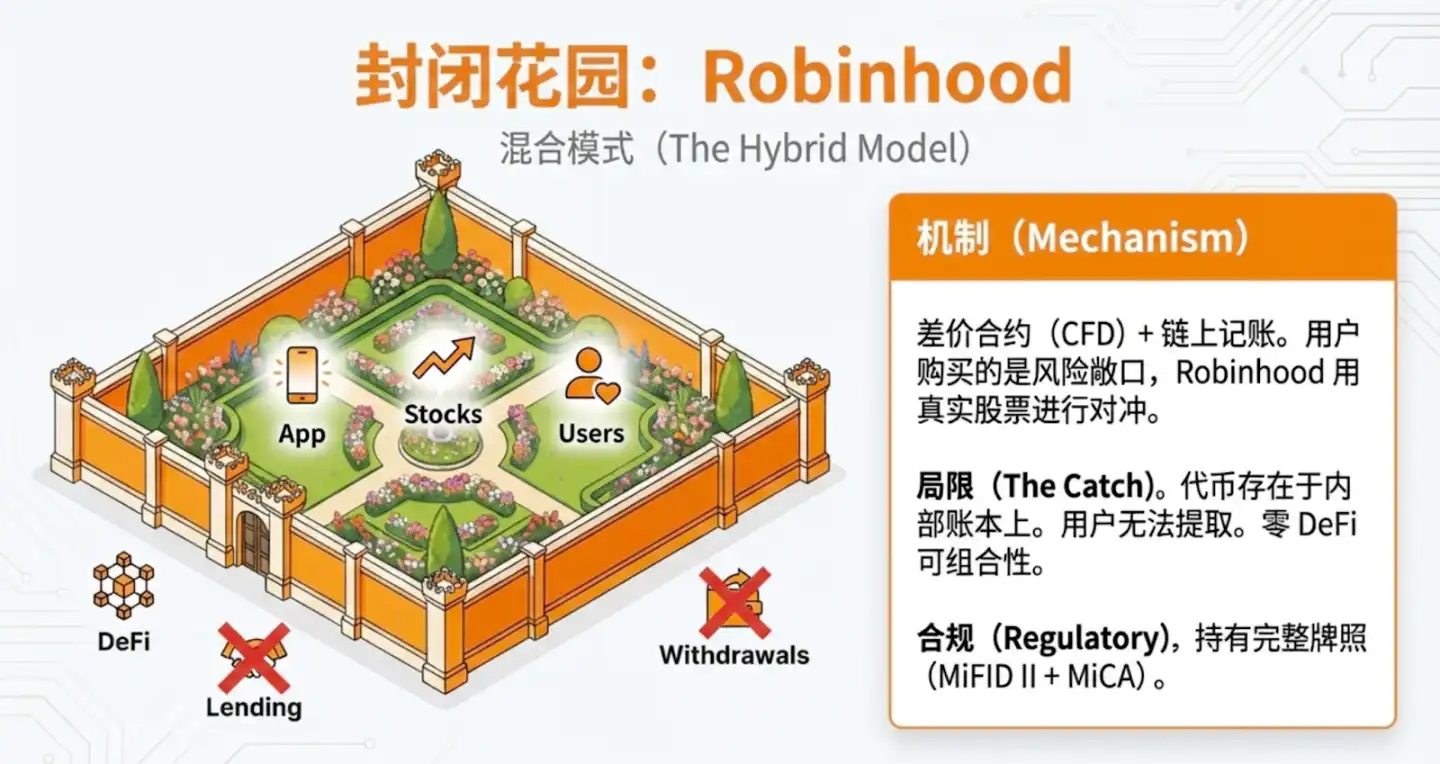
  • Robinhood (Walled Garden): Although it possesses the strongest combination of MiFID II and MiCA licenses, the lack of token extractability creates an isolated ecosystem, missing out on the open premium of DeFi.

'So What?' Level: Competition has shifted from 'user count' to a game of 'regulatory arbitrage' and 'capital efficiency'. Backed sacrificed direct equity rights through its debt structure in exchange for unlimited DeFi interoperability—a precise strategic trade-off.

5. Global Compliance Matrix: Building the Regulatory Moat

In the RWA space, 'license aggregation' is a more formidable moat than technology itself.
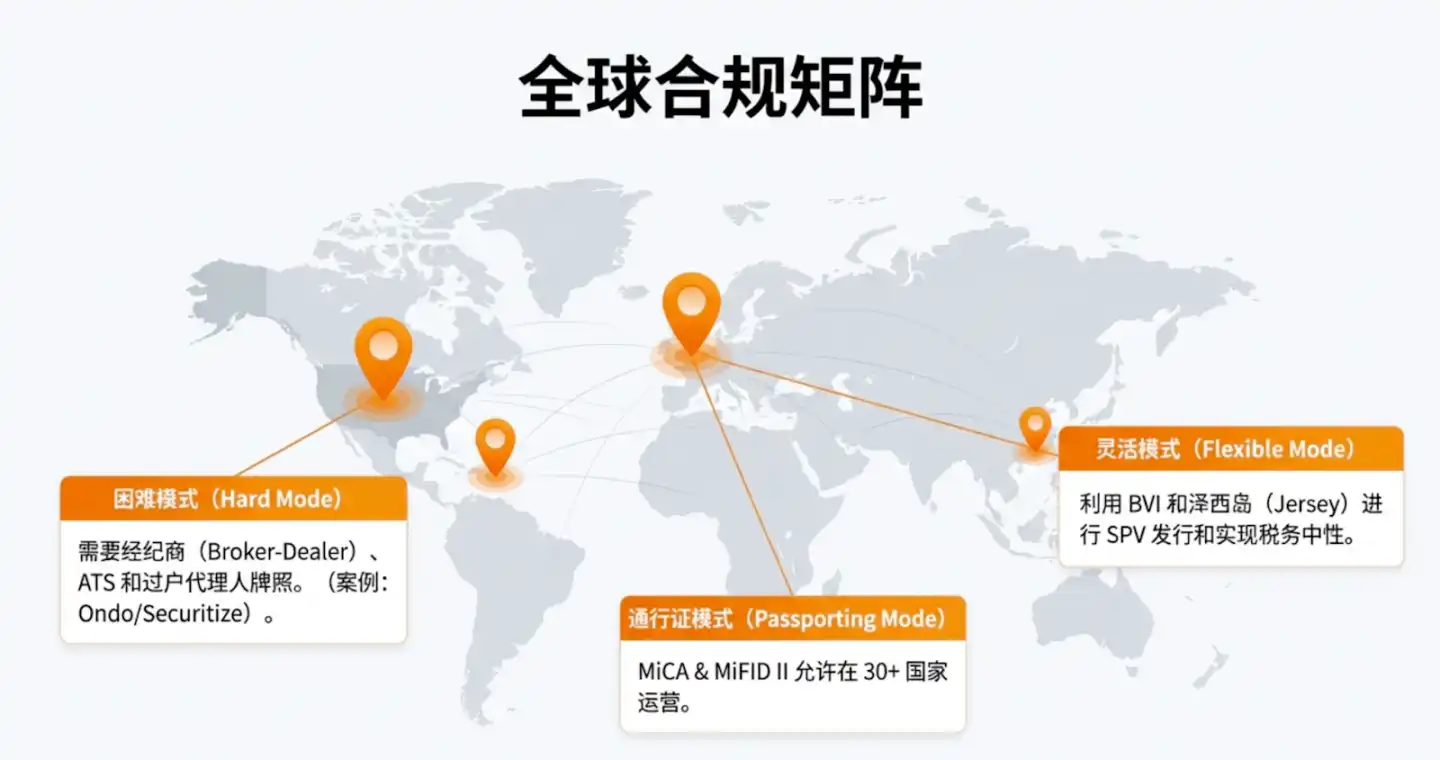
  • US Model (Hard Mode): The cornerstone of success is the 'trident' combination of Broker-Dealer, ATS, and Transfer Agent licenses. Ondo acquired this full suite of capabilities through its acquisition of Oasis Pro, mastering the complete closed loop from onboarding to secondary market matching.
  • EU Model (Passporting Mode): Leveraging the 'passporting' system of MiCA and MiFID II, companies obtaining licenses in Liechtenstein (e.g., Ondo approved by FMA) or Cyprus (e.g., xStocks approved by CySEC) can operate in 30 countries.
  • Specialized Pilots: Securitize, through a DLT pilot license from Spain's CNMV, gained permission to operate as a trading and清算 system, directly challenging the role of traditional CSDs (Central Securities Depositories).

'So What?' Level: Ondo's compliance architecture is a 'masterclass in financial engineering': ensuring tax neutrality through a BVI-based issuing entity, accessing underlying assets through US-licensed entities, achieving bankruptcy remoteness through daily proof of reserves from Ankura Trust, and finally enabling global compliant distribution through **BX Digital (Switzerland)**.

6. Strategic Outlook: Solving the Tokenized Stock 'Impossible Trinity'

The industry must balance the following three elements as it scales:

  • Liquidity / Speed: Exemplified by Ondo, optimized through buffer mechanisms.
  • Regulatory Security / Direct Rights: Exemplified by Securitize, pursuing SEC-compliant underlying direct ownership.
  • DeFi Composability: Exemplified by Backed, achieving on-chain asset flow through debt structures.
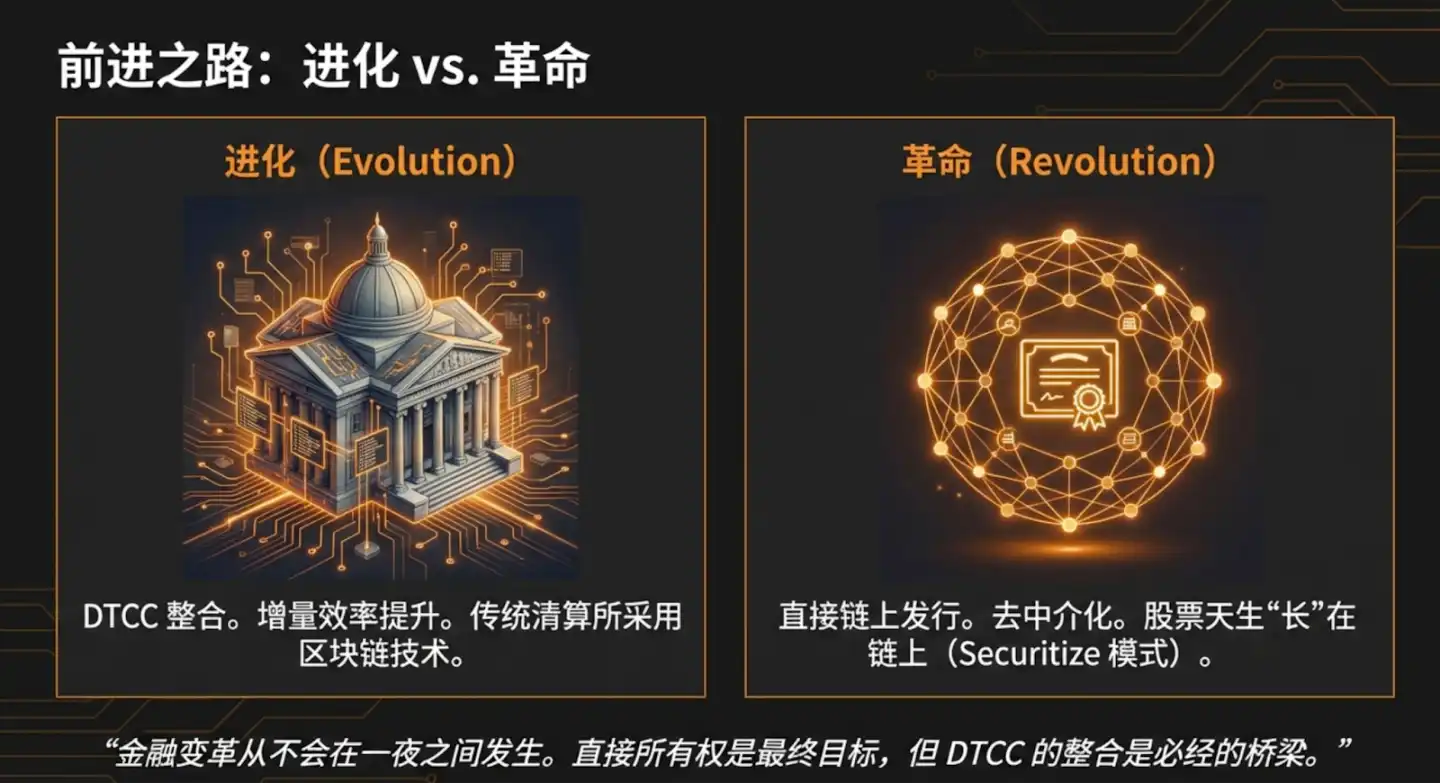
The market is currently bifurcating into two paths:

  • Evolutionary Path: Centered on DTCC integration, providing T+0 efficiency increments for incumbent financial institutions.
  • Revolutionary Path: Native on-chain issuance, exemplified by Securitize/Galaxy Digital, aiming for complete disintermediation.
7. Summary and Core Insights

The migration of the global $150 trillion equity market onto the blockchain is now irreversible.

  • Institutional Maturity: The 30x growth and milestones like Galaxy Digital mark the industry's transition from the conceptual phase into the deep waters of licensed competition.
  • Model Superiority: The Instant Execution model, with its极高的 capital efficiency, has gained an early advantage in the current liquidity war.
  • Licenses as Barriers: Platforms capable of navigating both US underlying asset access (ATS/BD licenses) and global (EU MiCA/Offshore BVI) compliant distribution will build an insurmountable long-term moat.

'Financial transformation is never overnight. Direct ownership is the ultimate goal, but integration and optimization with the DTCC is the necessary bridge to the future.'


Pertanyaan Terkait

QWhat are the three main product architectures in the tokenized stock market, and which one currently leads in capital efficiency?

AThe three main product architectures are: 1) Inventory Model (e.g., xStocks, Backed), 2) Instant Execution Model (e.g., Ondo, CyberAlpha), and 3) Direct Ownership Model (e.g., Securitize). The Instant Execution Model currently leads in capital efficiency.

QWhat is the core value proposition of tokenized stocks that addresses the pain points of traditional finance (TradFi)?

AThe core value proposition is the 'Efficiency Triple-Threat': enabling 24/7 trading, providing global accessibility to bypass geographical and broker restrictions, and achieving near-instant T+0 settlement to improve capital efficiency and eliminate delays.

QAccording to the report, what has become the most difficult competitive barrier to replicate in the tokenized stock sector, and why?

ARegulatory compliance, specifically building a cross-border licensing system across the US, EU, and offshore jurisdictions, has become the most difficult barrier to replicate. It is harder to obtain the necessary licenses (e.g., US broker-dealer, ATS, transfer agent; EU MiCA/MiFID II passports) than to develop the underlying tech.

QWhat fundamental 'trilemma' do tokenized stock platforms face, and what are the three competing elements?

APlatforms face a trilemma where they can only optimize for two of the following three elements at the same time: 1) Liquidity/Speed, 2) Regulatory Security/Direct Shareholder Rights, and 3) DeFi Composability.

QWhich two platforms currently dominate the market share of tokenized stocks, and what are their respective strategies for maintaining leadership?

AOndo Finance dominates with 53% market share, relying on its sophisticated liquidity engineering (USDon buffer pool) and extensive licensed partner network. Backed/xStocks holds 23% market share, leveraging a 'legal alpha' strategy by structuring products as debt under Swiss law to enable superior DeFi composability and regulatory arbitrage.

Bacaan Terkait

Kirim Pesan Bisa Transfer Koin? Telegram Akan 'Suntik' Dompet Kripto untuk 1 Miliar Pengguna Musim Panas Ini

Pendiri Telegram, Pavel Durov, mengumumkan bahwa musim panas ini dompet kripto non-penampung (non-custodial) asli, "Gram wallet", akan dibangun ke dalam semua aplikasi Telegram. Langkah ini menargetkan lebih dari 1 miliar pengguna bulanan, menawarkan transfer aset kripto instan dan tanpa biaya. Dompet baru ini berbeda dari bot @wallet pihak ketiga yang sudah ada, karena dikembangkan langsung oleh Telegram dan pengguna mengontrol kunci pribadi mereka sendiri. Pengumuman tersebut mendorong harga GRAM (sebelumnya Toncoin) naik sekitar 8%. Namun, harga saat ini masih jauh dari titik tertinggi sebelumnya. Keputusan Durov ini adalah bagian dari roadmap "Make TON Great Again" (MTONGA), menandai kembalinya Telegram ke proyek blockchain TON setelah sebelumnya berkonflik dengan SEC pada 2018-2020. Langkah Telegram terjadi di tengah persaingan ketat fitur pembayaran di aplikasi super. X Money pimpinan Elon Musk fokus pada rute fiat yang sesuai regulasi, sementara Meta mengeksplorasi pembayaran stablecoin. Telegram memilih jalur asli kripto dengan dompet non-penampung, memanfaatkan basis pengguna besar dan kedekatan alami dengan komunitas kripto. Namun, janji "tanpa biaya" dan detail teknis lainnya, seperti dukungan aset selain GRAM serta strategi edukasi pengguna baru, masih belum diungkap. Jadwal peluncuran yang tepat juga hanya disebut "musim panas ini".

marsbit19m yang lalu

Kirim Pesan Bisa Transfer Koin? Telegram Akan 'Suntik' Dompet Kripto untuk 1 Miliar Pengguna Musim Panas Ini

marsbit19m yang lalu

7 Bulan Setelah Runtuhnya Huiwang, Lanskap Platform Jaminan Asia Tenggara Menghadapi Reshuffle Besar

Setelah platform garansi terkenal Asia Tenggara, "Huiwang Pay", runtuh pada Desember tahun lalu, pasar menyaksikan perubahan besar dan kemunculan platform-platform baru yang mengisi kekosongan. Platform-platform seperti XinBi, JinBei/JinBo, DaLi/TianCheng, Fulilai, dan LingHang kini beroperasi di wilayah gelap, terutama melayani industri abu-abu dan ilegal. Data dari Bitrace menunjukkan bahwa pendapatan platform XinBi telah melebihi 1,6 miliar USDT. Sementara itu, platform LingHang secara terbuka menyediakan layanan garansi untuk transaksi yang terkait dengan perdagangan manusia. JinBei, yang terkait erat dengan bisnis kasino, telah berganti nama menjadi JinBo. DaLi mewarisi banyak bisnis dari platform "Tudou" yang sebelumnya terkait dengan Huiwang. Adapun Fulilai terkait dengan kelompok kriminal keluarga Liu di Myanmar Utara. Meskipun platform-platform ini sering dijuluki "Alipay Asia Tenggara", fungsi sebenarnya jauh dari itu. Seperti yang ditunjukkan dalam laporan Elliptic, pasar garansi Huiwang telah menangani lebih dari 310 miliar dolar AS, menjadikannya pasar ilegal online terbesar yang pernah ada, yang terutama melayani pencucian uang, penipuan, perjudian, dan perdagangan manusia. Kebangkitan platform-platform baru ini mencerminkan ekosistem keuangan bawah tanah yang terus beradaptasi dan berkembang di Asia Tenggara, menunggu tindakan penegakan hukum lebih lanjut.

Odaily星球日报31m yang lalu

7 Bulan Setelah Runtuhnya Huiwang, Lanskap Platform Jaminan Asia Tenggara Menghadapi Reshuffle Besar

Odaily星球日报31m yang lalu

Cahaya Tak Semenarik Dulu: Apa yang Sedang Dialami oleh VC Kripto?

Krisis Dana Ventura Kripto Khusus: Pergeseran Menuju Infrastruktur dan Masa Depan yang Terpolarisasi Dana ventura khusus kripto, seperti Paradigm yang baru saja mengalihkan fokus ke AI dan robotika, sedang menghadapi tantangan eksistensial. Artikel ini membahas apakah dana semacam ini sedang menuju kepunahan, dengan menarik paralel dari siklus hidup dana khusus sebelumnya di sektor energi bersih dan SPAC. Inti masalahnya adalah runtuhnya *information advantage* (keunggulan informasi) yang dulunya dimiliki dana khusus. Saat teknologi kripto matang dan diadopsi raksasa tradisional seperti Stripe dan BlackRock, pengetahuan mendalam tentang MEV atau ekonomi validator tidak lagi menjadi penghalang masuk. Dana generalis besar (seperti a16z, Sequoia) kini dapat menilai proyek kripto dengan logika yang sama seperti fintech biasa. Industri ventura mengalami polarisasi "barbell": di satu ujung, platform besar multifokus; di ujung lain, dana kecil niche yang bisa bertahan dengan satu "home run". Dana khusus kripto ukuran menengah terjepit di "zona kematian", karena ukurannya terlalu besar untuk bergantung pada investasi seed kecil, namun terlalu kecil untuk bersaing di putaran growth. Ini memaksa banyak dana, seperti Framework Ventures, untuk melebarkan mandat investasi. Bahkan dana yang tetap berlabel "kripto" seperti Dragonfly dan a16z kini mendefinisikan ulang fokus mereka terutama pada infrastruktur keuangan berbasis blockchain (stablecoin, pasar prediksi), yang juga diminati dana generalis. Perubahan ini didorong oleh tekanan dari Limited Partner (LP) yang haus akan hasil di tengah kinerja buruk portofolio kripto mereka, dan teralihkan oleh daya tarik AI yang menyedot 70% modal ventura. Implikasi bagi startup kripto adalah tantangan baru: bersaing dengan proyek AI untuk mendapatkan perhatian di dana generalis, dan kehilangan sponsor jangka panjang untuk riset infrastruktur dasar yang kurang komersial (seperti yang pernah didanai Paradigm). Kesimpulannya, "dana ventura kripto" sebagai kategori mandiri mungkin akan usang, mirip dengan "dana internet". Kripto berevolusi menjadi infrastruktur dasar. Masa depan akan mengikuti pola barbell: dana besar multifokus mendanai pertumbuhan, sementara dana kecil khusus akan muncul untuk niche eksperimental baru (seperti tokenisasi). Dana ukuran menengah yang hanya fokus pada kripto akan menghadapi kesulitan bertahan.

Foresight News51m yang lalu

Cahaya Tak Semenarik Dulu: Apa yang Sedang Dialami oleh VC Kripto?

Foresight News51m yang lalu

Ketika Konsensus Semakin Cepat, Apa yang Ditaruhkan oleh Investor Muda?

Dengan kemajuan teknologi yang semakin cepat, terutama di bidang AI, robotika, dirgantara, dan komputasi kuantum, para investor muda berhadapan dengan perubahan logika investasi. Mereka tidak lagi cukup mengandalkan model keuangan dan pengalaman industri lama, tetapi juga harus memahami bahasa teknologi, menerima rute yang belum konvergen, dan membuat keputusan sebelum konsensus terbentuk. WAIC merilis daftar "Alpha Youth Investment Leaders," yang mencerminkan beberapa tren utama dalam investasi teknologi saat ini. Tren pertama adalah pergeseran AI dari layar ke dunia fisik. Perhatian kini beralih ke perangkat ujung, robot, mobil, sistem industri, dan infrastruktur luar angkasa. Meskipun robot humanoid dan kecerdasan emboddied menarik perhatian, fokus utama adalah kemampuan pengiriman dan ROI yang nyata, bukan hanya demonstrasi yang mengesankan. Kecerdasan ujung menjadi kunci, dengan perangkat keras AI yang membangun hubungan data dan layanan berkelanjutan dengan pengguna. Tren kedua adalah beralihnya fokus kompetisi dari model dasar ke "roda terbang cerdas." Manfaat model besar belum sepenuhnya terealisasi dalam merekonstruksi produktivitas. Nilai jangka panjang terletak pada perusahaan yang dapat mengintegrasikan kemampuan model ke dalam alur kerja nyata, membentuk siklus tertutup data, pelatihan, dan umpan balik pengguna yang saling memperkuat (roda terbang cerdas). Ini menciptakan nilai yang bertahan melampaui sekadar pembaruan model. Tren ketiga adalah munculnya teknologi dasar baru untuk mengatasi hambatan data. Ketika data manusia yang berkualitas tinggi menjadi langka, pembelajaran penguatan, permainan mandiri, dan model dasar ilmiah menjadi arah yang diperhatikan. Model-model ini bertujuan untuk membangun kemampuan yang lebih mendasar dan universal dalam bidang seperti ilmu kehidupan dan material, menggunakan data dan umpan balik eksperimen khusus untuk mendorong pertumbuhan kemampuan AI selanjutnya. Tren keempat adalah perlunya modal yang sabar untuk teknologi keras. Di bidang seperti dirgantara komersial, komputasi kuantum, dan energi canggih, siklus validasi lebih panjang dan penuh ketidakpastian teknis. Investasi di bidang ini memerlukan pemahaman awal tentang kemampuan teknik dan ketahanan tim, dengan harapan pengembalian dalam skala waktu yang lebih panjang, sambil mendorong perkembangan industri dan akumulasi kemampuan dasar. Peran investor muda adalah memahami teknologi lebih awal, masuk lebih dalam ke industri, dan membuat pilihan jangka panjang di tengah ketidakpastian.

marsbit1j yang lalu

Ketika Konsensus Semakin Cepat, Apa yang Ditaruhkan oleh Investor Muda?

marsbit1j yang lalu

Trading

Spot
活动图片




