The Once-Niche Field of Philosophy Becomes a Hot Topic in "Governing" AI

marsbitDipublikasikan tanggal 2026-07-20Terakhir diperbarui pada 2026-07-20

Abstrak

"Cold" Philosophy Becomes Hot in Taming AI This article explores the rising prominence of philosophical inquiry at the World Artificial Intelligence Conference (WAIC), highlighting a shift from purely technical discussions to deeper questions about AI's nature and impact. A key theme is the foundational question of intelligence itself. Philosopher Sun Ning argued that true, grounded intelligence requires embodiment, environment, interaction with others, and historical context, summarized as "Before intelligence, there is a world. Before mind, there is relationship." The forum then examined AI's expanding role in science. Researchers presented AI systems that can autonomously generate scientific papers and mathematical proofs, raising critical questions about evaluation, attribution of discovery, and potential misuse. The proposed solution is a collaborative framework: AI expands the search space, humans define value and provide rigorous constraints, and machines handle verification. As AI models begin to simulate human societies and behaviors for research, new risks emerge. Simulations can inherit and amplify societal biases from their training data, and their outputs risk being mistaken for genuine social signals. This necessitates robust governance focused on auditability, bias correction, and clear human oversight—ensuring people retain intervention, correction, and explanation rights ("human-in-the-loop"). The discussion extended to industry, where AI integrates with...

Who would have thought that philosophy, a once niche major, would become a hot topic in the current AI scene.

This was our unexpected discovery while browsing WAIC this year – the philosophical content was surprisingly high.

For example, at the parallel session “Mind and Intelligence · Youth Ecology Forum” of the WAIC Scientific Intelligence Open Forum, the first speaker was Sun Ning, a professor from the School of Philosophy at Fudan University. In the main forum discussion “Original Innovation in the AI-Native Era,” Sun Xiangchen, another professor from the School of Philosophy at Fudan University, also joined the panel for a summit dialogue.

Coincidentally, during WAIC, the “2026 Blue Book on Intelligent Development in Humanities and Social Sciences” released by the National Development and Intelligent Governance Comprehensive Laboratory of Fudan University brought deep thinking, research credibility, and AI governance into the spotlight.

But to be fair, this seemingly sudden wave of philosophical interest actually has a clear trajectory.

A few years ago at AI conferences, people mostly talked about parameters, computing power, and leaderboards. Now, AI can write papers, perform mathematical proofs, generate protein conformations, and simulate societies with a group of agents.

While AI capabilities are advancing triumphantly, the ensuing problems are becoming increasingly philosophical:

  • Does a model's ability to answer questions fluently mean it truly understands?
  • If AI can autonomously discover knowledge, does it count as a new scientist?
  • If AI discovers laws that humans cannot explain but can be verified experimentally, should we believe them?

In his speech titled “Before Intelligence, There is a World,” Sun Ning brought the questions back to the source.

As early as the 1990s, cognitive scientist Stevan Harnad proposed the Symbol Grounding Problem, questioning how a symbol system acquires true meaning through perception and interaction. Around the same time, robotics engineer Rodney Brooks proposed the Physical Grounding Hypothesis, leaving behind an influential statement—the world is its own best model.
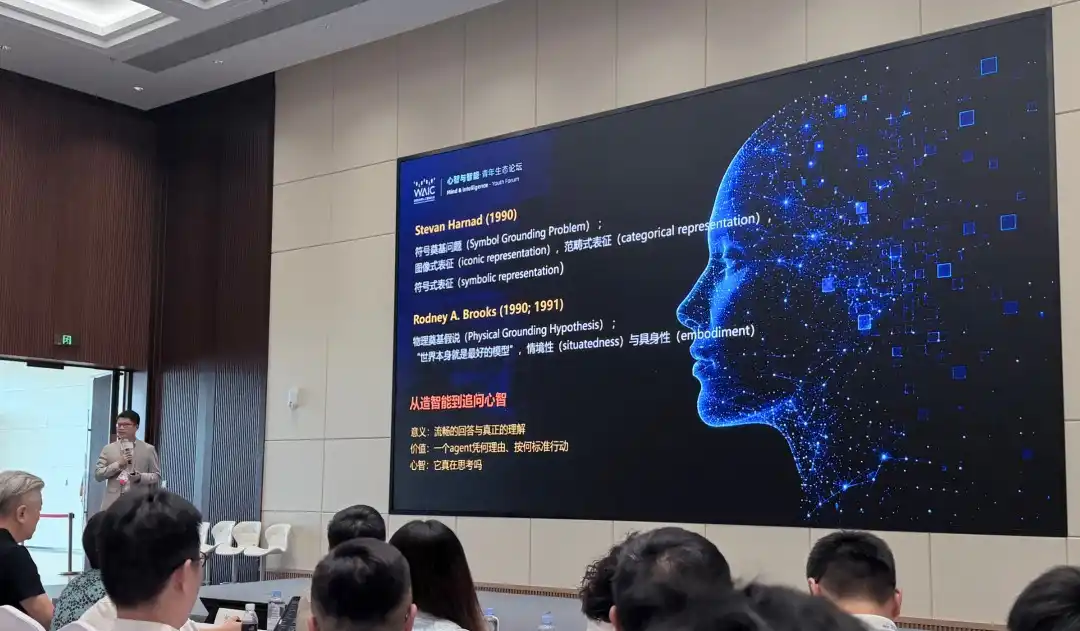
Following this line of thought, Sun Ning proposed that a kind of intelligence deeply rooted in the world requires at least a body, an environment, others, and history. The body gives action a cost, the environment provides feedback, others bring norms, and history allows failures to accumulate into experience.

He summarized it in two sentences:

Before intelligence, there is a world. Before mind, there is relationship.

This also set the tone for the day's discussions.

This Youth Forum was jointly organized by the National Development and Intelligent Governance Comprehensive Laboratory of Fudan University, Shanghai AI Lab, the School of Philosophy at Fudan University, Qingpu Fudan Future Technology Research Institute, and Datawhale.

The stage featured young scientists, philosophers, social scientists, and entrepreneurs. Conversations ranged from self-evolving models to mathematical proofs, from protein dynamics to social simulations, and finally settled on governance and industry.

Issues seemingly scattered across different disciplines were thus strung together.

AI Starts Doing Science Itself

Just after philosophers questioned “what is intelligence,” Chen Yongchao, founder of Chaoyan Intelligence, raised a more specific question—Can AI become a new scientist?
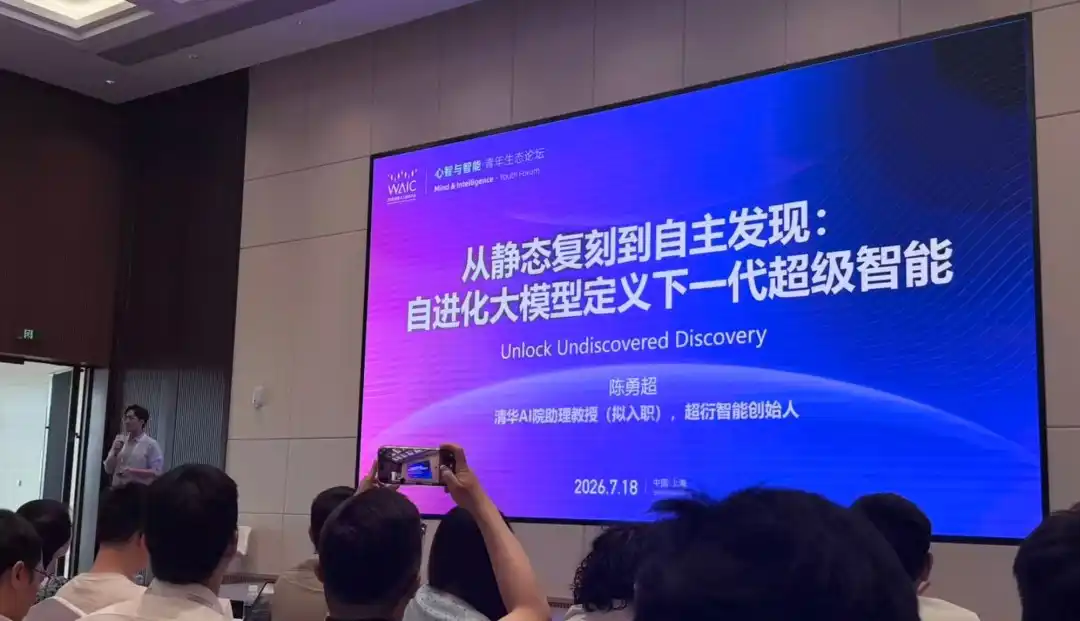
Past large models mainly learned existing human knowledge from internet data. The self-evolving models Chen Yongchao described aim to engage in real-world tasks and continuously learn from the research process and environmental feedback.

Specifically, the model can generate its own ideas, write code, run experiments, analyze data, and then incorporate the trajectories of successes and failures to adjust data, the model, and the Harness.

Chen Yongchao also showcased some eye-catching results.

The Apex Search developed by his team generated 34 papers, submitted to academic peer-review systems like ACL and ARR. According to results disclosed on-site, about 10 had the chance to enter Findings or the main conference, with two papers scoring 3.67, higher than about 95% of human submissions.
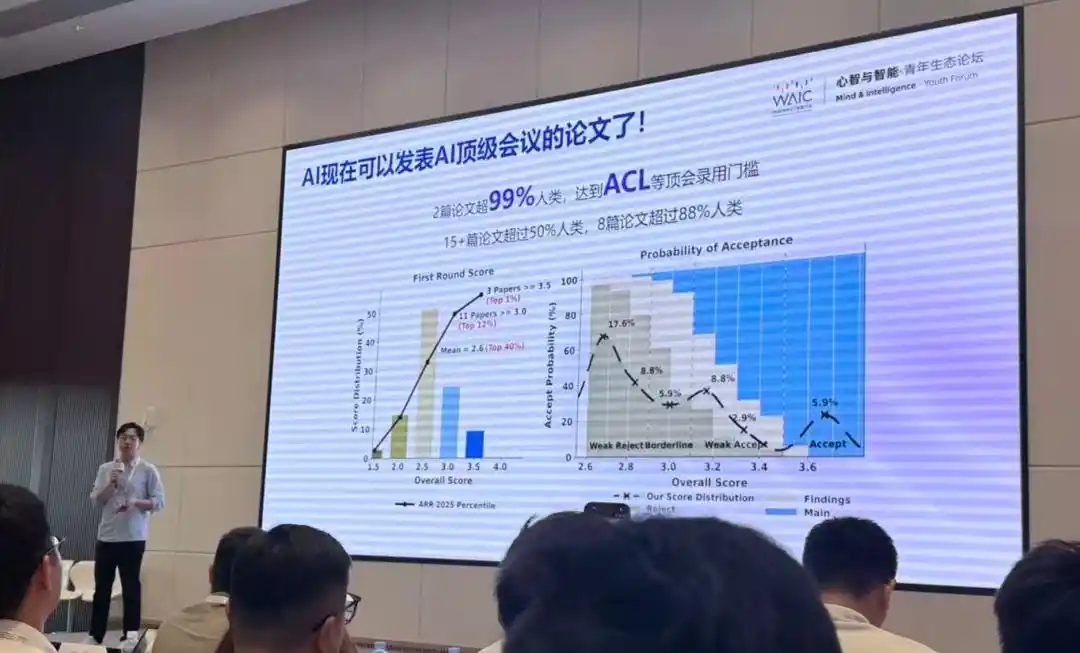
Some peer reviews even gave comments like “the first study in the field,” “rigorous experiments,” and “addresses key issues.”

In other words, AI-generated research results could already pass the first round of scrutiny by human reviewers.

But problems followed.

In the later “Changes in Society” panel, Wei Zhongyu, a professor at the School of Data Science, Fudan University, raised the question: if AI generates and submits dozens of papers at once, and a few receive high scores, how should we judge its research capabilities? Does this mean the system's research ability has reached top conference publication level, or has it merely found weak points in the existing peer-review mechanism?
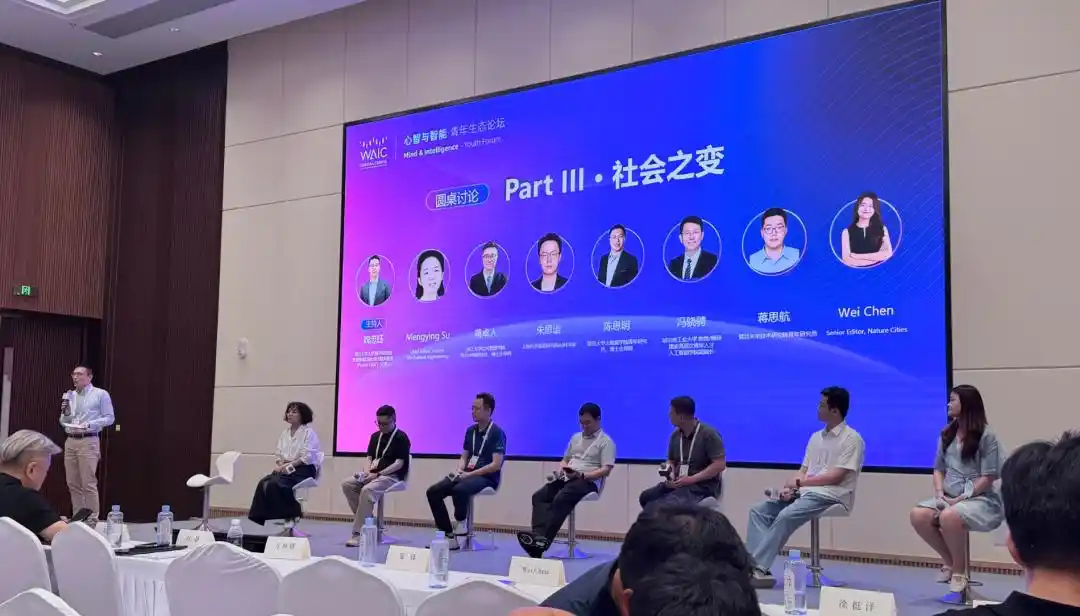
As papers are generated faster and faster, evaluation may become more difficult than generation itself.

Chen Yongchao himself left a series of questions. Can AI produce a breakthrough like Transformer? How to evaluate massive scientific discoveries? Who owns AI research outcomes? If the system is used for harmful research, how should responsibility be allocated?

Next on stage, Wang Tiandong, a tenure-track associate professor at the Shanghai Center for Mathematical Sciences, Fudan University, offered a clearer division of labor between humans and machines.
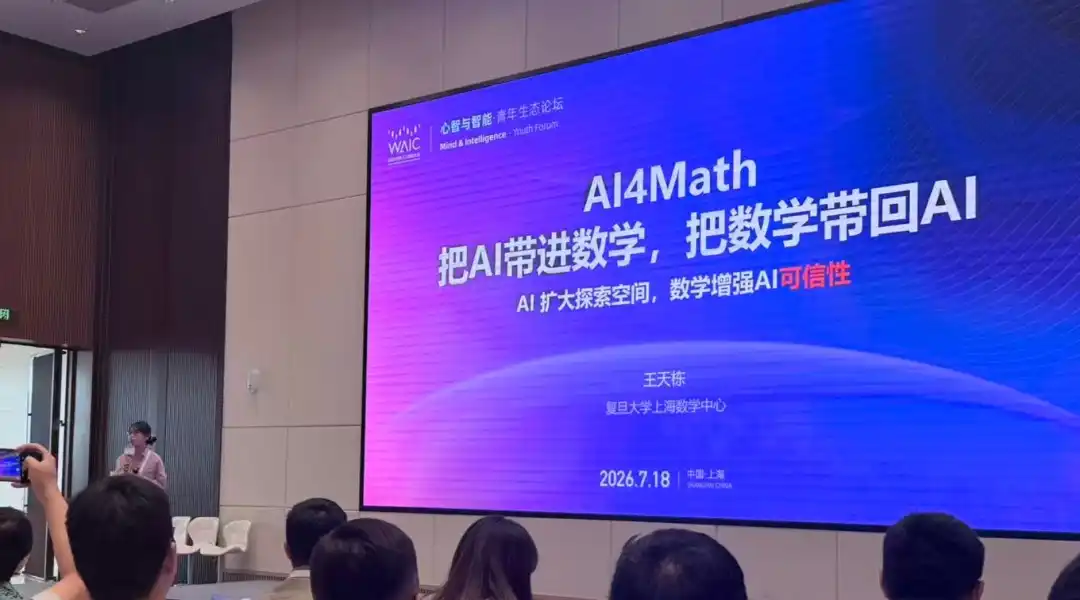
AI excels at retrieval, summarization, finding special and counterexamples, and generating dozens of candidate proof paths simultaneously. Mathematicians are responsible for judging the importance of problems, whether conjectures are worth studying, and applying rigorous concepts and structures to constrain results. Finally, machine verification is added to check for missing steps in reasoning or errors in calculations.

Simply put:

AI expands the search space, humans define value, and machines are responsible for verification.

In this process, mathematics can provide structural constraints, formal verification, error analysis, and applicability boundaries for AI. Trustworthiness does not mean never making mistakes; a more realistic standard is that errors can be discovered, risks can be defined, and conclusions can withstand review.

Subsequently, Yang Zixiong, an AI scientist at the Shanghai Institute for Science and Technology Artificial Intelligence, brought the trustworthiness issue into the more complex world of life.
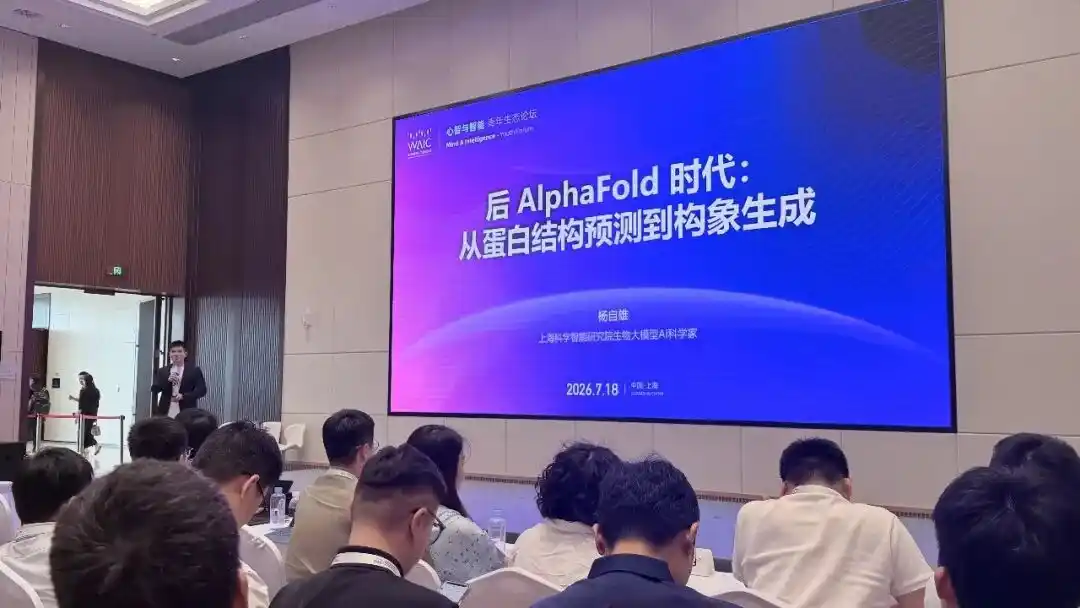
AlphaFold's core solution infers highly probable static structures from sequences. But biological molecules like proteins and RNA are always in motion, with many functions dependent on conformational distributions, state transitions, and timescales.

Therefore, the research goal in the post-AlphaFold era has shifted from “predicting a structure” to “generating a dynamic trajectory.”

This means the model must cover rare but important conformations, maintain structural stability over long generation times, and satisfy thermodynamics, kinetics, and physical laws. While static structures have accumulated vast data, dynamic molecular data is very limited, and related evaluation systems still need improvement.

From mathematical proofs to protein dynamics, AI can indeed explore faster and more broadly. But once it comes to effective scientific discovery, evidence, experiments, and real-world feedback are all indispensable.

If mathematics and life sciences have relatively clear verification paths, things get more complicated when AI starts simulating humans and society.

When Intelligence Enters Society, Governance Can’t Lag Behind

Qu Jingjing, a young scientist at the Shanghai AI Lab, researches precisely the intersection of AI and social sciences.
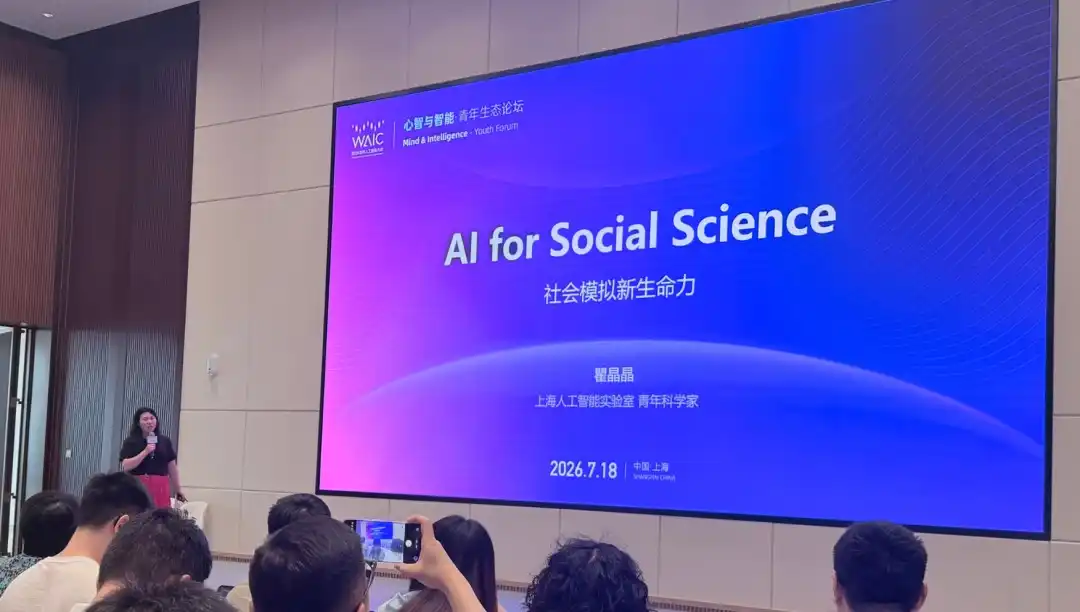
In her view, social sciences are a core foundation for AI development. Alan Turing's research on “whether machines can think” was published in the philosophy journal Mind. Herbert A. Simon proposed the theory of bounded rationality, co-founded the physical symbol system hypothesis with Allen Newell, initiating symbolic AI. Geoffrey Hinton combined psychology and cognitive science to develop neural networks simulating the human brain, paving the way for today's large models.

Now, this relationship is running in reverse, with AI bringing new experimental methods to the social sciences. However, as AGI develops socially and at scale, a core challenge remains: in large-scale, complex social evolutionary games, it's difficult to balance logical consistency with the credibility of experimental results.

Qu Jingjing showcased the social simulation platform Epitome. In terms of high-throughput efficiency, the platform can simulate thousands of virtual samples with one click, compressing a decade of social evolution into 14 hours. Researchers can freely adjust variables like intervention policies and group relationships to quickly observe their long-term social impacts.

This method is particularly suitable for experiments that are difficult to conduct directly in the real world.

For example, how to simulate a child growing from third to fifth grade? The model must reflect knowledge changes and simulate psychological, behavioral, and social relationships. Researchers also want to test different education policies in this virtual environment to observe which methods benefit child development.

While the idea is attractive, risks are also embedded.

After all, a large model can simulate an expert but may not accurately simulate a child in a specific family, region, and social context. Do the attitudes displayed by virtual roles come from real social patterns or stereotypes in the training data?

In the “Changes in Society” panel, Jiang Zhuoren, a Hundred-Talent-Plan researcher and doctoral supervisor at the School of Public Administration, Zhejiang University, shared a set of more cautionary data.

In a cross-national trust study, the correlation coefficient of data generated by large models at the national mean level could reach over 90%. But when entering regression analysis, the significance coverage dropped to 34%–37%; when researchers tried to recover country types using this data, the results were close to random.

In other words, the model looks very much like real society at a macro level, but once entering specific populations and causal relationships, biases are exposed.

More troublesome, social data can form a loop.

Real-world biases enter training data, models then participate in recruitment, education, content distribution, and public decision-making, and new results become materials for the next training round. Without auditing and correction, original biases may be continuously amplified in the loop.

Thus, a straightforward reminder appeared on the panel:

Large models can be used to simulate society, but don't take simulation results as the voice of real society.

Once AI enters society, governance cannot remain at the level of “is the model accurate.”

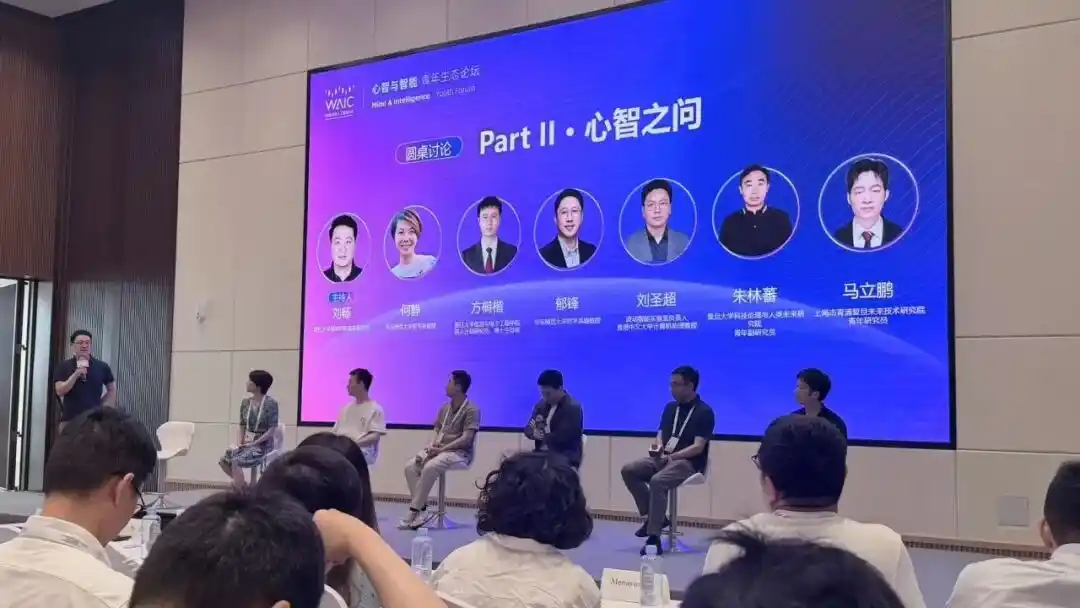
The “Questions of Mind” panel discussed risks like attacks, harmful biological research, and psychological dependence. Zhu Linfan, a young associate researcher at the Institute for Science, Technology and Human Future Ethics, Fudan University, also mentioned that current AI governance generally faces the dilemma of “over-regulation stifles, under-regulation leads to chaos,” requiring technology, policy, ethics, and international cooperation to find more nuanced solutions.

Ma Lipeng, a young researcher at the Qingpu Fudan Future Technology Research Institute, added a technical layer. Today's AI can answer almost anything but lacks the meta-cognitive ability to “know what it doesn't know.” Only by first helping AI recognize its own capabilities and boundaries can subsequent evaluation and governance have better handles. This also requires participation from different disciplines like philosophy, education, and computer science.
The responsibility issue is also becoming more complex.

When AI agents possess stronger initiative, can they become legal or moral actors? If they cannot bear responsibility independently, how should responsibility be divided among developers, deployers, users, and final decision-makers?

Given this, it's not hard to understand why the National Development and Intelligent Governance Comprehensive Laboratory of Fudan University appeared as an organizer of this Scientific Intelligence Forum.

This laboratory's research spans artificial intelligence, big data, humanities and social sciences, public governance, etc., and is one of the first Ministry of Education key laboratories for philosophy and social sciences. An important task it undertakes is observing technological changes within real social and institutional environments and then bridging academic research with policy needs.

The “2026 Blue Book on Intelligent Development in Humanities and Social Sciences,” compiled by the Fudan AI+New Liberal Arts ecosystem led by the lab, in collaboration with the Shanghai AI Lab, bringing together over 40 experts from nearly 20 disciplines, attempts to transform many seemingly abstract governance principles into actionable research and institutional processes.
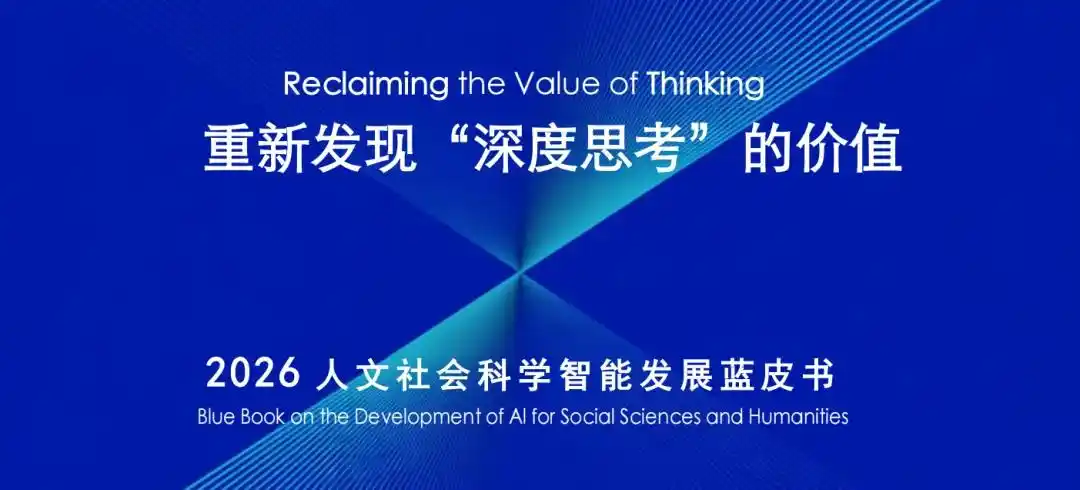
For example, when AI enters research, the final output cannot just be a fluently written paper. The research question, data dictionary, analysis scripts, execution records, review comments, and human adjudication should also be preserved, allowing others to follow the evidence chain.

The STRIDES framework proposed in the Blue Book sets checkpoints at theory, method, data, execution, and review stages. Which hypotheses need to be stated, which evidence needs to be located, which low-confidence conclusions need to be referred back to human judgment—all are incorporated into the process.

In the field of public governance, the questions are more direct.

The Blue Book distinguishes between agentic and auxiliary AI embedding modes. The former allows the algorithm to participate all the way to the output decision, with humans often only appearing in case of system failure or appeal. The latter mode assigns AI tasks like retrieval, calculation, risk prompts, and solution generation, with the final decision still made by humans.

And so-called “human-in-the-loop” cannot just be a confirmation button. Humans need rights to intervene, correct, and explain.

From this perspective, governance is more like building roads for technology. Which scenarios can accelerate, which places need guardrails, who reviews, who explains, and who takes responsibility when problems arise must all be written into the rules beforehand.

Additionally, the 2026 Blue Book constructs the “Chinese Universities AI4SSH Index,” observing the integration level of AI and humanities/social sciences in universities from dimensions like core research capability, innovative development potential, and social dissemination capability.

The judgment it conveys is clear. For a field to develop long-term capacity, a few papers and models are not enough. Data, computing power, toolchains, talent cultivation, organizational collaboration, and evaluation systems all need to keep up.

This is the significance of the National Development and Intelligent Governance Comprehensive Laboratory connecting academia and policy. Technology provides new possibilities, social sciences explain impacts, economics studies incentives and distribution, and governance research transforms these understandings into procedures and institutions.

In Shanghai, Academia, Policy, and Industry Are Connected

Following governance issues further down, one eventually encounters industry.

Luo Xiaozhou, a researcher at the Shenzhen Institute of Advanced Technology, Chinese Academy of Sciences, and founder of SynbioTech, vividly described a key difference on-site.
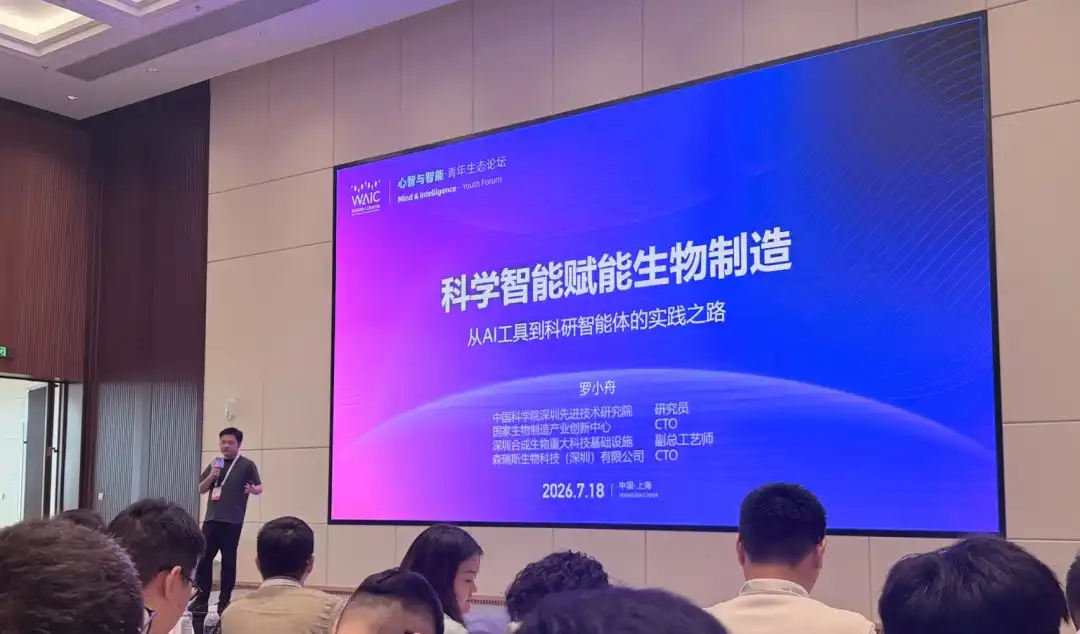
When AI writes code or does math, many processes can form closed loops within computers. But bio-manufacturing must cross the chasm between the digital and physical worlds.

After the model proposes a scientific hypothesis, experimental equipment must physically realize it, then feed the detection results back to the model. If any single link is broken, self-evolution stops.

Relying on the Shenzhen Synthetic Biology Major Science Facility with over 2 billion RMB investment, Luo Xiaozhou's team uses automated equipment as the “body and hands,” letting AI handle experimental design and decision-making. They hope that upon inputting a demand, the system can automatically design experiments, write scripts, execute operations, collect data, and proceed to the next round of optimization.

Related technologies have been used in R&D and production of products like squalene and squalane. Among them, squalene products have entered Merck's supply chain, and squalane has entered cosmetic supply chains.

But deep integration of research and industry involves more than just the model.

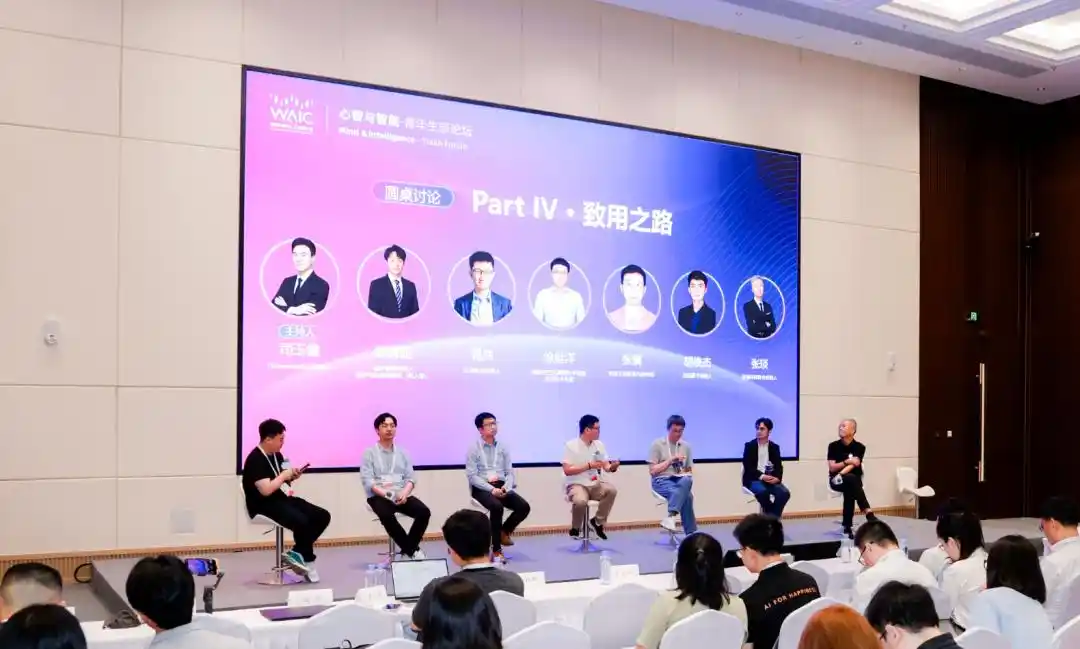
The “Path to Application” panel was quite candid. AI can accelerate antibody design, protein optimization, and strain engineering, but there are still wet lab experiments, clinical trials, approvals, process development, production, and markets.

Zhang Yan, co-founder and senior vice president of MGI Tech, summarized the difficulty as the “last mile” for AI landing in the physical world. In his view, lab automation and robotics technologies are relatively mature; the harder part is truly integrating AI, software systems, instruments, and specific disciplinary needs. To this end, MGI Tech attempts to control lab instruments and robots like computer peripherals, then connect models, automated experiments, and data feedback into a closed loop.
Upstream shortens R&D time, but bottlenecks may quickly shift to the next link. If regulatory systems, industry inertia, and organizational processes don't change simultaneously, the acceleration brought by technology is hard to pass along the value chain.

Of course, the money issue is also unavoidable.

When data providers, model developers, automation platforms, and industry clients jointly create a result, how should they charge, and how should revenue be distributed? Zhang Yan was also direct: new productivity changes production relations; besides “how to make money,” one must figure out “how to share the money” among parties in the chain.

It sounds down-to-earth but touches on deep changes as AI enters industry.

In the past, parties charged based on work stages; now, AI pushes industries from process delivery to outcome delivery, with participants beginning to share responsibility for the final result.

New productivity is also giving birth to new production relations.

This also falls within the scope of AI governance. Besides safety, ethics, and rights, how technological dividends are distributed, how industry rules adjust, and how traditional regulation adapts to new research speeds all require study.

Looking back, the composition of guests at this Youth Forum was actually quite interesting.

Some study self-evolving models, some build trustworthy boundaries for AI, some explore protein dynamics and social simulations, journal editors question what real problems AI research solves from an academic evaluation perspective; others move from labs to startups, advancing research results to automated experiments and industrial production.

They come from different specialties and institutions but gathered together in Shanghai.

That same afternoon, the main Scientific Intelligence Open Forum unfolded along the themes of “Path of Discovery, Foundation of Closed Loop, Road to Implementation,” with guests like Nobel laureate Arieh Warshel and Turing Award winner Gilles Brassard discussing scientific intelligence and original innovation.

The Youth Forum turned the lens towards research credibility, social governance, and industry chains.

One side discusses how far scientific intelligence can go, the other continues to ask how it can steadily enter reality.

Behind this lies a Youth Scientific Intelligence Ecosystem taking shape in Shanghai.

Shanghai provides universities, research institutions, industry resources, and policy research platforms, while young people cross disciplinary boundaries here, placing models, society, and industry within the same set of questions.

Therefore, philosophy heating up again in AI circles is just the visible part of this change.

Deeper down, AI has entered knowledge production and social operation, and technical issues have begun intertwining with governance, economics, ethics, and public policy.

The better AI answers, the more seriously humans must decide what to ask, what to believe, and where to steer the technology.

This article comes from the WeChat public account “QbitAI” (ID: QbitAI), author: Jin Lei.

Kripto yang Sedang Tren

Pertanyaan Terkait

QWhat is the core philosophical concept proposed by Professor Sun Ning regarding the development of true intelligence?

AThe core concept proposed by Professor Sun Ning is summarized as: 'Intelligence exists only after there is a world. Mind exists only after there are relationships.' He argues that a truly grounded intelligence requires embodiment (a body that incurs action costs), an environment (providing feedback), other agents (introducing norms), and history (where failures become experience).

QWhat are the main concerns raised about AI systems that autonomously conduct scientific research and generate papers?

AThe main concerns are: 1) How to accurately evaluate an AI's true research capability versus its ability to exploit weaknesses in peer review systems. 2) Ownership and attribution of AI-generated scientific discoveries. 3) Responsibility and liability if the AI system is used for harmful research. 4) The risk of generating papers faster than they can be properly assessed, making evaluation more difficult than generation.

QAccording to the article, what are the key limitations or risks when using large language models to simulate human society?

AKey limitations and risks include: 1) Models may replicate stereotypes and biases from training data rather than capturing real social dynamics. 2) While macro-level simulated data may correlate highly with real-world data, it often breaks down in specific causal relationships or population-level analyses. 3) A dangerous feedback loop can form where real-world biases in data train models, which then influence decisions (e.g., in hiring, education), and those outcomes become new training data, amplifying the biases. The article cautions against treating simulation results as the voice of real society.

QWhat is the STRIDES framework proposed in the '2026 Humanities and Social Sciences Intelligent Development Bluebook', and what is its purpose?

AThe STRIDES framework is a proposed system that sets checkpoints at various stages of AI-assisted research, including Theory, Method, Data, Execution, and Scrutiny. Its purpose is to translate abstract governance principles into actionable research and institutional workflows. It ensures that AI-driven research leaves behind not just a fluent paper, but a verifiable evidence chain including research questions, data dictionaries, analysis scripts, execution records, review comments, and human adjudication, allowing others to retrace the steps.

QHow is AI's integration into industries like biomanufacturing challenging traditional models of work and payment, according to the discussion in the 'Road to Application' roundtable?

AAI integration is shifting the industry from process-based delivery to outcome-based delivery. Traditionally, different parties were paid for their specific work环节 (process). Now, with AI driving towards a final result (e.g., a new molecule or manufacturing process), participants including data providers, model developers, automation platforms, and industrial clients are becoming jointly responsible for the final outcome. This new productivity is催生 new production relationships, forcing a re-evaluation of not just 'how to make money' but 'how to distribute the profits' across the entire value chain.

Bacaan Terkait

Dalam Kepungan Modal, Desentralisasi adalah Satu-satunya Pertahanan Public Blockchain

Oleh Omid Malekan, Profesor Tambahan Keuangan di Columbia Business School Di dunia yang penuh dengan kekuasaan dan keserakahan, penulis berpendapat bahwa desentralisasi adalah satu-satunya pertahanan penting untuk blockchain publik melawan pengepungan modal dan korporasi besar. Sementara banyak dalam industri kripto menganggap skalabilitas, pengembangan bisnis, dan pendanaan besar sebagai prioritas, penulis yakin hanya jaringan yang benar-benar terdesentralisasi dan netral sejak lahir yang dapat menghindari pengambilalihan dan korupsi oleh kepentingan kapitalis. Logika dasarnya adalah realistis dan Machiavellian: perusahaan yang mencari keuntungan pada akhirnya akan mencoba menguasai atau menetralkan teknologi yang mengancam model bisnis mereka yang sudah mapan. Jaringan terpusat atau "izin" (permissioned), termasuk blockchain konsorsium perusahaan, rentan terhadap pengambilalihan kontrol internal, yang lebih berbahaya daripada serangan eksternal. Sejarah jaringan pembayaran seperti Visa dan Mastercard menunjukkan pola di mana inisiatif yang awalnya netral berubah menjadi alat monopoli yang mencari keuntungan. Penulis memberikan contoh konkret: sebuah CEO perusahaan blockchain konsorsium mengklaim jaringannya lebih "adil" daripada Ethereum karena calon peserta hanya perlu "membuktikan nilai" mereka kepada anggota yang ada. Namun, dalam praktiknya, jaringan seperti ini justru dapat mengabadikan oligopoli dengan mengecualikan pesaing. Motivasi sebenarnya di balik banyak solusi blockchain semi-terpusat yang didukung perusahaan mungkin hanyalah taktik penundaan untuk memperlambat adopsi teknologi desentralisasi sejati. Kesimpulannya, meskipun tidak sempurna, blockchain publik yang terdesentralisasi seperti Ethereum tetap merupakan pilihan terbaik yang realistis. Pasar pada akhirnya akan mengalir ke infrastruktur yang paling aman dan netral, karena sistem terpusat pada dasarnya tidak efisien dan bergantung pada gesekan untuk menghasilkan keuntungan. Hanya desentralisasi penuh yang dapat bertahan dari pengepungan modal dan menjadi senjata efektif melawan raksasa industri lama.

Foresight News25m yang lalu

Dalam Kepungan Modal, Desentralisasi adalah Satu-satunya Pertahanan Public Blockchain

Foresight News25m yang lalu

Trading

Spot

Artikel Populer

Apa Itu GROK AI

Grok AI: Merevolusi Teknologi Percakapan di Era Web3 Pendahuluan Dalam lanskap kecerdasan buatan yang terus berkembang dengan cepat, Grok AI menonjol sebagai proyek yang patut diperhatikan yang menjembatani domain teknologi canggih dan interaksi pengguna. Dikembangkan oleh xAI, sebuah perusahaan yang dipimpin oleh pengusaha terkenal Elon Musk, Grok AI berupaya untuk mendefinisikan ulang cara kita berinteraksi dengan kecerdasan buatan. Seiring dengan berkembangnya gerakan Web3, Grok AI bertujuan untuk memanfaatkan kekuatan AI percakapan untuk menjawab pertanyaan kompleks, memberikan pengguna pengalaman yang tidak hanya informatif tetapi juga menghibur. Apa itu Grok AI? Grok AI adalah chatbot AI percakapan yang canggih yang dirancang untuk berinteraksi dengan pengguna secara dinamis. Berbeda dengan banyak sistem AI tradisional, Grok AI menerima berbagai pertanyaan yang lebih luas, termasuk yang biasanya dianggap tidak pantas atau di luar respons standar. Tujuan inti proyek ini meliputi: Penalaran yang Andal: Grok AI menekankan penalaran akal sehat untuk memberikan jawaban logis berdasarkan pemahaman kontekstual. Pengawasan yang Dapat Diskalakan: Integrasi bantuan alat memastikan bahwa interaksi pengguna dipantau dan dioptimalkan untuk kualitas. Verifikasi Formal: Keamanan adalah hal yang utama; Grok AI menggabungkan metode verifikasi formal untuk meningkatkan keandalan output-nya. Pemahaman Konteks Panjang: Model AI unggul dalam mempertahankan dan mengingat riwayat percakapan yang luas, memfasilitasi diskusi yang bermakna dan sadar konteks. Ketahanan Adversarial: Dengan fokus pada peningkatan pertahanannya terhadap input yang dimanipulasi atau berbahaya, Grok AI bertujuan untuk mempertahankan integritas interaksi pengguna. Intinya, Grok AI bukan hanya perangkat pengambilan informasi; ini adalah mitra percakapan yang imersif yang mendorong dialog yang dinamis. Pencipta Grok AI Otak di balik Grok AI tidak lain adalah Elon Musk, seorang individu yang identik dengan inovasi di berbagai bidang, termasuk otomotif, perjalanan luar angkasa, dan teknologi. Di bawah naungan xAI, sebuah perusahaan yang fokus pada kemajuan teknologi AI dengan cara yang bermanfaat, visi Musk bertujuan untuk membentuk kembali pemahaman tentang interaksi AI. Kepemimpinan dan etos dasar sangat dipengaruhi oleh komitmen Musk untuk mendorong batasan teknologi. Investor Grok AI Meskipun rincian spesifik mengenai investor yang mendukung Grok AI masih terbatas, secara publik diakui bahwa xAI, inkubator proyek ini, didirikan dan didukung terutama oleh Elon Musk sendiri. Usaha dan kepemilikan Musk sebelumnya memberikan dukungan yang kuat, lebih lanjut memperkuat kredibilitas dan potensi pertumbuhan Grok AI. Namun, hingga saat ini, informasi mengenai yayasan investasi tambahan atau organisasi yang mendukung Grok AI tidak tersedia secara mudah, menandai area untuk eksplorasi potensial di masa depan. Bagaimana Grok AI Bekerja? Mekanisme operasional Grok AI sama inovatifnya dengan kerangka konseptualnya. Proyek ini mengintegrasikan beberapa teknologi mutakhir yang memfasilitasi fungsionalitas uniknya: Infrastruktur yang Kuat: Grok AI dibangun menggunakan Kubernetes untuk orkestrasi kontainer, Rust untuk kinerja dan keamanan, dan JAX untuk komputasi numerik berkinerja tinggi. Ketiga elemen ini memastikan bahwa chatbot beroperasi secara efisien, dapat diskalakan dengan efektif, dan melayani pengguna dengan cepat. Akses Pengetahuan Real-Time: Salah satu fitur pembeda Grok AI adalah kemampuannya untuk mengakses data real-time melalui platform X—sebelumnya dikenal sebagai Twitter. Kemampuan ini memberikan AI akses ke informasi terbaru, memungkinkannya untuk memberikan jawaban dan rekomendasi yang tepat waktu yang mungkin terlewat oleh model AI lainnya. Dua Mode Interaksi: Grok AI menawarkan pengguna pilihan antara “Mode Menyenangkan” dan “Mode Reguler.” Mode Menyenangkan memungkinkan gaya interaksi yang lebih bermain dan humoris, sementara Mode Reguler fokus pada memberikan respons yang tepat dan akurat. Fleksibilitas ini memastikan pengalaman yang disesuaikan yang memenuhi berbagai preferensi pengguna. Intinya, Grok AI menggabungkan kinerja dengan keterlibatan, menciptakan pengalaman yang kaya dan menghibur. Garis Waktu Grok AI Perjalanan Grok AI ditandai oleh tonggak penting yang mencerminkan tahap pengembangan dan penerapannya: Pengembangan Awal: Fase dasar Grok AI berlangsung selama sekitar dua bulan, di mana pelatihan awal dan penyempurnaan model dilakukan. Rilis Beta Grok-2: Dalam kemajuan signifikan, beta Grok-2 diumumkan. Rilis ini memperkenalkan dua versi chatbot—Grok-2 dan Grok-2 mini—masing-masing dilengkapi dengan kemampuan untuk chatting, coding, dan penalaran. Akses Publik: Setelah pengembangan beta, Grok AI menjadi tersedia untuk pengguna platform X. Mereka yang memiliki akun yang diverifikasi dengan nomor telepon dan aktif selama setidaknya tujuh hari dapat mengakses versi terbatas, membuat teknologi ini tersedia untuk audiens yang lebih luas. Garis waktu ini mencakup pertumbuhan sistematis Grok AI dari awal hingga keterlibatan publik, menekankan komitmennya untuk perbaikan berkelanjutan dan interaksi pengguna. Fitur Utama Grok AI Grok AI mencakup beberapa fitur kunci yang berkontribusi pada identitas inovatifnya: Integrasi Pengetahuan Real-Time: Akses ke informasi terkini dan relevan membedakan Grok AI dari banyak model statis, memungkinkan pengalaman pengguna yang menarik dan akurat. Gaya Interaksi yang Beragam: Dengan menawarkan mode interaksi yang berbeda, Grok AI memenuhi berbagai preferensi pengguna, mengundang kreativitas dan personalisasi dalam berkomunikasi dengan AI. Dasar Teknologi yang Canggih: Pemanfaatan Kubernetes, Rust, dan JAX memberikan proyek ini kerangka kerja yang solid untuk memastikan keandalan dan kinerja optimal. Pertimbangan Diskursus Etis: Penyertaan fungsi penghasil gambar menunjukkan semangat inovatif proyek ini. Namun, hal ini juga menimbulkan pertimbangan etis seputar hak cipta dan penggambaran yang menghormati tokoh-tokoh yang dikenali—diskusi yang sedang berlangsung dalam komunitas AI. Kesimpulan Sebagai entitas perintis di bidang AI percakapan, Grok AI mencakup potensi untuk pengalaman pengguna yang transformatif di era digital. Dikembangkan oleh xAI dan didorong oleh pendekatan visioner Elon Musk, Grok AI mengintegrasikan pengetahuan real-time dengan kemampuan interaksi yang canggih. Ini berupaya untuk mendorong batasan apa yang dapat dicapai oleh kecerdasan buatan sambil tetap fokus pada pertimbangan etis dan keselamatan pengguna. Grok AI tidak hanya mewujudkan kemajuan teknologi tetapi juga mewakili paradigma percakapan baru di lanskap Web3, menjanjikan untuk melibatkan pengguna dengan pengetahuan yang mahir dan interaksi yang menyenangkan. Seiring proyek ini terus berkembang, ia berdiri sebagai bukti apa yang dapat dicapai di persimpangan teknologi, kreativitas, dan interaksi yang mirip manusia.

631 Total TayanganDipublikasikan pada 2024.12.26Diperbarui pada 2024.12.26

Apa Itu GROK AI

Apa Itu ERC AI

Euruka Tech: Gambaran Umum tentang $erc ai dan Ambisinya di Web3 Pendahuluan Dalam lanskap teknologi blockchain dan aplikasi terdesentralisasi yang berkembang pesat, proyek-proyek baru muncul dengan frekuensi tinggi, masing-masing dengan tujuan dan metodologi yang unik. Salah satu proyek tersebut adalah Euruka Tech, yang beroperasi di domain cryptocurrency dan Web3 yang luas. Fokus utama Euruka Tech, khususnya tokennya $erc ai, adalah untuk menghadirkan solusi inovatif yang dirancang untuk memanfaatkan kemampuan teknologi terdesentralisasi yang terus berkembang. Artikel ini bertujuan untuk memberikan gambaran komprehensif tentang Euruka Tech, eksplorasi tujuannya, fungsionalitas, identitas penciptanya, calon investor, dan signifikansinya dalam konteks yang lebih luas dari Web3. Apa itu Euruka Tech, $erc ai? Euruka Tech dicirikan sebagai proyek yang memanfaatkan alat dan fungsionalitas yang ditawarkan oleh lingkungan Web3, dengan fokus pada integrasi kecerdasan buatan dalam operasinya. Meskipun rincian spesifik tentang kerangka proyek ini agak samar, proyek ini dirancang untuk meningkatkan keterlibatan pengguna dan mengotomatiskan proses di ruang crypto. Proyek ini bertujuan untuk menciptakan ekosistem terdesentralisasi yang tidak hanya memfasilitasi transaksi tetapi juga menggabungkan fungsionalitas prediktif melalui kecerdasan buatan, sehingga penamaan tokennya, $erc ai. Tujuannya adalah untuk menyediakan platform intuitif yang memfasilitasi interaksi yang lebih cerdas dan pemrosesan transaksi yang efisien dalam lingkup Web3 yang terus berkembang. Siapa Pencipta Euruka Tech, $erc ai? Saat ini, informasi mengenai pencipta atau tim pendiri di balik Euruka Tech masih tidak ditentukan dan agak tidak jelas. Ketidakhadiran data ini menimbulkan kekhawatiran, karena pengetahuan tentang latar belakang tim sering kali penting untuk membangun kredibilitas dalam sektor blockchain. Oleh karena itu, kami telah mengkategorikan informasi ini sebagai tidak diketahui sampai rincian konkret tersedia di domain publik. Siapa Investor Euruka Tech, $erc ai? Demikian pula, identifikasi investor atau organisasi pendukung untuk proyek Euruka Tech tidak disediakan dengan mudah melalui penelitian yang tersedia. Aspek yang sangat penting bagi pemangku kepentingan atau pengguna potensial yang mempertimbangkan keterlibatan dengan Euruka Tech adalah jaminan yang datang dari kemitraan keuangan yang mapan atau dukungan dari perusahaan investasi yang terkemuka. Tanpa pengungkapan tentang afiliasi investasi, sulit untuk menarik kesimpulan komprehensif tentang keamanan finansial atau keberlangsungan proyek. Sesuai dengan informasi yang ditemukan, bagian ini juga berada pada status tidak diketahui. Bagaimana Euruka Tech, $erc ai Bekerja? Meskipun kurangnya spesifikasi teknis yang mendetail untuk Euruka Tech, penting untuk mempertimbangkan ambisi inovatifnya. Proyek ini berusaha memanfaatkan kemampuan komputasi kecerdasan buatan untuk mengotomatiskan dan meningkatkan pengalaman pengguna dalam lingkungan cryptocurrency. Dengan mengintegrasikan AI dengan teknologi blockchain, Euruka Tech bertujuan untuk menyediakan fitur seperti perdagangan otomatis, penilaian risiko, dan antarmuka pengguna yang dipersonalisasi. Esensi inovatif dari Euruka Tech terletak pada tujuannya untuk menciptakan koneksi yang mulus antara pengguna dan kemungkinan luas yang ditawarkan oleh jaringan terdesentralisasi. Melalui pemanfaatan algoritma pembelajaran mesin dan AI, proyek ini bertujuan untuk meminimalkan tantangan bagi pengguna baru dan menyederhanakan pengalaman transaksional dalam kerangka Web3. Simbiosis antara AI dan blockchain ini menggarisbawahi signifikansi token $erc ai, yang berdiri sebagai jembatan antara antarmuka pengguna tradisional dan kemampuan canggih dari teknologi terdesentralisasi. Garis Waktu Euruka Tech, $erc ai Sayangnya, sebagai akibat dari informasi yang terbatas mengenai Euruka Tech, kami tidak dapat menyajikan garis waktu yang mendetail tentang perkembangan utama atau tonggak dalam perjalanan proyek ini. Garis waktu ini, yang biasanya sangat berharga dalam memetakan evolusi suatu proyek dan memahami trajektori pertumbuhannya, saat ini tidak tersedia. Ketika informasi tentang peristiwa penting, kemitraan, atau penambahan fungsional menjadi jelas, pembaruan pasti akan meningkatkan visibilitas Euruka Tech di dunia crypto. Klarifikasi tentang Proyek “Eureka” Lainnya Penting untuk dicatat bahwa banyak proyek dan perusahaan berbagi nomenklatur serupa dengan “Eureka.” Penelitian telah mengidentifikasi inisiatif seperti agen AI dari NVIDIA Research, yang fokus pada pengajaran robot tugas kompleks menggunakan metode generatif, serta Eureka Labs dan Eureka AI, yang meningkatkan pengalaman pengguna dalam analitik pendidikan dan layanan pelanggan, masing-masing. Namun, proyek-proyek ini berbeda dari Euruka Tech dan tidak boleh disamakan dengan tujuan atau fungsionalitasnya. Kesimpulan Euruka Tech, bersama dengan token $erc ai-nya, mewakili pemain yang menjanjikan namun saat ini masih samar dalam lanskap Web3. Meskipun rincian tentang pencipta dan investor masih belum diungkapkan, ambisi inti untuk menggabungkan kecerdasan buatan dengan teknologi blockchain tetap menjadi titik fokus yang menarik. Pendekatan unik proyek ini dalam mendorong keterlibatan pengguna melalui otomatisasi canggih dapat membedakannya seiring dengan kemajuan ekosistem Web3. Seiring dengan terus berkembangnya pasar crypto, pemangku kepentingan harus memperhatikan kemajuan seputar Euruka Tech, karena pengembangan inovasi yang terdokumentasi, kemitraan, atau peta jalan yang terdefinisi dapat menghadirkan peluang signifikan di masa depan. Saat ini, kami menunggu wawasan yang lebih substansial yang dapat mengungkap potensi Euruka Tech dan posisinya dalam lanskap crypto yang kompetitif.

603 Total TayanganDipublikasikan pada 2025.01.02Diperbarui pada 2025.01.02

Apa Itu ERC AI

Apa Itu DUOLINGO AI

DUOLINGO AI: Mengintegrasikan Pembelajaran Bahasa dengan Inovasi Web3 dan AI Dalam era di mana teknologi membentuk kembali pendidikan, integrasi kecerdasan buatan (AI) dan jaringan blockchain menandai batasan baru untuk pembelajaran bahasa. Masuklah DUOLINGO AI dan cryptocurrency terkaitnya, $DUOLINGO AI. Proyek ini bercita-cita untuk menggabungkan kekuatan pendidikan dari platform pembelajaran bahasa terkemuka dengan manfaat teknologi Web3 yang terdesentralisasi. Artikel ini menggali aspek-aspek kunci dari DUOLINGO AI, menjelajahi tujuannya, kerangka teknologi, perkembangan sejarah, dan potensi masa depan sambil mempertahankan kejelasan antara sumber daya pendidikan asli dan inisiatif cryptocurrency independen ini. Gambaran Umum DUOLINGO AI Pada intinya, DUOLINGO AI berusaha untuk membangun lingkungan terdesentralisasi di mana pelajar dapat memperoleh imbalan kriptografi untuk mencapai tonggak pendidikan dalam kemahiran bahasa. Dengan menerapkan kontrak pintar, proyek ini bertujuan untuk mengotomatiskan proses verifikasi keterampilan dan alokasi token, sesuai dengan prinsip Web3 yang menekankan transparansi dan kepemilikan pengguna. Model ini menyimpang dari pendekatan tradisional dalam akuisisi bahasa dengan sangat bergantung pada struktur tata kelola yang dipimpin oleh komunitas, memungkinkan pemegang token untuk menyarankan perbaikan pada konten kursus dan distribusi imbalan. Beberapa tujuan notable dari DUOLINGO AI meliputi: Pembelajaran Gamified: Proyek ini mengintegrasikan pencapaian blockchain dan token non-fungible (NFT) untuk mewakili tingkat kemahiran bahasa, mendorong motivasi melalui imbalan digital yang menarik. Penciptaan Konten Terdesentralisasi: Ini membuka jalan bagi pendidik dan penggemar bahasa untuk berkontribusi pada kursus mereka, memfasilitasi model pembagian pendapatan yang menguntungkan semua kontributor. Personalisasi Berbasis AI: Dengan menggunakan model pembelajaran mesin yang canggih, DUOLINGO AI mempersonalisasi pelajaran untuk beradaptasi dengan kemajuan belajar individu, mirip dengan fitur adaptif yang ditemukan di platform yang sudah mapan. Pencipta Proyek dan Tata Kelola Hingga April 2025, tim di balik $DUOLINGO AI tetap anonim, praktik yang umum dalam lanskap cryptocurrency terdesentralisasi. Anonimitas ini dimaksudkan untuk mempromosikan pertumbuhan kolektif dan keterlibatan pemangku kepentingan daripada fokus pada pengembang individu. Kontrak pintar yang diterapkan di blockchain Solana mencatat alamat dompet pengembang, yang menandakan komitmen terhadap transparansi terkait transaksi meskipun identitas penciptanya tidak diketahui. Menurut peta jalannya, DUOLINGO AI bertujuan untuk berkembang menjadi Organisasi Otonom Terdesentralisasi (DAO). Struktur tata kelola ini memungkinkan pemegang token untuk memberikan suara pada isu-isu penting seperti implementasi fitur dan alokasi kas. Model ini sejalan dengan etos pemberdayaan komunitas yang ditemukan dalam berbagai aplikasi terdesentralisasi, menekankan pentingnya pengambilan keputusan kolektif. Investor dan Kemitraan Strategis Saat ini, tidak ada investor institusi atau modal ventura yang dapat diidentifikasi secara publik yang terkait dengan $DUOLINGO AI. Sebaliknya, likuiditas proyek ini terutama berasal dari bursa terdesentralisasi (DEX), menandai kontras yang tajam dengan strategi pendanaan perusahaan teknologi pendidikan tradisional. Model akar rumput ini menunjukkan pendekatan yang dipimpin oleh komunitas, mencerminkan komitmen proyek terhadap desentralisasi. Dalam whitepapernya, DUOLINGO AI menyebutkan pembentukan kolaborasi dengan “platform pendidikan blockchain” yang tidak ditentukan yang bertujuan untuk memperkaya penawaran kursusnya. Meskipun kemitraan spesifik belum diungkapkan, upaya kolaboratif ini menunjukkan strategi untuk menggabungkan inovasi blockchain dengan inisiatif pendidikan, memperluas akses dan keterlibatan pengguna di berbagai jalur pembelajaran. Arsitektur Teknologi Integrasi AI DUOLINGO AI menggabungkan dua komponen utama yang didorong oleh AI untuk meningkatkan penawaran pendidikannya: Mesin Pembelajaran Adaptif: Mesin canggih ini belajar dari interaksi pengguna, mirip dengan model kepemilikan dari platform pendidikan besar. Ia secara dinamis menyesuaikan kesulitan pelajaran untuk mengatasi tantangan spesifik pelajar, memperkuat area yang lemah melalui latihan yang ditargetkan. Agen Percakapan: Dengan menggunakan chatbot bertenaga GPT-4, DUOLINGO AI menyediakan platform bagi pengguna untuk terlibat dalam percakapan yang disimulasikan, mendorong pengalaman pembelajaran bahasa yang lebih interaktif dan praktis. Infrastruktur Blockchain Dibangun di atas blockchain Solana, $DUOLINGO AI memanfaatkan kerangka teknologi yang komprehensif yang mencakup: Kontrak Pintar Verifikasi Keterampilan: Fitur ini secara otomatis memberikan token kepada pengguna yang berhasil melewati tes kemahiran, memperkuat struktur insentif untuk hasil pembelajaran yang nyata. Lencana NFT: Token digital ini menandakan berbagai tonggak yang dicapai pelajar, seperti menyelesaikan bagian dari kursus mereka atau menguasai keterampilan tertentu, memungkinkan mereka untuk memperdagangkan atau memamerkan pencapaian mereka secara digital. Tata Kelola DAO: Anggota komunitas yang memiliki token dapat terlibat dalam tata kelola dengan memberikan suara pada proposal kunci, memfasilitasi budaya partisipatif yang mendorong inovasi dalam penawaran kursus dan fitur platform. Garis Waktu Sejarah 2022–2023: Konseptualisasi Landasan untuk DUOLINGO AI dimulai dengan pembuatan whitepaper, menyoroti sinergi antara kemajuan AI dalam pembelajaran bahasa dan potensi terdesentralisasi dari teknologi blockchain. 2024: Peluncuran Beta Peluncuran beta terbatas memperkenalkan penawaran dalam bahasa-bahasa populer, memberikan imbalan kepada pengguna awal dengan insentif token sebagai bagian dari strategi keterlibatan komunitas proyek. 2025: Transisi DAO Pada bulan April, peluncuran mainnet penuh terjadi dengan peredaran token, mendorong diskusi komunitas mengenai kemungkinan ekspansi ke bahasa Asia dan pengembangan kursus lainnya. Tantangan dan Arah Masa Depan Hambatan Teknis Meskipun memiliki tujuan ambisius, DUOLINGO AI menghadapi tantangan signifikan. Skalabilitas tetap menjadi perhatian yang berkelanjutan, terutama dalam menyeimbangkan biaya yang terkait dengan pemrosesan AI dan mempertahankan jaringan terdesentralisasi yang responsif. Selain itu, memastikan penciptaan konten berkualitas dan moderasi di tengah penawaran terdesentralisasi menimbulkan kompleksitas dalam mempertahankan standar pendidikan. Peluang Strategis Melihat ke depan, DUOLINGO AI memiliki potensi untuk memanfaatkan kemitraan mikro-credentialing dengan institusi akademis, menyediakan validasi keterampilan bahasa yang diverifikasi oleh blockchain. Selain itu, ekspansi lintas rantai dapat memungkinkan proyek ini untuk menjangkau basis pengguna yang lebih luas dan ekosistem blockchain tambahan, meningkatkan interoperabilitas dan jangkauannya. Kesimpulan DUOLINGO AI mewakili perpaduan inovatif antara kecerdasan buatan dan teknologi blockchain, menghadirkan alternatif yang berfokus pada komunitas untuk sistem pembelajaran bahasa tradisional. Meskipun pengembangannya yang anonim dan model ekonomi yang muncul membawa risiko tertentu, komitmen proyek terhadap pembelajaran gamified, pendidikan yang dipersonalisasi, dan tata kelola terdesentralisasi menerangi jalan ke depan untuk teknologi pendidikan di ranah Web3. Seiring kemajuan AI dan evolusi ekosistem blockchain, inisiatif seperti DUOLINGO AI dapat mendefinisikan ulang bagaimana pengguna terlibat dengan pendidikan bahasa, memberdayakan komunitas dan memberikan imbalan atas keterlibatan melalui mekanisme pembelajaran yang inovatif.

645 Total TayanganDipublikasikan pada 2025.04.11Diperbarui pada 2025.04.11

Apa Itu DUOLINGO AI

Diskusi

Selamat datang di Komunitas HTX. Di sini, Anda bisa terus mendapatkan informasi terbaru tentang perkembangan platform terkini dan mendapatkan akses ke wawasan pasar profesional. Pendapat pengguna mengenai harga AI (AI) disajikan di bawah ini.

活动图片