# Artikel Terkait Institutional Finance

Pusat Berita HTX menyediakan artikel terbaru dan analisis mendalam mengenai "Institutional Finance", mencakup tren pasar, pembaruan proyek, perkembangan teknologi, dan kebijakan regulasi di industri kripto.

Re-evaluating Founder-Market Fit Amidst the Crypto Bear Market

In the current crypto bear market, the concept of founder-market fit emerges as the most enduring investment signal. While markets, regulations, and products constantly change, the alignment between a specific founder and a specific market remains the constant, compounding factor, especially when prices stall. The blockchain space is now attracting a higher caliber of founders than ever before. Talent has converged on solving serious problems in two key verticals: AI and fintech. The most compelling challenge has become building institutional-grade financial infrastructure, drawing serious operators from firms like Citadel, Stripe, Block, Nvidia, and Goldman Sachs. This shift is supported by maturing on-chain data: stablecoin settlement now surpasses Visa and Mastercard combined, institutional adoption is rising, and tokenized real-world assets are growing rapidly. When evaluating founders, four key traits are sought: deep domain expertise, high agency, an unfair advantage in networks, and obsession. Examples like Offchain Labs (Arbitrum), Ondo Finance, Morpho, Circle (USDC), and Alchemy demonstrate that projects possessing all four traits can define categories and endure through cycles. For founders already building, bear markets strip away momentum and reveal true conviction. This period offers the quiet, uncrowded space to build foundational products that will define the next cycle when capital returns. Capital is still available, and lower valuations present an opportunity. The advice is to extend runway, focus on genuine product-market fit, and recruit strategically. For talented individuals still within traditional finance giants, the moment to act is now. The hard problems in crypto now align with their skills in institutional infrastructure—settlement, credit, custody, compliance. The bear market is not a risk but a testing ground, clearing out noise and creating the ideal conditions for builders with the right fit to establish themselves. The defining founders of the next cycle are not waiting; they are building in the quiet of the winter, anchored by a deep belief in their market that price action cannot shake. The ultimate question is not if the market will return, but who will be standing, stronger, in the market they were inherently meant to win.

Foresight News07/27 13:03

Re-evaluating Founder-Market Fit Amidst the Crypto Bear Market

Foresight News07/27 13:03

What Wall Street Really Wants After the Crypto Story Recedes

The tide of speculative crypto narratives has receded, revealing Wall Street's true objective: building a controlled, yield-generating, and compliant financial pipeline on distributed ledgers. They are migrating core functions onto blockchains, not for decentralization, but for efficiency and new revenue streams. Key developments include BlackRock's BUIDL fund, a tokenized treasury fund acting as a foundational reserve asset, and the rise of Securitize, which is going public and partnering with the NYSE to build a 24/7 digital securities trading and settlement system. This signals a major shift of securities clearing to blockchain technology. To make volatile assets like Bitcoin palatable for institutional investors, firms like BlackRock and Goldman Sachs are creating "covered call" ETFs (e.g., BITA). These products systematically sell options on Bitcoin holdings, transforming price volatility into stable monthly income, effectively repackaging crypto as a yield-bearing asset. Stablecoins are being positioned not as speculative tools but as efficient payment rails. Companies like Stripe and Mastercard are integrating them for instant, low-cost merchant settlements and cross-border card payments, respectively. Critically, new legislation like the GENIUS Act shapes them as non-interest-bearing, heavily regulated extensions of the US dollar system. In summary, Wall Street is quietly constructing a parallel, blockchain-based financial infrastructure featuring tokenized traditional assets, structured crypto yields, and programmable dollar pipelines—all under its control and fully integrated with existing regulatory and credit frameworks.

marsbit06/17 00:08

What Wall Street Really Wants After the Crypto Story Recedes

marsbit06/17 00:08

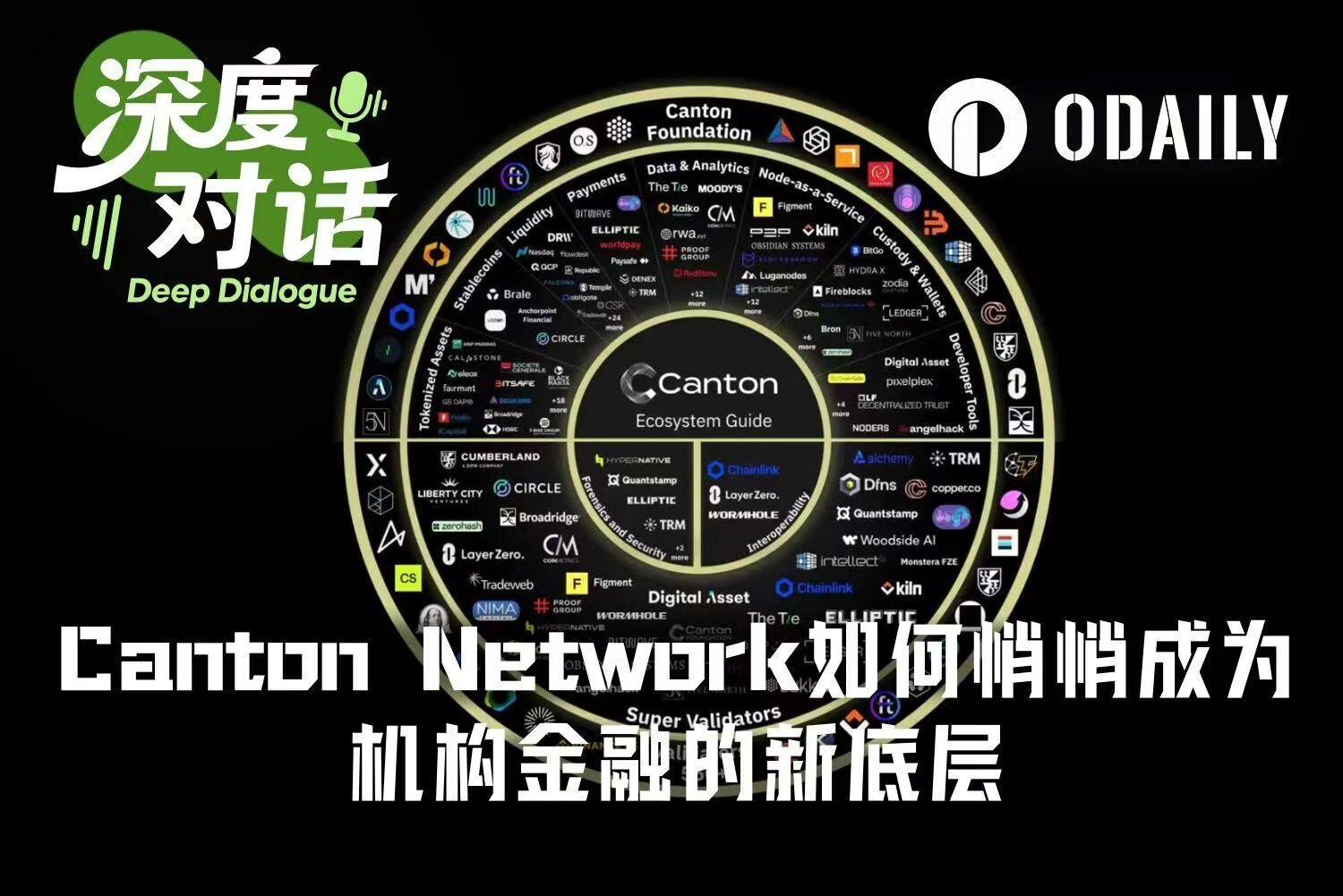
Putting Markets On-Chain: Canton Network Quietly Becoming the New Backbone for Institutional Finance

Canton Network: A New Institutional Financial Infrastructure Emerges Visa's rapid three-day approval as a super-validator on Canton Network in March 2026 marks a significant institutional endorsement. Unlike public blockchains like Ethereum, which prioritize transparency, Canton is designed for regulated financial institutions. Its core innovation is built-in data visibility control, where transaction details are only visible to direct participants. This enables institutions like Goldman Sachs, JPMorgan, and DTCC to conduct private, secure business on-chain without exposing sensitive strategies or positions. Canton, developed by Wall Street-focused Digital Asset, emphasizes slow, methodical development to meet stringent institutional requirements. Current on-chain activity, exceeding $9 trillion monthly, involves real balance-sheet operations like tokenized repos, treasury settlements, and collateral movement—not retail speculation. Key applications include JPMorgan's deposit token (JPM Coin), DTCC's U.S. Treasury tokenization, and Visa-enabled atomic settlement, aiming to synchronize asset delivery and payment instantly. The network's CC token is a utility asset, with value tied to real financial activity volume. It features no pre-mine or VC allocations, aligning with institutional preferences for transparency. Canton's 3–5 year vision is to become an "invisible" foundational layer for global finance—facilitating real-time cross-border capital flows, institutional stablecoin settlement, and native on-chain operations for major asset classes. While regulatory harmonization and legacy system integration remain challenges, Canton represents a pragmatic shift towards embedding markets themselves into blockchain infrastructure.

Odaily星球日报05/21 17:50

Putting Markets On-Chain: Canton Network Quietly Becoming the New Backbone for Institutional Finance

Odaily星球日报05/21 17:50

How Does HashKey Build Institutional-Grade On-Chain Financial Infrastructure?

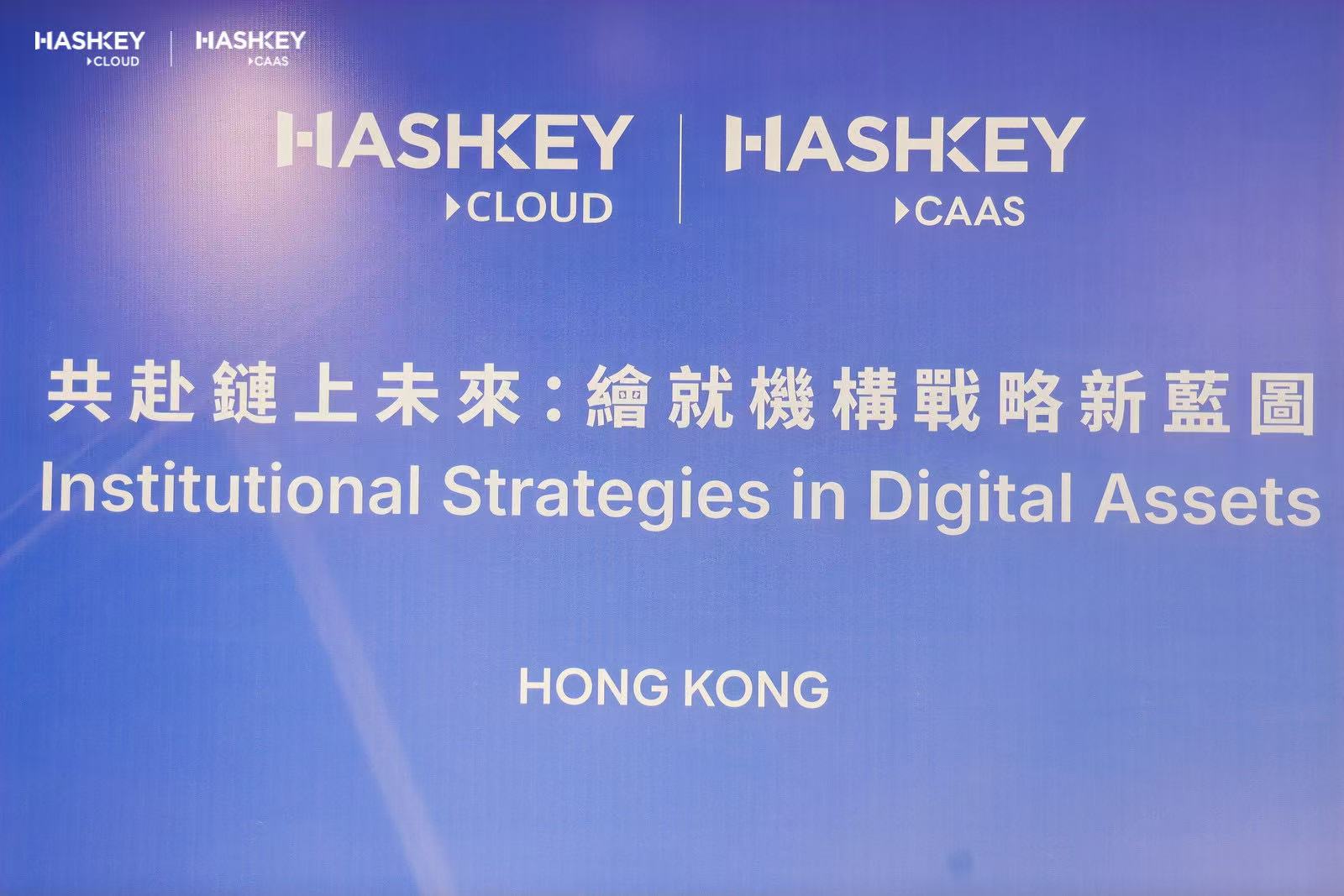
In a recent "Charting a New Institutional Strategy" event held ahead of Consensus, HashKey Cloud and HashKey CaaS introduced a comprehensive on-chain financial infrastructure solution tailored for institutional clients. The event highlighted the growing demand for secure, efficient, and regulatory-compliant services as institutions enter the crypto ecosystem. Leo, CEO of HashKey’s On-Chain Business Group, expressed optimism about the industry’s compliance-driven future, emphasizing Web3’s potential as transparent and secure financial infrastructure, particularly in regions with less developed financial systems. HashKey Cloud, represented by Product Lead Shen Jun, showcased its institutional-grade staking and yield services, operating under a non-custodial model to enable secure asset tokenization and yield generation. The platform supports multi-chain services and offers insurance-backed staking solutions. HashKey CaaS, introduced by Business Development Manager Yu Yi, provides end-to-end services including asset tokenization, staking for ETFs and digital assets, on-chain transactions, and risk management. It aims to bridge traditional finance with crypto through compliant, globally-trusted infrastructure. The event also featured roundtables with participants from firms like Victory Securities, Zodia Custody, WisdomTree, Ether.fi, Lido, and others, discussing the integration of traditional finance with on-chain yields, new earning opportunities with ETH and BTC, and the tokenization of precious metals as part of the expanding RWA (Real-World Asset) ecosystem. HashKey’s strategic shift from a compliant exchange to an institutional on-chain infrastructure provider underscores its commitment to driving the convergence of traditional and digital asset finance in Hong Kong and globally.

marsbit02/10 03:45

How Does HashKey Build Institutional-Grade On-Chain Financial Infrastructure?

marsbit02/10 03:45

活动图片