Predicting the 'Side Hustles' of Market Giants: From Online Betting to Offline Store Openings

比推Dipublikasikan tanggal 2026-02-04Terakhir diperbarui pada 2026-02-04

Abstrak

The competition between leading prediction market platforms Kalshi and Polymarket has expanded from online to offline. On February 4, Kalshi distributed free groceries (up to $50 per person) at a market in New York City, promoting its event-based trading platform with the slogan “We believe in free markets.” The campaign targeted economic concerns like inflation and aimed to attract users by lowering entry barriers. On the same day, Polymarket announced plans to open a permanent free grocery store in New York, supported by a $1 million donation to address food security. The store, set to open on February 12, aligns with Polymarket’s mission to make prediction markets accessible and socially impactful. This offline move reflects intensifying competition. Kalshi, compliant in the U.S., has partnered with platforms like Coinbase and reported annualized trading volume exceeding $100 billion. Polymarket faces regulatory challenges, including bans in Ukraine and Portugal, and restrictions in Nevada. It also competes with new entrants like Opinion, which raised millions and gained rapid traction. Other players, including Crypto.com, Kraken, Robinhood, and Hyperliquid, are also entering the prediction market space, driven by growing user interest in event-based trading. As global events like elections and sports continue to attract attention, prediction markets are poised for further growth, keeping platforms like Kalshi and Polymarket in a fierce battle for users.

Author: Ma He, Foresight News

Original Title: Behind the 'Side Hustles' of Prediction Market Giants: Opening Offline Grocery Stores Out of Anxiety?


Who would have thought that the competition between the two online prediction market giants, Kalshi and Polymarket, has already extended from purely online to offline.

At 12:00 PM on February 4th, Kalshi gave away free groceries to residents at the West Side Market on 84 Third Avenue in New York City, with a limit of up to $50 per person.

Kalshi CEO Tarek Mansour stated, "We believe in free markets," making it clear that this move aims to promote the concept of prediction markets through tangible benefits to the public.
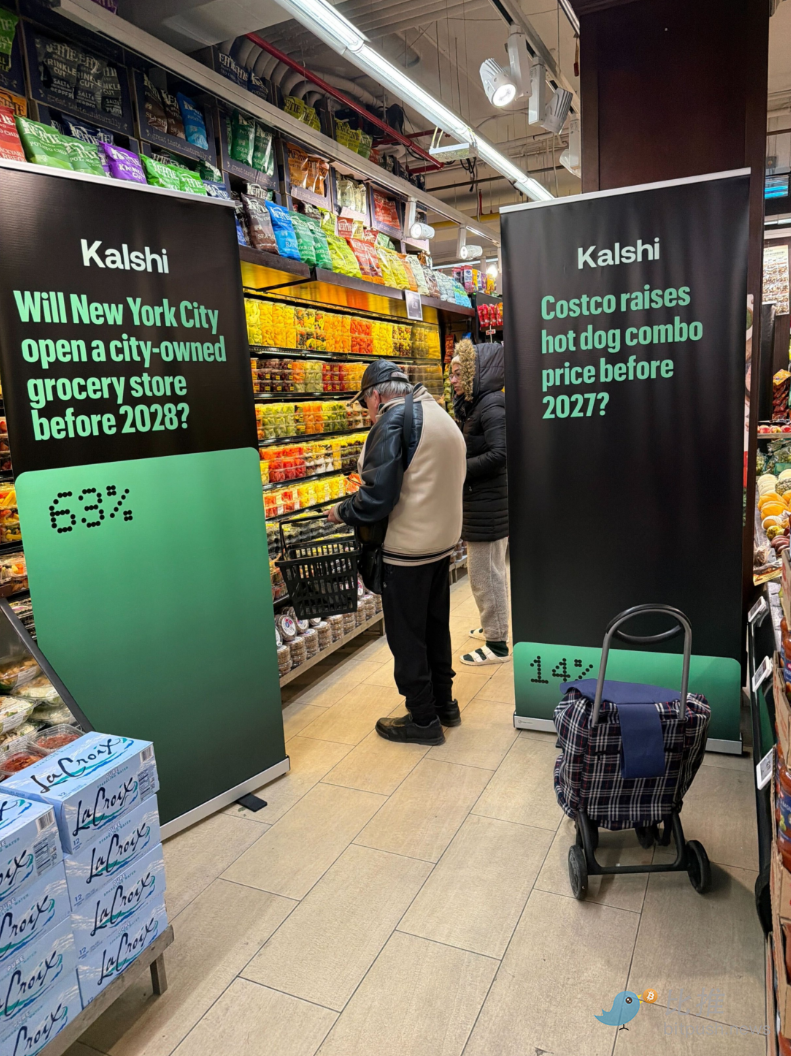
The highlight of the event lies in its clever marketing strategy. First, it directly ties into current economic hot topics—inflation and rising living costs have become pain points for the American public. By offering free groceries, Kalshi not only provides immediate value but also positions itself as an "event contract exchange," allowing users to trade on events such as politics, economics, and sports.

For example, users can predict fluctuations in grocery prices or changes in economic indicators on the platform, thereby transforming the offline experience into online participation. Second, the event’s location in a high-density, high-consumption city like New York maximizes exposure. Official videos show crowds rushing in at the opening moment, likened to "Christmas revisited."

The event had a low barrier to entry: no app download was required to participate; one only needed to shop in-store, and Kalshi would cover the bill. This not only lowered the entry barrier for users but also reinforced the platform’s approachable image.

Unlike Kalshi’s short-term promotion, Polymarket’s offline activity is more long-term and ambitious.

On February 4th, Polymarket announced it would open a "free grocery store" in New York, located at 7 Madison Avenue, scheduled to officially open on February 12th. The store is supported by the Food Bank for New York City, with the project breaking ground in late 2025 and a lease agreement already signed. Additionally, Polymarket donated $1 million to address security concerns.

Polymarket’s announcement coincidentally came on the same day as Kalshi’s event, even with overlapping opening times, which is seen as a direct response.
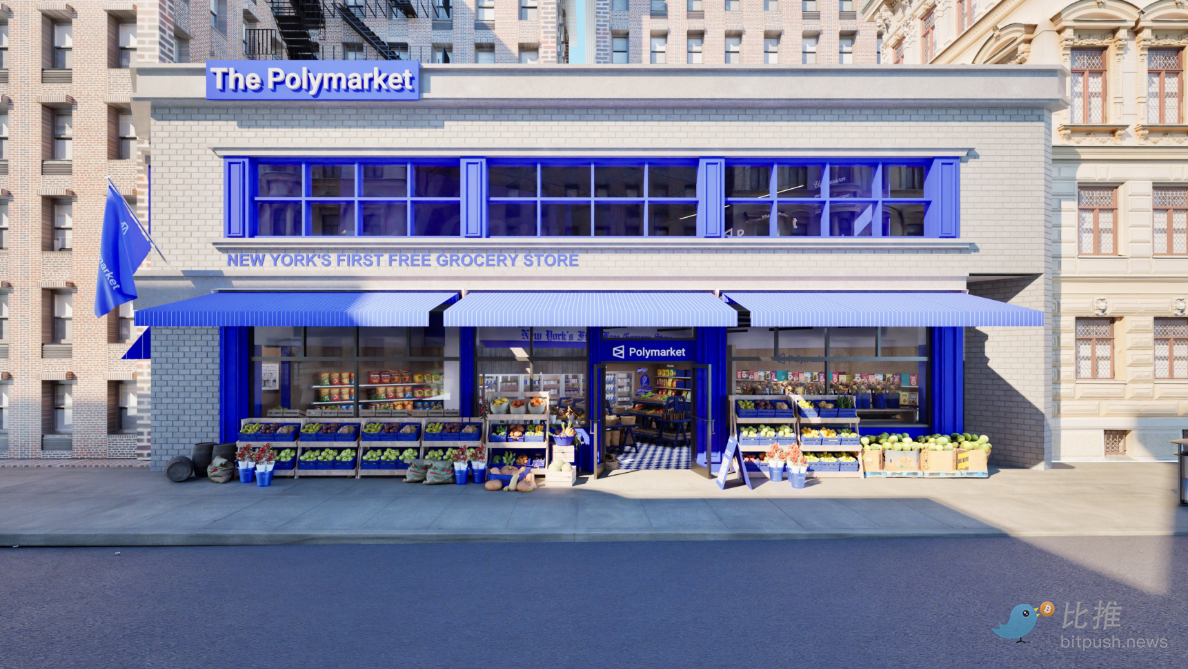
The highlight of Polymarket’s activity lies in its innovation and emphasis on social responsibility. First, this is not a one-time promotion but a permanent store where users can obtain groceries for free, addressing food security issues in New York. Second, this aligns closely with the platform’s core philosophy of revealing truth and allocating resources through prediction markets.

Polymarket founder Shayne Coplan stated that this move is an expansion of the platform from online to offline, aiming to "make prediction markets accessible."
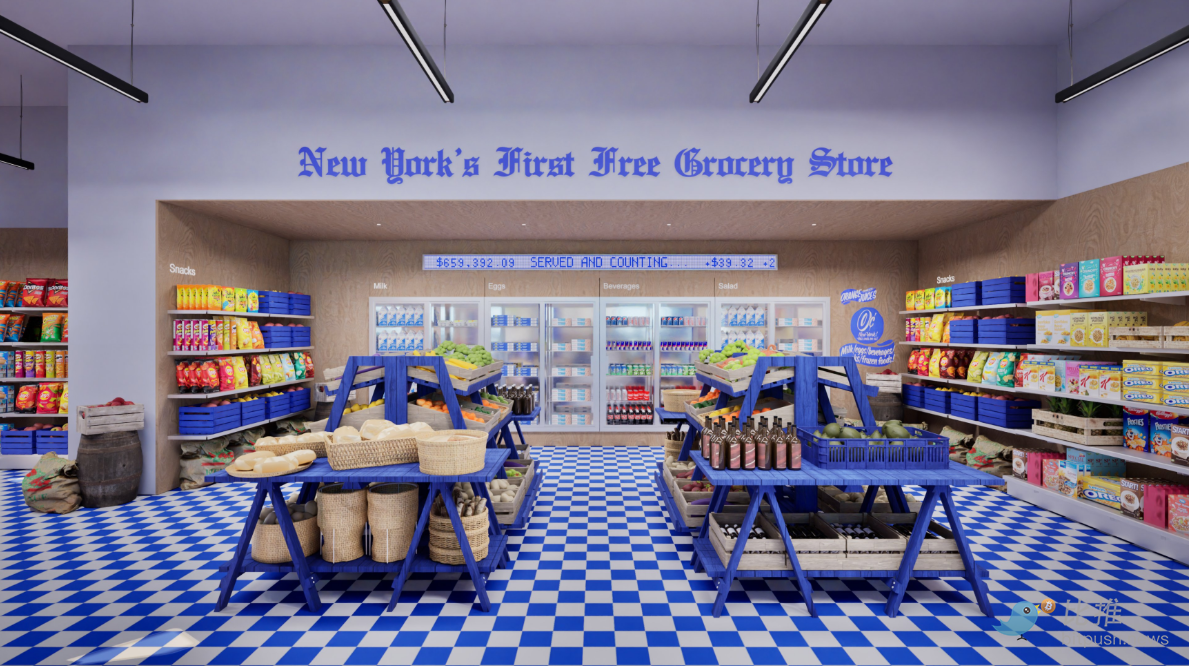
Polymarket incorporates its signature blue logo into the store, with a simple and stylish interior design. Compared to Kalshi’s $50 cap, Polymarket’s free model is more attractive and is expected to reach more low-income groups.

Intensified Rivalry Between the Two Platforms

The offline activities of Kalshi and Polymarket are a microcosm of the fierce competition in the prediction market.

Kalshi uses U.S. compliance as its moat, rapidly expanding its territory. It has not only integrated with various Web3 wallets like Phantom but also partnered with Coinbase to extend its services to all 50 U.S. states. Coinbase users can trade prediction market contracts with as little as $1. In January of this year, Kalshi officially announced that its annualized trading volume exceeded $100 billion.

Polymarket has not only strengthened collaborations with crypto-native players like Jupiter and Phantom but has also expanded its traffic channels by sponsoring events such as the Hollywood Golden Globe Awards.

However, the latest data shows that its market share is still being eroded by Kalshi.
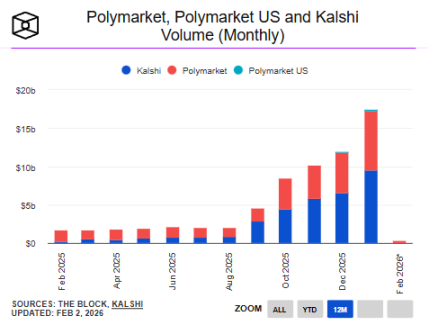
To make matters worse, Polymarket faces troubling regulatory issues.

In January of this year, Ukraine banned Polymarket, as the country’s current legal framework does not recognize prediction markets. Portuguese regulators have also ordered Polymarket to cease operations in the country.

In February, a Nevada court issued a temporary restraining order, prohibiting Polymarket from offering event contract services to Nevada residents before a preliminary hearing on February 11th.

Additionally, many regions in Asia view Polymarket as a gambling platform and have blocked its IP address.

Another competitor backed by Binance is also eyeing the market. Opinion completed a tens of millions of dollars funding round in December 2025. Driven by airdrop expectations, the platform’s trading volume exceeded $5 billion in just one month, with daily fee revenue consistently surpassing $100,000.
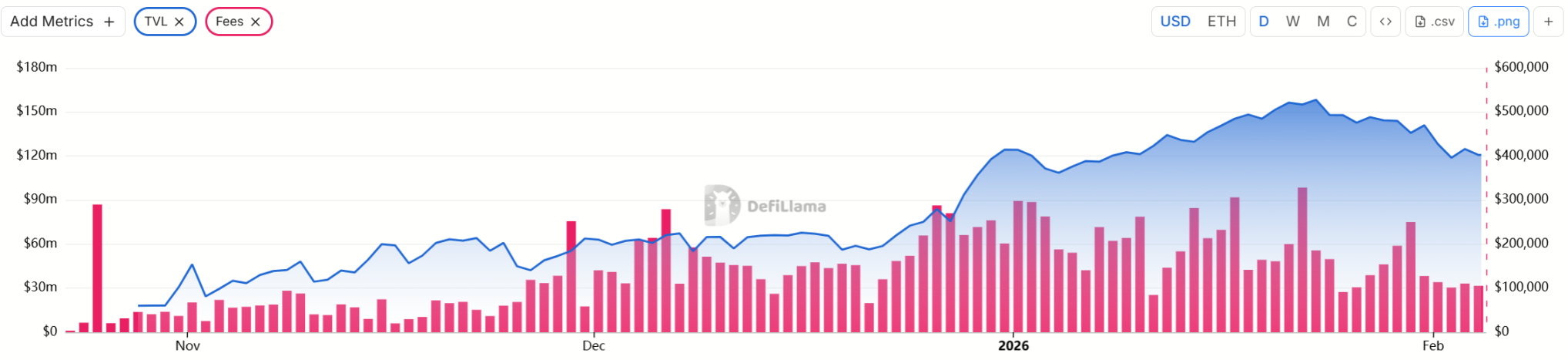
Meanwhile, various exchanges, DEXs, and traditional financial institutions are also entering the prediction market.

Bloomberg reported that Crypto.com announced on Tuesday that it would launch a dedicated prediction market platform, OG, just days before the Super Bowl. Its co-founder and CEO, Kris Marszalek, stated that its event contract business has grown 40 times week-over-week in the past six months, making the launch of an independent product necessary. Another crypto trading platform, Kraken, plans to launch prediction market services in 2026, as revealed by its Global Consumer Business Head, Mark Greenberg, on the Crypto World show.

Robinhood had already launched a prediction market before Trump’s election and plans to introduce more new event contracts. In October 2025, Robinhood CEO Vlad Tenev stated in an interview with Bloomberg that its prediction market segment is one of the fastest-growing sectors and one of its nine business lines with annual revenue exceeding $100 million.

Derivatives DEX leader Hyperliquid is also testing a native prediction market on its testnet. Hyperliquid announced that HyperCore will support Outcome Trading (HIP-4). Outcome Trading involves fully collateralized contracts settled within a fixed range. This is a universal foundational trading element applicable to scenarios such as prediction markets and bounded option-like instruments.

It features non-linear, time-bound contracts, offering a form of derivatives trading without leverage or liquidation, and can be combined with portfolio margin and HyperEVM. Currently, this feature is still under development and is only being tested on the testnet. Once technical development is complete, Hyperliquid will deploy standardized markets denominated in USDH.

The store openings by Kalshi and Polymarket are not just marketing but also battles to capture user attention.

Wars, political events, elections, and sports competitions are gathering global users online, enabling 24/7 non-stop global betting. Rule disputes, wealth stories, and insider trading are all unfolding simultaneously, with only money and brains never sleeping. Perhaps future hot events like the World Cup and U.S. elections will continue to drive prediction market trading volumes and recognition to new heights.

Before the final outcome is determined, no participant dares to let their guard down.


Twitter:https://twitter.com/BitpushNewsCN

Bitpush TG Discussion Group:https://t.me/BitPushCommunity

Bitpush TG Subscription: https://t.me/bitpush

Original link:https://www.bitpush.news/articles/7608693

Pertanyaan Terkait

QWhat was the main purpose of Kalshi's free grocery giveaway event in New York?

AKalshi's free grocery event aimed to promote the concept of prediction markets by providing immediate value to the public, linking economic concerns like inflation to their platform where users can trade on events such as politics, economics, and sports.

QHow does Polymarket's approach to a physical store differ from Kalshi's event?

APolymarket's store is a permanent establishment in partnership with Food Bank for New York City, focusing on long-term social responsibility and addressing food insecurity, while Kalshi's was a temporary promotional event with a spending limit per person.

QWhat regulatory challenges is Polymarket currently facing?

APolymarket faces bans in Ukraine and Portugal, a temporary restriction order in Nevada, and is blocked in several Asia-Pacific regions where it is viewed as a gambling platform.

QWhich companies are emerging as new competitors in the prediction market space?

ANew competitors include Opinion, which received funding and rapid growth, Crypto.com's OG platform, Kraken's planned service, Robinhood's expanding prediction market, and Hyperliquid's testing of native prediction market features.

QWhat is the significance of the competition between Kalshi and Polymarket expanding to physical locations?

AThe expansion into physical locations represents a strategic move to capture user attention and market share beyond online platforms, using real-world engagement to drive awareness and participation in prediction markets amid growing competition.

Bacaan Terkait

Ketika Penjual Sekop Juga Harus Pinjam Uang untuk Beli Sekop: Pasar Saham AI AS Kehilangan Triliunan dalam Seminggu, Pasar Mulai 'Membanderol' Tagihan AI

Minggu lalu, pasar saham AI AS mengalami penurunan drastis meskipun banyak perusahaan melaporkan rekor pendapatan. Saham seperti Broadcom dan Oracle anjlok setelah laporan kuartalan, meskipun angka penjualan dan pesanan mereka sangat kuat. Indeks Nasdaq juga jatuh 4% pada 5 Juni. Masalahnya bukan pada pendapatan, tetapi pada cara mencapainya. Pasar mulai mempertanyakan biaya besar yang diperlukan untuk infrastruktur AI. Oracle, misalnya, memiliki arus kas bebas negatif dan berencana mengumpulkan dana $40 miliar lagi, meskipun baru saja mengumpulkan hampir $500 miliar. Broadcom melihat margin menurun karena meningkatnya penjualan chip AI. Rantai pendanaan untuk balapan AI ini semakin tegang. Alphabet, yang memiliki cadangan tunai besar, masih melakukan pendanaan ekuitas $84,75 miliar. Perusahaan dari penyedia chip hingga lab AI seperti OpenAI dan Anthropic bergantung pada pembiayaan eksternal. Namun, banyak pesanan besar (seperti >50% pesanan Oracle) hanya berasal dari segelintir lab AI yang belum profitabel ini, menciptakan titik tekanan konsentrasi risiko. Intinya, pasar tidak lagi hanya menghargai pertumbuhan, tetapi mulai memeriksa siapa yang membayar tagihan AI yang sangat besar dan bagaimana caranya. IPO SpaceX yang akan datang menjadi uji tekanan berikutnya bagi rantai pendanaan ini.

marsbit25m yang lalu

Ketika Penjual Sekop Juga Harus Pinjam Uang untuk Beli Sekop: Pasar Saham AI AS Kehilangan Triliunan dalam Seminggu, Pasar Mulai 'Membanderol' Tagihan AI

marsbit25m yang lalu

Doubao Berbayar Lebih Mahal dari GPT, Sementara DeepSeek Justru Potong Harga Drastis, Siapa yang Akan Menang?

Penulis: Think AI, Aaron Industri AI menyaksikan perkembangan yang kontras. Doubao (ByteDance) mengonfirmasi akan mulai berbayar pada akhir Juni, dengan harga tinggi - versi Pro bahkan melebihi ChatGPT Plus. Sebaliknya, DeepSeek justru mengumumkan penurunan harga permanen pada akhir Mei, menurunkan harga API-nya menjadi seperempat harga asli, menciptakan rekor harga global baru. Reaksi pengguna pun bertolak belakang: Doubao mendapat banyak kritik, sementara DeepSeek dipuji. Kedua perusahaan ini mengambil strategi berbeda. Doubao, dengan basis pengguna C-nya yang besar (345 juta MAU), memulai langkah berbayar untuk menutupi biaya komputasi yang sangat besar dari 120+ triliun Token harian. Sementara DeepSeek (130 juta MAU) fokus pada pasar B dan menurunkan harga berkat inovasi arsitektur yang memangkas konsumsi daya komputasi, otonomi daya komputasi lokal, dan optimalisasi teknik, membangun parit pertahanan di pasar bisnis. Kedua perusahaan masih dalam fase kerugian. Dibandingkan dengan model berlangganan OpenAI, Anthropic menunjukkan jalur berbeda dengan meraih profitabilitas melalui pendapatan korporat (80%+). Kunci utamanya adalah AI harus tertanam dalam alur kerja nyata untuk menghemat biaya tenaga kerja, bukan sekadar obrolan. AI akan mencapai ROI nyata baik melalui ekosistem produktivitas C seperti Doubao, atau platform agen B seperti DeepSeek. DeepSeek baru saja mengumpulkan pendanaan $70 miliar, memperkuat posisinya. Pemenang akhirnya adalah pemain yang berhasil mengubah AI menjadi ROI yang nyata. Komersialisasi AI masih dalam tahap awal.

marsbit32m yang lalu

Doubao Berbayar Lebih Mahal dari GPT, Sementara DeepSeek Justru Potong Harga Drastis, Siapa yang Akan Menang?

marsbit32m yang lalu

Janji Tahun Besar IPO Kripto? Hanya Satu yang Tercatat dalam Setengah Tahun, dan Sudah Jatuh 70%

**Ringkasan:** Meski tahun 2026 dijuluki sebagai "tahun IPO crypto", kenyataannya sangat berbeda. Sementara SpaceX bersiap meluncurkan IPO terbesar dalam sejarah (valuasi $1.75 triliun), pipa IPO perusahaan crypto justru membeku. BitGo, satu-satunya perusahaan crypto yang berhasil IPO tahun ini, kinerjanya buruk. Sahamnya telah anjlok sekitar 70% dari harga penawaran awal. Hal ini menjadi peringatan bagi perusahaan lain yang mengantre. Kraken, yang sebelumnya menargetkan IPO kuartal pertama, telah membekukan rencananya. Valuasinya dilaporkan menyusut 33% dalam lima bulan. Consensys (induk MetaMask) menunda IPO setidaknya hingga musim gugur, sementara Bitpanda kemungkinan besar akan melewatkan tenggat waktu IPO semester pertamanya. Pasar crypto sendiri sedang lesu, dengan Bitcoin jatuh di bawah $60,000 untuk pertama kalinya tahun ini. Likuiditas tersedot oleh IPO raksasa seperti SpaceX dan sektor AI. Ada tenggat waktu politik yang mendesak: pemilihan pertengahan jabatan AS pada November dapat mengubah lanskap regulasi. Banyak perusahaan crypto awalnya menargetkan IPO sebelum pemilihan untuk memanfaatkan kepastian kebijakan saat ini. Dengan kondisi pasar yang lemah dan contoh kegagalan BitGo, perusahaan-perusahaan crypto kini lebih memilih menunggu daripada terburu-buru membuka buku keuangan mereka kepada publik. Jendela peluang IPO crypto tahun ini tampaknya akan menutup, kecuali jika ada perbaikan signifikan dalam likuiditas dan sentimen pasar setelah IPO SpaceX.

marsbit45m yang lalu

Janji Tahun Besar IPO Kripto? Hanya Satu yang Tercatat dalam Setengah Tahun, dan Sudah Jatuh 70%

marsbit45m yang lalu

Di Balik "Pabrik AI" Musk dan Huang, Perang "Perampasan Air Tawar" Tak Terlihat Telah Dimulai

Anda mungkin tidak menyadari bahwa setiap kali Anda meminta ChatGPT menulis laporan mingguan 100 kata atau Claude memperbaiki beberapa baris kode, sekitar 500 ml air tawar murni (setara dengan satu botol air mineral) akan menguap menjadi uap putih dari pipa pendingin di suatu tempat di Bumi. Laporan terbaru dari United Nations University (UNU) mengungkap biaya lingkungan global AI yang mengkhawatirkan: pada 2030, konsumsi air tahunan infrastruktur AI diperkirakan mencapai 9,3 triliun liter—cukup untuk memenuhi kebutuhan air dasar 1,3 miliar penduduk dunia selama setahun. Mengapa AI menjadi "raksasa peminum air"? Jawabannya terletak pada sistem pendingin pusat data. Lebih dari 70% pusat data global menggunakan sistem pendingin evaporatif, di mana sekitar 80% air yang digunakan untuk mendinginkan chip berdaya tinggi seperti GPU NVIDIA Blackwell menguap ke atmosfer dan tidak dapat didaur ulang secara lokal. Contoh nyata: Pelatihan GPT-4 sekali saja menghabiskan sekitar 600 juta liter air bersih. Konsumsi air Google telah melampaui 81 miliar galon per tahun, sementara Microsoft menghadapi protes warga Iowa karena pusat datanya bersaing merebut air tanah dengan lahan pertanian. Konflik memuncak di Memphis, Tennessee, pada 2026. Kluster superkomputer Colossus milik xAI (Elon Musk), yang dibangun dalam 122 hari, memompa 1 juta galon air minum warga per hari dari aquifer lokal. Tekanan publik memaksa xAI membangun pabrik daur ulang air senilai $80 juta untuk menggunakan air limbah sebagai pengganti. Menanggapi kritik, CEO Microsoft Satya Nadella mempromosikan sistem pendingin "loop tertutup tanpa air" yang diklaim hampir tidak mengonsumsi air. Namun, sistem ini meningkatkan konsumsi listrik 20-30%, mengalihkan jejak air secara tidak langsung ke pembangkit listrik. Bagi industri AI China, krisis air ini menjadi peringatan sekaligus peluang. Strategi "Perhitungan Timur-Datanya Barat" memanfaatkan geografi seperti Guizhou dan Mongolia Dalam untuk lokasi pusat data. Kunci utamanya adalah rekonstruksi komputasi hybrid: kecerdasan di tepi (edge AI) seperti pada perangkat rumah pintar dan robot embodied, yang dapat menangani 90% tugas secara lokal dengan chip hemat daya, mengurangi ketergantungan pada komputasi awan yang boros air dan energi. Perang memperebutkan air tawar ini memaksa AI global menghadapi batasan fisik Bumi. Masa depan AI akan ditentukan oleh kemampuannya beradaptasi dengan sumber daya yang terbatas, bukan hanya oleh peningkatan daya komputasi.

marsbit1j yang lalu

Di Balik "Pabrik AI" Musk dan Huang, Perang "Perampasan Air Tawar" Tak Terlihat Telah Dimulai

marsbit1j yang lalu

Trading

Spot
Futures
活动图片





