OpenClaw Gold Rush: The Shovel Sellers Never Anxious

marsbitDipublikasikan tanggal 2026-03-11Terakhir diperbarui pada 2026-03-11

Abstrak

OpenClaw, an open-source AI agent framework, has sparked a massive wave of commercialization in China, creating a lucrative industry built on user anxiety and the desire to adopt cutting-edge technology. While the software itself is free, a full ecosystem has emerged to monetize the complexity of its deployment and operation. Hardware manufacturers, including former crypto mining machine producers, now sell specialized OpenClaw-optimized devices, with some like iPollo's Claw PC retailing for $439. Others offer white-label OEM solutions, capitalizing on users' unwillingness to configure standard hardware like Mac Minis. A significant market has also emerged for discounted API tokens required to run OpenClaw. Many providers offer heavily discounted, and sometimes fraudulent, access to models like Claude or GPT. Research indicates nearly half of these third-party APIs are deceptive, often substituting expensive models with cheaper, local alternatives. Beyond the markup, the core business for some token resellers is collecting high-quality user prompts and responses to sell as valuable training data to large model companies. Furthermore, a service industry thrives on information asymmetry. Consultants travel nationwide to install and configure OpenClaw for small business owners, charging thousands per installation. An extreme example is RoofClaw in the US, which ships pre-configured MacBooks to roofing contractors for $5,000 each, generating over $1.8 million in revenue. The m...

Original Author: 黑色小虾笼, Deep Tide TechFlow

OpenClaw has become a sensation in China. How many people around you are anxious, and how many are counting their money?

Some travel nationwide, flying to Shenzhen, Chengdu, and Hangzhou, specifically to configure this "Lobster" for small business owners, charging over ten thousand yuan per order.

Others directly install OpenClaw into Apple devices and ship them to customers, ready to use out of the box, accumulating $1.8 million in earnings.

Previously struggling crypto mining machine manufacturers have now pivoted to selling OpenClaw hardware.

Resellers of Token API relay stations are quietly making a fortune, with monthly profits reaching millions.

This is the real slice of the OpenClaw wave: on the surface, millions are tinkering with deployment, buying hardware, and purchasing courses; behind the scenes, a complete industry chain is monetizing this collective anxiety, layer by layer.

From selling hardware to cloud servers, from selling Tokens to Skills, the open-source code is free, but anxiety is the real commodity.

Turning OpenClaw into Hardware

A photo circulating online has left many people both amused and exasperated.
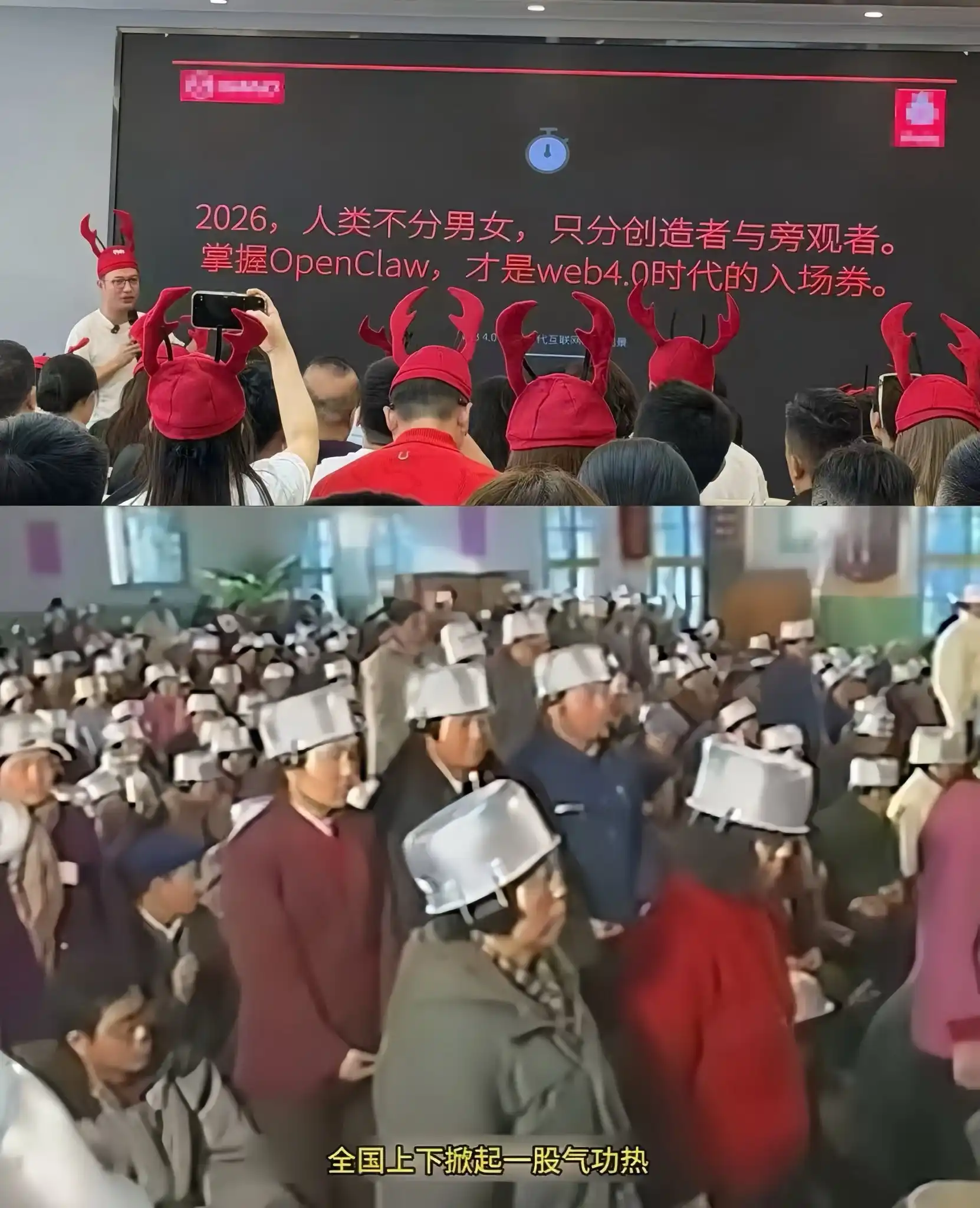
In the 1990s, qigong masters drew circles on people's aluminum pots, claiming to connect to cosmic energy; in 2026, people wear lobster hats in conference rooms receiving ideological洗礼, as if not raising a lobster means falling behind the times.

After the laughter, attention turns to the person speaking on stage. His name is Kong Jianping, a crypto OG and founder of iPollo.

Renowned KOL "Crypto Fearless" commented on social media: "In the crypto circle, the one always standing at the hottest spot is definitely Boss Kong Jianping... He never misses the big money and doesn't neglect the small change."

When Bitcoin mining was hot, he launched the mining machine company Nano Labs. When the metaverse boomed, he announced a shift from mining to metaverse business, stating the metaverse would usher in a new era for humanity; when Hong Kong's policies emerged, he布局香江, becoming a director of Hong Kong Cyberport; when the DAT concept heated up, he started a DAT company...

This time, with OpenClaw's popularity, Kong Jianping hosts offline events across the country, proclaiming that humanity has entered the "Web 4.0" era dominated by AI Agents, while launching the hardware iPollo Claw PC, officially described as "born for Open Claw applications," featuring an AMD 5600H processor, up to 64GB RAM, pre-installed with the native ClawOS system, priced at $439 on the official website.
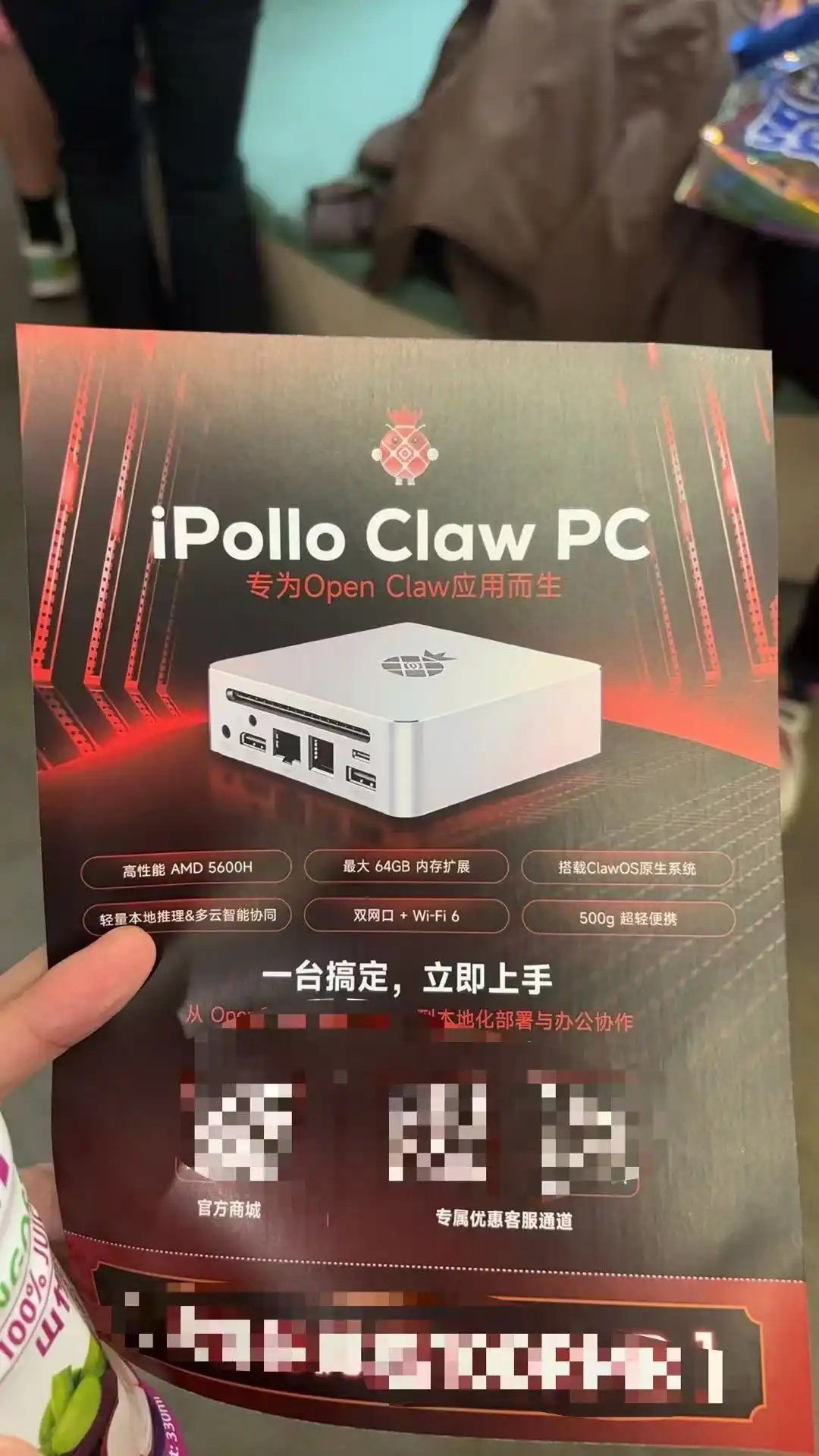
Kong Jianping is not an isolated case; he is just the most visible name in this hardware industry chain.

In Dongguan, a hardware manufacturer's sales representative's朋友圈 is filled with lobster logos: OpenClaw Lobster Hardware Solution, OEM ODM supported, B-end and commercial clients welcome to inquire.
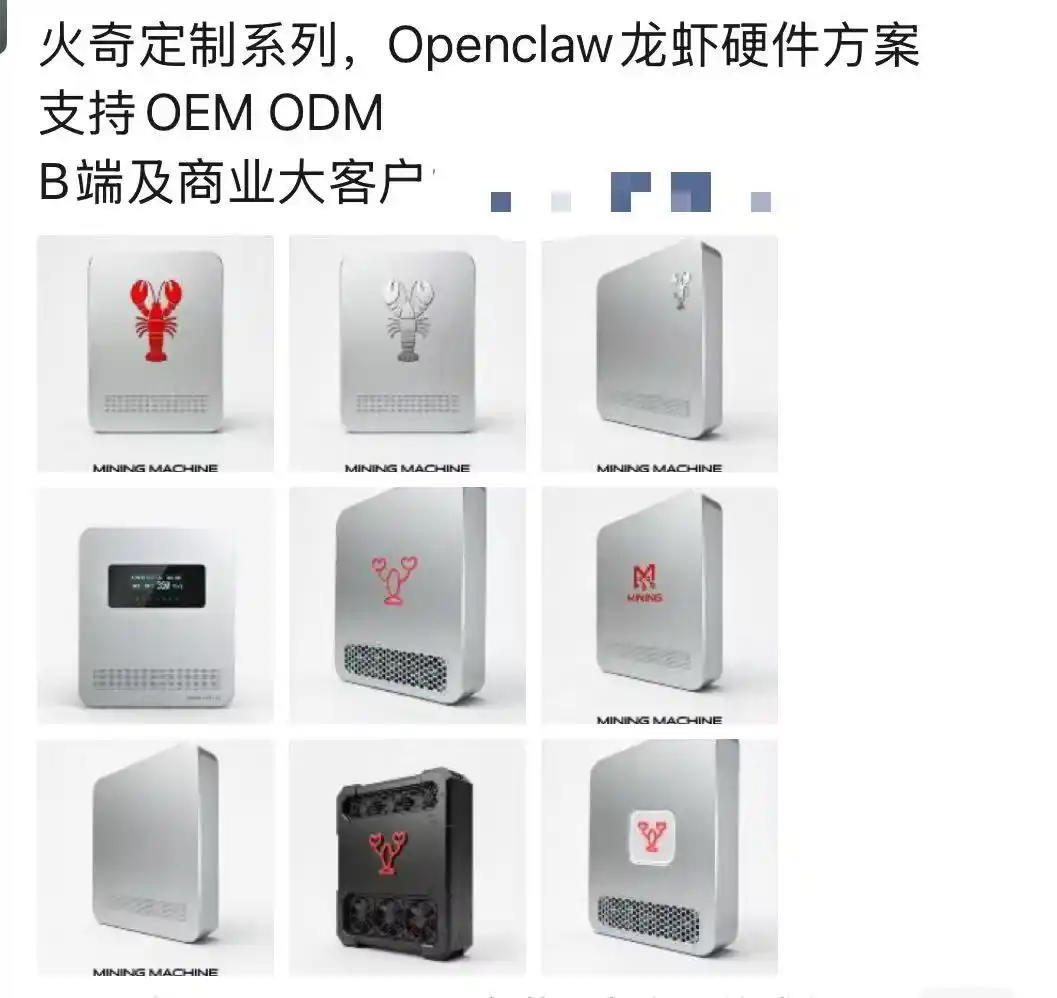
A standard white-label factory: anyone wanting to enter the market can make a call and have a "AI host optimized for OpenClaw" branded under their name.

Like this Dongguan company, many upstream in this hardware chain are former factories that made Filecoin and other cryptocurrency mining machines. They know this script all too well: concept explosion, hardware demand surge, branded premium, harvesting window.

The supply chain responsiveness honed in the mining era is just as effective in a new field.

The core logic of this business is no mystery: The Mac Mini is the most widely recommended hardware for running OpenClaw locally, but for most average users, a $300+ Mac Mini plus a command-line configuration without a GUI is too high a barrier. Thus, demand arises: someone sells a service to "lower the barrier," or simply sells a "ready-to-use" machine, monetizing that barrier.

The deeper the anxiety, the higher the premium.

Token Relaying is a Big Business

OpenClaw itself is free, but running it requires continuously feeding it Tokens for the large model.

Domestic large model companies like MINIMAX and KIMI have become major beneficiaries, but some still want to use overseas models like Claude and ChatGPT for complex tasks.

The trouble is: registering accounts and making payments is difficult, and Claude frequently bans Chinese-speaking users. Official API prices are steep; a heavy OpenClaw user running Claude at full capacity can easily cost over $800 per month.

This has spawned a massive Token relay market.

On the market, you can buy plenty of "50% or even 30% off Claude APIs," but their origin has always been a mystery.

On the surface, this industry is about making a price difference business: obtaining low-cost APIs, reselling at a markup, profiting from the middle margin. But the waters run much deeper.

At the bottom, some use stolen credit cards to批量注册 OpenAI and Anthropic accounts. After obtaining accounts, the most common tactic is to reverse-engineer the ChatGPT and Claude web interfaces, repackage them as standard APIs, and resell them.

The price list of one API relay station shows its reverse-engineered Claude Code API is 89% cheaper than the official price: official $0.024/K Token, it charges $0.0024/T Token.
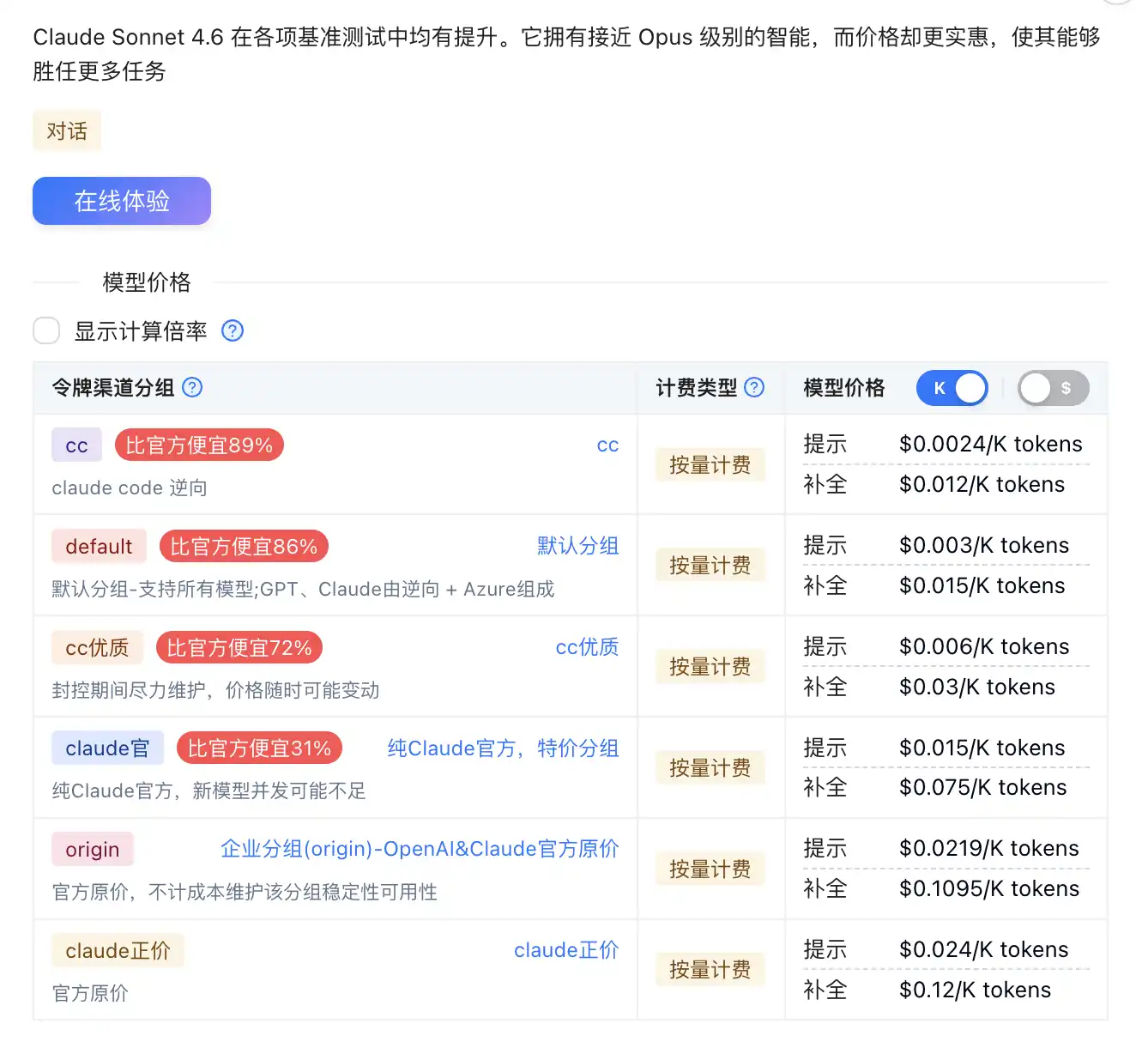
Even more profitable is selling outright fakes.

In early March, CISPA (Helmholtz Center for Information Security) published a research report titled "Real Money, Fake Models: Deceptive Model Claims in Shadow APIs".
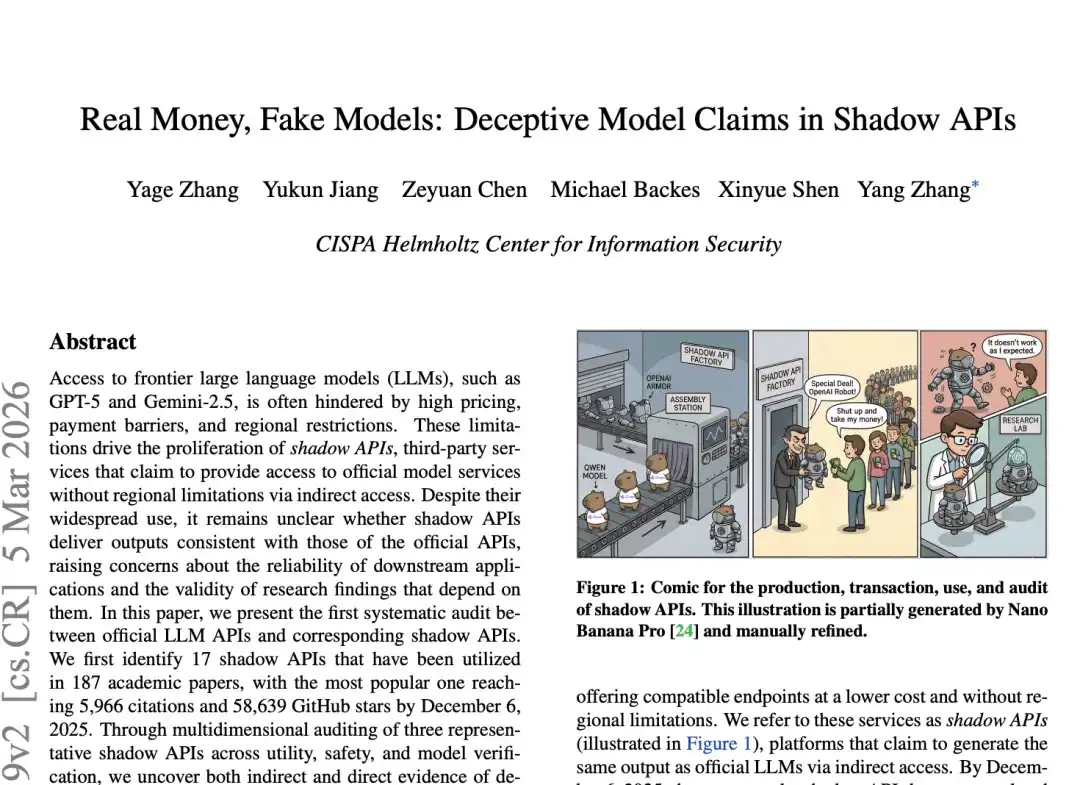
They found that nearly half of third-party API endpoints are engaged in bait-and-switch schemes.

You pay the API fee, happily thinking you're calling GPT-5, but the merchant is likely running an extremely low-cost domestic model in the background, or even a free open-source model run locally (like GLM-4-9B).

Among the 17 top independent shadow API service providers identified by CISPA's audit, 15 were operated purely by individuals, and over 88.2% lacked even the most basic Internet Content Provider (ICP) registration.
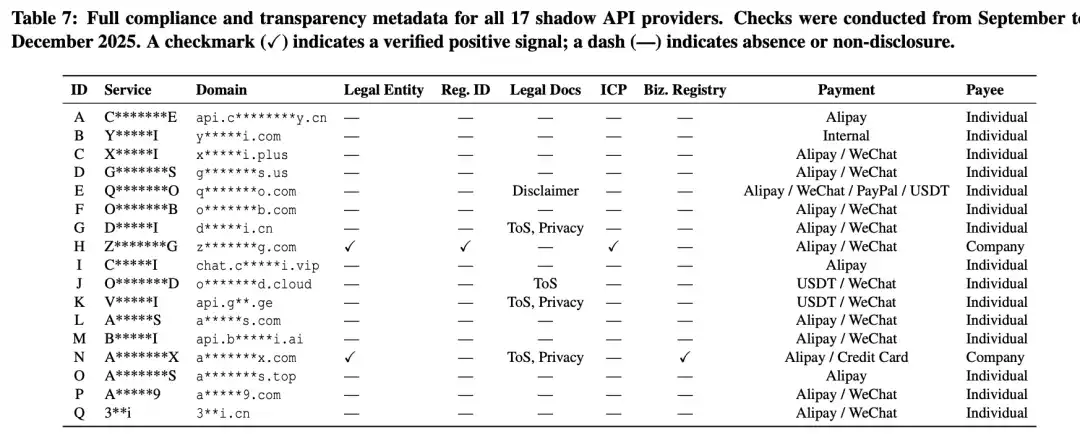
An practitioner engaged in relay API代理 told Deep Tide TechFlow that top relay APIs can achieve monthly profits in the millions, with demand very strong.

These are just stories on the cost side. Former Manus employee Yan publicly disclosed a deeper logic of this business: The core purpose of many Token relay stations is not selling APIs, but to gather high-quality distillation data for specific scenarios.

"All requests passing through the relay, the complete prompt plus response, are ready-made distillation data. Especially in OpenClaw's programming scenarios, users produce complex reasoning chains and real engineering decisions, dream training material for model companies. So the real business model of some relay stations is likely: collecting your relay fee is the surface business; packaging your request data and selling it to big companies for model distillation is the core profit. You are a paying customer and also a free training data producer—killing two birds with one stone."

Above this entire chain, there's another layer of business that looks cleaner: Token aggregation routing service providers, connecting you to a dozen model APIs, automatically routing based on task complexity—simple tasks go to cheap domestic models, complex tasks use Claude or GPT—claiming to save users 65% to 80% on API costs. The service itself has value. Those controlling this traffic entry point accumulate maps of real user usage earlier than any single model company.

Data is always the true asset.

Information Asymmetry is the Oldest Business

If the first two lobster gold mines rely on hardware and data, the third relies on something more fundamental: You know, and others don't.

Li Huan's recent business involves traveling nationwide. He carries his laptop, flying to Shenzhen, Chengdu, Hangzhou, installing OpenClaw for local small business owners, connecting it to Feishu and DingTalk, debugging automated workflows and专属 Skills. Thousands, even tens of thousands of yuan per order, earning more in a month than many programmers' monthly salaries.

A counterintuitive fact is that Li Huan is not a programmer but comes from a liberal arts background. He candidly states he's not selling technology, but information asymmetry—transforming a hot concept into a product bosses can use directly, while providing emotional value to soothe anxiety.

Taking this logic to the extreme is an American named Adam Sand.

Adam is not an engineer either. He and his wife Allison run a roofing industry consulting business. After OpenClaw blew up, he did something the tech circle sees as having no barrier to entry: he pre-installed OpenClaw into MacBooks, connected them to roofing industry-specific Skills packages, HubSpot CRM, and ticketing systems, configured data security, and shipped them directly to customers. Plug it in, and the AI employee starts work. One-on-one training, ongoing weekly support, priced at $5000 per unit.

This project is called RoofClaw, with total historical revenue exceeding $1.8 million, delivered to over 360 roofing contractors.

Many people's first reaction: Isn't this just putting a free open-source project into hardware and charging $5000?

Yes. But Adam isn't selling software, nor hardware. He's selling the certainty that a roofing contractor, without understanding any technology, can have an AI employee start work tomorrow. Most pay the $5000 without hesitation, because he understands their pain points better than anyone, having worked in this industry for over a decade.

This is the essence of the information asymmetry business: truly understanding your customer's needs.

Back in China, this business has evolved into a different style.

On Taobao, several stores offering installation services have received over 1000 orders, with teams of dozens of engineers, earning 300,000 to 450,000 yuan in the past month just from installing OpenClaw. Some installers even promise in the product description "on-site deployment, plus one free cooking service, can cook家常菜".

This track is so hot that even Meituan and JD.com have entered the fray, partnering with Lenovo IT services to offer remote deployment services. From individual operators all the way up to internet giants, every level has people making money, indicating the demand is real and substantial enough.
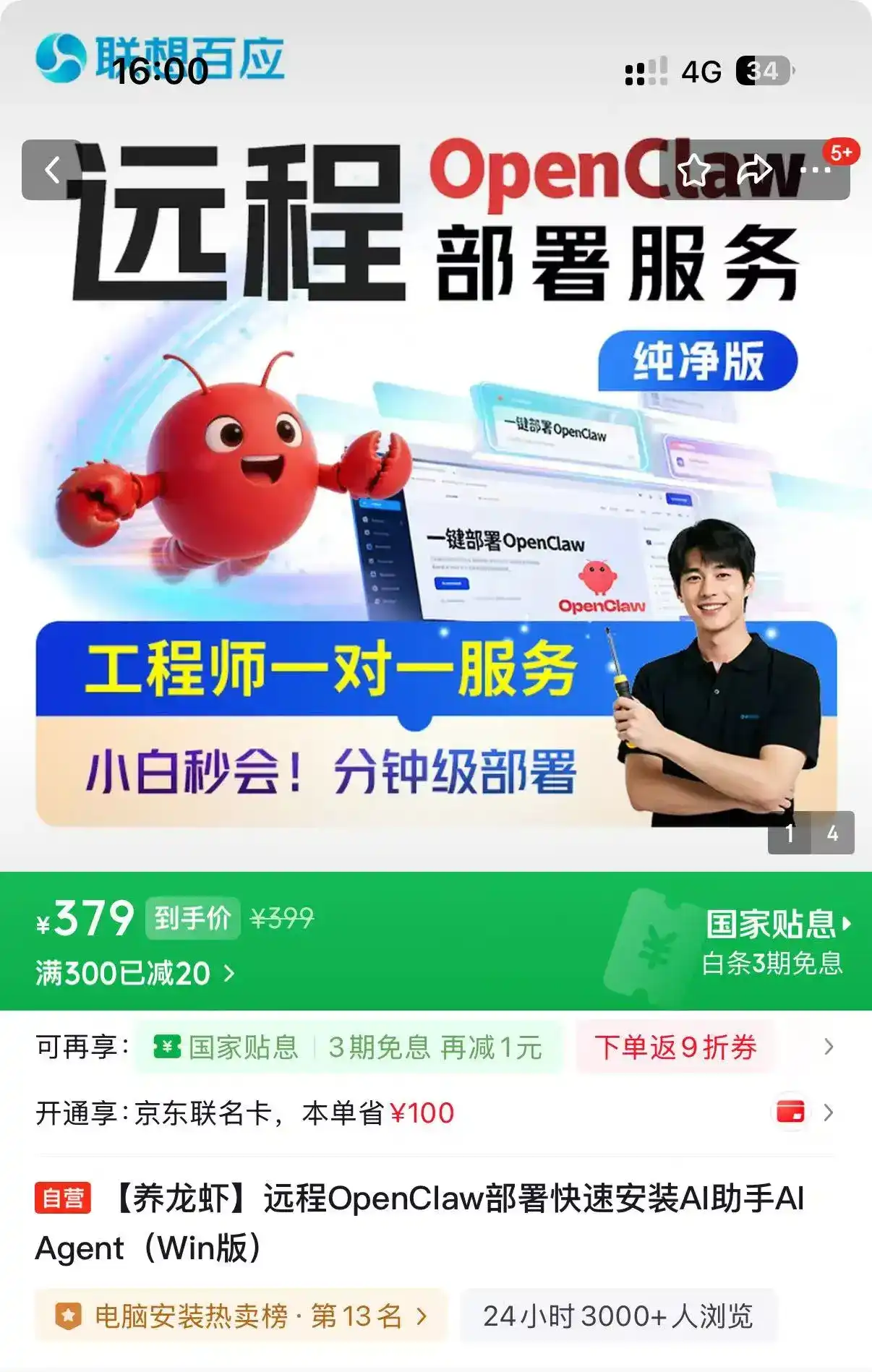
Selling Skills is the other side of this logic.

In OpenClaw's plugin ecosystem ClawHub, community-contributed Skills plugins exceed 5700. Some sell ready-made Skills packages, some sell SOUL.md role configuration templates—AI CEO, Marketing Director, Legal Reviewer—for $19 to $99 each. Some sell custom development services, others sell "Complete OpenClaw Practical Tutorials".

The higher the technical barrier, the more people are willing to pay to lower it. This rule has never failed in any technology cycle.

The Shovel Sellers Are Never Anxious

On a Stripe-officially verified platform aggregating创业项目 with verified revenue, there are already 126 startup projects围绕 OpenClaw, ranked by verifiable revenue over the past 30 days.

The data is brutal: among the top 30 highest-earning projects, over 17 are doing the same thing—one-click cloud hosting.

Claw Mart made $54,000 in the last 30 days, Donely has total historical revenue of $747,000, RoofClaw has total historical revenue of $1.8 million.

But the other side of the story is: The half-life of information asymmetry is measured in "weeks," not "months."

The first wave of shovel sellers have already begun to retreat. A project called QuickClaw, promoting "30-second OpenClaw deployment on手机," quickly gained traction during a traffic surge week, then offered to sell the entire package for $300,000.

This is the most真实 rhythm of this wave: technology concept explodes, information asymmetry window opens, the first wave rushes in,红利 quickly dissipates, the shovel sellers sell their shovels and walk away.

Kong Jianping has long ingrained this rhythm into his muscle memory. He moved from Bitcoin miners to OpenClaw hosts, spanning an entire crypto era. Each time he accurately catches the wave, not because he understands the technology earlier than others, but because he understands human nature better—he understands the fear of "I can't fall behind," and how much people are willing to pay to消解 that fear.

That comparison picture of the qigong craze makes people laugh. The images from the two eras are structurally identical: aluminum pots and lobster hats are both rituals, visualizations of anxiety, symbols of "I'm already on the right side."

The only difference is that the lobster hat in 2026 is connected to a real industry chain behind it, more sophisticated, more adept at monetizing human nature.

During the 1849 California Gold Rush, the ones who made money weren't the miners, but Levi Strauss, who sold jeans.

This story has been told for 175 years, brought up again in every technology wave.

Because every time, it's right.

The shovel sellers don't bet on the technology's win or loss, they bet on the stability of human nature.

So they are never anxious.

Pertanyaan Terkait

QWhat is the core business model of the OpenClaw hardware industry described in the article?

AThe core business model is capitalizing on user anxiety by selling pre-configured hardware or 'turnkey' solutions that lower the technical barrier to using the free, open-source OpenClaw software. This includes selling branded AI-optimized computers, offering OEM/ODM services for white-label hardware, and providing on-site installation and configuration services for a premium price.

QHow do token relay stations (API中转站) generate profit in the OpenClaw ecosystem?

AThey profit by reselling discounted API tokens, often sourced through questionable means like credit card fraud or by reverse-engineering web interfaces of models like Claude. Some engage in deceptive practices by secretly routing user requests to cheaper, less capable models while charging for premium ones. A more sophisticated model involves collecting high-quality user prompts and responses to sell as valuable distillation data to large model companies for training.

QWhat does the success of Adam Sand's RoofClaw project demonstrate about the information gap business?

AIt demonstrates that the most successful businesses are not necessarily built on technical expertise, but on a deep understanding of a specific industry's needs and pain points. By providing a complete, ready-to-use solution (a pre-configured laptop with industry-specific skills) that offers certainty and saves time, he could command a high price ($5000 per unit) from non-technical customers, earning over $1.8 million.

QAccording to the article, who are the real winners in the OpenClaw gold rush, and why?

AThe real winners are the 'shovel sellers'—the businesses that provide the infrastructure and services around the open-source technology rather than using the technology itself. This includes hardware manufacturers, API token resellers, installation service providers, and tutorial sellers. They profit from the widespread anxiety and fear of missing out (FOMO) by monetizing the barriers to entry, and their success is based on the predictable stability of human nature rather than the success of the technology.

QWhat historical analogy does the article use to describe the current OpenClaw phenomenon, and how is it similar?

AThe article uses the analogy of the 1849 California Gold Rush, where the people who sold shovels, jeans (like Levi Strauss), and supplies to the prospectors made more money than the vast majority of the miners themselves. It is similar because in the OpenClaw wave, the entities providing the essential tools, hardware, and services to the masses trying to use the technology are profiting the most, not necessarily the end-users.

Bacaan Terkait

Dialog dengan Ray Dalio: Saat Ini Berada dalam Gelembung AI, 1% Portofolio Investasi Adalah Bitcoin

Sumber: The Diary Of A CEO Ray Dalio, pendiri Bridgewater Associates yang meramalkan krisis keuangan 2008, memperingatkan bahwa ledakan AI saat ini menunjukkan tanda-tanda klasik gelembung ekonomi yang dapat pecah dan memicu resesi. Dalam wawancara podcast, dia menjelaskan dinamika "siklus besar" yang didorong oleh ketimpangan kekayaan, defisit pemerintah, dan perubahan geopolitik. Dalio mengidentifikasi pola di mana antusiasme berlebihan terhadap teknologi revolusioner baru, seperti AI, menyebabkan harga aset melambung dan pinjaman berlebihan. Ketika kondisi berubah (seperti kenaikan suku bunga atau kebutuhan tunai), gelembung ini dapat pecah, menyebabkan penurunan harga aset, kerugian luas, dan kontraksi ekonomi. Untuk melindungi kekayaan di masa ketidakpastian, Dalio sangat menekankan pentingnya **diversifikasi portofolio**—termasuk saham, obligasi, emas, dan real estat—daripada mengandalkan uang tunai saja. Dia mengungkapkan bahwa sekitar **1% portofolionya adalah Bitcoin**, yang diakuinya sebagai aset keras, tetapi dia lebih menyukai **emas fisik** karena sejarahnya sebagai penyimpan nilai dan aset bebas liabilitas. Mengenai dampak AI, Dalio percaya bahwa teknologi ini akan menggantikan tidak hanya tenaga fisik tetapi juga kemampuan kognitif manusia, berpotensi memperlebar kesenjangan antara pemilik modal dan pekerja. Masa depan akan menguntungkan mereka yang dapat memadukan kecerdasan manusia (seperti emosi dan intuisi) dengan kemitraan AI. Secara geopolitik, Dalio menggambarkan dunia yang memasuki fase "penurunan" dalam tatanan global, dengan Amerika Serikat menghadapi tantangan internal dan eksternal, termasuk konflik seperti di Iran yang mengungkap kelemahannya. Dia memprediksi dunia mungkin menjadi lebih terregionalisasi di masa depan. Secara keseluruhan, kunci untuk navigasi melalui periode kompleks ini adalah pemahaman akan pola sejarah, adaptasi, dan diversifikasi yang cermat.

marsbit2j yang lalu

Dialog dengan Ray Dalio: Saat Ini Berada dalam Gelembung AI, 1% Portofolio Investasi Adalah Bitcoin

marsbit2j yang lalu

Rekor! Beli Bersih Asing 7,2 Triliun Won dalam Sehari, Wall Street: Tekanan Likuiditas di Pasar Saham Korea Telah Mereda

**Ringkasan: Rekor Pembelian Asing dan Peningkatan Likuiditas di Pasar Saham Korea** Aliran modal asing menunjukkan perubahan signifikan di pasar saham Korea (KOSPI). Pada 31 Juli, investor asing melakukan pembelian bersih rekor sebesar 7,2 triliun Won Korea dalam sehari, menandai pembalikan dari tren penjualan bersih besar-besaran dalam beberapa bulan terakhir. Secara bulanan, penjualan bersih asing menyusut drastis menjadi 9,8 triliun Won di Juli, turun dari 48,4 triliun dan 44,5 triliun Won pada Juni dan Mei. Tekanan penjualan dari lembaga domestik juga mereda. Dana pensiun dan reksa dana domestik justru menjadi pembeli bersih 1,0 triliun Won di Juli, setelah dua bulan sebelumnya menjadi penjual bersih. Faktor pendukung lainnya adalah peraturan baru dari Komisi Jasa Keuangan (FSC) yang memberlakukan syarat lebih ketat bagi investor ritel untuk masuk ke ETF leverage saham tunggal, yang langsung mengurangi volume perdagangan instrumen tersebut hingga sekitar 50%. Kebijakan ini diperkirakan dapat menekan volatilitas pasar. Citigroup mempertahankan target indeks KOSPI di level 10.000 poin, menyoroti memudarnya angin penentu likuiditas. Analis mereka menilai faktor fundamental seperti industri chip memori yang solid, valuasi historis yang rendah, fundamental ekonomi Korea yang kuat, dan dukungan kebijakan berpotensi menjadi pendorong bagi pasar.

marsbit2j yang lalu

Rekor! Beli Bersih Asing 7,2 Triliun Won dalam Sehari, Wall Street: Tekanan Likuiditas di Pasar Saham Korea Telah Mereda

marsbit2j yang lalu

Pembaruan! AI Generasi Berikut OpenAI Pecahkan 10 Masalah Kelas Medali Fields

**OpenAI Model Astra Pecahkan 10 Masalah Matematika Kelas Fields Medal!** OpenAI mengumumkan terobosan besar dari model internal terbarunya, Astra. Model ini dilaporkan telah membuat kemajuan signifikan dalam **10 masalah matematika yang belum terpecahkan**, dengan biaya komputasi hanya sekitar **$2000**. Hasilnya dipublikasikan dalam makalah setebal 249 halaman. Beberapa pencapaian utama meliputi: 1. **Menyelesaikan masalah "non-sofic group"** yang diajukan Mikhail Gromov tahun 1999, dengan membangun contoh kelompok yang tak hingga dan finitely presented yang bukan sofic. Ini dianggap sebagai kemajuan bersejarah. 2. **Memecahkan batas lama dalam masalah pengepakan bola berdimensi tinggi** (sphere packing), meningkatkan batas yang telah bertahan sejak 1978 untuk dimensi tak hingga. 3. **Menyangkal dugaan "Connes Rigidity"** dengan membangun keluarga tak terhitung dari kelompok berbeda yang menghasilkan aljabar von Neumann yang sama persis. Semua bukti telah diverifikasi menggunakan asisten pembuktian formal Lean 4, memastikan ketepatannya. Para ahli matematika menyebut temuan ini sebagai **momen bersejarah**, setara dengan prestasi penghargaan Fields Medal, dan menandai kemampuan AI untuk melakukan penalaran matematika mendalam di berbagai bidang. OpenAI juga membagikan proses penalaran model, menunjukkan langkah maju yang besar menuju AGI (Artificial General Intelligence).

marsbit4j yang lalu

Pembaruan! AI Generasi Berikut OpenAI Pecahkan 10 Masalah Kelas Medali Fields

marsbit4j yang lalu

Bagaimana Membuat Diri Sendiri Tak Tergantikan oleh Kecerdasan Buatan

**Ringkasan: Bagaimana Membuat Diri Anda Tak Tergantikan oleh AI** Artikel ini membahas ancaman nyata dalam era AI: bukan kehilangan pekerjaan, tetapi "perbudakan gaji"—ketergantungan pada sistem dan orang lain untuk bertahan hidup. Solusinya adalah menjadi "individu super" yang "tak bisa dipekerjakan" dengan membangun bisnis atau karya sendiri. Kunci untuk bertahan dan berkembang di masa depan bukan sekadar keterampilan teknis, tetapi menguasai lima elemen yang sulit digantikan AI: 1. **Otonomi (Agency):** Kemampuan bertindak tanpa menunggu perintah. 2. **Rasa (Taste):** Pengalaman untuk mengetahui apa yang bernilai untuk ditawarkan. 3. **Kemampuan Persuasi (Persuasion):** Keterampilan menarik perhatian dan pengakuan. 4. **Ketekunan (Persistence):** Memahami bahwa kegagalan adalah bagian dari proses. 5. **Iterasi (Iteration):** Kemampuan memperbaiki kesalahan berdasarkan umpan balik. Lima elemen ini dapat dikembangkan dengan **membuat konten** (media). Dibandingkan pemrograman (code), konten lebih unggul karena nilainya subjektif, membutuhkan penilaian manusia, dan merupakan alat distribusi yang ampuh untuk membangun koneksi dan otoritas. Untuk memulai transformasi: 1. **Ubah lingkungan** Anda secara drastis untuk memicu perubahan identitas. 2. **Gali "bahan mentah"** Anda: Identifikasi pengetahuan mendalam, masalah yang pernah Anda selesaikan, dan minat unik masa kecil Anda. 3. **Temukan "poros pemikiran balik"**: Tentukan pendapat kontra-intuitif atau keyakinan Anda yang bertentangan dengan arus utama dalam bidang Anda. 4. **Luncurkan ide pertama** Anda besok. Gabungkan jawaban dari langkah 2 dan 3, lalu publikasikan. Umpan balik nyata dari dunia adalah guru terbaik. Intinya, bangunlah *karier seumur hidup* yang autentik berdasarkan pengalaman dan sudut pandang unik Anda. Dengan memanfaatkan AI sebagai alat dan fokus pada pengembangan diri yang tak tergantikan, Anda dapat mengambil kendali atas hidup dan masa depan Anda.

marsbit5j yang lalu

Bagaimana Membuat Diri Sendiri Tak Tergantikan oleh Kecerdasan Buatan

marsbit5j yang lalu

Kunci Bitcoin Disimpan Offline Berkat Lemparan Dadu, Tetapi Tidak Semua Orang Akan Melakukannya

Berdasarkan insiden kerentanan generator angka acak pada perangkat hardware wallet Coldcard, artikel ini membahas metode pembuatan kunci Bitcoin menggunakan dadu untuk menghasilkan entropi mandiri. Claude Shannon mengukur ketidakpastian dengan konsep entropi, di mana satu lemparan dadu enam sisi setara dengan sekitar 2,585 bit. Praktik melempar dadu 50 hingga 99 kali dapat menghasilkan frasa pemulihan 12 kata yang aman (128 bit entropi), melampaui ketergantungan pada generator perangkat. Namun, insiden Coldcard mengungkap bahwa meskipun seed utama dibuat dari dadu aman, fungsi lain seperti dompet kertas, kunci kloning, dan password masih berpotensi menggunakan generator cacat. Peneliti keamanan Kevin Loaec menekankan bahwa perlindungan hanya berlaku untuk seed utama, bukan keseluruhan sistem. Proses manual ini membutuhkan ketelitian tinggi, rentan kesalahan, dan tidak praktis bagi kebanyakan pengguna baru. Oleh karena itu, meski kuat secara matematis, metode ini lebih cocok untuk pengguna berpengalaman. Artikel menyarankan pemilik Coldcard untuk memperbarui firmware, memeriksa fungsi yang pernah digunakan, dan mempertimbangkan skema multisignature dengan perangkat dari produsen berbeda untuk mitigasi risiko. Tujuan jangka panjang adalah perangkat yang dapat menghasilkan keacakan kuat secara mandiri, tanpa memerlukan prosedur rumit dari pengguna.

cryptonews.ru8j yang lalu

Kunci Bitcoin Disimpan Offline Berkat Lemparan Dadu, Tetapi Tidak Semua Orang Akan Melakukannya

cryptonews.ru8j yang lalu

Trading

Spot
活动图片





