Matrixdock FRS Standard: From Gold to Silver, How Is the On-Chain Reserve Asset System Evolving?

marsbitDipublikasikan tanggal 2026-03-19Terakhir diperbarui pada 2026-03-19

Abstrak

The article discusses the evolution of on-chain real-world assets (RWA), shifting focus from simple asset tokenization to establishing sustainable and verifiable operational frameworks for long-term on-chain existence. It introduces Matrixdock’s FRS (Fungible Reserve Standard), a mechanism that encodes the economic attributes of reserve assets—like custody and operational costs—directly into the token structure. Unlike traditional mapping approaches, FRS maintains a deterministic relationship between the reserve asset, token supply, and operational costs over time. It adjusts the quantity of underlying assets per token to reflect costs structurally, without charging external fees or extracting profits. The piece highlights the extension from gold—a stable reserve asset—to more volatile and cyclical silver, demonstrating how FRS provides a consistent operational framework regardless of asset type. Matrixdock’s XAGm, a silver-backed token, is presented as a practical implementation of FRS, using LBMA-standard silver bars held in institutional vaults. Finally, the article introduces the concept of a “Reserve Layer”—a structured system of diverse, high-quality assets operating under a unified mechanism to support on-chain finance. The broader implication is that RWA’s future depends not on tokenization alone, but on robust, verifiable, and sustainable on-chain operational frameworks.

In recent times, discussions around RWA (Real World Assets) being brought on-chain have primarily revolved around one question: which assets can be introduced to the blockchain. Whether it's gold, government bonds, or various real-world assets, the core logic centers on "mapping"—converting real assets into on-chain certificates. However, as the market gradually advances, a more specific issue has begun to emerge: can these assets exist on-chain in the long term and operate in a verifiable manner over time?

When assets are no longer short-term holding instruments but need to form long-term structures on-chain, mere "mapping" is no longer sufficient. The clarity of reserve status, how token supply changes, and how custody and operational costs are reflected have become critical factors affecting asset stability.

Against this backdrop, mechanism frameworks built around "how assets operate on-chain" are becoming an important component of RWA infrastructure. Among these, the FRS (Fungible Reserve Standard) developed by Matrixdock is a structural response to this very issue.

FRS: A Mechanism Framework for Encoding the Economic Attributes of Assets

FRS is not a single product issuance model but a mechanism framework that encodes the economic attributes of reserve assets into the token structure. Its focus is not on "how to issue tokens" but on continuously maintaining a deterministic relationship between reserve assets, token supply, and operational costs on-chain.

In the FRS framework:

  • The correspondence between tokens and the underlying reserve assets is explicitly defined at the mechanism level and is verifiable
  • The economic attributes of the assets (including custody and operational costs) are continuously reflected on-chain through systematic mechanisms
  • Costs are structurally reflected on-chain according to established rules, rather than being charged separately as external fees
  • The overall structure does not include management fees or profit extraction, only reflecting the actual costs incurred from asset custody and operations

Specifically, this mechanism adjusts "the amount of asset corresponding to each unit token" so that asset costs are continuously reflected over time, thereby reflecting holding costs without changing the quantity held by users. This design transforms on-chain assets from static "mapping results" into a structured system that operates continuously according to established rules. In this sense, FRS is closer to a standardized operating mechanism for on-chain reserve assets, rather than a single product framework.

From Gold to Silver: The Logic Behind Asset Expansion

In the traditional financial system, gold has long played a central role as a reserve asset, and its value-anchoring properties have made it one of the first precious metals to enter the on-chain structure.

In contrast, silver is influenced by both investment demand and industrial cycles, exhibiting more pronounced volatility and cyclical characteristics. This also means that, in the absence of a unified mechanism, the on-chain representation of such assets often faces higher uncertainty. The stronger the asset volatility, the greater the demand for constraints and verification mechanisms in its on-chain structure.

The role of FRS is to provide a unified structural foundation in this process: regardless of how asset characteristics change, their operational logic on-chain remains consistent. Under this framework, asset expansion is no longer merely an increase in underlying assets but:

  • Introducing reserve assets with different attributes under a unified mechanism
  • Enhancing the diversity of asset portfolios while maintaining structural consistency

Therefore, the evolution from gold to silver is not just an expansion at the asset level but also a continuation at the mechanism level.

XAGm: An Implementation of FRS for Silver Assets

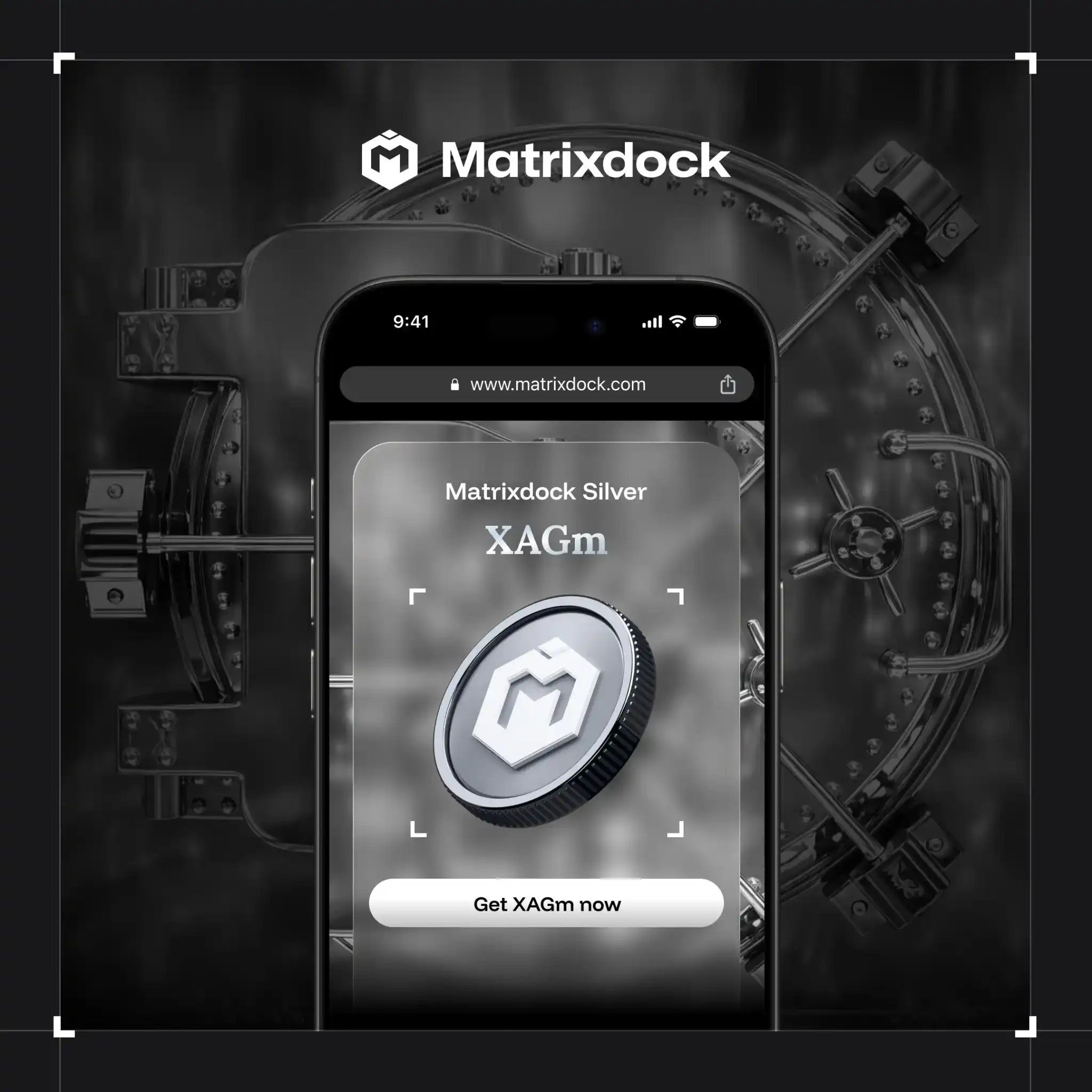
Under the FRS framework, Matrixdock has launched the silver token XAGm, representing a further application of this mechanism to precious metal assets.

From a practical perspective, XAGm operates silver assets within the FRS mechanism, rather than merely mapping physical silver on-chain. Its underlying assets are fully physically allocated silver, using LBMA Good Delivery standard silver bars, and are custodied by institutional-grade vaults. However, within the FRS framework, the key aspect of silver is not just "being put on-chain" but how its economic attributes are continuously encoded into the on-chain structure.

In this mechanism, the operation of silver assets is manifested as:

  • The configuration status of reserve assets has clear boundaries on-chain and can be independently verified through established methods
  • The amount of silver corresponding to each unit token adjusts over time according to established rules, ensuring asset costs are continuously reflected over time
  • The total token supply is adjusted mechanistically to maintain a deterministic relationship with the underlying silver reserves
  • Custody and operational costs for silver are not charged as external fees but are continuously reflected on-chain through preset rules

In this process, silver is not just represented as an on-chain asset; its economic attributes are continuously reflected within the mechanism. Therefore, the significance of XAGm is not only in bringing silver on-chain but also in providing a specific paradigm for how silver assets can be structurally organized and operated under the FRS mechanism.

Reserve Layer: From Asset Collection to Structural System

Under the FRS framework, reserve assets no longer exist as "single assets" but gradually form a structural system with internal logic.

This system (referred to by Matrixdock as the Reserve Layer) can be understood as:

  • Comprising multiple high-quality reserve assets
  • Operating under a unified mechanism
  • Collectively providing value support and a liquidity foundation for on-chain financial activities

Within this structure:

  • Gold serves a relatively stable value-anchoring function
  • Silver introduces cyclicality and trading activity
  • Different assets are organized into a portfolio with consistent operational logic through the FRS mechanism

This shift means that the significance of reserve assets lies not only in "the assets themselves" but also in their structural position and mode of operation.

RWA development is entering a new stage. The act of bringing assets on-chain is no longer the main hurdle; the real challenge lies in: how to ensure these assets can exist on-chain in the long term and operate in a verifiable manner continuously.

FRS, as a mechanism framework built by Matrixdock, provides a path to transform real-world assets into structural units on-chain. As more assets are introduced onto the chain under this framework, a reserve asset system based on "mechanisms" is gradually taking shape.


Pertanyaan Terkait

QWhat is the core focus of the FRS (Fungible Reserve Standard) framework developed by Matrixdock?

AThe core focus of the FRS framework is not on 'how to issue tokens,' but on continuously maintaining a deterministic relationship between reserve assets, token supply, and operational costs on the blockchain in a verifiable manner.

QHow does the FRS mechanism handle the costs associated with holding a reserve-backed asset like XAGm?

AThe FRS mechanism handles costs by systematically adjusting the 'amount of asset corresponding to each unit of token' over time. This reflects custody and operational costs within the token's structure itself, rather than charging them as separate, external fees.

QWhat key challenge in the RWA (Real World Asset) sector does the FRS framework aim to address?

AThe FRS framework aims to address the challenge of how to make real-world assets exist long-term on the blockchain and operate continuously in a verifiable way, moving beyond simple asset 'mapping' to a structured, rules-based system.

QWhat is the significance of expanding from gold to silver within the FRS framework, according to the article?

AThe expansion from gold to silver is significant because it demonstrates the framework's ability to incorporate assets with different attributes (like silver's higher volatility and cyclical nature) under a unified, consistent operational mechanism, thereby increasing portfolio diversity.

QHow does the article define the 'Reserve Layer' that is formed under the FRS framework?

AThe 'Reserve Layer' is defined as a structural system composed of multiple high-quality reserve assets (like gold and silver) that run under a unified mechanism (FRS) to collectively provide value support and a liquidity foundation for on-chain financial activities.

Bacaan Terkait

Operator Teleprompter "Khusus" Gedung Putih Raup Lebih dari $100.000 dengan Prediksi Berbasis Informasi Orang Dalam

Artikel berjudul "Operator Teleprompter Gedung Putih Dapatkan Lebih dari $100.000 dengan Informasi Orang Dalam" mengungkap kasus insider trading di pasar prediksi oleh Gabriel Perez, asisten teknis dan operator teleprompter untuk mantan Presiden AS Donald Trump. Perez, yang memiliki akses ke naskah pidato Trump sebelum disampaikan, menggunakan informasi orang dalam ini untuk bertaruh pada kata-kata spesifik yang akan disebutkan Trump dalam berbagai pidato di platform prediksi Kalshi. Dalam sekitar tiga bulan, ia mendapat untung lebih dari $100.000. Namun, platform Kalshi mendeteksi aktivitas mencurigakan, membekukan dana sekitar $90.000, dan melaporkannya ke CFTC. Akibatnya, Perez diberhentikan sementara tanpa gaji oleh Trump. Meski mengembalikan keuntungan dan berjanji tidak mengulangi pelanggaran, ia tidak menghadapi tuntutan pidana karena dianggap tidak membocorkan informasi rahasia negara. Kasus ini menyoroti kerentanan pasar prediksi "sebutan" terhadap manipulasi, di mana orang dalam atau pembicara sendiri dapat dengan mudah mempengaruhi hasil. Insiden serupa sebelumnya melibatkan tentara dan insinyur Google. Sebagai tanggapan, platform seperti Kalshi mulai memperketat aturan, termasuk mengharuskan pengguna mengungkapkan tempat kerja. Artikel menyimpulkan bahwa meskipun pembersihan perdagangan orang dalam membuat pasar prediksi lebih patuh, hal itu juga menjauhkannya dari tujuan awalnya sebagai pengejawantahan kebijaksanaan kolektif, menjadikannya lebih mirip kasino biasa.

marsbit8m yang lalu

Operator Teleprompter "Khusus" Gedung Putih Raup Lebih dari $100.000 dengan Prediksi Berbasis Informasi Orang Dalam

marsbit8m yang lalu

Operator Teleprompter "Khusus" Gedung Putih, Meraup Lebih dari 100 Ribu Dolar AS dengan Prediksi Menggunakan Informasi Orang Dalam

Sebuah staf Gedung Putih yang bertugas mengoperasikan teleprompter (penyusun teks pidato) untuk mantan Presiden AS Donald Trump, Gabriel Perez, telah diduga melakukan perdagangan orang dalam (insider trading) di pasar prediksi. Perez, yang memiliki akses ke naskah pidato Trump sebelum disampaikan, dilaporkan memanfaatkan informasi non-publik tersebut untuk bertaruh pada kata-kata spesifik yang akan disebutkan Trump dalam berbagai pidatonya di platform prediksi Kalshi. Dalam kurun waktu sekitar tiga bulan, ia dikabarkan memperoleh keuntungan lebih dari $100,000. Kalshi kemudian mendeteksi aktivitas transaksi yang tidak biasa dan membekukan lebih dari $90,000 di akun Perez sebelum melaporkan kasus ini kepada Commodity Futures Trading Commission (CFTC). Atas insiden tersebut, Perez diberhentikan sementara dari tugasnya tanpa gaji oleh Trump. Berbeda dengan dua kasus insider trading sebelumnya di pasar prediksi yang melibatkan seorang tentara dan insinyur Google, Perez tidak menghadapi tuntutan pidana. CFTC dikabarkan sedang dalam proses penyelesaian damai yang mewajibkannya mengembalikan keuntungannya dan berhenti melakukan transaksi serupa. Kasus ini menyoroti kerentanan pasar prediksi "sebutan" (mention markets) terhadap manipulasi, di mana individu dengan informasi orang dalam atau bahkan pembicara itu sendiri dapat dengan mudah memengaruhi hasilnya. Beberapa contoh, seperti CEO Coinbase yang dengan sengaja menyebut semua opsi taruhan dalam sebuah konferensi, mengilustrasikan masalah ini. Menanggapi hal tersebut, Kalshi telah memperketat kebijakan dengan mewajibkan pengguna mengungkapkan tempat kerja mereka untuk mencegah penyalahgunaan informasi orang dalam. Insiden Perez menandai langkah lain dalam pembersihan perdagangan orang dalam di industri pasar prediksi, sekaligus mempertanyakan keandalan pasar tersebut sebagai cerminan kebijaksanaan kolektif.

Odaily星球日报12m yang lalu

Operator Teleprompter "Khusus" Gedung Putih, Meraup Lebih dari 100 Ribu Dolar AS dengan Prediksi Menggunakan Informasi Orang Dalam

Odaily星球日报12m yang lalu

Tambang Bitcoin Berubah Menjadi Pabrik AI

Tambang Bitcoin Berubah Menjadi Pabrik AI Di Texas, AS, proyek kampus besar pertama OpenAI "Stargate" dibangun di atas lahan bekas penambangan Bitcoin oleh Crusoe, perusahaan yang awalnya memanfaatkan gas alam terbuang untuk menambang kripto. Ini mencerminkan tren transformasi besar: infrastruktur dan sumber daya dari era Crypto kini dialirkan ke industri AI. Pilar utama transformasi ini adalah: 1. **Tambang ke Pusat Data AI:** Perusahaan penambangan seperti Bitdeer, CoreWeave (dulunya Atlantic Crypto), TeraWulf, dan Hut 8 menjual atau mengalihkan kapasitas pusat data mereka yang sudah memiliki akses listrik, lahan, dan izin ke perusahaan AI seperti Anthropic dan AWS. Kontrak jangka panjang bernilai miliaran dolar ini lebih menguntungkan dibandingkan pendapatan menambang Bitcoin yang menurun. 2. **Talenta Crypto ke Startup AI:** Mantan eksekutif dan insinyur Crypto membawa keahlian mereka ke bidang AI. Contohnya, Alex Atallah (co-founder OpenSea) mendirikan OpenRouter, sebuah platform agregator untuk ratusan model AI. Burkay Gur (eks Coinbase) mendirikan Fal.ai, infrastruktur untuk inferensi media generatif. 3. **Modal Crypto Mendanai AI:** Kekayaan yang terakumulasi dari pasar Crypto digunakan untuk membiayai ekosistem AI. Jed McCaleb (pendiri Ripple/Stellar) mendanai Voltage Park, penyewa GPU skala besar. Venture capital Crypto seperti Paradigm berinvestasi dalam startup AI seperti Nous Research (pengembang model Hermes). Bahkan investasi awal SBF (FTX) di Anthropic dan Anysphere (penghasil Cursor) menunjukkan aliran modal ini. Intinya, industri Crypto tidak menghilang, tetapi aset-aset berharganya—infrastruktur listrik/pusat data, talenta teknis, dan modal—ditempatkan kembali untuk membangun fondasi industri AI berikutnya.

链捕手22m yang lalu

Tambang Bitcoin Berubah Menjadi Pabrik AI

链捕手22m yang lalu

Trading

Spot
活动图片