High-Frequency Trading, $100K Annual Income: The Most 'Boring' Profit Myth on Polymarket

marsbitDipublikasikan tanggal 2026-02-11Terakhir diperbarui pada 2026-02-11

Abstrak

A user known as planktonXD (0x4ffe49ba2a4cae123536a8af4fda48faeb609f71) has generated over $106,000 in profit on Polymarket within a year by executing more than 61,000 predictions—averaging around 170 trades per day. This high-frequency, automated strategy focuses on exploiting small, certain opportunities rather than betting on high-risk, high-reward outcomes. The approach is characterized by market-making and micro-arbitrage: placing orders on both sides of the order book to capture spreads or profiting from mispriced options in low-liquidity markets. The largest single win was only $2,527, illustrating a disciplined, risk-managed method that avoids large drawdowns. The bot operates across diverse categories—sports, weather, crypto prices, politics—constantly scanning for pricing inefficiencies. Notable examples include buying heavily undervalued options in niche markets, such as esports matches or extreme crypto price movements, where probability is mispriced due to emotional trading or thin order books. For instance, a $16 bet on SOL falling to $130 (priced at 0.7¢, implying <1% chance) returned $1,574 during a volatile period. Key takeaways: The strategy highlights the power of compounding small gains, the necessity of automation and API tools, and the superiority of high-probability opportunities over high-risk bets. In prediction markets, the most advanced approach isn’t forecasting—it’s managing probability and liquidity.

Original Author: Ma He, Foresight News

Another miracle has emerged on Polymarket.

Through extensive monitoring and frenzied betting, an address has netted $100,000 in just one year by compounding small profits.

The address we are reviewing, planktonXD (0x4ffe49ba2a4cae123536a8af4fda48faeb609f71), is an extremely typical high-frequency quantitative trader. From February 2025 to the present, in just one year, it has generated a net profit of $106,000 through over 61,000 predictions.
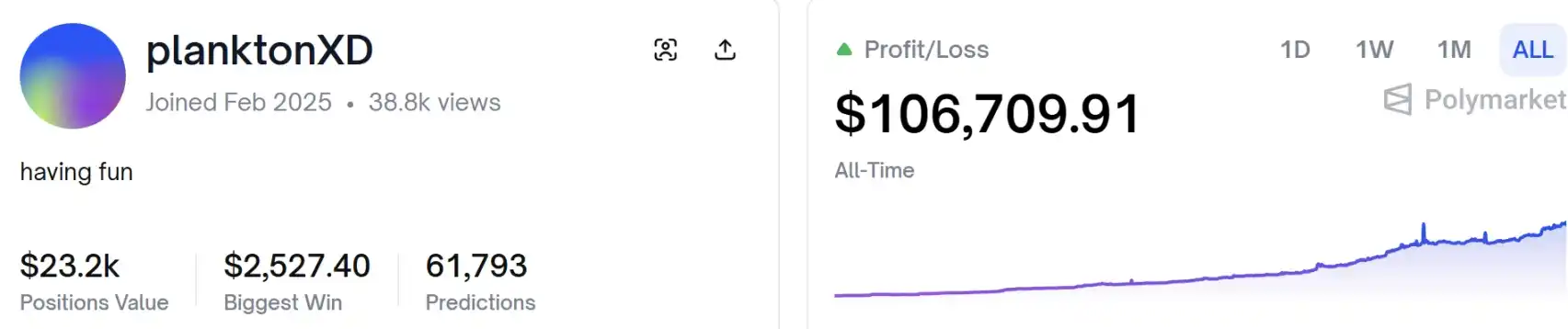
In prediction markets, most people are gambling on "black swans" or chasing big news, but planktonXD takes a completely different path: extreme certainty and terrifying execution frequency.

Looking at planktonXD's historical trading data, the most astonishing aspect is its 61,000 predictions. From February 2025 to February 2026, it averages about 170 transactions per day.

This frequency far exceeds the limits of manual human operation, confirming that this player uses an automated trading script (Bot). It is not "predicting" outcomes but "harvesting" price differences.

A very interesting phenomenon is that planktonXD's "Biggest Win" is only $2,527.4. Compared to its total profit of $100,000, this single largest gain appears very "small" (only about 2% of the total profit).

Some retail players always hope to make a big score, betting all their chips on a confident judgment.

Winning is good, of course, but losing makes it hard to get back to the table.

Even if every ALL-IN could win, just one loss would mean a big defeat.

Reviewing its trading history, it never goes all-in on a single extreme event, nor does it bet on high odds. Its profit curve shows a perfect 45-degree smooth rise with almost no significant drawdowns. This indicates it employs a market-making strategy: placing orders on both sides of the order book to earn the bid-ask spread, or performing micro-arbitrage using price fluctuations between different markets.
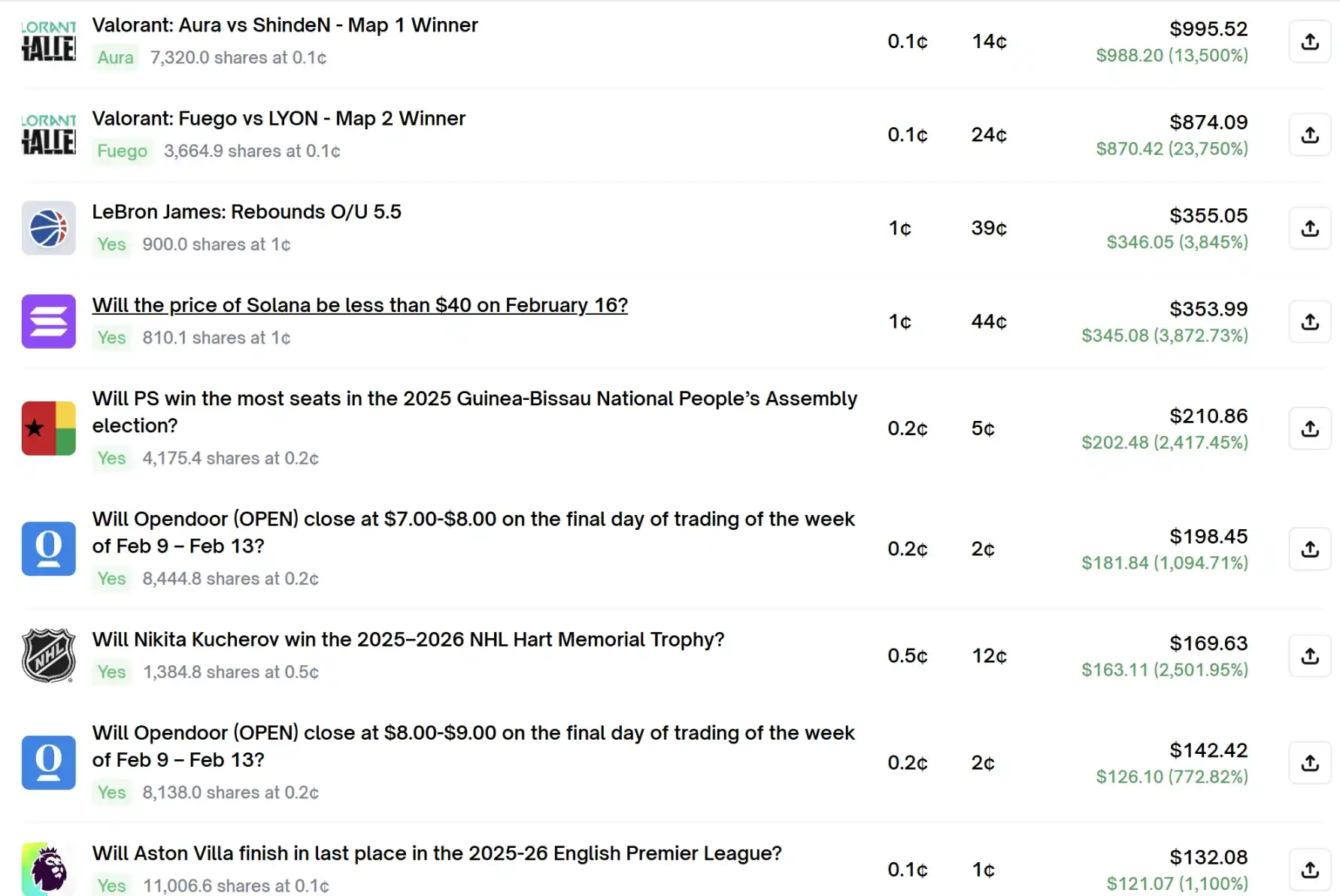
It does not always hold positions long-term (Buy and Hold) but frequently enters and exits the market. This "light position, fast turnover" approach greatly reduces single-point risk. Even if an unexpected event occurs in a prediction market (like a sudden election result change), its impact on the total capital pool is minimal.

This quantitative robot does not specialize in trading vertical sectors like weather but places bets across multiple sectors: sports, weather, coin prices, politics, etc. It monitors thousands of prediction markets on the platform 24/7, looking for moments of pricing inefficiency.

VALORANT Challengers is a classic实战 case study for this trader.

You can think of it as the "minor league" or "regional league" of the esports circle. Fuego and LYON are professional teams in the Latin American region. Because such matches have a small audience and extremely high information asymmetry, they become a "套利天堂" (arbitrage paradise) for quantitative robots.

It bought 3,664.9 shares of Fuego winning at a unit price of $0.001, and this trade ultimately yielded a return of $874.09, with a staggering return rate of 23,750%!

This is a typical "small position, big odds" play. In long-tail markets with extremely poor liquidity or where the public is extremely bearish on a certain option (like the round results of esports matches), it uses a Bot to monitor options that are mispriced to near "zero." It doesn't need to predict who will win; it only needs to know that Fuego's probability of winning is definitely not 0.1%. This is essentially harvesting the market's "extreme sentiment" and "lack of liquidity."

When it comes to sentiment, coin prices embody it most vividly.
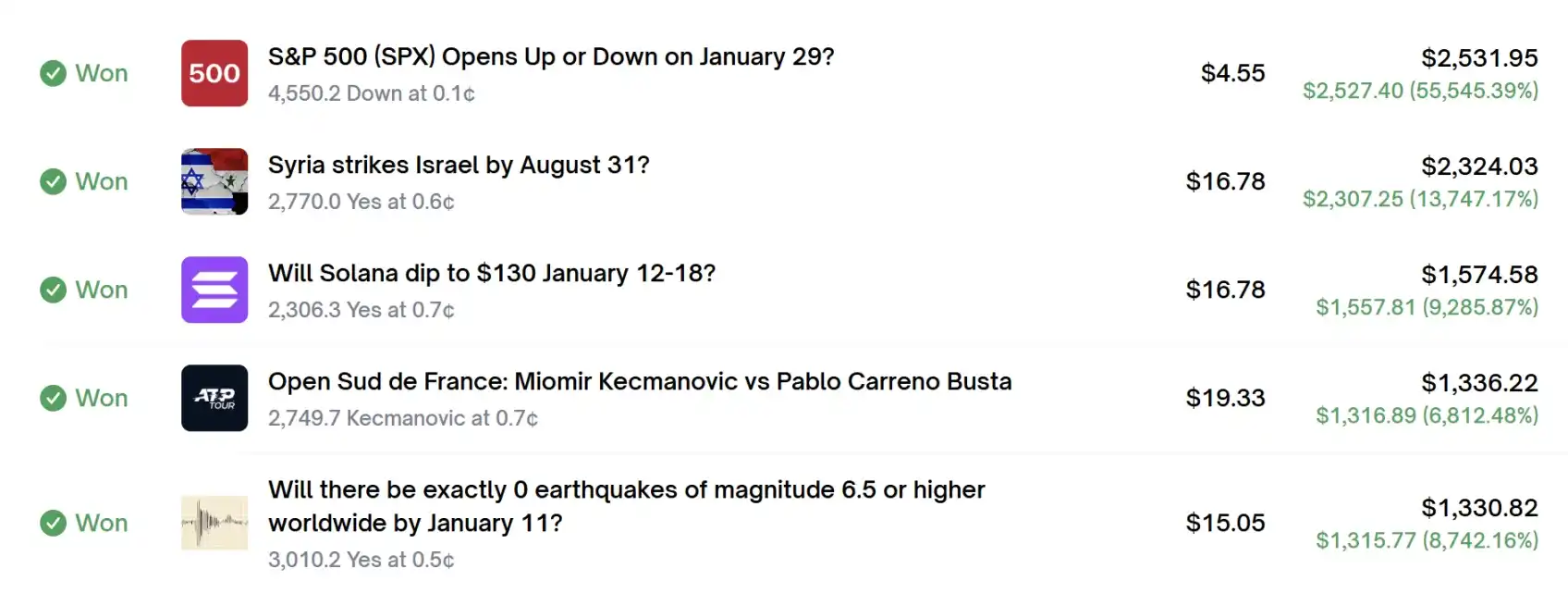
Will the SOL price drop to $130 between January 12-18?

It invested about $16 at $0.007 (the market believed the probability of success was less than 1%) and ultimately took away $1,574, with an amazing return rate of 9,285%.

Why did this "almost impossible" prediction allow it to make big money at that time?

During periods of剧烈波动 (sharp volatility) in the cryptocurrency market, mainstream predictions tend to be bullish or sideways. planktonXD would捕捉 (capture) those "extremely bearish" options priced at $0.001 - $0.01 around the clock. These options are like worthless paper to ordinary people, but they are extremely cheap insurance to quant traders. As long as the market experiences a deep wick or sudden bad news, these "worthless papers" can instantly surge thousands of times. Additionally, in specific price ranges (e.g., SOL < $40), because the current price is far from the predicted price, the order book is often very thin. planktonXD uses automated scripts to place orders in these "no-man's land," eating up the cheap shares抛出的 (thrown out) due to panic or misoperation, essentially acting as a probability搬运工 (mover).

planktonXD's SOL strategy shows that on Polymarket, buying the "impossible" does not mean it believes it will happen, but because the "probability of it happening" is underestimated by the market. It uses a few dollars to buy out the market's one-in-ten-thousand possibility of panic. This is a typical "antifragile" trade.

planktonXD's success offers three core启示 (insights) for ordinary retail users:

The power of compound interest should not be underestimated. Earning 0.5% daily through high-frequency trading yields much more stable returns after a year than betting on a 10x coin. Technology is the killer skill. In the Crypto era, quantitative tools and API capabilities are standard for top players. Finally, certainty is greater than odds. In prediction markets,寻找 (finding) those small profit opportunities with extremely high probability (e.g., 90%+ certainty) is easier to survive than gambling on 50/50 major events.

After all, the highest level of play in prediction markets is not predicting the future, but managing probability and liquidity.


Pertanyaan Terkait

QWhat is the key strategy used by the address planktonXD to earn over $100,000 on Polymarket in a year?

AThe key strategy is high-frequency automated trading (using a bot) that focuses on small, certain profits through market making and micro-arbitrage, rather than betting on high-risk, high-reward events. It executed over 61,000 predictions in a year, averaging about 170 trades per day.

QHow does planktonXD achieve such a smooth profit curve with minimal drawdowns?

AIt achieves this by using a market maker strategy: placing orders on both sides of the order book to capture the bid-ask spread, and engaging in micro-arbitrage across different markets. This 'light position, fast turnover' approach minimizes single-point risk and avoids large bets on volatile outcomes.

QWhat type of markets does planktonXD typically target for its trades?

AIt targets multiple sectors including sports, weather, cryptocurrency prices, and politics. It monitors thousands of prediction markets 24/7 to identify mispriced opportunities, especially in illiquid or emotionally driven markets where extreme mispricing occurs.

QCan you give an example of a high-return trade made by planktonXD and explain why it was successful?

AOne example is buying 3,664.9 shares of Fuego winning a VALORANT Challengers match at 0.1¢ each, which resulted in an 874.09 USD profit with a 23,750% return. The success came from exploiting extreme mispricing in a low-liquidity, information-asymmetric market where the probability of Fuego winning was significantly higher than the market price reflected.

QWhat are the three key lessons for retail traders from planktonXD's success on Polymarket?

A1. The power of compounding: small daily gains through high-frequency trading can yield more stable returns than betting on high-risk events. 2. Technology is essential: automated tools and API capabilities are crucial for top performers. 3. Certainty over odds: seeking high-probability, small-profit opportunities is more sustainable than gambling on 50/50 outcomes.

Bacaan Terkait

Dari Kembali ke Mengundurkan Diri: 437 Hari Chen Hang di DingTalk

Sumber: Jiazi Guangnian Selama 437 hari, Chen Hang (nama samaran "Wu Zhao") kembali memimpin DingTalk. Dari pengumuman akuisisi Alibaba terhadap HHO pada 31 Maret 2025 hingga pengunduran dirinya sebagai CEO pada 11 Juni tahun ini, perjalanannya penuh gejolak. Chen Hang, sang pendiri DingTalk yang legendaris, dipanggil kembali oleh mentornya, CEO Alibaba Wu Yongming, untuk menghidupkan kembali roh kewirausahaan DingTalk di era AI. Ia menerapkan disiplin ketat: absensi jam 9, inspeksi malam hari, dan "kampanye turun ke lapangan" di mana tim produk menjadi agen layanan pelanggan. Langkah-langkah ini mengungkap kenyataan bahwa kepuasan pelanggan hanya 30%, jauh dari laporan resmi. Dalam waktu singkat, ia meluncurkan produk-produk AI. Pada Agustus 2025, AI DingTalk 1.0 dan DingTalk ONE diluncurkan. Namun, proyek ONE, yang dianggap sebagai pintu masuk baru, gagal mempertahankan pengguna setelah mencapai puncak DAU 3 juta. Puncaknya datang pada Maret 2026. Chen Hang meluncurkan "Wukong", platform kerja asli AI tingkat perusahaan pertama di dunia, pada acara AI DingTalk 2.0. Ia menyatakan akan "menghancurkan DingTalk dan membangunnya kembali dengan AI". Wukong menjadi inti dari strategi AI-to-B Alibaba, menandai pergeseran DingTalk dari pintu masuk utama menjadi pembawa platform baru ini. Namun, tekanan organisasi meledak. Pada awal Juni 2026, dua artikel panjang—"Di Dalam DingTalk" oleh mantan manajer produk Teng Yaxin dan "Di Luar DingTalk" oleh mantan Wakil Presiden DingTalk Ma Ruila—mengungkap masalah internal seperti persaingan tidak sehat, pengambilan keputusan sepihak, dan kerja lembur yang tidak berarti. Komite Mitra Alibaba merespons dengan postingan internal yang keras, menyatakan gaya manajemen tersebut "bukan seperti budaya Ali seharusnya". Pada 11 Juni, Alibaba mengumumkan penyesuaian manajemen: Chen Hang mengundurkan diri sebagai CEO DingTalk. Posisinya diambil alih oleh Chen Yusen, seorang ahli teknologi kelahiran 1992 yang terkenal dan pendiri MuleRun AI Agent. Chen Hang meninggalkan fondasi teknis yang kuat—Agent OS dan platform Wukong—tetapi dengan biaya budaya organisasi yang besar. Kini, DingTalk memulai babak baru di bawah kepemimpinan yang lebih muda, berusaha menemukan kembali semangat awal "Danau Taman"-nya di era AI.

marsbit7m yang lalu

Dari Kembali ke Mengundurkan Diri: 437 Hari Chen Hang di DingTalk

marsbit7m yang lalu

"Ratu Lingkungan Tambang" Lyu Yongshuang: Pernah Menguasai 9% Daya Komputasi Bitcoin Global, Namun Tertipu Rp60 Miliar di AS oleh "Menantu Kerajaan Timur Tengah"

Penipuan Berkedok "Pangeran Timur Tengah" Rugikan Ratu Tambang Kripto China Rp 60 Miliar Seorang pengusaha wanita China di industri kripto, Fiona Lyu (Lü Yongshuang), mengalami kerugian lebih dari 9.4 juta dolar AS (sekitar Rp 60 miliar) karena menjadi korban penipuan investasi rumit di Amerika Serikat. Lyu adalah CEO Chengdu Valarhash Technology, yang pada puncaknya menguasai sekitar 9% dari total kekuatan penambangan (hash rate) Bitcoin global melalui dua kolam penambangannya, 1THash dan Bytepool. Penipuan ini dilakukan oleh dua bersaudara warga AS, Zubair dan Muzamir Al Zubair. Mereka mengaku memiliki latar belakang keluarga kerajaan Timur Tengah, dengan Zubair menyebut diri sebagai "menantu pangeran". Mereka berhasil mendapatkan kepercayaan Lyu dan bahkan mengatur upacara penandatanganan kontrak palsu di balai kota East Cleveland, Ohio, dengan melibatkan seorang pejabat setempat yang disuap. Setelah penandatanganan, Lyu mentransfer jutaan dolar. Saudara-saudara Al Zubair kemudian juga menipunya dengan menjual 1.067 unit penambang kripto milik Lyu ke Kanada. Pada Mei 2026, ketiga pelaku dihukum penjara dengan hukuman total 55 tahun. Musibah ini terjadi di tengah tekanan besar pada bisnis Lyu di China, setelah pemerintah melarang aktivitas penambangan kripto pada 2021, yang memaksanya untuk memindahkan operasinya ke luar negeri. Secara bersamaan, di China, perusahaannya juga terlibat dalam gugatan hukum terkait kontrak penambangan Bitcoin dan diperintahkan untuk mengembalikan pembayaran senilai jutaan dolar.

marsbit15m yang lalu

"Ratu Lingkungan Tambang" Lyu Yongshuang: Pernah Menguasai 9% Daya Komputasi Bitcoin Global, Namun Tertipu Rp60 Miliar di AS oleh "Menantu Kerajaan Timur Tengah"

marsbit15m yang lalu

AI Baru Kaya, Teman Ngobrol Bayaran Rp70 Juta per Jam, Silicon Valley 2026 dan Night City 2077

**Inti Artikel:** Pada Juni 2026, San Francisco menunjukkan dua wajah yang kontras. Di siang hari, kota ini diramaikan oleh gelombang kekayaan dari industri AI, dengan IPO OpenAI dan Anthropic serta kemakmuran pegawai startup yang menjual saham mereka. Namun di malam hari, fenomena lain muncul: para teknisi muda kaya baru yang kesepian rela membayar $3000-$6000 per jam untuk layanan pendampingan *high-end* dari wanita-wanita yang cerdas, menarik, dan mengerti topik seperti GPU, AI, dan biohacking. Artikel ini menelusuri bagaimana ledakan AI telah mengubah wajah kota. Uang mendorong pemulihan sewa kantor dan melonjakkan harga sewa/perumahan di distrik-distrik yang ditinggali perusahaan AI, memperlebar kesenjangan dengan wilayah seperti Oakland. Seperti demam emas dulu, di sekitar "demam AI" tumbuhlah industri pendukung, dari penjual "sekop" (perangkat keras) hingga pelayanan untuk memenuhi kebutuhan emosional para miliarder baru. Para klien ini umumnya tidak tertarik pada kemewahan fisik seperti mobil mewah. Mereka lebih fokus pada pengoptimalan diri (diet keto, panjang umur) dan obrolan intelektual tentang visi mereka terhadap masa depan. Layanan pendampingan ini memenuhi kebutuhan mereka untuk didengarkan dan dianggap serius, sesuatu yang tidak mereka dapatkan dari lingkaran sosial biasa. Akhirnya, artikel menggambarkan San Francisco yang semakin mirip dengan "Night City" dari *Cyberpunk 2077*: sebuah metropolis dengan teknologi tinggi, di mana kekayaan dan kemajuan teknis berdampingan dengan kesenjangan sosial yang lebar. Sebagian kecil orang hidup dalam dunia pengoptimalan dan layanan *on-demand*, sementara banyak lainnya terdorong ke pinggiran oleh biaya hidup yang melambung, semua berbagi kota yang sama namun di alam realitas yang berbeda.

marsbit25m yang lalu

AI Baru Kaya, Teman Ngobrol Bayaran Rp70 Juta per Jam, Silicon Valley 2026 dan Night City 2077

marsbit25m yang lalu

Peta Jalan Lengkap AI Terdesentralisasi 2026: Mengapa Blockchain adalah 'Obat' yang Tak Terhindarkan bagi AI?

Keberadaan AI terdesentralisasi muncul karena AI terpusat memiliki hambatan struktural yang tak bisa diselesaikan hanya dengan modal dan kode: sumber daya komputasi yang langka dan mahal, kontrol yang terlalu terpusat di segelintir perusahaan, keluaran model yang tidak terverifikasi, serta kesulitan mendapatkan data pelatihan karena masalah privasi dan regulasi. Blockchain menjawab ini dengan membuat kecerdasan terbuka, terverifikasi, dan terjangkau secara ekonomi. Peta teknologi AI terdesentralisasi terdiri dari tiga lapisan. Lapisan aplikasi didominasi oleh **Keuangan Agen** (Agentic Finance), di mana agen mengubah perintah bahasa alami menjadi aksi on-chain untuk perdagangan dan yield farming, serta **Pembayaran Agen** (Agentic Payments) untuk transaksi mesin-ke-mesin otomatis. Lapisan middleware menangani koordinasi, identitas, dan reputasi agen, dengan proyek seperti Bittensor yang menggunakan ekonomi token untuk mengoordinasikan jaringan subnet AI yang kompetitif. Lapisan infrastruktur adalah tulang punggungnya, menawarkan komputasi, pelatihan, inferensi, penyimpanan data, serta lapisan privasi dan verifikasi yang terdesentralisasi — semuanya bertujuan membuat sumber daya AI lebih murah, dapat diakses, dan aman. Menuju 2026-2027, pertumbuhan AI melampaui infrastruktur, dan agen AI menjadi motor utama. Komputasi berubah menjadi kelas aset, dan ekonomi token menjadi keunggulan struktural dalam mengoordinasikan modal, komputasi, dan data. Meski masih awal dengan adopsi yang belum merata, proyek-proyek terdepan menunjukkan evolusi dari narasi spekulatif menuju model baru yang kohesif untuk kecerdasan masa depan.

Foresight News27m yang lalu

Peta Jalan Lengkap AI Terdesentralisasi 2026: Mengapa Blockchain adalah 'Obat' yang Tak Terhindarkan bagi AI?

Foresight News27m yang lalu

Trading

Spot
Futures
活动图片




