Fed warns of ‘long, painful history’ – Why stablecoin oversight is urgent

ambcryptoDipublikasikan tanggal 2026-04-01Terakhir diperbarui pada 2026-04-01

Abstrak

Federal Reserve Governor Michael Barr has called for strict stablecoin oversight, citing risks to financial stability and a surge in illicit use. Chainalysis data shows stablecoins now account for 84% of illegal crypto activity, up from 15% in 2020, often facilitating terrorism financing and sanctions evasion. Barr warned that unregulated private money historically caused bank runs, emphasizing the need for tight reserve asset controls, supervision, and liquidity requirements. While illicit activity remains below 1% of all crypto transactions, regulators are advancing the GENIUS Act, aiming for finalized rules by mid-2026. Meanwhile, non-USD stablecoins are growing rapidly, and Asian markets—which drive over 60% of global stablecoin activity—may restrict USD-based options, potentially reshaping the $315 billion market.

Michael Barr, a member of the Federal Reserve Board of Governors, has called for caution and strict stablecoin oversight.

During a recent discussion on stablecoin law, the GENIUS Act, Barr singled out major uses of the products, including crypto trading, cheaper remittances, and savings overseas.

However, he raised concerns about stablecoins’ facilitation of terrorist financing and risk to financial stability.

Well, Chainalysis data estimates that stablecoins now account for 84% of illicit crypto activity. This is a massive spike from only 15% in 2020. Hackers are now embracing stablecoins and P2P transactions to evade sanctions.

To curb this, Barr recommended,

Both regulatory and technological solutions will need to be deployed to limit these risks.

Despite the surge, the overall illicit activity only accounts for less than 1% of total crypto transactions.

On financial stability risk, Barr cited the ‘long and painful history’ of competing private money (bank notes) in the 1800s that led to bank runs and financial panics because they traded below par.

The cause? Low-quality reserve assets and weak safeguards. Barr added,

Tight control over reserve assets, coupled with supervision, capital and liquidity requirements, and other measures, could enhance the stability of stablecoins and make them more viable payment instruments.

This is part of the rulemaking process as regulators race to meet the July 2026 deadline for implementing the GENIUS Act. So far, the OCC and NCUA have issued proposed rules for the same. The Fed and other regulators are expected to follow suit and finalize guidelines by early Q3.

Stablecoins: USD-based vs. others

For issuers, the GENIUS Act offers clear rules. But for the U.S. government, it’s an increasingly important demand line for Treasury Bills to finance its debt.
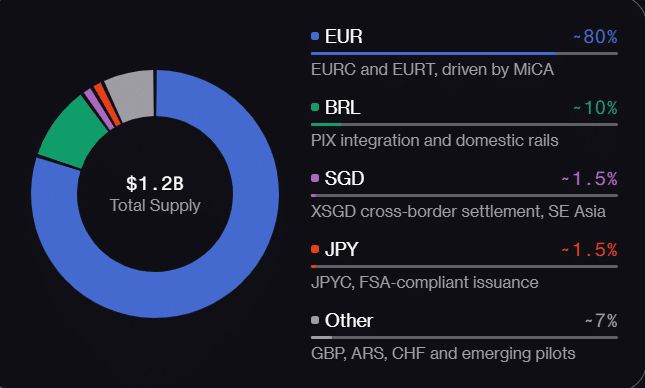
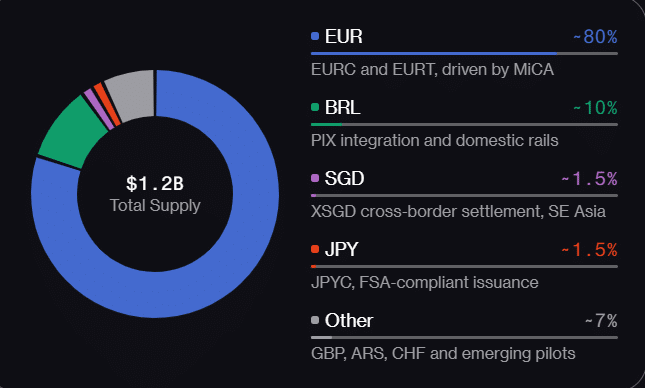
Source: Dune

Although USD-based versions (USDT, USDC) dominate the current $315 billion stablecoin market, non-USD alternatives have seen record growth. Since 2023, non-USD stablecoins have surged from $350 million to $1.2 billion. That’s a 3x expansion outpacing USD stablecoin growth, mostly dominated by Euro-based alternatives.

Beyond currency-based measures, Asia accounts for over 60% of global stablecoin activity, driven primarily by the Singapore–Japan–Hong Kong–China corridor. Interestingly, these jurisdictions are pushing for stablecoin rules that could restrict USD-based options. It’s unclear how these shifts will impact current stablecoin market dynamics in the upcoming months.


Final Summary

  • Fed’s Barr called for strong stablecoin oversight to avoid repeating the ‘painful’ bank runs of the 1800s due to private money.
  • The stablecoin market could be headed for major shifts as key global adoption jurisdictions mull restricting USD-based alternatives.


Pertanyaan Terkait

QWhat are the main concerns raised by Michael Barr regarding stablecoins?

AMichael Barr raised concerns about stablecoins facilitating terrorist financing and posing risks to financial stability, citing their use in illicit activities and the historical precedent of private money causing bank runs and financial panics in the 1800s.

QWhat percentage of illicit crypto activity do stablecoins account for according to Chainalysis data?

AAccording to Chainalysis data, stablecoins now account for 84% of illicit crypto activity, a significant increase from 15% in 2020.

QWhat solutions did Michael Barr recommend to address the risks associated with stablecoins?

AMichael Barr recommended deploying both regulatory and technological solutions, including tight control over reserve assets, supervision, capital and liquidity requirements, and other measures to enhance the stability of stablecoins.

QHow has the non-USD stablecoin market grown since 2023?

ASince 2023, non-USD stablecoins have surged from $350 million to $1.2 billion, a 3x expansion that outpaced the growth of USD stablecoins, with Euro-based alternatives dominating this segment.

QWhich regions are driving global stablecoin activity, and what regulatory shifts are they considering?

AAsia accounts for over 60% of global stablecoin activity, primarily driven by the Singapore–Japan–Hong Kong–China corridor. These jurisdictions are considering stablecoin rules that could restrict USD-based options.

Bacaan Terkait

Penarikan Bitcoin Terus Berlanjut: Penyimpanan 8 Tahun di Dompet Dingin Coldcard Berakhir dengan Nol

Dompet keras Coldcard Dihack, Aset Bitcoin Senilai $88,6 Juta Dicuri Dompet keras Coldcard mengalami kerentanan keamanan serius, menyebabkan gelombang penarikan paksa dana pengguna. Menurut Galaxy Research, total 1.367,05 BTC (sekitar $88,6 juta) telah dicuri dari 4.585 alamat yang rentan. Masalahnya bukan pada perangkat lunak (firmware), yang sudah diperbarui oleh pengembang Coinkite. Akar masalahnya ada pada seed phrase (frasa pemulihan) yang dihasilkan oleh perangkat antara Maret 2021 dan versi firmware tertentu. Kesalahan pemrograman menyebabkan generator angka acak perangkat beralih dari komponen keras ke generator perangkat lunak (Yasmarang) yang dapat diprediksi. Seed phrase yang dibuat dalam periode rentan ini dapat ditebak melalui serangan brute-force secara offline. Perangkat yang terdampak mencakup model Mk2/Mk3 (firmware 4.0.1–4.1.9), Mk4/Mk5 (sebelum v5.6.0), dan Q (sebelum v1.5.0Q). Satu-satunya cara untuk mengamankan dana adalah dengan membuat seed phrase BARU pada firmware yang telah diperbaiki dan memindahkan semua aset ke alamat baru tersebut. Memperbarui firmware saja tidak mengubah seed phrase lama yang sudah rentan. Insiden ini menghancurkan bagi investor jangka panjang. Satu korban, seorang pria 39 tahun, kehilangan 2 BTC ($130.000) yang ia kumpulkan selama 8 tahun melalui kerja keras. Ia menggunakan Bitcoin sebagai lindung nilai terhadap hiperinflasi di negaranya dan menyimpannya dengan aman di dompet dingin untuk pensiun dini. Pencurian instan ini menghancurkan rencananya dan mengungkap kerapuhan strategi 'simpan dan lupakan' meski dengan perangkat keras sekalipun. Kasus ini mengingatkan pada insiden serupa di masa lalu di mana kelemahan generator angka acak merusak keamanan kriptografi. Ini mempertanyakan asumsi bahwa penyimpanan offline selalu identik dengan keamanan mutlak.

cryptonews.ru48m yang lalu

Penarikan Bitcoin Terus Berlanjut: Penyimpanan 8 Tahun di Dompet Dingin Coldcard Berakhir dengan Nol

cryptonews.ru48m yang lalu

Mengapa Bitcoin Bertahan di $64.000 Setelah Jeda Ketat dari The Fed

Bitcoin berakhir di bulan Juli mendekati level $64.000, bertahan di tengah volatilitas pasca keputusan Federal Reserve AS untuk mempertahankan suku bunga dalam kisaran 3,50-3,75%. Meskipun tiga anggota komite voting mendukung kenaikan suku bunga, sinyal keseluruhan dari Fed tetap ketat, membatasi minat terhadap aset berisiko. Pasar kripto menunjukkan ketahanan dengan aliran bersih masuk $32,1 juta ke ETF Bitcoin spot, mengakhiri serangkaian arus keluar. Di sisi lain, ETF Ethereum mengalami penarikan dana sekitar $18,65 juta. Kapitalisasi pasar agregat bertahan di sekitar $2,29 triliun. Secara teknis, Bitcoin menemukan dukungan di zona $63.000-63.500 dengan hambatan utama di dekat $66.000. Sementara Ethereum diperdagangkan sekitar $1.900 dengan tekanan harga, metrik jaringan seperti antrian validator yang panjang menunjukkan komitmen jangka panjang. Pergerakan di altcoin beragam: ETF Solana mencatat aliran masuk yang kuat sekitar $19 juta, sementara XRP dan BNB bergerak dalam konsolidasi. Regulasi juga menjadi perhatian setelah penundaan pembahasan CLARITY Act di Senat AS hingga musim gugur, mengurangi harapan disahkannya undang-undang tersebut pada tahun 2026. Hari terakhir bulan Juli akan dipantau untuk data makro AS seperti inflasi dan pengeluaran konsumen, yang dapat memengaruhi pergerakan pasar. Skenario dasar untuk Bitcoin adalah konsolidasi dalam kisaran $63.000-66.000. Kelangsungan aliran masuk institusional dan pertahanan level kunci akan menjadi sinyal penting untuk pemulihan pasar di paruh kedua tahun 2026.

cryptonews.ru4j yang lalu

Mengapa Bitcoin Bertahan di $64.000 Setelah Jeda Ketat dari The Fed

cryptonews.ru4j yang lalu

Trading

Spot
活动图片




