‘Adapt or die’- SEC approves Nasdaq plan to trade tokenized securities

ambcryptoDipublikasikan tanggal 2026-03-19Terakhir diperbarui pada 2026-03-19

Abstrak

The SEC has approved Nasdaq's pilot program to trade tokenized securities, allowing the exchange to test blockchain-based versions of stocks and ETFs on a unified platform. The program will initially include high-volume assets like those in the Russell 1000 Index and major ETFs. Unlike many existing tokenized products, Nasdaq’s tokens will grant holders the same legal rights as traditional shareholders, including the same CUSIP numbers and trading symbols. This move is seen as a major disruptive force in asset management, with experts comparing its potential impact to that of ETFs on mutual funds. The approval accelerates Nasdaq’s partnership with Kraken and aims to enable 24/7 trading and attract offshore investors. The tokenized securities market has already surpassed $1 billion, with significant growth in early 2026.

New York-based Nasdaq Exchange has gotten the green light to proceed with its pilot program for trading tokenized securities.

The SEC approval would allow the traditional exchange to test trading of the blockchain-based version of stocks under its Depository Trust Company (DTC) pilot program.

Both traditional stocks and these tokenized variants will trade on the same unified platform. The program will initially target high-volume ETFs and stocks.

This would include the constituents of the Russell 1000 Index (Apple, Microsoft, Nvidia, Amazon, etc.). Additionally, ETFs such as the S&P 500 and the Nasdaq-100 will fall within the early asset scope.

Community reactions

For ETF analyst Nate Geraci, the SEC approval would set the stage for a massive disruption by the tokenization boom.

For him, the writing is on the wall: the top regulator, the SEC, major exchanges (Nasdaq, NYSE), and the world’s largest asset managers (BlackRock and Fidelity) are all in on tokenization.

He added,

Tokenization will be as disruptive to asset management as ETFs were to mutual funds...Will basically be adapt or die a slow death.

Nasdaq initially sought SEC approval for tokenized stocks in September 2025. But its proposal was wholly different from the current tokenized securities on the market, such as xStocks offered by Kraken and Backed Finance.

Unlike most current offerings, including leveraged derivatives that grant holders no legal rights, Nasdaq pushed for its tokenized securities to have rights similar to those of investors holding traditional shares. And the SEC acknowledged this.

A tokenized share of a DTC Eligible Security must be fungible with, share the same CUSIP number and trading symbol with, and afford its shareholders the same rights and privileges as a share of an equivalent class of the traditional security for it to trade on Nasdaq.

Nasdaq’s tokenization plans

That said, the SEC’s green light will accelerate Nasdaq’s recent partnership with Kraken to distribute tokenized securities by xStocks.

This integration may likely be tied to the DTC pilot and eventually accord xStock holders similar legal rights as traditional shareholders.

The end goal? Ensure 24/7 trading and target large offshore users to gain access to the U.S. equity market.

And the appetite for these products is incredible. So far, the tokenized segment has crossed $1B, and over $300 million of the market cap was added in Q1 2026 alone.
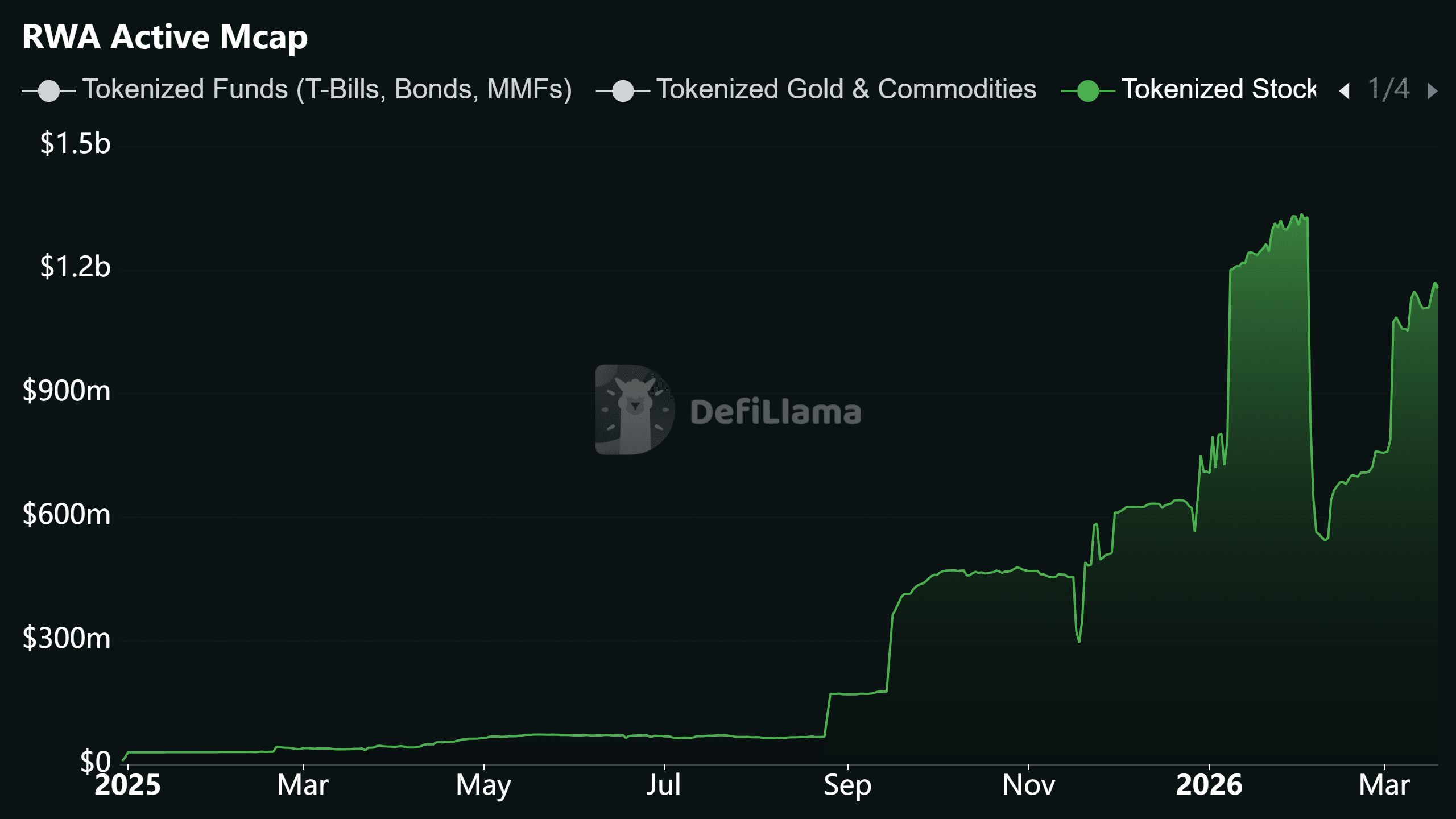
Source: DeFiLlama

Final Summary

  • The approval of Nasdaq’s tokenized securities trading is a major unfolding disruption that would force other traditional players to pivot, per an ETF expert.
  • SEC clarified that Nasdaq’s tokenized stocks and ETFs will offer similar rights as traditional securities.


Pertanyaan Terkait

QWhat is the significance of the SEC's approval for Nasdaq's pilot program?

AThe SEC's approval allows Nasdaq to proceed with its pilot program for trading tokenized securities, which are blockchain-based versions of stocks. This program will enable both traditional stocks and their tokenized variants to trade on the same unified platform, initially targeting high-volume ETFs and stocks like those in the Russell 1000 Index and major ETFs such as the S&P 500 and Nasdaq-100.

QAccording to ETF analyst Nate Geraci, how disruptive will tokenization be to asset management?

ANate Geraci believes tokenization will be as disruptive to asset management as ETFs were to mutual funds. He stated that it will force traditional players to 'adapt or die a slow death,' indicating a significant transformation in the industry.

QHow do Nasdaq's tokenized securities differ from current offerings like xStocks from Kraken and Backed Finance?

AUnlike current offerings such as leveraged derivatives that grant holders no legal rights, Nasdaq's tokenized securities are designed to have rights similar to those of investors holding traditional shares. The SEC requires that tokenized shares must be fungible, share the same CUSIP number and trading symbol, and afford shareholders the same rights and privileges as traditional securities.

QWhat is the end goal of Nasdaq's tokenization plans, as mentioned in the article?

AThe end goal of Nasdaq's tokenization plans is to ensure 24/7 trading and target large offshore users to gain access to the U.S. equity market. This initiative aims to expand market accessibility and provide continuous trading opportunities.

QWhat is the current market size of the tokenized segment, and how much growth was seen in Q1 2026?

AThe tokenized segment has crossed $1 billion in market size. In Q1 2026 alone, over $300 million in market capitalization was added, indicating significant growth and appetite for these products.

Bacaan Terkait

Mengapa Bitcoin Bertahan di $64.000 Setelah Jeda Ketat dari The Fed

Bitcoin berakhir di bulan Juli mendekati level $64.000, bertahan di tengah volatilitas pasca keputusan Federal Reserve AS untuk mempertahankan suku bunga dalam kisaran 3,50-3,75%. Meskipun tiga anggota komite voting mendukung kenaikan suku bunga, sinyal keseluruhan dari Fed tetap ketat, membatasi minat terhadap aset berisiko. Pasar kripto menunjukkan ketahanan dengan aliran bersih masuk $32,1 juta ke ETF Bitcoin spot, mengakhiri serangkaian arus keluar. Di sisi lain, ETF Ethereum mengalami penarikan dana sekitar $18,65 juta. Kapitalisasi pasar agregat bertahan di sekitar $2,29 triliun. Secara teknis, Bitcoin menemukan dukungan di zona $63.000-63.500 dengan hambatan utama di dekat $66.000. Sementara Ethereum diperdagangkan sekitar $1.900 dengan tekanan harga, metrik jaringan seperti antrian validator yang panjang menunjukkan komitmen jangka panjang. Pergerakan di altcoin beragam: ETF Solana mencatat aliran masuk yang kuat sekitar $19 juta, sementara XRP dan BNB bergerak dalam konsolidasi. Regulasi juga menjadi perhatian setelah penundaan pembahasan CLARITY Act di Senat AS hingga musim gugur, mengurangi harapan disahkannya undang-undang tersebut pada tahun 2026. Hari terakhir bulan Juli akan dipantau untuk data makro AS seperti inflasi dan pengeluaran konsumen, yang dapat memengaruhi pergerakan pasar. Skenario dasar untuk Bitcoin adalah konsolidasi dalam kisaran $63.000-66.000. Kelangsungan aliran masuk institusional dan pertahanan level kunci akan menjadi sinyal penting untuk pemulihan pasar di paruh kedua tahun 2026.

cryptonews.ru1j yang lalu

Mengapa Bitcoin Bertahan di $64.000 Setelah Jeda Ketat dari The Fed

cryptonews.ru1j yang lalu

Parker Lewis Menjawab Mengapa Bitcoin Tetap Menjadi Uang Terbaik

Parker Lewis, salah satu analis Bitcoin paling terkemuka, mengkritik keras strategi pemasaran perusahaan publik yang memposisikan diri sebagai perbendaharaan kripto. Menurutnya, upaya mereka mengumpulkan modal melalui penjualan "kredit digital" dalam bentuk saham preferen abadi mendistorsi esensi mata uang kripto pertama. Lewis menekankan bahwa Bitcoin tidak memiliki hasil tetap pada tingkat algoritmanya, dan janji dividen reguler adalah permainan berisiko tinggi yang didanai terutama oleh investor baru di pasar yang naik. Untuk menunjukkan risikonya, ia membandingkan pasar kredit global sebesar $300 triliun dengan pasar saham preferen abadi yang hanya $1 triliun, menunjukkan bahwa lembaga keuangan menghindari risiko abadi ini, mengalihkannya ke investor ritel. Ia juga membantah klaim bahwa Bitcoin "terlalu volatil untuk 99% populasi". Volatilitas, katanya, adalah konsekuensi matematis alami dari adopsi massal aset baru dengan pasokan tetap. Setiap gelombang pengguna baru menyebabkan lonjakan harga karena mereka harus menawar lebih tinggi kepada pemegang awal. Lewis menyarankan untuk membeli Bitcoin langsung daripada saham perusahaan seperti MicroStrategy, karena lebih aman secara matematis daripada mempercayakan dana kepada manajer korporat. Fokus pada derivatif korporat mengalihkan perhatian dari ancaman utama: depresiasi uang fiat yang cepat. Lewis mengilustrasikan inflasi sebenarnya dengan "Indeks Ribeye"-nya, mencatat kenaikan harga steak premium dari $19,99 menjadi $37,99 sejak musim semi 2020, setara dengan inflasi 12-13% per tahun, lebih tinggi dari data resmi. Strategi keuangan yang paling bijaksana dan aman dalam inflasi global adalah kepemilikan langsung atas Bitcoin pertama dan kendali penuh atas kunci pribadi. Mengejar imbal hasil korporat yang meragukan melalui saham perbendaharaan kripto hanya meningkatkan risiko sistemik, sementara pemahaman tentang uang terdesentralisasi yang sejati dapat melindungi tabungan dari gejolak makroekonomi.

cryptonews.ru1j yang lalu

Parker Lewis Menjawab Mengapa Bitcoin Tetap Menjadi Uang Terbaik

cryptonews.ru1j yang lalu

Trading

Spot
活动图片




