a16z Partner: Being in the Flow of Capital Is the True Moat

marsbitDipublikasikan tanggal 2026-06-11Terakhir diperbarui pada 2026-06-11

Abstrak

A16z Partner: Standing in the Cash Flow is the True Moat Historically, many of the strongest companies built their moats by positioning themselves within "cash flows"—facilitating value creation and transfer in a network and taking a cut. The more value flows, the larger they grow. Crypto is the first modern technology natively built for this. With open ledgers, programmable settlement, and stablecoins enabling internet-speed global value transfer, it allows startups to inherit network effects from day one. Well-designed tokens align users, developers, and the protocol towards network growth, distributing value to contributors. This model isn't new (e.g., railroads, Visa, Google, AWS) but Crypto democratizes it. It lets entrepreneurs target areas with high inefficiency and profit extraction—like traditional finance's payments, custody, FX, and settlement—to compress costs, increase speed, and redistribute value by standing in the new flow. The opportunity extends beyond finance to emerging markets like GPU/compute, AI training data, energy, and space, where new, programmable infrastructure can be built without legacy constraints. Key questions for founders: Are you already in the cash flow? Does your revenue scale 10x with network activity? Where is profit extraction highest relative to value created in your market? The strategy is clear: compress the old cost structure, position yourself in the new value stream, and let the network compound.

Editor's Note: The core judgment of this article is straightforward: the flow of capital itself is the moat. Looking back through business history, many of the most powerful companies didn't win by simply selling products; they positioned themselves in the middle of a "value flow," continuously taking a cut from every shipment, payment, transaction, ad conversion, compute call, or order flow. Railroads made money from the movement of goods, Visa charged fees from the payment network, Google and Meta captured the entry point where attention converts into commercial transactions, and AWS positioned itself at the center of compute flow. As long as value continues to flow through the network, the network itself becomes stronger.

Crypto natively gives this model to startups for the first time. Blockchains provide open ledgers and programmable settlement, stablecoins allow capital to flow globally at internet speed, and token mechanisms align users, developers, and network growth. For Crypto entrepreneurs, the real opportunity isn't just building a new application, but finding the most expensive, inefficient, and profit-extracting value channels in the old system, compressing them, reconstructing them, and positioning themselves in the new capital flow.

The article emphasizes that the most profit-extracting and inefficient parts of traditional financial services—payments, custody, lending, forex, clearing, market making, etc.—will become entry points for crypto entrepreneurs to reconstruct: compressing costs, increasing speed, and redistributing value. This type of "capital flow business" (taking a revenue share based on volume in the value flow channel) will not stop at finance; it could extend to future markets like GPU markets, AI training data, energy, robotics, space, and rare earth metals.

For founders, the most crucial questions are: Is your product already positioned in a value flow? When network activity scales 10x, does your revenue scale proportionally? Opportunities often hide where old infrastructure is least efficient but profit extraction is highest. Whoever compresses old costs and positions themselves in the new flow has the chance to turn the capital flow into their own moat.

Here is the original text:

Many of history's greatest businesses have been built by putting themselves in the "flow of capital"—they facilitate the creation and transfer of value in a network and take a portion of it. The more value that flows through the network, the larger such businesses tend to grow.

Crypto is the first modern technology that is native to this. If your startup isn't designing its product and business model around these principles, you're missing the opportunity. Especially with stablecoins, capital and value can now flow at internet speed: global settlement, running 24/7, with end-to-end programmability. The underlying rails are open, the unit economics are public, and the addressable market for capital flows is nearly every dollar moving globally.

This Model

Blockchains are network businesses by nature. Every transaction settles on a shared ledger; every new participant reinforces the same underlying infrastructure that later participants can use. As more people use and build on it, the network becomes more valuable for all its users.

Most companies spend years artificially manufacturing network effects on top of traditional infrastructure. Crypto entrepreneurs inherit this network effect from day one.

Network tokens amplify this further. A well-designed token can align users, developers, suppliers, validators, and the protocol itself to the same goal: growing the network and distributing rewards based on each participant's contribution. Protocol revenue belongs to the people actually using it. No co-op rebates, no side deals, just a positive feedback loop: value flows through the system while also flowing back to those who build and drive its growth.

This isn't a new model. Crypto just makes it easier and at a larger scale for startups to use it.

Railroads didn't make money selling locomotives; they made money on every ton of grain, coal, and steel that moved over their tracks. Standard Oil, U.S. Steel, and AT&T were companies in the flow of capital. Google and Meta didn't replace print and TV because the ads were better; they captured the crucial node where attention converts into commerce, taking a cut from trillions in commercial intent. AWS positioned itself at the center of compute flow.

The model is consistent: Find where value flows, then put yourself in the middle.
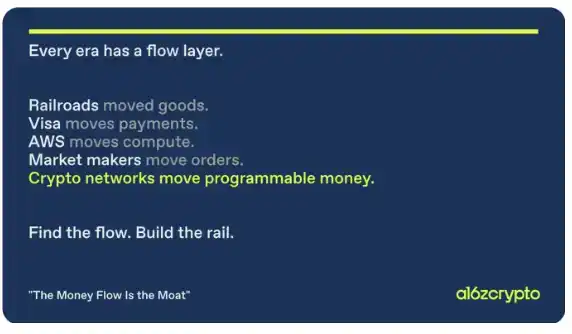
Financial markets make this pattern even clearer. Visa processed $15.7 trillion in payment volume in fiscal 2024, recording $35.9 billion in net revenue. Jane Street had $20.5 billion in net trading revenue last year, surpassing Citi and Bank of America. The top five U.S. market makers handle 87% of payment for order flow: they aren't predicting the market; they're in the middle of every order flow, earning more as trading volume grows.

These businesses share another trait: network effects. Visa becomes more useful to merchants as more cards are issued; more useful to cardholders as more merchants accept Visa. The same with order flow: each added broker narrows spreads, attracting more brokers, which attracts more order flow.

Capital flow plus network effects is one of the most durable structures in business history.

Your Margin is My Opportunity

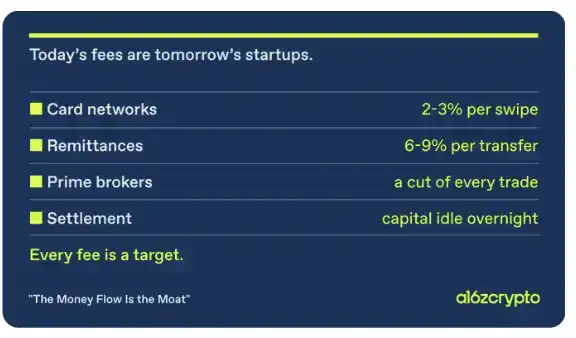
Jeff Bezos once said, "Your margin is my opportunity." He was talking about retail, but it applies even more to traditional financial services—the world's largest pool of profit extraction. Payments, custody, lending, forex, securitization, settlement, market making—it's all true. Visa and Mastercard charge 2% to 3% interchange on a network designed in the 1960s; cross-border remittance corridors charge 6% to 9%; prime brokers and custodians take a cut of every securities transaction. Even with the U.S. moving to T+1 settlement in 2024, capital still sits idle overnight, a structural cost borne by all participants.

These profit margins are targets. Compress costs, increase velocity, and potentially expand the entire market. Stripe and Square have proven this in payments.
Crypto entrepreneurs have the chance to build the next version: programmable, instant, global, and natively in the flow of capital.

And this frontier extends far beyond financial services. Compute and GPU markets, memory chips, AI training data, energy, robotics, space, rare earth metals—each could see massive global flows of value, and existing infrastructure isn't built to handle that scale.

Each is an open market where capital flow businesses can be built on programmable infrastructure from day one. No legacy rails, no entrenched intermediaries, no old profits to defend.

As a founder, you should ask yourself:

1. Are you in the flow of capital today?

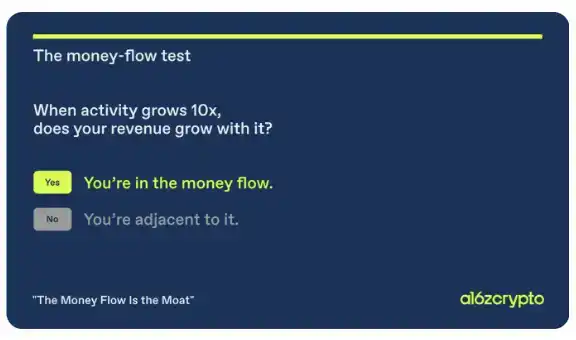
2. When activity value on your product grows 10x, does your revenue grow proportionally?

3. If you're building a new product, where in your target market does the highest profit extraction exist relative to the value created?
The opportunity is there. Compress it, step into the new value flow, and let the network compound from there.


Kripto yang Sedang Tren

Pertanyaan Terkait

QAccording to the article, what is the core characteristic shared by history's most powerful companies like Visa, Google, and AWS?

AThe core characteristic is that they position themselves within a 'value flow' or 'capital flow.' They don't just sell a product; they facilitate the creation and transfer of value within a network and extract a portion of the revenue from that ongoing flow. As more value moves through the network, these companies grow stronger.

QHow does the article argue that Crypto technology uniquely empowers startups compared to traditional models?

AThe article argues that Crypto provides the first modern technology that is natively designed for this 'value flow' model. It offers an open ledger, programmable settlement, and global, internet-speed money movement via stablecoins. Most importantly, token mechanisms can align all network participants (users, developers, validators) by rewarding contributions to network growth. Startups inherit network effects from day one on this open infrastructure, rather than having to build them manually.

QWhat does the article mean by 'Your margin is my opportunity' in the context of traditional financial services?

AIn this context, it means that the high profit margins (or 'rents') extracted by traditional financial intermediaries represent a major opportunity for disruption. Services like payments, custody, lending, and cross-border transfers often have high fees relative to the value provided. These inefficient, high-cost areas are prime targets for Crypto startups to compress costs, increase speed, and redistribute value by building more efficient, programmable alternatives.

QBeyond finance, what other future markets does the article suggest could be transformed by 'capital flow' businesses?

AThe article suggests that future markets like compute/GPU markets, AI training data, energy, robotics, space, and rare earth metals could see the emergence of global-scale 'capital flow' businesses. These are areas where massive value will move, and the existing infrastructure may not be designed for that scale, creating open opportunities for new, programmable platforms built from scratch.

QWhat are the three key questions the article suggests founders should ask themselves about their business?

A1. Are you already standing in a capital flow today? 2. When the value of activity on your product grows 10x, will your revenue grow alongside it? 3. If you're building a new product, where in your target market is the highest profit extraction relative to the value created?

Bacaan Terkait

human.tech Meluncurkan Clean SDK untuk Aplikasi Web3 yang Mengutamakan Privasi

human.tech meluncurkan Clean SDK, toolkit yang memungkinkan pengembang membuat aplikasi Web3 yang mengutamakan privasi dan akuntabilitas transparan. SDK ini menyediakan komponen untuk verifikasi identitas tanpa pengetahuan (zero-knowledge), pemeriksaan sanksi, dan transaksi privat tanpa harus menangani data pengguna sensitif atau membangun infrastruktur kepatuhan dari nol. Clean SDK mengatasi tantangan klasik Web3: memungkinkan privasi tanpa mengorbankan akuntabilitas. Dengan menggabungkan zero-knowledge proof dan verifikasi terprogram, aplikasi dapat membuktikan legitimasi pengguna dan dana telah lolos pemeriksaan sanksi, sambil menjaga kerahasiaan identitas pribadi. Shield, aplikasi pertama yang dibangun di atas Clean SDK, diluncurkan bersamaan. Aplikasi ini berfungsi sebagai jembatan privat ke Aztec, memungkinkan pengguna mentransfer aset sambil membuktikan bahwa transfer dilakukan oleh manusia unik dan dana telah diperiksa terhadap sumber sanksi, tanpa mengungkap identitas. SDK ini menawarkan tiga teknik verifikasi inti: Proof of Innocence (pemeriksaan sanksi), Proof of Personhood (verifikasi manusia), dan Proof of Clean Hands (verifikasi identitas pemerintah zero-knowledge). Fitur-fitur ini memungkinkan autentikasi pengguna dan transaksi tanpa membocorkan informasi pribadi. Didesain untuk pengembang di Aztec, Clean SDK memungkinkan integrasi privasi terprogram langsung ke dalam aplikasi terdesentralisasi. Peluncurannya mencerminkan permintaan yang tumbuh akan infrastruktur yang menyeimbangkan privasi dan akuntabilitas secara transparan, tanpa bergantung pada basis data identitas konvensional.

TheNewsCrypto27m yang lalu

human.tech Meluncurkan Clean SDK untuk Aplikasi Web3 yang Mengutamakan Privasi

TheNewsCrypto27m yang lalu

Melepaskan Likuiditas $100 Juta? Kebijakan Baru Pump.fun Menguji Teknik '5-Menit Pump'

Pump.fun, platform peluncuran token meme di Solana, resmi memperkenalkan mode BOOST pada 21 Juli sebagai mekanisme standar baru. Inti dari mode ini adalah mengubah 20% likuiditas yang sebelumnya terkunci secara permanen di pool likuiditas (LP) setelah migrasi token, menjadi pembeli aktif. Dana yang sebelumnya "terjebak" sebagai "likuiditas mati" itu sekarang akan digunakan untuk membeli token tersebut selama 5 menit pertama setelah migrasi ke PumpSwap, menggunakan metode TWAP (Time-Weighted Average Price). Semua token yang dibeli kemudian akan langsung dimusnahkan (burn). Mekanisme ini bertujuan menciptakan tekanan beli jangka pendek sekaligus mengurangi pasokan token yang beredar secara permanen. Pump.fun memperkirakan, kebijakan lama yang mengunci likuiditas menyebabkan pemborosan lebih dari $100 juta per tahun. BOOST berupaya memanfaatkan dana tersebut untuk meningkatkan momentum perdagangan sesaat setelah peluncuran, dengan harapan meningkatkan retensi trader dan volume perdagangan berkelanjutan bagi token-token yang diluncurkan. Namun, beberapa kekhawatiran muncul. Beberapa pihak menilai hal ini bisa mempermudah token berkualitas rendah terlihat sukses di menit-menit awal, dan justru mendorong perilaku peluncuran yang lebih spekulatif. Kekhawatiran lain adalah risiko kejatuhan harga yang lebih tajam setelah periode 5 menit berakhir, jika diikuti dengan penjualan besar-besaran.

marsbit34m yang lalu

Melepaskan Likuiditas $100 Juta? Kebijakan Baru Pump.fun Menguji Teknik '5-Menit Pump'

marsbit34m yang lalu

Menjual Ruang Blok Sudah Mati: Blockchain Publik Harus Menemukan Cara Hidup Baru

Penulis Castle Labs, dikompilasi oleh TechFlow, membahas perlunya perubahan model bisnis blockchain publik. Dalam dua tahun terakhir, 14 perusahaan crypto menghasilkan pendapatan lebih dari $200 juta, namun hanya satu yang merupakan blockchain publik: Hyperliquid. Sebagai perbandingan, Arbitrum hanya menghasilkan $430.000 dalam 30 hari terakhir, sementara Hyperliquid menghasilkan sekitar $58 juta. Hal ini menunjukkan bahwa model bisnis tradisional menjual ruang blok tidak lagi cukup. Blockchain publik perlu beralih menjadi studio produk, distributor aplikasi, jalur pembayaran, atau tumpukan SaaS vertikal untuk menghasilkan pendapatan berkelanjutan dan menghindari risiko kehabisan dana. Artikel ini juga membahas serangan terhadap Ostium, di mana lebih dari 40% TVL hilang karena input harga palsu, menekankan pentingnya kontrol keamanan yang ketat untuk protokol yang membawa pasar off-chain ke on-chain. Selain itu, diskusi tentang opsi keuangan menyoroti bahwa untuk adopsi yang lebih luas, manfaat opsi harus disajikan dalam produk yang lebih mudah dipahami seperti vault hasil, opsi biner jangka pendek, produk terstruktur, atau pasar prediksi, bukan sebagai instrumen kompleks dengan istilah teknis. Protokol baru yang menarik perhatian termasuk Flex (pasar uang suku bunga tetap dari Yearn), Base App yang kini dikelola oleh Cobie, Plether (DEX kontrak berkelanjutan untuk indeks dolar AS), dan fokus Starknet pada peningkatan privasi dan ketahanan kuantum untuk pertumbuhan kelembagaan di on-chain.

marsbit54m yang lalu

Menjual Ruang Blok Sudah Mati: Blockchain Publik Harus Menemukan Cara Hidup Baru

marsbit54m yang lalu

Catatan Podcast | Bicara dengan Kepala Unit Manajemen Aset GSR: Benar atau Palsu Rally Kripto Ini, Cek Suku Bunga Pinjaman di Aave Saja

**Rangkuman Podcast: Apakah Rally Kripto Ini Nyata? Pantau Suku Bunga Pinjaman di Aave!** Andy Baehr, Direktur GSR Asset Management, membagikan kerangka untuk menilai kondisi pasar kripto saat ini yang berada dalam fase "ambivalen" (ragu-ragu), bukan "conviction" (keyakinan naik berkelanjutan). Rally baru-baru ini, dipicu data CPI yang lebih rendah, diibaratkan seperti roket pendorong tunggal yang habis setelah tahap pertama. Tiga sinyal kunci untuk dipantau: 1. **Suku Bunga Pinjaman DeFi (terutama di Aave):** Saat ini, suku bunga USDC di Aave sekitar 3.75%, hampir sama dengan imbal hasil Treasury AS. Tidak adanya "credit spread" yang tinggi menunjukkan sangat sedikit keinginan untuk meminjam guna membuka leverage—tanda jelas energi pasar yang rendah. Baehr berpendapat bahwa kenaikan berkelanjutan baru akan terjadi jika suku bunga DeFi ini melonjak tajam, menandakan ledakan permintaan leverage. 2. **"Puncak Kebijakan Hawkish" The Fed:** Pasar masih belum mengetahui sejauh apa Chairman Fed baru, Kevin Warsh, akan menaikkan suku bunga. Ketidakpastian mengenai puncak sikap ketat (hawkish peak) ini menghambat keyakinan jangka panjang. Pasar membutuhkan momen "klarifikasi" di mana ada konsensus bahwa kenaikan suku bunga akan segera berakhir. 3. **Nasib CLARITY Act:** Peluang disahkannya undang-undang regulasi kripto ini telah turun drastis, dari 75% (Mei) menjadi di bawah 40%. Jika secara tak terduga disetujui sebelum tenggat waktu 7 Agustus, hal itu bisa menjadi katalis positif yang kuat bagi harga karena unsur kejutan. Baehr juga mencatat bahwa dana aliran masuk ETF tidak stabil, dan perusahaan publik yang memegang aset kripto (DAT) seperti Strategy dan Metaplanet saat ini tidak aktif membeli. Energi trading juga teralihkan ke IPO besar di sektor teknologi seperti SpaceX dan AI. **Kesimpulan:** Untuk membedakan rally palsu dari yang nyata, pantau suku bunga pinjaman di Aave. Selama suku bunga itu tetap rendah mendekati suku bunga bebas risiko, pasar kekurangan energi dan leverage yang dibutuhkan untuk rally berkelanjutan. Perubahan nyata baru akan terlihat ketika ada kejelasan dari The Fed, kejutan regulasi positif, dan lonjakan tajam dalam permintaan leverage di DeFi.

marsbit1j yang lalu

Catatan Podcast | Bicara dengan Kepala Unit Manajemen Aset GSR: Benar atau Palsu Rally Kripto Ini, Cek Suku Bunga Pinjaman di Aave Saja

marsbit1j yang lalu

Trading

Spot

Artikel Populer

Cara Membeli FLOW

Selamat datang di HTX.com! Kami telah membuat pembelian Flow (FLOW) menjadi mudah dan nyaman. Ikuti panduan langkah demi langkah kami untuk memulai perjalanan kripto Anda.Langkah 1: Buat Akun HTX AndaGunakan alamat email atau nomor ponsel Anda untuk mendaftar akun gratis di HTX. Rasakan perjalanan pendaftaran yang mudah dan buka semua fitur.Dapatkan Akun SayaLangkah 2: Buka Beli Kripto, lalu Pilih Metode Pembayaran AndaKartu Kredit/Debit: Gunakan Visa atau Mastercard Anda untuk membeli Flow (FLOW) secara instan.Saldo: Gunakan dana dari saldo akun HTX Anda untuk melakukan trading dengan lancar.Pihak Ketiga: Kami telah menambahkan metode pembayaran populer seperti Google Pay dan Apple Pay untuk meningkatkan kenyamanan.P2P: Lakukan trading langsung dengan pengguna lain di HTX.Over-the-Counter (OTC): Kami menawarkan layanan yang dibuat khusus dan kurs yang kompetitif bagi para trader.Langkah 3: Simpan Flow (FLOW) AndaSetelah melakukan pembelian, simpan Flow (FLOW) di akun HTX Anda. Selain itu, Anda dapat mengirimkannya ke tempat lain melalui transfer blockchain atau menggunakannya untuk memperdagangkan mata uang kripto lainnya.Langkah 4: Lakukan trading Flow (FLOW)Lakukan trading Flow (FLOW) dengan mudah di pasar spot HTX. Cukup akses akun Anda, pilih pasangan perdagangan, jalankan trading, lalu pantau secara real-time. Kami menawarkan pengalaman yang ramah pengguna baik untuk pemula maupun trader berpengalaman.

276 Total TayanganDipublikasikan pada 2024.12.10Diperbarui pada 2026.06.02

Cara Membeli FLOW

Diskusi

Selamat datang di Komunitas HTX. Di sini, Anda bisa terus mendapatkan informasi terbaru tentang perkembangan platform terkini dan mendapatkan akses ke wawasan pasar profesional. Pendapat pengguna mengenai harga FLOW (FLOW) disajikan di bawah ini.

活动图片












