A Must-Read for Tax Residents: Do I Need to Pay Taxes on Crypto Asset Profits?

marsbitDipublikasikan tanggal 2026-01-22Terakhir diperbarui pada 2026-01-22

Abstrak

Chinese tax residents are required to declare and pay taxes on profits from cryptocurrency transactions, regardless of whether the transactions occur on anonymous wallets or decentralized exchanges (DEXs). According to Chinese tax laws, income from the sale of crypto assets is classified as "property transfer income" and is taxed at a flat rate of 20%. Key points include: - A Chinese tax resident is defined as someone with a domicile in China or who resides in the country for 183 days or more within a tax year. - Despite the perceived privacy of decentralized platforms, tax authorities can trace transactions through banking channels, international information exchange mechanisms like CRS, and enhanced surveillance systems such as "Golden Tax Phase IV." - Failure to declare such income may result in back taxes, late payment fees (0.05% per day), fines ranging from ¥2,000 to ¥10,000, or even criminal charges in severe cases. - Recommendations include maintaining detailed transaction records, using official channels to declare income, preserving proof of transactions, and consulting tax professionals for compliance and planning.

Original Authors: Xu Qian, Jin Weilin

Introduction

In recent years, more and more people have earned considerable income through crypto asset trading, but many are still wondering: Do I need to pay taxes on money earned in anonymous wallets or on decentralized exchanges?

To put it directly: If you are a Chinese tax resident, in principle, you should declare and pay taxes to the Chinese tax authorities according to the law on income from crypto assets obtained through any channel.
How is a "Chinese Tax Resident" Defined?

According to the "Personal Income Tax Law of the People's Republic of China", an individual who meets any of the following conditions is considered a Chinese tax resident:

1. Has a domicile in China

Domicile: Refers to an individual who habitually resides in China due to household registration, family, main economic interests, or other reasons.

If your household registration (hukou) or family's center of gravity is in China, or your main life, work, and economic ties are in China, you may still be recognized as a tax resident even if you are often overseas.

2. Has resided in China for an aggregate of 183 days or more within a tax year

This is a clear time-based criterion. Even if you are a foreign national, as long as you reside in China for an aggregate of 183 days or more within one year, you are considered a Chinese tax resident.

Mankun Reminder:

Whether you are recognized as a tax resident due to "domicile" or "length of residence", once you meet the criteria, you need to declare and pay taxes to China on your worldwide income (including domestic and foreign income) according to the law.

Why Do Crypto Asset Profits Also Require Tax Payment?

Many people believe that since crypto assets are restricted domestically, the related profits are also "tax-free". This is a common misconception. Taxation focuses on whether you have income, not whether that income comes from an encouraged industry.

1. What is the nature of crypto assets?

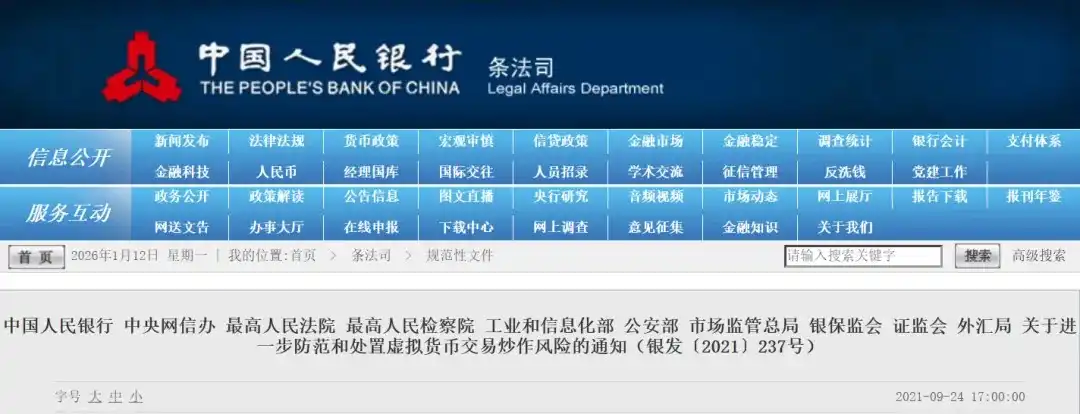
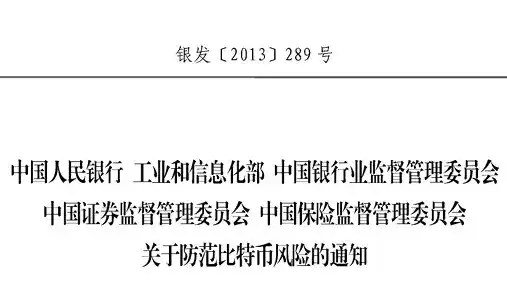
According to the "Notice on Preventing Bitcoin Risks" (Yin Fa [2013] No. 289) issued by the People's Bank of China and four other ministries, the "Announcement on Preventing Risks from Token Offering Financing" issued by the PBOC and six other ministries on September 4, 2017, and the "Notice on Further Preventing and Dealing with Virtual Currency Trading Speculation Risks" issued by the PBOC and nine other ministries on September 24, 2021, virtual currencies cannot be circulated as currency, but their property attributes as a "virtual commodity" are not denied. That is, the law recognizes them as tradable property.

2. What are the corresponding tax regulations?

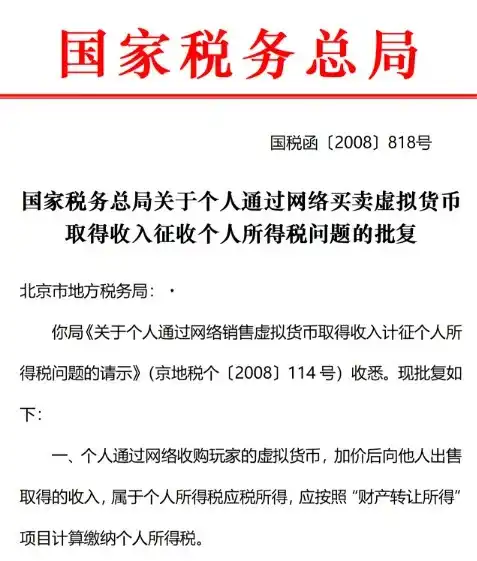
The "Reply of the State Administration of Taxation on the Levy of Personal Income Tax on Income Obtained by Individuals Buying and Selling Virtual Currency Online" (Guo Shui Han [2008] No. 818) clearly states: Income obtained by individuals from buying and selling virtual currency online belongs to "income from the transfer of property" and shall be subject to personal income tax according to the law.
3. Conclusion and Tax Rate

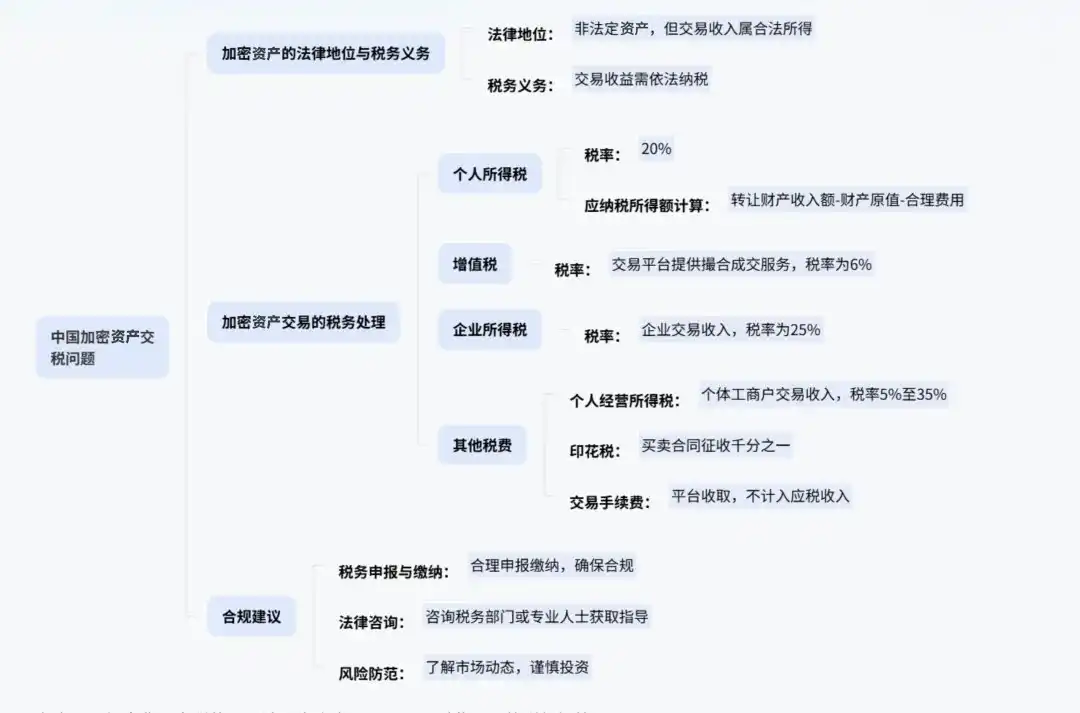
Therefore, regardless of which crypto asset you trade, as long as the transaction generates profit, this portion of the income is considered "income from the transfer of property" and should be subject to personal income tax at a rate of 20% according to the law.

In short: Taxation does not distinguish by industry; it only looks at income. Profits from crypto asset trading are considered income from property transfer and require declaration and payment of 20% personal income tax.

Do I Need to Declare Profits from Anonymous Wallets and DEX Trades?

Some investors believe that using decentralized wallets (like MetaMask) or trading on decentralized exchanges (like Uniswap) is anonymous and therefore untraceable by tax authorities. However, in the current regulatory and technological environment, this thinking carries significant risks.

1. The fund repatriation stage can still be traced

The vast majority of investors ultimately convert their crypto assets into fiat currency through OTC or compliant platforms and transfer it into domestic bank accounts.

Once funds enter the banking system, they fall under the purview of tax authorities. Transactions that are large in amount or high in frequency can easily trigger bank risk control systems, subsequently drawing attention from tax departments.

2. International tax information exchange mechanisms are now routine

China has joined the CRS (Common Reporting Standard) for the Automatic Exchange of Financial Account Information in Tax Matters, achieving automatic tax information exchange with over a hundred countries worldwide. If you have an account with an overseas exchange or bank, the relevant account information has likely already been exchanged back with the Chinese tax authorities.

3. "Golden Tax Project Phase IV" has strengthened data supervision capabilities

The "Golden Tax Phase IV" system utilizes big data, AI, and other technologies to achieve data linkage between tax, banking, customs, industry and commerce, and other departments. The system can automatically compare declared personal income with actual consumption and asset situations. Once a significant discrepancy is found, it triggers a tax warning.

Therefore, even if the trading activity occurs on-chain or overseas, as long as the final profits enter your name or are used for your living expenses in some form, there is a risk of being discovered by the tax authorities and being required to pay back taxes.

What Are the Consequences of Not Declaring Crypto Asset Income?

If the tax authorities discover that you have not declared income from overseas crypto assets, you may face the following legal consequences:

1. Back Taxes and Late Payment Surcharges

The tax authorities will order you to pay the taxes that should have been paid but were not, and, according to Article 32 of the "Law of the People's Republic of China on the Administration of Tax Collection", a late payment surcharge of 0.05% per day (approximately 18.25% annualized) will be added. The longer the time, the larger the accumulated amount.

2. Facing Tax Penalties

If deemed as "failure to file a tax return", a fine of up to RMB 2,000 may be imposed; if the circumstances are more severe, a fine between RMB 2,000 and RMB 10,000 may be imposed.

If deemed as "tax evasion" (refusing to declare or making false declarations after being notified), a fine of 50% to 5 times the amount of tax evaded or not paid will be imposed.

3. Possible Criminal Liability

If the amount of tax evaded is relatively large and accounts for more than 10% of the tax payable, and payment is still not made after the tax authorities have legally issued a recovery notice, it may constitute the crime of tax evasion, leading to criminal liability.

Mankun Reminder:

Not declaring crypto asset income may seem "hidden", but it actually carries multiple risks, from high late payment surcharges and substantial fines to potential criminal liability. We recommend proactive compliance and reporting to avoid subsequent legal and financial risks.

Mankun's Recommendations

If you have earned income from trading crypto assets, especially if funds have already been repatriated to domestic accounts, Mankun Law Firm recommends that you:

1. Proactively organize your transaction records

It is advisable to try to organize a clear transaction history, including the time, quantity, and price of purchases and sales, and focus on retaining proof that can demonstrate the "cost" of the assets, such as bank transfer records, exchange transaction details, on-chain transaction hashes, etc.

The more complete the cost documentation, the more accurate the calculation of taxable income, and the more reasonable the tax burden.

2. Consider proactive declaration or self-review

  • If you have not yet received notice from the tax authorities, you can declare through the "Personal Income Tax" APP or on the Natural Person Electronic Tax Bureau website.
  • According to regulations, the declaration should be submitted to the competent tax authority in the location of your employing unit; if you are not employed, you can file with the tax authority in your place of household registration, place of habitual residence, or place of main source of income.
  • If you have already received reminders from the tax authorities via text message, phone call, etc., please cooperate actively, truthfully explain the source of funds, and prepare relevant supporting materials such as transaction records.

3. Retain all transaction vouchers

Develop the habit of long-term retention of transaction screenshots, wallet addresses, transfer records, exchange statements, and other materials. These are not only the basis for calculating taxes but also key evidence for explaining and proving the authenticity of transactions during tax inspections.

4. Plan reasonably within compliance boundaries

If your trading is frequent and involves large amounts, you might consider tax planning within the legal boundaries, such as managing assets through compliant structures or legally applying tax treaties. It is recommended to consult professional tax lawyers or accountants during this process to ensure the plan is sound and feasible.

Conclusion

In today's world intertwined with the digital economy and globalization, tax compliance has become a required course for every investor. Although the world of crypto assets has a "decentralized" flavor, tax obligations do not disappear because of it.

Proactively understanding regulations, truthfully declaring income, and properly retaining vouchers are not only a respect for the law but also long-term protection for your asset and credit security.

If you have questions or need assistance regarding crypto asset taxation, you can seek professional support early to ensure steady progress on a compliant track.


Pertanyaan Terkait

QWho is considered a tax resident in China according to the article?

AAccording to the Personal Income Tax Law of China, an individual is considered a tax resident if they either 1) have a domicile in China (due to household registration, family, or main economic interests), or 2) have resided in China for a cumulative total of 183 days or more within a single tax year.

QHow are profits from cryptocurrency assets classified for tax purposes in China?

AProfits from cryptocurrency transactions are classified as 'property transfer income' and are subject to a 20% personal income tax, as stipulated in the official tax document Guo Shui Han [2008] No. 818.

QWhat are the potential consequences of not declaring cryptocurrency investment income in China?

AConsequences include being required to pay back taxes plus a late payment fee of 0.05% per day, facing fines ranging from under ¥2,000 to up to five times the amount of tax evaded, and potentially facing criminal charges for tax evasion if the amount is large and constitutes over 10% of the total tax payable.

QWhy does the article state that trading on anonymous wallets or DEXs does not avoid tax obligations?

ABecause funds are typically converted to fiat currency and enter the domestic banking system, which is monitored. China's participation in the CRS allows for international information exchange, and the 'Golden Tax Project Phase IV' uses big data to cross-reference income declarations with spending and assets, creating a high risk of detection.

QWhat practical advice does the article give to someone who has made profits from crypto assets?

AThe advice is to: 1) Proactively organize clear transaction records (time, quantity, price, and proof of cost); 2) Consider making a voluntary declaration via the 'Personal Income Tax' app or tax bureau website; 3) Keep all transaction proof long-term; and 4) Seek professional tax or legal advice for complex situations to ensure compliance.

Bacaan Terkait

Setelah Pelatihan, Insinyur OpenAI Weng Jiayi Mengajukan Asumsi Paradigma Baru untuk Agentic AI

Dalam eksperimen terbarunya, insinyur OpenAI, Weng Jiayi, mengusulkan paradigma baru untuk AI agentik yang disebut "Heuristic Learning" (HL). Berbeda dengan pendekatan tradisional yang mengandalkan pelatihan model neural berskala besar, HL memungkinkan AI (dalam hal ini Codex) untuk secara mandiri menulis, menjalankan, menguji, dan merevisi kode program strategi berdasarkan tujuan, lingkungan yang dapat dijalankan, dan umpan balik tertutup. Dalam eksperimen utama di lingkungan Atari Breakout, agen Codex berhasil mengembangkan strategi kode Python murni yang mencapai skor sempurna 864. Prosesnya melibatkan siklus iteratif: menulis kode, menjalankan simulasi, menganalisis log dan rekaman video, mengidentifikasi kegagalan, lalu memodifikasi kode. Pengalaman "dipelajari" tidak disimpan dalam bobot neural network, tetapi dalam sistem perangkat lunak yang dapat dibaca, diubah, dan diaudit. Eksperimen lebih lanjut di 57 game Atari menunjukkan bahwa pendekatan HL memiliki efisiensi sampel yang mengesankan di awal, mencapai kinerja sebanding dengan algoritma Reinforcement Learning (RL) seperti PPO dalam jutaan langkah. Namun, HL memiliki batasan dalam tugas yang memerlukan perencanaan jangka panjang dan urutan aksi kompleks, seperti yang terlihat dalam game Montezuma's Revenge. Paradigma HL ini berpotensi memiliki implikasi signifikan di industri, terutama dalam: 1) Kontrol robotik untuk skenario terstruktur, mengurangi ketergantungan pada inferensi neural network berat di setiap langkah; 2) Skenario kritis keamanan (mobil otonom, robot medis) di mana kemampuan audit dan penelusuran kode sangat berharga; 3) Pembelajaran berkelanjutan yang dapat diotomatisasi dan diintegrasikan ke dalam alur kerja rekayasa perangkat lunak; 4) Preservasi dan pertukaran kemampuan agen dalam bentuk aset kode yang dapat digunakan kembali. Weng Jiayi menekankan bahwa HL bukan pengganti lengkap untuk neural network, tetapi pelengkap. Visinya adalah sistem hybrid di mana neural network (System 1) menangani persepsi cepat, HL menangani pemrosesan aturan dan memori yang dapat diinterpretasikan, dan LLM agen (System 2) memberikan umpan balik tingkat tinggi. Intinya, HL menawarkan kemungkinan untuk mengubah pengalaman AI dari sesuatu yang "terkompresi dalam bobot" menjadi sesuatu yang "terkandung dalam perangkat lunak yang dapat dipelihara".

marsbit51m yang lalu

Setelah Pelatihan, Insinyur OpenAI Weng Jiayi Mengajukan Asumsi Paradigma Baru untuk Agentic AI

marsbit51m yang lalu

Claude-mu Akan Bermalam Ini, Jangan Ganggu Ia

Anthropic memperkenalkan fitur "Dreaming" (Bermimpi) pada platform Managed Agents, yang memungkinkan AI Agent secara otomatis menganalisis dan mengoptimalkan log dari sesi tugas sebelumnya saat tidak aktif. Proses ini mirip dengan konsolidasi memori dalam tidur manusia, di mana AI menyaring informasi penting dari riwayat operasinya (seperti pola keberhasilan atau kegagalan) untuk meningkatkan kinerja di masa depan. Fitur serupa juga dikembangkan oleh Hermes Agent dan OpenClaw, yang menggunakan mekanisme "mimpi" untuk menyempurnakan keterampilan dan memori jangka panjang AI. Artikel ini mengeksplorasi bagaimana istilah-istilah manusia seperti "berpikir", "ingatan", dan kini "bermimpi" semakin banyak diterapkan pada teknologi AI. Penggunaan bahasa ini tidak hanya bersifat metaforis tetapi juga membentuk persepsi pengguna tentang AI sebagai entitas yang lebih hidup dan mandiri. Namun, secara teknis, "Dreaming" pada AI adalah proses pengolahan data offline yang bertujuan untuk efisiensi dan pembelajaran mandiri, berbeda dengan mimpi manusia yang melibatkan kesadaran. Tantangan kontekstual dalam AI, seperti batasan memori (KV Cache) dan kebutuhan akan jendela konteks yang lebih besar (seperti model SubQ yang mengklaim 12 juta token), mendorong pengembangan fitur seperti "Dreaming" untuk membantu AI mengelola informasi dengan lebih cerdas. Artikel ini mengajak pembaca untuk mempertanyakan bagaimana bahasa membentuk hubungan kita dengan teknologi dan menggeser tanggung jawab dari pengembang ke AI itu sendiri.

marsbit54m yang lalu

Claude-mu Akan Bermalam Ini, Jangan Ganggu Ia

marsbit54m yang lalu

CoreWeave yang Diborong Duan Yongping, Kini Berubah Jadi Medan Perang Sengit antara Bull dan Bear

Penulis: Deep潮 TechFlow Pada 8 Mei, penyedia daya komputasi awan AI CoreWeave (CRWV) anjlok 11,4% dalam sehari. Kejatuhan ini terjadi bersamaan dengan fakta bahwa investor terkenal Tiongkok, Duan Yongping (段永平), yang sering disebut sebagai "murid Warren Buffett," baru saja membuka posisi pertamanya di CoreWeave pada kuartal IV 2025 dengan nilai sekitar $20 juta, tepat di dekat kisaran terendah saham tahun 2025. Laporan keuangan Q1 CoreWeave mempertajam perdebatan sengit antara pihak bullish (optimis) dan bearish (pesimis). Pendapatan melonjak 112% menjadi $2,08 miliar, namun kerugian bersih melebar menjadi $740 juta. Panduan pendapatan untuk Q2 juga berada di bawah ekspektasi pasar. Inti narasi bullish terletak pada cadangan pesanan yang belum dipenuhi (RPO) sebesar $99,4 miliar, daftar klien yang berkembang (termasuk Anthropic, Meta, Jane Street), dan hubungan yang sangat erat dengan NVIDIA sebagai investor, pemasok, dan pelanggan. Pihak bearish berfokus pada melemahnya profitabilitas: margin laba operasional (setelah disesuaikan) hanya 1%, meskipun margin EBITDA tinggi (56%), karena biaya infrastruktur melonjak. Mereka juga mengkhawatirkan pengeluaran modal yang sangat agresif ($6,8 miliar di Q1) dan utang yang membengkak ($25 miliar). Pola penjualan saham oleh internal perusahaan (insider selling) juga menambah tekanan. Duan Yongping, dengan posisi CoreWeave yang hanya 0,12% dari total portofolionya, tampaknya menganggap investasi ini sebagai taruhan kecil dan eksplorasi di hilir rantai pasokan daya komputasi AI, dengan taruhan utamanya tetap pada NVIDIA. CEO CoreWeave Michael Intrator berargumen bahwa pasar terlalu fokus pada harga saham (pohon) dan kehilangan pandangan atas prospek jangka panjang perusahaan (hutan), menjanjikan pemulihan margin di kuartak mendatang. Intinya, CoreWeave menjadi medan pertempuran antara narasi pertumbuhan masa depan yang kuat dan realitas keuangan saat ini yang menantang. Laporan keuangan Q2 nanti akan menjadi ujian penting untuk melihat apakah janji pemulihan margin dapat terwujud.

marsbit1j yang lalu

CoreWeave yang Diborong Duan Yongping, Kini Berubah Jadi Medan Perang Sengit antara Bull dan Bear

marsbit1j yang lalu

Festival "Burning Man" Teknologi Versi China Pertama Kali Hadir di Shanghai, muShanghai Bentuk "Kota Kilat" Geeks Global

"muShanghai: Festival Teknologi 'Burning Man' ala China Pertama Kali Hadir di Shanghai, Membangun 'Kota Pop-up' untuk Geeks Global" Shanghai, 10 Mei - 6 Juni 2026: MuShanghai, bagian dari komunitas sumber terbuka global The Mu, meluncurkan eksperimen "Kota Pop-up" selama 28 hari di Pusat Alibaba Hongqiao. Acara ini bertujuan menciptakan "kota paralel" bagi para geeks global, menghimpun lebih dari 800 peserta dari 50+ negara, termasuk mantan insinyur OpenAI, pendiri startup, dan kontributor inti OpenClaw. Acara bertema "festival teknologi Burning Man" ini menampilkan empat minggu tematik: * **Minggu AI (11-15 Mei):** Diskusi model AI besar, keamanan AI, dan aplikasi konsumen dengan pakar dari perusahaan seperti Kimi, Zhipu AI. * **Minggu Biotek (18-22 Mei):** Eksplorasi teknologi anti-penuaan, laboratorium bertenaga AI, dan penelitian panjang umur. * **Minggu Robotika (25-29 Mei):** Lomba robot, peragaan busana cyber, dan showcase perangkat keras. * **Minggu Budaya (1-6 Juni):** Dialog tentang masa depan masyarakat, budaya cyberpunk, dan game indie. Setiap Jumat diadakan "Pasar Inovator" outdoor untuk memamerkan proyek. Prinsip "Build in Public" diterapkan untuk mendorong iterasi berbasis umpan balik. Pusat Alibaba Hongqiao, sebagai tuan rumah bersama, menyediakan dukungan一站式 (layanan satu atap) bagi talenta internasional. The Mu, komunitas di balik acara ini, memiliki rekam jejak membangun hub inovasi serupa di Argentina, San Francisco, dan untuk Ekspo Osaka 2025. MuShanghai merupakan jendela penting bagi ekosistem inovasi China untuk terhubung dengan dunia global, menekankan kolaborasi manusia dan teknologi di era AI.

marsbit1j yang lalu

Festival "Burning Man" Teknologi Versi China Pertama Kali Hadir di Shanghai, muShanghai Bentuk "Kota Kilat" Geeks Global

marsbit1j yang lalu

Trading

Spot
Futures
活动图片