A Decade-Old Coin: Zcash Also Faces a Midlife Crisis

marsbitDipublikasikan tanggal 2026-01-09Terakhir diperbarui pada 2026-01-09

Abstrak

Zcash, a nearly decade-old privacy-focused cryptocurrency, faced a major crisis when its entire core development team, the Electric Coin Company (ECC), collectively resigned on January 7. The team, led by CEO Josh Swihart, left due to a governance dispute with the board of the non-profit Bootstrap organization, which oversees ECC. The conflict centered around Zashi, a privacy-first mobile wallet developed by ECC. The team wanted to privatize Zashi to attract external investment and operate as a nimble startup, but the board opposed, citing legal and compliance risks associated with converting a non-profit asset into a for-profit entity. This disagreement escalated into public accusations, with Swihart calling the board’s actions “malicious governance” and accusing them of making working conditions untenable. The board members, referred to as “ZCAM” (Zaki Manian, Christina, Alan, Michelle), were criticized—particularly Zaki, who had prior controversies in the crypto space. Following the resignation, the former ECC team announced a new venture, CashZ, and plans to launch a new wallet based on Zashi’s codebase, allowing seamless migration for existing users. The incident highlights recurring tensions in crypto between non-profit foundations and entrepreneurial development teams, especially as projects mature and face valuation pressures. Zcash’s token ZEC had surged nearly 800% in late 2025, making governance and control over key assets like Zashi increasingly contentious.

Written by: Kuli, Shenchao TechFow

On January 7th, the core development team of Zcash collectively resigned.

Not just one or two people throwing a tantrum, but the entire Electric Coin Company, about 25 people, led by the CEO, all left.

This company has an abbreviation, ECC, and is the main developer behind Zcash. You can understand it as: the people who write the code, quit.

Upon the news, ZEC plummeted by 20%.

A hot piece of knowledge: Zcash is almost ten years old.

Launched on October 28, 2016, it's older than many people's time in the crypto space. Its selling point back then was "private transactions"—sender, receiver, amount, all encrypted, nothing visible on the chain.

But the reality is, after nine years online, less than 1% of ZEC transactions actually used this feature.

The remaining 99% are still running naked.

Nine years. The product isn't used, but the team kept grinding. The price dropped from over $3,000 when it first launched in 2016 to $15 in July 2024.

Then, by the end of 2025, ZEC suddenly surged.

It was hovering around $40 at the start of the year, and by November 7th, it soared to $744, market cap breaking $10 billion, clawing its way back into the top twenty.

The long-dormant narrative of privacy coins suddenly became sexy again.

Okay, the price skyrocketed nearly 800%, and then, "the development team ran away."

This story sounds like a middle-aged man's script. Bought a Porsche, then got divorced. Year-end bonus came in, then it's splitsville.

When there's little money, everyone is comrades; when money increases, they start fighting over who calls the shots.

What are they fighting over? A wallet called Zashi.

Zashi is a mobile wallet released by ECC in early 2024, promoting "privacy features enabled by default." It's the most important user entry point in the Zcash ecosystem.
The ECC team wanted to privatize Zashi, bring in external investment, and turn it into a startup capable of raising funds and iterating quickly.

But ECC is not an independent company. In 2020, ECC was placed into a non-profit organization called Bootstrap, structured as a US 501(c)(3).

Simply put, this structure is specifically for charities and public welfare organizations. The benefit is no taxes, the downside is that money made cannot be distributed to insiders, and how assets are handled must be approved by the board of directors.

Back then, this was done for compliance, to avoid regulatory pressure from the SEC. In a bear market, no one cared about these details, as there was no money to share anyway.

Now, the Bootstrap board says, no.

The board's reasons are:

We are a non-profit organization with a fiduciary duty to protect donor interests. Privatizing Zashi could be illegal, could lead to lawsuits, could be politically attacked. They even gave an example: Look at OpenAI, trying to transition from non-profit to for-profit, how many people sued.

ECC's former CEO, Josh Swihart, sees it differently. He said on Twitter that the board's actions constitute "malicious governance behavior," making it "impossible for the team to perform their duties effectively and with dignity."

He used a legal term: "constructive discharge," meaning although not formally fired, the working conditions were altered to make the job untenable, equivalent to being forced out.

25 people forced out together.

Simultaneously, Swihart named four board members: Zaki, Christina, Alan, Michelle. He connected their initials, calling them "ZCAM."
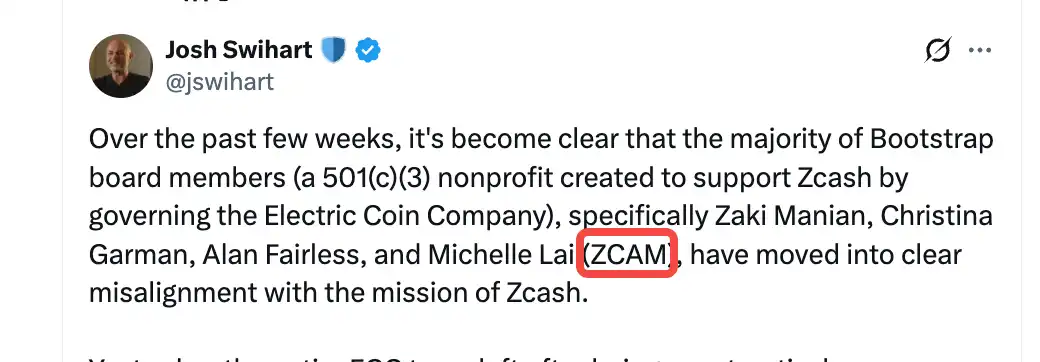
ZCAM. Sounds like SCAM. Not sure if it's intentional.

Among these four, Zaki Manian has the most stories.

He's an old-timer in the Cosmos ecosystem, was a core member of Tendermint. Resigned in 2020 after a public feud with founder Jae Kwon.

In 2023, the FBI informed him that two developers on a project he was responsible for were North Korean agents. After finding out, he concealed this for 16 months before making it public. In October 2024, Jae Kwon publicly accused him of "gross negligence" and "betraying the community's trust."

Now, he is a member of the Zcash board of directors.

The day after resigning, the former ECC team announced the formation of a new company, codenamed CashZ.

They said they would use the Zashi codebase to create a new wallet, to be launched within weeks. Existing Zashi users can migrate seamlessly.
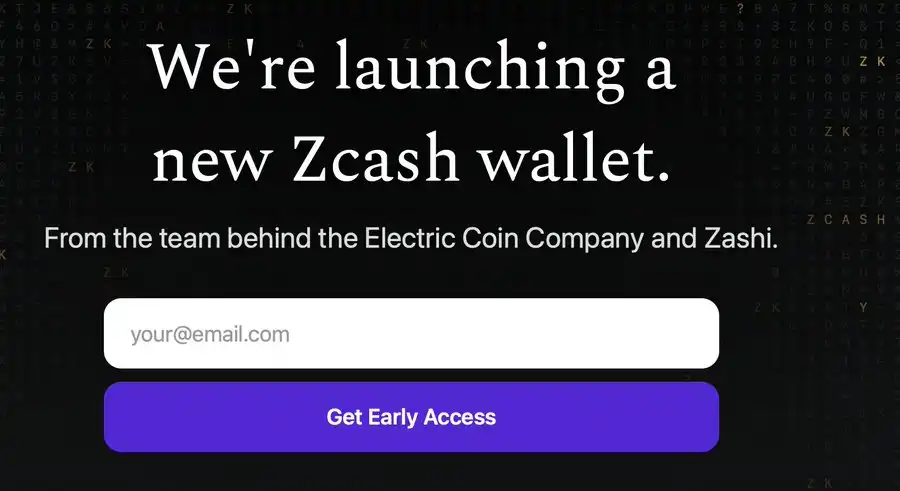
"We are the same team, with the same mission: to build unstoppable private money."

No new token, no starting from scratch, just changing the shell to keep working.

The most ironic part of this, we think, is the timing.

When ZEC was $15, no one cared who managed the wallet. When it hit $500, how much Zashi was worth became a matter of life and death.

When money appears, you find out who's family.

Similarly, the conflict between a non-profit and a startup team: OpenAI ended with the board losing, Zcash ended with the team leaving.

Who won is unclear, but this conflict is indeed common in crypto projects.

Swihart wrote a passage on the CashZ website explaining why they left:

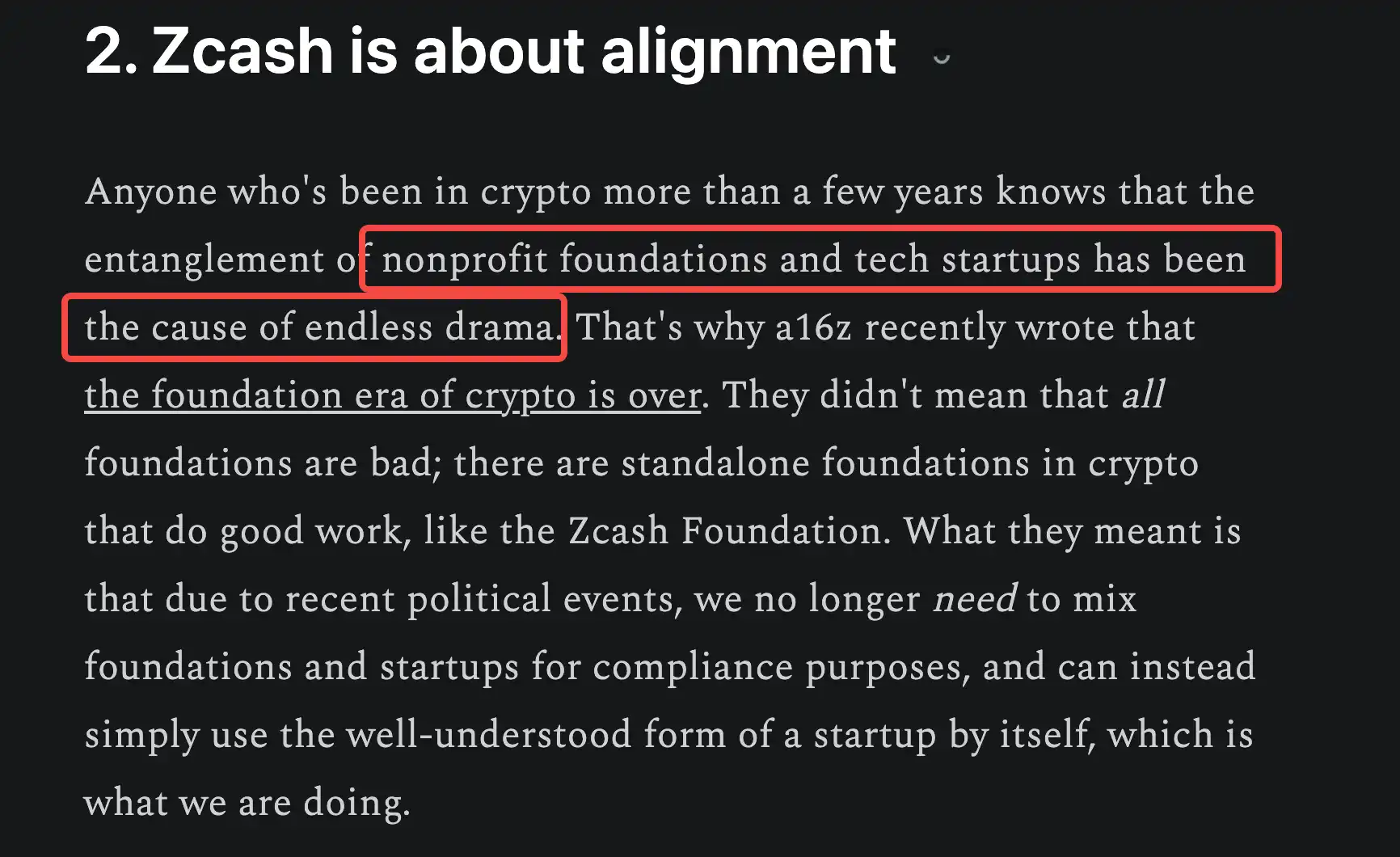
"The non-profit foundation model is a relic of the compliance era in crypto. An era where projects needed 'compliance buffers' to protect themselves. But these buffers introduced bureaucracy and divergence in roadmap. Startups can scale fast, non-profits cannot."

He also said: "Anyone who's been in crypto for a few years knows that the entanglement of non-profit foundations and tech startups is a source of endless drama."

It truly is endless drama.
In 2023, when Zooko stepped down as CEO, there were rumors of disagreements with Swihart. In January 2025, Zcash Foundation board member Peter Van Valkenburgh also resigned.

A decade-old coin, those who were supposed to leave have pretty much all gone.

Someone asked on Twitter: Will Zcash die?

The chain is still running. The code is still there. It's just that the people writing the code have changed.

But Swihart is right, the conflict between non-profits and startups is a common disease in this industry. Cosmos argued. The Ethereum Foundation argued. The Solana Foundation argued.

The difference is only in the manner and intensity of the arguments.

Zcash chose the most straightforward way.

Break up.

Kripto yang Sedang Tren

Pertanyaan Terkait

QWhat was the immediate market reaction to the resignation of the Zcash core development team?

AThe price of ZEC (Zcash) dropped by 20%.

QWhat was the primary reason for the conflict between the ECC team and the Bootstrap board of directors?

AThe conflict centered on the ECC team's proposal to privatize the Zashi wallet and bring in external investment, which the non-profit Bootstrap board opposed due to legal and fiduciary concerns.

QWhat is the name of the new company formed by the former ECC team, and what is its first project?

AThe new company is called CashZ, and its first project is to launch a new wallet based on the Zashi codebase, allowing for seamless migration for existing users.

QAccording to the article, what percentage of ZEC transactions actually used the coin's flagship privacy feature?

ALess than 1% of ZEC transactions used the privacy feature.

QWhich controversial figure on the Bootstrap board was previously involved in a scandal concerning North Korean developers?

AZaki Manian, a member of the Bootstrap board (part of the 'ZCAM' group), was previously involved in a scandal where he waited 16 months to disclose that two developers on a project he oversaw were North Korean agents.

Bacaan Terkait

Di Ethereum Terbentuk Antrian Staking Selama 43 Hari: Namun, Menurut Seorang Ahli, Ini Bukan Sinyal Bullish Sejati

Antrian untuk staking di Ethereum telah mencapai waktu tunggu sekitar 43 hari, dengan sekitar 2,5 juta ETH menunggu aktivasi. Lonjakan ini disebabkan oleh peningkatan minat validator, termasuk dari investor institusional. Namun, Thomas Brunner dari Sygnum Bank menyatakan bahwa antrian panjang ini bukanlah sinyal bullish langsung bagi harga ETH. Brunner menjelaskan bahwa antrian tersebut tidak hanya mencerminkan permintaan baru, tetapi juga dipengaruhi oleh mekanisme protokol Ethereum. Setelah pembaruan Dencun, kapasitas aktivasi validator dibatasi sekitar 57.600 ETH per hari, dan batas ini tidak dinaikkan dalam pembaruan Pectra. Pectra memungkinkan validator menambah hingga 2.048 ETH ke akun yang ada, tetapi transaksi tambahan ini tetap masuk ke antrian aktivasi yang sama, sehingga berkontribusi pada penumpukan. Menurutnya, sinyal pasar yang lebih kuat justru adalah antrian penarikan dana yang hampir kosong. Hal ini menunjukkan bahwa validator yang ada mempertahankan posisi mereka, yang mencerminkan kepercayaan terhadap jaringan. Saat ini, sekitar 41,2 juta ETH (33,8% dari total pasokan) telah di-stake. Brunner juga mencatat bahwa meskipun harga ETH melemah, minat institusional terhadap staking tetap kuat karena dianggap sebagai fitur fundamental. Namun, tantangan privasi masih menjadi hambatan besar, karena alamat validator dan transaksi dapat dilacak di blockchain, membuat investor institusi berhati-hati dalam meningkatkan operasi staking mereka.

cryptonews.ru41m yang lalu

Di Ethereum Terbentuk Antrian Staking Selama 43 Hari: Namun, Menurut Seorang Ahli, Ini Bukan Sinyal Bullish Sejati

cryptonews.ru41m yang lalu

NKCBFU Membuka Detail Persiapan RUU tentang Kriptocurrency

Kepala Komisi Nasional untuk Sekuritas dan Pasar Modal Ukraina (НКЦБФР), Alexey Semenyuk, mengungkapkan bahwa rancangan undang-undang mengenai regulasi aset virtual di Ukraina telah 90% selesai dan ditargetkan rampung pada Agustus mendatang. Namun, beberapa isu kunci masih belum terselesaikan, termasuk aspek perpajakan dan status hukum aset kripto dalam proses pidana serta eksekusi. Poin-poin yang telah disepakati meliputi pembagian kewenangan regulator, dengan НКЦБФР sebagai regulator utama pasar aset virtual dan daftar tugas yang jelas untuk Bank Nasional. Klasifikasi aset virtual juga telah disetujui sesuai dengan regulasi Eropa MiCA, mencakup token terkait aset, token uang elektronik, dan aset virtual lainnya. Persyaratan perizinan untuk penyedia layanan, aturan prudensial (seperti modal dan penyimpanan aset klien), serta rezim khusus selama keadaan perang telah disepakati. Namun, negosiasi masih berlangsung mengenai detail perpajakan (tarif, dasar pengenaan, waktu kewajiban pajak, periode keringanan) dan status hukum aset virtual dalam konteks hukum pidana dan eksekutif. Masa transisi setelah undang-undang berlaku juga masih dibahas. Proses legislasi ini telah berlangsung selama beberapa tahun. RUU tersebut telah melewati pembacaan pertama di parlemen pada September 2025, namun mengalami banyak amandemen. Otoritas berharap draf final siap pada Agustus, dengan target implementasi per 1 Januari 2027.

cryptonews.ru1j yang lalu

NKCBFU Membuka Detail Persiapan RUU tentang Kriptocurrency

cryptonews.ru1j yang lalu

Pemimpin Perusahaan Penambang Besar Nilai Profitabilitas AI Sepuluh Kali Lipat dari Penambangan

Kepala perusahaan penambangan Kanada, HIVE Digital Technologies, Frank Holmes, menyatakan percepatan pengembangan arah komputasi untuk kecerdasan buatan dalam sebuah wawancara. HIVE termasuk di antara penambang publik terbesar dan mengontrol sekitar 2% dari hashrate Bitcoin global. Menurut Holmes, porsi pendapatan perusahaan dari AI diperkirakan meningkat dari sekitar 10% menjadi lebih dari 50% tahun ini. Dia mencatat bahwa saat ini, penambang ASIC menghasilkan sekitar $0,12–0,14 per jam, sedangkan satu unit GPU Nvidia H100 dapat menghasilkan hampir $2 per jam. Bahkan GPU yang lebih tua menghasilkan sekitar $1,4 per jam, sekitar sepuluh kali lipat lebih banyak daripada peralatan penambangan. Banyak penambang besar seperti Riot Platforms, Cipher Digital, MARA, dan TeraWulf meminimalkan kerugian dengan beralih dari penambangan kripto ke mendukung komputasi AI di pusat data mereka atau menggabungkan kedua aktivitas tersebut. Awal Juli, penambang terbesar di AS, MARA Holdings, membeli lahan untuk pusat data AI dan penambangan seharga $600 juta. Bahkan pada November lalu, CEO MARA Fred Thiel menyatakan bahwa tanpa kenaikan harga Bitcoin minimal 50% per tahun, model penambangan saat ini akan menjadi tidak menguntungkan. Biaya produksi satu Bitcoin tidak dapat dihitung secara tepat, namun secara umum, menurut berbagai model estimasi, pada musim panas 2026 biaya tersebut sekitar $78 ribu. Harga Bitcoin telah bertahan di bawah level ini selama beberapa bulan, dan beberapa penambang mulai mematikan peralatan mereka ketika kompleksitas meningkat karena kenaikan biaya.

cryptonews.ru1j yang lalu

Pemimpin Perusahaan Penambang Besar Nilai Profitabilitas AI Sepuluh Kali Lipat dari Penambangan

cryptonews.ru1j yang lalu

Trading

Spot

Artikel Populer

Cara Membeli CORE

Selamat datang di HTX.com! Kami telah membuat pembelian CORE (CORE) menjadi mudah dan nyaman. Ikuti panduan langkah demi langkah kami untuk memulai perjalanan kripto Anda.Langkah 1: Buat Akun HTX AndaGunakan alamat email atau nomor ponsel Anda untuk mendaftar akun gratis di HTX. Rasakan perjalanan pendaftaran yang mudah dan buka semua fitur.Dapatkan Akun SayaLangkah 2: Buka Beli Kripto, lalu Pilih Metode Pembayaran AndaKartu Kredit/Debit: Gunakan Visa atau Mastercard Anda untuk membeli CORE (CORE) secara instan.Saldo: Gunakan dana dari saldo akun HTX Anda untuk melakukan trading dengan lancar.Pihak Ketiga: Kami telah menambahkan metode pembayaran populer seperti Google Pay dan Apple Pay untuk meningkatkan kenyamanan.P2P: Lakukan trading langsung dengan pengguna lain di HTX.Over-the-Counter (OTC): Kami menawarkan layanan yang dibuat khusus dan kurs yang kompetitif bagi para trader.Langkah 3: Simpan CORE (CORE) AndaSetelah melakukan pembelian, simpan CORE (CORE) di akun HTX Anda. Selain itu, Anda dapat mengirimkannya ke tempat lain melalui transfer blockchain atau menggunakannya untuk memperdagangkan mata uang kripto lainnya.Langkah 4: Lakukan trading CORE (CORE)Lakukan trading CORE (CORE) dengan mudah di pasar spot HTX. Cukup akses akun Anda, pilih pasangan perdagangan, jalankan trading, lalu pantau secara real-time. Kami menawarkan pengalaman yang ramah pengguna baik untuk pemula maupun trader berpengalaman.

712 Total TayanganDipublikasikan pada 2024.12.13Diperbarui pada 2026.06.02

Cara Membeli CORE

Diskusi

Selamat datang di Komunitas HTX. Di sini, Anda bisa terus mendapatkan informasi terbaru tentang perkembangan platform terkini dan mendapatkan akses ke wawasan pasar profesional. Pendapat pengguna mengenai harga CORE (CORE) disajikan di bawah ini.

活动图片