[Featured Research]How to Build NFT Royalties?

mediumDipublikasikan tanggal 2023-01-13Terakhir diperbarui pada 2023-01-13

Abstrak

We need to take into account what’s feasible on-chain, what makes sense in a competitive business environment (and if businesses are responsible for enforcing royalties), and how to support creators in order to make decisions as a community for the future of royalties.

Current State of NFT Royalties

The question of NFT royalty requirements has been top of mind in the crypto community lately. In short, NFT royalties are mechanisms to pay the original NFT creator a percentage of the purchase price from resales. As the digital art trades hands, royalties give the creator access to the upside and reward them for their piece reaching more people.

However, eliminated royalties and therefore lower prices for NFT buyers result in more sales for trading platforms, meaning that marketplaces are often conflicted on different policies to instate. On crypto Twitter especially, the debate has been raging – many have voiced opinions in favor of or against creator royalties.

One of the events that first set the debate in motion was the launch of Sudoswap, which uses a royalty-free trading model. The platform – essentially a decentralized NFT exchange with an AMM model – has seen incredible traction in the past few months, reaching a TVL of over $3.4M at peaks.
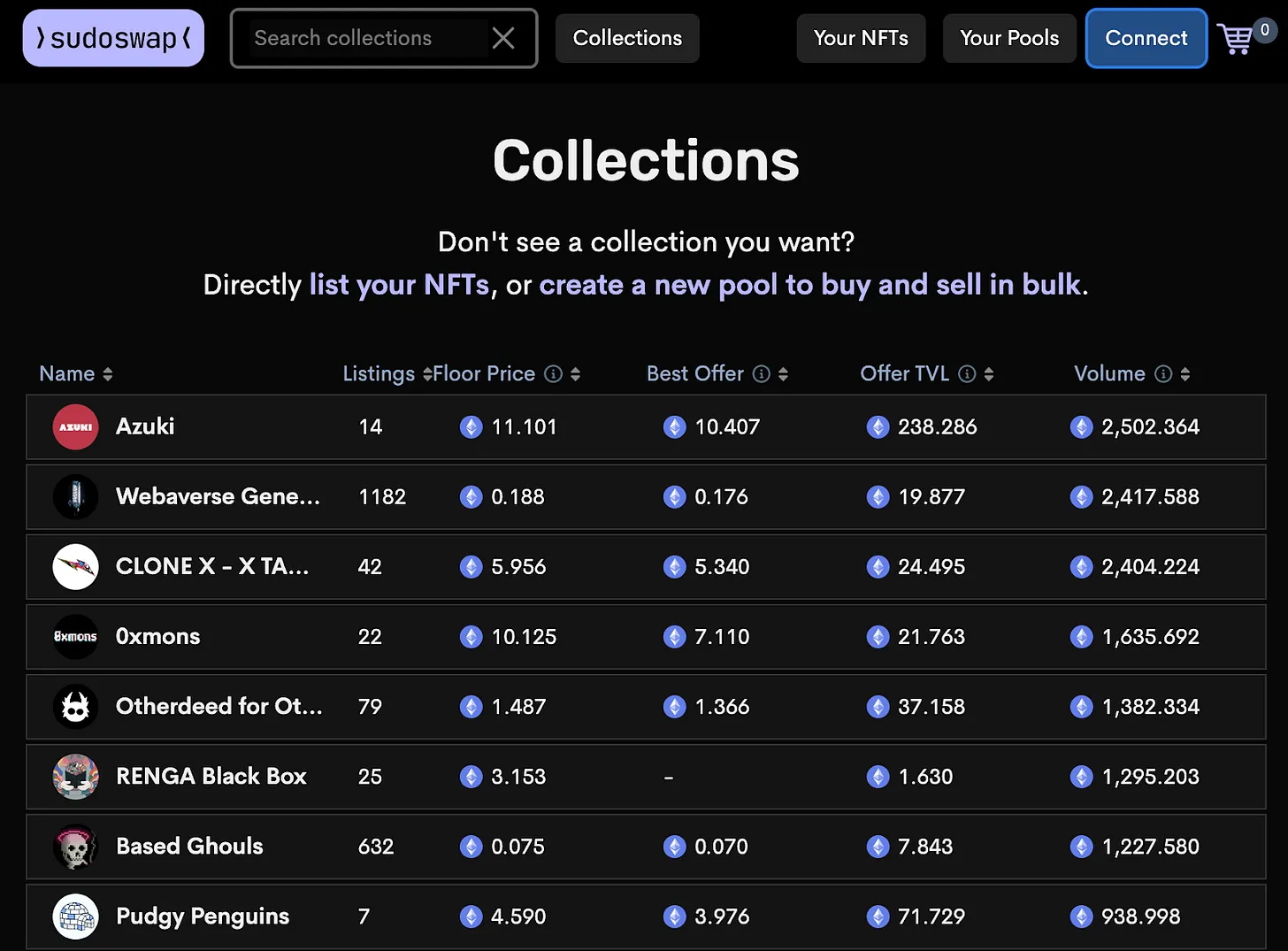
Collections on Sudoswap. Source: Sudoswap

Because of Sudoswap’s popularity and tx volume, their decision to forgo creator royalties drew a ton of attention in the NFT and crypto community. Users will most likely buy at the cheapest price point available to them, even if it means that the original creator of the art isn’t earning any fees.
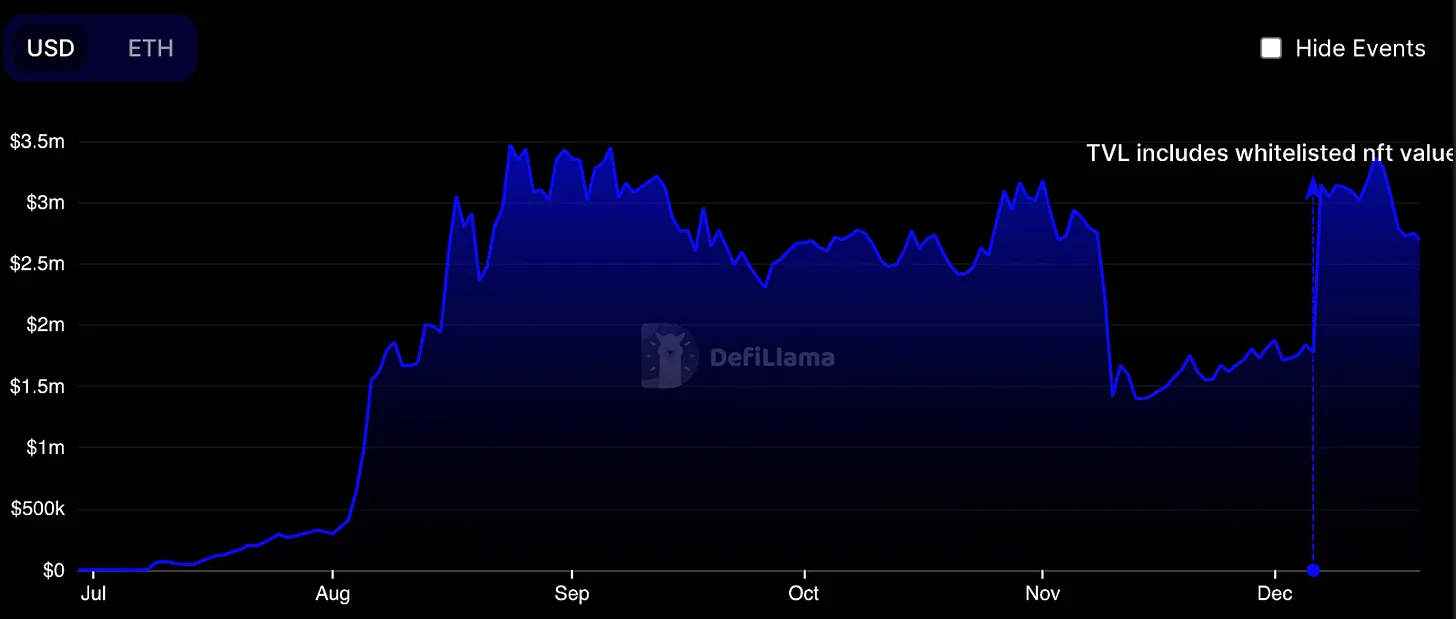
Sudoswap TVL. Source: Defi Llama

Many marketplaces have been increasingly eliminating royalties in an effort to bring more traders to their platform due to lower overall fees. Unlike Sudoswap, OpenSea has a history of paying on average 5% to creators via secondary sales. However, the dominant Ethereum marketplace stated on November 7 that they were creating a royalty enforcement tool that was only applicable to new NFT collections with no language on existing ones. However, after aggressive community pushback, OpenSea stated that it would continue to enforce royalties on existing projects just two days later on November 9. The OpenSea drama proved the power of community pushback influencing large business decisions almost immediately – something especially unique to the crypto environment. OpenSea’s decision also generated network effects: the following Friday, X2Y2, another popular marketplace, stated that they’d enforce creator royalties on all NFTs. Blur, an NFT collection platform for pro traders, recently also took to Twitter to affirm that they would “enforce a minimum royalty on immutable collections.” To start, Blur will enforce a minimum royalty of 0.5%, and plans to increase the minimum as they “observe the effects of each increase.”

Not all marketplaces have been as receptive to community feedback. In mid-October, Magic Eden stated on Twitter that “the market has been shifting towards optional creator royalties for awhile,” but that they’ve been “actively trying to avoid this outcome.” Noting that royalties aren’t enforceable on-chain, the platform instated optional royalties with the default set to full royalties. Magic Eden also cited evidence of wallet owners shifting their behavior towards using optional royalty marketplaces for trading.
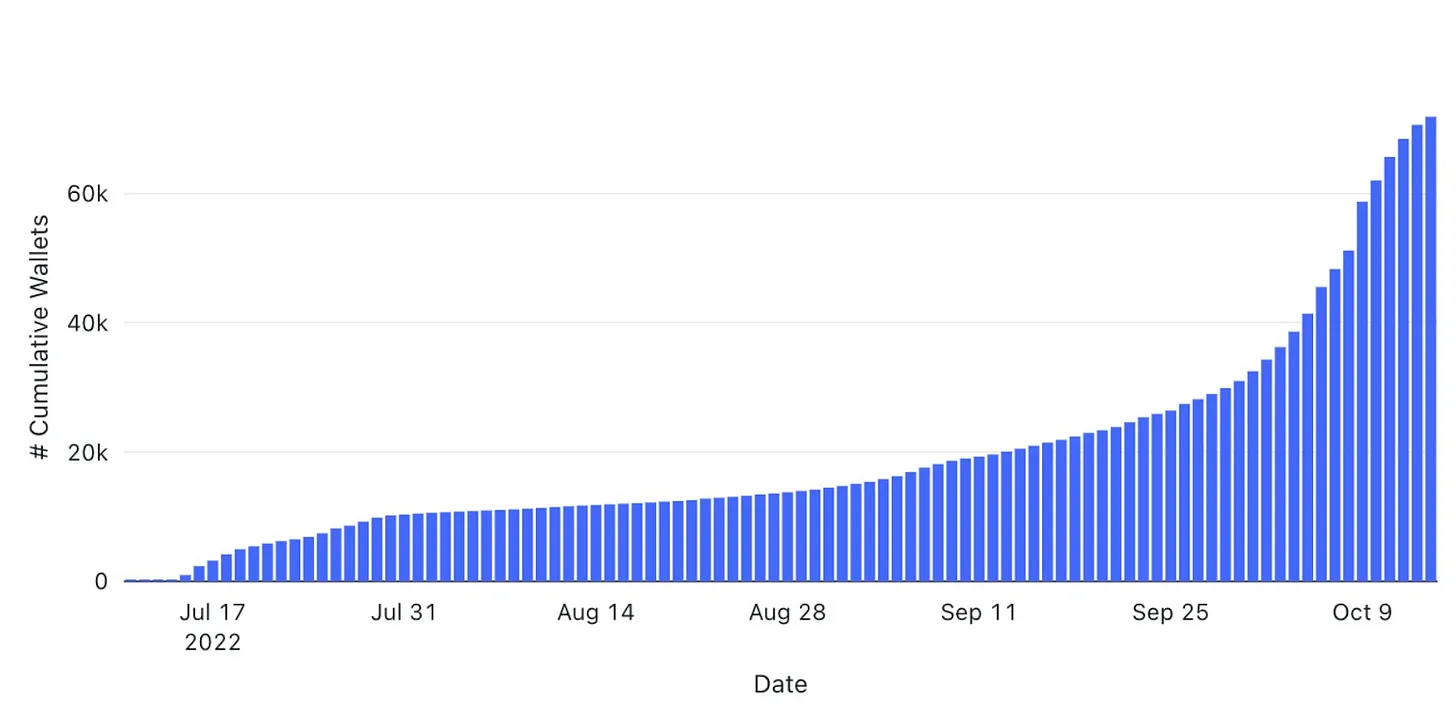
Cumulative wallets that have used optional royalty marketplaces to buy or sell NFTs. Source: Magic Eden on Twitter

Royalties have been a unique part of the NFT industry that have encouraged creators to further develop their projects. Wylie Aronow, co-founder of Yuga Labs, even claimed that “the NFT ecosystem would be a tiny fraction of what it is today if it weren’t for creator royalties.” For his collection, Bored Ape Yacht Club, the first mint was for only $220 per NFT, which pushed the team to get creative, popularize the collection, and really develop a brand around it that people were drawn to. If they did this, the NFTs would trade hands more often (at least initially), their prices would be bid up, and the project would generate more revenue for the core creators. According to Harry Liu on Twitter, royalties earned by top NFT collections in 2022 was around $340M, with Yuga Labs alone bringing in $110M.

There have also been some novel mechanisms involving royalties experimented with in practice, including with DigiDaigaku creator Limit Break’s “opt in, backwards compatible programmable royalties powered by staking.” As Limit Break specifies in an article detailing the mechanism, the royalties are enforceable at the individual token level and are compatible with any ERC-721 contract.

Royalties are a basic incentive design in industry. Without royalties, NFT creators aren’t as willing to promote and stick with their project. I’d even go so far as to say that a lack of royalties discourages creation in the first place. If artists aren’t given financial attribution as their work popularizes, they’re going to be disinclined to pursue creation. However, decentralization is at the heart of this industry and NFT royalties are nearly impossible to enforce on-chain. We need to take into account what’s feasible on-chain, what makes sense in a competitive business environment (and if businesses are responsible for enforcing royalties), and how to support creators in order to make decisions as a community for the future of royalties.

Bacaan Terkait

Blockstream, Unicorn Kripto, Terjerat dalam Skandal Penipuan Berat: Kisah Lengkap

Sejak awal tahun, pionir Bitcoin Adam Back dan perusahaan yang didirikannya, Blockstream, berada di pusat perhatian komunitas kripto. Baru-baru ini, akun investigasi NatInfoSec menerbitkan artikel panjang yang menuduh Blockstream melakukan penipuan serius terkait penerbitan obligasi pertambangan Bitcoin (BMN). Tuduhan utama mencakup: 1. **Kapasitas dan Kemampuan Pembayaran yang Dipertanyakan**: Untuk memenuhi kewajiban BMN yang diterbitkan, Blockstream membutuhkan daya komputasi (hashrate) lebih dari 20 EH/s, bahkan hingga 45 EH/s. Namun, dasbor mereka hanya menunjukkan 15 EH/s. Tidak ada bukti publik yang sesuai (seperti data jaringan listrik, impor perangkat keras, atau atribusi kolam penambangan) untuk mendukung skala kewajiban tersebut. Klausul "Substitute Performance BTC" dalam BMN2 juga memungkinkan Blockstream menggunakan BTC dari sumber mana pun untuk pembayaran tanpa perlu mengungkapkan asalnya. 2. **Imbal Hasil Tinggi dengan Risiko Utang**: Beberapa tingkat obligasi BMN menawarkan imbal hasil tetap hingga sekitar 20% per tahun. Di industri pertambangan Bitcoin yang sangat siklis, imbal hasil tetap setinggi itu dianggap berisiko tinggi dan memerlukan penjelasan yang jelas. 3. **Masalah Pengungkapan dan Masa Lalu Chris Cook**: Christopher William Cook, seorang figur kunci di bisnis pertambangan Blockstream dan CEO Exacore (entitas operasional yang dipisahkan), memiliki catatan kriminal. Pada 2008, ia dihukum karena penipuan pos dengan hukuman penjara 41 bulan. Informasi ini tidak diungkapkan dalam dokumen penawaran BMN. Materi pemasaran juga disebutkan secara menyesatkan tentang pengalaman kerjanya di NASA. 4. **Keterkaitan dengan BSTR/SPAC**: NatInfoSec mempertanyakan apakah catatan Cook dan kewajiban potensial BMN seharusnya diungkapkan dalam dokumen SEC untuk Bitcoin Standard Treasury Company (BSTR), yang terkait dengan Adam Back dan berencana go public melalui SPAC. Namun, analis seperti BitMEX Research berpendapat bahwa karena struktur hukum yang terpisah dan tidak adanya jaminan grup, risiko BMN tidak serta merta menjadi risiko BSTR. BitMEX Research mengakui bahwa latar belakang Cook kemungkinan benar dan menyuarakan kekhawatiran tentang imbal hasil tinggi, tetapi menilai bukti untuk tuduhan lain tidak memadai. Debat komunitas berpusat pada **kemampuan untuk memverifikasi** daya komputasi sebenarnya, sumber pendapatan, dan asal BTC yang digunakan untuk pembayaran kupon BMN. Pertanyaan inti yang belum terjawab meliputi: skala pasti dan batas tanggung jawab BMN, kecukupan daya komputasi tambang untuk mendukung pembayaran, sumber imbal hasil tetap 20%, keterlibatan Cook, dan verifikasi aset cadangan untuk pembayaran. Hingga saat ini, Blockstream belum memberikan tanggapan sistematis terhadap kontroversi ini.

链捕手49m yang lalu

Blockstream, Unicorn Kripto, Terjerat dalam Skandal Penipuan Berat: Kisah Lengkap

链捕手49m yang lalu

a16z: Di Era AI, Perebutan Talenta Perusahaan Dimulai dari Pemberian Nama Jabatan

**Ringkasan: Arbitrase Judul Pekerjaan di Era AI** Artikel ini membahas pentingnya penamaan atau "judul" (title) pekerjaan sebagai strategi dalam merebut talenta dan membentuk persepsi di era AI, yang disebut sebagai "title arbitrage". Konsep ini diilustrasikan dengan contoh **FDE (Forward-Deployed Engineer)** yang dipopulerkan Palantir. Alih-alih disebut sebagai "insinyur implementasi" atau "dukungan pelanggan", FDE mendefinisikan ulang pekerjaan teknis di lokasi klien sebagai peran inti yang kompleks dan bernilai tinggi, menarik talenta rekayasa yang juga mahir menghadapi klien. Judul pekerjaan adalah **bahasa organisasi**. Perubahannya (misalnya dari "programmer" ke "software engineer", atau "clerk" ke "data scientist") mencerminkan pergeseran nilai strategis suatu kemampuan dalam bisnis. Penamaan yang tepat mengakui dan memberi legitimasi pada kemampuan baru. Di era AI, transformasi bukan hanya tentang alat yang lebih pintar, tetapi tentang kemunculan **individu berpengaruh baru** dalam organisasi—mereka yang mahir menggunakan AI, mengotomatisasi alur kerja, dan menerjemahkan masalah kompleks menjadi sistem. Judul baru seperti **Legal Engineer** atau **GTM Engineer** membantu mengidentifikasi, memberi wewenang, dan mempertahankan talenta semacam ini. Bagi startup AI, menciptakan dan mempopulerkan judul pekerjaan baru untuk peran yang lahir dari produk mereka adalah strategi. Ini membantu klien dalam mobilisasi internal dan membangun asosiasi kuat antara perusahaan dengan kemampuan spesifik tersebut. Kesimpulannya, dalam dunia perangkat lunak AI di mana batas antara produk dan layanan kabur, kemampuan untuk mendefinisikan, menamai, dan mengorganisir peran baru—terutama yang menjembatani produk dengan masalah nyata klien—dapat menjadi pembeda kompetitif dan dasar bagi keunggulan yang berkelanjutan.

marsbit2j yang lalu

a16z: Di Era AI, Perebutan Talenta Perusahaan Dimulai dari Pemberian Nama Jabatan

marsbit2j yang lalu

Trading

Spot
Futures
活动图片