DeepSeek's "Self-Evolution" Blueprint, Revealed

marsbitDipublikasikan tanggal 2026-08-14Terakhir diperbarui pada 2026-08-14

Abstrak

DeepSeek, in collaboration with Peking University, has unveiled a new research paper titled "A Programming Paradigm for Spatiotemporal Composability," which outlines the core architecture behind its "Harness" agent platform. The paper introduces **Cordis**, a foundational "Lego-like baseboard" that enables a highly modular and composable system where **everything is a plugin and everything can be reassembled**. The core innovation addresses two major challenges for self-evolving AI agents: **temporal composability** (the ability to dynamically load, unload, and update plugins at runtime without restarting the entire process) and **spatial composability** (managing complex, dynamic dependencies between components). Cordis solves these using two key theoretical concepts adapted for dynamic environments: **revertible effects** (which allow state changes to be cleanly rolled back) and **reactive coeffects** (which enable automatic, declarative dependency resolution). This design is not merely theoretical. It has been validated over four years in the **Koishi** chatbot framework, which is built on Cordis and hosts over 4,000 community plugins. The framework demonstrates live plugin management—enabling, disabling, or updating plugins without disrupting others—and robust handling of dependencies across a decentralized ecosystem. The paper represents DeepSeek's vision for a foundational infrastructure that supports true **self-evolution** in AI agents, allowing them to dynamically...

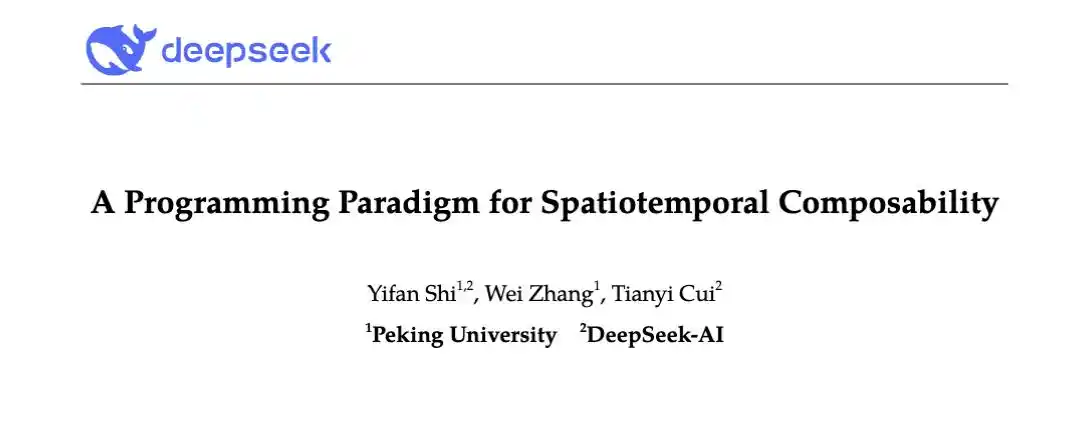
DeepSeek 's latest collaborative paper with Peking University has lifted the veil on the Harness version of "Whale."

It's titled "A Programming Paradigm for Spatiotemporal Composability," translated into Chinese as "一套处理时空可组合性的编程范式".

It sounds a bit convoluted, but you just need to remember one sentence—

The entire text revolves around Cordis, the core of the black whale, a detachable "Lego baseplate."

Here, everything is a plugin, and everything can be reorganized.

This also explains why "Black Whale" is so open and why the official team actively encourages everyone to develop plugins and customize Harness.

It's a paper packed with information, also the culmination of the DeepSeek Harness team's long-term efforts, ultimately making a spectacular debut in the form of the Great Black Whale.

It's worth noting that this is DeepSeek 's seventh paper this year and the Nth time collaborating with Peking University.
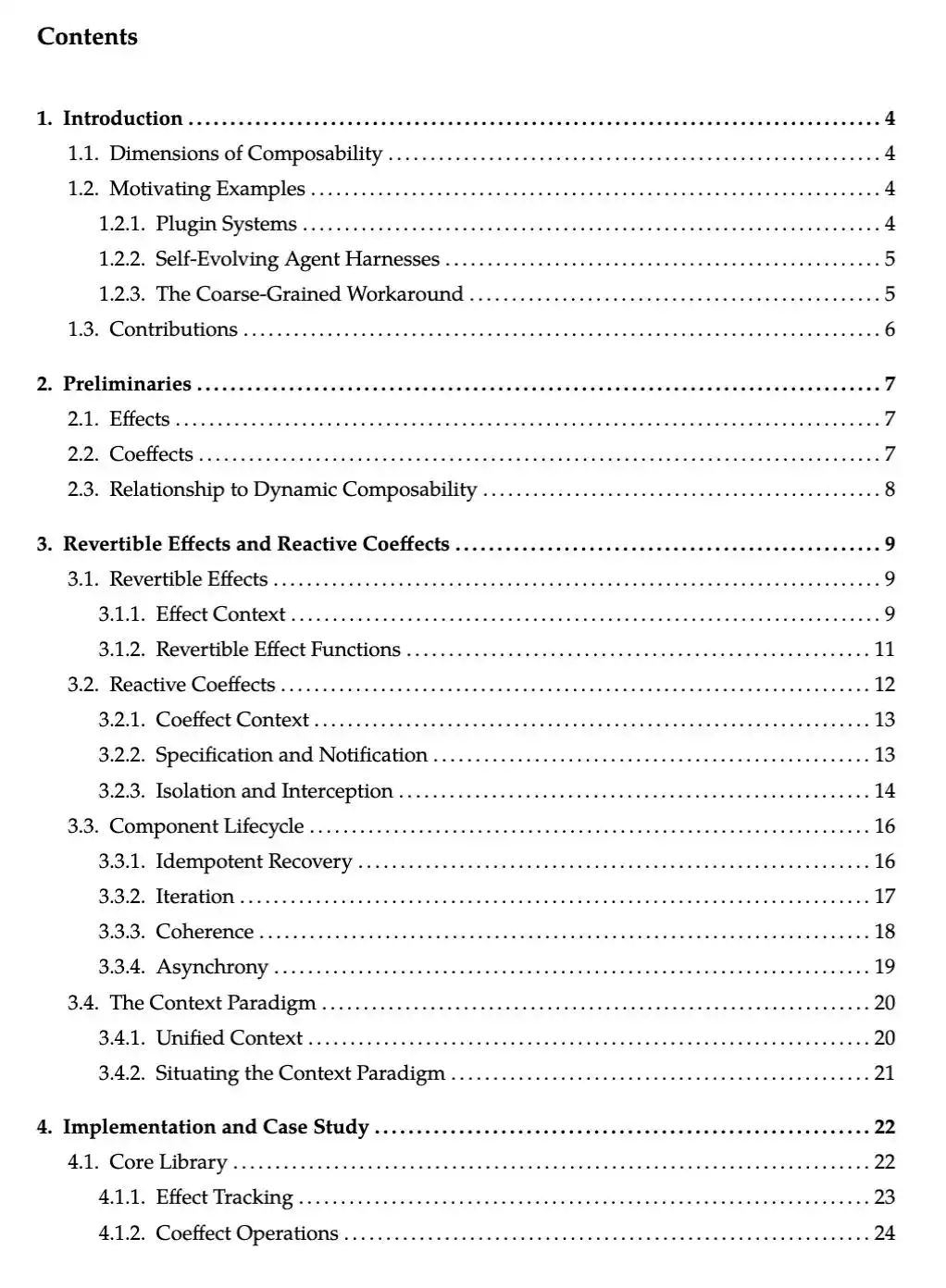
Over eighty pages long, I went through the paper from start to finish and roughly compiled a few takeaways—

1. Cordis provides a set of universal dynamic composition semantics. Components managed through Context can be dynamically loaded, unloaded, and have their managed side effects automatically reclaimed.

2. The mathematical foundation comes from two classical concepts in type theory: effects and coeffects.

3. Not just a lab toy. This design has been running on the Koishi chatbot framework for four years, validated in production environments by over 4,000 community plugins.
And all of this serves the same ambition—

Self-Evolution.

Time and Space: The Two Hurdles for Harness Self-Evolution

There's a counterintuitive reality in the software world: most systems supporting plugins require restarting the entire host process after uninstalling a plugin.

This means that while only one plugin might be deleted, all other loaded plugins have to restart along with it.

Yes, a "plug-in" is actually plugged in and can't be pulled out.

VSCode is a typical case.

The paper states that as of June 9, 2026, among the top 100 extensions in the VSCode Marketplace, 87 contain executable code. Once activated, they cannot be individually unloaded at runtime; disabling or deleting them requires restarting the entire extension host.

This isn't a problem unique to VSCode. The paper points out that almost all plugin architectures have such defects, just to varying degrees.

In ordinary plugin systems, this is troublesome enough, but if the cost is just a restart, it's somewhat acceptable.

But in the context of Agents, it's a completely different problem.

A conventional harness is typically packed with a bunch of things: toolkits, execution environments, permission controls, sandboxes, session states, memory systems... It's an extremely complex engineering system in itself.

And now, it's met with the "Self-Evolving AI"—a mischievous Sun Wukong (Monkey King) who might accidentally modify itself out of existence.

This is also the angle from which DeepSeek 's paper approaches self-evolution:

Future Agents might generate a tool based on a task, install it into the runtime themselves, and if problems are discovered, replace it themselves.

If every time a single line of code is changed, the entire process has to be restarted, the accumulated context, cache—everything could crash.

This is called Temporal Composability.

If dependencies between modules rely on each module patching itself—checking for A today, guessing about B tomorrow... it's easy to inadvertently introduce circular dependencies, which will explode during reloading.

This is called Spatial Composability.

And these two difficulties are precisely the two problems Cordis aims to solve.

DeepSeek's Solution

First, let's supplement two mathematical knowledge points, which are also the two main theoretical pillars of this paper—

Effects and Coeffects.

Simply put, effects characterize "the program's impact on the world"; coeffects characterize "the world's constraints on the program." The two are dual concepts: effect systems enrich types, while coeffect systems enrich contexts.

But there's a problem: in the context of self-evolving AI, frameworks are dynamically loaded.

Classical effect/coeffect systems are static type system tools.

To overcome both the temporal and spatial hurdles simultaneously, the team adapted and upgraded these two concepts for Agent runtimes—"revertible effects" and "reactive coeffects."

Revertible effects target the temporal dimension.

The core definition is just one sentence: every modification to the context must have an explicit inverse function, making side effects reversible.

When loading a plugin, each state modification records the corresponding inverse function, stacking them sequentially into an "undo chain."

When unloading a plugin, this chain is executed in reverse, allowing the system state to be precisely restored to its state before the plugin was loaded.

Think of it like a stack of plates: the last one placed is the first one removed.

This way, the temporal order doesn't get messed up.

Reactive coeffects are responsible for the spatial dimension.

In Cordis, components can declare which dependencies they need, achieving resolvable dependencies.

For example, a chat plugin states it needs a message adapter and a database. It only becomes ACTIVE when both dependencies are satisfied. If one is missing, it stays INACTIVE—not rushing to start, nor running and then throwing a null reference error.

When a provider appears, dependents automatically activate. When a provider is removed, dependents stop first. After they roll back their own effects, the provider completes its unloading.

If a dependency provider unloads, dependents automatically deactivate; if the dependency comes back online, dependents automatically resume. This topological arrangement isn't manually written by developers but automatically derived from declarations.

The combination of the two constitutes the core of Cordis.

The intuitive meaning of "spatiotemporal composability" in the paper's title lies right here.

Koishi

So, has all this just been discussed been validated in practice?

Yes.

And the scale is not small.

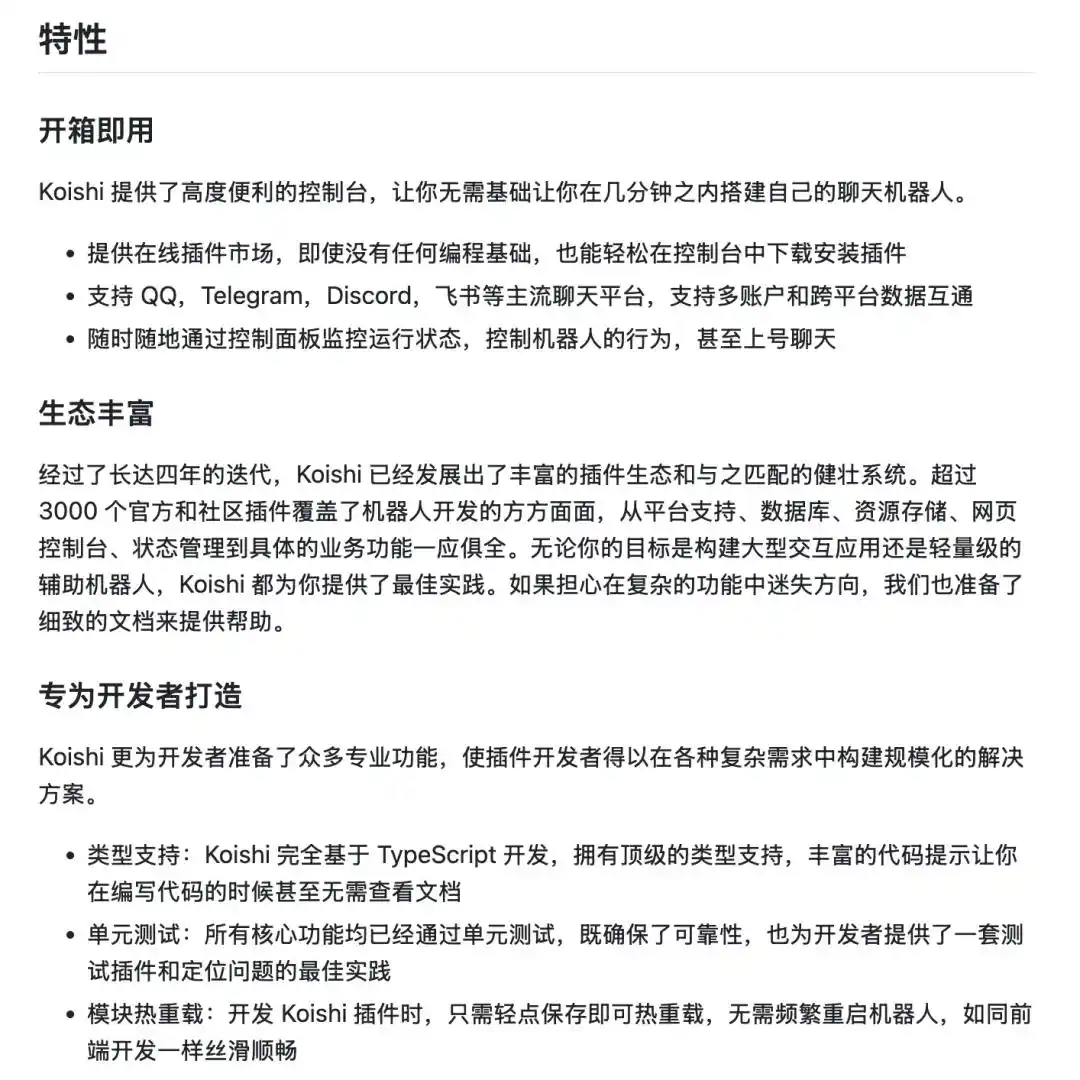
The project used for experimental validation in the paper is a chatbot framework called Koishi.

Koishi is built on Cordis. Over four years, it has accumulated over 4,000 community plugins, covering instant messaging adapters, database drivers, admin consoles, and various user functions.

GitHub shows that Koishi is a cross-platform, extensible, high-performance chatbot framework.

Its name and icon design are inspired by the character Komeiji Koishi from Touhou Project.

Komeiji Koishi is a character known for unconscious actions. This name symbolizes the theme of chatbots and also embodies the passion developers poured into it.

A rather interesting README indeed.
So, what is Cordis?

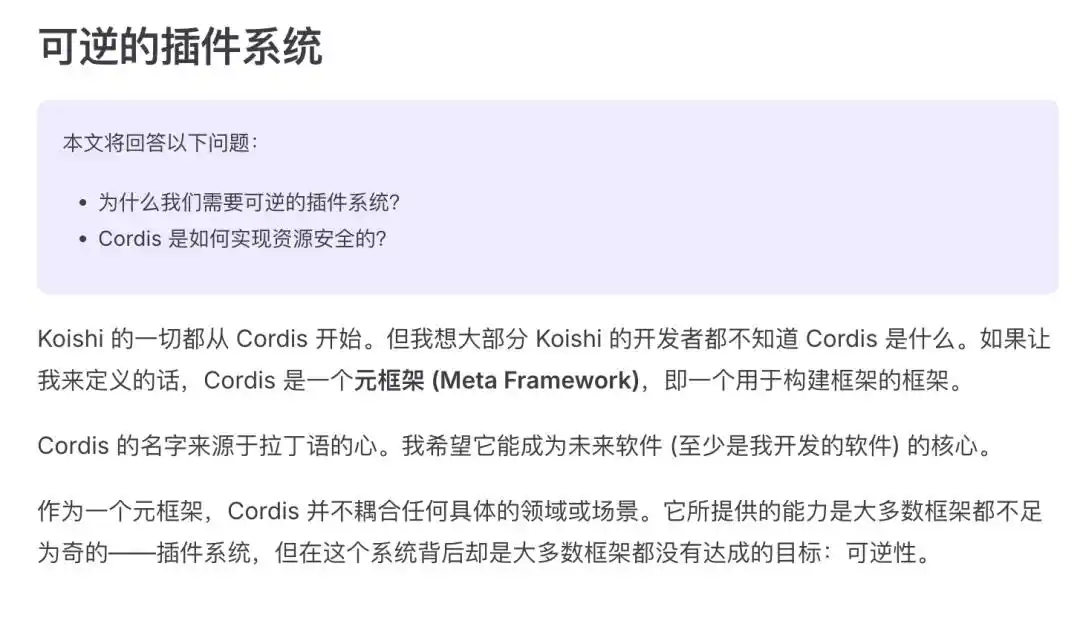
The author of Koishi states that the name Cordis comes from the Latin word for "heart." Everything in Koishi starts from Cordis.

As a meta-framework, Cordis is not coupled to any specific domain or scenario.

The capability it provides is something most frameworks take for granted—a plugin system. But behind this system lies a goal most frameworks haven't achieved: reversibility.

And this sentence was left:

I hope it can become the core of future software (at least the software I develop).

Four years later, DeepSeek 's paper provides the validation.

First, validation of the temporal dimension.

In Koishi, an administrator can disable a plugin from the console. The plugin's impact on the system is rolled back on the spot, while other plugins continue to work.

During development, when a plugin is modified and saved, the modified plugin is reapplied, while caches and connections remain untouched.

Next, validation of the spatial dimension.

In the Koishi ecosystem, IM adapters provide message platform access, database drivers provide persistent storage, and functional plugins declare these as dependencies for direct access.

During actual operation, when switching storage backends or reconnecting adapters, only plugins whose dependencies have actually changed are reactivated. Plugins with unchanged dependencies remain completely still.

It's important to note that these plugins are typically developed independently by different authors. The only coordination between them is the reactive coeffect emphasized by Cordis.

This shows that a set of dynamic composition rules can indeed work in an open plugin ecosystem contributed by different authors.

But the paper doesn't package this case as a perfect demo either.

The team admits that currently, there's only validation data from the single ecosystem of Koishi and the single language of TypeScript, lacking controlled comparisons with alternative architectures...

But the most important thing is pointing out a new direction—a foundational infrastructure for Agent Harness serving self-evolution.

And now the released DeepSeek Harness is precisely the upgraded version of Koishi's Cordis.

Paper Author Introduction

Finally, let's talk about the paper authors as usual.

There are three in total, spanning Peking University and DeepSeek .
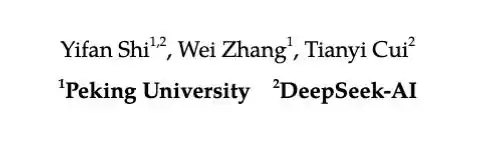
The first author is Yifan Shi, from Peking University and also a member of DeepSeek .

A deeper dive reveals that his name had already appeared in the DeepSeek V3 Technical Report.
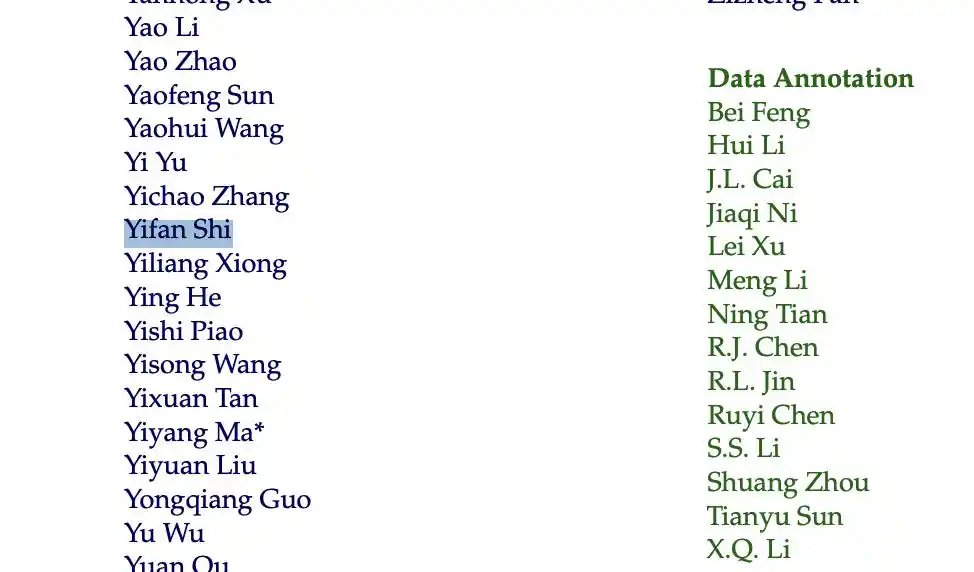
The project used for validation in this new paper—Koishi—also originates from him.

Seems to have a strong attachment to "shi": real name Yifan Shi, project named Koishi, GitHub handle Shigma.

(doge)
Back on topic.

Koishi is a repository from four years ago, now with 5.7K stars. One could say this is the origin of everything.

Because the concept of Cordis was also proposed within Koishi.

In 2023, Shigma wrote a design article for the Koishi official documentation titled "Reversible Plugin System," almost the ancestor of this new paper.
Wei Zhang, also from Peking University, is an Associate Professor at the Software Research Institute, School of Computer Science, Peking University.

The school's website shows that Wei Zhang's research areas mainly cover software engineering and programming languages.
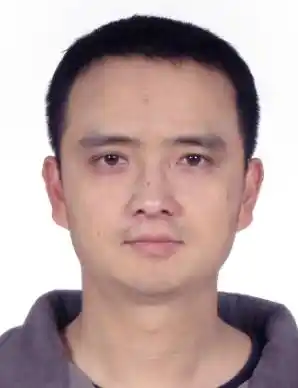
In 1999, he graduated with a bachelor's degree in Engineering Thermophysics from Nanjing University of Aeronautics and Astronautics. Subsequently, he shifted towards computer science, obtaining a Master's degree in Computer Science from Nanjing University of Aeronautics and Astronautics in 2002.

After his master's, Zhang Wei entered Peking University to pursue his Ph.D., earning a Doctorate in Computer Software and Theory in 2006.

After his doctorate, he directly took a position at Peking University and has since been engaged in research and teaching in software engineering, programming languages, and related directions.

Notably, as early as 2021 at ASE, Wei Zhang collaborated with Yifan Shi.
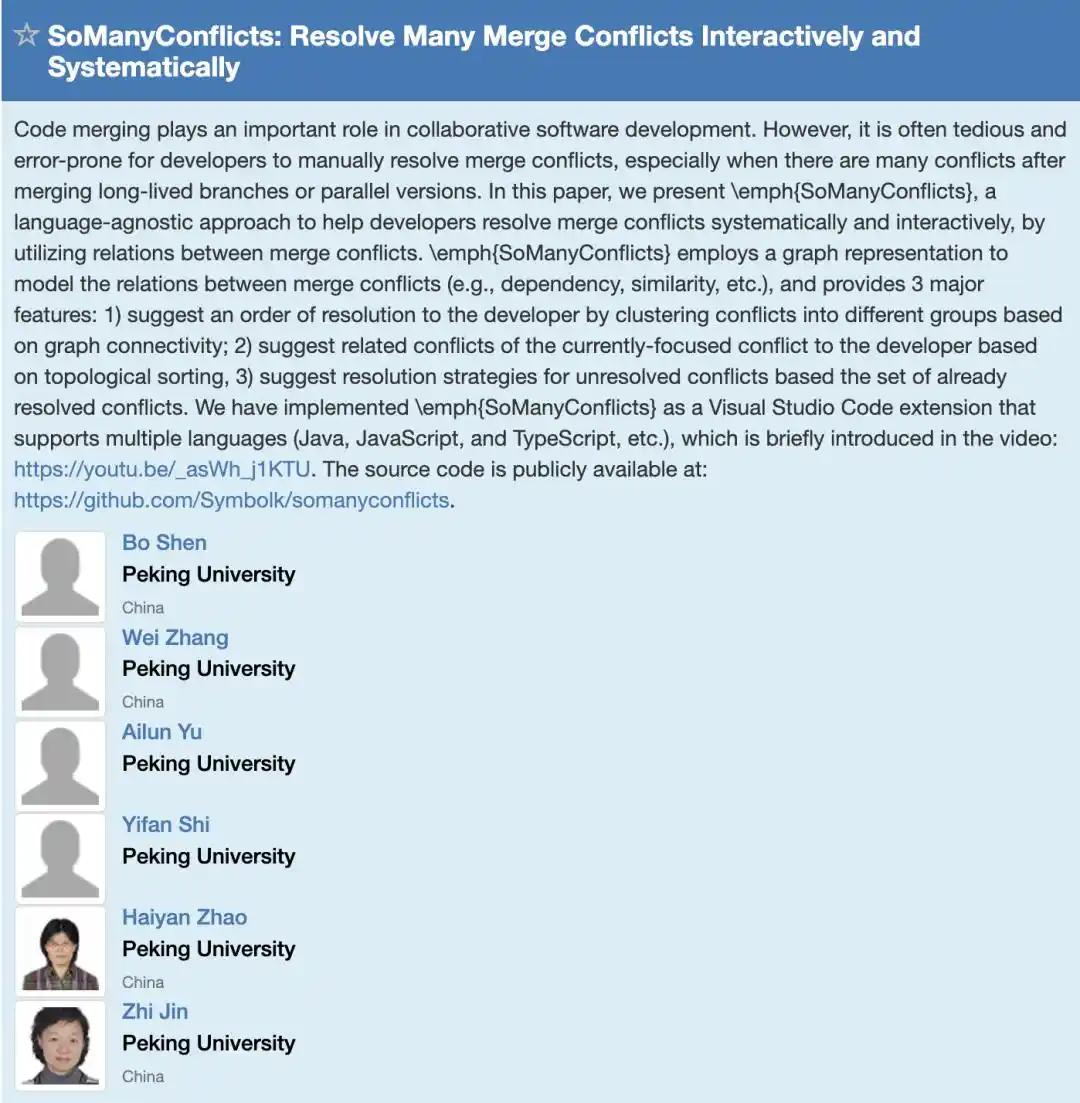
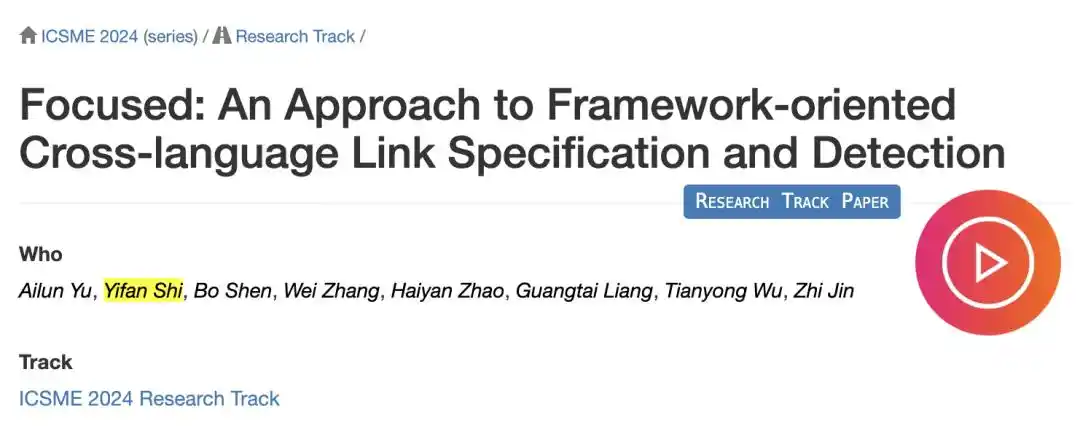
In 2024, the two published another ICSME paper together: "Focused: An Approach to Framework-oriented Cross-language Link Specification and Detection."
Finally, an old acquaintance.

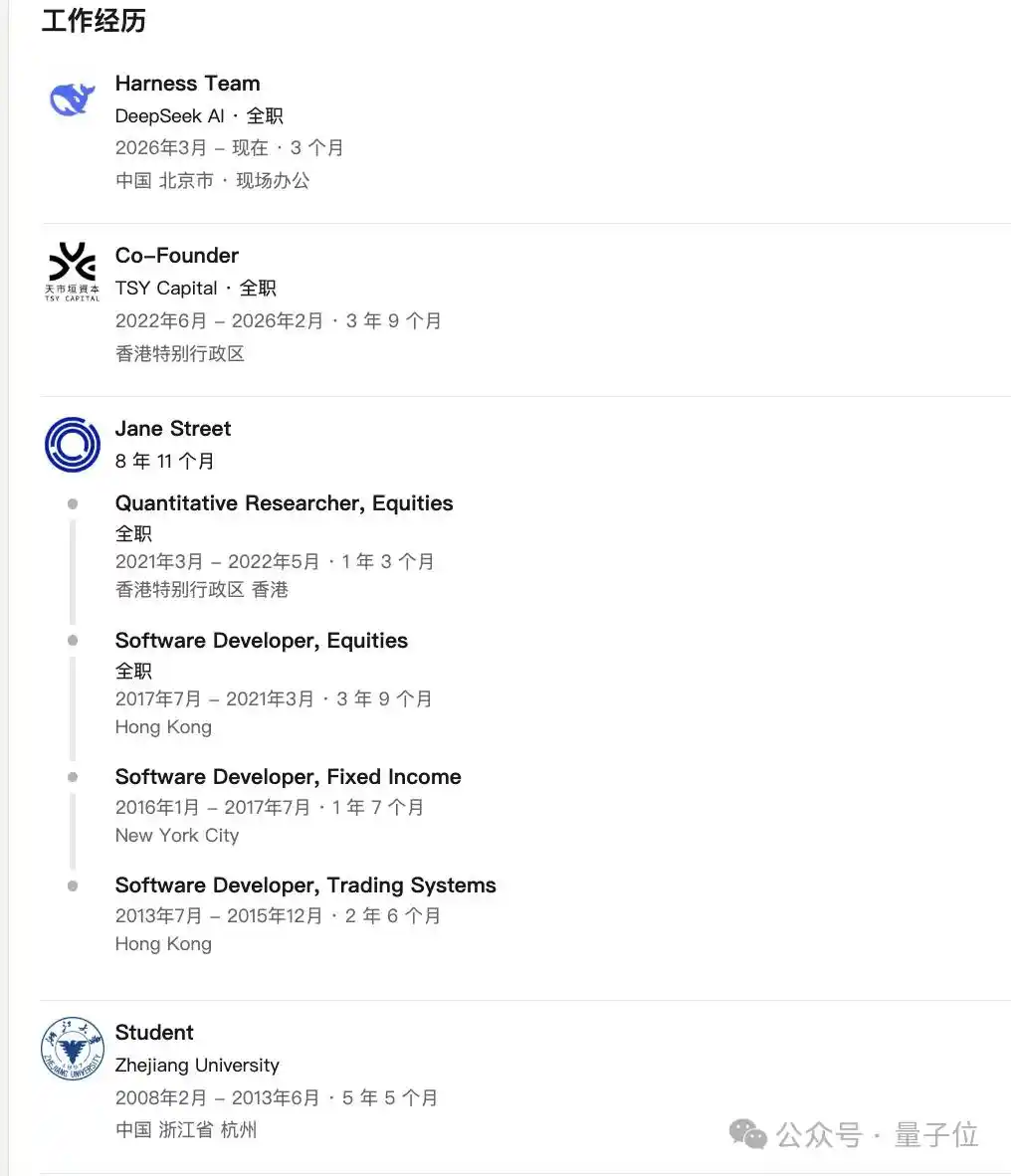
Tianyi Cui, DeepSeek Harness Team Lead. Undergraduate graduate from Zhejiang University's Computer Science Department, junior to Wenfeng Liang.
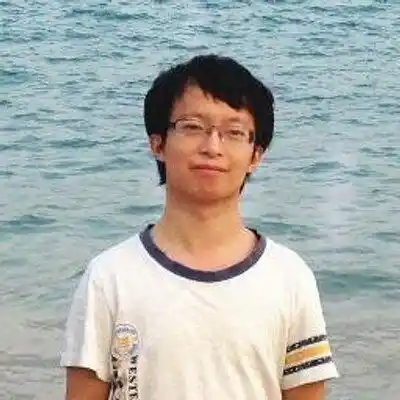
During his studies, Tianyi Cui was admitted to Zhejiang University via NOIP/informatics competition recommendation and won gold medals in the ACM International Collegiate Programming Contest Asian Regional six times.

After graduation, he worked for nine years at Jane Street's Hong Kong and New York offices.
Paper Link: https://github.com/cordiverse/paperKoishi: https://github.com/koishijs/koishi

This article is from the WeChat public account "Qubit," author: Jay

Kripto yang Sedang Tren

Pertanyaan Terkait

QWhat is the core concept of the Cordis system introduced in the DeepSeek paper, and what does it enable?

AThe core concept of Cordis is a 'Lego baseplate' programming paradigm for spatiotemporal composability. It enables everything to be a plugin and everything to be recombinable. Its central design allows for dynamic loading and unloading of plugins and the automatic reclamation of their side effects, serving as the foundation for agent self-evolution.

QWhat two key challenges for agent self-evolution does the paper identify, and what does Cordis propose to solve them?

AThe paper identifies two key challenges: Temporal Composability and Spatial Composability. Temporal composability refers to the inability to dynamically change code (e.g., update a tool) without restarting the entire process and losing context. Spatial composability refers to the complexity of managing dependencies between modules without creating conflicts. Cordis solves these with 'revertible effects' (for time) and 'reactive coeffects' (for space), providing a framework for safe, dynamic composition.

QWhat is 'Koishi' and what role does it play in validating the Cordis system?

AKoishi is a cross-platform, extensible, high-performance chatbot framework built on Cordis. It serves as the practical validation system for the Cordis concepts. With over 4000 community plugins developed independently over four years, it demonstrates that Cordis's dynamic composition rules for temporal and spatial dependencies work effectively in a large-scale, open-source production environment.

QAccording to the article, what is a major limitation of current plugin systems like VSCode's that Cordis aims to overcome?

AA major limitation is the lack of true runtime uninstallability. In systems like VSCode, once a plugin with executable code is activated, it cannot be individually unloaded at runtime. Disabling or removing it requires a full restart of the extension host process, which impacts all other loaded plugins and loses state. Cordis's revertible effects allow precise, on-the-fly unloading and state reversion.

QWho are the main authors of the paper, and what is their background connection to the project?

AThe three main authors are Yifan Shi (first author, Peking University & DeepSeek), Wei Zhang (Peking University professor), and Tianyi Cui (DeepSeek Harness team lead). Yifan Shi is the original creator of the Koishi framework, which is the practical foundation for Cordis. He and Wei Zhang have collaborated on previous research. Tianyi Cui brings industry experience from Jane Street to lead the Harness team applying these concepts.

Bacaan Terkait

Trading

Spot

Artikel Populer

Apa Itu $S$

Memahami SPERO: Tinjauan Komprehensif Pengenalan SPERO Seiring dengan perkembangan lanskap inovasi, munculnya teknologi web3 dan proyek cryptocurrency memainkan peran penting dalam membentuk masa depan digital. Salah satu proyek yang telah menarik perhatian di bidang dinamis ini adalah SPERO, yang dilambangkan sebagai SPERO,$$s$. Artikel ini bertujuan untuk mengumpulkan dan menyajikan informasi terperinci tentang SPERO, untuk membantu para penggemar dan investor memahami dasar-dasar, tujuan, dan inovasi dalam domain web3 dan crypto. Apa itu SPERO,$$s$? SPERO,$$s$ adalah proyek unik dalam ruang crypto yang berusaha memanfaatkan prinsip desentralisasi dan teknologi blockchain untuk menciptakan ekosistem yang mendorong keterlibatan, utilitas, dan inklusi finansial. Proyek ini dirancang untuk memfasilitasi interaksi peer-to-peer dengan cara baru, memberikan pengguna solusi dan layanan keuangan yang inovatif. Pada intinya, SPERO,$$s$ bertujuan untuk memberdayakan individu dengan menyediakan alat dan platform yang meningkatkan pengalaman pengguna dalam ruang cryptocurrency. Ini termasuk memungkinkan metode transaksi yang lebih fleksibel, mendorong inisiatif yang dipimpin komunitas, dan menciptakan jalur untuk peluang finansial melalui aplikasi terdesentralisasi (dApps). Visi mendasar dari SPERO,$$s$ berputar di sekitar inklusivitas, bertujuan untuk menjembatani kesenjangan dalam keuangan tradisional sambil memanfaatkan manfaat teknologi blockchain. Siapa Pencipta SPERO,$$s$? Identitas pencipta SPERO,$$s$ tetap agak samar, karena ada sumber daya publik yang terbatas yang memberikan informasi latar belakang terperinci tentang pendiriannya. Kurangnya transparansi ini dapat berasal dari komitmen proyek terhadap desentralisasi—sebuah etos yang banyak proyek web3 bagi, memprioritaskan kontribusi kolektif di atas pengakuan individu. Dengan memusatkan diskusi di sekitar komunitas dan tujuan kolektifnya, SPERO,$$s$ mewujudkan esensi pemberdayaan tanpa menonjolkan individu tertentu. Dengan demikian, memahami etos dan misi SPERO tetap lebih penting daripada mengidentifikasi pencipta tunggal. Siapa Investor SPERO,$$s$? SPERO,$$s$ didukung oleh beragam investor mulai dari modal ventura hingga investor malaikat yang berdedikasi untuk mendorong inovasi di sektor crypto. Fokus investor ini umumnya sejalan dengan misi SPERO—memprioritaskan proyek yang menjanjikan kemajuan teknologi sosial, inklusivitas finansial, dan tata kelola terdesentralisasi. Fondasi investor ini biasanya tertarik pada proyek yang tidak hanya menawarkan produk inovatif tetapi juga memberikan kontribusi positif kepada komunitas blockchain dan ekosistemnya. Dukungan dari investor ini memperkuat SPERO,$$s$ sebagai pesaing yang patut diperhitungkan di domain proyek crypto yang berkembang pesat. Bagaimana SPERO,$$s$ Bekerja? SPERO,$$s$ menerapkan kerangka kerja multi-faceted yang membedakannya dari proyek cryptocurrency konvensional. Berikut adalah beberapa fitur kunci yang menekankan keunikan dan inovasinya: Tata Kelola Terdesentralisasi: SPERO,$$s$ mengintegrasikan model tata kelola terdesentralisasi, memberdayakan pengguna untuk berpartisipasi aktif dalam proses pengambilan keputusan mengenai masa depan proyek. Pendekatan ini mendorong rasa kepemilikan dan akuntabilitas di antara anggota komunitas. Utilitas Token: SPERO,$$s$ memanfaatkan token cryptocurrency-nya sendiri, yang dirancang untuk melayani berbagai fungsi dalam ekosistem. Token ini memungkinkan transaksi, hadiah, dan fasilitasi layanan yang ditawarkan di platform, meningkatkan keterlibatan dan utilitas secara keseluruhan. Arsitektur Berlapis: Arsitektur teknis SPERO,$$s$ mendukung modularitas dan skalabilitas, memungkinkan integrasi fitur dan aplikasi tambahan secara mulus seiring dengan perkembangan proyek. Kemampuan beradaptasi ini sangat penting untuk mempertahankan relevansi di lanskap crypto yang selalu berubah. Keterlibatan Komunitas: Proyek ini menekankan inisiatif yang dipimpin komunitas, menggunakan mekanisme yang memberikan insentif untuk kolaborasi dan umpan balik. Dengan memelihara komunitas yang kuat, SPERO,$$s$ dapat lebih baik memenuhi kebutuhan pengguna dan beradaptasi dengan tren pasar. Fokus pada Inklusi: Dengan menawarkan biaya transaksi yang rendah dan antarmuka yang ramah pengguna, SPERO,$$s$ bertujuan untuk menarik basis pengguna yang beragam, termasuk individu yang mungkin sebelumnya tidak terlibat dalam ruang crypto. Komitmen ini terhadap inklusi sejalan dengan misi utamanya untuk memberdayakan melalui aksesibilitas. Garis Waktu SPERO,$$s$ Memahami sejarah proyek memberikan wawasan penting tentang trajektori dan tonggak perkembangannya. Berikut adalah garis waktu yang disarankan yang memetakan peristiwa signifikan dalam evolusi SPERO,$$s$: Fase Konseptualisasi dan Ideasi: Ide awal yang membentuk dasar SPERO,$$s$ dikembangkan, sangat selaras dengan prinsip desentralisasi dan fokus komunitas dalam industri blockchain. Peluncuran Whitepaper Proyek: Setelah fase konseptual, whitepaper komprehensif yang merinci visi, tujuan, dan infrastruktur teknologi SPERO,$$s$ dirilis untuk menarik minat dan umpan balik komunitas. Pembangunan Komunitas dan Keterlibatan Awal: Upaya jangkauan aktif dilakukan untuk membangun komunitas pengguna awal dan investor potensial, memfasilitasi diskusi seputar tujuan proyek dan mendapatkan dukungan. Acara Generasi Token: SPERO,$$s$ melakukan acara generasi token (TGE) untuk mendistribusikan token asli kepada pendukung awal dan membangun likuiditas awal dalam ekosistem. Peluncuran dApp Awal: Aplikasi terdesentralisasi (dApp) pertama yang terkait dengan SPERO,$$s$ diluncurkan, memungkinkan pengguna untuk terlibat dengan fungsionalitas inti platform. Pengembangan Berkelanjutan dan Kemitraan: Pembaruan dan peningkatan berkelanjutan terhadap penawaran proyek, termasuk kemitraan strategis dengan pemain lain di ruang blockchain, telah membentuk SPERO,$$s$ menjadi pemain yang kompetitif dan berkembang di pasar crypto. Kesimpulan SPERO,$$s$ berdiri sebagai bukti potensi web3 dan cryptocurrency untuk merevolusi sistem keuangan dan memberdayakan individu. Dengan komitmen terhadap tata kelola terdesentralisasi, keterlibatan komunitas, dan fungsionalitas yang dirancang secara inovatif, ia membuka jalan menuju lanskap keuangan yang lebih inklusif. Seperti halnya investasi di ruang crypto yang berkembang pesat, calon investor dan pengguna dianjurkan untuk melakukan riset secara menyeluruh dan terlibat dengan perkembangan yang sedang berlangsung dalam SPERO,$$s$. Proyek ini menunjukkan semangat inovatif industri crypto, mengundang eksplorasi lebih lanjut ke dalam berbagai kemungkinan yang ada. Meskipun perjalanan SPERO,$$s$ masih berlangsung, prinsip-prinsip dasarnya mungkin benar-benar mempengaruhi masa depan cara kita berinteraksi dengan teknologi, keuangan, dan satu sama lain dalam ekosistem digital yang saling terhubung.

402 Total TayanganDipublikasikan pada 2024.12.17Diperbarui pada 2024.12.17

Apa Itu $S$

Apa Itu AGENT S

Agent S: Masa Depan Interaksi Otonom di Web3 Pendahuluan Dalam lanskap Web3 dan cryptocurrency yang terus berkembang, inovasi secara konstan mendefinisikan ulang cara individu berinteraksi dengan platform digital. Salah satu proyek perintis, Agent S, menjanjikan untuk merevolusi interaksi manusia-komputer melalui kerangka agen terbuka. Dengan membuka jalan untuk interaksi otonom, Agent S bertujuan untuk menyederhanakan tugas-tugas kompleks, menawarkan aplikasi transformasional dalam kecerdasan buatan (AI). Eksplorasi mendetail ini akan menyelami seluk-beluk proyek, fitur uniknya, dan implikasinya untuk domain cryptocurrency. Apa itu Agent S? Agent S berdiri sebagai kerangka agen terbuka yang inovatif, dirancang khusus untuk mengatasi tiga tantangan mendasar dalam otomatisasi tugas komputer: Memperoleh Pengetahuan Spesifik Domain: Kerangka ini secara cerdas belajar dari berbagai sumber pengetahuan eksternal dan pengalaman internal. Pendekatan ganda ini memberdayakannya untuk membangun repositori pengetahuan spesifik domain yang kaya, meningkatkan kinerjanya dalam pelaksanaan tugas. Perencanaan Selama Rentang Tugas yang Panjang: Agent S menggunakan perencanaan hierarkis yang ditingkatkan pengalaman, pendekatan strategis yang memfasilitasi pemecahan dan pelaksanaan tugas-tugas rumit dengan efisien. Fitur ini secara signifikan meningkatkan kemampuannya untuk mengelola beberapa subtugas dengan efisien dan efektif. Menangani Antarmuka Dinamis dan Tidak Seragam: Proyek ini memperkenalkan Antarmuka Agen-Komputer (ACI), solusi inovatif yang meningkatkan interaksi antara agen dan pengguna. Dengan memanfaatkan Model Bahasa Besar Multimodal (MLLM), Agent S dapat menavigasi dan memanipulasi berbagai antarmuka pengguna grafis dengan mulus. Melalui fitur-fitur perintis ini, Agent S menyediakan kerangka kerja yang kuat yang mengatasi kompleksitas yang terlibat dalam mengotomatisasi interaksi manusia dengan mesin, membuka jalan untuk berbagai aplikasi dalam AI dan seterusnya. Siapa Pencipta Agent S? Meskipun konsep Agent S secara fundamental inovatif, informasi spesifik tentang penciptanya tetap samar. Pencipta saat ini tidak diketahui, yang menyoroti baik tahap awal proyek atau pilihan strategis untuk menjaga anggota pendiri tetap tersembunyi. Terlepas dari anonimitas, fokus tetap pada kemampuan dan potensi kerangka kerja. Siapa Investor Agent S? Karena Agent S relatif baru dalam ekosistem kriptografi, informasi terperinci mengenai investor dan pendukung keuangannya tidak secara eksplisit didokumentasikan. Kurangnya wawasan yang tersedia untuk umum mengenai fondasi investasi atau organisasi yang mendukung proyek ini menimbulkan pertanyaan tentang struktur pendanaannya dan peta jalan pengembangannya. Memahami dukungan sangat penting untuk mengukur keberlanjutan proyek dan potensi dampak pasar. Bagaimana Cara Kerja Agent S? Di inti Agent S terletak teknologi mutakhir yang memungkinkannya berfungsi secara efektif dalam berbagai pengaturan. Model operasionalnya dibangun di sekitar beberapa fitur kunci: Interaksi Komputer yang Mirip Manusia: Kerangka ini menawarkan perencanaan AI yang canggih, berusaha untuk membuat interaksi dengan komputer lebih intuitif. Dengan meniru perilaku manusia dalam pelaksanaan tugas, ia menjanjikan untuk meningkatkan pengalaman pengguna. Memori Naratif: Digunakan untuk memanfaatkan pengalaman tingkat tinggi, Agent S memanfaatkan memori naratif untuk melacak sejarah tugas, sehingga meningkatkan proses pengambilan keputusannya. Memori Episodik: Fitur ini memberikan panduan langkah demi langkah kepada pengguna, memungkinkan kerangka untuk menawarkan dukungan kontekstual saat tugas berlangsung. Dukungan untuk OpenACI: Dengan kemampuan untuk berjalan secara lokal, Agent S memungkinkan pengguna untuk mempertahankan kontrol atas interaksi dan alur kerja mereka, sejalan dengan etos terdesentralisasi Web3. Integrasi Mudah dengan API Eksternal: Versatilitas dan kompatibilitasnya dengan berbagai platform AI memastikan bahwa Agent S dapat dengan mulus masuk ke dalam ekosistem teknologi yang ada, menjadikannya pilihan menarik bagi pengembang dan organisasi. Fungsionalitas ini secara kolektif berkontribusi pada posisi unik Agent S dalam ruang kripto, saat ia mengotomatisasi tugas-tugas kompleks yang melibatkan banyak langkah dengan intervensi manusia yang minimal. Seiring proyek ini berkembang, aplikasi potensialnya di Web3 dapat mendefinisikan ulang bagaimana interaksi digital berlangsung. Garis Waktu Agent S Pengembangan dan tonggak Agent S dapat dirangkum dalam garis waktu yang menyoroti peristiwa pentingnya: 27 September 2024: Konsep Agent S diluncurkan dalam sebuah makalah penelitian komprehensif berjudul “Sebuah Kerangka Agen Terbuka yang Menggunakan Komputer Seperti Manusia,” yang menunjukkan dasar untuk proyek ini. 10 Oktober 2024: Makalah penelitian tersebut dipublikasikan secara terbuka di arXiv, menawarkan eksplorasi mendalam tentang kerangka kerja dan evaluasi kinerjanya berdasarkan tolok ukur OSWorld. 12 Oktober 2024: Sebuah presentasi video dirilis, memberikan wawasan visual tentang kemampuan dan fitur Agent S, lebih lanjut melibatkan pengguna dan investor potensial. Tanda-tanda dalam garis waktu ini tidak hanya menggambarkan kemajuan Agent S tetapi juga menunjukkan komitmennya terhadap transparansi dan keterlibatan komunitas. Poin Kunci Tentang Agent S Seiring kerangka Agent S terus berkembang, beberapa atribut kunci menonjol, menekankan sifat inovatif dan potensinya: Kerangka Inovatif: Dirancang untuk memberikan penggunaan komputer yang intuitif seperti interaksi manusia, Agent S membawa pendekatan baru untuk otomatisasi tugas. Interaksi Otonom: Kemampuan untuk berinteraksi secara otonom dengan komputer melalui GUI menandakan lompatan menuju solusi komputasi yang lebih cerdas dan efisien. Otomatisasi Tugas Kompleks: Dengan metodologinya yang kuat, ia dapat mengotomatisasi tugas-tugas kompleks yang melibatkan banyak langkah, membuat proses lebih cepat dan kurang rentan terhadap kesalahan. Perbaikan Berkelanjutan: Mekanisme pembelajaran memungkinkan Agent S untuk belajar dari pengalaman masa lalu, terus meningkatkan kinerja dan efektivitasnya. Versatilitas: Adaptabilitasnya di berbagai lingkungan operasi seperti OSWorld dan WindowsAgentArena memastikan bahwa ia dapat melayani berbagai aplikasi. Saat Agent S memposisikan dirinya di lanskap Web3 dan kripto, potensinya untuk meningkatkan kemampuan interaksi dan mengotomatisasi proses menandakan kemajuan signifikan dalam teknologi AI. Melalui kerangka inovatifnya, Agent S mencerminkan masa depan interaksi digital, menjanjikan pengalaman yang lebih mulus dan efisien bagi pengguna di berbagai industri. Kesimpulan Agent S mewakili lompatan berani ke depan dalam pernikahan AI dan Web3, dengan kapasitas untuk mendefinisikan ulang cara kita berinteraksi dengan teknologi. Meskipun masih dalam tahap awal, kemungkinan aplikasinya sangat luas dan menarik. Melalui kerangka komprehensifnya yang mengatasi tantangan kritis, Agent S bertujuan untuk membawa interaksi otonom ke garis depan pengalaman digital. Saat kita melangkah lebih dalam ke dalam ranah cryptocurrency dan desentralisasi, proyek-proyek seperti Agent S pasti akan memainkan peran penting dalam membentuk masa depan teknologi dan kolaborasi manusia-komputer.

1.2k Total TayanganDipublikasikan pada 2025.01.14Diperbarui pada 2025.01.14

Apa Itu AGENT S

Cara Membeli S

Selamat datang di HTX.com! Kami telah membuat pembelian Sonic (S) menjadi mudah dan nyaman. Ikuti panduan langkah demi langkah kami untuk memulai perjalanan kripto Anda.Langkah 1: Buat Akun HTX AndaGunakan alamat email atau nomor ponsel Anda untuk mendaftar akun gratis di HTX. Rasakan perjalanan pendaftaran yang mudah dan buka semua fitur.Dapatkan Akun SayaLangkah 2: Buka Beli Kripto, lalu Pilih Metode Pembayaran AndaKartu Kredit/Debit: Gunakan Visa atau Mastercard Anda untuk membeli Sonic (S) secara instan.Saldo: Gunakan dana dari saldo akun HTX Anda untuk melakukan trading dengan lancar.Pihak Ketiga: Kami telah menambahkan metode pembayaran populer seperti Google Pay dan Apple Pay untuk meningkatkan kenyamanan.P2P: Lakukan trading langsung dengan pengguna lain di HTX.Over-the-Counter (OTC): Kami menawarkan layanan yang dibuat khusus dan kurs yang kompetitif bagi para trader.Langkah 3: Simpan Sonic (S) AndaSetelah melakukan pembelian, simpan Sonic (S) di akun HTX Anda. Selain itu, Anda dapat mengirimkannya ke tempat lain melalui transfer blockchain atau menggunakannya untuk memperdagangkan mata uang kripto lainnya.Langkah 4: Lakukan trading Sonic (S)Lakukan trading Sonic (S) dengan mudah di pasar spot HTX. Cukup akses akun Anda, pilih pasangan perdagangan, jalankan trading, lalu pantau secara real-time. Kami menawarkan pengalaman yang ramah pengguna baik untuk pemula maupun trader berpengalaman.

2.5k Total TayanganDipublikasikan pada 2025.01.15Diperbarui pada 2026.06.02

Cara Membeli S

Diskusi

Selamat datang di Komunitas HTX. Di sini, Anda bisa terus mendapatkan informasi terbaru tentang perkembangan platform terkini dan mendapatkan akses ke wawasan pasar profesional. Pendapat pengguna mengenai harga S (S) disajikan di bawah ini.

活动图片