China's 'Bio DeepSeek' Emerges: 4 Oxford Prodigies Let AI Take Over Life Science

marsbitDipublikasikan tanggal 2026-08-04Terakhir diperbarui pada 2026-08-04

Abstrak

China's 'Biology DeepSeek' Emerges: Four Oxford Alumni Aim to Let AI Take Over Life Sciences Following DeepSeek-V4-Flash's global impact, a Chinese counterpart for life sciences has arrived. Jindu Bio, founded by four Oxford University alumni, has developed GeneLLM, a multi-omics large language model. Published in top journals *Nature Communications* and *Advanced Science*, GeneLLM is the first model pre-trained directly on raw omics data, aiming to understand the "language" and "system" of life. GeneLLM treats the four RNA bases (A, U, G, C) as fundamental tokens, learning from raw sequencing data without relying on pre-defined annotations. It uses a Transformer architecture to predict the next base, processing trillions of RNA reads. With versions ranging from 1.5 billion to 30 billion parameters, it achieves high accuracy in disease prediction with significantly lower-cost, shallow-depth sequencing, making precision medicine more accessible. Beyond the model, Jindu Bio is building BioFord Harness, an infrastructure to connect AI with physical labs. This system translates scientific intent into executable commands for various lab equipment, manages scheduling, and creates a data feedback loop. Its platform features five collaborative AI agents for literature review, experimental design, scientific reasoning, lab scheduling, and data analysis, drastically speeding up research cycles. Crucially, it turns all experimental data—including failures—into valuable learning mater...

Just as DeepSeek-V4-Flash's official release shook the global general-purpose large model community, China's life science version of DeepSeek followed closely behind.

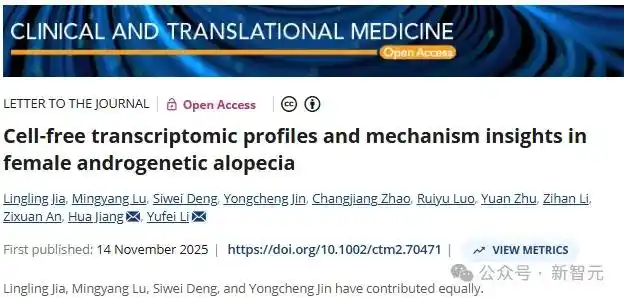
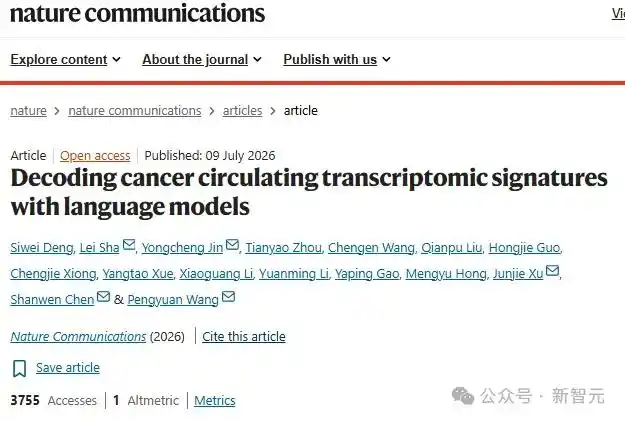
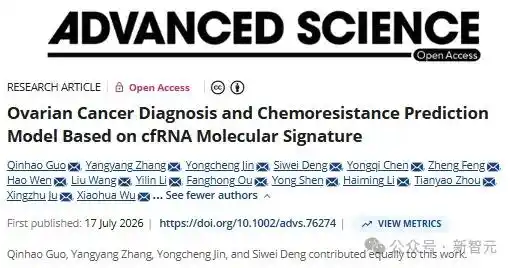
Recently, GeneLLM, a life science vertical multi-omics large model independently developed by Kindu Biology (founded by 4 Oxford University returnees), has been successively published in top-tier international academic journals – Nature Communications and Advanced Science.

As the world's first multi-omics large model pre-trained directly on raw omics data, GeneLLM is another heavyweight model following Google's AlphaFold and Stanford's EVO 2, filling the gap in China's life science foundational large models. It can be called China's life science version of DeepSeek, allowing AI to begin understanding the multiple 'languages' and the entire 'system' of life.
Predicting the Next Piece of Life Information Like Predicting the Next Token

Disease recognition is just one application scenario for GeneLLM. What Kindu Biology truly aims to do is build the "Claude Code" for the life science field.

The core of large language models like ChatGPT, Claude, and DeepSeek is next-token prediction.

GeneLLM adopts a similar approach, but what it predicts is not text, but life information.

The four bases in RNA sequences – Adenine (A), Uracil (U), Guanine (G), and Cytosine (C) – become the basic tokens for GeneLLM to understand the language of life.

Traditional bioinformatics analysis typically relies on gene annotation, sequence alignment, and manually defined labels. While accurate, this method prematurely limits the model's cognitive scope and may lose vast amounts of unknown biological signals hidden in raw data.

GeneLLM, however, charts a different path, learning life's patterns directly from unprocessed raw sequencing data.

It uses multi-omics raw data such as RNA-seq, proteomics, and metabolomics as training data, allowing the model to autonomously discover disease-related patterns.

Currently, GeneLLM has completed pre-training of a 1.5 billion parameter model with 3.5 trillion base sequences, and the XLarge version has achieved pre-training of a 30 billion parameter model, continuously expanding the technological barrier.

As the world's first multi-omics large model pre-trained on raw sequencing data, GeneLLM includes two main stages:

(1) Unsupervised Pre-training & Prototype Discovery

(2) Patient-level Disease Fine-tuning (Disease Tuning)
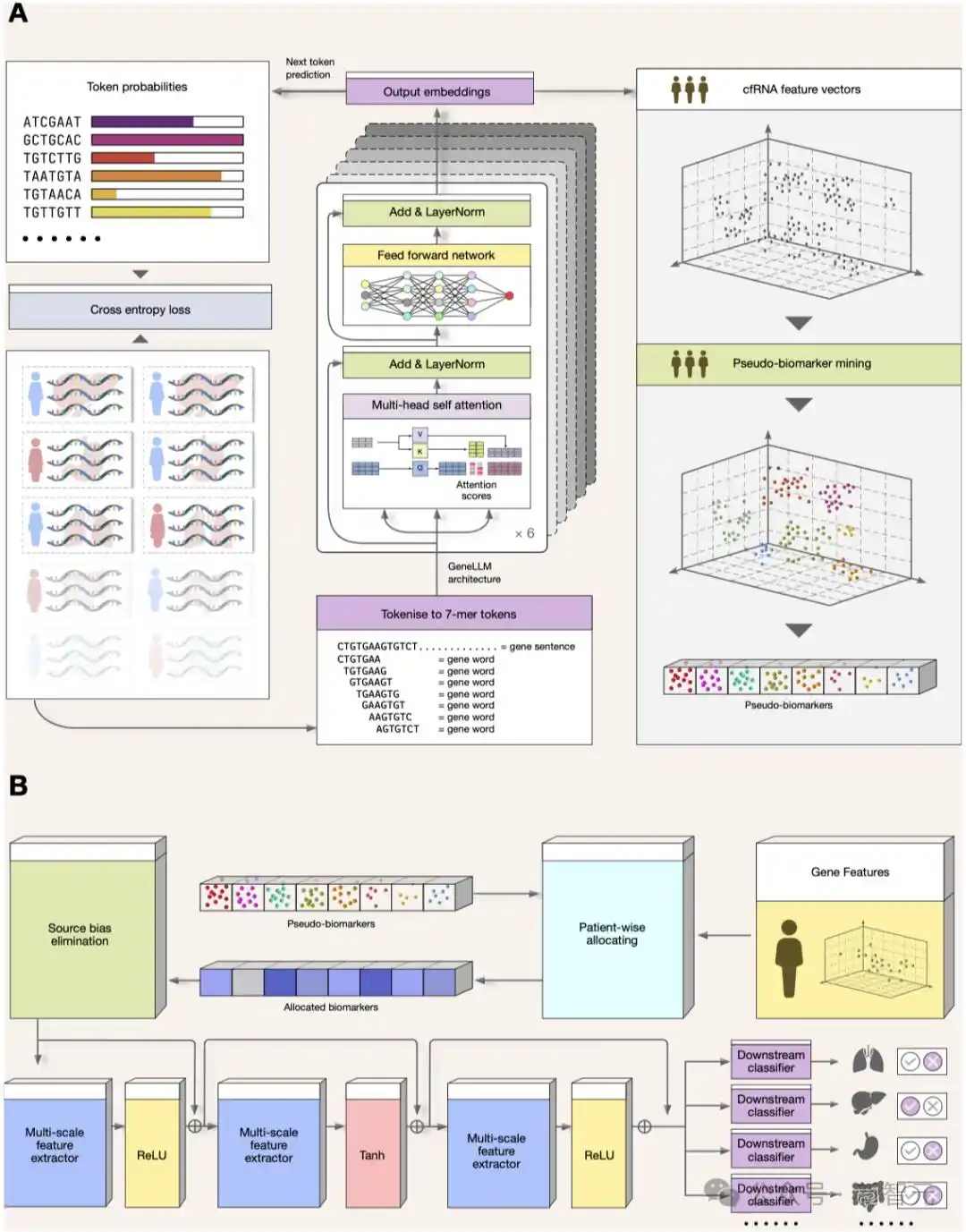
GeneLLM first needs to solve a problem:

How to transform complex life data into a language AI can understand?

In natural language processing, the BPE algorithm splits sentences into Tokens; GeneLLM, however, splits RNA sequencing fragments of about 150bp length into life Tokens using a sliding window of 7 bases (7-mer).

Subsequently, the model utilizes the Transformer architecture to directly predict the next base without gene annotation or human labels.

This means the AI is not first consulting a human-compiled "dictionary," but learning directly from the raw signals of life.

During training, GeneLLM processed approximately tens of trillions of RNA reads, trained on a hundred-card cluster of NVIDIA A100 GPUs.

At this point, GeneLLM's generalization and other capabilities began to "emerge."

As a major innovative breakthrough in the life science field, this domestically produced life science model, GeneLLM, can be applied to various fields including new drug R&D, precision medicine, synthetic biology, environmental monitoring, microbiology & bio-agriculture, and protein & molecule design. It is one of the few large models globally that has achieved real-world scenario deployment.
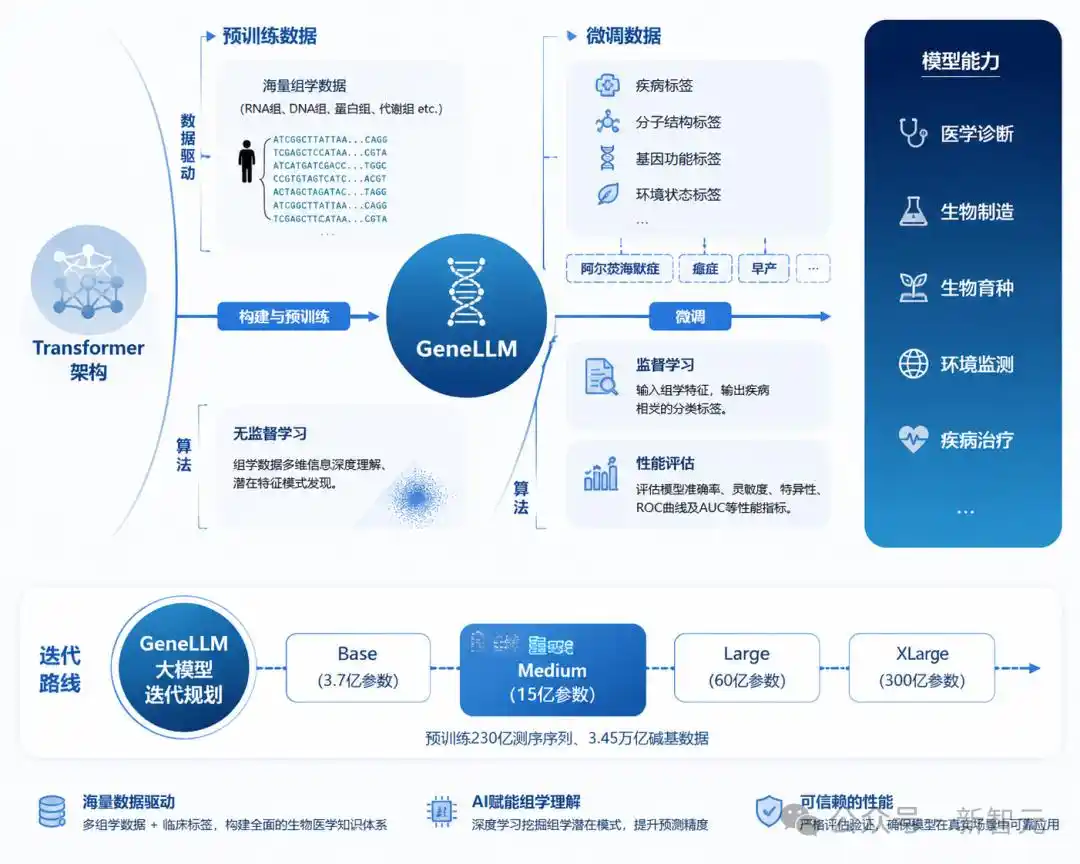
Only after examining the underlying innovations of GeneLLM in "data, architecture, training," can we truly understand: why it represents China's "Bio Version of DeepSeek."

Silicon Valley stacks tens of thousands of H100s for trillion-parameter models, DeepSeek improves computing efficiency through algorithmic innovation, and GeneLLM similarly moves massive life science data with a deft touch.

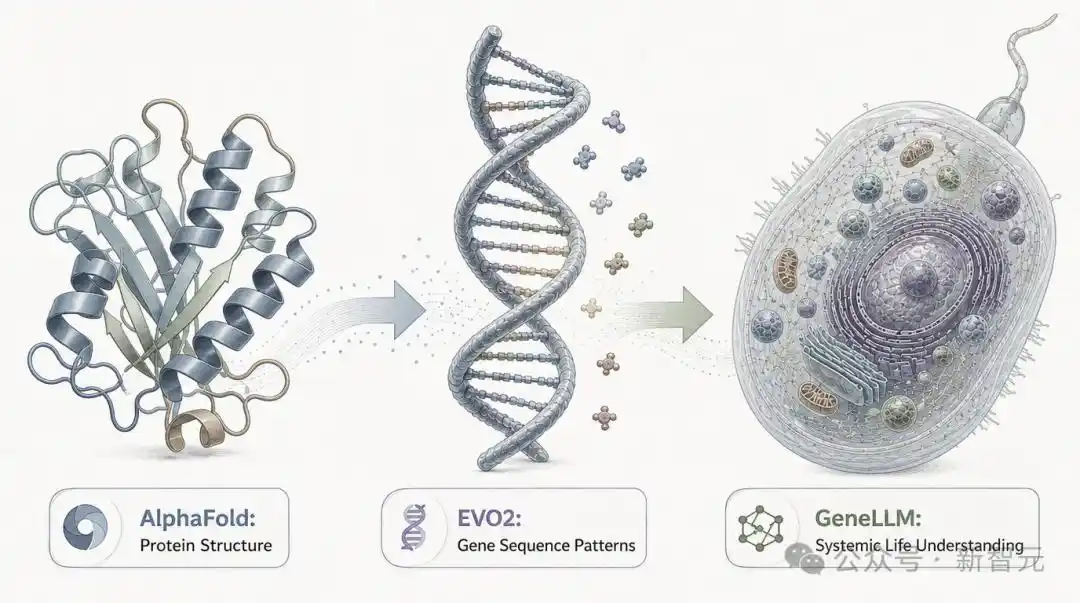
If AlphaFold allowed AI to see life's "structure" for the first time, and EVO2 allowed AI to begin understanding life's "code," then GeneLLM attempts to further understand life's "system."
What's more remarkable is efficiency. Traditional methods rely on 6Gb deep sequencing, with high costs making deployment difficult. GeneLLM maintains AUC > 0.8 even at an extremely shallow depth of 1Gb (cost reduced by 83%).

This truly holds the promise of making affordable precision medicine a reality.

A new research paradigm begins to emerge: letting AI learn from life data, bringing life science into a new stage of predictable, computable, and scalable exploration.

Not Just a Model, but the "Last Mile" Intelligent Infrastructure

But Kindu Biology's strategy extends beyond the foundational model.

Using the GeneLLM multi-omics large model as the life cognition base, Kindu Biology further constructs an execution system connecting AI intelligence with the physical world. Through the Harness intelligent experiment execution layer and the DBTL (Design-Build-Test-Learn) data feedback loop, it achieves a complete AI for Science closed loop—from understanding life patterns and generating scientific hypotheses, to automated experimental validation and continuous iterative optimization.

As Liam Fedus, former OpenAI VP and head of post-training, said, current LLMs have exhausted the limited text and code on the internet. The next major advance in scientific discovery must rely on experimental iteration.
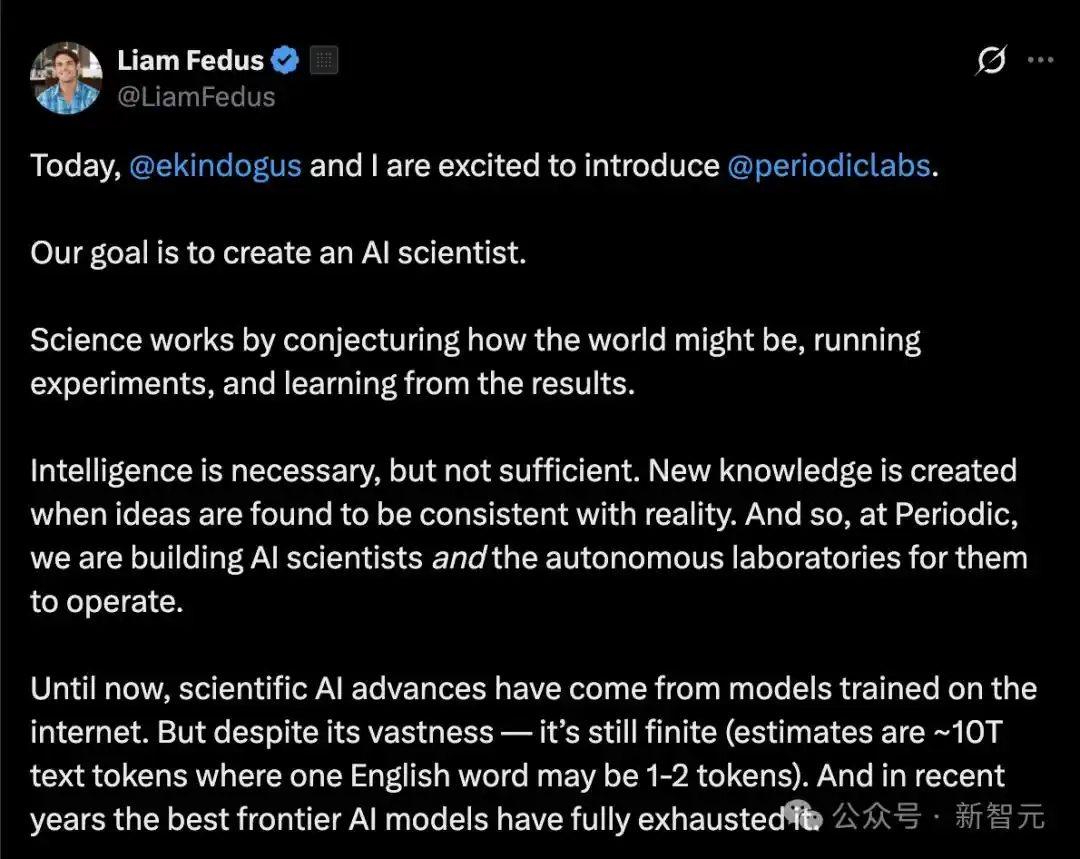
In other words, AI cannot discover new knowledge solely by reading what humans have already written; it must conduct experiments itself.

But here's the problem—

Internet services inherently have APIs; network information is inherently digital. But research equipment comes from different vendors with varying protocols, complex and expensive. No one can rebuild everything from scratch in a few months.

Most labs today are designed for humans: instrument panels, pipetting actions, sample states, on-the-spot judgments—the vast majority are not translated into machine-readable signals.

For AI to enter the lab, the current challenge is not just model capability; it requires a new set of infrastructure.

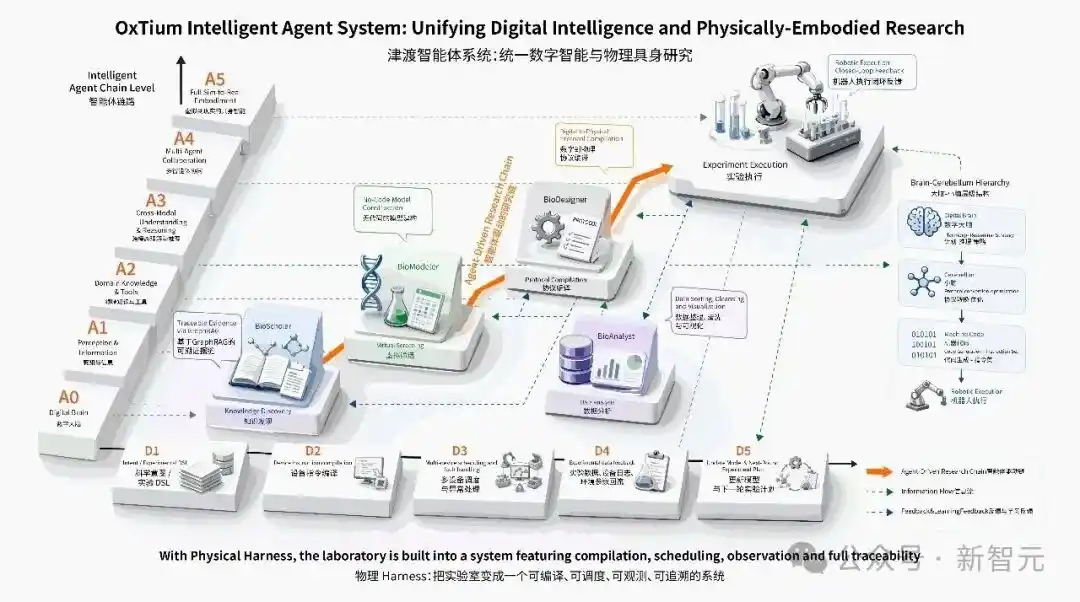
Therefore, for AI to enter the lab, the current issue is not just a model capability problem; it also requires a physical Harness: turning the lab into a system that can be compiled, scheduled, monitored, and traced.

This is the true last mile of AI4S.

BioFord Harness, Making the Lab Start "Running Itself"

For this purpose, Kindu developed a system called BioFord Harness.

This is an infrastructure that connects AI with the physical lab.

They are not making robotic arms imitate human hands, but transforming the lab into a system that can be compiled, scheduled, monitored, and traced.

In this process, the physical Harness must accomplish at least three things:

1. Compile scientific intent or experimental DSL into instructions executable by different devices;

2. Complete scheduling, resource and safety constraint management among multiple devices, and handle exceptions;

3. Let experimental results, device logs, and environmental parameters flow back, becoming inputs for the next round of model and experimental design.

Scientific question → AI understanding → experimental plan → device scheduling → execution → data feedback → model optimization → next round.

A flywheel for scientific experimental data is thus set in motion.
Five Intelligent Agents, Turning Research Workflow into an Assembly Line

The BioFord Agent embodied intelligent research platform connects downward to the physical lab layer and upward to the scientist's cognitive layer, bridging the gap between reasoning and execution with physical AI.

At the cognitive layer, BioFord Agent consists of a collaborative network of five intelligent agents, spanning the entire life science research workflow, potentially multiplying research efficiency.

Literature Retrieval Agent

Experimental Design Agent

Science Agent

Experiment Scheduling Agent

Data Analysis Agent

For example, the Literature Retrieval Agent can quickly help you search and read vast amounts of literature, complete literature reviews, and assist in hypothesis generation.
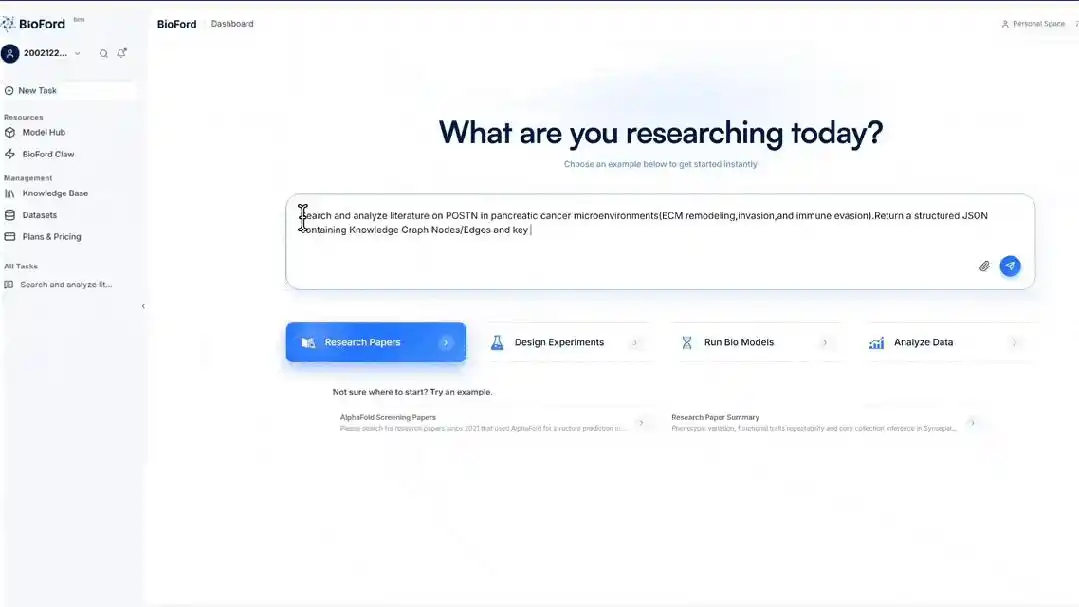
The Experimental Design Agent enabled the research team to shorten the experimental design cycle from several months to one week.

The Experiment Scheduling Agent launched by Kindu Biology, relying on the Universal Instrument Abstraction Layer, breaks protocol barriers between various heterogeneous devices.

Whether it's PCR machines, microplate readers, flow cytometers, or automated liquid handling workstations, they can all achieve unified management and scheduling. The system has built-in dynamic scheduling algorithms, enabling automatic batch scheduling, real-time conflict avoidance, and full recording of experimental parameters, forming a traceable audit trail.
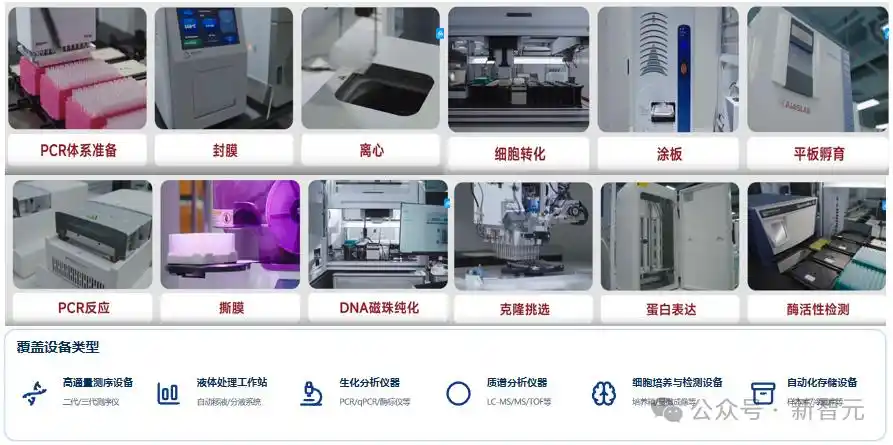
This means AI is no longer stuck in the "suggestions" stage, but truly enters the lab, operates equipment, executes tasks, and becomes a trustworthy "research assistant."

Failure Data Might Be More Valuable Than Success Data

The deeper value this system addresses is: making every experiment—whether successful or failed—data that the system can digest.

In a traditional lab, a failed record might just be a line saying "results not as expected." The experience resides in people's minds; when they leave, the experience is gone.

But in the BioFord system, every failure is valuable training data—the logic of parameter selection, records of environmental conditions, proofs of erroneous paths... all are deposited, becoming part of the system's "experience."

Next time, AI knows: this path is blocked.

Interestingly, in this field, it's not the one with the strongest computing power that wins, nor the one with the largest model.

Computing power can be bought, but research data cannot.

Jin Yongcheng, Founder & CEO of Kindu Biology, stated: "During the R&D process, we gradually realized that AI for BioScience is not simply about stacking models and data. For those doing experiments, the ultimate problem to solve remains the dilemma of not knowing how to proceed after calculation, and not getting it right when proceeding."

This is the most important, and hardest-to-replicate, moat in the AI4S field.

Four Oxford People, Including a Senior Fellow of Luo Fuli

In 2022, when Jin Yongcheng received his PhD in Bioengineering from the University of Oxford, he faced a choice.

His supervisor was Hagan Bayley, a Fellow of the Royal Society and founder of the UK-listed third-generation sequencing giant Oxford Nanopore. The lab had a strong tradition of "translating research into practice." Staying in the UK was a clear, smooth path.

But he chose another path—packing a "prototype technology" from the lab into his suitcase and bringing it back to China. Accompanying him were three Oxford alumni: Biology PhD Deng Siwei, Computer Science Associate Researcher Sha Lei (PhD in Computer Science from Peking University, senior fellow of Luo Fuli, head of Xiaomi's large model), and Zhou Tianyao, skilled in product commercialization. The four possess complementary backgrounds in bioengineering, AI, computational biology, and business operations, forming a perfect team for highly interdisciplinary research. They had previously collaborated on joint research projects, achieving disease prediction and detection by combining AI and transcriptomics technology.

The company name "Kindu Biology": "Kin" is taken from "Oxford," symbolizing their starting point from top-tier academic institutions like Oxford labs; "du" (渡) signifies ferrying or helping others, representing the destination they believe AI for Science should reach.

Currently, Kindu Biology's BioFord Agent physical AI research platform has been deployed in several prestigious domestic universities with significant results, reducing research cycles from several months to one week.

The Wind Rises: 4 Funding Rounds in 1 Year, A Capital "Enchantment" Scene

However, walking a path "untrodden by predecessors" inevitably comes with solitude.

The early days of entrepreneurship were full of difficulties. At that time, AI startups were booming, but "AI+" attempts in the biological sciences were rare. "Those who understand AI may not understand biological science, and most who understand biological science don't understand AI."

Jin Yongcheng admitted: "Investors once couldn't understand what we were doing."

The team chose the "hardest path": starting from a biological foundational large model, a direction pursued by only a handful of companies globally.

In 2025, a turning point emerged.

That year, the State Council issued the "Opinions on Deepening the Implementation of the 'AI+' Initiative," listing AI for Science among the key areas. The field began to gain momentum.

Kindu Biology achieved the feat of "completing 4 funding rounds in one year." The company's main funding timeline is a benchmark for the industry.

Angel+ Round: Led by Sequoia Capital China Seed Fund;

Pre-A+ Round: Led by Chuangdongfang Investment with tens of millions;

Pre-A+ Round: Received tens of millions in investment from Nanshan Zhanxintou;

Series A Round: Led by Gaotejia Investment with nearly 100 million RMB.

Teng Yuhang, Executive Partner at Gaotejia Investment, stated: "Kindu Biology has transformed life science basic research into a subscribable, scalable 'computing power + experiment' infrastructure."

Jin Yongcheng's goal is even more ambitious: "We are not satisfied with just selling software; we want to build the intelligent operating system for the life science field. Just as Intel defined computing power in the PC era, we hope to define the new R&D paradigm for life science in the AI era."

From Oxford labs to Shenzhen, from being misunderstood to receiving heavy investment from top-tier capital, the story of the four Oxford graduates is not just a startup legend, but a soul-searching inquiry about "what we can do for humanity."

When AI learns to "stay up all night" doing research on its own, scientific discovery may no longer rely on the serendipitous inspiration of geniuses, but become a predictable inevitability. This journey has just begun for them.

Industry Landscape: Kindu Charts a Lightweight Physical AI Path

In the broader AI for BioScience landscape, Kindu is not alone, but its entry point is distinctly different.

The first category is Digital AI Scientists.

Stanford-incubated Biomni (commercialized as Phylo) possesses over 150 specialized tools, capable of automatically performing literature review, hypothesis generation, and bioinformatics analysis.

FutureHouse, backed by Eric Schmidt, is dedicated to building AI scientists that can autonomously generate hypotheses and write papers.

However, while powerful, they remain confined to the digital world.

The second category is the Full-stack Autonomous route.

XtalPi deploys over 300 "AI + robotics" workstations globally.

Lila Sciences, incubated by Flagship Pioneering, with $550 million in funding, attempts to let AI completely take over the design, execution, and redesign of experiments, aiming for "scientific superintelligence."

But these approaches are extremely capital-intensive.

The third category is the End-to-end Pipeline route.

Insilico Medicine pushes AI directly into its own innovative drug pipelines, with its first AI-discovered drug entering Phase III clinical trials, but they are "car builders" rather than "road pavers."

Kindu Biology's choice is: focus on building the physical Harness, creating the "last mile" infrastructure between models and physical experimental systems.

Not engaging in the foundational model race, not pursuing end-to-end pipelines, not creating pure digital AI scientists. Focusing only on that last mile is undoubtedly a more lightweight approach.

Jin Yongcheng articulated this judgment clearly: "The true watershed for AI for Science is not how well the model mimics a scientist's answers, but whether the lab can start functioning like a continuously learning system."

Moreover, in the global AI for Science field, Kindu is not simply "only doing the last mile."

More accurately, it uses the last mile as an entry point to compete for the orchestration rights of the entire scientific workflow.

Compared to pure digital AI scientists, it can interact with the physical world; compared to building heavy-asset science factories from scratch, it has the opportunity to take over clients' existing labs; compared to end-to-end AI drug discovery companies, it doesn't have to bet its fate on a single clinical pipeline.
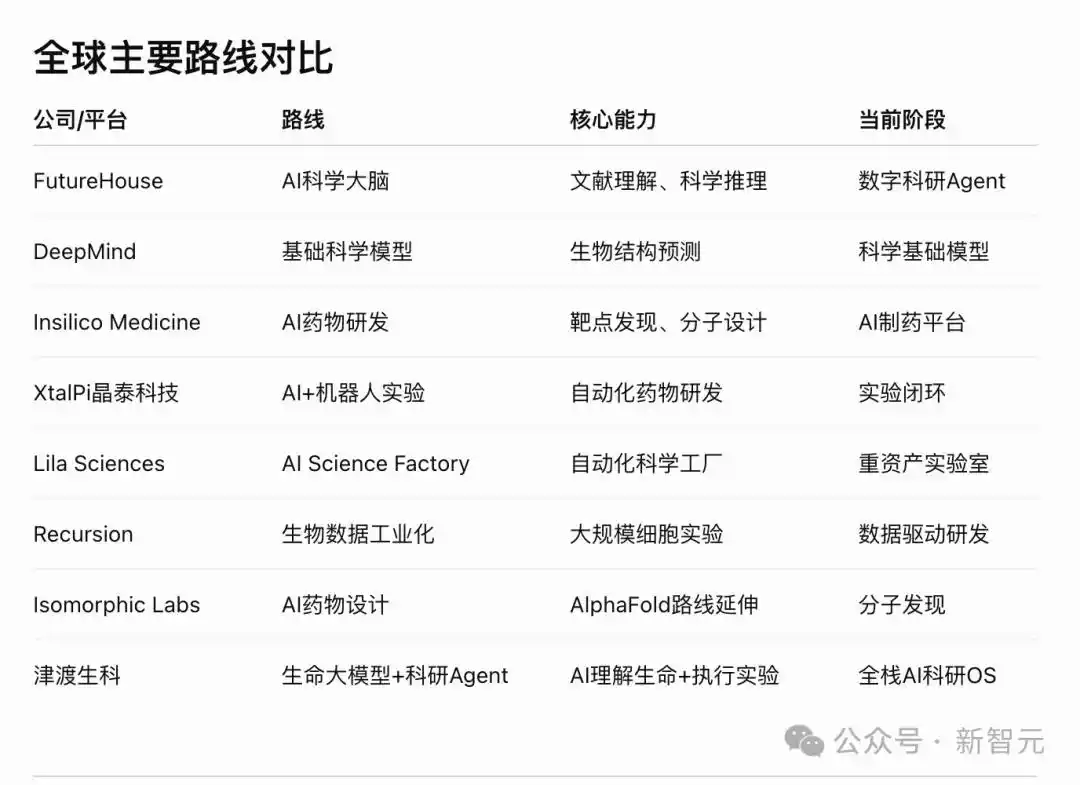
Its true moat will not be parameter count, but the continuously accumulated experimental trajectories, device interfaces, failure experiences, and cross-laboratory execution network.

As Jin Yongcheng said, the myriad signaling pathways within organisms and the reaction mechanisms full of unknowns are fascinating. "As rich as biology is, so is the prospect of AI for Science."

Exploring the mysteries of life with AI's intelligence—the vast universe for these Oxford prodigies has just begun to unfold.

This article is from the WeChat public account "Xinzhiyuan", author: Xinzhiyuan; Editor: Aeneas KingHZ


Kripto yang Sedang Tren

Pertanyaan Terkait

QWhat is GeneLLM, and how does it represent a significant advancement in China's life science AI field?

AGeneLLM is a multi-omics foundation model developed by Jindu Biotechnology, created by four Oxford University returnees. It is hailed as China's 'DeepSeek for Life Sciences.' Its significance lies in being the first multi-omics foundation model in the world trained directly on raw omics data (like RNA, proteomics, metabolomics) without relying on pre-defined gene annotations or labels. This allows it to autonomously learn patterns and 'understand' the language and systems of life from primary biological signals, filling a key gap in China's life science foundation model landscape. It has been published in top journals like Nature Communications and Advanced Science.

QHow does GeneLLM's core training approach mimic Large Language Models (LLMs) like ChatGPT?

AGeneLLM's core approach mirrors that of text-based LLMs. Just as LLMs predict the next 'token' (word piece) in a sequence, GeneLLM predicts the next 'life information token.' It treats the four RNA bases (A, U, G, C) as fundamental tokens. The model processes raw RNA sequencing data by splitting it into fragments using a sliding 7-mer window, creating these biological tokens. It then uses a Transformer architecture to predict the next base in a sequence, learning directly from the raw data without human-curated 'dictionaries' of biological knowledge.

QWhat is BioFord Harness, and what role does it play in the AI for Science (AI4S) ecosystem according to the article?

ABioFord Harness is a physical infrastructure system developed by Jindu Biotech. Its role is to bridge the gap between AI models and the physical laboratory—solving the 'last-mile' problem in AI4S. It transforms a lab into a 'compilable, schedulable, observable, and traceable' system. It does this by 1) compiling scientific intent into executable instructions for diverse lab equipment, 2) managing scheduling, resources, and safety constraints across multiple devices, and 3) ensuring experimental results, logs, and environmental data flow back to optimize the next round of AI models and experimental designs, creating a continuous learning loop.

QWhat distinguishes Jindu Biotech's strategic approach from other major players in the AI for BioScience field?

AJindu Biotech carves out a distinct, 'lightweight' strategic niche by focusing on the 'last mile' infrastructure (BioFord Harness) rather than competing directly in other established approaches. It does not aim to be a pure 'digital AI scientist' (like Biomni), build capital-intensive fully autonomous labs (like Lila Sciences or XtalPi), or develop end-to-end proprietary drug pipelines (like Insilico Medicine). Instead, it specializes in building the physical harness that connects AI models to existing laboratory equipment, allowing it to orchestrate the entire scientific workflow without the massive capital expenditure of rebuilding labs from scratch.

QHow did the founding team's background and the 2025 policy shift contribute to Jindu Biotech's development?

AThe founding team comprised four Oxford alumni with complementary expertise in bioengineering (CEO Jin Yongcheng), biology, computer science (a former colleague of DeepSeek's Luo Fuli), and business operations. This interdisciplinary 'puzzle' was crucial for tackling the highly cross-disciplinary AI for Science challenge. Despite initial investor skepticism, a major turning point came in 2025 when the Chinese State Council issued guidelines prioritizing 'AI+', including AI for Science. This policy tailwind helped validate the field, leading Jindu Biotech to secure an impressive four rounds of funding in one year from top-tier investors like Sequoia Capital China and Gaotejia Investment, fueling its rapid growth.

Bacaan Terkait

Penambang Bitcoin Solo Peroleh $200.000

Menurut data mempool, seorang penambang independen berhasil memblokir 960.804 dini hari Senin. Hadiah blok sebesar 3,157 BTC bernilai sekitar $199.300. Kesuksesan ini datang hanya tiga minggu setelah penambang lain, menggunakan satu perangkat level hobi Bitaxe, memblokir 957.382 dan mendapatkan 3,1382 BTC, senilai sekitar $200.000 saat itu. Kemenangan beruntun ini menyoroti tren yang lebih luas. Tahun ini, penambang solo telah menambang 13 blok. Sementara operator individu terus menantang peluang dengan setup yang relatif sederhana, sektor penambangan Bitcoin yang lebih luas mengalami tekanan karena margin keuntungan yang menipis. Hal ini mendorong beberapa perusahaan penambangan besar beralih ke pusat data AI dan infrastruktur terkait untuk mencari keberlanjutan. Sementara itu, pemegang BTC kecil terus mengungkapkan kekecewaan atas insiden Coldcard yang mengakibatkan hilangnya tabungan Bitcoin lama. Data on-chain akhir pekan menunjukkan tanda-tanda bahwa beberapa pemegang memindahkan koin senilai jutaan dolar ke bursa. Menurut CryptoQuant, jumlah alamat pengirim BTC pada Jumat naik ke level tertinggi sejak awal 2024. Tanggal 30 Juli, hari dimulainya insiden, cadangan BTC di bursa meningkat. Firma analitis lain menyatakan bahwa pemegang mentransfer koin ke dompet baru, bukan ke bursa. Akhirnya, kenaikan imbal hasil obligasi Treasury, termasuk suku bunga hipotek, menjadi hambatan potensial bagi aset berisiko termasuk kripto.

cryptonews.ru2j yang lalu

Penambang Bitcoin Solo Peroleh $200.000

cryptonews.ru2j yang lalu

Trading

Spot

Artikel Populer

Apa Itu $S$

Memahami SPERO: Tinjauan Komprehensif Pengenalan SPERO Seiring dengan perkembangan lanskap inovasi, munculnya teknologi web3 dan proyek cryptocurrency memainkan peran penting dalam membentuk masa depan digital. Salah satu proyek yang telah menarik perhatian di bidang dinamis ini adalah SPERO, yang dilambangkan sebagai SPERO,$$s$. Artikel ini bertujuan untuk mengumpulkan dan menyajikan informasi terperinci tentang SPERO, untuk membantu para penggemar dan investor memahami dasar-dasar, tujuan, dan inovasi dalam domain web3 dan crypto. Apa itu SPERO,$$s$? SPERO,$$s$ adalah proyek unik dalam ruang crypto yang berusaha memanfaatkan prinsip desentralisasi dan teknologi blockchain untuk menciptakan ekosistem yang mendorong keterlibatan, utilitas, dan inklusi finansial. Proyek ini dirancang untuk memfasilitasi interaksi peer-to-peer dengan cara baru, memberikan pengguna solusi dan layanan keuangan yang inovatif. Pada intinya, SPERO,$$s$ bertujuan untuk memberdayakan individu dengan menyediakan alat dan platform yang meningkatkan pengalaman pengguna dalam ruang cryptocurrency. Ini termasuk memungkinkan metode transaksi yang lebih fleksibel, mendorong inisiatif yang dipimpin komunitas, dan menciptakan jalur untuk peluang finansial melalui aplikasi terdesentralisasi (dApps). Visi mendasar dari SPERO,$$s$ berputar di sekitar inklusivitas, bertujuan untuk menjembatani kesenjangan dalam keuangan tradisional sambil memanfaatkan manfaat teknologi blockchain. Siapa Pencipta SPERO,$$s$? Identitas pencipta SPERO,$$s$ tetap agak samar, karena ada sumber daya publik yang terbatas yang memberikan informasi latar belakang terperinci tentang pendiriannya. Kurangnya transparansi ini dapat berasal dari komitmen proyek terhadap desentralisasi—sebuah etos yang banyak proyek web3 bagi, memprioritaskan kontribusi kolektif di atas pengakuan individu. Dengan memusatkan diskusi di sekitar komunitas dan tujuan kolektifnya, SPERO,$$s$ mewujudkan esensi pemberdayaan tanpa menonjolkan individu tertentu. Dengan demikian, memahami etos dan misi SPERO tetap lebih penting daripada mengidentifikasi pencipta tunggal. Siapa Investor SPERO,$$s$? SPERO,$$s$ didukung oleh beragam investor mulai dari modal ventura hingga investor malaikat yang berdedikasi untuk mendorong inovasi di sektor crypto. Fokus investor ini umumnya sejalan dengan misi SPERO—memprioritaskan proyek yang menjanjikan kemajuan teknologi sosial, inklusivitas finansial, dan tata kelola terdesentralisasi. Fondasi investor ini biasanya tertarik pada proyek yang tidak hanya menawarkan produk inovatif tetapi juga memberikan kontribusi positif kepada komunitas blockchain dan ekosistemnya. Dukungan dari investor ini memperkuat SPERO,$$s$ sebagai pesaing yang patut diperhitungkan di domain proyek crypto yang berkembang pesat. Bagaimana SPERO,$$s$ Bekerja? SPERO,$$s$ menerapkan kerangka kerja multi-faceted yang membedakannya dari proyek cryptocurrency konvensional. Berikut adalah beberapa fitur kunci yang menekankan keunikan dan inovasinya: Tata Kelola Terdesentralisasi: SPERO,$$s$ mengintegrasikan model tata kelola terdesentralisasi, memberdayakan pengguna untuk berpartisipasi aktif dalam proses pengambilan keputusan mengenai masa depan proyek. Pendekatan ini mendorong rasa kepemilikan dan akuntabilitas di antara anggota komunitas. Utilitas Token: SPERO,$$s$ memanfaatkan token cryptocurrency-nya sendiri, yang dirancang untuk melayani berbagai fungsi dalam ekosistem. Token ini memungkinkan transaksi, hadiah, dan fasilitasi layanan yang ditawarkan di platform, meningkatkan keterlibatan dan utilitas secara keseluruhan. Arsitektur Berlapis: Arsitektur teknis SPERO,$$s$ mendukung modularitas dan skalabilitas, memungkinkan integrasi fitur dan aplikasi tambahan secara mulus seiring dengan perkembangan proyek. Kemampuan beradaptasi ini sangat penting untuk mempertahankan relevansi di lanskap crypto yang selalu berubah. Keterlibatan Komunitas: Proyek ini menekankan inisiatif yang dipimpin komunitas, menggunakan mekanisme yang memberikan insentif untuk kolaborasi dan umpan balik. Dengan memelihara komunitas yang kuat, SPERO,$$s$ dapat lebih baik memenuhi kebutuhan pengguna dan beradaptasi dengan tren pasar. Fokus pada Inklusi: Dengan menawarkan biaya transaksi yang rendah dan antarmuka yang ramah pengguna, SPERO,$$s$ bertujuan untuk menarik basis pengguna yang beragam, termasuk individu yang mungkin sebelumnya tidak terlibat dalam ruang crypto. Komitmen ini terhadap inklusi sejalan dengan misi utamanya untuk memberdayakan melalui aksesibilitas. Garis Waktu SPERO,$$s$ Memahami sejarah proyek memberikan wawasan penting tentang trajektori dan tonggak perkembangannya. Berikut adalah garis waktu yang disarankan yang memetakan peristiwa signifikan dalam evolusi SPERO,$$s$: Fase Konseptualisasi dan Ideasi: Ide awal yang membentuk dasar SPERO,$$s$ dikembangkan, sangat selaras dengan prinsip desentralisasi dan fokus komunitas dalam industri blockchain. Peluncuran Whitepaper Proyek: Setelah fase konseptual, whitepaper komprehensif yang merinci visi, tujuan, dan infrastruktur teknologi SPERO,$$s$ dirilis untuk menarik minat dan umpan balik komunitas. Pembangunan Komunitas dan Keterlibatan Awal: Upaya jangkauan aktif dilakukan untuk membangun komunitas pengguna awal dan investor potensial, memfasilitasi diskusi seputar tujuan proyek dan mendapatkan dukungan. Acara Generasi Token: SPERO,$$s$ melakukan acara generasi token (TGE) untuk mendistribusikan token asli kepada pendukung awal dan membangun likuiditas awal dalam ekosistem. Peluncuran dApp Awal: Aplikasi terdesentralisasi (dApp) pertama yang terkait dengan SPERO,$$s$ diluncurkan, memungkinkan pengguna untuk terlibat dengan fungsionalitas inti platform. Pengembangan Berkelanjutan dan Kemitraan: Pembaruan dan peningkatan berkelanjutan terhadap penawaran proyek, termasuk kemitraan strategis dengan pemain lain di ruang blockchain, telah membentuk SPERO,$$s$ menjadi pemain yang kompetitif dan berkembang di pasar crypto. Kesimpulan SPERO,$$s$ berdiri sebagai bukti potensi web3 dan cryptocurrency untuk merevolusi sistem keuangan dan memberdayakan individu. Dengan komitmen terhadap tata kelola terdesentralisasi, keterlibatan komunitas, dan fungsionalitas yang dirancang secara inovatif, ia membuka jalan menuju lanskap keuangan yang lebih inklusif. Seperti halnya investasi di ruang crypto yang berkembang pesat, calon investor dan pengguna dianjurkan untuk melakukan riset secara menyeluruh dan terlibat dengan perkembangan yang sedang berlangsung dalam SPERO,$$s$. Proyek ini menunjukkan semangat inovatif industri crypto, mengundang eksplorasi lebih lanjut ke dalam berbagai kemungkinan yang ada. Meskipun perjalanan SPERO,$$s$ masih berlangsung, prinsip-prinsip dasarnya mungkin benar-benar mempengaruhi masa depan cara kita berinteraksi dengan teknologi, keuangan, dan satu sama lain dalam ekosistem digital yang saling terhubung.

293 Total TayanganDipublikasikan pada 2024.12.17Diperbarui pada 2024.12.17

Apa Itu $S$

Apa Itu AGENT S

Agent S: Masa Depan Interaksi Otonom di Web3 Pendahuluan Dalam lanskap Web3 dan cryptocurrency yang terus berkembang, inovasi secara konstan mendefinisikan ulang cara individu berinteraksi dengan platform digital. Salah satu proyek perintis, Agent S, menjanjikan untuk merevolusi interaksi manusia-komputer melalui kerangka agen terbuka. Dengan membuka jalan untuk interaksi otonom, Agent S bertujuan untuk menyederhanakan tugas-tugas kompleks, menawarkan aplikasi transformasional dalam kecerdasan buatan (AI). Eksplorasi mendetail ini akan menyelami seluk-beluk proyek, fitur uniknya, dan implikasinya untuk domain cryptocurrency. Apa itu Agent S? Agent S berdiri sebagai kerangka agen terbuka yang inovatif, dirancang khusus untuk mengatasi tiga tantangan mendasar dalam otomatisasi tugas komputer: Memperoleh Pengetahuan Spesifik Domain: Kerangka ini secara cerdas belajar dari berbagai sumber pengetahuan eksternal dan pengalaman internal. Pendekatan ganda ini memberdayakannya untuk membangun repositori pengetahuan spesifik domain yang kaya, meningkatkan kinerjanya dalam pelaksanaan tugas. Perencanaan Selama Rentang Tugas yang Panjang: Agent S menggunakan perencanaan hierarkis yang ditingkatkan pengalaman, pendekatan strategis yang memfasilitasi pemecahan dan pelaksanaan tugas-tugas rumit dengan efisien. Fitur ini secara signifikan meningkatkan kemampuannya untuk mengelola beberapa subtugas dengan efisien dan efektif. Menangani Antarmuka Dinamis dan Tidak Seragam: Proyek ini memperkenalkan Antarmuka Agen-Komputer (ACI), solusi inovatif yang meningkatkan interaksi antara agen dan pengguna. Dengan memanfaatkan Model Bahasa Besar Multimodal (MLLM), Agent S dapat menavigasi dan memanipulasi berbagai antarmuka pengguna grafis dengan mulus. Melalui fitur-fitur perintis ini, Agent S menyediakan kerangka kerja yang kuat yang mengatasi kompleksitas yang terlibat dalam mengotomatisasi interaksi manusia dengan mesin, membuka jalan untuk berbagai aplikasi dalam AI dan seterusnya. Siapa Pencipta Agent S? Meskipun konsep Agent S secara fundamental inovatif, informasi spesifik tentang penciptanya tetap samar. Pencipta saat ini tidak diketahui, yang menyoroti baik tahap awal proyek atau pilihan strategis untuk menjaga anggota pendiri tetap tersembunyi. Terlepas dari anonimitas, fokus tetap pada kemampuan dan potensi kerangka kerja. Siapa Investor Agent S? Karena Agent S relatif baru dalam ekosistem kriptografi, informasi terperinci mengenai investor dan pendukung keuangannya tidak secara eksplisit didokumentasikan. Kurangnya wawasan yang tersedia untuk umum mengenai fondasi investasi atau organisasi yang mendukung proyek ini menimbulkan pertanyaan tentang struktur pendanaannya dan peta jalan pengembangannya. Memahami dukungan sangat penting untuk mengukur keberlanjutan proyek dan potensi dampak pasar. Bagaimana Cara Kerja Agent S? Di inti Agent S terletak teknologi mutakhir yang memungkinkannya berfungsi secara efektif dalam berbagai pengaturan. Model operasionalnya dibangun di sekitar beberapa fitur kunci: Interaksi Komputer yang Mirip Manusia: Kerangka ini menawarkan perencanaan AI yang canggih, berusaha untuk membuat interaksi dengan komputer lebih intuitif. Dengan meniru perilaku manusia dalam pelaksanaan tugas, ia menjanjikan untuk meningkatkan pengalaman pengguna. Memori Naratif: Digunakan untuk memanfaatkan pengalaman tingkat tinggi, Agent S memanfaatkan memori naratif untuk melacak sejarah tugas, sehingga meningkatkan proses pengambilan keputusannya. Memori Episodik: Fitur ini memberikan panduan langkah demi langkah kepada pengguna, memungkinkan kerangka untuk menawarkan dukungan kontekstual saat tugas berlangsung. Dukungan untuk OpenACI: Dengan kemampuan untuk berjalan secara lokal, Agent S memungkinkan pengguna untuk mempertahankan kontrol atas interaksi dan alur kerja mereka, sejalan dengan etos terdesentralisasi Web3. Integrasi Mudah dengan API Eksternal: Versatilitas dan kompatibilitasnya dengan berbagai platform AI memastikan bahwa Agent S dapat dengan mulus masuk ke dalam ekosistem teknologi yang ada, menjadikannya pilihan menarik bagi pengembang dan organisasi. Fungsionalitas ini secara kolektif berkontribusi pada posisi unik Agent S dalam ruang kripto, saat ia mengotomatisasi tugas-tugas kompleks yang melibatkan banyak langkah dengan intervensi manusia yang minimal. Seiring proyek ini berkembang, aplikasi potensialnya di Web3 dapat mendefinisikan ulang bagaimana interaksi digital berlangsung. Garis Waktu Agent S Pengembangan dan tonggak Agent S dapat dirangkum dalam garis waktu yang menyoroti peristiwa pentingnya: 27 September 2024: Konsep Agent S diluncurkan dalam sebuah makalah penelitian komprehensif berjudul “Sebuah Kerangka Agen Terbuka yang Menggunakan Komputer Seperti Manusia,” yang menunjukkan dasar untuk proyek ini. 10 Oktober 2024: Makalah penelitian tersebut dipublikasikan secara terbuka di arXiv, menawarkan eksplorasi mendalam tentang kerangka kerja dan evaluasi kinerjanya berdasarkan tolok ukur OSWorld. 12 Oktober 2024: Sebuah presentasi video dirilis, memberikan wawasan visual tentang kemampuan dan fitur Agent S, lebih lanjut melibatkan pengguna dan investor potensial. Tanda-tanda dalam garis waktu ini tidak hanya menggambarkan kemajuan Agent S tetapi juga menunjukkan komitmennya terhadap transparansi dan keterlibatan komunitas. Poin Kunci Tentang Agent S Seiring kerangka Agent S terus berkembang, beberapa atribut kunci menonjol, menekankan sifat inovatif dan potensinya: Kerangka Inovatif: Dirancang untuk memberikan penggunaan komputer yang intuitif seperti interaksi manusia, Agent S membawa pendekatan baru untuk otomatisasi tugas. Interaksi Otonom: Kemampuan untuk berinteraksi secara otonom dengan komputer melalui GUI menandakan lompatan menuju solusi komputasi yang lebih cerdas dan efisien. Otomatisasi Tugas Kompleks: Dengan metodologinya yang kuat, ia dapat mengotomatisasi tugas-tugas kompleks yang melibatkan banyak langkah, membuat proses lebih cepat dan kurang rentan terhadap kesalahan. Perbaikan Berkelanjutan: Mekanisme pembelajaran memungkinkan Agent S untuk belajar dari pengalaman masa lalu, terus meningkatkan kinerja dan efektivitasnya. Versatilitas: Adaptabilitasnya di berbagai lingkungan operasi seperti OSWorld dan WindowsAgentArena memastikan bahwa ia dapat melayani berbagai aplikasi. Saat Agent S memposisikan dirinya di lanskap Web3 dan kripto, potensinya untuk meningkatkan kemampuan interaksi dan mengotomatisasi proses menandakan kemajuan signifikan dalam teknologi AI. Melalui kerangka inovatifnya, Agent S mencerminkan masa depan interaksi digital, menjanjikan pengalaman yang lebih mulus dan efisien bagi pengguna di berbagai industri. Kesimpulan Agent S mewakili lompatan berani ke depan dalam pernikahan AI dan Web3, dengan kapasitas untuk mendefinisikan ulang cara kita berinteraksi dengan teknologi. Meskipun masih dalam tahap awal, kemungkinan aplikasinya sangat luas dan menarik. Melalui kerangka komprehensifnya yang mengatasi tantangan kritis, Agent S bertujuan untuk membawa interaksi otonom ke garis depan pengalaman digital. Saat kita melangkah lebih dalam ke dalam ranah cryptocurrency dan desentralisasi, proyek-proyek seperti Agent S pasti akan memainkan peran penting dalam membentuk masa depan teknologi dan kolaborasi manusia-komputer.

1.1k Total TayanganDipublikasikan pada 2025.01.14Diperbarui pada 2025.01.14

Apa Itu AGENT S

Cara Membeli S

Selamat datang di HTX.com! Kami telah membuat pembelian Sonic (S) menjadi mudah dan nyaman. Ikuti panduan langkah demi langkah kami untuk memulai perjalanan kripto Anda.Langkah 1: Buat Akun HTX AndaGunakan alamat email atau nomor ponsel Anda untuk mendaftar akun gratis di HTX. Rasakan perjalanan pendaftaran yang mudah dan buka semua fitur.Dapatkan Akun SayaLangkah 2: Buka Beli Kripto, lalu Pilih Metode Pembayaran AndaKartu Kredit/Debit: Gunakan Visa atau Mastercard Anda untuk membeli Sonic (S) secara instan.Saldo: Gunakan dana dari saldo akun HTX Anda untuk melakukan trading dengan lancar.Pihak Ketiga: Kami telah menambahkan metode pembayaran populer seperti Google Pay dan Apple Pay untuk meningkatkan kenyamanan.P2P: Lakukan trading langsung dengan pengguna lain di HTX.Over-the-Counter (OTC): Kami menawarkan layanan yang dibuat khusus dan kurs yang kompetitif bagi para trader.Langkah 3: Simpan Sonic (S) AndaSetelah melakukan pembelian, simpan Sonic (S) di akun HTX Anda. Selain itu, Anda dapat mengirimkannya ke tempat lain melalui transfer blockchain atau menggunakannya untuk memperdagangkan mata uang kripto lainnya.Langkah 4: Lakukan trading Sonic (S)Lakukan trading Sonic (S) dengan mudah di pasar spot HTX. Cukup akses akun Anda, pilih pasangan perdagangan, jalankan trading, lalu pantau secara real-time. Kami menawarkan pengalaman yang ramah pengguna baik untuk pemula maupun trader berpengalaman.

2.1k Total TayanganDipublikasikan pada 2025.01.15Diperbarui pada 2026.06.02

Cara Membeli S

Diskusi

Selamat datang di Komunitas HTX. Di sini, Anda bisa terus mendapatkan informasi terbaru tentang perkembangan platform terkini dan mendapatkan akses ke wawasan pasar profesional. Pendapat pengguna mengenai harga S (S) disajikan di bawah ini.

活动图片