MiCA strikes again? Revolut to drop USDT as Circle gains momentum

ambcryptoDipublikasikan tanggal 2026-07-04Terakhir diperbarui pada 2026-07-04

Abstrak

Europe's largest fintech platform Revolut will delist Tether's USDT stablecoin, halting deposits by the end of July and removing it entirely by August 31. This move is widely attributed to compliance with the EU's new MiCA crypto regulatory framework, which aims to block non-compliant stablecoins. Tether's CEO has criticized MiCA as "dangerous," arguing its reserve requirements could destabilize European banks, and has opted not to seek approval. In contrast, Circle's USDC, which is MiCA-compliant, is gaining significant momentum. Visa data shows USDC's transfer volume doubled that of USDT in June, reaching $1.21 trillion, with a notable shift towards Euro-based stablecoins also observed. The delisting by Revolut and other EU platforms may further accelerate this trend, though USDT maintains a dominant position in overall market supply.

Europe’s largest fintech platform, Revolut, will drop Tether’s USDT by 31st of August. However, USDT deposits will be disabled from the platform by the end of this month.

The tech giant informed users that those who fail to transfer their funds by the end of August will have their USDT automatically exchanged to fiat.

The move is likely informed by regulatory pressure, according to analyst Max Karpis. He noted,

Revolut is delisting USDT on 31 Aug 2026 (regulatory/risk reasons). Not long ago, they expanded support to include zero-fee transfers and 1:1 USDT/USDC swaps. Now a reversal. Compliance hits again.

EU’s crypto regulatory framework, MiCA, is now in effect. Hence, the move is likely to block non-compliant stablecoins and tokens.

Tether CEO deems MiCA as ‘dangerous’ for stablecoins

Interestingly, Tether CEO Paolo Ardoino has been open about not seeking MiCA approval. In fact, he argued that the regulation is “bad” and “dangerous” for stablecoins.

The problem I have with MiCA is that it’s very dangerous for stablecoins. What will happen next year is that a few banks in Europe will go belly up because of MiCA’s requirement that 60% of stablecoin reserves be kept in uninsured cash deposits in European banks.

He also noted that only small banks accept crypto firms, as major ones like UBS are unwilling to accept stablecoin business. For Ardoino, this would be risky as a +20% redemption on USDT could quickly trigger a banking crisis.

He believes that MiCA is designed to position the Digital Euro to control fund flows. Hence, he opted to keep USDT safe for emerging markets that rely heavily on it.

Whether the same risk applies to Circle’s USDC or Euro stablecoin EURC is not clear. However, Circle has MiCA approval and seems to have benefited last month as the MiCA transition period came to an end.

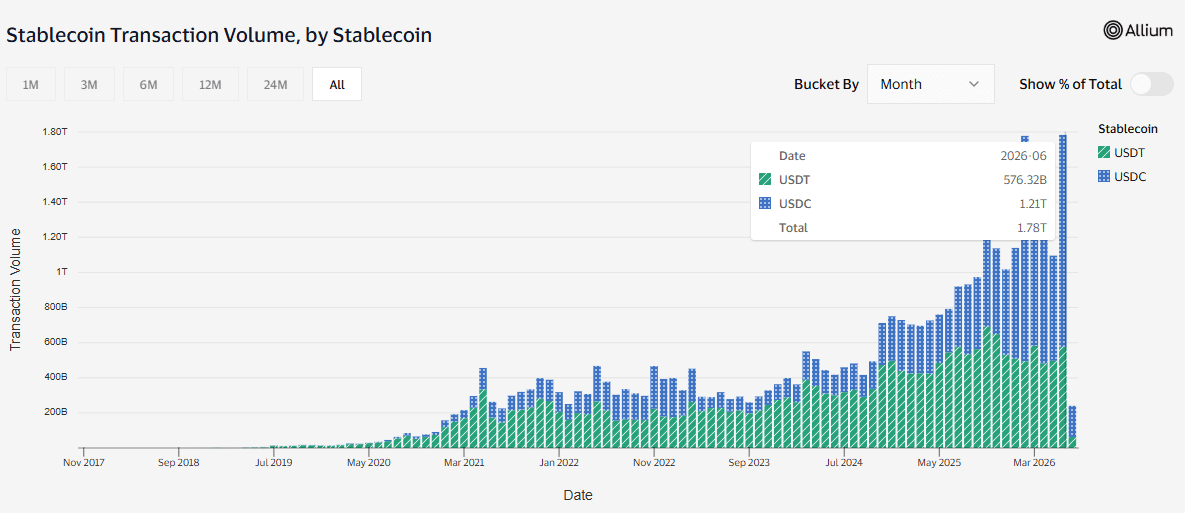
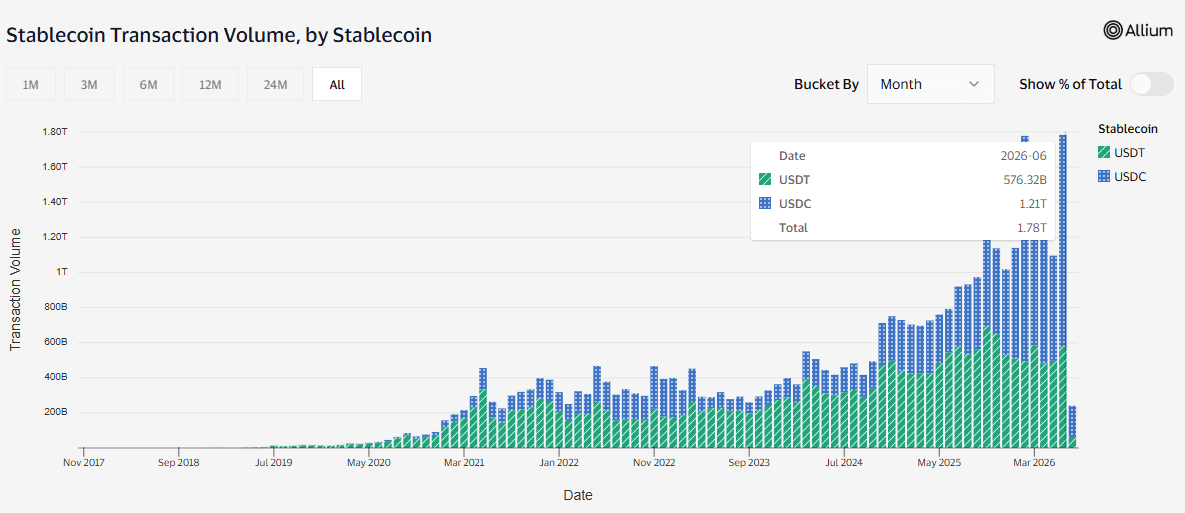
According to Visa data, USDC saw $1.21T in transfer volume in June, doubling Tether’s USDT. This was the second highest monthly transfer volume following February’s record $1.28T amid growing adoption across most blockchains.
Source: Visa

In fact, less than a week into July, USDC’s volume was 3x that of USDT, underscoring a likely shift tied to the MiCA framework. Users across the EU or those sending money to the continent may be opting for USDC instead of USDT.

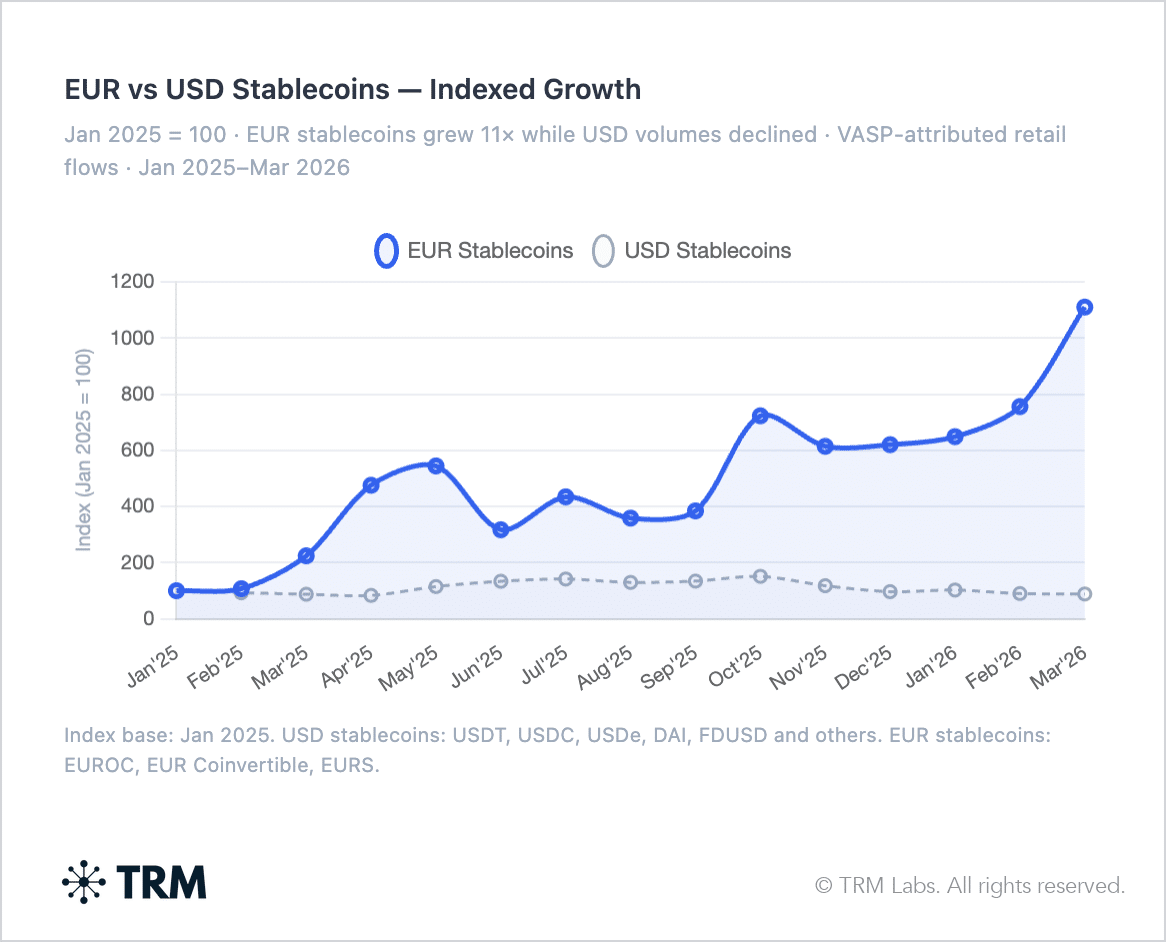
The shift was also evident across US dollar and Euro-based stablecoins. The latter grew 11x while USD-based stablecoin volumes shrank.
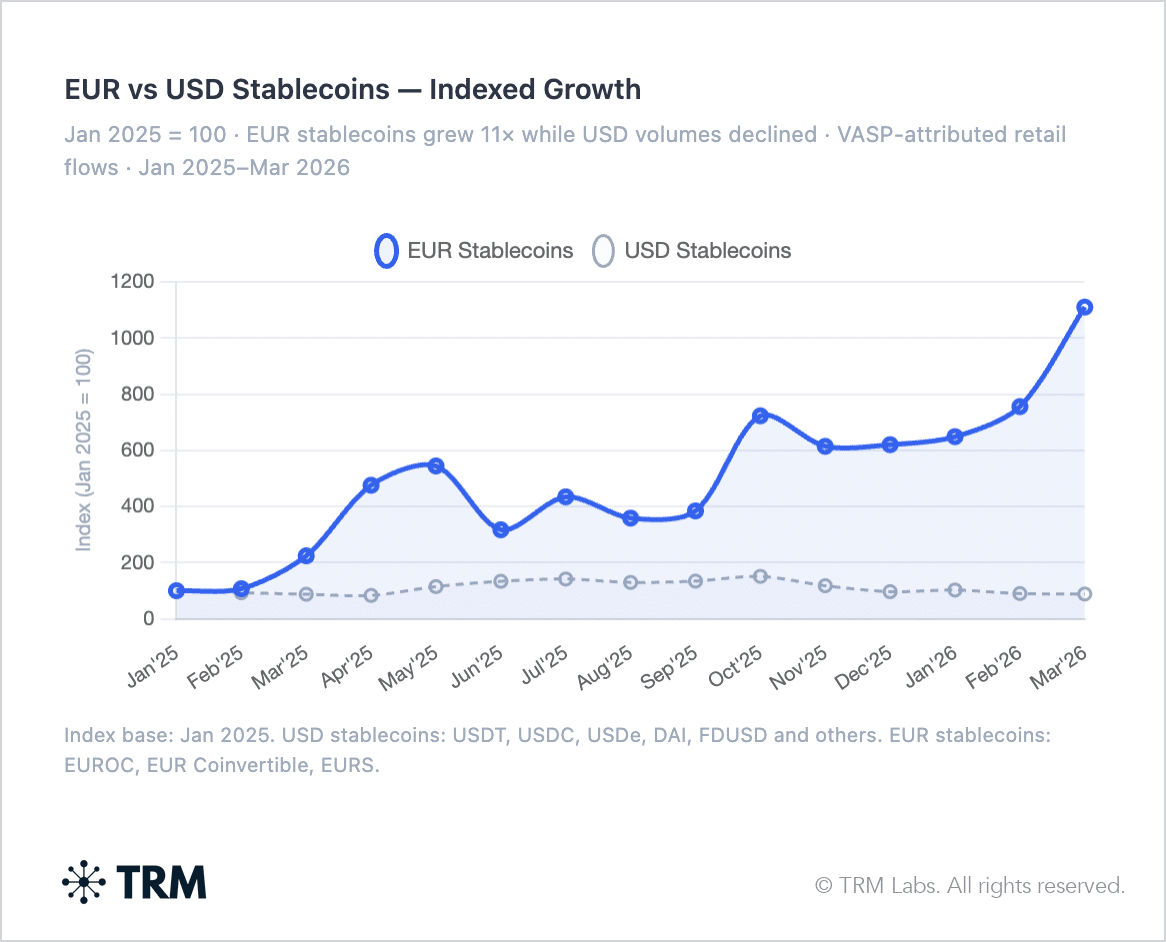
Source: TRM Labs

Tether’s USDT still dominates the stablecoin market in terms of supply though. It remains to be seen whether Circle will close the gap as Revolut and other EU platforms continue to delist USDT.


Final Summary

  • Revolut will delist USDT by August 31st and stop accepting deposits from the stablecoin by the end of July.
  • USDC transfer volume hit $1.21T, doubling Tether’s USDT, further underscoring MiCA’s impact on stablecoin adoption.


Pertanyaan Terkait

QWhat is the key deadline and action that Revolut is taking regarding Tether's USDT stablecoin?

ARevolut will stop accepting USDT deposits by the end of July 2026 and will completely delist Tether's USDT from its platform by August 31, 2026. Users who fail to transfer their USDT funds by the end of August will have them automatically exchanged to fiat currency.

QAccording to the analyst Max Karpis, what is the primary reason behind Revolut's decision to delist USDT?

AAccording to analyst Max Karpis, Revolut's decision is primarily due to regulatory and risk reasons, specifically in response to compliance pressures, which he attributes to the EU's MiCA regulatory framework now being in effect.

QWhat are the main criticisms of the MiCA regulation expressed by Tether's CEO, Paolo Ardoino?

ATether CEO Paolo Ardoino criticizes MiCA as being 'bad' and 'dangerous' for stablecoins. He argues that its requirement for 60% of stablecoin reserves to be held as uninsured cash deposits in European banks could lead to bank failures, especially if there is a large-scale redemption event like a +20% redemption of USDT. He also believes it is designed to favor the Digital Euro and control fund flows.

QHow has Circle's USDC stablecoin reportedly been affected by the implementation of MiCA, according to the Visa data mentioned in the article?

AAccording to Visa data cited in the article, USDC's transfer volume reached $1.21 trillion in June 2026, doubling that of Tether's USDT. Furthermore, in early July, USDC's volume was three times that of USDT, indicating a significant shift in adoption likely tied to MiCA compliance.

QBeyond USDT and USDC, what broader trend in stablecoin usage was observed in the EU market as the MiCA transition period ended?

AThe article shows a broader shift towards Euro-based stablecoins. While USD-based stablecoin volumes shrank, Euro-based stablecoin volumes grew by 11 times, indicating a significant move towards euro-denominated stablecoins within the EU market following the MiCA framework's implementation.

Bacaan Terkait

Token Saham Robinhood yang Kamu Beli, Hanya Utang dari Jersey

Robinhood meluncurkan token saham yang diklaim sebagai aset digital, namun sebenarnya merupakan surat utang yang diterbitkan oleh perusahaan shell di Jersey. Token ini hanya melacak harga saham perusahaan seperti Nvidia atau Apple, tanpa memberikan hak kepemilikan atau klaim atas aset perusahaan. Jika perusahaan penerbit token bangkrut, investor hanya menjadi kreditur biasa dengan risiko kehilangan seluruh modal. Struktur produk ini dirancang untuk menghindari peraturan ketat AS, terutama setelah insiden GameStop 2021 yang menyebabkan Robinhood membatasi perdagangan. Dengan menggunakan blockchain, Robinhood bertujuan menghilangkan penyelesaian T+2 dan kebutuhan margin besar. Produk ini tersedia untuk 120+ negara, tetapi dilarang untuk pengguna AS, Kanada, dan Inggris. Di Eropa, Robinhood menawarkan token saham yang sesuai dengan peraturan MiFID II dan didukung saham sungguhan. Namun, untuk pasar lain, mereka memilih struktur utang Jersey yang lebih ringan regulasinya. Produk ini juga menghadapi risiko seperti manipulasi oracle price di DeFi dan tidak ada perlindungan asuransi untuk risiko gagal bayar. Sementara itu, perusahaan seperti Ondo telah meluncurkan token saham yang sepenuhnya mematuhi peraturan SEC AS, memberikan hak suara dan dividen kepada pemegangnya. Robinhood saat ini memilih pendekatan "produk setengah jadi" untuk menguasai pasar terlebih dahulu, menunggu kejelasan regulasi di masa depan.

Foresight News29m yang lalu

Token Saham Robinhood yang Kamu Beli, Hanya Utang dari Jersey

Foresight News29m yang lalu

Mitra Blockchain Capital: AI Sedang Menulis Ulang Unit Dasar Tenaga Kerja

Menurut artikel "AI sedang menulis ulang unit dasar tenaga kerja" oleh partner Blockchain Capital, revolusi AI mengubah esensi kerja. Sam Altman memprediksi kemunculan perusahaan miliaran dolar yang didirikan satu orang, karena AI menghilangkan batasan waktu manusia. Peralihan mendasar terjadi ketika tenaga kerja dapat diskalakan melalui agen AI yang dapat diprogram dan dibayar dengan mata uang kripto stabil seperti USDC dalam hitungan milidetik. Artikel ini menjelaskan bahwa perusahaan muncul ketika biaya koordinasi pasar melebihi biaya mempekerjakan. Setiap transformasi tenaga kerja, dari revolusi industri ke ekonomi gig dan kreator, didorong oleh penurunan biaya koordinasi. Ekonomi gig dan kreator berperan sebagai "kelas jembatan" yang membuktikan konsep pekerjaan yang terpecah dan terdistribusi, namun masih bergantung pada platform untuk koordinasi. Kini, kombinasi **tenaga kerja yang dapat diprogram (agen AI)** dan **mata uang yang dapat diprogram (stablecoin)** memungkinkan dekomposisi tenaga kerja sejati. Agen AI dapat mendelegasikan dan mengevaluasi tugas antar sesamanya, dengan unit dasar menjadi "tugas" itu sendiri. Stablecoin memungkinkan penyelesaian pembayaran mikro instan tanpa perantara, cocok untuk transaksi mesin-ke-mesin. Contoh nyata seperti Poncho dari Merit Systems menunjukkan bagaimana agen AI dengan dompet digital dapat membayar layanan sesuai pemakaian. Ini menggeser model ekonomi dari berlangganan ke pembayaran mikro per tugas. Ke depan, peran manusia akan berubah menjadi **penata** atau **pengarah** yang merancang sistem, mendelegasikan tugas kepada agen AI, mengevaluasi hasil, dan menyusunnya menjadi sesuatu yang bernilai. Perusahaan akan berevolusi dari wadah tenaga kerja menjadi lapisan kecerdasan di atas pasar tenaga kerja global yang dapat diprogram, di mana keahlian manusia terletak pada kemampuan mengkurasi dan mengombinasi output mesin.

marsbit31m yang lalu

Mitra Blockchain Capital: AI Sedang Menulis Ulang Unit Dasar Tenaga Kerja

marsbit31m yang lalu

Apakah Open USD Dapat Menopang Ambisi Stripe?

Artikel ini membahas peran Open USD (OUSD) dalam ambisi Stripe untuk beralih dari sekadar perusahaan API pembayaran menjadi jaringan pergerakan uang (*money movement network*). Penulis berargumen bahwa OUSD, sebagai stablecoin bersama yang dikelola Open Standard dengan dukungan Stripe, Visa, Mastercard, dan lainnya, bukanlah pesaing langsung USDC. Signifikansinya terletak pada upaya mendefinisikan ulang alokasi keuntungan dalam ekosistem stablecoin, di mana mitra yang berkontribusi pada adopsi dan distribusi berbagi hasil dari aset cadangan. Bagi Stripe, OUSD adalah langkah strategis untuk memperluas narasi perusahaan. Ini membuka peluang untuk memiliki aset penyelesaian default, mengubah model ekonomi, menyediakan lapangan dana yang dapat diprogram untuk perdagangan berbasis agen (*agentic commerce*), dan pada akhirnya berevolusi dari perusahaan perangkat lunak menjadi jaringan infrastruktur keuangan. Bersama dengan akuisisi Bridge, pengembangan blockchain Tempo, dan platform Privy, OUSD merupakan bagian dari upaya Stripe untuk turun ke lapisan penyelesaian (*settlement layer*) dan mengatur arus keuangan di era ekonomi internet dan AI berikutnya. Singkatnya, OUSD mewakili ambisi Stripe untuk tidak hanya memproses transaksi, tetapi membantu mendefinisikan jaringan penyelesaian uang masa depan di mana uang tidak hanya "berjalan di atas Stripe", tetapi mungkin "diselesaikan di jaringan yang Stripe bantu tentukan".

marsbit39m yang lalu

Apakah Open USD Dapat Menopang Ambisi Stripe?

marsbit39m yang lalu

Trading

Spot
活动图片