‘Hard-backed currency’ – Coinbase CEO pushes crypto for $39T debt

ambcryptoDipublikasikan tanggal 2026-07-02Terakhir diperbarui pada 2026-07-02

Abstrak

Coinbase CEO Brian Armstrong proposes using cryptocurrency as "hard-backed currency" to address the U.S. national debt, which stands at $39.4 trillion. He argues the U.S. Constitution needs amendments to cap government spending and mandate such a currency to prevent fiscal decline. While Bitcoin's fixed supply is seen as a digital alternative to gold, analysis suggests even significant Bitcoin reserves would only cover a fraction of the debt by 2049. The article concludes that capping spending may be a more practical step than relying solely on crypto to solve the debt issue.

Coinbase CEO Brian Armstrong has made a bold proposal to rein in inflation and unchecked government spending.

According to him, crypto can be used as ‘hard-backed currency.’ For growth, he floated AI and robotics as the best bet to spur the next growth. He noted,

The US Constitution was the most important political innovation ever, but it’s missing two important things: A cap on the growth of government spending and a requirement for hard-backed currency.

AD

He added,

Without them, every democracy drifts toward more debt and eventual loss of reserve currency status.

As of writing, the total U.S fiscal debt has hit $39.4 trillion. Armstrong cautioned that the fiscal debt increases by $1 trillion after every 100 days, largely driven by the current broken ‘political incentive structure.’

Can Bitcoin, stablecoins solve U.S. debt?

Others were quick to correct him, saying that the Constitution only allows gold and silver coins to be used to pay debts. Well, that’s why he is advocating for an amendment to include other “money” options.

For his part, BitGo CEO Mike Belshe supported his proposal and added,

The Bill of Rights protects you from the government taking your speech, your property, your liberty. It’s time to update it to protect you from the government debasing your money.

Well, this is not the first time crypto has been floated as a solution to U.S fiscal debt.

In particular, Bitcoin’s hard-coded supply limit of 21 million coins has been viewed as a potential replacement for gold or a better digital alternative to the precious metal.

In fact, the two assets have shown close correlation, sparking a ‘debasement trade’ during the West Asia crisis. They acted as macro hedges, and their demand pushed their values higher.

So far, gold and Bitcoin prices have fallen together amid slow but progress toward a solution to the West Asia crisis.

Bitcoin vs. America’s debt problem

But U.S inflation has devalued the dollar by nearly 97% since 1913. Since 2000, the US dollar’s purchasing power has dropped further to a record low. Over the same period, BTC value has surged from below $1 to over $50K.
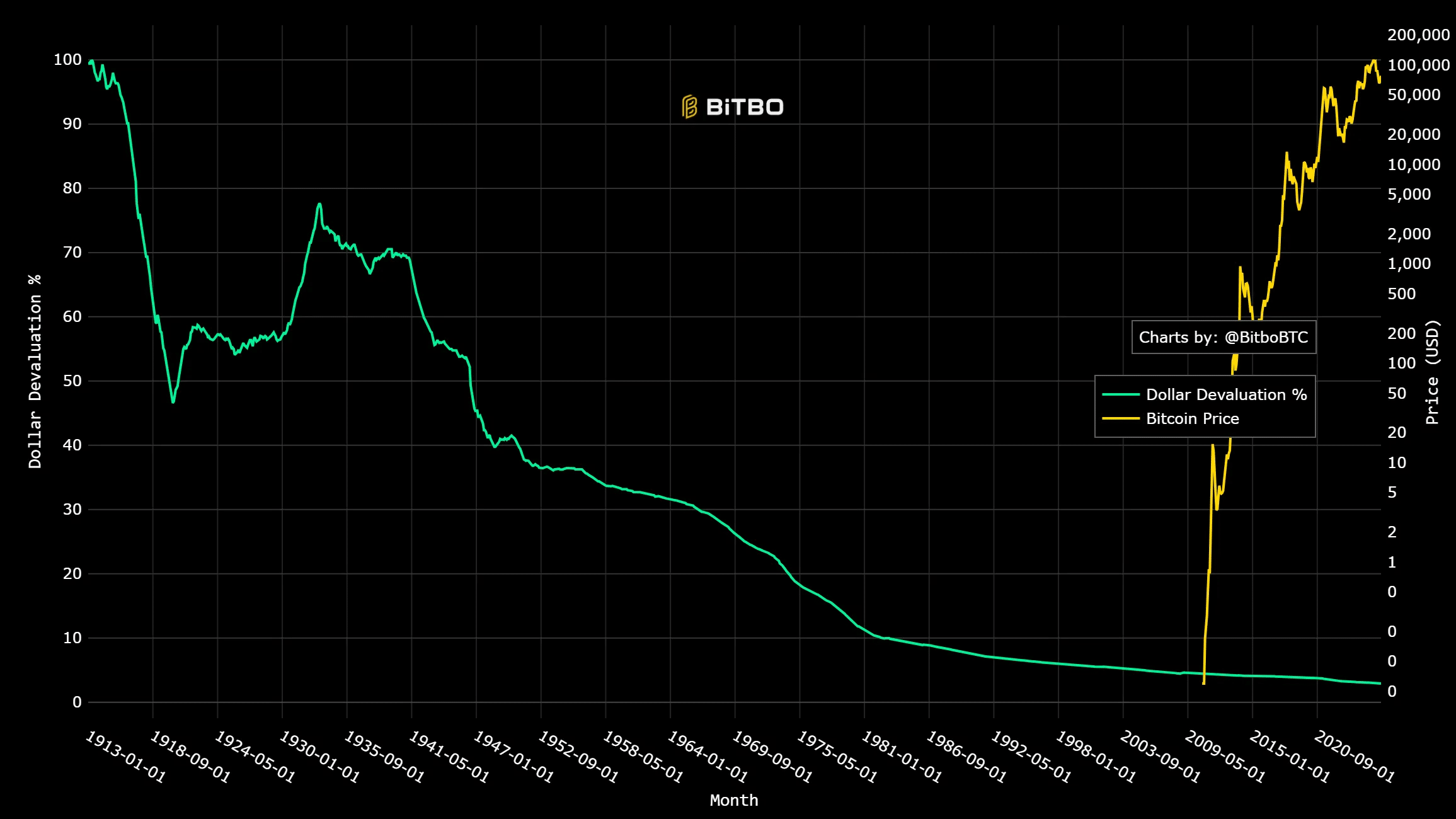
Source: Bitbo

In fact, the Trump Administration is betting on a Bitcoin strategic reserve and stablecoins to manage its debt. Unfortunately, VanEck projected that a BTC reserve can only help pay 18%-36% of the US debt by 2049.

The above projection holds only if the government holds 1 million BTC and the price surges from $250K to $43M per coin before 2050.
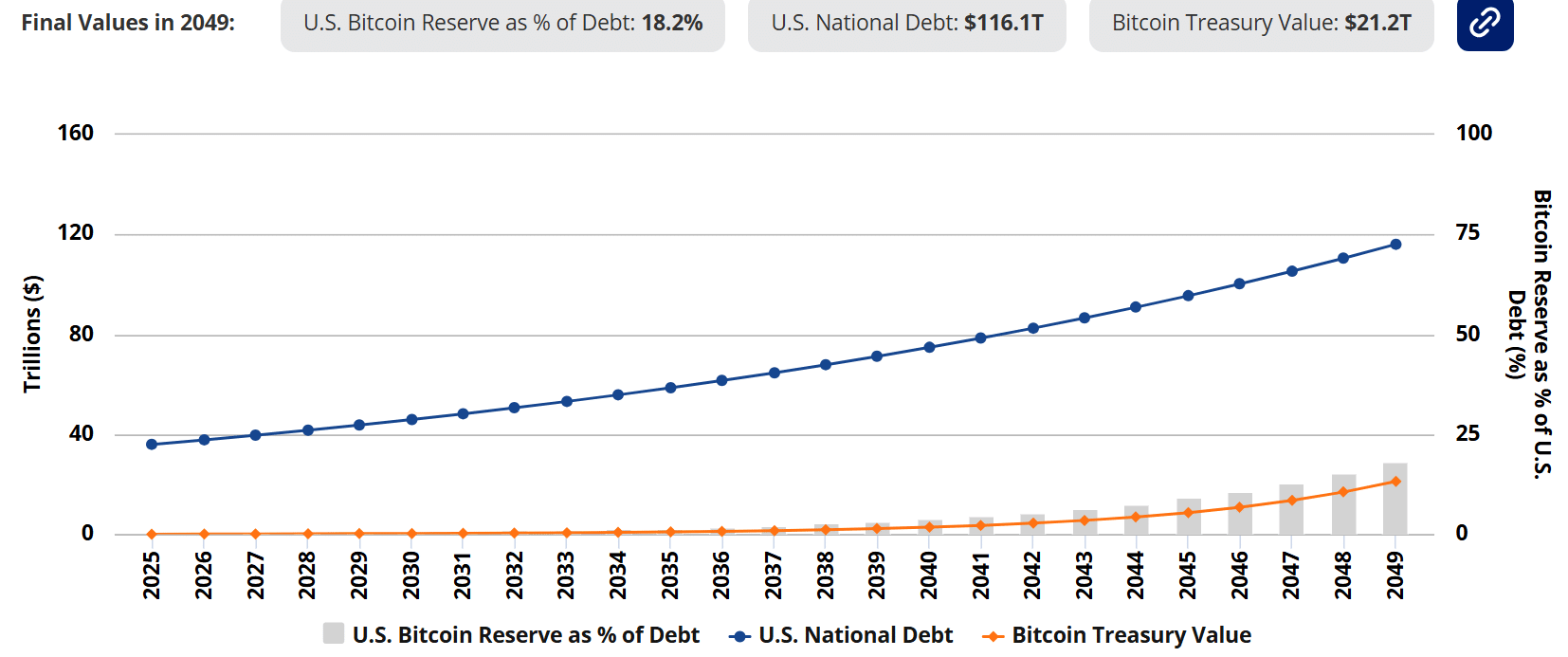
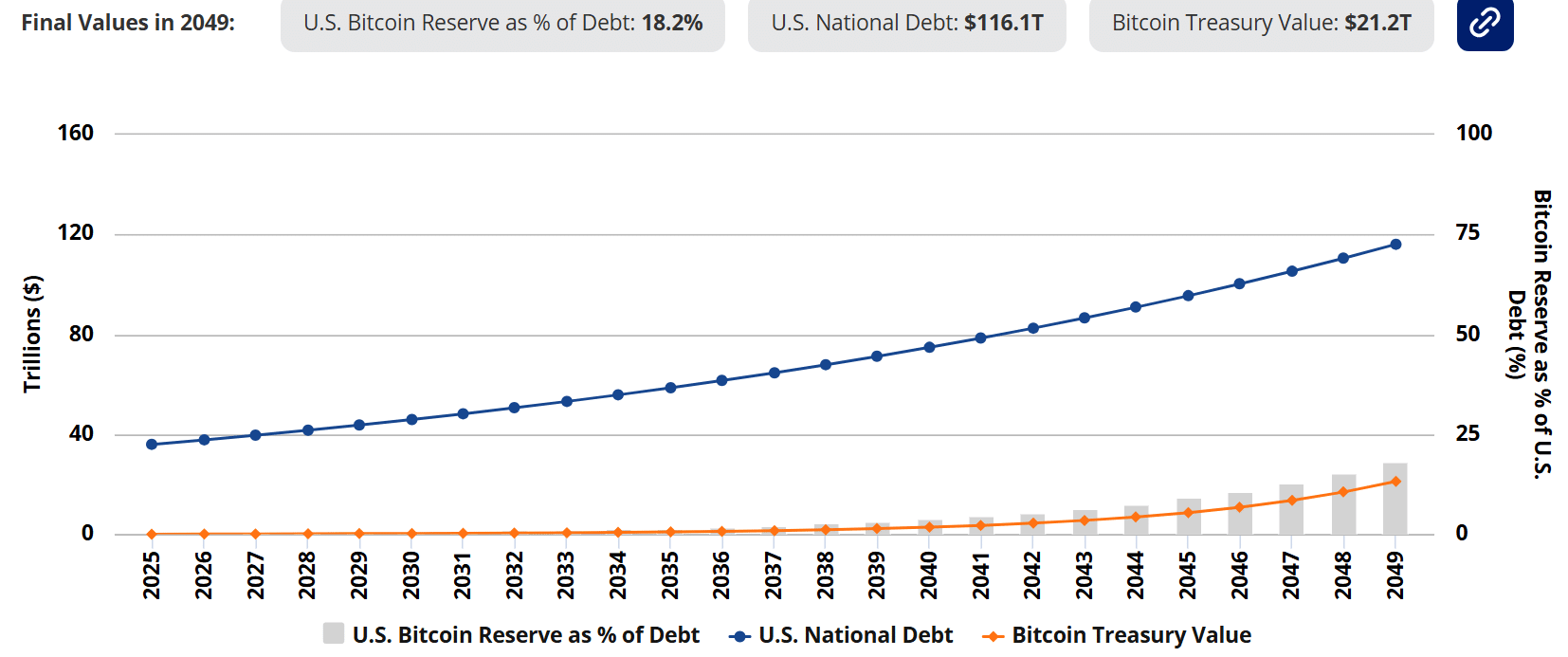
Source: VanEck

Overall, the crypto proposal may not fully solve the U.S debt problem. However, capping government spending could be a practical step toward addressing the fiscal debt issue.


Final Summary

  • Coinbase CEO proposed crypto as ‘hard-backed money’ to address the U.S $39T fiscal debt problem
  • But crypto could only pay a fraction of the U.S debt, assuming BTC price hits $43M per coin by 2049.


Pertanyaan Terkait

QWhat is Coinbase CEO Brian Armstrong's proposal to address the U.S. fiscal debt, and what key constitutional changes does he suggest are needed?

ABrian Armstrong proposes using cryptocurrency as 'hard-backed currency' to address inflation and U.S. fiscal debt. He suggests amending the U.S. Constitution to include a cap on government spending growth and a requirement for a hard-backed currency, which he believes are missing but necessary to prevent excessive debt and loss of reserve currency status.

QWhat is the current size of the U.S. fiscal debt according to the article, and at what rate is it reportedly increasing?

AAccording to the article, the total U.S. fiscal debt has hit $39.4 trillion. Armstrong cautions that the debt increases by $1 trillion approximately every 100 days.

QWhy is Bitcoin specifically considered as a potential tool to manage debt, and what is one significant limitation of this idea presented in the article?

ABitcoin is considered due to its hard-coded supply limit of 21 million coins, making it a potential digital alternative to gold and a hedge against currency debasement. A significant limitation, according to a VanEck projection cited, is that even if the U.S. held 1 million BTC, and its price surged to an unrealistic $43 million per coin by 2049, it would only cover 18%-36% of the U.S. debt by that time.

QAccording to the article, what role did Mike Belshe, CEO of BitGo, see for the Bill of Rights in relation to the current monetary system?

AMike Belshe suggested that the Bill of Rights protects citizens from the government infringing on speech, property, and liberty, and it should be updated to also protect people from the government debasing their money.

QWhat practical step does the article suggest might be more effective than relying solely on cryptocurrency reserves to address the U.S. debt problem?

AThe article suggests that capping government spending could be a more practical step toward addressing the fiscal debt issue, as the crypto proposal alone may not fully solve the problem.

Bacaan Terkait

Token Saham Robinhood yang Kamu Beli, Hanya Utang dari Jersey

Robinhood meluncurkan token saham yang diklaim sebagai aset digital, namun sebenarnya merupakan surat utang yang diterbitkan oleh perusahaan shell di Jersey. Token ini hanya melacak harga saham perusahaan seperti Nvidia atau Apple, tanpa memberikan hak kepemilikan atau klaim atas aset perusahaan. Jika perusahaan penerbit token bangkrut, investor hanya menjadi kreditur biasa dengan risiko kehilangan seluruh modal. Struktur produk ini dirancang untuk menghindari peraturan ketat AS, terutama setelah insiden GameStop 2021 yang menyebabkan Robinhood membatasi perdagangan. Dengan menggunakan blockchain, Robinhood bertujuan menghilangkan penyelesaian T+2 dan kebutuhan margin besar. Produk ini tersedia untuk 120+ negara, tetapi dilarang untuk pengguna AS, Kanada, dan Inggris. Di Eropa, Robinhood menawarkan token saham yang sesuai dengan peraturan MiFID II dan didukung saham sungguhan. Namun, untuk pasar lain, mereka memilih struktur utang Jersey yang lebih ringan regulasinya. Produk ini juga menghadapi risiko seperti manipulasi oracle price di DeFi dan tidak ada perlindungan asuransi untuk risiko gagal bayar. Sementara itu, perusahaan seperti Ondo telah meluncurkan token saham yang sepenuhnya mematuhi peraturan SEC AS, memberikan hak suara dan dividen kepada pemegangnya. Robinhood saat ini memilih pendekatan "produk setengah jadi" untuk menguasai pasar terlebih dahulu, menunggu kejelasan regulasi di masa depan.

Foresight News27m yang lalu

Token Saham Robinhood yang Kamu Beli, Hanya Utang dari Jersey

Foresight News27m yang lalu

Mitra Blockchain Capital: AI Sedang Menulis Ulang Unit Dasar Tenaga Kerja

Menurut artikel "AI sedang menulis ulang unit dasar tenaga kerja" oleh partner Blockchain Capital, revolusi AI mengubah esensi kerja. Sam Altman memprediksi kemunculan perusahaan miliaran dolar yang didirikan satu orang, karena AI menghilangkan batasan waktu manusia. Peralihan mendasar terjadi ketika tenaga kerja dapat diskalakan melalui agen AI yang dapat diprogram dan dibayar dengan mata uang kripto stabil seperti USDC dalam hitungan milidetik. Artikel ini menjelaskan bahwa perusahaan muncul ketika biaya koordinasi pasar melebihi biaya mempekerjakan. Setiap transformasi tenaga kerja, dari revolusi industri ke ekonomi gig dan kreator, didorong oleh penurunan biaya koordinasi. Ekonomi gig dan kreator berperan sebagai "kelas jembatan" yang membuktikan konsep pekerjaan yang terpecah dan terdistribusi, namun masih bergantung pada platform untuk koordinasi. Kini, kombinasi **tenaga kerja yang dapat diprogram (agen AI)** dan **mata uang yang dapat diprogram (stablecoin)** memungkinkan dekomposisi tenaga kerja sejati. Agen AI dapat mendelegasikan dan mengevaluasi tugas antar sesamanya, dengan unit dasar menjadi "tugas" itu sendiri. Stablecoin memungkinkan penyelesaian pembayaran mikro instan tanpa perantara, cocok untuk transaksi mesin-ke-mesin. Contoh nyata seperti Poncho dari Merit Systems menunjukkan bagaimana agen AI dengan dompet digital dapat membayar layanan sesuai pemakaian. Ini menggeser model ekonomi dari berlangganan ke pembayaran mikro per tugas. Ke depan, peran manusia akan berubah menjadi **penata** atau **pengarah** yang merancang sistem, mendelegasikan tugas kepada agen AI, mengevaluasi hasil, dan menyusunnya menjadi sesuatu yang bernilai. Perusahaan akan berevolusi dari wadah tenaga kerja menjadi lapisan kecerdasan di atas pasar tenaga kerja global yang dapat diprogram, di mana keahlian manusia terletak pada kemampuan mengkurasi dan mengombinasi output mesin.

marsbit29m yang lalu

Mitra Blockchain Capital: AI Sedang Menulis Ulang Unit Dasar Tenaga Kerja

marsbit29m yang lalu

Apakah Open USD Dapat Menopang Ambisi Stripe?

Artikel ini membahas peran Open USD (OUSD) dalam ambisi Stripe untuk beralih dari sekadar perusahaan API pembayaran menjadi jaringan pergerakan uang (*money movement network*). Penulis berargumen bahwa OUSD, sebagai stablecoin bersama yang dikelola Open Standard dengan dukungan Stripe, Visa, Mastercard, dan lainnya, bukanlah pesaing langsung USDC. Signifikansinya terletak pada upaya mendefinisikan ulang alokasi keuntungan dalam ekosistem stablecoin, di mana mitra yang berkontribusi pada adopsi dan distribusi berbagi hasil dari aset cadangan. Bagi Stripe, OUSD adalah langkah strategis untuk memperluas narasi perusahaan. Ini membuka peluang untuk memiliki aset penyelesaian default, mengubah model ekonomi, menyediakan lapangan dana yang dapat diprogram untuk perdagangan berbasis agen (*agentic commerce*), dan pada akhirnya berevolusi dari perusahaan perangkat lunak menjadi jaringan infrastruktur keuangan. Bersama dengan akuisisi Bridge, pengembangan blockchain Tempo, dan platform Privy, OUSD merupakan bagian dari upaya Stripe untuk turun ke lapisan penyelesaian (*settlement layer*) dan mengatur arus keuangan di era ekonomi internet dan AI berikutnya. Singkatnya, OUSD mewakili ambisi Stripe untuk tidak hanya memproses transaksi, tetapi membantu mendefinisikan jaringan penyelesaian uang masa depan di mana uang tidak hanya "berjalan di atas Stripe", tetapi mungkin "diselesaikan di jaringan yang Stripe bantu tentukan".

marsbit37m yang lalu

Apakah Open USD Dapat Menopang Ambisi Stripe?

marsbit37m yang lalu

Trading

Spot
活动图片