Investors Are Now Hunting for AI Projects on Bilibili and Xiaohongshu

marsbitDipublikasikan tanggal 2026-06-12Terakhir diperbarui pada 2026-06-12

Abstrak

Investors Turn to Bilibili and Xiaohongshu to Source AI Projects The AI hardware boom is in full swing in 2025, with a surge in smart wearables like AI glasses, rings, toys, and companion robots. This frenzy has investors scrambling, not just sifting through business plans, but actively hunting for promising "under-the-radar" projects on youth and tech-enthusiast content platforms like Bilibili and Xiaohongshu. The logic is straightforward: for consumer-facing AI hardware, genuine user demand and potential pitfalls are often revealed earlier in public discussions, comments, and critiques on these communities than in formal pitches. As one industry insider notes, these products must ultimately be tested and understood by real people. This shift highlights a crucial challenge in the sector: user education. The success of AI hardware depends on moving beyond mere efficiency gains to fulfilling higher-order needs like "unleashing personal creativity." Products must convince users they are natural, unobtrusive additions to daily life. Early hype, as seen with devices like the Rabbit R1, often fades if the product fails to clearly solve real-world problems, leading to high return rates and market rejection. The market is now entering a shakeout phase. 2026 is seen as a year of commercial validation. Some projects have already stalled or been canceled due to market resistance, lack of differentiation, or financial woes. However, the long-term opportunity remains vast, with forec...

Author: Investment Community

"In the AI era, all hardware is worth remaking from scratch."

This statement might have sounded somewhat radical in 2024, but in 2025, its credibility has surged significantly—as we are witnessing, the wave of AI hardware entrepreneurship is rising, with financings following one after another. Across the ocean, the smart ring Oura Health has seen its latest valuation soar to a staggering 70 billion yuan.

This frenzy is sweeping up FOMO-stricken investors. This time, aside from sifting through thousands of pitch deck emails, they have strikingly turned their deal-sourcing gaze towards content communities densely populated by tech geeks and young people.

The underlying logic is rather simple: compared to spec sheets and roadshows, the real demand for a consumer-grade AI smart hardware product is often first exposed by whether it can be understood, discussed, and questioned in the public sphere.

Ultimately, all tech products aimed at the masses must go through the test of the crowd.

AI Hardware Explosion, Investors Scramble for Under-the-Radar Projects

We are experiencing a banner year for AI hardware.

Since 2025, extending from the wearable device track, more segmented smart hardware products such as AI glasses, AI toys, AI recording cards, AI rings, AI earphones, companion robots, and Agent Boxes have collectively seen an explosion.

Amid the fervor, certain details reveal the excitement in the investment circle: in the latter half of 2025, we frequently saw several top-tier institutions posting job openings to recruit AI/smart hardware investors, with the job descriptions almost invariably requiring the candidates to be based in Shenzhen, the hardware capital.

Good projects almost require 'repeated visits' and intense competition, especially those still under the radar with valuations not yet sky-high. Investors have even started approaching potential founders who haven't yet left their jobs. For instance, cafes near DJI are packed with VCs and FAs trying to 'persuade people to start a business.'
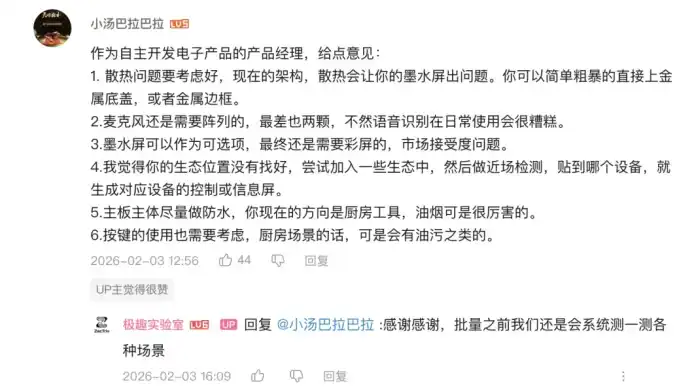
(Comment section of an AI sticky note product pre-sale video)

"After this content was posted, many technical discussion threads appeared in the bullet comments and comment section, and more users began sharing their similar needs: some mentioned frequently attending cross-border exhibitions, others talked about communication barriers when collaborating remotely with overseas teams, and some shared experiences where translation tools were inconvenient when accompanying foreign relatives for medical treatment or handling foreign affairs."

"These feedbacks not only helped us expand the direction for creator content but also directly influenced our thinking about the product line," Wu Zhen said.
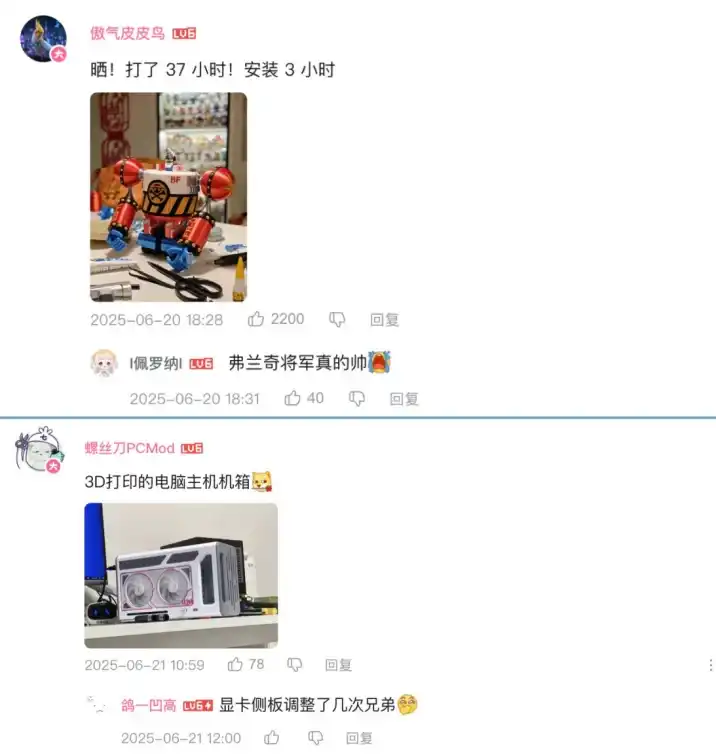
(Comment section of UP主影视飓风's video)

Enthusiasts Gather

Remember January 2024, at CES.

A little orange square box called Rabbit R1, touted as 'the world's first AI hardware device,' stirred a frenzy in the tech world. The market hailed it as the iPhone of the AI era, selling 100,000 units upon launch.

But what followed was not success. On the contrary, skepticism soon arose with comments like 'actually using it is not as good as a phone.' At the time, the high-flying Rabbit R1 failed to adequately explain to users: what exactly can Rabbit R1 do now and in the future? What real user problems does this innovation actually solve?

Even today, user education remains the most critical challenge for AI smart hardware—when AI enters consumer electronics, the product consumption logic is no longer limited to 'improving life efficiency' but also includes higher-dimensional needs like 'unleashing personal creativity' and 'liberating the mind.' In this context, whoever can make users understand, discuss, and pay in real-life scenarios truly crosses the threshold from a tech product to a consumer good.

But this is not easy. Regarding user education for AI glasses, INMO's CMO Wu Zhen told us frankly: This is not simply about conveying product information; it also requires overcoming a psychological barrier. Users must first complete a 'virtual try-on' in their minds, confirming that integrating this device into daily life feels natural and not awkward, before they can proceed to the next step.

In Wu Zhen's view, the process of psychologically preparing users for AI smart hardware might be longer than for most consumer electronics categories. "The day users naturally put on AI glasses to go out without reminding themselves 'I need to use AI glasses today,' this behavioral change might be more convincing than many data points."

Shakeout Begins, Battle for Attention Heats Up

While the frenzy peaks, a shakeout is underway.

There is now market consensus that 2026 will be the year of commercial validation for AI hardware. This also means that trend-chasers and狂热资本 will face rationality and冷静.

A winnowing process is unfolding: At the end of 2025, the AI wearable device Friend AI Necklace stalled after encountering severe market resistance; after its peak appearance in 2024, Rabbit R1, unable to keep up with product expectations amid negative feedback, saw abnormally high return rates, severely damaging its reputation, and ultimately陷入欠薪与现金流枯竭的困境 (fell into困境 of salary arrears and cash flow depletion).

Meanwhile, savvy players are also开始审慎调整和优化决策 (beginning to prudently adjust and optimize decisions). In February 2026, market rumors emerged that the Doubao AI glasses project was suspended; at least within the visible cycle, this product line is no longer considered a direction to pursue. Earlier, in January, smartphone manufacturer vivo halted its AI glasses project, citing the difficulty of achieving differentiation at present.

Such developments are a reflection of industry differentiation.

Nevertheless, it is undeniable that in this trillion-dollar-value赛道 (track), entrepreneurs still possess enormous确定性机会 (deterministic opportunities). According to AICC predictions, by 2030, the global AI-related hardware market will easily surpass several trillion dollars. In China, the industry expects the market size for consumer-grade AI hardware (excluding phones and cars) to突破 (break through) 1.27 trillion yuan in 2026 and reach 2.56 trillion yuan by 2030.

Currently, opportunities for exit and entry coexist. OpenAI just announced it will launch its first AI hardware device in the second half of the year, and Meta plans to double the annual production capacity of its AI smart glasses to 20 million units by the end of 2026. The latest scene domestically: a batch of AI smart terminals from京东 (JD.com), including AI desk lamps, AI cooking machines, AI mattresses, and AI wheelchairs, are酝酿上新售卖 (being酝酿 for launch and sale).

People remain convinced that the battle for入口之争 (portals) behind AI smart hardware will not stop. The AI era is still an era of用户主权 (user sovereignty).

The热浪 (heat wave) will push everyone forward. But when attention, product power, and user perception begin to compete on the same table, the final battle is just beginning.

Pertanyaan Terkait

QWhat new strategy are venture capitalists adopting to find promising AI hardware projects?

AVenture capitalists are increasingly looking for promising AI hardware projects on youth-focused content communities like Bilibili and Xiaohongshu. They analyze user discussions, comments, and product reviews to gauge genuine market demand and real-world product understanding before these ventures become widely known or receive high valuations.

QWhy is user education considered crucial for AI consumer hardware adoption?

AUser education is crucial because the value proposition of AI hardware often involves higher-level needs like 'unleashing personal creativity' or 'liberating the brain,' not just efficiency. Consumers need to understand and visualize how these devices fit into their daily lives without being intrusive. This mental acceptance and natural integration into routines are considered more important than just product specifications for driving adoption.

QWhat are some examples of AI consumer hardware that faced significant market challenges?

AExamples of AI consumer hardware that faced significant market challenges include the Rabbit R1, which suffered from high return rates and negative feedback regarding its practical utility, leading to cash flow problems. The Friend AI Necklace also encountered severe market resistance and stalled development.

QWhat is the predicted market size for consumer AI hardware in China by 2030?

AIndustry predictions estimate that the market size for consumer AI hardware (excluding smartphones and cars) in China will reach 2.56 trillion yuan by 2030. It is projected to first exceed 1.27 trillion yuan by 2026.

QWhy are some companies adjusting their strategies in the AI hardware market in 2026?

ACompanies are adjusting their strategies because 2026 is widely seen as the 'commercial validation year' for AI hardware. The market is entering a phase of rationalization and consolidation. Projects that fail to demonstrate clear product differentiation, genuine user value, or sustainable business models are being paused or canceled, as seen with Doubao's AI glasses and vivo's AI glasses project, indicating an industry-wide shakeout.

Bacaan Terkait

Penilaian Akhir 2029: Saat Cryptocurrency Benar-benar 'Menghilang', Siapa yang Akan Bertahan dalam Transformasi Keuangan Besar Ini?

**Ringkasan: Prediksi Akhir 2029: Ketika Kripto Menjadi 'Tidak Terlihat', Siapa yang Bertahan dalam Transformasi Keuangan Besar?** Analisis ini memproyeksikan evolusi industri cryptocurrency dari sekarang hingga 2029, berfokus pada tiga masalah inti: penentuan nilai token, adopsi teknologi, dan transisi menjadi infrastruktur keuangan tradisional. **2026:** Kontrak berjangka abadi (*perpetual futures*) untuk aset ekuitas privat (mis., SpaceX, OpenAI) menjadi standar harga utama di platform seperti Hyperliquid, mengungguli token tanpa dasar aset nyata. Sementara itu, proyek "AI + crypto" gagal menemukan kebutuhan pasar yang nyata, kecuali pasar prediksi. Fondasi untuk tokenisasi aset institusional (reksa dana pasar uang, kredit privat) mulai dibangun dengan diam-diam. **2027:** Blockchain publik memilih fokus pada layanan institusi (KYC, compliance) sambil membangun infrastruktur yang pada akhirnya akan terbuka bagi pengguna ritel. Pasar kontrak berjangka privat, stablecoin, dan tokenisasi aset mengalami pertumbuhan stabil tetapi dibatasi secara ketat oleh ketidakpastian regulasi dan batasan hukum (mis., larangan promosi sekuritas privat). **2028:** Setelah peristiwa likuidasi berantai yang mengekspos risiko kontrak berjangka tanpa aset dasar, regulator melonggarkan aturan. Investor ritel yang memenuhi syarat (*qualified investors*) akhirnya mendapatkan akses legal ke pasar sekunder untuk ekuitas perusahaan privat yang nyata. Hal ini menciptakan saluran baru untuk aliran modal. **2029:** Kripto mencapai "ketidakterlihatan" sebagai infrastruktur. Token yang bertahan hanyalah yang mewakili klaim hukum atas aset nyata atau arus kas dari infrastruktur. Pasar utama yang terlihat adalah perdagangan saham privat perusahaan teknologi inovatif. Aktivitas spekulatif menyusut menjadi ceruk kecil. Pertumbuhan stablecoin stabil tetapi dibatasi secara kebijakan. Transformasi kripto menjadi infrastruktur keuangan tradisional selesai tanpa peristiwa besar, menjadi bagian yang membosankan dan tidak terlihat dari sistem keuangan. Kesimpulan kunci: Hambatan utama industri adalah hukum, bukan teknologi. Validasi prediksi ini terletak pada apakah investor ritel akan memiliki akses legal ke aset privat pada akhir 2028.

marsbit39m yang lalu

Penilaian Akhir 2029: Saat Cryptocurrency Benar-benar 'Menghilang', Siapa yang Akan Bertahan dalam Transformasi Keuangan Besar Ini?

marsbit39m yang lalu

Panduan Pendaftaran dan Pengiriman Artikel Kolom PANews

Panduan Pendaftaran dan Pengiriman Artikel Kolom PANews Artikel ini menjelaskan proses lengkap untuk mendaftar sebagai penulis kolom dan mengirimkan artikel ke platform PANews, serta beberapa fitur yang tersedia. **Syarat Utama untuk Kolom:** * Konten harus mendalam seputar Crypto, Web3, blockchain, data, atau opini terkait. * Konten yang bersifat promosi merek/perkenalan produk atau soft PR disarankan melalui jalur bisnis. * Konten yang sebagian besar dibuat dengan AI tidak akan disetujui. **Cara Mendaftar Kolom:** 1. **Versi Web:** * Akses situs web PANews, gulir ke bagian bawah, dan klik "申请专栏" (Ajukan Kolom). * Daftar menggunakan nomor ponsel atau email. Login hanya memerlukan kode verifikasi, tanpa kata sandi. * Isi nama kolom, deskripsi, unggah foto profil, dan lampirkan tautan artikel yang pernah diterbitkan (sebagai referensi). 2. **Versi Ponsel:** * Di aplikasi/website, temukan bagian "我的" (Saya), lalu pilih "投稿与创作" (Kirim & Buat). * Isi informasi yang diperlukan. **Cara Membuat & Mengirim Artikel:** 1. Login ke situs web PANews. 2. Akses "个人主页" (Halaman Profil) dan masuk ke "创作者中心" (Pusat Kreator). 3. Klik untuk membuat artikel baru dan mulai menulis. **Cara Menyematkan Video:** Platform saat ini hanya mendukung penyematan kode video dari pihak ketiga (contoh: Bilibili). * Salin kode semat (embed code) dari video yang diinginkan. * Di editor artikel, klik tombol "插入/编辑媒体" (Sisipkan/Edit Media), pilih tab "嵌入" (Semat), tempel kode, dan simpan. * Ukuran video dapat disesuaikan dengan memilih video yang sudah disematkan, lalu edit propertinya (disarankan: lebar 100%, tinggi 560px). **PANews Skills (Alat AI untuk Penulis):** PANews menyediakan set keterampilan AI bernama **PANews Skills** (dapat dipasang dari GitHub) untuk membantu penulis. * **panews:** Melacak berita panas, artikel tren, data pendanaan, untuk pembuatan laporan harian otomatis. * **panews-creator (Kunci):** Mengelola kolom, mempublikasikan artikel, mengunggah gambar. Membutuhkan token otentikasi (`authorization`) yang bisa didapat dari browser setelah login ke akun PANews (lihat Network tab). * **panews-web-viewer:** Mengonversi konten web PANews menjadi Markdown. Alat ini kompatibel dengan berbagai agen AI seperti Cursor, Claude Code, ChatGPT, dll., untuk membantu pembuatan konten, pemantauan tren, dan publikasi.

marsbit54m yang lalu

Panduan Pendaftaran dan Pengiriman Artikel Kolom PANews

marsbit54m yang lalu

Saya Membangun Sebuah Platform Kerja Investasi Pribadi Menggunakan AI

Selama dua minggu terakhir, saya menggunakan "Vibe Coding" (memerintahkan AI seperti Codex, Claude Code, dan DeepSeek untuk menulis kode berdasarkan bahasa alami) untuk membangun workstation investasi pribadi. Saya membuat empat alat kecil yang berguna: 1. **Panel Aset Lintas Pasar:** Dashboard lokal untuk melihat sekilas semua portofolio saya (saham AS, Crypto, saham HK, saham A) dalam satu halaman, dilengkapi dengan pemantauan pergerakan harga dan ringkasan keuntungan/kerugian harian. 2. **Pemantau Taruhan Pasar Prediksi (PM):** Dasbor untuk memusatkan dan memantau taruhan di pasar prediksi (misalnya, tentang valuasi perusahaan atau peristiwa makro), menghubungkan perubahan probabilitas dengan berita dan pergerakan pasar, serta mengurutkannya berdasarkan keyakinan saya. 3. **Backend Operasi Kecil:** Alat berbasis cloud (dihosting di GitHub + Vercel) untuk mengelola ide penulisan, kemajuan artikel, dan jadwal publikasi di berbagai platform. 4. **Alat Format Satu Klik:** Skrip sederhana untuk secara otomatis memformat satu naskah ke dalam gaya yang diperlukan oleh berbagai platform media, menghemat waktu. Intinya, AI mengubah cara penelitian investasi untuk orang biasa dengan sangat mengurangi hambatan teknis. Sekarang, kita dapat dengan cepat membuat prototipe sistem dasar sesuai kebutuhan pribadi, seperti sistem pengamatan aset, pemantauan sinyal, peta hubungan sektor (misalnya, untuk melacak aliran dana di sektor AI), dan sistem tinjauan ulang. Siklus "ide - implementasi - penggunaan - umpan balik - revisi" menjadi sangat cepat, memungkinkan kita secara bertahap mengumpulkan alat yang berguna tanpa harus menjadi ahli pemrograman. Perubahan ini memungkinkan eksekusi ide yang sebelumnya tertunda.

marsbit1j yang lalu

Saya Membangun Sebuah Platform Kerja Investasi Pribadi Menggunakan AI

marsbit1j yang lalu

Robinhood, Saham Konsep Pasar Prediksi Pertama

Robinhood, platform perdagangan saham retail terkemuka AS, kini muncul sebagai pesaing baru dalam pasar prediksi, khususnya menantang posisi Kalshi yang sebelumnya menjadi mitra strategisnya. Awalnya, pada Maret 2025, Robinhood bermitra dengan Kalshi untuk menyediakan layanan perdagangan pasar prediksi kepada penggunanya, dengan Kalshi menyediakan infrastruktur pasar dan kepatuhan regulasi. Kerja sama ini sukses, di mana sekitar 25%-35% volume perdagangan Kalshi diperkirakan berasal dari saluran Robinhood, berkontribusi signifikan pada pendapatan Robinhood. Namun, Robinhood mulai mengembangkan ambisinya sendiri. Pada November 2025, mereka mendirikan usaha patungan dengan Susquehanna dan mengakuisisi pertukaran derivatif yang diatur CFTC, MIAXdx, yang kemudian berganti nama menjadi Rothera Exchange. Dengan infrastruktur ini, Robinhood kini memiliki kemampuan untuk mengoperasikan pasar prediksi secara mandiri. Pada Juni 2026, bertepatan dengan Piala Dunia, Robinhood meluncurkan Rothera dan mulai mengalihkan sebagian pesanan pasar prediksi dari Kalshi ke platformnya sendiri. Event besar seperti Piala Dunia menjadi momentum yang tepat untuk menarik pengguna dan volume perdagangan. Data awal menunjukkan Rothera berhasil menangani puluhan juta kontrak dalam beberapa hari pertama. Perkembangan ini menggeser dinamika industri. Alih-alih sekadar menjadi saluran distribusi, Robinhood kini menjadi pesaing langsung Kalshi. Insiden ini menggarisbawahi prinsip kunci: dalam era di mana produk dapat direplikasi, kontrol atas distribusi dan akses ke pengguna adalah aset paling berharga. Masa depan industri pasar prediksi mungkin akan lebih didorong oleh perebutan kontrol saluran distribusi, di mana platform dengan basis pengguna besar, seperti Robinhood, memiliki keunggulan strategis untuk mendominasi pasar.

marsbit1j yang lalu

Robinhood, Saham Konsep Pasar Prediksi Pertama

marsbit1j yang lalu

Trading

Spot
Futures

Artikel Populer

Cara Membeli ERA

Selamat datang di HTX.com! Kami telah membuat pembelian Caldera (ERA) menjadi mudah dan nyaman. Ikuti panduan langkah demi langkah kami untuk memulai perjalanan kripto Anda.Langkah 1: Buat Akun HTX AndaGunakan alamat email atau nomor ponsel Anda untuk mendaftar akun gratis di HTX. Rasakan perjalanan pendaftaran yang mudah dan buka semua fitur.Dapatkan Akun SayaLangkah 2: Buka Beli Kripto, lalu Pilih Metode Pembayaran AndaKartu Kredit/Debit: Gunakan Visa atau Mastercard Anda untuk membeli Caldera (ERA) secara instan.Saldo: Gunakan dana dari saldo akun HTX Anda untuk melakukan trading dengan lancar.Pihak Ketiga: Kami telah menambahkan metode pembayaran populer seperti Google Pay dan Apple Pay untuk meningkatkan kenyamanan.P2P: Lakukan trading langsung dengan pengguna lain di HTX.Over-the-Counter (OTC): Kami menawarkan layanan yang dibuat khusus dan kurs yang kompetitif bagi para trader.Langkah 3: Simpan Caldera (ERA) AndaSetelah melakukan pembelian, simpan Caldera (ERA) di akun HTX Anda. Selain itu, Anda dapat mengirimkannya ke tempat lain melalui transfer blockchain atau menggunakannya untuk memperdagangkan mata uang kripto lainnya.Langkah 4: Lakukan trading Caldera (ERA)Lakukan trading Caldera (ERA) dengan mudah di pasar spot HTX. Cukup akses akun Anda, pilih pasangan perdagangan, jalankan trading, lalu pantau secara real-time. Kami menawarkan pengalaman yang ramah pengguna baik untuk pemula maupun trader berpengalaman.

796 Total TayanganDipublikasikan pada 2025.07.17Diperbarui pada 2026.06.02

Cara Membeli ERA

Diskusi

Selamat datang di Komunitas HTX. Di sini, Anda bisa terus mendapatkan informasi terbaru tentang perkembangan platform terkini dan mendapatkan akses ke wawasan pasar profesional. Pendapat pengguna mengenai harga ERA (ERA) disajikan di bawah ini.

活动图片