TON Revives the Gram Brand, a Name That Disappeared Six Years Ago Returns

marsbitDipublikasikan tanggal 2026-06-10Terakhir diperbarui pada 2026-06-10

Abstrak

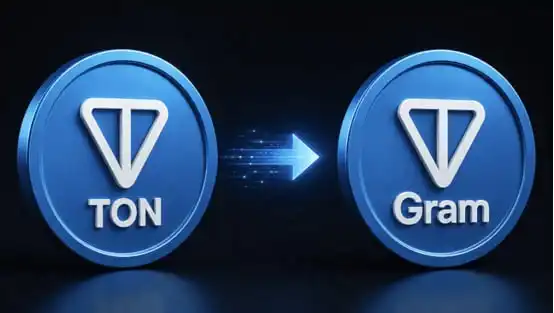
After a community vote with over 81% support, The Open Network (TON) is officially renaming its native token from Toncoin back to Gram (with ticker GRAM), effective June 15. This move reclaims the original name from the project's 2018 inception under Telegram, before regulatory issues forced its halt. The rebrand to Gram is part of the "Make TON Great Again" strategy and is seen as more than a simple logo change. It aims to leverage the historical brand recognition and narrative associated with Telegram’s initial vision of a global blockchain network. Gram evokes the original story of bringing crypto to Telegram's massive user base. This shift comes as TON is experiencing significant growth, driven by Telegram's over 1 billion monthly active users and viral mini-apps like Notcoin. The ecosystem is expanding in wallets, active addresses, and payment use cases. Analysts suggest the name change could strengthen TON's unique identity in a crowded Layer 1 market by deepening its association with Telegram's vast distribution channel. While potentially boosting short-term market attention, the long-term focus remains on Gram's utility within Telegram's evolving ecosystem, particularly for payments, transfers, and mini-app transactions. The ultimate goal is for Gram to become a widely used digital currency within one of the world's largest social platforms.

Author: Winnie, CryptoPulse Labs

On June 9th, the results of the TON Vote community governance were announced. Over 81% of voters supported changing the native token name from Toncoin to Gram, and the token code will also change from TON to GRAM, with the changes scheduled to take effect officially on June 15th.

On the surface, this seems like just a brand upgrade, but for old players who experienced the Telegram token issuance saga, the name "Gram" carries the initial ideals and story of TON.

More importantly, against the backdrop of Telegram's monthly active users exceeding 1 billion, the TON ecosystem re-entering a growth cycle, and the rapid expansion of its on-chain payment and Mini App ecosystem, this renaming may be far more significant than just a logo change.

I. Behind TON's Brand Upgrade: Gram Officially Returns to the Crypto Market

Let's go back to 2018. At that time, Telegram founder Pavel Durov launched the TON (Telegram Open Network) plan, aiming to build a blockchain network covering hundreds of millions of users worldwide.

The project's whitepaper explicitly stated that the name of the network's native currency would be "Gram."
During the fervent ICO era, TON once set a fundraising record of $1.7 billion and was seen as one of the blockchain projects with the greatest potential for mass adoption.

However, in 2020, the U.S. SEC sued Telegram for allegedly conducting an unregistered securities offering. Ultimately, Telegram was forced to halt project development and refund investors.

Many thought TON was over, but the story didn't end there.

Subsequently, the open-source community took over the code and continued development. The project gradually evolved into today's The Open Network. To distinguish it from the original project, the community renamed the token to Toncoin, while keeping the token code as TON.

After several years of development, TON has re-emerged as a mainstream public chain. And now, with the token officially renamed to Gram, this name that had been dormant for years finally returns to the market's view.

An important step in the "Make TON Great Again" plan. Officials stated that this renaming is the fourth step in the "Make TON Great Again (MTGA)" seven-step strategy.

Based on public information, the TON team is driving a comprehensive brand overhaul. This upgrade mainly includes changing Toncoin to Gram, changing the TON code to GRAM, launching a new logo and visual system, synchronizing updates to wallets and ecosystem applications, and gradual adaptation by trading platforms.

It's noteworthy that only the token brand is changing; the blockchain network will maintain the name "The Open Network." In other words, the TON chain remains the TON chain, but the currency on the chain is once again called Gram.

This is similar to the Ethereum network keeping its name while ETH suddenly changes. Therefore, this is not a technical upgrade but a brand strategy adjustment.

In the crypto market, narrative is often more important than technology. For many veteran players, Gram represents TON's original dream. It is the story from 2018 that attempted to bring blockchain to hundreds of millions of global users; it is also a significant symbol of Telegram's challenge to the traditional financial system.

II. From Public Chain Competition to Brand Competition, TON is Seeking Differentiation

If we rewind two years, TON might not have had the conditions to rename, but the situation today is completely different.

Over the past year, Telegram has become one of the fastest-growing Web3 traffic portals globally. Especially after the explosion of hit applications like Notcoin and Hamster Kombat, a large number of users were exposed to on-chain assets for the first time.
The TON ecosystem's user base has rapidly expanded, with continuous growth in wallet numbers, on-chain active addresses, payment scenarios, and developer numbers.

For TON, it is no longer an experimental project; it has begun to become a large-scale ecosystem with a real user base. Against this backdrop, the timing for a brand upgrade has matured. Reviving "Gram" may be about strengthening the Telegram DNA.

In fact, "Toncoin" has always had a problem. Although it is highly aligned with the TON network name, it lacks a sufficiently distinct brand memory point.

Gram is different. This name is deeply tied to Telegram's history. Just mentioning Gram will remind veteran users of a series of keywords: Telegram, Pavel Durov, the $1.7 billion fundraising, the vision for global payments, Web3 super apps, etc. This brand equity is something Toncoin cannot provide.

For TON, re-adopting Gram is equivalent to reactivating brand value that has been dormant for years. This can help TON establish a more unique cognitive label in the fiercely competitive public chain market.

Currently, competition in the Layer1 track is intensifying. Besides Ethereum, new public chains like Solana, Sui, and Aptos are all vying for users and developers.

The technological gap is gradually narrowing, and what can truly create a difference is starting to become brand and traffic.

From this perspective, TON's biggest advantage is not TPS or gas fees, but the Telegram behind it. A global user base exceeding 1 billion is a moat difficult for other public chains to replicate. And the name Gram can further strengthen this association.

In the future, when users mention Gram, they will think not just of a token, but of the entire Telegram ecosystem. This is precisely the effect TON hopes to achieve.

III. From Token Upgrade to Ecosystem Expansion, Can Gram Open Up New Space?

Looking at historical experience, the crypto community often reacts positively to brand upgrades. Whether it's a project name change, token split, or visual upgrade, it can become a focus of short-term capital attention.

The reason is simple: a brand upgrade means a new story. And the market loves stories the most. Gram's return also possesses this attribute.
For a period of time in the future, "Gram's Revival" is likely to become a new communication theme for the TON ecosystem. For the trading market, this narrative has the potential to increase attention and capital inflows.

Of course, a name change alone cannot support prices long-term. What truly determines value remains ecosystem development. The Telegram payment system may be further improved

Compared to short-term price fluctuations, TON's future payment layout is more worthy of attention. From its inception, Gram was positioned as a digital payment currency. Its goal is not merely as an investment asset, but to become a medium of value exchange within the Telegram ecosystem.

Now, with the development of the Telegram Stars system, the expansion of the Mini App ecosystem, and the increase in on-chain payment scenarios, Gram's application space is gradually opening up.

If Telegram further integrates its payment system in the future, Gram may take on an even more central role, which is also one of the long-term logics the market is most concerned about.

Over the past few years, most public chains have been competing for developers. TON seems to have chosen a different path; it attempts to embed blockchain directly into the social platform users are already accustomed to using.

This model is somewhat similar to the development path of WeChat Pay. Users don't need to understand the underlying technology; they just need to complete payments, transfers, tipping, or game operations, with the blockchain hidden in the background.

If this model ultimately proves successful, TON could become the first Web3 network to truly achieve mass adoption by hundreds of millions of users. And Gram would be the core value carrier within this ecosystem.

Therefore, the significance of this renaming may far exceed market imagination. It is not just a brand return, but could be the beginning of TON redefining its own positioning.

Conclusion

For the market, Gram is not just a token name; it represents the dream Telegram once had of building a global digital economic network.

And now, against the backdrop of Telegram's traffic, on-chain payments, the Mini App ecosystem, and the continuous integration of AI applications, this dream may be getting a second chance.

In the coming years, what's truly worth watching may not be that TON changed its name. It is whether Gram can leverage Telegram's vast user network to grow into the crypto industry's first genuinely global internet currency.

Pertanyaan Terkait

QWhat was the result of the TON Vote community governance on June 9th regarding the native token's name?

AThe result of the TON Vote community governance on June 9th showed that over 81% of voters supported changing the native token name from Toncoin to Gram, with the token code changing from TON to GRAM. This change was planned to take effect officially on June 15th.

QWhat is the historical significance of the name 'Gram' for the TON project?

AThe name 'Gram' holds historical significance as it was the original name for the native currency in the 2018 whitepaper of the TON (Telegram Open Network) project launched by Telegram founder Pavel Durov. It represents the initial vision and story of TON, which was later halted due to a lawsuit from the U.S. SEC in 2020, before being revived by the open-source community.

QAccording to the article, what is the 'Make TON Great Again (MTGA)' plan and where does the token rename fit into it?

AThe 'Make TON Great Again (MTGA)' plan is a seven-step strategic initiative by the TON team. The token rename from Toncoin to Gram is the fourth step in this plan, which is part of a broader brand reshuffling effort that also includes a new logo, visual identity, and updates across wallets, ecosystem applications, and trading platforms.

QHow does the article describe the current competitive advantage of TON compared to other Layer1 blockchains?

AThe article states that TON's biggest competitive advantage is not its TPS or gas fees, but its association with Telegram and its user base of over 1 billion monthly active users. This provides a massive, unique traffic moat that other Layer1 blockchains like Solana, Sui, and Aptos cannot easily replicate. The rebranding to 'Gram' is seen as a way to further strengthen this association.

QWhat potential long-term role does the article suggest for Gram within the Telegram ecosystem?

AThe article suggests that Gram has the potential to become a core medium of value exchange within the Telegram ecosystem, similar to how WeChat Pay functions. As Telegram expands its payment systems (like Telegram Stars), Mini App ecosystem, and on-chain payment scenarios, Gram could evolve into the first truly global internet currency for the crypto industry, facilitated by Telegram's vast user network.

Bacaan Terkait

Bitcoin Melepaskan Diri dari Likuiditas M2 Global Saat Pasokan Uang Mencatat Rekor Tertinggi

Bitcoin kembali menguji salah satu asumsi makro kripto favorit: bahwa likuiditas global yang meningkat pada akhirnya mendorong BTC lebih tinggi. Menurut data 16 Juni, likuiditas M2 global telah melampaui rekor $135 triliun, sementara Bitcoin tetap jauh di bawah puncak Oktober 2025 dan diperdagangkan di kisaran pertengahan $60.000-an. Perbedaan ini menarik perhatian karena Bitcoin sering bergerak seiring likuiditas global dalam siklus sebelumnya. Namun, kali ini hubungannya tampak kurang langsung. Ada dua argumen utama: 1. **Argumen Rally Menyusul:** Pandangan bullish menyatakan Bitcoin tertinggal, bukan rusak korelasinya. Likuiditas masih kuat, tetapi butuh waktu untuk berpindah dari bank sentral ke aset berisiko. Jika hubungan lama bertahan, BTC mungkin akhirnya menyusul. 2. **Argumen Perubahan Rezim:** Pandangan lebih hati-hati menyebut struktur pasar Bitcoin telah berubah. ETF spot, aliran institusi, dolar yang kuat, dan rotasi modal ke saham AI mungkin mengubah respons BTC terhadap likuiditas. Likuiditas mungkin menjadi salah satu faktor di antara banyak faktor lainnya, bukan variabel utama. Bagi trader, kesimpulan yang berguna adalah tidak memilih satu model secara membabi buta. Divergensi ini perlu dipantau karena menciptakan pertanyaan makro yang jelas: apakah Bitcoin tertunda, atau apakah korelasinya melemah? Jawabannya akan membentuk interpretasi peserta pasar terhadap setiap rilis likuiditas besar ke depan. Dalam hal trading, kerangka kerja validasi menjadi jelas. Jika M2 global tetap tinggi dan Bitcoin mulai merebut kembali level resistensi kunci, argumen *catch-up* akan menguat. Jika BTC terus tertinggal sementara likuiditas berkembang, pandangan perubahan rezim harus dipertimbangkan lebih serius. Intinya, perkembangan ini memberi trader sesuatu yang konkret untuk diuji, bukan sekadar narasi bullish yang samar.

bitcoinist15m yang lalu

Bitcoin Melepaskan Diri dari Likuiditas M2 Global Saat Pasokan Uang Mencatat Rekor Tertinggi

bitcoinist15m yang lalu

Blok Dovish di Fed Secara Kolektif Beralih ke Hawkish, Debut Warsh 'Dilematis'

Para pembuat kebijakan di Federal Reserve (Fed) yang sebelumnya mendukung suku bunga rendah (dovish), termasuk Christopher Waller, baru-baru ini menyatakan mereka tidak menutup kemungkinan untuk menaikkan suku bunga. Hampir tidak ada anggota Komite yang masih menganjurkan pemotongan suku bunga. Pertemuan pertama yang dipimpin oleh Ketua baru Fed, Kevin Warsh, diperkirakan akan mengirimkan sinyal bahwa langkah berikutnya Fed mungkin adalah kenaikan suku bunga. Warsh, yang diangkat oleh Presiden Trump karena posisinya yang mendukung pemotongan suku bunga tahun lalu, kini menghadapi situasi yang sulit. Inflasi AS terus melampaui 3%, pasar tenaga kerja menguat, dan tekanan dari harga minyak serta hambatan pasokan mendorong kenaikan harga. Alasan-alasan yang mendasari ekspektasi pemotongan suku bunga satu per satu menghilang. Pergeseran sikap ini terlihat jelas. Waller, yang sebelumnya mendukung pemotongan, kini mengatakan dia tidak dapat lagi mengesampingkan kemungkinan kenaikan suku bunga di masa depan. Anggota dewan lain seperti Lisa Cook juga mulai bersikap terbuka terhadap opsi kenaikan jika inflasi tidak turun tepat waktu. Sementara itu, anggota yang lebih hawkish seperti Beth Hammack dan Lorie Logan telah lama mempertanyakan perlunya pemotongan dan sekarang mengkhawatirkan perlunya kenaikan suku bunga jika tren saat ini berlanjut. Pada pertemuan mendatang, Fed diperkirakan akan mempertahankan suku bunga namun menghapus bahasa 'bias longgar' dari pernyataannya, yang menyiratkan bahwa kenaikan dan penurunan suku bunga dianggap memiliki kemungkinan yang sama. 'Dot plot' triwulanan juga diperkirakan akan menunjukkan bahwa sebagian besar pejabat memperkirakan suku bunga akan tetap tidak berubah tahun ini, dengan beberapa bahkan mungkin memproyeksikan kenaikan. Warsh, yang telah lama mengkritik alat komunikasi Fed seperti 'dot plot', kini harus menyampaikan perubahan arah kebijakan ini menggunakan alat-alat yang dikritiknya, dengan komite yang tidak dipilihnya, menuju arah yang bertentangan dengan keinginan presiden yang menunjuknya. Intinya, pembicaraan di dalam Fed telah bergeser dari 'kapan menurunkan' menjadi 'apakah harus menaikkan' suku bunga.

marsbit25m yang lalu

Blok Dovish di Fed Secara Kolektif Beralih ke Hawkish, Debut Warsh 'Dilematis'

marsbit25m yang lalu

Siapa "Raja Value for Money" di antara "Yi-Zhong-Tian" yang Bernilai Pasar Satu Triliun?

Penulis blog Douyin "Li Yien" telah menemukan resep suksesnya dengan berseru setiap hari, "Waktulah yang akan membuktikan modul optik dan daya komputasi!" Slogan ini telah mendorong popularitasnya, mencerminkan minat tinggi terhadap saham-saham "Yi Zhong Tian"—sebutan untuk tiga raksasa modul optik di pasar A-saham Tiongkok: Xinyisheng, Zhongji Innolight, dan TFC Optical Communication. Sejak April 2025, saham mereka melonjak 10 hingga 17 kali lipat, menciptakan kekayaan yang luar biasa. Namun, pada Juni 2026, sentimen berubah dengan koreksi tajam, memicu pertanyaan tentang saham mana yang paling bernilai. Artikel ini menganalisis "Yi Zhong Tian" menggunakan tiga tolok ukur: PEG (harga/pertumbuhan), kualitas laba, dan diskon/premi untuk kepastian. **Xinyisheng** tampak sebagai "raja nilai" secara angka dengan PEG terendah (0,30) dan margin kotor di atas 47%, didorong oleh integrasi vertikal. Namun, diskonnya mencerminkan risiko seperti ketergantungan pada beberapa pelanggan besar (78% pendapatan dari luar negeri) dan ketidakpastian keberlanjutan pertumbuhannya yang meledak-ledak. **Zhongji Innolight** adalah pilihan "kepastian yang mahal". Sebagai pemimpin pasar dengan pangsa lebih dari 50% untuk modul 800G NVIDIA dan keunggulan dalam 1.6T, kinerjanya solid—laba kuartal pertama 2026 saja melebihi total laba 2024. Namun, valuasi P/E-nya 40% lebih tinggi dari Xinyisheng, dan risiko geopolitik (seperti daftar "1260H" Departemen Pertahanan AS) menjadi ancaman konstan bagi perusahaan dengan 86,8% pendapatan dari luar negeri. **TFC Optical Communication** adalah "kepastian termahal" yang bertaruh pada arsitektur masa depan (CPO/NPO). Sebagai pemasok komponen inti (mesin optik, perangkat) ke pabrikan modul, ia menikmati margin kotor tertinggi (>50%) dan posisi stabil di hilir. Namun, pertumbuhannya lebih halus, valuasi P/E-nya sangat tinggi (~122x), dan perbedaan ekspektasi kinerja dapat mengecewakan pasar. Analisis ini mengungkap perbedaan mendasar: Xinyisheng dan Zhongji adalah "restoran" yang menjual modul jadi, sedangkan TFC adalah "pemasok air". Membandingkannya secara langsung adalah kesalahan. Terakhir, artikel menantang narasi kemenangan dengan menyoroti bahwa kolam laba sebenarnya berada di hulu—pada chip laser dan chip switching yang dikuasai perusahaan AS seperti Lumentum dan Coherent. "Yi Zhong Tian" mendominasi tahap perakitan, tetapi arsitektur CPO masa depan justru dapat memperkuat posisi pemain hulu AS. Upaya Tiongkok, seperti Yuangjie Technology yang mengembangkan chip laser berdaya tinggi, adalah kunci untuk merebut nilai tambah ini. Jadi, ukuran nilai jangka panjang sesungguhnya bukanlah PEG terendah, tetapi apakah industri modul optik Tiongkok dapat naik ke rantai nilai yang lebih tinggi. Waktu akan menjawab apakah modul optik dan daya komputasi terbukti, tetapi investor harus memahami di mana sebenarnya mereka "berdiri dalam cahaya".

marsbit34m yang lalu

Siapa "Raja Value for Money" di antara "Yi-Zhong-Tian" yang Bernilai Pasar Satu Triliun?

marsbit34m yang lalu

Apakah Pasar Kripto Sudah Mencapai Titik Terendah? Begini Pandangan Para Institusi

Artikel ini merangkum tiga laporan penelitian dari Galaxy Digital, NYDIG, dan Standard Chartered tentang apakah pasar kripto, khususnya Bitcoin, telah mencapai titik terendah (bottom). **Tiga Pandangan Berbeda:** * **Galaxy Digital:** Belum mencapai bottom. Berdasarkan analisis 13 indikator historis, hanya 4 yang terpenuhi. Mereka memperkirakan kisaran bottom antara $30.000 - $54.000, dengan perkiraan netral $40.000 - $46.000. * **NYDIG:** Mungkin sudah bottom, tetapi kemungkinannya kecil. Meski banyak indikator mendekati level terendah historis, belum ada kepanikan jual besar-besaran yang khas. Namun, masuknya modal institusi bisa berarti koreksi kali ini lebih dangkal dari siklus bear market sebelumnya. * **Standard Chartered:** Sudah bottom di $59.000. Alasan utamanya adalah kemungkinan kesepakatan diplomatik AS-Iran dan IPO SpaceX akan mengurangi tekanan jual dari investor ETF. **Konsensus Penting bagi Investor Jangka Panjang:** Meski berbeda pada level harga bottom, ketiga laporan memiliki kesepakatan kunci: 1. Titik terendah pasar **akan terjadi dalam tahun ini**. 2. Harga saat ini **lebih dekat ke bottom daripada ke puncak sebelumnya**. 3. **Mereka tetap optimis** Bitcoin akan mengalami bull run baru di masa depan. **Poin Penting:** Bagi investor jangka panjang, perbedaan prediksi bottom ($40k, $50k, atau $59k) kurang krusial dibandingkan potensi kenaikan jangka panjang ke level $100.000 atau lebih. Logika dasar nilai Bitcoin jangka panjang—seperti inflasi, utang pemerintah, dan adopsi digital—terus menguat. Fokus seharusnya bukan hanya "apakah sudah bottom?", tetapi "apakah puncak sudah terlihat?" Selama puncak belum tercapai, Bitcoin tetap memiliki nilai sebagai aset jangka panjang.

marsbit45m yang lalu

Apakah Pasar Kripto Sudah Mencapai Titik Terendah? Begini Pandangan Para Institusi

marsbit45m yang lalu

Kesulitan dan Perjuangan Industri Rantai Pasok "Chip" Cahaya dalam Negeri

Dalam perlombaan AI global, modul optik adalah komponen kritis untuk menghubungkan dan mensinkronisasi ribuan GPU dalam pelatihan model besar. Dua perusahaan AS, Marvell dan Broadcom, mendominasi pasar chip DSP (Digital Signal Processor) berkecepatan tinggi (800G/1.6T), yang penting untuk modul optik AI canggih, dengan pangsa gabungan diperkirakan lebih dari 90%. Produsen modul optik Tiongkok terkemuka dunia seperti Zhongji Innolight dan Eoptolink sangat bergantung pada chip ini untuk ekspor ke pasar AI luar negeri, terutama AS. Sementara itu, chip laser EML berkecepatan tinggi, komponen kunci lainnya, juga didominasi oleh pemasok seperti Lumentum. Namun, lanskap pemasok di segmen ini lebih beragam, dan kemajuan substitusi domestik Tiongkok lebih cepat dibandingkan dengan DSP. Risiko gangguan pasokan dari pemasok AS memang ada, tetapi hubungannya saling bergantung: Marvell dan Broadcom mengandalkan pasar manufaktur dan rantai pasok Tiongkok. Untuk mengurangi risiko, industri Tiongkok dapat melakukan diversifikasi pemasok, memperpanjang persediaan, serta mengembangkan pasar domestik dan regional. Solusi jangka panjang terletak pada percepatan substitusi domestik untuk chip DSP dan optik berkecepatan tinggi, didukung oleh pasar komputasi dalam negeri yang besar. Teknologi baru seperti Silicon Photonics dan CPO juga berpotensi mengurangi ketergantungan di masa depan. Meskipun jalan menuju swasembada penuh membutuhkan waktu dan investasi berkelanjutan, fondasi industri yang kuat dan kemajuan teknologi domestik menawarkan jalur untuk mengamankan otonomi dalam rantai pasok optik.

marsbit57m yang lalu

Kesulitan dan Perjuangan Industri Rantai Pasok "Chip" Cahaya dalam Negeri

marsbit57m yang lalu

Trading

Spot
Futures
活动图片