Aave Is Surrendering the Throne of DeFi Lending Due to Its Own Stupidity

Odaily星球日报Dipublikasikan tanggal 2026-04-24Terakhir diperbarui pada 2026-04-24

Abstrak

Aave, a leading DeFi lending protocol, is facing a severe crisis and losing its dominant market position due to its poor handling of a recent security incident. The crisis began when Kelp DAO suffered a hack resulting in a loss of $292 million in rsETH. In the aftermath, approximately $17.2 billion in funds flowed out of Aave as user panic escalated. The article criticizes Aave's crisis management as "extremely foolish." Instead of promptly offering reassurance or committing to cover the potential bad debt—estimated between $123.7 million and $230.1 million, which Aave could have afforded—the protocol initially deflected blame, emphasizing that its code was not at fault. This delay and lack of a clear guarantee led to widespread user anxiety, triggering a bank run-like scenario where users withdrew funds or borrowed aggressively from other pools, causing liquidity shortages. Meanwhile, Aave’s competitor Spark—a fork of Aave’s own code—has benefited significantly. Having removed support for rsETH months earlier, Spark avoided any losses from the incident and has since seen its TVL grow by nearly $2 billion, attracting major deposits such as over $1.24 billion from Justin Sun. Spark has actively capitalized on the situation, publicly criticizing Aave’s security reputation. Although Aave’s founder Stani eventually announced a relief plan named "DeFi United" with several partners and a personal donation, the damage to user trust and capital outflows may be irreversible. The ar...

Original | Odaily Planet Daily (@OdailyChina)

Author | Azuma (@azuma_eth)

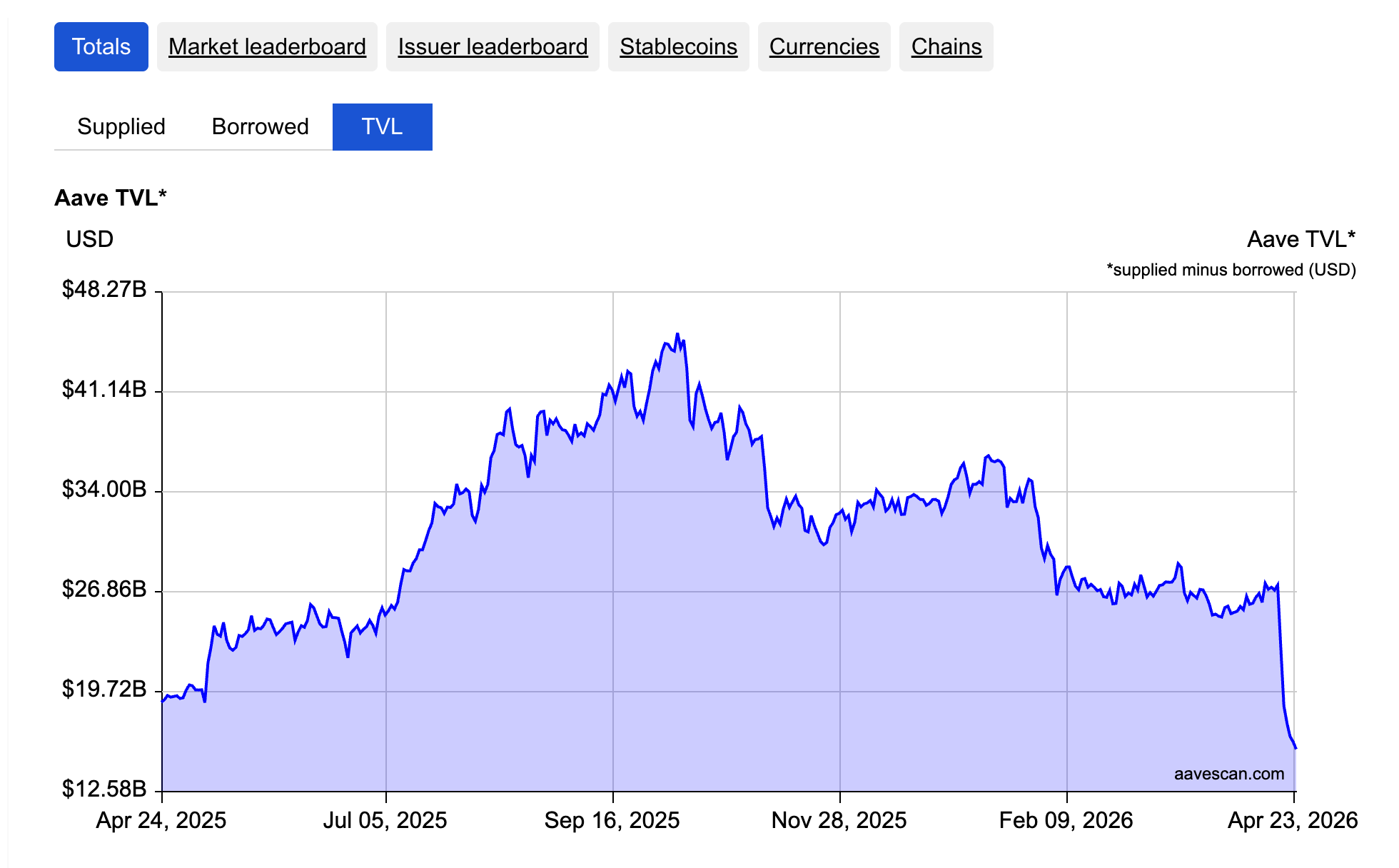
$292 million, this is the total amount of rsETH funds stolen from Kelp DAO; $17.2 billion, this is the scale of funds that have flowed out of Aave since the incident.

Aave is watching as its extremely foolish crisis PR strategy allows community panic to ferment for several consecutive days, thereby losing its former biggest advantage in the lending track — hundreds of billions of dollars in deposited funds and the user perception label of "the safest DeFi".
  • Odaily Note: For background, please refer to "DeFi Hacked Again for $292 Million, Is Aave Not Safe Anymore?"; "The Tripartite Game Under the $290 Million Hole: Who Will Pay, Aave, L0, or Kelp?".

What Did Aave Do Wrong?

The details of the Kelp DAO hack incident need not be repeated. There's no point in blaming Aave for giving rsETH such a high LTV anymore. Here, I mainly want to discuss Aave's response strategy after the incident from the perspective of a long-term AAVE user.

First is the bad debt scale issue. Aave itself has done the math. Depending on the different handling of rsETH, there could be two possibilities for bad debt — If the stolen loss is written off from all circulating rsETH, it is expected to generate $123.7 million in bad debt; If the value of mainnet rsETH is protected, and the loss is fully accounted for in the mapped version of rsETH on Layer2, it is expected to generate $230.1 million in bad debt.

In either case, Aave has the financial strength to cover it with its Umbrella, DAO treasury, and team reserves. I understand that Aave is unwilling to pay this money itself and wants Kelp DAO, the main responsible party, and LayerZero, the secondary responsible party, to also contribute more. But the problem is, the other parties think the same way — "Aave is so rich, the situation is so awkward, surely they should bear more." Therefore, in the short term, it's difficult for these three parties to reach a consensus, meaning a solution that satisfies everyone is temporarily impossible.

But users cannot wait that long — Aave's yield levels have never been very competitive in the industry. Users who choose to deposit funds with Aave do so for its reputation, security, and liquidity. However, the current situation is that in the most critical days following the incident, Aave consistently failed to give users some kind of bottom-line guarantee promise, instead repeatedly emphasizing "our code is not the problem" and "Aave cannot control how rsETH is accounted for" to shift blame.

This is why panic continued to ferment within the community. Users tried every means to escape the risk, withdrawing directly if they could, or borrowing from other pools if they couldn't withdraw, causing the impact to gradually expand. So Aave's current situation is, on one hand, facing continuous fund outflows, and on the other hand, multiple pools are experiencing liquidity drying up due to utilization rates being maxed out.

This awkward situation could have been avoided (or at least not been this bad)...... Since Aave can afford the money, why not inject a dose of reassurance into the community from the start to prevent a bank run? At most, it's $230 million in bad debt (possibly less), and this money wouldn't necessarily be paid by Aave alone; they could negotiate with LayerZero and Kelp DAO later.

Now, it's done. For the sake of saving on a promise of relief worth at most $230 million, Aave watched as $17.2 billion in deposited funds flowed out (the number may continue to grow), and this doesn't even include the decline in the AAVE token price these days...... by any calculation, it's a disastrously bad deal.

What makes Aave even more uncomfortable is that the worse its situation becomes, the more relaxed opponents like LayerZero and Kelp DAO will be, because they will judge that Aave will be more motivated to solve the problem as soon as possible, which only puts Aave at a disadvantage in the博弈 (game theory).

Having reached this point, Aave has brought this upon itself.

Behind Aave, Spark Is Watching Closely

While Aave is suffering from headaches, the situation for its competitor Spark is booming and extremely positive. What's even more lamentable is that Spark is a competitor that Aave "personally incubated".

Spark was originally a lending protocol forked and developed by Sky (formerly MakerDAO) based on the open-source code of Aave V3. Both sides actually use the same underlying code logic. In return, there was once a profit-sharing agreement between Spark and Aave, but later Aave accused Spark of allegedly breaching the contract, and due to route differences, the two are now in a purely competitive relationship.

Three months before the Kelp DAO theft, Spark had just removed support for rsETH (for details, see "Different Fates on the Same Day: Aave Embraces rsETH and Loses Nearly $200M, Spark Exits Unscathed"). You can call it strategic conservatism, rigorous risk control, or even attribute it entirely to luck, but the result is that Spark was completely unaffected by this incident — on this point alone, Spark can brazenly attack Aave's former label of "safest DeFi".

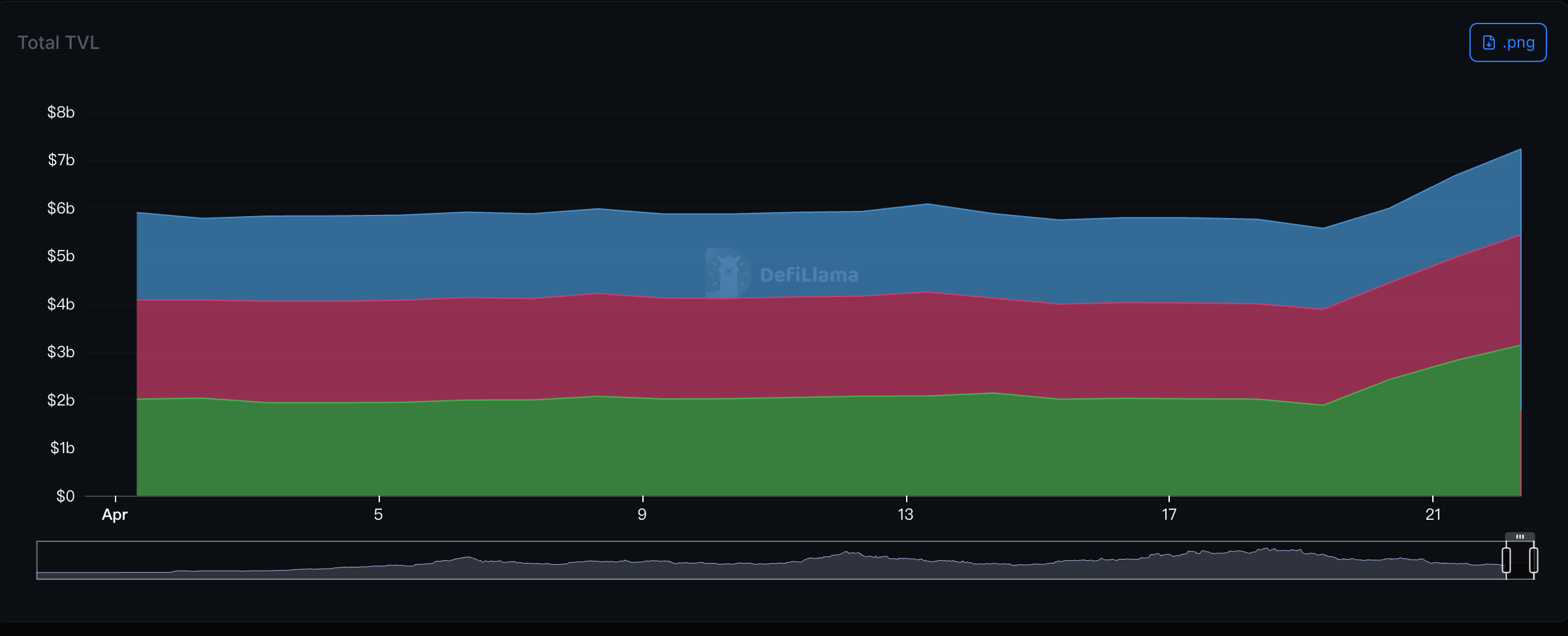
Consequently, Spark became one of the safe havens for funds fleeing Aave. Since the incident, Spark's TVL has grown by nearly $2 billion (green part in the chart below). On the day of the incident, Justin Sun withdrew 53,665 ETH (worth $124 million) from Aave and subsequently deposited it into Spark. After further accumulation in recent days, the total deposit has reached $1.3 billion — In the DeFi world, Brother Sun's (Justin Sun) moves are really something to learn.
On April 23rd, Upbit officially announced the launch of the Spark (SPK) Korean Won trading market. SPK, stimulated by this positive news, surged over 80% in a single day, significantly narrowing the market capitalization gap with AAVE.

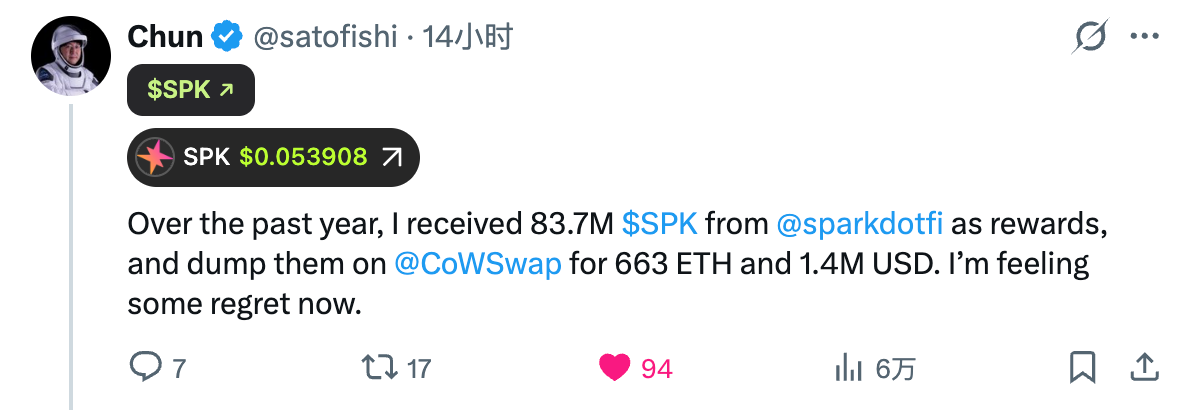
Even Wang Chun, founder of F2Pool, lamented on X: "In the past year, I received 83.7 million SPK rewards from Spark and sold them on CoWSwap for 663 ETH and $1.4 million. Now I kind of regret it."
Spark clearly realizes this is a perfect opportunity to seize market share from Aave's mouth. Since the incident, Spark's Strategy Lead, MonetSupply, has almost become the most vocal KOL on this matter, posting dozens of times a day. Although his comments do help the public understand what happened to some extent, they also objectively exacerbate the panic surrounding Aave.

But this is the purest form of commercial competition. MonetSupply simply made the most correct choice.

Aave Is Losing the Throne of DeFi Lending

In the early hours of April 24th, perhaps realizing the severity of the current situation, Aave founder Stani announced on X the launch of a relief plan called DeFi United. Participating collaborators include LayerZero, Ethena, ether.fi, Ink Foundation, Golem Foundation, Trydo, etc. Stani personally will also donate 5,000 ETH to help resolve the current issue.

But the funds have already flowed out, and user trust has been severely damaged. Relying solely on this belated statement, it will be difficult for Aave to quickly recover the deposited funds and user trust.

The DeFi lending track has long presented a "one superpower, many strong powers" pattern, with Aave一直以来 (yīzhí yǐlái - all along) having a seemingly extremely solid leading advantage. But now, Aave is surrendering the throne. Behind it, challengers are approaching menacingly. Besides the booming Spark, other opponents like Morpho and Jupiter Lend also hope to take a bite out of Aave's share.

Last year, Stani bought a five-story mansion in London for approximately $30 million, one of the most expensive transactions in the UK's sluggish luxury property market over the past year. I don't know if there's something like a "jinx," but following the examples of Su Zhu and others, it seems like big shots in the circle who consume conspicuously always run into some bad luck.

I can't guess what Stani is thinking right now in his five-story mansion.

Pertanyaan Terkait

QWhat was the main reason for the massive outflow of funds from Aave following the Kelp DAO hack?

AAave's poor crisis management strategy, which failed to provide timely reassurance or a bailout guarantee to its users, leading to widespread panic and a bank run.

QWhat are the two potential bad debt scenarios calculated by Aave for the rsETH incident, and what are the amounts?

AIf the stolen loss is written off from all rsETH, the bad debt would be approximately $123.7 million. If the value of mainnet rsETH is protected and the loss is fully accounted for in the Layer2 mapped version of rsETH, the bad debt would be approximately $230.1 million.

QWhich competitor protocol directly benefited from the funds flowing out of Aave, and what was the approximate amount of TVL it gained?

ASpark Protocol directly benefited, gaining nearly $2 billion in Total Value Locked (TVL) following the incident.

QWhat was the name of the relief plan announced by Aave founder Stani Kulechov in response to the crisis, and what was his personal contribution?

AThe relief plan was named 'DeFi United'. Stani Kulechov personally donated 5,000 ETH to help resolve the situation.

QAccording to the article, what was the primary reason users traditionally deposited funds into Aave, given its uncompetitive yield rates?

AUsers primarily deposited funds into Aave due to its reputation for safety, security, and liquidity, not for competitive yield rates.

Bacaan Terkait

Peringatan Terbaru Dalio: Jangan Terlalu Tergila-gila dengan AI, Imbal Hasil Ril AS Kemungkinan -5% hingga -10% dalam 5-10 Tahun Mendatang

Ray Dalio, pendiri Bridgewater, memperingatkan bahwa pasar saham AS saat ini didominasi oleh segelintir perusahaan di sektor AI, menciptakan risiko konsentrasi yang tinggi. Berdasarkan pengalaman 50 tahunnya, Dalio menekankan bahwa pada tahap siklus seperti ini, bertaruh besar pada segelintir perusahaan teknologi baru sering berakhir dengan kegagalan bagi sebagian besar investor. Meskipun AI adalah teknologi revolusioner, ketidakpastian yang melekat pada perusahaan-perusahaan ini sangat besar. Mereka menghadapi risiko seperti persaingan global (terutama dari China), perubahan kebijakan, gejolak geopolitik, dan potensi terdisrupsi oleh teknologi yang lebih baru. Dalio menyatakan fakta bahwa risiko tinggi tak terbantahkan, sambil memberikan pandangannya bahwa imbal hasil riil pasar saham AS dalam 5-10 tahun ke depan mungkin sekitar -5% hingga -10%. Solusinya adalah **diversifikasi**. "Piala Suci" investasinya adalah membangun portofolio sekitar 15 posisi bagus yang tidak berkorelasi dan menyeimbangkan risikonya. Secara matematis, portofolio yang terdiversifikasi dengan baik dapat menghasilkan rasio imbal hasil/risiko yang jauh lebih baik daripada taruhan terkonsentrasi, bahkan dengan imbal hasil yang sama. Kesimpulannya, Dalio menyarankan untuk tidak terbawa euphoria AI. Alih-alih berkonsentrasi pada saham-saham teknologi yang berisiko tinggi dan berkorelasi tinggi, investor harus menyadari ketidaktahuan mereka dan melindungi diri melalui diversifikasi yang cerdas untuk mencapai imbal hasil yang menarik dengan risiko yang lebih rendah.

marsbit11m yang lalu

Peringatan Terbaru Dalio: Jangan Terlalu Tergila-gila dengan AI, Imbal Hasil Ril AS Kemungkinan -5% hingga -10% dalam 5-10 Tahun Mendatang

marsbit11m yang lalu

Valuasi Rain Mendekati $20 Miliar: Perang Kartu U Tiba di Sistem Hadiah

Rain, perusahaan infrastruktur pembayaran stablecoin yang bernilai hampir $20 miliar, kini memperluas layanannya dengan meluncurkan Rain Rewards. Program loyalitas ini terintegrasi langsung ke dalam infrastruktur penerbitan kartu Rain, memungkinkan mitra (seperti perusahaan, fintech, atau bank) dengan mudah membuat program reward merek sendiri untuk meningkatkan keterlibatan dan retensi pengguna. Data uji coba dengan Avalanche Card menunjukkan peningkatan belanja 25% pada pengguna yang bergabung. Inti bisnis Rain adalah menyediakan "sistem belakang" yang memungkinkan entitas bisnis menerbitkan kartu (kredit/prepaid) dan dompet yang didukung stablecoin, serta mengakses penyelesaian lintas batas, pengelolaan risiko, dan now, sistem reward. Sebagai Anggota Principal Visa dan Mastercard, Rain bertindak sebagai lapisan penghubung antara aset on-chain dan jaringan pembayaran tradisional. Perkembangan pesat Rain tercermin dari putaran pendanaan berturut-turut: $24.5 juta (Seri A, Maret 2025), $58 juta (Seri B, Agustus 2025), dan $250 juta (Seri C, Januari 2026) yang mendorong valuasinya menjadi $19.5 miliar. Rain juga berinovasi dengan fitur seperti Agent Control Layer untuk mengatur pembayaran otomatis oleh AI Agent. Dengan mengintegrasikan rewards, kontrol agen, dan infrastruktur inti, Rain membangun sistem operasi pembayaran stablecoin yang lengkap, menargetkan aliran dana on-chain ke dalam skenario pembayaran sehari-hari baik oleh manusia maupun mesin.

Foresight News15m yang lalu

Valuasi Rain Mendekati $20 Miliar: Perang Kartu U Tiba di Sistem Hadiah

Foresight News15m yang lalu

Sinyal Pasar Bawah Sejarah Terulang? Messari yang Bernilai 3 Miliar Terjual Murah 10 Juta

Penanda Sinyal Sejarah Terulang? Messari yang Pernah Bernilai $300 Juta Terjual Murah $10 Juta Messari, yang pernah menjadi platform data kripto terdekat dengan Bloomberg dan bernilai $300 juta pada 2022, baru-baru ini dijual kepada pesaingnya Blockworks dengan harga hanya sekitar $10 juta. Penurunan dramatis ini bukan hanya kisah satu perusahaan. AI menjadi ancaman struktural bagi bisnis inti Messari, yaitu laporan penelitian dan data. Di saat yang sama, industri secara keseluruhan mengalami kontraksi mendalam: platform data seperti DappRadar dan Parsec tutup, media seperti CoinDesk dijual murah, dan perusahaan seperti Dune melakukan PHK besar-besaran. Venture Capital (VC) juga mundur. Investasi VC kripto anjlok lebih dari 80% dalam 6 bulan, dana dan perhatian dialihkan ke AI. Banyak firma VC kripto legendaris berhenti beroperasi atau memperluas fokus ke luar kripto, dengan salah satu mitra Dragonfly Capital menyebut situasi saat ini sebagai "kepunahan massal". Namun, kondisi suram ini mungkin justru merupakan sinyal bottom historis. Indeks Fear & Greed Kripto telah lama berada di zona "ketakutan ekstrem", mirip dengan momen sebelum siklus bull sebelumnya. Pemegang jangka panjang Bitcoin mengontrol hampir 80% pasokan yang beredar, pola yang biasanya terlihat di area bawah pasar. Aktivitas VC yang rendah juga mirip dengan periode sebelum ledakan DeFi pada 2020. Beberapa pelaku pasar justru melihat peluang dalam keputusasaan ini. Dragonfly Capital baru saja mengumpulkan dana baru senilai $650 juta, sementara Blockworks, yang membeli Messari, dengan sengaja mengkonsolidasi industri data kripto. Sejarah menunjukkan bahwa titik balik besar sering kali dimulai ketika semuanya terlihat paling suram.

marsbit1j yang lalu

Sinyal Pasar Bawah Sejarah Terulang? Messari yang Bernilai 3 Miliar Terjual Murah 10 Juta

marsbit1j yang lalu

Volume Pengiriman TPU Google Dinaikkan 50%

Kebutuhan AI akan daya komputasi terus meningkat, dan pasar sedang mengalami koreksi ekspektasi penting. Beberapa lembaga luar negeri secara diam-diam telah merevisi perkiraan pengiriman Google TPU ke atas. Dari perkiraan awal 10 juta unit untuk tahun 2027, penelitian industri terbaru menunjukkan angka ini dapat dinaikkan menjadi 15 juta unit, peningkatan 50%. Peningkatan signifikan dalam volume TPU ini akan langsung mengalir ke seluruh rantai pasokan. Skema interkoneksi optik penuh yang standar pada kluster TPU Google berarti kebutuhan perangkat keras pendukungnya kaku dan hampir tetap, termasuk NPO Optical Engine (yang dipasangkan 1:1 dengan TPU), modul optik 1.6T, OCS Optical Switch, catu daya server, serta kabel serat optik dan konektor MPO. Setiap kenaikan ekspektasi pengiriman TPU akan mendorong ekspektasi kinerja seluruh rantai ini. Di antara segmen-segmen ini, pendinginan cair (*liquid cooling*) muncul sebagai arah inti dengan perubahan terbesar. Dengan peningkatan daya chip TPU generasi baru, solusi pendingin tradisional sudah tidak memadai. Tahun 2026 diprediksi menjadi tahun peluncuran besar-besaran pendinginan cair untuk Google. Selain akselerasi kinerja, pola persaingan global sedang berubah. Produsen luar negeri menghadapi kendala kapasitas dan teknologi, membuka peluang bagi produsen domestik China untuk masuk ke rantai pasokan inti Google dengan keunggulan iterasi cepat dan kapasitas memadai. Pasar pendinginan cair khusus Google diproyeksikan melonjak dari level ratusan miliar menjadi 300 miliar dalam dua tahun, didorong oleh peningkatan volume dan nilai per unit. Logika di pasar serat optik juga diperbarui. Kebutuhan akan interkoneksi padat di pusat data AI telah mengubahnya dari komoditas siklus menjadi sumber daya strategis. Siklus ekspansi yang panjang untuk preform serat optik (18-24 bulan) menciptakan ketidakseimbangan pasokan dan permintaan global. Vendor cloud besar seperti Google mengamankan pasokan jangka panjang. Produsen serat optik China, dengan keunggulan kapasitas dan biaya, diperkirakan akan mendominasi hampir setengah dari permintaan global untuk serat AIDC pada 2026. Selain itu, peningkatan pasokan TPU juga mendorong pemulihan di segmen pendukung lain seperti modul optik 1.6T dan catu daya server bertegangan tinggi, di mana produsen China juga mendapat peluang substitusi. Intinya, fokus investasi beralih dari spekulasi chip ke pertumbuhan pasti infrastruktur pendukung komputasi. Revisi besar pasokan TPU Google ini mengunci visibilitas kinerja untuk dua tahun ke depan di seluruh rantai industri.

marsbit1j yang lalu

Volume Pengiriman TPU Google Dinaikkan 50%

marsbit1j yang lalu

Setelah Cerita Dunia Kripto Meredup, Apa yang Sebenarnya Diinginkan Wall Street?

Penulis: Blockchain in Plain Language Pada musim gugur 2008, saat Lehman Brothers runtuh, Satoshi Nakamoto meluncurkan Bitcoin dengan pesan sindiran terhadap sistem keuangan tradisional. Setelah 17 tahun, situasinya berbalik. Alih-alih mengadopsi narasi spekulatif "decentralized", Wall Street kini membangun infrastruktur keuangan tradisional yang dikendalikan dan sesuai regulasi di atas teknologi blockchain. Inti transformasi ini adalah tokenisasi aset dunia nyata. Dana BUIDL milik BlackRock, yang di-backing oleh surat utang pemerintah AS jangka pendek, telah menjadi aset dasar yang stabil di blockchain. Securitize, mitra BlackRock, akan melantai di bursa dengan valuasi $1,25 miliar dan bekerja sama dengan NYSE untuk membangun sistem penyelesaian perdagangan saham 24/7 berbasis blockchain. Wall Street juga mengemas volatilitas Bitcoin menjadi produk berpenghasilan tetap. ETF Bitcoin Premium Income (BITA) milik BlackRock akan menghasilkan pendapatan dengan menjual opsi call, mengubah Bitcoin menjadi aset yang membayar dividen bulanan. Dalam pembayaran, stablecoin kini difokuskan sebagai alat transaksi yang efisien. Stripe dan Mastercard mengintegrasikan stablecoin untuk penyelesaian pembayaran lintas batas yang instan, sementara regulasi GENIUS Act 2025 memastikan stablecoin tetap sebagai alat bayar yang tidak membayar bunga dan diawasi ketat. Kesimpulannya, Wall Street tidak lagi mengejar cerita spekulatif cryptocurrency. Mereka membangun pipa keuangan baru di blockchain yang menghasilkan pendapatan, terkendali, dan compliant—mengadopsi teknologi untuk memperkuat, bukan mengganti, sistem keuangan tradisional.

marsbit2j yang lalu

Setelah Cerita Dunia Kripto Meredup, Apa yang Sebenarnya Diinginkan Wall Street?

marsbit2j yang lalu

Trading

Spot
Futures

Artikel Populer

Cara Membeli AAVE

Selamat datang di HTX.com! Kami telah membuat pembelian Aave Protocol (AAVE) menjadi mudah dan nyaman. Ikuti panduan langkah demi langkah kami untuk memulai perjalanan kripto Anda.Langkah 1: Buat Akun HTX AndaGunakan alamat email atau nomor ponsel Anda untuk mendaftar akun gratis di HTX. Rasakan perjalanan pendaftaran yang mudah dan buka semua fitur.Dapatkan Akun SayaLangkah 2: Buka Beli Kripto, lalu Pilih Metode Pembayaran AndaKartu Kredit/Debit: Gunakan Visa atau Mastercard Anda untuk membeli Aave Protocol (AAVE) secara instan.Saldo: Gunakan dana dari saldo akun HTX Anda untuk melakukan trading dengan lancar.Pihak Ketiga: Kami telah menambahkan metode pembayaran populer seperti Google Pay dan Apple Pay untuk meningkatkan kenyamanan.P2P: Lakukan trading langsung dengan pengguna lain di HTX.Over-the-Counter (OTC): Kami menawarkan layanan yang dibuat khusus dan kurs yang kompetitif bagi para trader.Langkah 3: Simpan Aave Protocol (AAVE) AndaSetelah melakukan pembelian, simpan Aave Protocol (AAVE) di akun HTX Anda. Selain itu, Anda dapat mengirimkannya ke tempat lain melalui transfer blockchain atau menggunakannya untuk memperdagangkan mata uang kripto lainnya.Langkah 4: Lakukan trading Aave Protocol (AAVE)Lakukan trading Aave Protocol (AAVE) dengan mudah di pasar spot HTX. Cukup akses akun Anda, pilih pasangan perdagangan, jalankan trading, lalu pantau secara real-time. Kami menawarkan pengalaman yang ramah pengguna baik untuk pemula maupun trader berpengalaman.

497 Total TayanganDipublikasikan pada 2024.12.11Diperbarui pada 2026.06.02

Cara Membeli AAVE

Diskusi

Selamat datang di Komunitas HTX. Di sini, Anda bisa terus mendapatkan informasi terbaru tentang perkembangan platform terkini dan mendapatkan akses ke wawasan pasar profesional. Pendapat pengguna mengenai harga AAVE (AAVE) disajikan di bawah ini.

活动图片