JST Embarks on Its Second Buyback and Burn: Cumulative 10.96% of Total Supply Destroyed, Accelerating Entry into a New Era of Value Growth

marsbitDipublikasikan tanggal 2026-01-16Terakhir diperbarui pada 2026-01-16

Abstrak

JST, the token of the JUST ecosystem, has completed its second major buyback and burn event on January 15, 2026, permanently removing 525 million JST (5.3% of total supply) worth over $21 million. Combined with the first burn, a total of 10.96% of JST's supply has been destroyed, accelerating its deflationary trajectory and reinforcing its value proposition. The buyback was funded by $10.19 million from JustLend DAO's Q4 2025 net profits and $10.34 million from accumulated reserve earnings, demonstrating the ecosystem's strong profitability and financial health. Key drivers include JustLend DAO's robust performance, with Total Value Locked (TVL) exceeding $7.08 billion, innovative products like sTRX (with over 9.3 billion TRX staked), and the widely adopted GasFree smart wallet, which has facilitated over $46 billion in transactions and saved users $36.25 million in fees. Additionally, growth from the USDD decentralized stablecoin ecosystem, which recently surpassed $1 billion in TVL, contributed significant incremental revenue. This burn signifies a fundamental shift for JST from a utility governance token to a yield-backed asset, directly tethering its value to the ecosystem's cash flow. The reduced supply increases scarcity, enhances per-token governance power for holders, and establishes a sustainable, transparent deflation model for DeFi. With a market cap surpassing $400 million and growing trading volume, JST is positioned for continued value appreciation driven by r...

On January 15, 2026, the JST token officially completed its second large-scale buyback and burn. This burn action not only demonstrates the project's firm commitment to its deflationary mechanism but also showcases the robust profitability and financial health of the JUST ecosystem to the entire cryptocurrency market with the destruction of 525,000,000 JST (5.3% of the total supply).

According to the JustLend DAO official announcement, the estimated value corresponding to this burn exceeds 21 million US dollars. Combined with the amount burned in the first round, the cumulative number of JST tokens burned has reached 1,084,890,753, accounting for 10.96% of the total supply. This means that in less than three months, JST has permanently removed over one-tenth of its total supply, a remarkable pace of deflation.

From a broader perspective, this burn marks a fundamental evolution in JST's value narrative. It is transitioning from a governance token to an equity asset anchored to the growth of the ecosystem's cash flow. This process not only enhances the scarcity and value foundation of the JST token but also provides a clear, practical path for the decentralized finance (DeFi) sector—one driven by real yield to fuel token value—demonstrating a transparent and sustainable new paradigm of deflation.

Strong Performance of JustLend DAO Ecosystem Forges the Financial Cornerstone for Large-Scale Buyback

Such a large-scale buyback and burn necessarily requires a solid financial foundation. The announcement clearly reveals the dual pillars of the funding source: $10,192,875 came from JustLend DAO's net profit in the fourth quarter of 2025, while another $10,340,249 originated from the project's accumulated stock of reserve earnings. These figures themselves are the most powerful proof of performance; they collectively point to a core fact: the JustLend DAO ecosystem not only possesses strong immediate profitability but also boasts a robust financial structure and sustainable cash flow, which form the solid foundation supporting its commitment to buybacks and its deflation strategy.

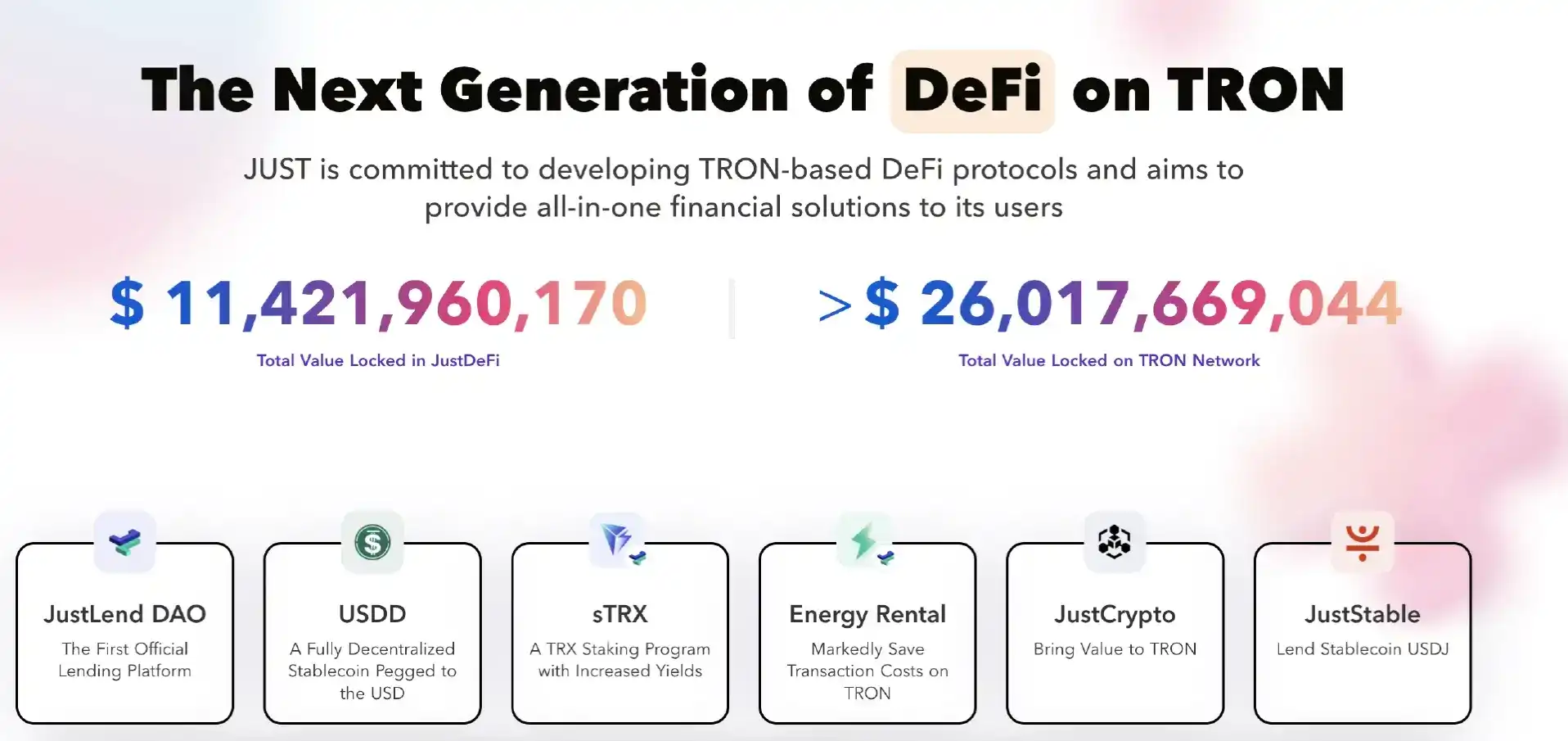
A deeper analysis of JustLend DAO's performance in Q4 2025 reveals clear growth trajectories. Firstly, as the flagship lending protocol of the JUST ecosystem, JustLend DAO benefits from the continuous improvement of the TRON infrastructure. Its Total Value Locked (TVL) broke through the $7.08 billion mark in the fourth quarter and has long been ranked among the top three in the lending market, with lending activity in its SBM market also climbing to a new cycle high.

It is worth noting that the $10,340,249 in stock earnings, which formed an important part of this buyback fund, can be traced back to the earnings from the reserve capital deposited in the SBM USDT market during the first JST buyback. The appreciation process of this capital is itself the most direct proof of the SBM market's strong profitability. It showcases JustLend DAO's sophisticated financial operation model: strategically reinvesting ecosystem profits for "self-regeneration" within the protocol, thereby providing an endogenous and sustainable source of funding for subsequent value returns.

On this basis, JustLend DAO's revenue structure is also showing a trend of diversification. While the traditional lending market, its core business, maintains steady growth, JustLend DAO has innovatively built a product matrix including sTRX (Staked TRX) and Energy Rental, greatly expanding the boundaries and depth of its value capture.

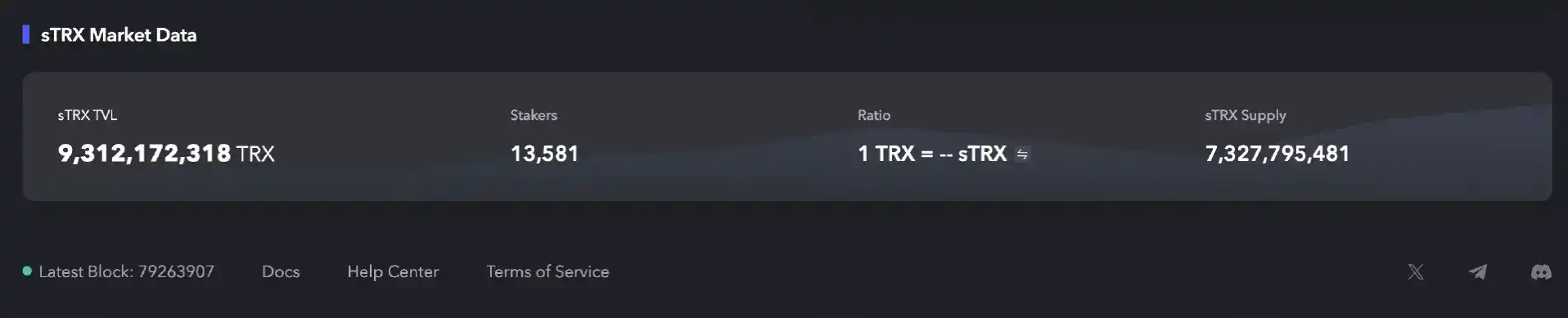
Among these, the sTRX service allows users to stake TRX to earn rewards while still flexibly participating in other DeFi activities. This innovative design significantly improves capital efficiency and user stickiness. As of January 15, the amount of TRX staked on the platform has surpassed 9.3 billion tokens. This staggering figure not only reflects the community's high recognition of the sTRX product but also generates considerable and sustainable service revenue.
Meanwhile, the "Energy Rental" service, designed to reduce users' on-chain operation costs, has also demonstrated strong market appeal through active rate optimization. Since September 2025, the base rate for this service was significantly reduced from 15% to a more competitive 8%. The rate optimization directly stimulated market demand and transaction frequency, thereby creating steady incremental revenue for the protocol through more active leasing business.

While the core product matrix continues to perform strongly, JustLend DAO, focusing on lowering the participation threshold for the general user, innovatively launched the GasFree smart wallet in March 2025. This feature彻底打破了用户必须预先持有原生代币(TRX)以支付手续费这一长期困扰新手用户的壁垒 (completely breaks down the long-standing barrier for new users of having to hold the native token (TRX) in advance to pay transaction fees), allowing users to directly deduct and pay the required network fees from the token assets they are transferring (e.g., USDT). This design not only achieves ultimate operational convenience but also fundamentally broadens the accessibility of blockchain finance.

To accelerate the adoption of this innovative feature, JustLend DAO simultaneously launched a highly attractive 90% transfer fee subsidy campaign. With this support, users only need to pay an extremely low fee of approximately 1 USDT when using the GasFree function for USDT transfers. This combined strategy quickly ignited market demand. As of January 15, the total transaction volume driven by the GasFree smart wallet has exceeded $46 billion. This astonishing scale not only validates the market's strong desire for a frictionless transaction experience but has also directly saved users a cumulative total of over $36.25 million in network fee costs. This innovation, by significantly reducing actual usage costs and cognitive barriers, has introduced massive incremental users and capital flow into the ecosystem, constituting another powerful growth pole for the platform's network effects and revenue potential.

Meanwhile, another funding channel in the buyback and burn plan, namely the incremental revenue from the USDD multi-chain ecosystem (the portion exceeding $10 million), also constitutes a significant source of value. USDD, as the core decentralized stablecoin of the TRON ecosystem, has seen remarkable results from its multi-chain expansion strategy. It has been successfully deployed on mainstream public chains like Ethereum and BNB Chain, broadening its application scenarios and user base.

Its ecosystem value recently achieved a milestone breakthrough. On January 14, USDD's TVL historically surpassed the $1 billion mark. This means that in less than two months, USDD's TVL规模实现了惊人的100%增长 (achieved an astonishing 100% growth), its expansion speed and market acceptance fully confirming the strong momentum and deep asset appeal of this stablecoin within the multi-chain ecosystem. The rapid growth of its TVL and the continuous prosperity of its ecosystem significantly enhance the potential scale of this funding channel, providing an anticipated source of value for JST's subsequent quarterly buyback and burn plans.

Through deep integration with various DeFi protocols, USDD not only consolidates its peg stability but also creates continuous value inflow for the entire ecosystem. The inclusion of USDD ecosystem's excess income in the JST buyback and burn plan builds a value闭环 (closed loop) of "stablecoin + lending protocol + governance token". In this model, the expansion and prosperity of USDD and JustLend DAO directly power the deflation of JST, while the increase in JST's value in turn enhances the attractiveness and cohesion of the entire TRON DeFi ecosystem, creating a powerful internal synergy and value feedback effect.

Deepening Deflation Mechanism: Revolutionary Reshaping of JST's Value Foundation

In summary, the significance of this buyback and burn早已超越了单纯的价格支撑范畴 (has long surpassed the scope of mere price support); it is triggering a series of profound structural changes. Most fundamentally, it has completed the reshaping of JST's value support logic. JST is no longer merely a "utility token" for paying network fees or participating in governance votes; it has evolved into an "equity asset" directly anchored to the cash flow performance of JustLend DAO, USDD, and associated ecosystems.
Through the buyback and burn mechanism, the profit growth of the ecosystem is continuously injected into the value foundation of the JST token, making holding JST equivalent to holding an equity certificate that shares in the future profit growth of the ecosystem. On January 8, CoinMarketCap data showed that JST's market cap historically broke through the $400 million mark. This is not just a numerical leap but substantial market recognition of its new positioning. Accompanying the rising market cap was increased activity of funds. On January 8, its 24-hour trading volume significantly increased by 21.92%, reaching $31.49 million, and its price had also risen 10.82% steadily over the past month, with a daily increase of 3.1%.

The synchronous expansion of trading volume and market cap at key junctures is not偶然的市场波动 (an accidental market fluctuation) but a clear "vote of confidence" from the capital markets in response to the improving fundamentals of the JUST ecosystem, particularly the profitability and value return mechanism demonstrated by the buyback and burn.

Secondly, the JST buyback and burn also带来治理权力的实质性增值 (brings substantial增值 to governance power). As the total token supply is irreversibly reduced, the governance weight in the protocol represented by each remaining JST in the market will increase accordingly. This means that long-term holders not only enjoy the economic benefits of value appreciation but also see their voice in key community decisions (such as parameter adjustments, new product launches, treasury fund usage, etc.) amplified simultaneously. This design deeply binds the interests of core community members to the long-term success of the protocol,极大地增强了社区的稳定性和参与感 (greatly enhancing community stability and sense of participation).

From a broader industry perspective, JST's buyback and burn practice provides a clear and借鉴的新范式 (new paradigm to emulate) for token economics in the DeFi field. Removing 10.96% of the total supply through two rounds of burns in an extremely short time not only demonstrates efficient execution but, more profoundly, deeply binds the protocol's financial success to the interests of token holders, thereby establishing a良性循环典范 (exemplary virtuous cycle) of "value creation - value return".

This model fundamentally reverses the old logic where token value relied on speculative narratives,转向由协议基本面现金流驱动的可持续路径 (turning towards a sustainable path driven by the protocol's fundamental cash flow), providing a solid and credible case study for the industry on how to build economic models with substantial value support.

Looking ahead, with JST buyback and burn becoming a quarterly routine, a clear, predictable deflation path has been laid out. The scarcity of JST will be a certain narrative that strengthens over time. Each quarterly report disclosure and the subsequent burn will serve as a catalyst for reassessing its intrinsic value. This burn is not an endpoint but the beginning of a more恢弘的价值累积篇章 grand chapter of value accumulation). A value revolution, supported by ecosystem profitability and driven by product synergy, has already pressed the accelerator.


Pertanyaan Terkait

QWhat was the total amount of JST tokens burned in the second buyback and what percentage of the total supply did it represent?

A525,000,000 JST tokens were burned, representing 5.3% of the total supply.

QWhat is the cumulative amount and percentage of JST tokens burned so far through the two buyback events?

AThe cumulative amount burned is 1,084,890,753 JST tokens, which is 10.96% of the total supply.

QWhat were the two main financial pillars that funded the buyback and burn initiative?

AThe funding came from JustLend DAO's Q4 2025 net revenue of $10,192,875 and a reserve of accumulated earnings of $10,340,249.

QWhat innovative product significantly lowered the barrier to entry for new users by eliminating the need to hold TRX for gas fees?

AThe GasFree Smart Wallet, which allows users to pay network fees directly from the tokens being transferred (like USDT).

QWhat major milestone did the USDD ecosystem achieve recently, and what does it signify for the JST buyback mechanism?

AThe USDD ecosystem's Total Value Locked (TVL) historically surpassed $1 billion, signifying rapid growth and providing a substantial, predictable value source for future JST buyback and burn plans.

Bacaan Terkait

Saya Membangun Sebuah Platform Kerja Investasi Pribadi Menggunakan AI

Selama dua minggu terakhir, saya menggunakan "Vibe Coding" (memerintahkan AI seperti Codex, Claude Code, dan DeepSeek untuk menulis kode berdasarkan bahasa alami) untuk membangun workstation investasi pribadi. Saya membuat empat alat kecil yang berguna: 1. **Panel Aset Lintas Pasar:** Dashboard lokal untuk melihat sekilas semua portofolio saya (saham AS, Crypto, saham HK, saham A) dalam satu halaman, dilengkapi dengan pemantauan pergerakan harga dan ringkasan keuntungan/kerugian harian. 2. **Pemantau Taruhan Pasar Prediksi (PM):** Dasbor untuk memusatkan dan memantau taruhan di pasar prediksi (misalnya, tentang valuasi perusahaan atau peristiwa makro), menghubungkan perubahan probabilitas dengan berita dan pergerakan pasar, serta mengurutkannya berdasarkan keyakinan saya. 3. **Backend Operasi Kecil:** Alat berbasis cloud (dihosting di GitHub + Vercel) untuk mengelola ide penulisan, kemajuan artikel, dan jadwal publikasi di berbagai platform. 4. **Alat Format Satu Klik:** Skrip sederhana untuk secara otomatis memformat satu naskah ke dalam gaya yang diperlukan oleh berbagai platform media, menghemat waktu. Intinya, AI mengubah cara penelitian investasi untuk orang biasa dengan sangat mengurangi hambatan teknis. Sekarang, kita dapat dengan cepat membuat prototipe sistem dasar sesuai kebutuhan pribadi, seperti sistem pengamatan aset, pemantauan sinyal, peta hubungan sektor (misalnya, untuk melacak aliran dana di sektor AI), dan sistem tinjauan ulang. Siklus "ide - implementasi - penggunaan - umpan balik - revisi" menjadi sangat cepat, memungkinkan kita secara bertahap mengumpulkan alat yang berguna tanpa harus menjadi ahli pemrograman. Perubahan ini memungkinkan eksekusi ide yang sebelumnya tertunda.

marsbit17m yang lalu

Saya Membangun Sebuah Platform Kerja Investasi Pribadi Menggunakan AI

marsbit17m yang lalu

Robinhood, Saham Konsep Pasar Prediksi Pertama

Robinhood, platform perdagangan saham retail terkemuka AS, kini muncul sebagai pesaing baru dalam pasar prediksi, khususnya menantang posisi Kalshi yang sebelumnya menjadi mitra strategisnya. Awalnya, pada Maret 2025, Robinhood bermitra dengan Kalshi untuk menyediakan layanan perdagangan pasar prediksi kepada penggunanya, dengan Kalshi menyediakan infrastruktur pasar dan kepatuhan regulasi. Kerja sama ini sukses, di mana sekitar 25%-35% volume perdagangan Kalshi diperkirakan berasal dari saluran Robinhood, berkontribusi signifikan pada pendapatan Robinhood. Namun, Robinhood mulai mengembangkan ambisinya sendiri. Pada November 2025, mereka mendirikan usaha patungan dengan Susquehanna dan mengakuisisi pertukaran derivatif yang diatur CFTC, MIAXdx, yang kemudian berganti nama menjadi Rothera Exchange. Dengan infrastruktur ini, Robinhood kini memiliki kemampuan untuk mengoperasikan pasar prediksi secara mandiri. Pada Juni 2026, bertepatan dengan Piala Dunia, Robinhood meluncurkan Rothera dan mulai mengalihkan sebagian pesanan pasar prediksi dari Kalshi ke platformnya sendiri. Event besar seperti Piala Dunia menjadi momentum yang tepat untuk menarik pengguna dan volume perdagangan. Data awal menunjukkan Rothera berhasil menangani puluhan juta kontrak dalam beberapa hari pertama. Perkembangan ini menggeser dinamika industri. Alih-alih sekadar menjadi saluran distribusi, Robinhood kini menjadi pesaing langsung Kalshi. Insiden ini menggarisbawahi prinsip kunci: dalam era di mana produk dapat direplikasi, kontrol atas distribusi dan akses ke pengguna adalah aset paling berharga. Masa depan industri pasar prediksi mungkin akan lebih didorong oleh perebutan kontrol saluran distribusi, di mana platform dengan basis pengguna besar, seperti Robinhood, memiliki keunggulan strategis untuk mendominasi pasar.

marsbit22m yang lalu

Robinhood, Saham Konsep Pasar Prediksi Pertama

marsbit22m yang lalu

Setelah Aset Ditatakan, Bagaimana Cara Keluarnya?

Setelah aset di-tokenisasi, masalah utama yang belum sepenuhnya terpecahkan adalah bagaimana cara pemegangnya dapat keluar atau menebus aset tersebut dengan likuiditas instan. Artikel ini membahas tiga model arsitektur likuiditas untuk menyediakan jalur keluar instan bagi aset dunia nyata yang ditokenisasi (RWA): 1. **Model Neraca (Grove Basin):** Menyediakan likuiditas langsung dari cadangan satu entitas (contohnya Sky). Cocok untuk aset likuid seperti T-bills dengan penyelesaian cepat, tetapi kapasitasnya terbatas pada satu neraca dan aksesnya terbatas. 2. **Model Vault Khusus Aset (Upshift Clear):** Setiap aset yang didukung memiliki vault likuiditas khususnya sendiri yang didanai oleh penyedia likuiditas independen. Ini memungkinkan perluasan modal tetapi modal menjadi terisolasi per aset, mengurangi efisiensi modal. 3. **Lapisan Likuiditas Bersama (Symbiotic Liquid Lane):** Menggunakan modal bersama yang dapat mendukung berbagai jenis aset RWA secara bersamaan. Dana di vault terus menghasilkan hasil di antara peristiwa penebusan melalui berbagai sumber (pinjaman, spread penebusan). Penetapan harga penebusan ditentukan melalui pasar RFQ kompetitif. Perbandingan menunjukkan bahwa **model lapisan likuiditas bersama menawarkan efisiensi modal yang lebih tinggi, skalabilitas yang lebih baik, dan fleksibilitas untuk mendukung berbagai aset—terutama aset dengan jangka waktu penebusan yang lebih panjang seperti kredit privat.** Ini bertujuan untuk mengubah likuiditas penebusan dari solusi tambal sulam menjadi infrastruktur bersama yang dapat tumbuh bersama pasar tokenisasi.

marsbit25m yang lalu

Setelah Aset Ditatakan, Bagaimana Cara Keluarnya?

marsbit25m yang lalu

Setelah Aset Ditokenisasi, Bagaimana Cara Keluarnya?

Setelah aset di-tokenisasi, masalah setengah lainnya yang belum terpecahkan adalah bagaimana cara keluar atau menebusnya dengan cepat. Artikel ini membahas tiga model arsitektur likuiditas instan untuk aset tokenisasi (RWA) dan membandingkan kekurangan serta keunggulannya. Tiga model tersebut adalah: 1. **Model Neraca (Contoh: Grove Basin):** Menyediakan likuiditas instan dari cadangan satu entitas tunggal (neraca). Cocok untuk aset seperti Treasury yang penyelesaiannya cepat, tetapi kapasitas terbatas pada satu neraca dan aksesnya terbatas. 2. **Model Brankas Khusus Aset (Contoh: Upshift Clear):** Likuiditas disediakan oleh Penyedia Likuiditas (LP) independen ke dalam brankas terpisah untuk setiap aset yang didukung. Lebih fleksibel dan memisahkan risiko, tetapi modal terisolasi per aset sehingga kurang efisien. 3. **Model Lapisan Likuiditas Bersama (Contoh: Symbiotic Liquid Lane):** Menggunakan lapisan likuiditas bersama yang didanai oleh banyak penyedia modal untuk mendukung berbagai jenis aset sekaligus. Modal digunakan secara efisien dengan tetap menghasilkan pendapatan di antara peristiwa penebusan, dan penyelesaiannya melalui pasar RFQ kompetitif. Dirancang untuk aset likuiditas lebih rendah seperti kredit privat. Kesimpulannya, untuk skala pasar yang luas, diperlukan infrastruktur likuiditas bersama yang efisien, fleksibel, dan dapat tumbuh bersama partisipasi pasar—seperti yang dituju Liquid Lane—bukan solusi terpisah untuk setiap aset atau penerbit.

链捕手40m yang lalu

Setelah Aset Ditokenisasi, Bagaimana Cara Keluarnya?

链捕手40m yang lalu

Trading

Spot
Futures

Artikel Populer

Cara Membeli JST

Selamat datang di HTX.com! Kami telah membuat pembelian JUST (JST) menjadi mudah dan nyaman. Ikuti panduan langkah demi langkah kami untuk memulai perjalanan kripto Anda.Langkah 1: Buat Akun HTX AndaGunakan alamat email atau nomor ponsel Anda untuk mendaftar akun gratis di HTX. Rasakan perjalanan pendaftaran yang mudah dan buka semua fitur.Dapatkan Akun SayaLangkah 2: Buka Beli Kripto, lalu Pilih Metode Pembayaran AndaKartu Kredit/Debit: Gunakan Visa atau Mastercard Anda untuk membeli JUST (JST) secara instan.Saldo: Gunakan dana dari saldo akun HTX Anda untuk melakukan trading dengan lancar.Pihak Ketiga: Kami telah menambahkan metode pembayaran populer seperti Google Pay dan Apple Pay untuk meningkatkan kenyamanan.P2P: Lakukan trading langsung dengan pengguna lain di HTX.Over-the-Counter (OTC): Kami menawarkan layanan yang dibuat khusus dan kurs yang kompetitif bagi para trader.Langkah 3: Simpan JUST (JST) AndaSetelah melakukan pembelian, simpan JUST (JST) di akun HTX Anda. Selain itu, Anda dapat mengirimkannya ke tempat lain melalui transfer blockchain atau menggunakannya untuk memperdagangkan mata uang kripto lainnya.Langkah 4: Lakukan trading JUST (JST)Lakukan trading JUST (JST) dengan mudah di pasar spot HTX. Cukup akses akun Anda, pilih pasangan perdagangan, jalankan trading, lalu pantau secara real-time. Kami menawarkan pengalaman yang ramah pengguna baik untuk pemula maupun trader berpengalaman.

437 Total TayanganDipublikasikan pada 2024.12.11Diperbarui pada 2025.03.21

Cara Membeli JST

Diskusi

Selamat datang di Komunitas HTX. Di sini, Anda bisa terus mendapatkan informasi terbaru tentang perkembangan platform terkini dan mendapatkan akses ke wawasan pasar profesional. Pendapat pengguna mengenai harga JST (JST) disajikan di bawah ini.

活动图片