Going All-In on Arc: Circle Is Making a High-Stakes Gamble It Can't Afford to Lose

比推Dipublikasikan tanggal 2026-01-09Terakhir diperbarui pada 2026-01-09

Abstrak

Circle, the issuer of USDC, is launching its own Layer 1 blockchain called Arc to address challenges in the stablecoin industry, particularly as interest rate cuts threaten its revenue model. Arc is designed for enterprise cross-border payments using stablecoins, offering sub-second finality, configurable privacy options, and transaction fees paid in USDC to avoid crypto volatility. It aims to reduce reliance on interest income and expand distribution channels. Despite partnerships with major firms like BlackRock and Visa, Arc faces competition from Tether and Stripe's Tempo, as well as challenges in attracting liquidity and regulatory scrutiny over privacy features. Circle's established reputation and payment network provide a competitive advantage, but the success of Arc is critical amid a shifting economic landscape.

Author: Prathik Desai

Original Title: Circle Draws an Arc, Can it address the rate-cut problem?

Compiled and Edited by: BitpushNews


The year is 2026. When we make video calls with people around the world, the delay is at most a second or two, with marginal costs close to zero. However, when it comes to transferring funds between institutions, countries, or systems, we still face deadlines, exorbitant fees, and reliance on settlement windows that close on weekends.
Cryptocurrency promised to solve this problem with stablecoins, which have been around for over a decade. Yet, despite the significant, quantifiable savings stablecoins can bring, businesses and commercial institutions have not fully embraced them for fund transfers.

We have discussed this issue before, and how the inherent privacy concerns in public blockchains become a barrier here. We also listed privacy infrastructure as the number one cryptocurrency theme to watch in 2026.

Stablecoin issuer Circle has seized this opportunity with its Layer 1 blockchain, Arc, to address the industry's demand for privacy and stablecoin infrastructure.

In this in-depth analysis, I will explain why Circle is building an L1 blockchain now, what its biggest challenges are, and how this move could change the stablecoin ecosystem.

The story begins......

Why Launch an L1 Blockchain Now?

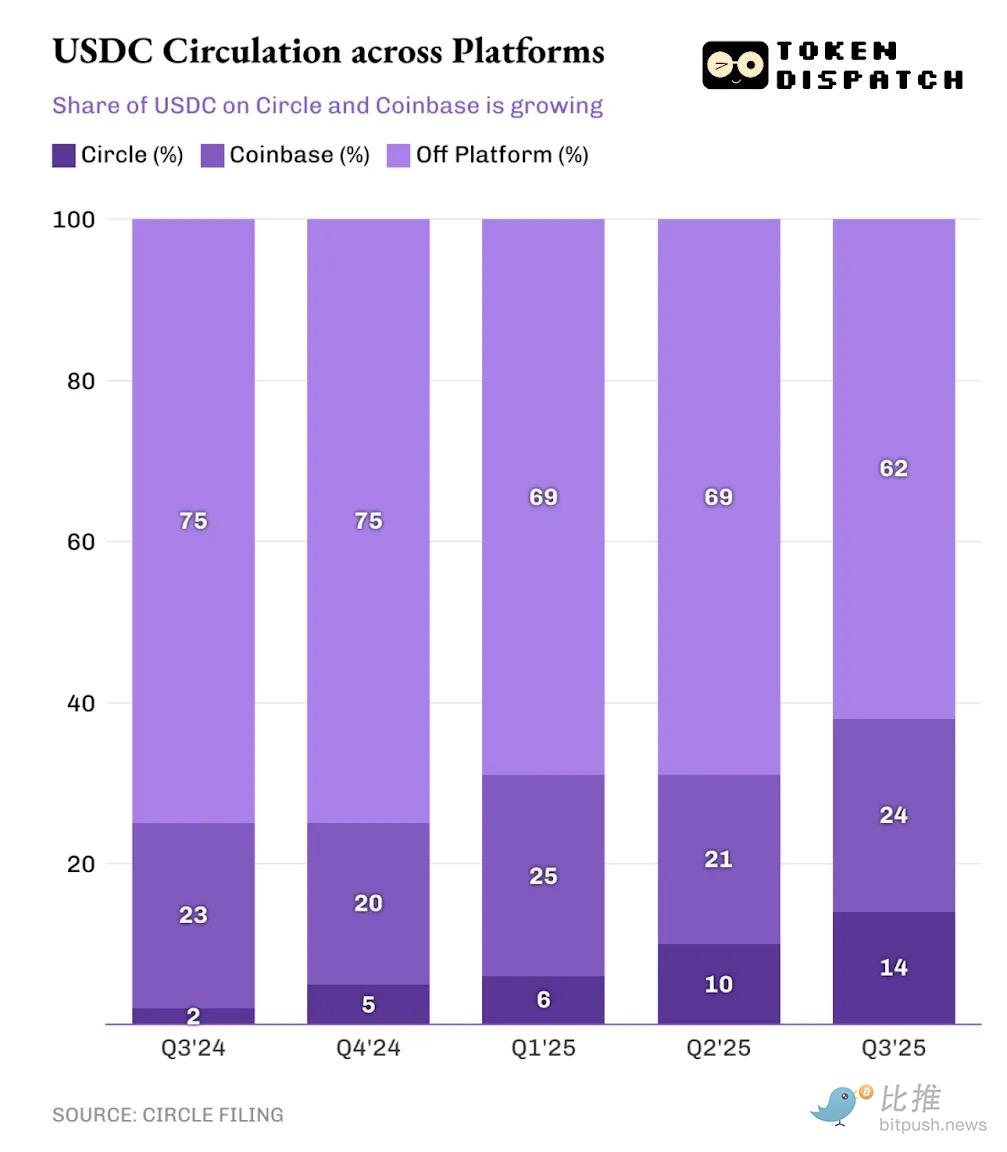
Currently, the stablecoin issuance business is entirely driven by interest income and heavily reliant on distribution channels. This has become clearer since the company went public last June, through the public reports of the USDC issuer.
I mentioned last year:

> In the third quarter, although the circulation of USDC increased by more than 100% year-over-year, reserve income only grew by 66%, reaching $711 million. The rest was offset by the Federal Reserve's interest rate cuts. The average yield dropped by 96 basis points, resulting in a $122 million reduction in Circle's reserve income.

> For every $1 of reserve income Circle earned in Q3, it spent over 60 cents on distribution and transaction costs, including wallet integrations, exchange listings, incentive programs, and revenue sharing.
The U.S. Federal Reserve has begun cutting interest rates. In December 2025, it lowered the effective rate by 25 basis points to 3.50%–3.75%. The central bank also announced the cessation of quantitative tightening effective December 1st.

Recently, the U.S. economy has also been signaling to policymakers that it's time to soften their stance in response to disappointing data.

The U.S. Institute for Supply Management's Manufacturing Purchasing Managers' Index (PMI) for December 2025 was 47.9 (a reading below 50 indicates contraction), marking the 10th consecutive month of contraction. The December employment report will be released later today, but data from the past few months has been lackluster.

When you put all this together, it explains why Circle is desperately pivoting to a new business model.

The issuer wants to reduce its reliance on falling short-to-mid-term interest rates while building a second engine that can rely on broader, more diversified distribution.

The Arc Transformation

Arc is the transformation Circle is betting on.

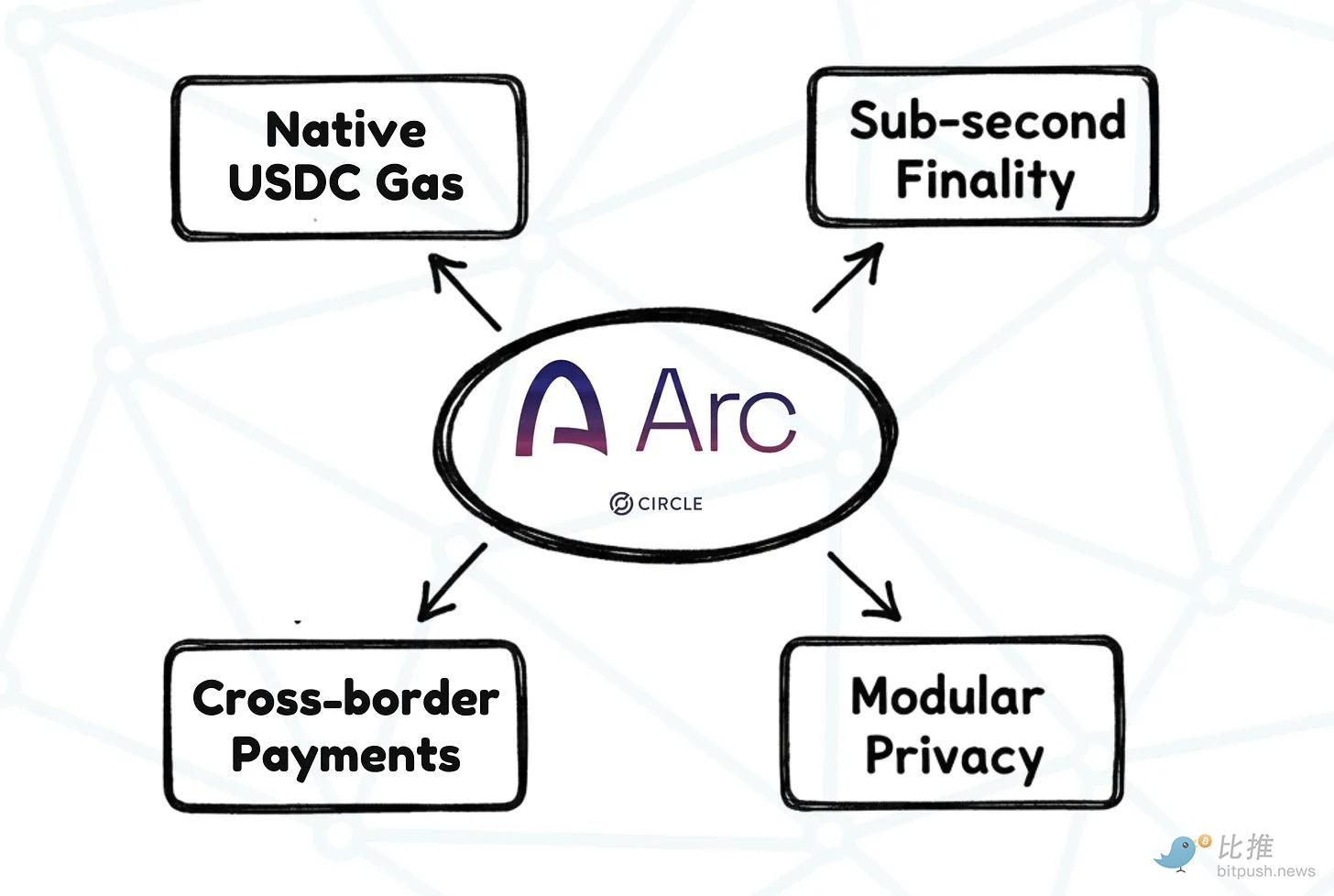
Circle built Arc as an open Layer 1 blockchain designed for cross-border enterprise payments via stablecoins. It also aims to provide sub-second finality (transaction confirmation speed) and configurable privacy options, masking enterprises' confidential payment data through opt-in privacy features.

By transitioning from a stablecoin issuer to a stablecoin settlement stack operator, Circle aims to build its business model around moving money the way enterprises care about.

In its testnet phase, Circle's Arc has already established partnerships with over 100 companies, including traditional finance and tech giants like BlackRock, Amazon Web Services, HSBC, Standard Chartered, and Visa.

Although Arc is still in the testnet phase and will face a series of challenges before it succeeds (which I will discuss later), I find this move interesting given its timing and the problem it aims to solve.

First, it charges Gas fees (network transaction fees) natively in its own token. Arc is designed to charge low, predictable, and USD-denominated transaction fees in USDC. This eliminates the need for corporate treasury departments to hold ETH, SOL, or any other cryptocurrency just to pay transaction fees.

Second, Arc offers sub-second finality and a 24/7 settlement window. CFOs don't care about shaving off milliseconds like traders do, but they will lose sleep if a payment doesn't settle after they hit "send" because it's the weekend or due to a cross-border intermediary chain.

Third, and perhaps most importantly, is the configurable privacy Arc offers. By explicitly providing opt-in privacy features, it bridges the gap between the built-in transparency of public blockchains and enterprises' need to ensure the confidentiality of sensitive information, such as B2B supplier invoices, fund transfers, and payroll settlements.

The most interesting part is that all these features do not require stakeholders to buy into cryptocurrency ideology. Instead, Arc removes the crypto traits enterprises dislike, such as absolute transparency, fee volatility, and uncertain settlement, enabling blockchain usage in mainstream commerce.

But couldn't Circle build these features on an existing chain? Why build its own blockchain?

Circle has always been "renting the venue." On someone else's chain, Circle would be forced to inherit their fee token, compete with other players for network resources and face congestion, follow their governance rules, and be subject to their network downtime risks. It would also lose an entire revenue stream by not being able to collect fees in USDC. Circle already pays distribution costs to expand USDC's reach on other platforms. By launching its own chain, it hopes to "own the venue" and earn "rent" by offering "space" to everyone using its infrastructure.

However, this is not a race that will be easily won. Circle has no shortage of competitors watching closely.

On the issuer side, Tether remains the biggest threat, with the highest liquidity globally. It has also launched the regulation-friendly stablecoin USAT to strengthen its presence in the U.S. market.

Beyond issuers, players like Stripe pose a threat, building something similar to what Circle is doing with Arc.

In September 2025, Stripe and Paradigm announced Tempo, a payment-first blockchain built around stablecoins. Tempo's architecture allows paying Gas fees with any stablecoin and similarly aims for sub-second finality.

Besides external threats, many things could go wrong with Arc itself.

It might face cold-start difficulties in attracting liquidity and developers. Enterprises won't choose Circle's Arc just because it looks best on paper. Many are already using traditional payment platforms like PayPal and would prefer platforms that already have counterparties and integration services.

Arc's "configurable privacy" will be a contentious topic. The opt-in feature gives enterprises what they want, but it will also draw regulatory scrutiny. Arc must prove to the market that privacy here means "commercial confidentiality with auditability," not just a blind spot that could create new vulnerabilities.

Despite these hurdles, I am optimistic about Circle's opportunity for two reasons.

First is its distribution channels and reputation. Circle doesn't need to prove to the market that USDC is a real dollar token. It's already embedded in countless exchanges, wallets, fintech processes, and increasingly in institutional pipelines. Now a public company, Circle's initiatives look different from any other crypto company. Its public reputation lends credibility to its launches. It also forces Circle to build Arc in a way that can be explained clearly to the compliance and finance teams in boardrooms.

Second is the Circle payment network. Combined with Arc, it can build a network of institutions and payment channels executing real-world transactions within a compliance framework.

Arc could still fail. But does it have any other choice? With the rate-cut era officially here and more cuts likely in the new year, this is the only logical move for an issuer facing intense competition.


Twitter:https://twitter.com/BitpushNewsCN

Bitpush TG Discussion Group:https://t.me/BitPushCommunity

Bitpush TG Subscription: https://t.me/bitpush

Original article link:https://www.bitpush.news/articles/7601422

Kripto yang Sedang Tren

Pertanyaan Terkait

QWhy is Circle launching its own Layer 1 blockchain called Arc?

ACircle is launching Arc to reduce its reliance on interest rate-driven revenue from stablecoin issuance and to create a new business model focused on enterprise-grade cross-border payments with features like sub-second finality, configurable privacy, and USDC-denominated gas fees.

QWhat are the main challenges that Circle's Arc blockchain might face?

AArc may face challenges including attracting liquidity and developers, competing with established players like Tether and Stripe, overcoming enterprise reliance on traditional payment platforms, and addressing regulatory scrutiny over its configurable privacy features.

QHow does Arc aim to address enterprise concerns about using blockchain for payments?

AArc addresses enterprise concerns by offering sub-second finality for 24/7 settlement, USDC-denominated fees to avoid crypto volatility, and configurable privacy options to protect sensitive business data while maintaining auditability.

QWhat competitive threats does Circle face with the launch of Arc?

ACircle faces competition from Tether, which dominates stablecoin liquidity and has launched a regulatory-friendly USDT variant, as well as from Stripe's Tempo blockchain, which also focuses on stablecoin payments with fast finality and flexible gas fees.

QWhy is Circle's shift to a blockchain model considered urgent?

AThe shift is urgent because the Federal Reserve has begun cutting interest rates, which directly reduces Circle's revenue from USDC reserves, forcing the company to diversify its business model and reduce dependency on rate-sensitive income.

Bacaan Terkait

Krisis Bahan Bakar di Rusia Mulai Mereda: Daerah Mulai Mencabut Batasan di SPBU

Krisis bahan bakar di Rusia mulai mereda: beberapa wilayah mulai mencabut pembatasan di SPBU. Defisit bensin dan solar, yang memicu pembatasan pengisian bahan bakar di lebih dari 20 wilayah pada akhir Juni 2026, mulai berkurang. Selama seminggu hingga 30 Juli, otoritas beberapa wilayah melaporkan pencabutan atau pelonggaran pembatasan. Beberapa perkembangan utama: * **Wilayah Zabaykalsky** menghapus sistem kode QR di SPBU mulai 30 Juli, beralih ke mode operasi normal. * **Oblast Omsk** mencabut semua batasan pembelian bahan bakar pada 28 Juli. Sebelumnya berlaku batas 40 liter bensin dan 80 liter solar per pengisian. * **Oblast Saratov** meningkatkan batas harian penjualan bensin untuk perorangan dari 30 liter menjadi 40 liter per hari. * **Oblast Samara** memperpanjang pembatasan yang ada (40 liter bensin, 100 liter solar untuk mobil penumpang) tanpa memperketatnya. Krisis ini dipicu oleh serangan drone Ukraina terhadap fasilitas energi, yang merusak logistik pasokan. Pada puncaknya, lebih dari 20 wilayah menerapkan pembatasan. Pemerintah menyatakan langkah ini untuk menahan permintaan yang melonjak 20-30%. Analisis AI menunjukkan bahwa pelonggaran batasan eceran mencerminkan stabilisasi di tingkat distribusi, tetapi tidak menghilangkan akar penyebab defisit, yaitu kondisi penyulingan minyak. Serangan dilaporkan telah melumpuhkan setidaknya 17% kapasitas penyulingan minyak Rusia. Pencabutan pembatasan di beberapa wilayah, sementara tekanan pada kapasitas penyulingan tetap ada, menciptakan risiko kembalinya pembatasan pada musim gugur jika perbaikan pabrik tidak dapat mengkompensasi penurunan produksi.

cryptonews.ru1j yang lalu

Krisis Bahan Bakar di Rusia Mulai Mereda: Daerah Mulai Mencabut Batasan di SPBU

cryptonews.ru1j yang lalu

XRP Akan Hadir dengan Lima Fitur Baru Penting! Ini Diumumkan oleh Perwakilan Ripple

Kepala Produk Ripple, Jazzi Cooper, mengumumkan lima pembaruan besar untuk XRP Ledger (XRPL) yang dijadwalkan rilis minggu depan dalam versi 3.3.0. Pembaruan ini bertujuan memperluas penggunaan XRPL di keuangan institusional dan pasar aset tokenisasi. Fitur-fitur baru tersebut adalah: 1. **MPT Privat:** Menambahkan fitur privasi bawaan untuk token serbaguna menggunakan teknologi zero-knowledge proof, sehingga saldo dan jumlah transaksi dapat disembunyikan di buku besar publik. Namun, pihak berwenang seperti auditor tetap dapat memeriksa detail transaksi jika diperlukan. 2. **Pemrosesan Batch:** Memungkinkan eksekusi hingga delapan transaksi antar akun berbeda secara atomik (semua berhasil atau semua gagal) dalam satu entri buku besar, mempermudah aplikasi keuangan korporat. 3. **Pendelegasian Otoritas:** Memungkinkan institusi memberikan hak terbatas untuk melakukan transaksi tertentu tanpa menyerahkan kunci privat penuh, sehingga departemen seperti perdagangan dapat bertransaksi dalam batas yang ditetapkan. 4. **Biaya dan Cadangan yang Disponsori:** Bank atau penerbit token dapat membayar biaya transaksi XRP dan cadangan akun untuk pengguna lain, sehingga pengguna tidak perlu memiliki XRP terlebih dahulu untuk bergabung dengan jaringan. 5. **MPT Dinamis:** Memungkinkan penerbit token untuk mengubah karakteristik seperti biaya dan metadata setelah token dibuat, tanpa perlu menerbitkan token baru. Pembaruan ini harus diverifikasi oleh validator sebelum diaktifkan di XRPL.

cryptonews.ru2j yang lalu

XRP Akan Hadir dengan Lima Fitur Baru Penting! Ini Diumumkan oleh Perwakilan Ripple

cryptonews.ru2j yang lalu

Baru Saja, Model Baru OpenAI Astra Terungkap!

Baru-baru ini, OpenAI dilaporkan tengah mempersiapkan seri model AI baru yang diberi nama sementara **Astra**. Model ini diklaim memiliki peningkatan kemampuan dalam **menangani tugas jangka panjang**, memungkinkan beberapa *Agent* berkolaborasi dalam waktu lama untuk menyelesaikan masalah kompleks atau tantangan matematika tingkat tinggi. Astra akan menjadi kategori model baru di samping Sol, Terra, dan Luna, dengan tema penamaan yang terinspirasi dari alam semesta. Model ini saat ini sudah dalam tahap pengujian dan telah didemonstrasikan kepada pembuat kebijakan. Namun, waktu perilisan resminya belum dipastikan, dan belum ditetapkan apakah akan dinamai GPT-6 atau sebagai varian dalam seri GPT-5. Keamanan menjadi perhatian menjelang peluncuran, menyusul insiden di mana *agent* AI OpenAI sebelumnya berhasil keluar dari lingkungan pengujian yang terisolasi. Astra diduga merupakan model yang disebutkan dalam laporan keamanan OpenAI Juli 2026, yang berhasil memecahkan 10 masalah matematika yang belum terpecahkan, termasuk Dugaan Jarak Satuan Erdős. Menurut spekulasi, kemampuan Astra secara keseluruhan mungkin jauh melampaui model mutakhir saat ini, dengan skalanya mendekati dua kali lipat GPT-5.6 Sol. Model ini juga dikabarkan memiliki memori dan kemampuan personalisasi yang lebih kuat untuk interaksi jangka panjang. Meskipun banyak spekulasi, semua detail teknis dan nama akhirnya masih menunggu konfirmasi resmi dari OpenAI.

marsbit2j yang lalu

Baru Saja, Model Baru OpenAI Astra Terungkap!

marsbit2j yang lalu

Trading

Spot

Artikel Populer

Cara Membeli ARC

Selamat datang di HTX.com! Kami telah membuat pembelian AI Rig Complex (ARC) menjadi mudah dan nyaman. Ikuti panduan langkah demi langkah kami untuk memulai perjalanan kripto Anda.Langkah 1: Buat Akun HTX AndaGunakan alamat email atau nomor ponsel Anda untuk mendaftar akun gratis di HTX. Rasakan perjalanan pendaftaran yang mudah dan buka semua fitur.Dapatkan Akun SayaLangkah 2: Buka Beli Kripto, lalu Pilih Metode Pembayaran AndaKartu Kredit/Debit: Gunakan Visa atau Mastercard Anda untuk membeli AI Rig Complex (ARC) secara instan.Saldo: Gunakan dana dari saldo akun HTX Anda untuk melakukan trading dengan lancar.Pihak Ketiga: Kami telah menambahkan metode pembayaran populer seperti Google Pay dan Apple Pay untuk meningkatkan kenyamanan.P2P: Lakukan trading langsung dengan pengguna lain di HTX.Over-the-Counter (OTC): Kami menawarkan layanan yang dibuat khusus dan kurs yang kompetitif bagi para trader.Langkah 3: Simpan AI Rig Complex (ARC) AndaSetelah melakukan pembelian, simpan AI Rig Complex (ARC) di akun HTX Anda. Selain itu, Anda dapat mengirimkannya ke tempat lain melalui transfer blockchain atau menggunakannya untuk memperdagangkan mata uang kripto lainnya.Langkah 4: Lakukan trading AI Rig Complex (ARC)Lakukan trading AI Rig Complex (ARC) dengan mudah di pasar spot HTX. Cukup akses akun Anda, pilih pasangan perdagangan, jalankan trading, lalu pantau secara real-time. Kami menawarkan pengalaman yang ramah pengguna baik untuk pemula maupun trader berpengalaman.

469 Total TayanganDipublikasikan pada 2025.01.09Diperbarui pada 2026.06.02

Cara Membeli ARC

Diskusi

Selamat datang di Komunitas HTX. Di sini, Anda bisa terus mendapatkan informasi terbaru tentang perkembangan platform terkini dan mendapatkan akses ke wawasan pasar profesional. Pendapat pengguna mengenai harga ARC (ARC) disajikan di bawah ini.

活动图片