How crypto is used in 2025: YouTube, Pokémon cards and more

cointelegraphDipublikasikan tanggal 2025-12-15Terakhir diperbarui pada 2025-12-15

Abstrak

In 2025, cryptocurrency is increasingly used in specific digital workflows, though not yet as everyday money. A major use case is for payments: freelancers, YouTubers, and creators receive income in stablecoins like USDC and USDT, bypassing traditional payment delays and fees. Platforms like YouTube now allow payouts via PayPal’s PYUSD. Crypto is also used for purchasing digital goods and services, such as domain registrations, VPNs, and hosting, with companies like Namecheap and Mullvad accepting it. Additionally, crypto supports the digitization of physical collectibles, with tokenized versions of items like Pokémon cards gaining popularity. In DeFi and GameFi, users engage in token swaps, yield farming, and play-to-earn games, though these remain niche. Decentralized autonomous organizations (DAOs) use crypto for onchain governance, though participation is limited to crypto-native users. While challenges like banking restrictions and bot cheating persist, crypto is growing by reducing friction in global digital transactions.

For years, one of the simplest and most effective criticisms of cryptocurrency was the same question repeated over and over: “Where can you actually use it?”

Bitcoin (BTC) was pitched as money, but outside a handful of novelty merchants, it rarely behaved like one. The question lingered through bull markets and crashes, reinforcing the idea that crypto was something to hold, trade or argue about rather than something to use.

That looks different in 2025. Crypto is still not everyday money at the checkout counter, but it is used across specific digital workflows, where speed or direct settlement are prioritized over familiarity.

Here are the places where people are actually using crypto today.

YouTubers and freelancers get paid in crypto

One of the most common ways people use crypto today is to pay for work and receive income online. Freelancers, contractors and creators use stablecoins like USDC (USDC) or Tether’s USDt (USDT) to settle payments directly between wallets, without relying on traditional payment processors.

A recent example comes from YouTube. The world’s largest video-sharing platform reportedly enabled US-based content creators to cash out using PayPal’s stablecoin, PayPal USD (PYUSD).
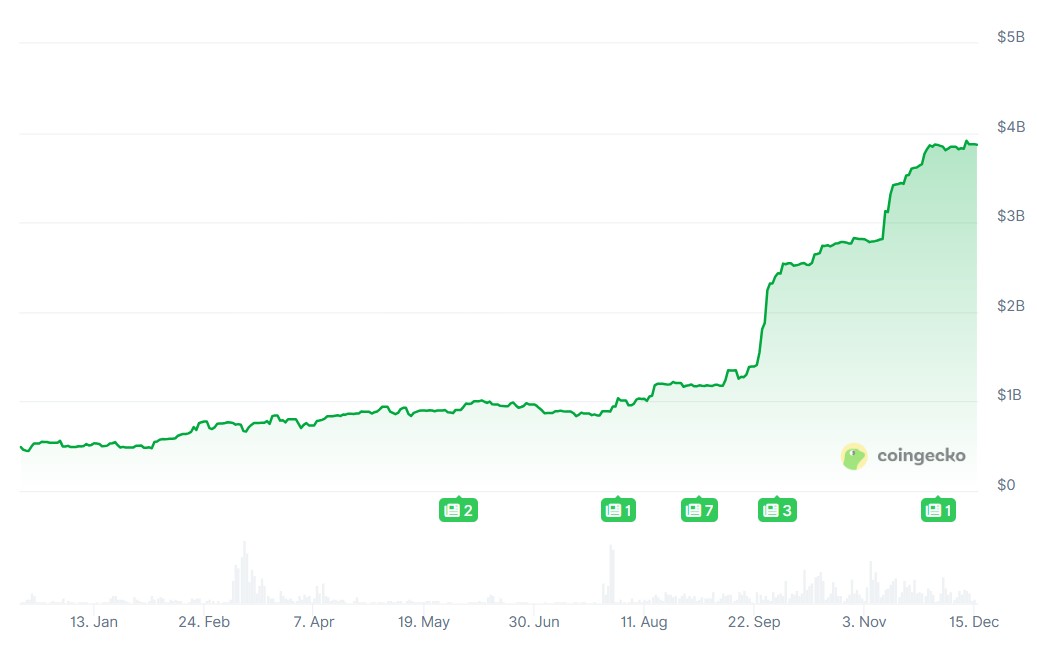
PayPal’s stablecoin is closing in on a $4-billion market capitalization. Source: CoinGecko

For clients and employers, this removes delays, fees and transfer limits that often come with international payments. This model is especially common in remote work and creator economies.

However, those who opt for crypto payments may still face difficulties when converting crypto into fiat. Industry participants have said banks continue to close or restrict the accounts of crypto firms with little explanation despite a more crypto-friendly stance taken by the current US administration.

Use crypto to purchase digital goods

Beyond paying individuals, crypto is also used to settle payments with businesses. This is most common among online services with global customers, where traditional payment systems introduce friction through fees, delays or regional restrictions.

Domain registrars, hosting providers and privacy-focused software companies are among the most visible adopters. Providers like Mullvad VPN allow customers to pay using cryptocurrency, while Namecheap and Porkbun accept crypto for domain registrations and hosting services. On Sept. 9, Namecheap CEO Richard Kirkendall said the company received a $2-million BTC payment for a domain sale.
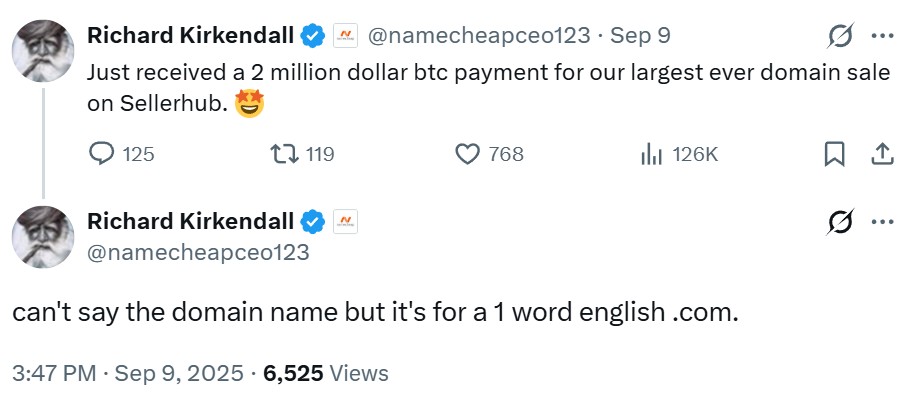
Namesake received Bitcoin for one of its largest sales ever. Source: Richard Kirkendall

More recently, mainstream payments and commerce platforms have started integrating stablecoin payments. Stripe has enabled businesses to accept USDC payments and launched the public testnet of its own stablecoin blockchain, Tempo. Shopify has piloted stablecoin-based checkout options for merchants selling internationally.

Related: Bitcoin decouples from stocks in second half of 2025

Clearer regulatory treatment of stablecoins in the US, driven by the signing of the GENIUS Act into law, has reduced uncertainty for some merchants considering these pilots.

Digitizing and extending physical collectible cultures

Crypto has also found use in the digitization of collectible cultures that were already thriving offline. In 2025, interest in physical collectibles surged again, driven by renewed demand for Pokémon cards, Labubu figures and other toys.

Alongside that revival, digital and tokenized versions of collectibles gained traction as an extension rather than a replacement of physical collecting.

Tokenized Pokémon-style cards and digital gachas — popular randomized item vending machines — became popular ways for collectors to participate in familiar formats online, especially as marketplaces and communities shifted from binders and display cases to apps and web platforms.
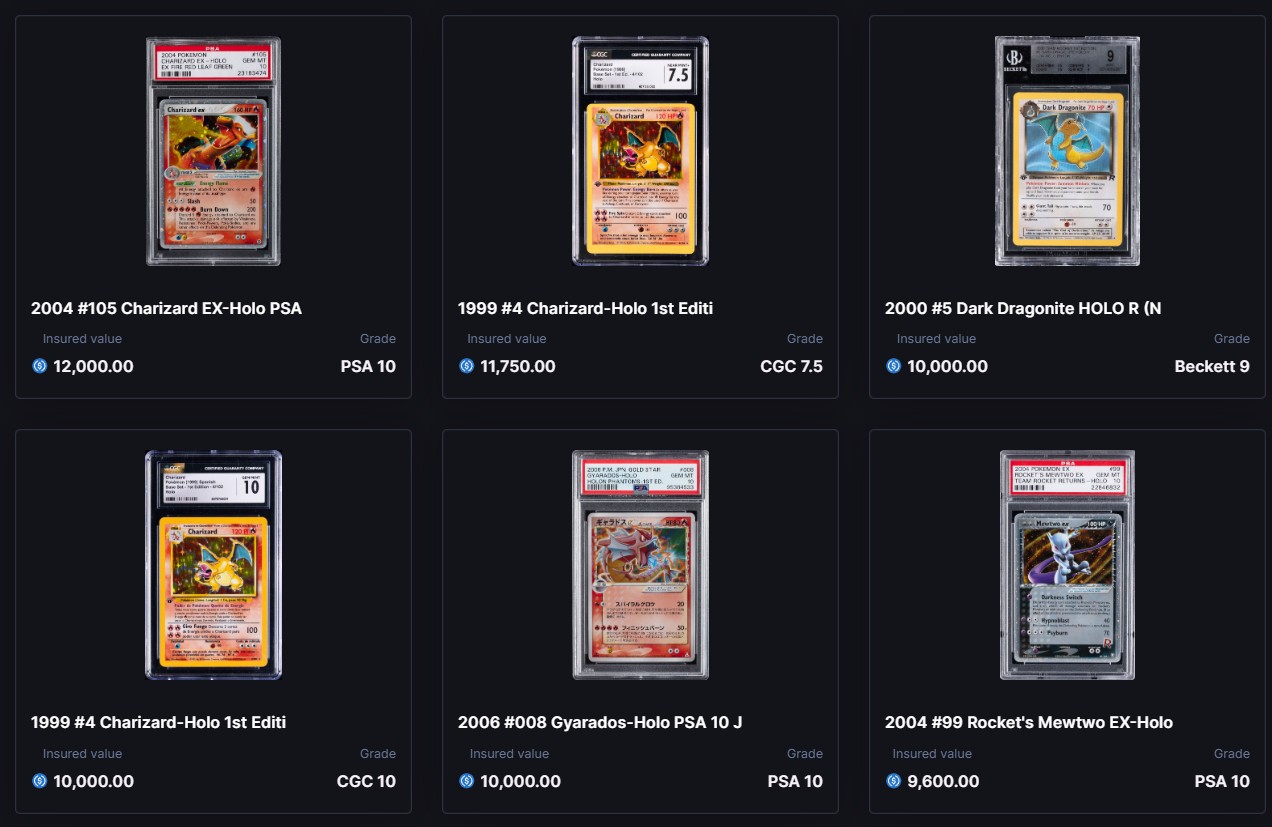
Collectors can spend between $50 and $250 to test their luck on tokenized versions of legendary Pokémon cards. Source: Collector Crypt

Crypto’s niche inside DeFi and GameFi

In decentralized finance (DeFi), users swap tokens, provide liquidity to farm yield, lend assets or borrow against collateral through smart contracts.

Blockchain-based games operate in a similar way. Often, blockchain and crypto add economic layers to games running on Web2 infrastructure. Players use crypto to buy or trade in-game items and move assets between marketplaces.

Related: How prediction markets raise insider trading and credit risks

A popular model is play-to-earn gaming, where players earn crypto through gameplay. A well-known example is Axie Infinity, which became a primary source of income for some communities in the Philippines during the pandemic. In 2025, play-to-earn games are more likely to provide extra income rather than a primary livelihood. Developers also face persistent challenges, including cheaters using bots to farm rewards, which takes value away from fair players.

According to DappRadar, World of Dypians, which operates across multiple chains, including Ethereum and BNB Chain, leads blockchain games with more than 1 million unique active wallets interacting with the game. Treasure-collecting game Pixudi Runs, which also operates across multiple chains, such as Sei and Polygon, ranks second with nearly 570,000 active wallets.
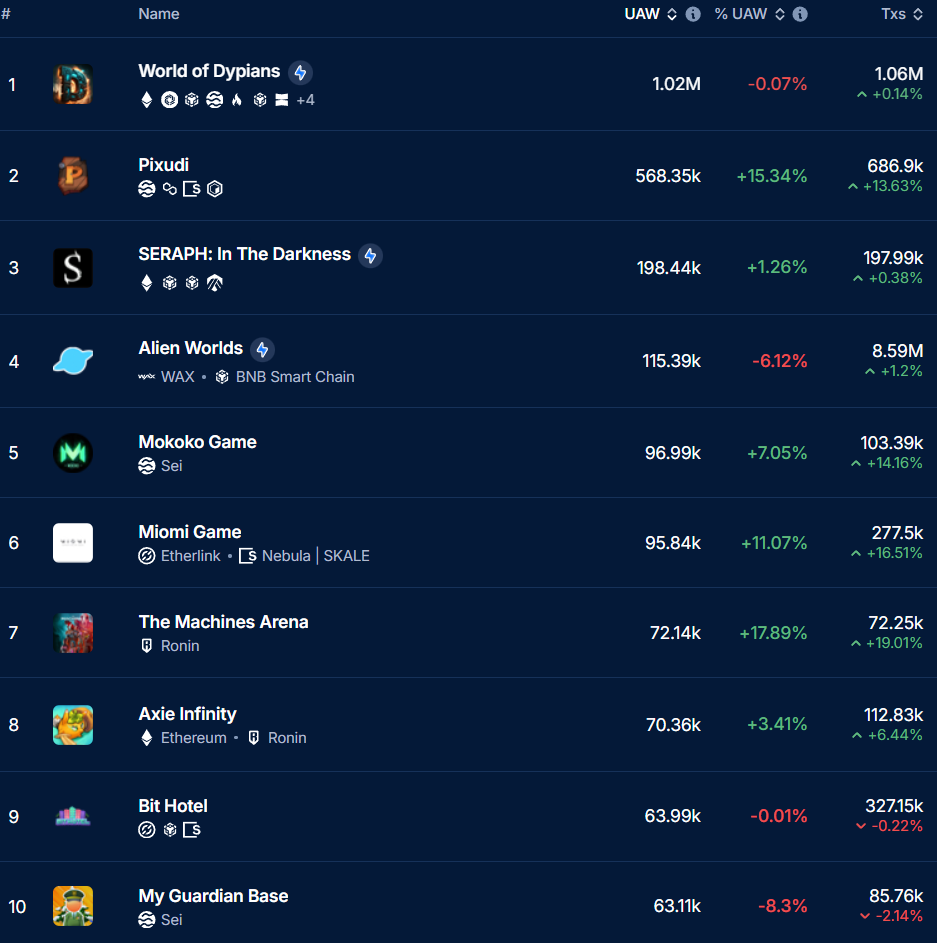
Blockchain games remain niche but attract thousands of active wallets daily. Source: DappRadar

Running organizations with crypto onchain

Deeper in DeFi, crypto is used to coordinate decentralized autonomous organizations (DAOs). In these groups, tokenholders are the members. They use their tokens to vote on proposals, approve spending and decide how the organization is run. Votes are recorded onchain, and once a proposal passes, actions such as payments or rule changes are carried out automatically through smart contracts.
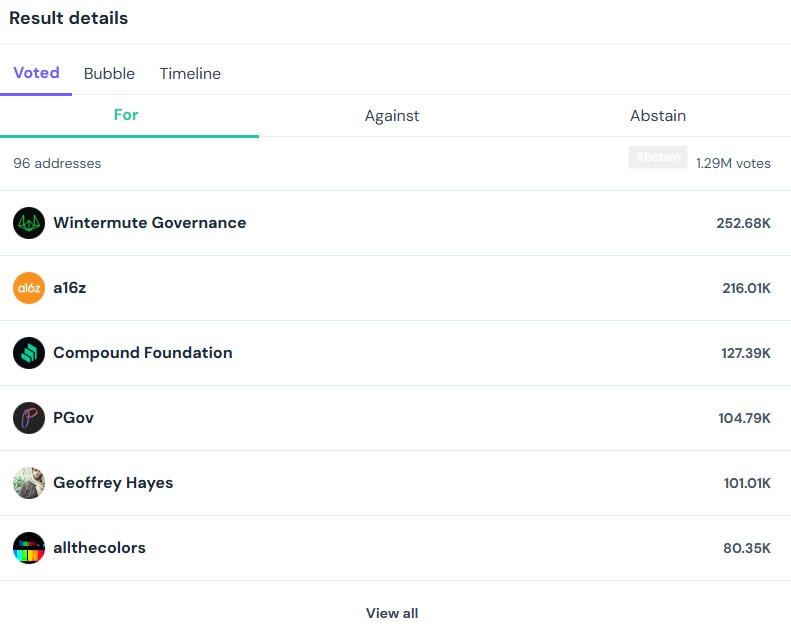
Voting power is concentrated among large tokenholders, many of whom often abstain from governance votes. Source: Tally

DAOs are mostly used to manage crypto-native projects. Taking part usually means holding governance tokens, navigating onchain voting proposals and managing a wallet. These requirements make DAO governance impractical for most casual users.

As a result, DAOs remain largely the domain of people already active in the crypto ecosystem.

Crypto’s current uses are broader than its early ambitions, and development continues. Financial companies are using blockchains to tokenize real-world assets, settle transactions with stablecoins and test onchain versions of traditional financial products.

Other experiments, such as wallet-based identity systems and Bitcoin-backed lending, remain in early stages. But they follow familiar patterns, with crypto most likely to integrate into existing services and remove frictions created by intermediaries.

Magazine: Big questions: Would Bitcoin survive a 10-year power outage?

Bacaan Terkait

Token Saham Robinhood yang Kamu Beli, Hanya Utang dari Jersey

Robinhood meluncurkan token saham yang diklaim sebagai aset digital, namun sebenarnya merupakan surat utang yang diterbitkan oleh perusahaan shell di Jersey. Token ini hanya melacak harga saham perusahaan seperti Nvidia atau Apple, tanpa memberikan hak kepemilikan atau klaim atas aset perusahaan. Jika perusahaan penerbit token bangkrut, investor hanya menjadi kreditur biasa dengan risiko kehilangan seluruh modal. Struktur produk ini dirancang untuk menghindari peraturan ketat AS, terutama setelah insiden GameStop 2021 yang menyebabkan Robinhood membatasi perdagangan. Dengan menggunakan blockchain, Robinhood bertujuan menghilangkan penyelesaian T+2 dan kebutuhan margin besar. Produk ini tersedia untuk 120+ negara, tetapi dilarang untuk pengguna AS, Kanada, dan Inggris. Di Eropa, Robinhood menawarkan token saham yang sesuai dengan peraturan MiFID II dan didukung saham sungguhan. Namun, untuk pasar lain, mereka memilih struktur utang Jersey yang lebih ringan regulasinya. Produk ini juga menghadapi risiko seperti manipulasi oracle price di DeFi dan tidak ada perlindungan asuransi untuk risiko gagal bayar. Sementara itu, perusahaan seperti Ondo telah meluncurkan token saham yang sepenuhnya mematuhi peraturan SEC AS, memberikan hak suara dan dividen kepada pemegangnya. Robinhood saat ini memilih pendekatan "produk setengah jadi" untuk menguasai pasar terlebih dahulu, menunggu kejelasan regulasi di masa depan.

Foresight News27m yang lalu

Token Saham Robinhood yang Kamu Beli, Hanya Utang dari Jersey

Foresight News27m yang lalu

Mitra Blockchain Capital: AI Sedang Menulis Ulang Unit Dasar Tenaga Kerja

Menurut artikel "AI sedang menulis ulang unit dasar tenaga kerja" oleh partner Blockchain Capital, revolusi AI mengubah esensi kerja. Sam Altman memprediksi kemunculan perusahaan miliaran dolar yang didirikan satu orang, karena AI menghilangkan batasan waktu manusia. Peralihan mendasar terjadi ketika tenaga kerja dapat diskalakan melalui agen AI yang dapat diprogram dan dibayar dengan mata uang kripto stabil seperti USDC dalam hitungan milidetik. Artikel ini menjelaskan bahwa perusahaan muncul ketika biaya koordinasi pasar melebihi biaya mempekerjakan. Setiap transformasi tenaga kerja, dari revolusi industri ke ekonomi gig dan kreator, didorong oleh penurunan biaya koordinasi. Ekonomi gig dan kreator berperan sebagai "kelas jembatan" yang membuktikan konsep pekerjaan yang terpecah dan terdistribusi, namun masih bergantung pada platform untuk koordinasi. Kini, kombinasi **tenaga kerja yang dapat diprogram (agen AI)** dan **mata uang yang dapat diprogram (stablecoin)** memungkinkan dekomposisi tenaga kerja sejati. Agen AI dapat mendelegasikan dan mengevaluasi tugas antar sesamanya, dengan unit dasar menjadi "tugas" itu sendiri. Stablecoin memungkinkan penyelesaian pembayaran mikro instan tanpa perantara, cocok untuk transaksi mesin-ke-mesin. Contoh nyata seperti Poncho dari Merit Systems menunjukkan bagaimana agen AI dengan dompet digital dapat membayar layanan sesuai pemakaian. Ini menggeser model ekonomi dari berlangganan ke pembayaran mikro per tugas. Ke depan, peran manusia akan berubah menjadi **penata** atau **pengarah** yang merancang sistem, mendelegasikan tugas kepada agen AI, mengevaluasi hasil, dan menyusunnya menjadi sesuatu yang bernilai. Perusahaan akan berevolusi dari wadah tenaga kerja menjadi lapisan kecerdasan di atas pasar tenaga kerja global yang dapat diprogram, di mana keahlian manusia terletak pada kemampuan mengkurasi dan mengombinasi output mesin.

marsbit29m yang lalu

Mitra Blockchain Capital: AI Sedang Menulis Ulang Unit Dasar Tenaga Kerja

marsbit29m yang lalu

Apakah Open USD Dapat Menopang Ambisi Stripe?

Artikel ini membahas peran Open USD (OUSD) dalam ambisi Stripe untuk beralih dari sekadar perusahaan API pembayaran menjadi jaringan pergerakan uang (*money movement network*). Penulis berargumen bahwa OUSD, sebagai stablecoin bersama yang dikelola Open Standard dengan dukungan Stripe, Visa, Mastercard, dan lainnya, bukanlah pesaing langsung USDC. Signifikansinya terletak pada upaya mendefinisikan ulang alokasi keuntungan dalam ekosistem stablecoin, di mana mitra yang berkontribusi pada adopsi dan distribusi berbagi hasil dari aset cadangan. Bagi Stripe, OUSD adalah langkah strategis untuk memperluas narasi perusahaan. Ini membuka peluang untuk memiliki aset penyelesaian default, mengubah model ekonomi, menyediakan lapangan dana yang dapat diprogram untuk perdagangan berbasis agen (*agentic commerce*), dan pada akhirnya berevolusi dari perusahaan perangkat lunak menjadi jaringan infrastruktur keuangan. Bersama dengan akuisisi Bridge, pengembangan blockchain Tempo, dan platform Privy, OUSD merupakan bagian dari upaya Stripe untuk turun ke lapisan penyelesaian (*settlement layer*) dan mengatur arus keuangan di era ekonomi internet dan AI berikutnya. Singkatnya, OUSD mewakili ambisi Stripe untuk tidak hanya memproses transaksi, tetapi membantu mendefinisikan jaringan penyelesaian uang masa depan di mana uang tidak hanya "berjalan di atas Stripe", tetapi mungkin "diselesaikan di jaringan yang Stripe bantu tentukan".

marsbit37m yang lalu

Apakah Open USD Dapat Menopang Ambisi Stripe?

marsbit37m yang lalu

Trading

Spot
活动图片