175-Year-Old Western Union: Not Just Playing with Stablecoins, but Also Acquired a Digital Wallet

marsbitDipublikasikan tanggal 2026-04-07Terakhir diperbarui pada 2026-04-07

Abstrak

At 175 years old, Western Union, the global money transfer giant, is undergoing a significant digital shift. After a failed 2018 experiment with Ripple's XRP due to high costs, the company is now aggressively embracing blockchain and digital assets. In April 2026, Western Union acquired Singapore-based digital wallet Dash from Singtel, marking its first digital wallet asset in the Asia-Pacific region. Dash, with 1.4 million users, offers a full suite of services including payments, remittances, savings, insurance, and investments, deeply integrated into Singapore's local life. This move is part of a broader strategy to modernize its legacy business. While Western Union's vast network of over 500,000 physical agent locations remains its backbone, it is also its biggest cost burden. The company faces intense competition from digital-native rivals like Wise and Remitly, which offer significantly lower fees. To compete, Western Union is building a "Digital Asset Network." A key component is its own USD-pegged stablecoin, USDPT, issued on the Solana blockchain in partnership with Anchorage Digital. It is also piloting a stablecoin-linked Visa card with Rain for users in high-inflation countries like Argentina, allowing them to spend or cash out dollars at its agent locations. The acquisition of Dash represents a fundamental change: moving from being a transient "pipe" for money transfers to building a destination where users stay. Dash provides a trusted, established platform ...

Original author: angelilu, Foresight News

In 2018, Western Union conducted a small experiment. They integrated Ripple's cross-border payment product xRapid, using XRP tokens to settle exchanges between the US dollar and the Mexican peso. A total of 10 transactions were tested. After the test, the then CEO publicly stated: Too expensive, did not save any costs. The experiment was paused.

On April 3, 2026, Western Union announced the completion of the acquisition of the Singaporean digital wallet Dash. Dash was originally under Singapore Telecommunications, with 1.4 million users, supporting payments, remittances, savings, insurance, and investments, making it one of the most widely used all-in-one wallets in Singapore. This is the first digital wallet asset acquired by Western Union in the Asia-Pacific region.

Eight years, from "blockchain is too expensive" to issuing its own stablecoin on Solana and now starting to layout crypto wallets, Western Union is quietly undergoing a rebuild.

Western Union's 175 Years

Domestic users may rarely use Western Union and may not even be sure what the name represents. But in over 200 countries and regions worldwide, especially in immigrant communities in Southeast Asia, Latin America, and South Asia, Western Union is almost synonymous with "sending money."

It was founded in 1851, 20 years earlier than China's first telegraph line. It started as a telegraph business, building the first transcontinental telegraph line in the United States. In 1871, it began offering remittance services, using "telegraph transfers" to allow people, for the first time, to send money to another city without carrying cash or being physically present.

More than 170 years later, the core logic remains unchanged: Western Union maintains over 500,000 physical agent locations worldwide, mostly small supermarkets, convenience stores, and post offices. People walk in, fill out a form, hand cash to the counter, and the recipient can withdraw the money at another location. This network covers areas almost untouched by the banking system—immigrant workers without bank accounts, people without access to credit cards, and families in remote areas relying on remittances from relatives.
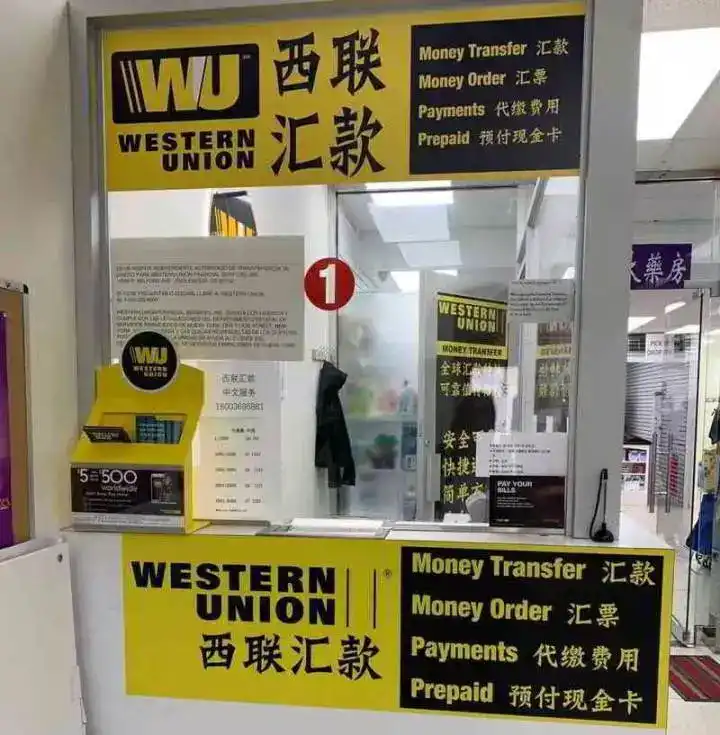
But this network is also Western Union's heaviest burden. The cost of maintaining 500,000 agent points accounts for about 60% of its service costs. Its core customer base—cash-dependent remittance senders—is being eroded by generations of digital-native products. Wise's cross-border transfer fees are 60% to 80% lower than Western Union's; Remitly's revenue reached $1.635 billion in 2025, a 29% year-on-year increase, with 9 million active users. Although Western Union's digital revenue is also growing, it still only accounts for 35% of total C2C revenue, with the vast majority of profits still from users who walk into physical locations and pull out cash.

Western Union is being caught up, and it knows it.

Moving Remittance Paths On-Chain with Stablecoins

In October 2025, Western Union announced it would issue the stablecoin USDPT on Solana, with the issuer being the US-licensed crypto bank Anchorage Digital. As of April 2026, USDPT has entered the actual deployment phase. At the same time, Western Union is building a "Digital Asset Network," connecting multiple on- and off-ramp platforms, aiming to allow users holding any mainstream crypto assets to exchange them for cash through Western Union's network.

A more specific landing scenario is its partnership with Rain to issue a Visa card linked to stablecoins. This card is designed for high-inflation countries, a Visa card tied to a US dollar stablecoin, specifically targeting countries like Argentina and Zimbabwe, where the local currency depreciates by tens or even hundreds of percentage points annually. Western Union CFO Matthew Cagwin mentioned at an industry conference, "Argentina's inflation exceeded 200% last year. After locals obtain US dollar stablecoins, they can directly spend at merchants or walk into Western Union locations to withdraw cash." The final step still relies on that network of 500,000 cash points.

Wallets Are the Real Battlefield

For the past 170-plus years, Western Union has played the role of a "pipeline" in remittances: money flows in from one end and out from the other, used and then gone. Users are not in Western Union's app, nor in Western Union's accounts; they are just passing through. What Wise and Remitly are taking is precisely that time users spend staying—people are getting used to keeping money in digital wallets, where transfers are just one action, not the entirety.

The acquisition of Dash is Western Union's first real attempt to keep users.
Dash was launched by Singapore Telecommunications in 2014 and is deeply embedded in Singapore's local life scenarios: paying utility bills, buying insurance, making small investments, and sending money to family overseas, all within one app. 1.4 million users represent a very high coverage rate for a city-state. More importantly, a large portion of these users are Southeast Asian immigrants working in Singapore, precisely Western Union's core customer group.

Western Union's previous way of reaching these people was to have them walk into convenience store counters. Now, it wants to move directly into their phones.

Dash brings not just users but also a front end for directly testing new products. After the USDPT stablecoin launches, one of the most natural distribution channels will be Dash's wallet interface; the stablecoin card for high-inflation markets also needs a trusted app to support it. Singapore, as a financial hub in Southeast Asia with a relatively mature regulatory environment, is the most suitable place for Western Union to first validate the logic before rolling out this suite of on-chain products across the Asia-Pacific region.

Pertanyaan Terkait

QWhat was Western Union's initial experiment with Ripple's xRapid in 2018, and what was the outcome?

AIn 2018, Western Union conducted a small experiment by integrating Ripple's xRapid product to settle foreign exchange transactions between the US dollar and the Mexican peso using XRP tokens. After testing 10 transactions, the then-CEO stated that it was too expensive and did not save any costs, leading to the suspension of the experiment.

QWhat significant acquisition did Western Union announce on April 3, 2026, and why is it important?

AOn April 3, 2026, Western Union announced the acquisition of Dash, a Singapore-based digital wallet formerly owned by Singapore Telecommunications. With 1.4 million users, Dash supports payments, remittances, savings, insurance, and investments, and is one of the most widely used full-featured wallets in Singapore. This marks Western Union's first digital wallet asset in the Asia-Pacific region.

QHow does Western Union's traditional business model work, and what are its main challenges?

AWestern Union's traditional model relies on a network of over 500,000 physical agent locations, such as small supermarkets, convenience stores, and post offices. Customers fill out a form and hand over cash, and the recipient can collect the money from another agent location. This network serves people without bank accounts or in remote areas. However, maintaining these agent locations accounts for about 60% of service costs, and the core customer base is being eroded by digital-native competitors like Wise and Remitly, which offer lower fees and digital convenience.

QWhat is USDPT, and how does Western Union plan to use it?

AUSDPT is a stablecoin issued by Western Union on the Solana blockchain, with Anchorage Digital as the issuer. It is part of Western Union's 'Digital Asset Network,' which connects multiple on- and off-ramp platforms. The goal is to allow users with any mainstream cryptocurrency to convert it into cash through Western Union's network. Additionally, Western Union partnered with Rain to issue a Visa card linked to the stablecoin, targeting high-inflation countries like Argentina and Zimbabwe, where users can spend the stablecoin at merchants or withdraw cash at Western Union agent locations.

QWhy did Western Union acquire the Dash wallet, and what strategic advantages does it offer?

AWestern Union acquired Dash to move beyond being a mere 'pipeline' for remittances and to retain users within its ecosystem. Dash, with its 1.4 million users in Singapore, is deeply integrated into local life scenarios like bill payments, insurance, investments, and remittances. It particularly serves Southeast Asian immigrants in Singapore, who are part of Western Union's core customer base. The acquisition provides a front-end to test new products, such as distributing the USDPT stablecoin and launching stablecoin Visa cards, making Singapore a strategic hub for expanding these blockchain-based products across the Asia-Pacific region.

Bacaan Terkait

Setelah Pelatihan, Insinyur OpenAI Weng Jiayi Mengajukan Asumsi Paradigma Baru untuk Agentic AI

Dalam eksperimen terbarunya, insinyur OpenAI, Weng Jiayi, mengusulkan paradigma baru untuk AI agentik yang disebut "Heuristic Learning" (HL). Berbeda dengan pendekatan tradisional yang mengandalkan pelatihan model neural berskala besar, HL memungkinkan AI (dalam hal ini Codex) untuk secara mandiri menulis, menjalankan, menguji, dan merevisi kode program strategi berdasarkan tujuan, lingkungan yang dapat dijalankan, dan umpan balik tertutup. Dalam eksperimen utama di lingkungan Atari Breakout, agen Codex berhasil mengembangkan strategi kode Python murni yang mencapai skor sempurna 864. Prosesnya melibatkan siklus iteratif: menulis kode, menjalankan simulasi, menganalisis log dan rekaman video, mengidentifikasi kegagalan, lalu memodifikasi kode. Pengalaman "dipelajari" tidak disimpan dalam bobot neural network, tetapi dalam sistem perangkat lunak yang dapat dibaca, diubah, dan diaudit. Eksperimen lebih lanjut di 57 game Atari menunjukkan bahwa pendekatan HL memiliki efisiensi sampel yang mengesankan di awal, mencapai kinerja sebanding dengan algoritma Reinforcement Learning (RL) seperti PPO dalam jutaan langkah. Namun, HL memiliki batasan dalam tugas yang memerlukan perencanaan jangka panjang dan urutan aksi kompleks, seperti yang terlihat dalam game Montezuma's Revenge. Paradigma HL ini berpotensi memiliki implikasi signifikan di industri, terutama dalam: 1) Kontrol robotik untuk skenario terstruktur, mengurangi ketergantungan pada inferensi neural network berat di setiap langkah; 2) Skenario kritis keamanan (mobil otonom, robot medis) di mana kemampuan audit dan penelusuran kode sangat berharga; 3) Pembelajaran berkelanjutan yang dapat diotomatisasi dan diintegrasikan ke dalam alur kerja rekayasa perangkat lunak; 4) Preservasi dan pertukaran kemampuan agen dalam bentuk aset kode yang dapat digunakan kembali. Weng Jiayi menekankan bahwa HL bukan pengganti lengkap untuk neural network, tetapi pelengkap. Visinya adalah sistem hybrid di mana neural network (System 1) menangani persepsi cepat, HL menangani pemrosesan aturan dan memori yang dapat diinterpretasikan, dan LLM agen (System 2) memberikan umpan balik tingkat tinggi. Intinya, HL menawarkan kemungkinan untuk mengubah pengalaman AI dari sesuatu yang "terkompresi dalam bobot" menjadi sesuatu yang "terkandung dalam perangkat lunak yang dapat dipelihara".

marsbit36m yang lalu

Setelah Pelatihan, Insinyur OpenAI Weng Jiayi Mengajukan Asumsi Paradigma Baru untuk Agentic AI

marsbit36m yang lalu

Claude-mu Akan Bermalam Ini, Jangan Ganggu Ia

Anthropic memperkenalkan fitur "Dreaming" (Bermimpi) pada platform Managed Agents, yang memungkinkan AI Agent secara otomatis menganalisis dan mengoptimalkan log dari sesi tugas sebelumnya saat tidak aktif. Proses ini mirip dengan konsolidasi memori dalam tidur manusia, di mana AI menyaring informasi penting dari riwayat operasinya (seperti pola keberhasilan atau kegagalan) untuk meningkatkan kinerja di masa depan. Fitur serupa juga dikembangkan oleh Hermes Agent dan OpenClaw, yang menggunakan mekanisme "mimpi" untuk menyempurnakan keterampilan dan memori jangka panjang AI. Artikel ini mengeksplorasi bagaimana istilah-istilah manusia seperti "berpikir", "ingatan", dan kini "bermimpi" semakin banyak diterapkan pada teknologi AI. Penggunaan bahasa ini tidak hanya bersifat metaforis tetapi juga membentuk persepsi pengguna tentang AI sebagai entitas yang lebih hidup dan mandiri. Namun, secara teknis, "Dreaming" pada AI adalah proses pengolahan data offline yang bertujuan untuk efisiensi dan pembelajaran mandiri, berbeda dengan mimpi manusia yang melibatkan kesadaran. Tantangan kontekstual dalam AI, seperti batasan memori (KV Cache) dan kebutuhan akan jendela konteks yang lebih besar (seperti model SubQ yang mengklaim 12 juta token), mendorong pengembangan fitur seperti "Dreaming" untuk membantu AI mengelola informasi dengan lebih cerdas. Artikel ini mengajak pembaca untuk mempertanyakan bagaimana bahasa membentuk hubungan kita dengan teknologi dan menggeser tanggung jawab dari pengembang ke AI itu sendiri.

marsbit40m yang lalu

Claude-mu Akan Bermalam Ini, Jangan Ganggu Ia

marsbit40m yang lalu

CoreWeave yang Diborong Duan Yongping, Kini Berubah Jadi Medan Perang Sengit antara Bull dan Bear

Penulis: Deep潮 TechFlow Pada 8 Mei, penyedia daya komputasi awan AI CoreWeave (CRWV) anjlok 11,4% dalam sehari. Kejatuhan ini terjadi bersamaan dengan fakta bahwa investor terkenal Tiongkok, Duan Yongping (段永平), yang sering disebut sebagai "murid Warren Buffett," baru saja membuka posisi pertamanya di CoreWeave pada kuartal IV 2025 dengan nilai sekitar $20 juta, tepat di dekat kisaran terendah saham tahun 2025. Laporan keuangan Q1 CoreWeave mempertajam perdebatan sengit antara pihak bullish (optimis) dan bearish (pesimis). Pendapatan melonjak 112% menjadi $2,08 miliar, namun kerugian bersih melebar menjadi $740 juta. Panduan pendapatan untuk Q2 juga berada di bawah ekspektasi pasar. Inti narasi bullish terletak pada cadangan pesanan yang belum dipenuhi (RPO) sebesar $99,4 miliar, daftar klien yang berkembang (termasuk Anthropic, Meta, Jane Street), dan hubungan yang sangat erat dengan NVIDIA sebagai investor, pemasok, dan pelanggan. Pihak bearish berfokus pada melemahnya profitabilitas: margin laba operasional (setelah disesuaikan) hanya 1%, meskipun margin EBITDA tinggi (56%), karena biaya infrastruktur melonjak. Mereka juga mengkhawatirkan pengeluaran modal yang sangat agresif ($6,8 miliar di Q1) dan utang yang membengkak ($25 miliar). Pola penjualan saham oleh internal perusahaan (insider selling) juga menambah tekanan. Duan Yongping, dengan posisi CoreWeave yang hanya 0,12% dari total portofolionya, tampaknya menganggap investasi ini sebagai taruhan kecil dan eksplorasi di hilir rantai pasokan daya komputasi AI, dengan taruhan utamanya tetap pada NVIDIA. CEO CoreWeave Michael Intrator berargumen bahwa pasar terlalu fokus pada harga saham (pohon) dan kehilangan pandangan atas prospek jangka panjang perusahaan (hutan), menjanjikan pemulihan margin di kuartak mendatang. Intinya, CoreWeave menjadi medan pertempuran antara narasi pertumbuhan masa depan yang kuat dan realitas keuangan saat ini yang menantang. Laporan keuangan Q2 nanti akan menjadi ujian penting untuk melihat apakah janji pemulihan margin dapat terwujud.

marsbit46m yang lalu

CoreWeave yang Diborong Duan Yongping, Kini Berubah Jadi Medan Perang Sengit antara Bull dan Bear

marsbit46m yang lalu

Festival "Burning Man" Teknologi Versi China Pertama Kali Hadir di Shanghai, muShanghai Bentuk "Kota Kilat" Geeks Global

"muShanghai: Festival Teknologi 'Burning Man' ala China Pertama Kali Hadir di Shanghai, Membangun 'Kota Pop-up' untuk Geeks Global" Shanghai, 10 Mei - 6 Juni 2026: MuShanghai, bagian dari komunitas sumber terbuka global The Mu, meluncurkan eksperimen "Kota Pop-up" selama 28 hari di Pusat Alibaba Hongqiao. Acara ini bertujuan menciptakan "kota paralel" bagi para geeks global, menghimpun lebih dari 800 peserta dari 50+ negara, termasuk mantan insinyur OpenAI, pendiri startup, dan kontributor inti OpenClaw. Acara bertema "festival teknologi Burning Man" ini menampilkan empat minggu tematik: * **Minggu AI (11-15 Mei):** Diskusi model AI besar, keamanan AI, dan aplikasi konsumen dengan pakar dari perusahaan seperti Kimi, Zhipu AI. * **Minggu Biotek (18-22 Mei):** Eksplorasi teknologi anti-penuaan, laboratorium bertenaga AI, dan penelitian panjang umur. * **Minggu Robotika (25-29 Mei):** Lomba robot, peragaan busana cyber, dan showcase perangkat keras. * **Minggu Budaya (1-6 Juni):** Dialog tentang masa depan masyarakat, budaya cyberpunk, dan game indie. Setiap Jumat diadakan "Pasar Inovator" outdoor untuk memamerkan proyek. Prinsip "Build in Public" diterapkan untuk mendorong iterasi berbasis umpan balik. Pusat Alibaba Hongqiao, sebagai tuan rumah bersama, menyediakan dukungan一站式 (layanan satu atap) bagi talenta internasional. The Mu, komunitas di balik acara ini, memiliki rekam jejak membangun hub inovasi serupa di Argentina, San Francisco, dan untuk Ekspo Osaka 2025. MuShanghai merupakan jendela penting bagi ekosistem inovasi China untuk terhubung dengan dunia global, menekankan kolaborasi manusia dan teknologi di era AI.

marsbit47m yang lalu

Festival "Burning Man" Teknologi Versi China Pertama Kali Hadir di Shanghai, muShanghai Bentuk "Kota Kilat" Geeks Global

marsbit47m yang lalu

Trading

Spot
Futures
活动图片