Federal Reserve Raises Rates, Signals Potential Pause

WSJDipublikasikan tanggal 2023-05-04Terakhir diperbarui pada 2023-05-04

Abstrak

Central-bank officials remove earlier guidance that had pointed to further increases

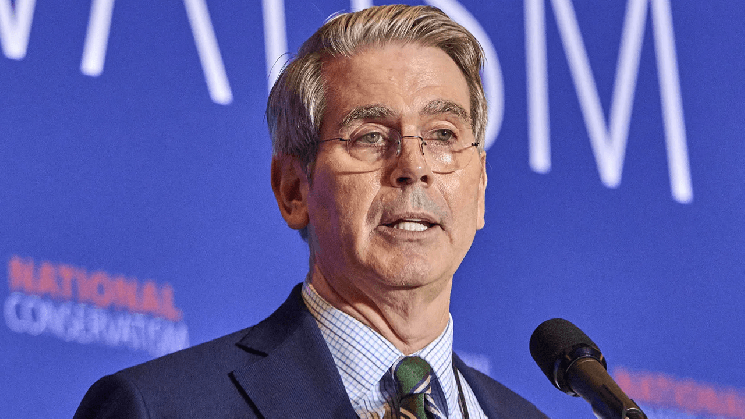
WASHINGTON—Federal Reserve officials signaled they might be done raising interest rates for now after approving another increase at their meeting that concluded Wednesday.

“People did talk about pausing, but not so much at this meeting,” Fed Chair Jerome Powell said at a news conference. “We feel like we’re getting closer or maybe even there.”

The unanimous decision marked the Fed’s 10th consecutive rate increase aimed at battling inflation and brings its benchmark federal-funds rate to a range between 5% and 5.25%, a 16-year high.

Stocks retreated after the decision. The Dow industrials were down 0.8%, or about 270 points. U.S. government bonds rallied slightly. The benchmark 10-year U.S. Treasury yield fell to 3.401%, from 3.438% Tuesday.

With the latest increase, the Fed has raised its benchmark federal-funds rate by a cumulative 5 percentage points from near zero in March 2022, the most rapid series of increases since the 1980s. The rate influences other rates throughout the economy, such as on mortgages, credit cards and business loans.

“I think that policy is tight,” Mr. Powell said. But he added, “we are prepared to do more if greater monetary policy restraint is warranted.”

Until now, officials have been looking for clear signs of a slowdown to justify ending rate increases. But Mr. Powell indicated that calculation could shift now, and officials would need to see signs of stronger-than-expected growth, hiring and inflation to continue raising rates. The Fed’s next meeting is June 13-14.

The Fed fights inflation by slowing the economy through lifting rates, which causes tighter financial conditions such as higher borrowing costs, lower stock prices and a stronger dollar. Banking stresses are expected to further tighten financial conditions, but the magnitude of any credit crunch is hard to predict and might not be apparent for months.

“We have a broad understanding of monetary policy. Credit tightening is a different thing,” Mr. Powell said.

Analysts said Mr. Powell’s comments suggested an important shift in what the Fed would monitor as it determines any further moves. “For the last 12 months, it has been all about inflation and the pace of employment growth,” said Blerina Uruci, chief U.S. economist at T. Rowe Price. “Now, perhaps, that is broadening. Banking-sector stress and credit conditions are going to be part of that calculation much more now.”

Some said the Fed would have been better off holding rates steady Wednesday to see how those strains slow the economy. “It’s not clear this move was necessary,” said Brian Sack, an economist and former senior executive at the New York Fed. “The arguments for the hike were very backward looking, and that’s just not the right approach when you have such important developments affecting the path of the economy going forward.”

Mr. Sack said he thought the Fed wouldn’t raise rates again this year.

Others said the increase was a reasonable way to balance the risks of sustained inflation pressures in a resilient economy. “It’s not an indefensible position, I don’t think. Is it one made a lot more difficult by the current backdrop? Yes,” said Michael de Pass, global head of linear rates trading at Citadel Securities.

Officials dropped a key phrase from their previous policy statement, in March, that said they anticipated some additional increases might be appropriate, and they replaced it with new language saying they would carefully monitor the economy and the effects of their rapid increases over the past year.

“That’s a meaningful change, that we’re no longer saying that we ‘anticipate’” additional increases, said Mr. Powell.

Officials considered skipping a rate hike in March after the failures of two regional lenders, Silicon Valley Bank and Signature Bank, raised worries about a bank-funding crisis. But they concluded that the stresses had calmed enough on the eve of their March 22 decision to move ahead with an increase.

How would you rate the Fed’s actions so far this year? Join the conversation below.

The sale of First Republic Bank to JPMorgan Chase by the Federal Deposit Insurance Corp., announced Monday, showed how those strains are still clouding the economic outlook.

Mr. Powell said conditions in the banking sector had broadly improved since March. “There were three large banks, really, from the very beginning that were at the heart of the stress that we saw,” he said. “Those have now all been resolved and all the depositors have been protected.”

Officials have signaled growing divergence over the policy outlook recently, with some urging greater caution about raising rates given the lagged effects of the banking stress and the Fed’s earlier increases. Others are more worried about stopping prematurely only to see economic activity and inflation remain strong.

In projections released after their March meeting, most Fed officials thought they would need one more quarter-point rate rise before moving to the sidelines. But many thought they might need at least two more increases.

At the March meeting, the Fed staff forecast a recession would start later this year due to the banking-sector turmoil. The staff hasn’t usually projected a recession before a downturn begins. Previously, the staff had judged a recession was roughly as likely to occur as not this year.

Mr. Powell said he didn’t share the staff’s view, but he didn’t dismiss the prospect of a recession. “It’s possible that we will have—what I hope would be—a mild recession,” he said.

Since officials met in March, the economy has shown only modest signs of cooling, including more muted consumer spending and factory activity. Job openings declined in February and March, and the share of private-sector workers voluntarily leaving their jobs has returned closer to prepandemic levels, suggesting the tight labor market has eased a bit.

Hiring remains robust. Employers added nearly 345,000 jobs a month on average in the first quarter.

Steady job growth and brisk wage gains could sustain higher inflation. The Fed’s preferred inflation gauge, the personal-consumption expenditures price index, rose 4.2% in March from a year earlier. That was down from the previous month’s 5.1% increase. Core prices, which exclude volatile food and energy prices, rose 4.6% in March, slowing from 5.1% in October. The Fed targets 2% inflation over time.

The housing market—one of the sectors hardest hit by Fed rate increases—has seen some signs of improvement, illustrating how difficult it has been so far for the Fed to slow economic activity.

Some congressional Democrats chided the Fed’s latest move. Rep. Brendan Boyle (D., Pa.), the top Democrat on the House Budget Committee, called the increase “imprudent.”

Many have faulted the Fed for being slow to remove stimulus after Congress approved more than $2 trillion in spending at the end of 2020 and in early 2021, when inflation first surged. But Sen. Elizabeth Warren (D., Mass.) said the Fed should have taken a more cautious approach to fighting inflation. “The problems we have that are driving prices higher are not all problems that you can fix by raising interest rates,” she said on CNBC. “You’ve got other tools you have to work with.”

The Fed and many investors have sometimes been at odds during the past nine months over how high rates might rise and how long rates will stay at those higher levels to ensure inflation declines. Investors have often anticipated a speedier drop in inflation and rates, in part because they expect rate increases to tip the economy into recession.

Those expectations have led long-term bond yields to decline, potentially making it harder for the Fed to restrain the economy with higher short-term rates.

Mr. Powell pushed back against expectations of rate cuts this year, but he acknowledged that investors expecting inflation to fall quickly could take that view. “We on the committee have a view that inflation is going to come down not so quickly. In that world, if that forecast is broadly right, it would not be appropriate to cut rates, and we won’t cut rates,” he said.

Bacaan Terkait

Investasi Pasang Surut: Kami Masih Optimis dengan Rantai Industri AI, Namun Alasannya Telah Berubah

**Investasi Pasang Surut: Kami Masih Optimis dengan Rantai Industri AI, Tapi Alasannya Berubah** Pasar saat ini dihadapkan pada gelombang penggalangan dana besar-besaran oleh perusahaan teknologi raksasa seperti SpaceX, Alphabet, dan Meta, menimbulkan kekhawatiran bahwa siklus AI mungkin telah mencapai puncaknya. Namun, analisis menunjukkan bahwa ini bukan tanda akhir, melainkan peralihan ke babak berikutnya dalam perkembangan AI. Alasan utama optimisme terletak pada intensitas investasi modal (Capex) yang terus berlanjut dan bahkan meningkat tajam. Lima penyedia cloud utama (Alphabet, Amazon, Meta, Microsoft, Oracle) semuanya telah meningkatkan panduan Capex mereka untuk tahun 2026 secara signifikan, dengan angka mencapai ratusan miliar dolar AS. Ini menunjukkan komitmen kuat untuk membangun infrastruktur AI. Siklus investasi ini diperkirakan akan lebih tahan lama dibandingkan siklus perangkat keras sebelumnya karena beberapa alasan: 1. **Kompleksitas dan Hambatan Fisik:** Investasi tidak hanya untuk chip (GPU), tetapi juga untuk listrik, transformator, pendinginan, jaringan, dan ruang data. Banyak dari komponen ini menghadapi kendala pasokan yang parah dan waktu tunggu produksi yang panjang (misalnya, transformator bisa memakan waktu 4 tahun). 2. **Sifat Proyek yang Berkelanjutan:** Proyek infrastruktur berskala besar, sekali dimulai, lebih mahal untuk dihentikan di tengah jalan daripada diselesaikan. 3. **Data Pendukung:** Perusahaan seperti Eaton melaporkan lonjakan pesanan data center lebih dari 200%, menunjukkan bahwa investasi ini didukung oleh aktivitas konstruksi nyata. Pasar memiliki dua kekhawatiran utama: 1. **ROI (Return on Investment):** Pertumbuhan Capex melampaui pertumbuhan pendapatan, menekan arus kas bebas. Namun, model bisnis cloud historis menunjukkan bahwa fase investasi masif dapat diikuti oleh monetisasi skala besar. Sinyal untuk mengubah pandangan akan muncul jika panduan Capex diturunkan atau penggunaan produk AI meleset dari ekspektasi – yang saat ini belum terjadi. 2. **Gelembung seperti tahun 2000:** Krisis dot-com dipicu oleh kelebihan pasokan infrastruktur (serat optik) yang mudah dibangun. Situasi saat ini justru sebaliknya, ditandai oleh **kekurangan pasokan** di banyak lapisan infrastruktur fisik yang kritis dan tidak dapat diproduksi secara berlebihan dengan mudah. Kesimpulannya, gelombang penggalangan dana saat ini mencerminkan kebutuhan untuk mendanai tahap ekspansi AI berikutnya yang penuh dengan hambatan teknis dan logistik. Sinyal dari perusahaan menunjukkan investasi belum melambat. Meskipun risiko selalu ada, bukti saat ini lebih mendukung narasi bahwa siklus AI masih berlanjut, hanya saja dengan dinamika dan tantangan yang telah berubah.

marsbit48m yang lalu

Investasi Pasang Surut: Kami Masih Optimis dengan Rantai Industri AI, Namun Alasannya Telah Berubah

marsbit48m yang lalu

Tidal Investment: Kami Masih Optimis dengan Rantai Pasokan AI, tapi Alasan Kami Berubah

**Investasi Pasang Surut: Kami Masih Optimis dengan Rantai Industri AI, Tapi Alasannya Berubah** Pasar saat ini dihadapkan pada gelombang besar pengumpulan modal dari raksasa teknologi seperti IPO SpaceX senilai $750 miliar dan rencana pendanaan besar-besaran oleh Alphabet dan Meta. Ini memicu kekhawatiran bahwa siklus AI mungkin telah mencapai puncaknya. Namun, menurut "Tidal Investment", ini bukan tanda akhir, melainkan peralihan ke babak baru. Alasan untuk tetap optimis telah berubah. Dua tahun lalu, cerita didorong oleh ledakan permintaan dan imajinasi industri. Pada pertengahan 2026, fokusnya beralih ke pertanyaan apakah intensitas investasi ini berkelanjutan. Kunci jawabannya terletak pada niat dan kemampuan para pemain kunci untuk terus berinvestasi. Data menunjukkan investasi justru semakin agresif. Panduan belanja modal (Capex) 2026 dari lima vendor cloud utama (Alphabet, Amazon, Meta, Microsoft, Oracle) semuanya dinaikkan secara signifikan, mencapai angka ratusan miliar dolar AS. Bahkan perusahaan dengan arus kas kuat pun mengatur ulang struktur modalnya untuk mendanai infrastruktur AI. Siklus investasi ini sulit berhenti karena beberapa alasan. Pertama, investasi tersebar di banyak lapisan fisik seperti komputasi, memori, jaringan, dan yang paling kritis: **listrik**. Kemacetan bergeser dari chip ke komponen fisik seperti transformer, pendinginan cair, dan akses jaringan listrik, yang membutuhkan waktu bertahun-tahun untuk dikembangkan. Kedua, pesanan untuk peralatan pendukung data center (seperti dari Eaton yang melonjak 240%) membuktikan ada progres konstruksi riil di balik angka Capex yang besar. Pasar memiliki dua kekhawatiran utama: 1. **ROI**: Pertumbuhan Capex melampaui pertumbuhan pendapatan, meningkatkan beban penyusutan dan menekan arus kas bebas (seperti yang dialami Amazon). Namun, ini mirip dengan fase awal pengembangan cloud. Risiko ROI nyata, tetapi belum ada sinyal seperti panduan Capex yang diturunkan atau pesanan yang dibatalkan. 2. **Gelembung seperti tahun 2000**: Krisis dot-com disebabkan oleh kelebihan pasokan infrastruktur (seperti fiber optik) yang mudah dibangun. Situasi saat ini justru terbalik. Infrastruktur fisik yang dibutuhkan AI (listrik, transformer) sangat kompleks, membutuhkan waktu lama, dan tidak dapat "dipra-pasang" seperti fiber optic, sehingga risiko kelebihan pasokan mendadak lebih rendah. Kesimpulannya, gelombang pendanaan besar-besaran ini lebih mencerminkan **"istirahat tengah babak"** daripada akhir permainan. Tantangan di babak selanjutnya (keterbatasan listrik, pasokan transformer) justru membutuhkan lebih banyak modal dan waktu. Siklus investasi AI masih berlangsung, hanya saja alur ceritanya yang berubah dari narasi murni pertumbuhan menjadi narasi ketahanan dan realisasi nilai dalam menghadapi kendala fisik.

链捕手54m yang lalu

Tidal Investment: Kami Masih Optimis dengan Rantai Pasokan AI, tapi Alasan Kami Berubah

链捕手54m yang lalu

Grayscale: 15 Protokol Kripto Penghasil Uang Ini, Harganya Sangat Terendervaluasi

**Ringkasan: 15 Protokol Kripto Penghasil Pendapatan yang Dinilai Terlalu Rendah Menurut Grayscale** Grayscale Research melaporkan bahwa 15 protokol on-chain dengan pendapatan tertinggi saat ini diperdagangkan pada kelipatan pendapatan (revenue multiple) yang sangat rendah, banyak di antaranya hanya 1x hingga 9x. Protokol seperti Pump.fun, PancakeSwap, dan Meteora bahkan memiliki kapitalisasi pasar yang hampir setara dengan pendapatan satu tahun mereka. Rendahnya valuasi ini terjadi meskipun protokol-protokol ini menghasilkan pendapatan ratusan juta dolar dengan biaya operasional minimal. Grayscale berpendapat bahwa potensi disahkannya *CLARITY Act* (Undang-Undang Kejelasan Pasar Aset Digital) pada bulan depan bisa menjadi katalis. Regulasi yang lebih jelas diharapkan dapat mengurangi hambatan bagi lembaga keuangan tradisional, mendorong lebih banyak aktivitas dan nilai terkunci (TVL) di sektor keuangan terdesentralisasi (DeFi), yang pada akhirnya akan meningkatkan pendapatan protokol-protokol ini. Laporan ini mengelompokkan protokol berdasarkan kelipatan pendapatannya: - **"Klub 1x"**: Pump.fun (PUMP), PancakeSwap (CAKE), Meteora (MET), Collector Crypt (CARDS). - **Kelipatan satu digit**: Raydium (RAY), Lido Finance (LDO), Aerodrome (AERO), Sky (SKY), Jupiter (JUP), Ether.fi (ETHFI), Lighter (LIT), Aave (AAVE). - **Kelipatan tinggi**: Hyperliquid (HYPE, 15x), World Liberty Financial (WLFI, 17x), dan Uniswap (UNI, 37x) yang dinilai berdasarkan narasi dan nilai opsi masa depan. Grayscale juga memberikan analisis valuasi DCF (Discounted Cash Flow) untuk Aave, dengan target harga sekitar $175. Namun, penting dicatat bahwa Grayscale memiliki kepentingan komersial dalam laporan ini sebagai perusahaan pengelola aset kripto, dan katalis regulasi (CLARITY Act) belum tentu terwujud. Investor disarankan untuk melakukan penilaian mandiri.

marsbit1j yang lalu

Grayscale: 15 Protokol Kripto Penghasil Uang Ini, Harganya Sangat Terendervaluasi

marsbit1j yang lalu

Trading

Spot
Futures
活动图片