Abstract
Ray Dalio argues that the world is in the early stages of a prolonged "world war" that is unlikely to end soon. This conflict is not a single declared war but a combination of multiple regional hot wars (e.g., Russia-Ukraine, Israel-Gaza, US-Iran) and non-shooting wars (economic, technological, capital, and geopolitical influence wars). These interconnected conflicts are reshaping global order, driven by shifting alliances, resource competition, and the weaponization of critical trade routes like the Strait of Hormuz.
Key powers are aligning into opposing blocs: China, Russia, Iran, and North Korea versus the US, Israel, Gulf states, Japan, and Australia. Dalio emphasizes that victory in such conflicts depends not on absolute strength but on which side can endure prolonged pain and resource depletion. He warns that the US, while powerful, is overextended globally and may struggle to manage multiple fronts simultaneously.
The current phase resembles historical pre-war periods (e.g., 1913–1914, 1938–1939), where economic and military tensions escalate into broader conflicts. Dalio urges observers to look beyond short-term events and focus on structural shifts: rising debt, internal political pressures, and the erosion of the US-led multilateral order into a "might-makes-right" system. He assesses a >50% probability of at least one major conflict escalating within five years, including scenarios in Ukraine, Korea, or the South China Sea.
Original Title: The Big Thing: We Are In A World War That Isn’t Going To End Anytime Soon
Original Author: Ray Dalio
Original Compilation: Peggy, BlockBeats
Editor's Note: While the market continues to price in short-term questions like "How long will the conflict last?" and "How high will oil prices go?", this article attempts to pull the perspective back to a longer time scale. Bridgewater Associates founder Ray Dalio believes that the current series of regional conflicts are piecing together into an as-yet unnamed "world-class conflict", whose evolutionary logic is closer to the cyclical stage on the eve of major historical wars.
{"@context":"https://schema.org","@type":"FAQPage","mainEntity":[{"@type":"Question","name":"According to Ray Dalio, what is the most important perspective to understand the current global situation?","acceptedAnswer":{"@type":"Answer","text":"The most important perspective is that we are in the early stages of a world war that will not end soon, and it is part of a larger 'Big Cycle' of structural changes in global order, rather than just focusing on short-term events."}},{"@type":"Question","name":"What does Dalio identify as the key factor in determining which side wins a prolonged conflict, rather than absolute strength?","acceptedAnswer":{"@type":"Answer","text":"The key factor is which side can endure pain and sustain the conflict better, as victory comes not from weakening the enemy but from making them surrender, and the ability to承受痛苦 (endure suffering) is crucial."}},{"@type":"Question","name":"How does Dalio describe the current shift in the world order?","acceptedAnswer":{"@type":"Answer","text":"The world order is shifting from one dominated by the US and its allies with rules-based multilateralism to a state with no single dominant power, where 'might makes right' prevails, resembling pre-1945 historical periods more than the post-war order."}},{"@type":"Question","name":"What are some of the indicators or signals that Dalio uses to track the progression into a conflict phase?","acceptedAnswer":{"@type":"Answer","text":"Indicators include the depletion of military and resource stockpiles, rising fiscal spending, debt, money printing, and capital controls, rival nations learning from each other's strengths and weaknesses through conflicts, and overextended dominant powers facing multiple distant conflicts simultaneously."}},{"@type":"Question","name":"Why does Dalio suggest that China might be less vulnerable in the context of a potential closure of the Strait of Hormuz?","acceptedAnswer":{"@type":"Answer","text":"Because China has a supportive relationship with Iran, likely ensuring oil passage to China; strong ties with Russia for alternative oil supplies; significant other energy sources like coal and solar; large oil reserves (90-120 days); and consumes 80-90% of Iran's oil output, strengthening its leverage."}}]}Related Questions
QAccording to Ray Dalio, what is the most important perspective to understand the current global situation?
AThe most important perspective is that we are in the early stages of a world war that will not end soon, and it is part of a larger 'Big Cycle' of structural changes in global order, rather than just focusing on short-term events.
QWhat does Dalio identify as the key factor in determining which side wins a prolonged conflict, rather than absolute strength?
AThe key factor is which side can endure pain and sustain the conflict better, as victory comes not from weakening the enemy but from making them surrender, and the ability to承受痛苦 (endure suffering) is crucial.
QHow does Dalio describe the current shift in the world order?
AThe world order is shifting from one dominated by the US and its allies with rules-based multilateralism to a state with no single dominant power, where 'might makes right' prevails, resembling pre-1945 historical periods more than the post-war order.
QWhat are some of the indicators or signals that Dalio uses to track the progression into a conflict phase?
AIndicators include the depletion of military and resource stockpiles, rising fiscal spending, debt, money printing, and capital controls, rival nations learning from each other's strengths and weaknesses through conflicts, and overextended dominant powers facing multiple distant conflicts simultaneously.
QWhy does Dalio suggest that China might be less vulnerable in the context of a potential closure of the Strait of Hormuz?
ABecause China has a supportive relationship with Iran, likely ensuring oil passage to China; strong ties with Russia for alternative oil supplies; significant other energy sources like coal and solar; large oil reserves (90-120 days); and consumes 80-90% of Iran's oil output, strengthening its leverage.
Related Reads
The Second Half of Macro Influencer Fu Peng's Career
Fu Peng, a prominent Chinese macroeconomist and former chief economist of Northeast Securities, has joined Hong Kong-based digital asset management firm Bitfire Group (formerly New Huo Group) as its chief economist. This move, announced in April 2026, triggered an 11% surge in Bitfire's stock price.
Fu, known for his accessible macroeconomic commentary and large social media following, will focus on integrating digital assets into global asset allocation frameworks, particularly combining FICC (fixed income, currencies, and commodities) with cryptocurrencies for institutional clients.
His career includes roles at Lehman Brothers and Solomon International, with significant influence gained through public communication. However, in late 2024, Fu faced temporary social media bans after a controversial private speech at HSBC on China's economic challenges, though he denied regulatory sanctions. He later left Northeast Securities citing health reasons.
Bitfire, a licensed virtual asset manager serving high-net-worth clients, seeks to build trust and attract traditional capital through Fu’s expertise and credibility. The partnership represents a strategic shift for both: Fu enters the crypto sector after a traditional finance peak, while Bitfire aims to leverage his macro framework for institutional adoption. Outcomes remain uncertain regarding capital inflows and compatibility within corporate structure.
marsbit39m ago

marsbit39m ago
Stablecoins Don’t Meet Core Requirements Of Money, BIS Says
The Bank for International Settlements (BIS) General Manager, Pablo Hernández de Cos, stated that existing stablecoins fail to meet the core requirements of money, specifically "singleness" and "interoperability." Singleness refers to the need for different forms of money to be interchangeable at par value, which is ensured by central banks in traditional finance but not in decentralized stablecoins. Interoperability means seamless cross-platform transactions, which stablecoins currently lack due to fragmentation across multiple blockchains. These shortcomings limit stablecoins' network effects and widespread acceptance, keeping them a "niche" payment instrument. However, de Cos acknowledged their potential to improve cross-border payments, though he also warned of risks to financial stability and monetary policy. Despite a bearish crypto market, the stablecoin market cap has reached a new all-time high of over $320 billion.
bitcoinist41m ago
bitcoinist41m ago
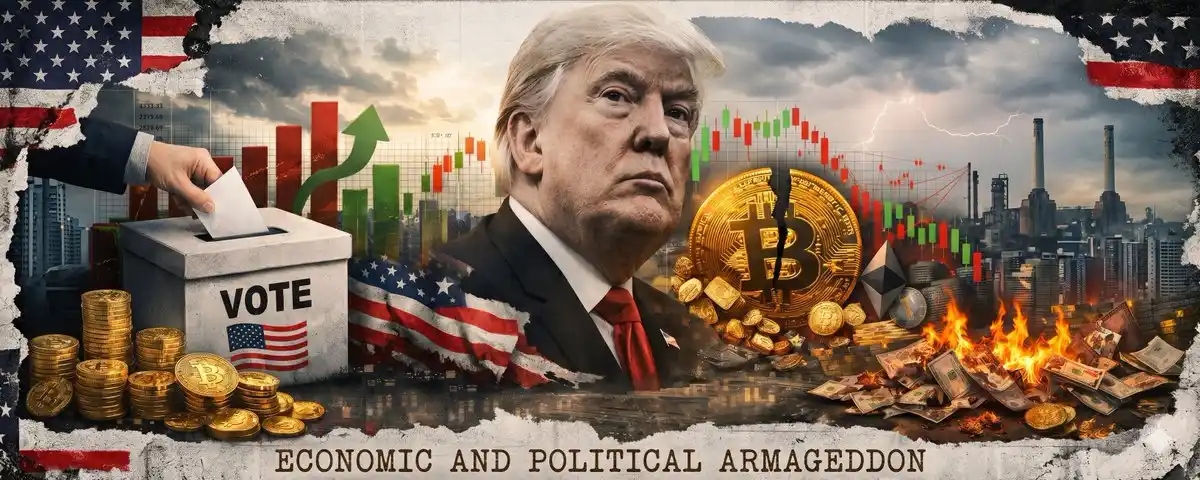
What Does the Outcome of the Midterm Elections Mean for Trump and Crypto?
The article analyzes the potential impact of the upcoming US midterm elections on Trump and cryptocurrency policy. Historically, the president's party loses congressional seats in 90% of midterms since 1946, making a Republican loss in the House highly probable. Current predictions suggest Democrats may take the House while Republicans retain the Senate, resulting in a divided government.
Despite potential losses, Trump could still advance crypto-friendly policies through executive orders, agency appointments (if the Senate is held), budget reconciliation, and veto power. However, major structural bills like the CLARITY Act or a comprehensive stablecoin law would likely stall without a Republican majority in both chambers.
The crypto industry has invested heavily ($288 million) in the elections to push for favorable legislation before the midterm window closes in mid-2026. While Trump remains the most crypto-friendly US president to date, advancing key reforms may be delayed until after 2028 if the legislative window is missed. The overall pro-crypto shift in US politics is seen as irreversible, even if progress slows temporarily.
marsbit1h ago
marsbit1h ago
Cardano Leadership Structure Comes Under Scrutiny, Clouding Its Future – See Why
Cardano is recognized as one of the most decentralized blockchains, yet recent criticism highlights its lack of clear leadership. Analyst Cardano Yoda argues that despite the introduction of on-chain governance—which involves DReps (governance decision-makers) and Pentad (leadership and execution)—the network remains centralized in practice. While DReps control treasury spending, they lack coordination and strategic direction, relying instead on founding entities like IOG, the Cardano Foundation, and EMURGO. This creates fragmented leadership and accountability issues. Yoda suggests that DReps should evolve into a more coordinated body, possibly through a board or DAOs, to define strategy and improve governance effectiveness. Enhanced cooperation between DReps, founding entities, and Intersect is essential for Cardano’s future leadership clarity and operational unity.
bitcoinist3h ago
bitcoinist3h ago
Bitcoin Must Do This To Continue The Rally, Or It Will Be Over
A crypto analyst known as "Swarmik" has identified 17 key price levels where Bitcoin (BTC) could find support if selling pressure increases. The analysis suggests that BTC's overall outlook remains bullish, and any successful bounce from these levels could drive it back to all-time highs or beyond. The first critical support is at $70,931, followed by levels such as $68,931 (an "Imbalance Zone"), $66,638 (a "Reversal Line"), and $64,491 (a "Psychological Level"). Further down, Fibonacci retracements and other technical zones like "Fair Value Gap" and "Order Block" are highlighted. If the decline continues, lower supports include $51,612 ("Demand Zone") and $49,466 ("Supply Zone"). The analyst warns that a drop below $34,732 would invalidate the bullish structure, potentially ending the rally.
bitcoinist5h ago
bitcoinist5h ago
Hot Articles
Welcome to HTX.com! We've made purchasing WAR (WAR) simple and convenient. Follow our step-by-step guide to embark on your crypto journey.Step 1: Create Your HTX AccountUse your email or phone number to sign up for a free account on HTX. Experience a hassle-free registration journey and unlock all features.Get My AccountStep 2: Go to Buy Crypto and Choose Your Payment MethodCredit/Debit Card: Use your Visa or Mastercard to buy WAR (WAR) instantly.Balance: Use funds from your HTX account balance to trade seamlessly.Third Parties: We've added popular payment methods such as Google Pay and Apple Pay to enhance convenience.P2P: Trade directly with other users on HTX.Over-the-Counter (OTC): We offer tailor-made services and competitive exchange rates for traders.Step 3: Store Your WAR (WAR)After purchasing your WAR (WAR), store it in your HTX account. Alternatively, you can send it elsewhere via blockchain transfer or use it to trade other cryptocurrencies.Step 4: Trade WAR (WAR)Easily trade WAR (WAR) on HTX's spot market. Simply access your account, select your trading pair, execute your trades, and monitor in real-time. We offer a user-friendly experience for both beginners and seasoned traders.
1.6k Total ViewsPublished 2024.03.29Updated 2026.03.18