Do Kwon Sentenced to 15 Years in Prison, Crypto's Prison All-Stars Welcome Another Heavyweight Guest

Odaily星球日报Published on 2025-12-12Last updated on 2025-12-12

Abstract

Do Kwon, co-founder of Terraform Labs, has been sentenced to 15 years in prison by a U.S. federal court. The ruling follows his extradition from Montenegro and guilty plea to charges of conspiracy fraud and wire fraud. Kwon was the mastermind behind Terra (LUNA) and its algorithmic stablecoin UST, which collapsed dramatically in May 2022, erasing tens of billions in market value and triggering a prolonged crypto market downturn. The failure of Terra’s “algorithmic” mechanism—which lacked sufficient collateral—led to widespread investor losses, with reports of tragic outcomes including suicides. After the collapse, Kwon fled South Korea and evaded international authorities using forged documents before eventually being captured in Montenegro in March 2023. He was later extradited to the U.S. in late 2024. Prosecutors had sought a 12-year sentence, while Kwon’s defense argued for five years. The judge, however, imposed a stricter sentence, citing the unprecedented scale of fraud, Kwon’s attempt to evade justice, and the need for deterrence. Kwon now joins other high-profile convicted crypto figures like SBF and Alex Mashinsky, marking a symbolic end to an era of reckless expansion and fraud in the industry.

Original | Odaily Planet Daily (@OdailyChina)

Author | Azuma (@azuma_eth)

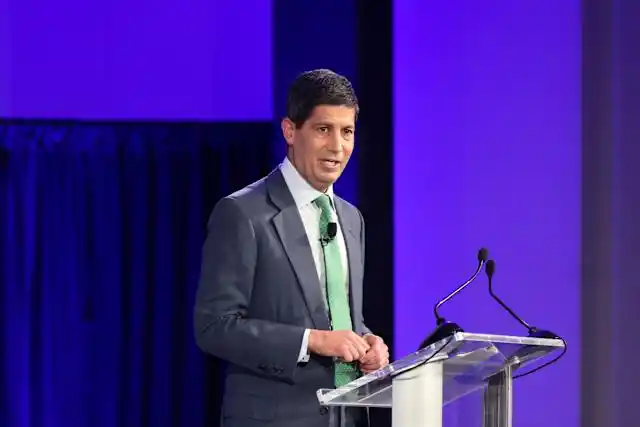
On December 11th Eastern Time, the U.S. District Court for the Southern District of New York held a sentencing hearing for former Terraform Labs co-founder Do Kwon in Courtroom 1305. During the hearing, Judge Paul Engelmayer announced a sentence of 15 years imprisonment for Do Kwon.

Do Kwon has become another high-profile industry figure to receive a heavy sentence, following FTX founder Sam Bankman-Fried and Celsius Network founder Alex Mashinsky.
The Myth and Collapse of Terra

The algorithmic stablecoin project Terra (project token LUNA, stablecoin UST), developed by Terraform Labs, was once the brightest project in the last bull market.

Algorithmic mechanisms were a hot trend in stablecoin innovation during the last cycle. Different from the mainstream over-collateralization mechanism, algorithmic stablecoins do not require full collateral but are designed around market supply and demand to dynamically maintain the "peg" of the coin's price. Taking Terra as an example, the protocol allowed market participants to mint UST by burning an equivalent value of LUNA, or conversely, to burn UST to redeem an equivalent value of LUNA. When demand for UST increased and its price rose above $1, arbitrage opportunities would drive the market to burn LUNA to mint UST, profiting from the premium; conversely, if UST demand decreased and its price fell below $1, the market would be driven to burn UST and mint LUNA, profiting from the discount.

This "stepping on each other's feet to reach the sky" technique between LUNA and UST once forged Terra's growth miracle. The circulating supply of UST once reached $18.7 billion, posing a significant challenge to the stablecoin king USDT; the price of LUNA once approached $120, with a market capitalization as high as $41 billion, once ranking among the top five in the cryptocurrency market cap rankings.

However, history has proven that all stablecoin mechanisms without sufficient collateral are bubbles. They might operate temporarily in normal market conditions but have extremely poor resistance to extreme situations. In May 2022, Terra's bubble finally burst. Under collective panic, Terra's algorithmic stablecoin mechanism instead caused it to sink deeper into a death spiral. Within a few days, LUNA's tens of billions in market capitalization and UST's billions in "value" evaporated.

From a macro perspective, Terra's collapse is considered by many industry insiders to be one of the core events that caused the subsequent prolonged market downturn. From a micro perspective, Terra's crash caused countless investors to suffer huge losses, and some users even chose to commit suicide out of despair.

Flight, Hiding, Capture, and Extradition

After Terra's collapse, prosecutors in both South Korea and the U.S. brought charges against Do Kwon, including conspiracy to commit fraud, commodities fraud, wire fraud, securities fraud, and conspiracy to engage in market manipulation and money laundering. In September 2022, South Korean prosecutors issued a Red Notice through the global police agency Interpol, requesting police worldwide to assist in arresting Do Kwon.

Although Do Kwon remained active on social media and once responded by saying "I'm not on the run," no one knew his specific whereabouts. It wasn't until a year later that people learned Do Kwon had been hiding in Serbia and Montenegro to evade Interpol's pursuit.

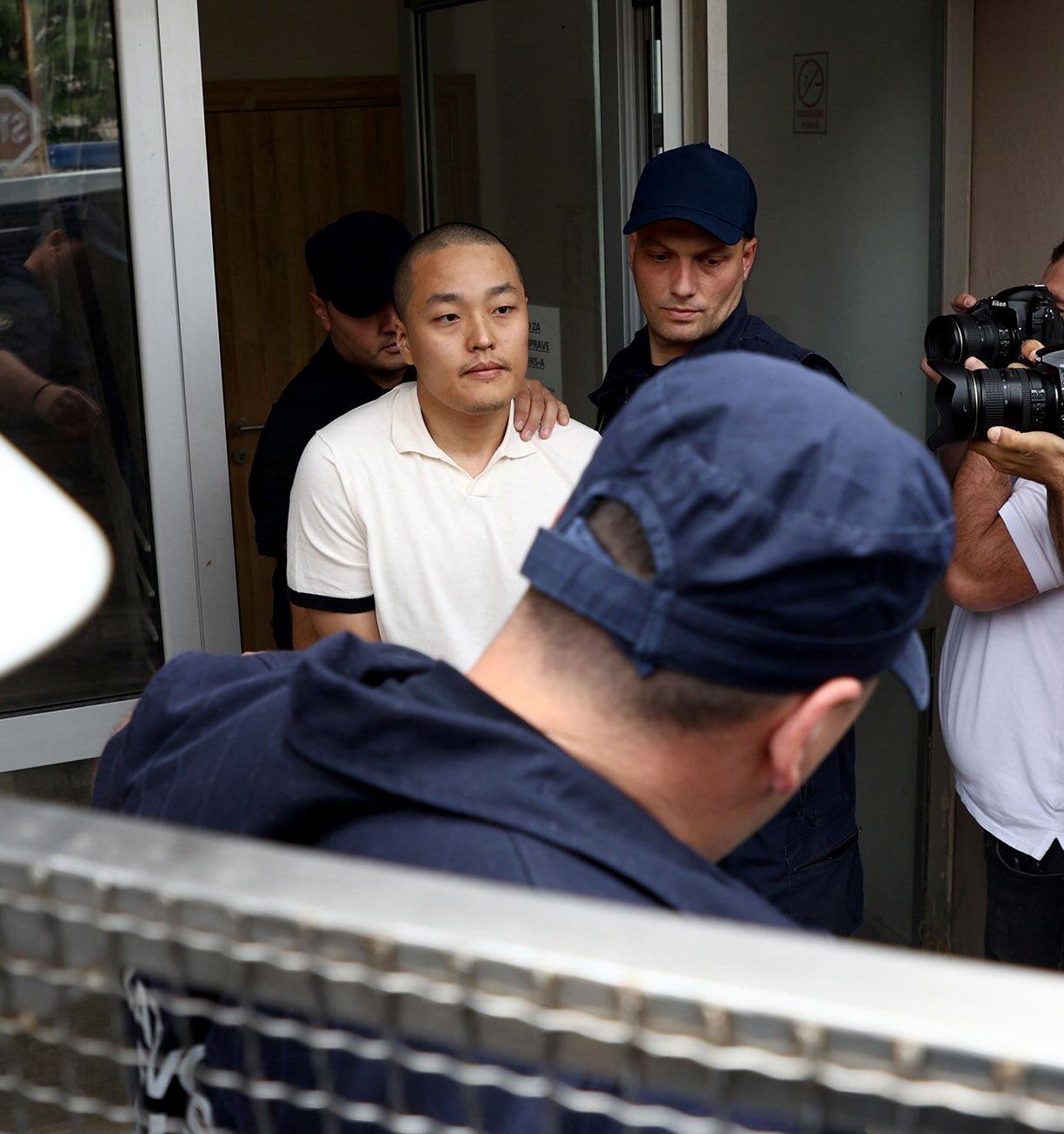
On March 23, 2023, Do Kwon and Terraform's CFO Han Chang-joon attempted to fly from Podgorica, Montenegro, to Dubai using forged Costa Rican passports but were detained by local police at the airport. About two hours before Do Kwon's arrest, an informant told Montenegro's top police officer, Interior Minister Filip Adžić, that Do Kwon might be in the country. Adžić, describing the arrest process to the WSJ, said the informant sent Do Kwon's passport details to his phone, and when he called the border police chief, the police had just detained Do Kwon at the airport.

That interior minister said in the call to the border police chief: "Do you know who that person is? He is very famous and has a lot of money."
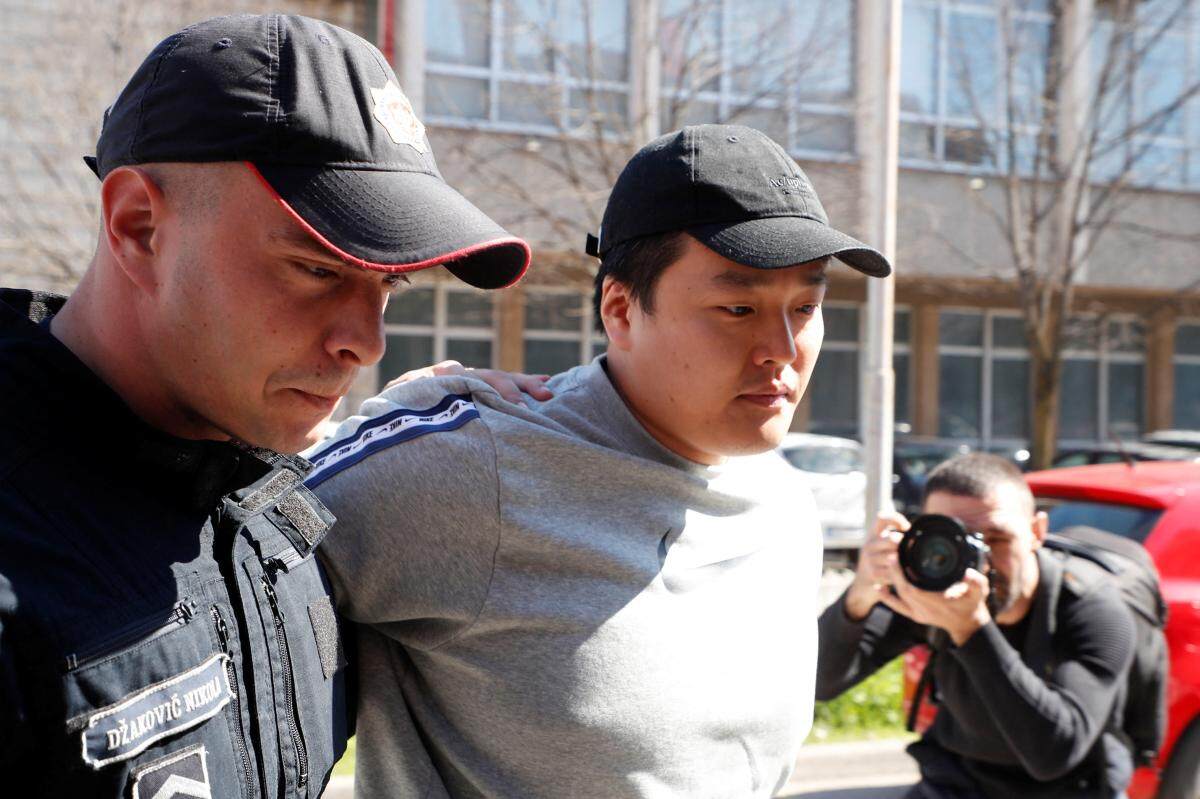
Odaily Note: Photo from the scene of Do Kwon's arrest.

After his arrest, Do Kwon was first held alone in the pre-trial detention area of Montenegro's Spuž Prison, and then on June 19, 2023, was sentenced to 4 months in prison by a Montenegrin court for passport forgery. At that time, both South Korea and the United States sought Do Kwon's extradition from Montenegro. At the request of U.S. and South Korean authorities, the High Court of Montenegro subsequently extended Do Kwon's detention period.

In March 2024, Do Kwon was allowed to leave prison, but considering he still faced criminal charges from several countries, the High Court of Montenegro ordered his passport confiscated to prevent him from leaving the country. At that time, the decision on Do Kwon's extradition was still pending. Montenegrin prosecutors opposed extraditing Do Kwon to South Korea, preferring him to be sent to the United States, where he could face a longer sentence if convicted.

The suspense was finally revealed on the last day of 2024, when the Prime Minister of Montenegro, Milojko Spajic, officially announced that the procedures for extraditing Do Kwon to the United States had been completed.

On January 2, 2025, Do Kwon first appeared in the public eye in a U.S. court. During a hearing at the Manhattan federal court that day, Do Kwon pleaded not guilty. However, as the case progressed, Do Kwon pleaded guilty in August of this year to two of the multiple charges (conspiracy to commit fraud and wire fraud).

Finally, on December 11, Judge Paul Engelmayer announced Do Kwon's fate.

Sentencing Controversy

Regarding Do Kwon's sentencing, the prosecution and the defense each had their say.

Last Thursday, U.S. federal prosecutors submitted a request to the judge of the Southern District of New York, asking for a 12-year prison sentence for Do Kwon.

On the other hand, Do Kwon's defense team requested a five-year sentence, citing that Do Kwon had already served time in Montenegro and might face further prosecution in South Korea. But U.S. officials argued that only a long prison term could reflect the scale of the fraud and deter similar behavior.

The prosecution argued that only a long prison sentence could reflect the scale of Do Kwon's fraud and deter similar behavior. For reference, the losses related to Terraform's collapse exceeded the combined losses from SBF's FTX, Alex Mashinsky's Celsius, and OneCoin. SBF is serving a 25-year sentence, while Mashinsky has been sentenced to 12 years in prison for fraud.
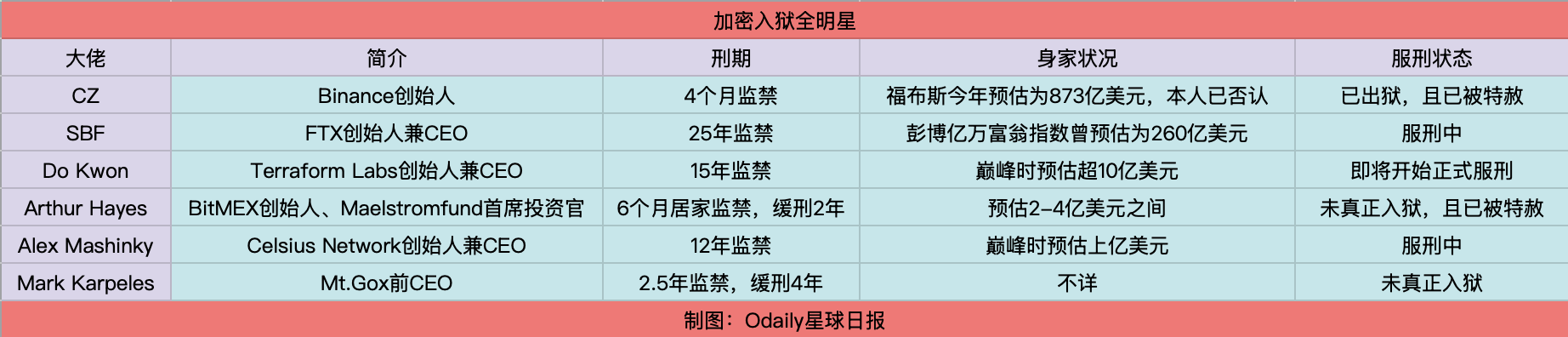
Odaily Note: Representative cryptocurrency figures sentenced in recent years.

The prosecution wrote in the filing: "The collapse of Terraform triggered a series of crises that swept through the cryptocurrency market, indirectly causing the subsequent industry winter. Do Kwon fled from this crisis. While in hiding, he was evasive in interviews and tweets, shifting blame to others, and after being captured, he resisted extradition...... Do Kwon's misconduct, the criminal consequences, and his reaction to the exposure of the plot are all sufficient to warrant a heavy sentence. In fact, the criminal circumstances alone are enough to support the maximum penalty."

Surprisingly, the sentence finally handed down by the judge even exceeded the prosecution's request for a 12-year term. Judge Paul Engelmayer stated that Do Kwon "chose to lie" and "made the wrong choices."

The Messy End of an Era That Has Already Concluded

From SBF to Do Kwon, those names once admired by countless people are now ending in an extremely messy manner.

In the narrative of the last bull market, projects like Terra and FTX represented the most radical, ambitious, and blindly expansionist forces in the crypto world. They rapidly accumulated vast capital and prestige in the name of technological innovation, but under the multiple pulls of regulatory absence,失控的风险 (uncontrolled risk), and human greed, they ultimately fell into the abyss.

But the industry's development does not stop because of the downfall of individuals. The crypto market has long entered a new cycle. New stablecoin models, new financial primitives, and stricter regulatory requirements are redefining the underlying order of the industry. History will remember Terra's past glory, but it will remember even more the price it left behind — this is the reality and warning that all newcomers must face.

Related Questions

QWhat was the sentence handed down to Do Kwon by the New York Southern District Court?

ADo Kwon was sentenced to 15 years in prison.

QWhat were the two specific charges that Do Kwon pleaded guilty to in August?

ADo Kwon pleaded guilty to conspiracy to commit fraud and wire fraud.

QWhat was the core mechanism behind the Terra (LUNA) algorithmic stablecoin system that ultimately failed?

AThe mechanism allowed users to burn LUNA to mint the stablecoin UST, or burn UST to mint LUNA, relying on arbitrage to maintain the peg. This created a 'death spiral' during extreme market conditions, leading to its collapse.

QWhich two countries initially sought the extradition of Do Kwon after his arrest in Montenegro?

ASouth Korea and the United States both sought his extradition.

QHow does the scale of losses from the Terraform Labs collapse compare to those from FTX and Celsius, according to the prosecution?

AThe prosecution stated that the losses related to Terraform's collapse exceeded the combined losses from SBF's FTX and Alex Mashinsky's Celsius and OneCoin.

Related Reads

Understanding the New Economic Model of Tokenization

Understanding the New Token Economics Model The commercialization of AI applications is evolving from selling software and subscriptions to selling token call capacity. Tokens, the fundamental unit of information processing for large language models (LLMs), have become the basis for API billing and consumption. With call volumes exploding, tokens themselves are now being traded—procured, routed, split, and resold—forming a new intermediary market. This layer connects upstream LLM providers with downstream developers and enterprises, acting as a global wholesale-to-retail liquidity network. The rise of this business is fueled by a massive surge in China's daily token call volume—growing over a thousandfold from 100 billion in early 2024 to over 140 trillion by March 2026—and significant improvements in domestic LLM capabilities, which are now competitive globally. The core value of token distribution platforms extends beyond simple arbitrage. Key functions include aggregating multiple models (like GPT, Claude, and domestic models such as Kimi and DeepSeek) under a unified API, lowering network and payment barriers, and providing enterprise services like model selection, prompt engineering, and system integration. Profit models are diversifying: (1) resale margins; (2) technical premiums from proprietary inference acceleration (e.g., reducing costs to 1/10 of the industry standard); and (3) enterprise value-added services. High-consumption scenarios like marketing, short-form video, gaming, and e-commerce are primary drivers. Investment opportunities are seen in both companies with strong model capabilities (e.g., Alibaba, Tencent, MiniMax) and those with high-consumption client scenarios (e.g., marketing agencies with overseas reach). However, risks are significant: low entry barriers leading to intense competition, capital requirements and bad debt risks from advance payments, and dependency on policy changes from upstream LLM providers who control API pricing and access.

marsbit5m ago

Understanding the New Economic Model of Tokenization

marsbit5m ago

Farewell to the Copper Era: Understanding the Logic of the AI Silicon Photonics Industry Chain and Key US Stock Players

**Summary: The Era of Silicon Photonics and Key AI Infrastructure Stocks** The article delves into the transition from copper-based interconnects to silicon photonics (SiPh) as a critical enabler for next-generation AI data centers. It explains that copper faces fundamental physical limits—the bandwidth wall, density wall, and power wall—at high data rates (1.6T+), making a material shift essential. Silicon photonics, which integrates components like lasers, modulators, and detectors onto a silicon chip, offers a solution by leveraging mature CMOS manufacturing for cost-effective, high-volume production. A key challenge is that silicon itself is not an efficient light source, making Indium Phosphide (InP) lasers a critical and supply-constrained component. A major industry catalyst was NVIDIA's 2025 GTC announcement, declaring optical interconnects a "standard" from its Rubin platform onward, followed by strategic investments to secure the supply chain. The industry is structured in four key layers: 1. **Foundries:** TSMC leads with its COUPE platform, while Tower Semiconductor (specialized SiPh foundry) and GlobalFoundries are major players. 2. **Core Component Suppliers:** Lumentum is highlighted as the sole volume manufacturer of the crucial 200G/lane EML laser, with orders locked by NVIDIA through 2027. 3. **Module & System Manufacturers:** Coherent holds significant market share, with Chinese manufacturers like InnoLight also noted for scale. 4. **System Integrators:** NVIDIA, Broadcom, and Marvell dominate this layer, setting standards and integrating technology. The article identifies core public investment targets: **NVIDIA (NVDA)** as the ecosystem driver; **Broadcom (AVGO)** and **Marvell (MRVL)** in networking/switching chips; **Lumentum (LITE)** and **Coherent (COHR)** for critical components; and foundries **TSMC (TSM)** and **Tower Semiconductor (TSEM)**. Private companies Lightmatter and Ayar Labs are noted as key IPO candidates. The silicon photonics shift is driving a re-rating of company valuations, moving them from traditional telecom/industrial metrics to premium AI infrastructure multiples. The industry features high barriers to entry (e.g., multi-year lead times for InP laser capacity, complex 3D integration/thermal management, and lengthy customer qualification cycles), suggesting a "winner-takes-most" dynamic. Risks include dependence on hyperscaler capex cycles, potential technology disruption among competing optical approaches (LPO, CPO, OCS, Optical I/O), and a timeline where widespread CPO deployment may not occur until ~2028, with LPO serving as a transitional technology. The conclusion advises that betting on the overall industry trend may be safer than betting on any single company.

marsbit45m ago

Farewell to the Copper Era: Understanding the Logic of the AI Silicon Photonics Industry Chain and Key US Stock Players

marsbit45m ago

POLY's Appearance Hints Are Getting Denser, How Far Away Is the Polymarket Airdrop?

**POLY Debut Hints Grow More Frequent: How Far is the Polymarket Airdrop?** Recent continuous hints from Polymarket team members regarding the POLY token have sparked widespread analysis within airdrop communities about its launch timeline and potential scale. According to predict.fun data, the probability of "Polymarket launching its official token before year-end 2025" currently stands at 56%. Hints about POLY began in October 2024. CEO Shayne Coplan's social media post mentioning $POLY alongside major cryptocurrencies first fueled speculation. This was followed by Growth Lead William LeGate discussing "prospective airdrop farmers," and CMO Matthew Modabber explicitly confirming that "Polymarket will have a token, and there will be an airdrop." The momentum continued into 2025. In April, major crypto data platforms CoinGecko and CoinMarketCap created placeholder pages for POLY, further solidifying expectations. May saw discussions shift towards token utility and airdrop criteria. A team member's "Soon" reply to a question about staking POLY for fee reductions, and a leaked internal screenshot showing an "Airdrop" tab, significantly increased anticipation. LeGate also outlined potential airdrop qualifiers, mentioning badges for employees, high-volume/high-profit traders, and ecosystem builders. He suggested that linking a Polymarket account to X (Twitter), sharing trades and market insights, and actively engaging with the community might constitute part of the eligibility criteria, leading to a surge in related social media activity. Despite the growing hype, the article's author expresses a personal view that Polymarket might prioritize platform stability and infrastructure upgrades—especially with the upcoming World Cup—over an immediate token launch, opting for a post-event release. Their current strategy involves hedging positions across prediction markets, actively trading on Polymarket, and engaging on social media to potentially qualify for a future airdrop.

Odaily星球日报1h ago

POLY's Appearance Hints Are Getting Denser, How Far Away Is the Polymarket Airdrop?

Odaily星球日报1h ago

Trading

Spot
Futures

Hot Articles

Discussions

Welcome to the HTX Community. Here, you can stay informed about the latest platform developments and gain access to professional market insights. Users' opinions on the price of S (S) are presented below.

活动图片