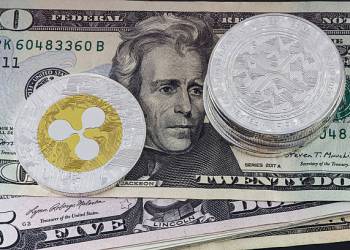
Many people observe Bitcoin's performance in 2025 and focus solely on price comparisons, failing to understand why it underperformed U.S. stocks led by Nvidia and even lagged behind the traditional safe-haven asset, gold.
When viewed from a higher-dimensional perspective, this is essentially a problem of physics and information theory. Price is merely the surface phenomenon; the underlying energy flows and information density are the true essence.
1. The Crowding Effect of Energy Arbitrage: The Shift in Computing Power Hegemony
In Elon Musk's logic, value is linked to energy conversion efficiency. Over the past decade, Bitcoin was the only machine capable of converting energy into a digitally scarce asset on a large scale—a form of value anchoring based on thermodynamics.
However, from 2024 to 2025, an extremely strong competitor emerged: generative artificial intelligence.
The core driver of U.S. stocks today is not fiat currency inflation but the exponential explosion in total factor productivity (TFP) brought about by AI. When tech giants invest hundreds of billions of dollars in building data centers, they are essentially competing for the world's electricity quota.
At the current stage, the economic value added by each kilowatt-hour of electricity used to train the next generation of large models or power high-performance computing chips temporarily exceeds the returns from hash collisions generating Bitcoin. The difference in marginal returns drives price and capital allocation—just look at how many Bitcoin mining farms have been converted into AI computing centers.
Capital is profit-seeking and sensitive. When the growth curve of silicon-based intelligence is steeper than the scarcity curve of "digital reserves," the world's excess liquidity will preferentially flow into productive assets with nonlinear growth potential, rather than purely digital assets.
2. Gold's "Atomic Properties" vs. Bitcoin's "Code Consensus"
This year's strong performance of gold is essentially a result of increasing global geopolitical entropy.
Facing deglobalization and systemic uncertainty, sovereign-level players need an asset that does not require network connectivity or rely on any clearing system. In this extreme system fault-tolerance logic, ancient gold provides atomic-level certainty.
Although Bitcoin is hailed as digital gold, it still heavily relies on internet infrastructure and centralized liquidity channels. When the system faces physical-level disconnection risks, atomic-level certainty temporarily triumphs over bit consensus—physical gold can at least be held in hand or stored in a cave.
Gold hedges against system collapse, while Bitcoin is more often seen by the market as an overflow of system liquidity.
3. The "Volatility Dampening" Effect of ETFs
The tool determines the behavior. The popularity of Bitcoin spot ETFs marks the official taming of this beast.
After entering traditional asset allocation portfolios, Bitcoin began to follow the risk control models of traditional finance. While this brings long-term capital support, it also significantly smooths its volatility, stifling its explosive potential.
Today's Bitcoin increasingly resembles a high-beta tech index. As the Federal Reserve maintained high interest rates longer than the market expected, this "long-tail asset," extremely sensitive to liquidity, was naturally suppressed.
4. The Productivity Singularity's Siphoning Effect on Bitcoin's Narrative
Charlie Munger emphasizes opportunity cost.
If holding dominant AI leaders offers highly certain nonlinear growth, then holding Bitcoin, which generates no cash flow, carries an extremely high opportunity cost.
2025 is the eve of a rare productivity singularity in human history. All capital is chasing the node that might produce super-intelligence. Bitcoin, as a "challenger to the monetary system," finds its appeal diluted in the short term by the narrative of the productivity revolution.
5. Phase Transition Adjustment Period in Fractal Structures
From a complex systems perspective, U.S. stocks are in a parabola-acceleration phase driven by AI.
In fractal geometry, tiny structures continuously self-replicate and amplify through simple iterative formulas. AI is acting as this iterative operator. From the underlying Nvidia computing power, to the middle layer of cloud services, and up to the application software layer, each level is replicating the logic of "productivity explosion." This structure is immensely grand but also means the system is approaching the physical limits of this local dimension.
Gold's performance amidst the disintegration of the old order can be understood through the construction process of the Cantor Set, which involves continuously removing the middle third. In the current global financial fractal, what is being removed is "credit expansion," "unfulfillable promises," and "high-entropy debt."
As the old order is continually fragmented by debt crises and geopolitical turmoil, the final remaining set of disconnected yet indestructible points is gold. This is a value density generated by "subtraction," the most solid physical foundation within the fractal structure.
Bitcoin's current state is essentially the result of对冲 (hedging) between forces at different scales: selling pressure from early participants taking profits is offset in time by continuous buying from sovereign nations and long-term capital, compressing the price into a long-term low-volatility range.
This prolonged low-volatility consolidation is known in dynamics as the reconstruction of an "Attractor."
This fractal system is accumulating through time, reserving space for the next scale change.
Ultimately, Bitcoin in 2025 has not been disproven but rather repriced. It is temporarily yielding to the dual pressures of the productivity singularity and geopolitical defense needs, bearing the cost of time rather than direction.
When the marginal efficiency of AI declines and capital liquidity continues to overflow, Bitcoin will return to the role it truly excels at: a cross-cycle store of liquid value.
Twitter:https://twitter.com/BitpushNewsCN
Bitpush TG Discussion Group:https://t.me/BitPushCommunity
Bitpush TG Subscription: https://t.me/bitpush