XRP treasury filing signals institutional push – Can demand sustain the shift?

ambcryptoPublié le 2026-03-21Dernière mise à jour le 2026-03-21

Résumé

Ripple's XRP treasury strategy is gaining institutional momentum as Evernorth Holdings moves toward a Nasdaq listing via a SPAC merger. The company plans to hold 473 million XRP, supported by SBI Holdings and Pantera Capital, and aims to generate yield through lending, DeFi, and validator activities—shifting from passive holding to active management. However, while the model draws inspiration from MicroStrategy’s Bitcoin treasury approach, XRP faces challenges in institutional adoption and capital flow compared to Bitcoin. Recent on-chain data shows significant whale outflows and large transfers, suggesting possible accumulation but also highlighting the need for sustained demand to support price stability and growth.

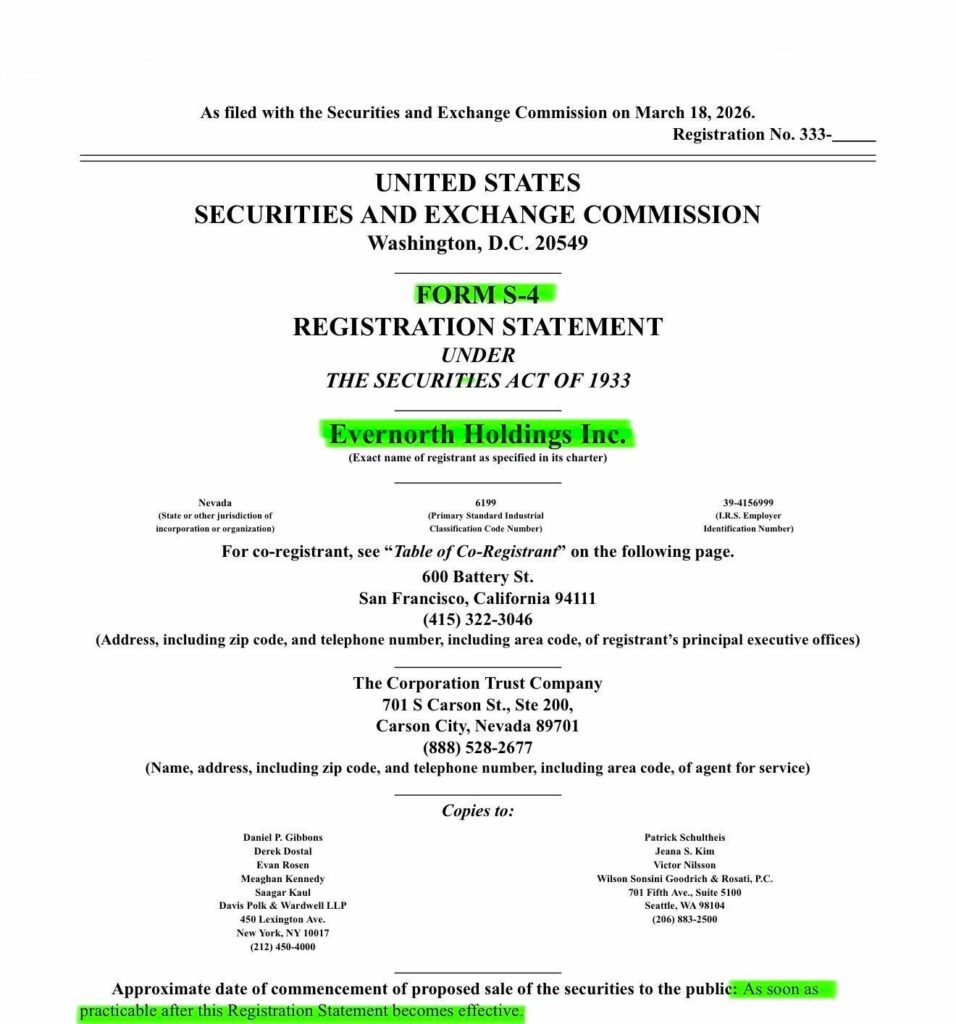
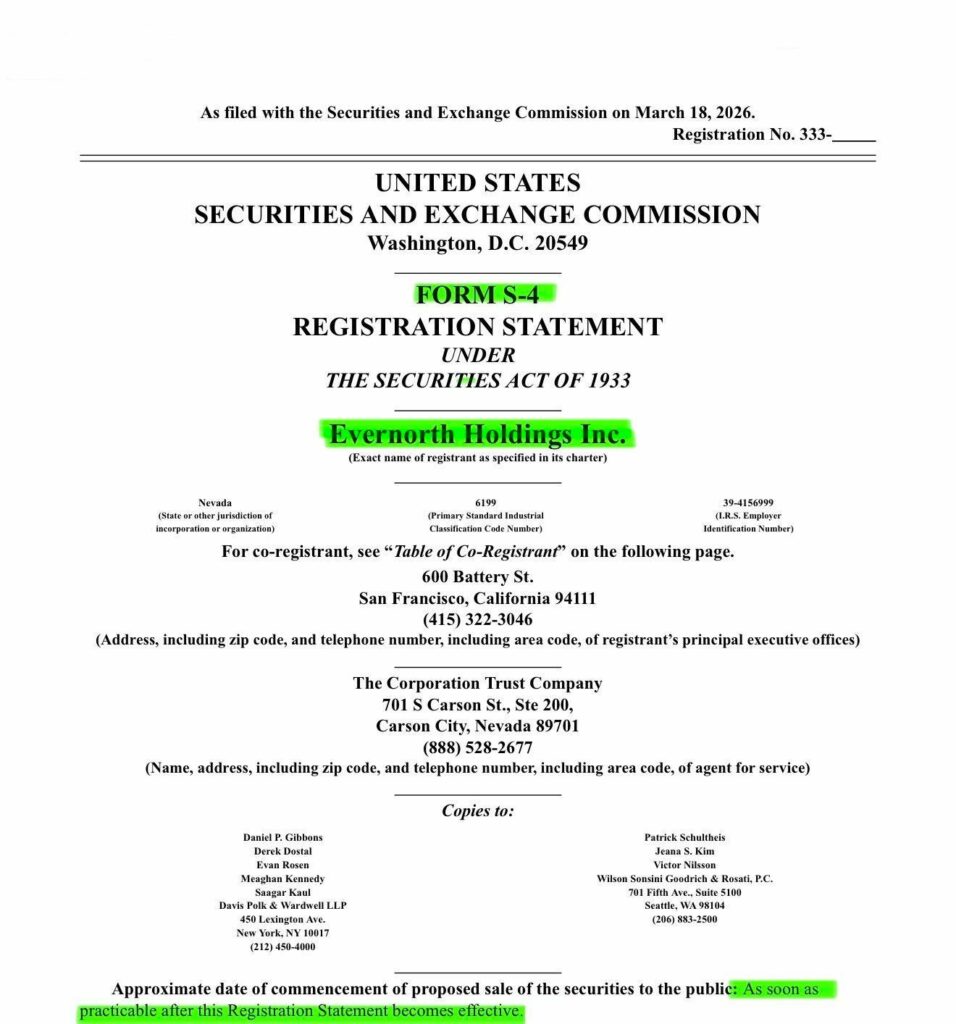
Armada Acquisition Corp. II filed the S-4 to register its proposed merger with Evernorth Holdings, moving the Ripple [XRP] treasury deal closer to market approval. As this process advances, the filing will set the legal path for Evernorth to enter public markets through a Nasdaq listing under XRPN.

Building on this, Evernorth targets holding about 473 million XRP at launch, forming a sizeable treasury base. Backing from SBI Holdings and Pantera Capital strengthens capital credibility, while leadership from Asheesh Birla adds operational depth.
Source: X

From here, the strategy shifts towards application, using lending, DeFi yields, and validator participation to grow XRP per share.

As this model unfolds, it moves beyond passive holding towards active yield generation, hinting at a new institutional framework that markets are yet to fully price in.

Evernorth’s XRP treasury model faces Bitcoin’s institutional benchmark

Evernorth’s XRP treasury model takes cues from MicroStrategy’s Bitcoin approach. And yet, the structure differs in depth and market positioning. Strategy holds 761,068 BTC worth about $53.9 billion, while its multiple to Net Asset Value (mNAV) ranges between 0.96x and 1.18x – A sign of strong conviction.

On the contrary, XRP’s price was trading near $1.45 with daily volume around $2.3–$2.4 billion – Evidence of steady liquidity, but lower institutional preference. As Bitcoin continues to dominate treasury allocations, XRP captures a smaller share of capital flows.

Building on this, Evernorth’s plan to raise over $1 billion introduces a new entry point for XRP exposure. However, the model also relies on developing a stronger narrative beyond payments.

As liquidity remains deep and reserves gradually decline, XRP can absorb demand. However, sustained strength will depend on consistent inflows rather than short-term capital bursts.

XRP outflows rise as whales reposition

As institutional positioning around XRP builds, on-chain flows have begun to reflect how capital is moving beneath the surface.

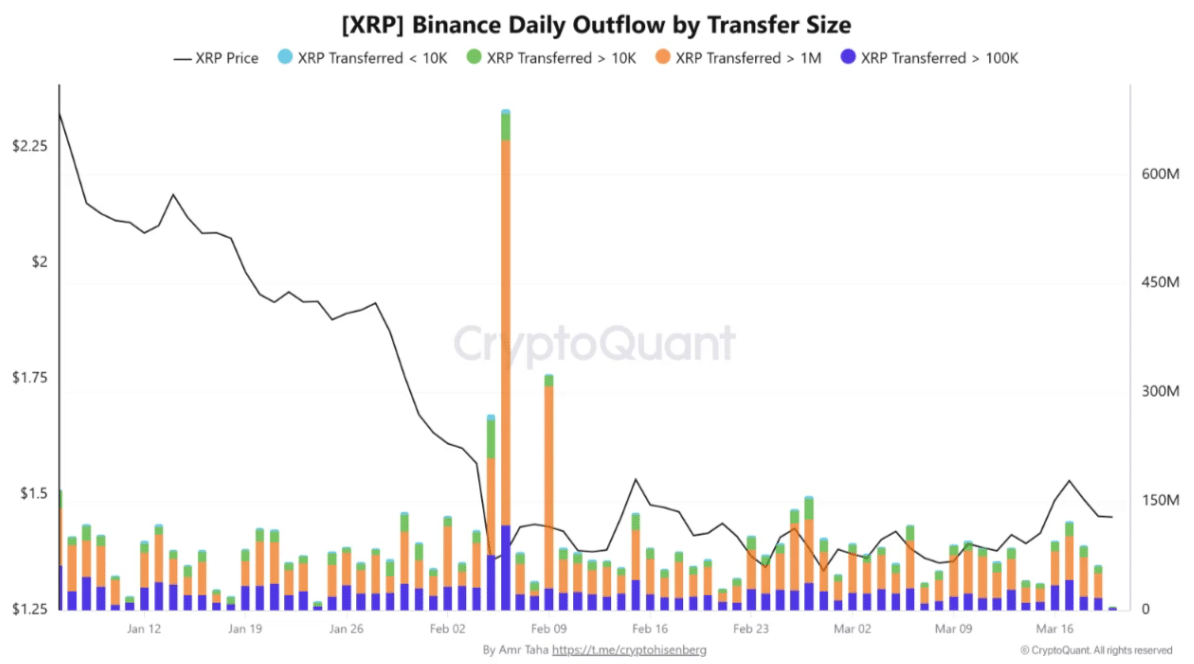
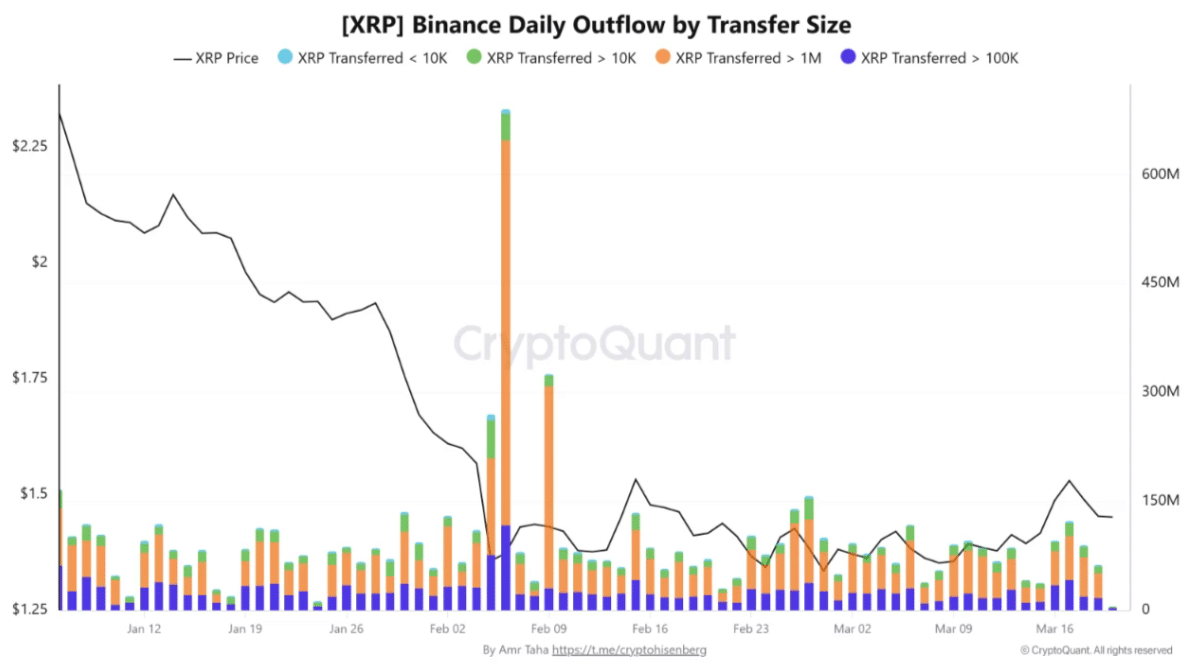
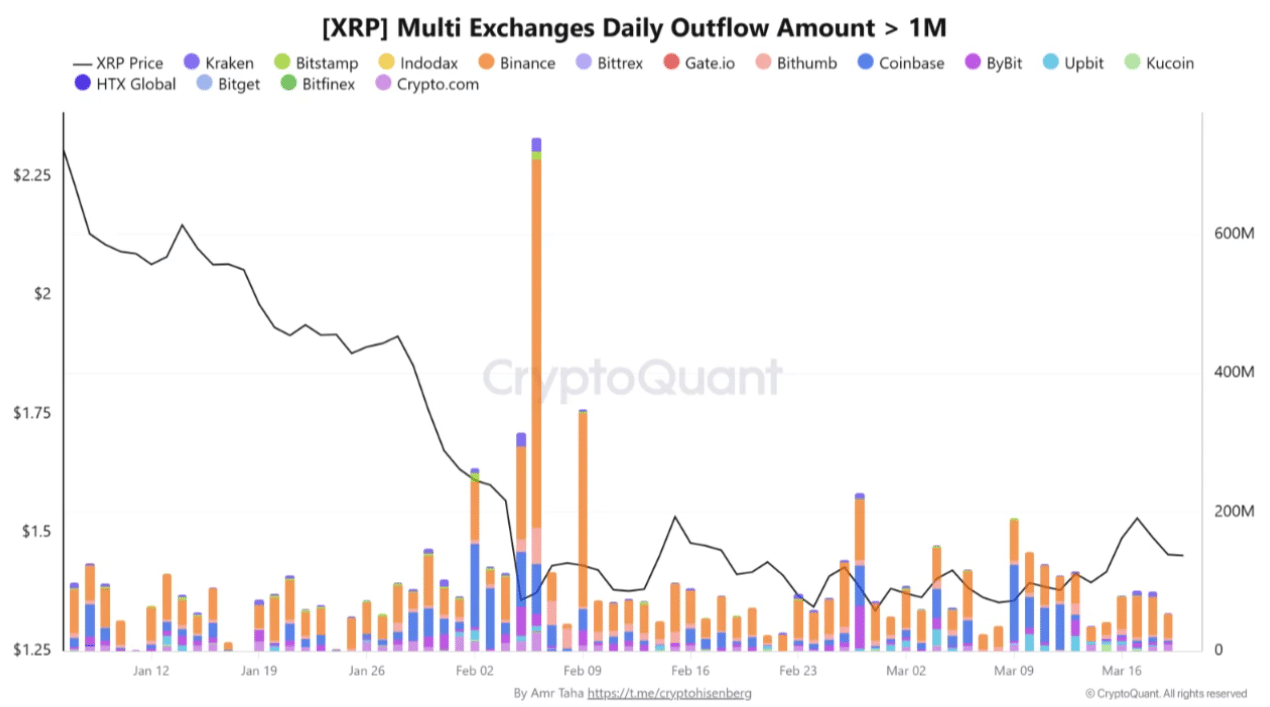
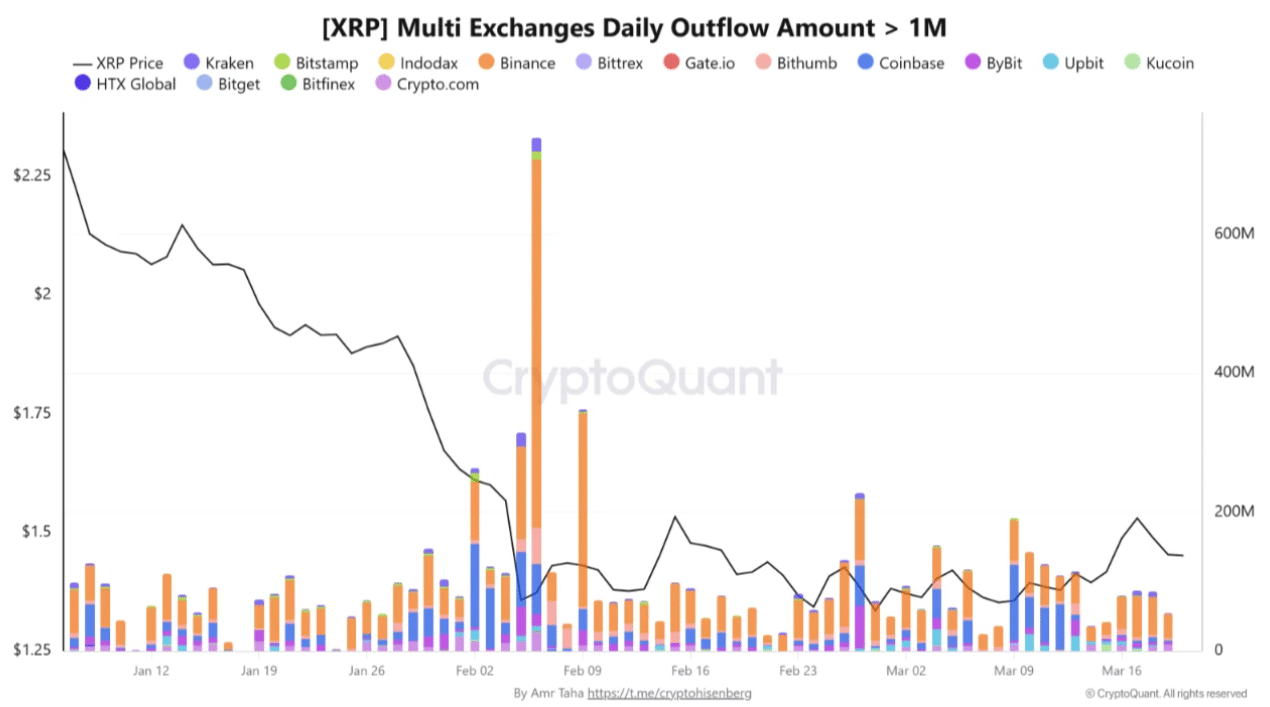
At press time, large outflows seemed to be dominating activity, with Binance leading across exchanges. Early February marked a key spike as 530 million XRP exited in one day, signaling strong whale movement.
Source: CryptoQuant

Following this surge, the altcoin’s price fell from above $2.20 towards the $1.30–$1.50 range, suggesting supply initially outweighed demand. As this pressure faded, daily outflows stabilized near 50 million XRP in March – A sign of more controlled positioning.

At the same time, transfer data revealed that over 1 million XRP transactions reinforced whale control.
Source: CryptoQuant

This pattern could mean that accumulation might be underway. However, sustained price strength will depend on consistent demand absorbing these large-scale movements.



Final Summary

  • Ripple [XRP] treasury strategy gained institutional traction through Evernorth’s SPAC structure, although sustained adoption will depends on consistent capital inflows.
  • Ripple whale outflows and rising large transfers alluded to accumulation trends.

Questions liées

QWhat is the significance of Armada Acquisition Corp. II filing the S-4 in relation to Ripple's XRP treasury?

AThe S-4 filing registers the proposed merger with Evernorth Holdings, moving the Ripple XRP treasury deal closer to market approval and setting the legal path for Evernorth to enter public markets through a Nasdaq listing under XRPN.

QHow does Evernorth's XRP treasury model compare to MicroStrategy's Bitcoin approach?

AEvernorth's model takes cues from MicroStrategy's Bitcoin strategy but differs in depth and market positioning. While MicroStrategy holds a massive amount of BTC with a strong conviction multiple, XRP has lower institutional preference and captures a smaller share of capital flows, with Evernorth aiming to raise over $1 billion for XRP exposure.

QWhat on-chain activity suggests whale movement and accumulation for XRP?

ALarge outflows dominated activity, with a key spike of 530 million XRP exiting in one day in early February, followed by stabilized daily outflows of around 50 million XRP in March. Additionally, over 1 million XRP transfers indicate strong whale control, which could signal accumulation is underway.

QWhat factors will determine the sustained strength of XRP's price according to the article?

ASustained price strength will depend on consistent capital inflows rather than short-term bursts, and the ability of demand to absorb large-scale movements and outflows, as well as developing a stronger narrative beyond payments.

QWhat is Evernorth's strategy for growing XRP per share after launch?

AEvernorth's strategy shifts towards active application, using lending, DeFi yields, and validator participation to generate yield and grow XRP per share, moving beyond passive holding towards an active institutional framework.

Lectures associées

Pourquoi les États-Unis n'ont-ils pas vu émerger des services comme « Huabei » et « Jiebei » ?

Pourquoi les États-Unis n'ont-ils pas développé des services de crédit à la consommation similaires à Huabei et Jiebei (produits chinois) ? La réponse réside dans un système financier rigide et fragmenté qui empêche l'émergence de solutions de microcrédit accessibles. Aux États-Unis, environ 4,2 % de la population n'a pas de compte bancaire, principalement en raison de soldes insuffisants ou d'une méfiance envers les banques. Ces personnes se tournent vers des prêts à taux élevé (jusqu'à 400 % d'intérêt annuel) ou des services de "Buy Now, Pay Later" (BNPL), qui restent marginaux. Le système de carte de crédit domine le marché, avec 70 à 80 % des adultes détenteurs d'une carte et des taux d'intérêt moyens de 22,3 %. Les utilisateurs qui ne remboursent pas intégralement leurs dettes subventionnent en réalité ceux qui le font, créant un déséquilibre coûteux. Plusieurs barrières structurelles expliquent cette situation : une régulation financière stricte et fragmentée (fédérale et par état), des lois strictes sur la confidentialité des données (comme le FCRA) empêchant l'utilisation des données comportementales pour le crédit, la réticence des investisseurs à valoriser les entreprises tech engagées dans la finance, et le contrôle des géants bancaires (JPMorgan, Bank of America, etc.) sur le marché du crédit. Ensemble, ces facteurs bloquent l'innovation en matière de microcrédit, laissant les alternatives abordables hors de portée pour de nombreux Américains.

Odaily星球日报Il y a 36 mins

Pourquoi les États-Unis n'ont-ils pas vu émerger des services comme « Huabei » et « Jiebei » ?

Odaily星球日报Il y a 36 mins

Trading

Spot
Futures

Articles tendance

Comment acheter PUSH

Bienvenue sur HTX.com ! Nous vous permettons d'acheter Push Protocol (PUSH) de manière simple et pratique. Suivez notre guide étape par étape pour commencer votre parcours crypto.Étape 1 : Création de votre compte HTXUtilisez votre adresse e-mail ou votre numéro de téléphone pour ouvrir un compte sur HTX gratuitement. L'inscription se fait en toute simplicité et débloque toutes les fonctionnalités.Créer mon compteÉtape 2 : Choix du mode de paiement (rubrique Acheter des cryptosCarte de crédit/débit : utilisez votre carte Visa ou Mastercard pour acheter instantanément Push Protocol (PUSH).Solde :utilisez les fonds du solde de votre compte HTX pour trader en toute simplicité.Prestataire tiers :pour accroître la commodité d'utilisation, nous avons ajouté des modes de paiement populaires tels que Google Pay et Apple Pay.P2P :tradez directement avec d'autres utilisateurs sur HTX.OTC (de gré à gré) : nous offrons des services personnalisés et des taux de change compétitifs aux traders.Étape 3 : stockage de vos Push Protocol (PUSH)Après avoir acheté vos Push Protocol (PUSH), stockez-les sur votre compte HTX. Vous pouvez également les envoyer ailleurs via un transfert sur la blockchain ou les utiliser pour trader d'autres cryptos.Étape 4 : tradez des Push Protocol (PUSH)Tradez facilement Push Protocol (PUSH) sur le marché Spot de HTX. Il vous suffit d'accéder à votre compte, de sélectionner la paire de trading, d'exécuter vos trades et de les suivre en temps réel. Nous offrons une expérience conviviale aux débutants comme aux traders chevronnés.

255 vues totalesPublié le 2024.12.13Mis à jour le 2025.03.21

Comment acheter PUSH

Discussions

Bienvenue dans la Communauté HTX. Ici, vous pouvez vous tenir informé(e) des derniers développements de la plateforme et accéder à des analyses de marché professionnelles. Les opinions des utilisateurs sur le prix de PUSH (PUSH) sont présentées ci-dessous.

活动图片











