The History of Crypto Advertising Sponsorships: A Cyclical Experiment in Buying Attention and Legitimacy

marsbitPublié le 2026-02-28Dernière mise à jour le 2026-02-28

Résumé

The article "A History of Crypto Advertising Sponsorships: A Cyclical Experiment in Buying Attention and Legitimacy" examines the volatile relationship between cryptocurrency companies and major sports and cultural sponsorships. It begins with the 2021-2022 "gold rush," where crypto firms like FTX, Crypto.com, and Coinbase engaged in massive, high-profile deals for stadium naming rights (e.g., FTX Arena), sports league partnerships (NBA, UFC, F1), and World Cup sponsorships. This period was marked by an attempt to rapidly purchase mainstream legitimacy and public trust. The strategy initially showed success, with Super Bowl ads generating massive short-term spikes in app downloads. However, the collapse of FTX in late 2022 became a major inflection point, turning these expensive sponsorships into liabilities and reputational disasters for the teams and venues involved. The industry subsequently entered a contraction phase, shifting from grand, headline-grabbing deals to more measured, ROI-focused partnerships like sleeve sponsorships and training kit deals (e.g., OKX and Manchester City). The article highlights the inherent tension: these sponsorships were a "pressure test" on whether high-risk financial products could leverage the trust of public institutions for credibility. This often led to controversy, with regulators like the UK's Advertising Standards Authority (ASA) ruling that such ads frequently trivialized investment risks and exploited consumer inexperience. ...

Author: Zen, PANews

In February 2026, when Coinbase's advertisement flickered once again on the giant LED screens of the Super Bowl, flashing the slogan "Crypto. For everybody." to the tune of a Backstreet Boys classic, the audience reacted with a mix of sighs and criticism, a stark contrast to the frenzy of the night four years prior, which was dubbed the "Crypto Bowl."

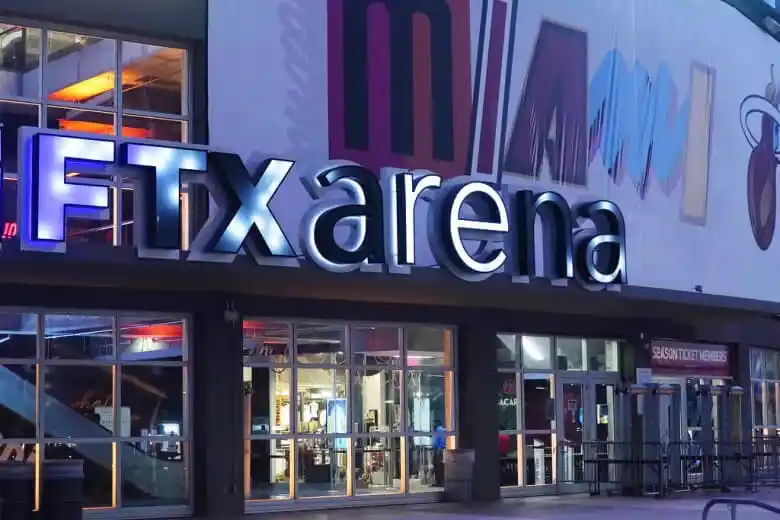
Back then, the FTX logo was still prominently displayed above the Miami Heat's arena. Crypto companies were waving massive checks, attempting to buy decades of mainstream trust in just a few days. However, the subsequent collapse, lawsuits, and the farce of the arena's name change turned this "attention experiment" into one of the most expensive jokes in sports history.

On the surface, it was a branding business, but in essence, it was more like a stress test: when sponsorships embed financial narratives into the daily lives of fans and viewers, trust is amplified. This was fundamentally a long-term experiment in "how high-risk financial products leverage high-trust public institutions to gain attention and legitimacy."

Crypto Company Sponsorships: Setting Sail from the Era of 'Big Money Splashing'

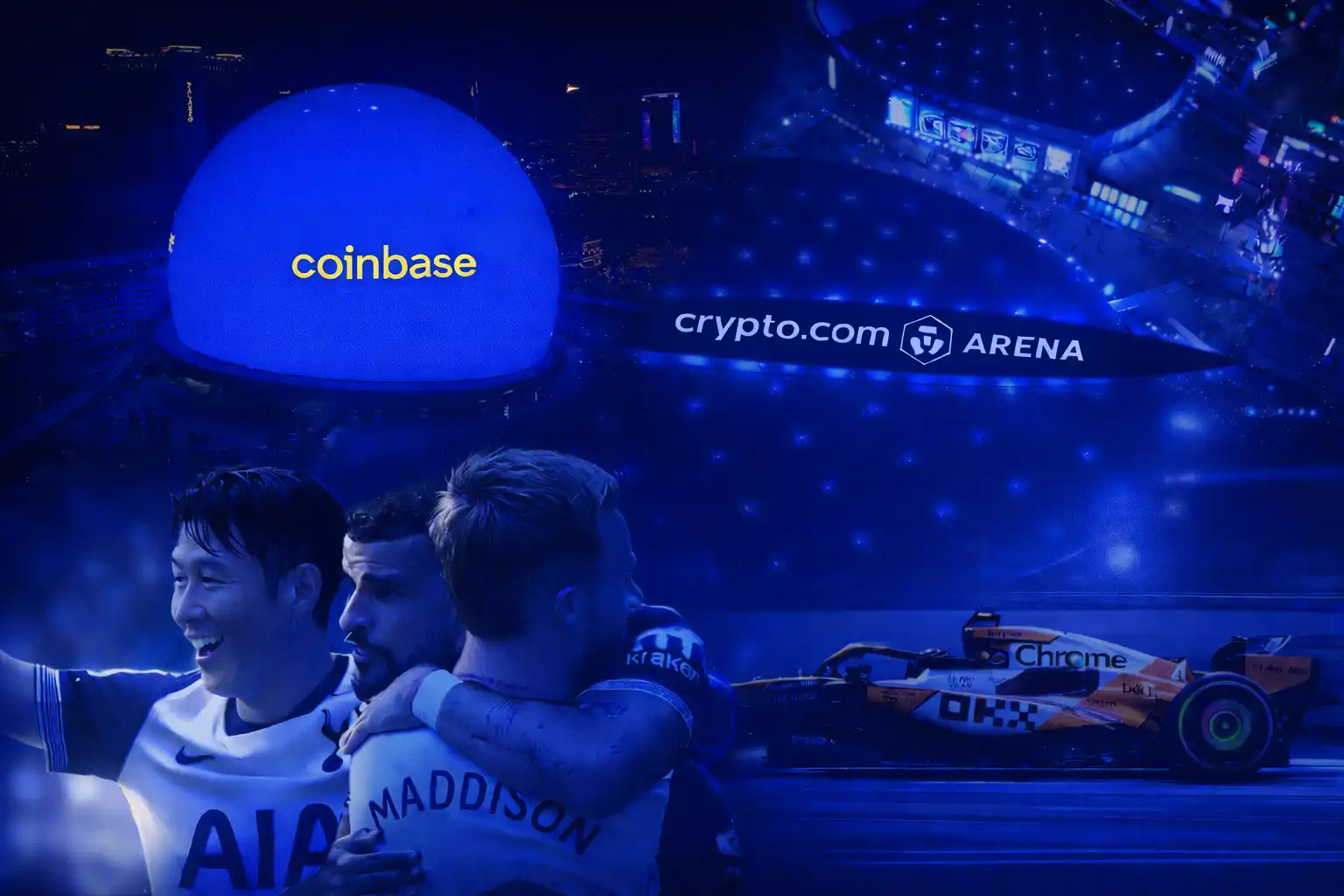
In 2021, with the emergence of a phenomenal bull market, rapidly profit-absorbing cryptocurrency companies began to aggressively penetrate the sports and cultural spheres. Cryptocurrency exchanges and blockchain projects started plastering their brands onto the most expensive, most visible public attention gateways: top leagues, major venues, and global sports broadcasts.

In March of that year, Miami-Dade County reached a 19-year naming rights agreement with FTX, renaming the Miami Heat home court to FTX Arena. This deal, which wrote a crypto company into the narrative of an urban landmark, marked the first large-scale entry of crypto advertising into mainstream urban public space narratives.
In the summer of the same year, Crypto.com reached a fight kit-level partnership with UFC, reportedly valued at around $175 million over 10 years, as disclosed by CNBC. In traditional sports, this level of sponsorship is one of the core commercial assets. Then, in October, Coinbase reached a multi-year official partnership with the NBA/WNBA, with its logo prominently displayed on the base of the basketball hoop.

In November, the news of Staples Center being renamed Crypto.com Arena further amplified this breakout. This arena is not only the home of the prestigious Los Angeles Lakers but also a super landmark for performances, music, and the entertainment industry in Los Angeles. This naming rights deal directly tied the crypto brand to the center stage of sports and pop culture.

During the same period, European football also began to quickly integrate, with Binance becoming the main shirt sponsor for Lazio, promoting fan token narratives and interactive benefits, merging exchange sponsorship with Web3 product conversion into a single commercial chain.

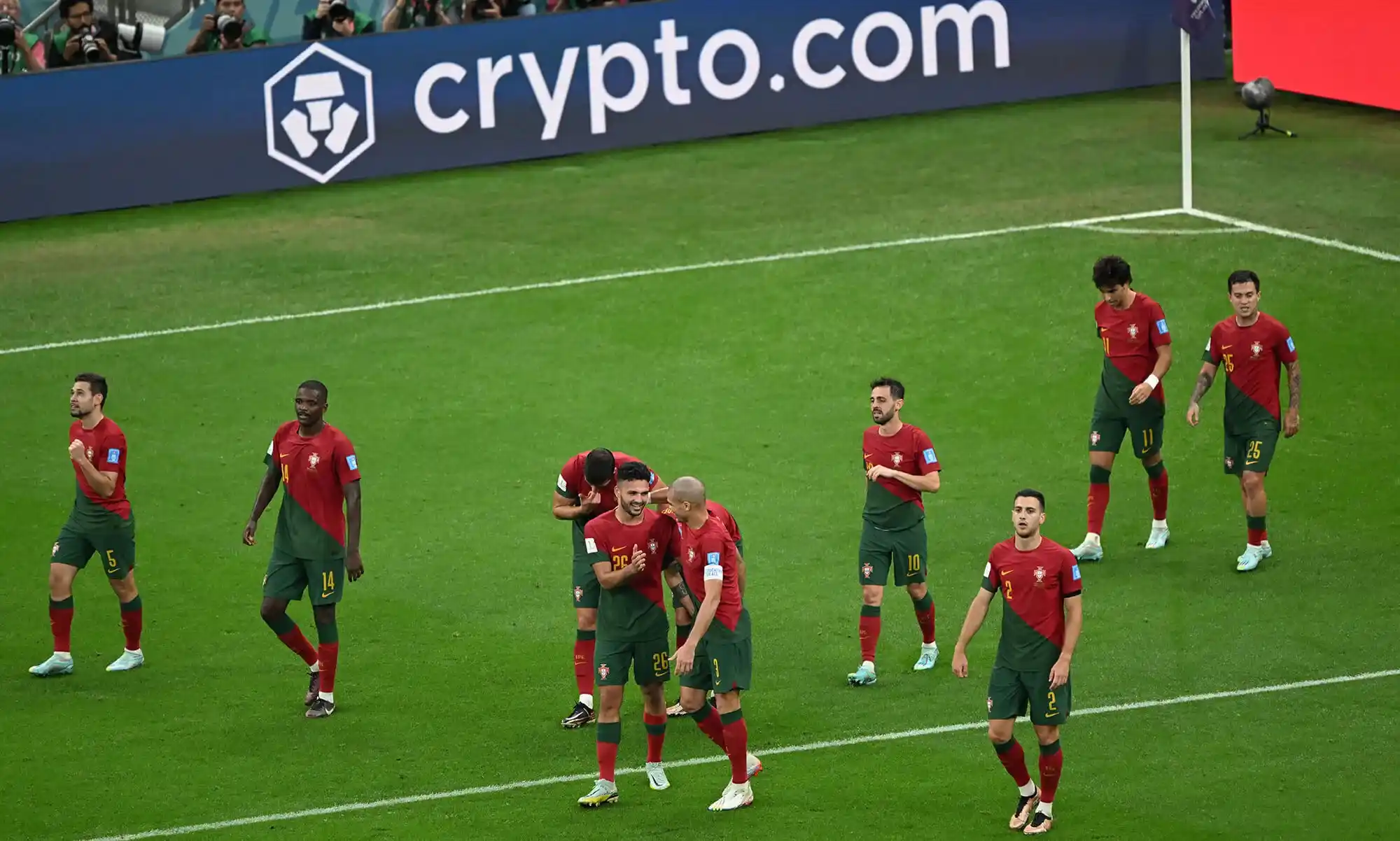
Entering 2022, this curve continued to rise and peaked at the global event level. Crypto.com not only became the global partner of the F1 Sprint series but also secured the title of official sponsor of the 2022 Qatar World Cup, marking the first time a crypto company officially entered the传播体系 (communication system) of the world's largest single sporting event with near-universal coverage.

The crypto industry's massive marketing offensive soon reached an inflection point at the end of 2022. The collapse of FTX quietly turned naming rights into a liability. In January 2023, a bankruptcy judge officially terminated the naming rights deal between Miami-Dade County and FTX, and the venue subsequently entered a process of de-FTX-ification and re-solicitation for sponsorship. This event also became a negative典型案例 (typical case) in the history of sports and cultural sponsorship.

After 2023, the industry as a whole entered a phase of contraction and re-evaluation. Many collaborations scaled back from venue naming rights and top-tier event sponsorships to more easily quantifiable ROI forms like sleeve patches, training kit sponsorships, digital content rights, and fan engagement activities. Sponsors also placed greater emphasis on compliance and sustainable exposure.

In football, OKX's partnership with Manchester City is an example of this more controlled version: starting as an official training kit partner in 2022 and later upgrading to the higher-exposure sleeve patch sponsorship. Its path resembles the gradual升级 (upgrade) of traditional sponsorship rather than an all-in gamble. From a macro-narrative perspective, the main theme of this stage was no longer ubiquitous crypto ads but rather how sports and cultural institutions re-priced the balance between新增收入 (new revenue) and reputational and compliance risks.

In the past two years, a more subtle change has emerged in this trend. Crypto sponsorships haven't disappeared but are increasingly repackaging their relationship with the mainstream using stablecoins, compliant products, and brand credibility.

For example, the 2025 partnership between the Aston Martin F1 team and Coinbase was described as the first publicly announced case of a sponsorship fee being settled entirely in stablecoins. Coinbase's appearance in the 2026 Super Bowl, with its closing slogan "Crypto. For everybody.," demonstrated its attempt to pull cryptocurrency from its early niche circles back into the mainstream narrative of "participation for all."
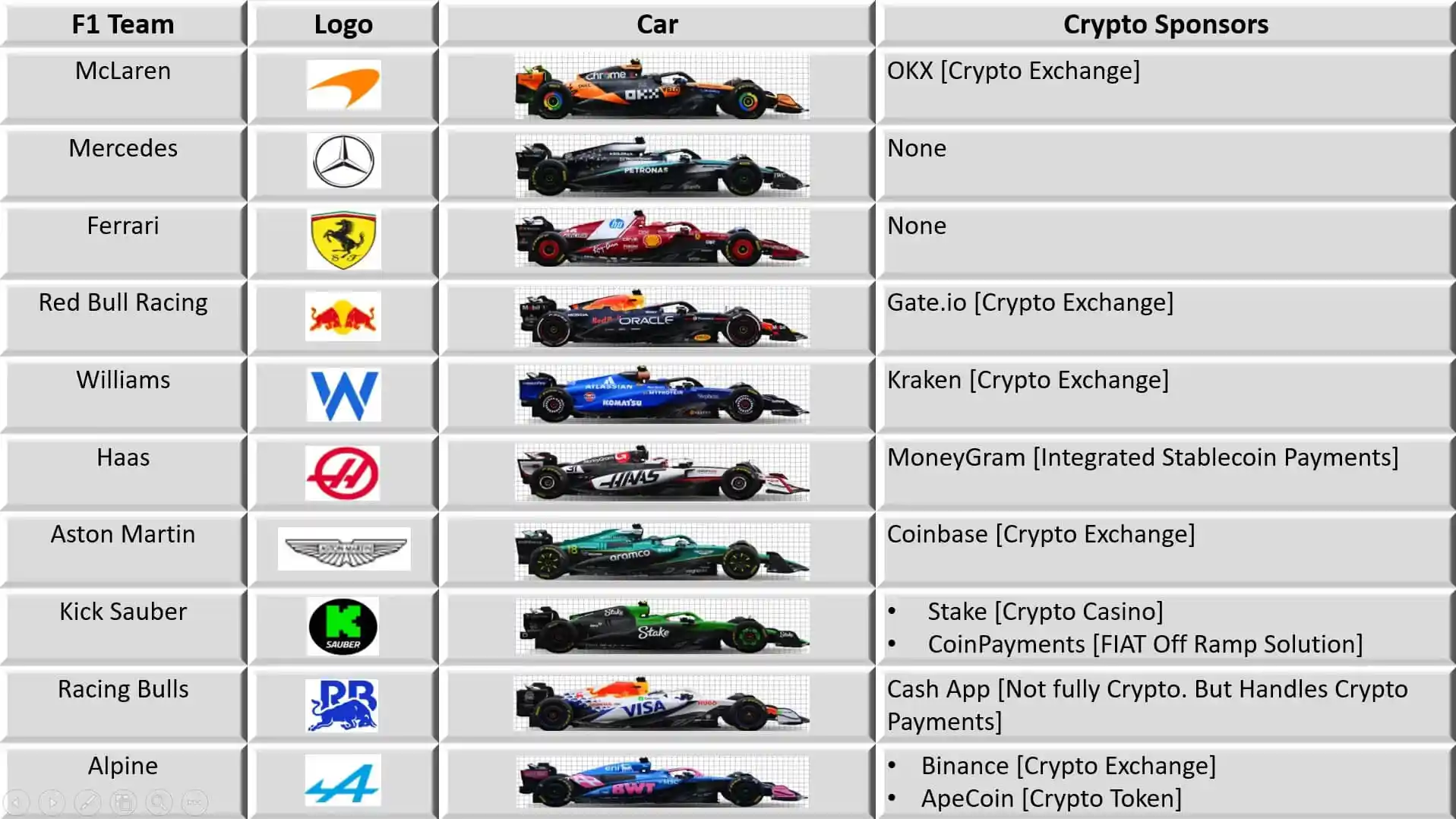
2025 F1 Teams and Crypto Sponsors (Source: reddit)

And this year's F1 season is about to start in March. Last year, the cryptocurrency industry spent $174 million on F1 sponsorship projects alone. This year, cryptocurrency sponsorship has reached a new high: 9 companies sponsor a total of 11 teams.

Exposure, Traffic Acquisition, and Criticism

Among the various advertisements and sponsorships of crypto companies, the exposure and conversion effectiveness of medium to long-term cooperation are difficult to estimate. However, in one-off investments like the Super Bowl, the early results were very significant.

In 2022, on Super Bowl Sunday, Coinbase's installs increased by 309% week-over-week, and by another 286% the next day; eToro saw increases of 132% and 82% respectively; FTX saw increases of 130% and 81% respectively. Coinbase's QR code advertisement caused the app to crash or experience access anomalies due to the massive influx of users scanning it. This indicates that the short-term conversion power of Super Bowl ads确实存在 (does indeed exist), at least in terms of generating peaks in downloads and activations.

However, this kind of explosive growth does not automatically translate into long-term retention, asset沉淀 (accumulation), or compliant operational capabilities. On the medium to long-term level, the hidden costs of sponsorship often materialize集中 (concentratedly) during periods of tightening regulation and enforcement cycles.

Taking the partnership between Premier League club Arsenal and Socios for fan tokens as an example, the UK Advertising Standards Authority (ASA) ruled in 2021 against the related promotional content, stating that the advertisement downplayed high-risk decision-making in the context of crypto assets and did not sufficiently highlight key risk information such as taxes. It ultimately required that the ads not appear again in the complained-about form and that the club adjust the presentation of pages and risk warnings.

As the world's number one sport, football has always been a favored traffic入口 (entry point) for crypto companies. Compared to the crypto industry giants willing to invest heavily, the companies flooding into football leagues and clubs are also more complex, generating more controversy and negative impacts.
In 2024, a book titled "No Questions Asked: How football joined the crypto con" was published, describing football's embrace of crypto sponsorship as a collective dereliction of duty driven by greed and侥幸 (wishful thinking) with almost no due diligence, resulting in fans being treated as an outlet for high-risk, low-regulation financial products, while clubs often offered no apology, explanation, or commitment to improvement after blow-ups.

At the level of sports and the arts, the core矛盾 (contradiction) is that organizations, under financial pressure, introduce high-risk sponsorships, potentially binding their own reputation to the counterparty's credit. Sports sponsorship research categorizes this damage into operational risk and reputational risk: once the sponsor blows up or faces major controversy, the sponsorship asset turns from a "credit enhancement tool" into a "liability."

Expanding to a sociological perspective, the controversy centers on crypto companies leveraging the emotional communities of sports and culture (fans, music lovers, movie buffs) to lower the participation threshold, packaging highly volatile assets as identity, interest, and trends, thereby amplifying FOMO and herd diffusion.

In the case of the Floki Inu London Underground advertisement, the UK ASA clearly stated that it "took advantage of consumers' fear of missing out and trivialized the risk," making it a typical expression of regulatory language. Collaborations with film festivals, art fairs, and awards also serve similar functions, but this "cultural legitimization" is not equivalent to financial suitability. It更像 (is more like) a conversion of symbolic capital: replacing risk explanation with cultural authority, and product understanding with brand association.

Regulation and Enforcement Gradually Catching Up

Faced with the expansion and controversy of crypto sponsorships in the cultural and sports fields, regulatory agencies are gradually补全 (completing) the rules.

In the UK, financial regulators announced in 2023 that starting October 8th, stricter requirements would be imposed on crypto asset marketing targeting UK consumers, including a首次 (first-time) investor cooling-off period, strengthened risk warnings, and a clear ban on inappropriate incentives like referral rewards.

The ASA, through密集 (dense) rulings, applied standards such as "whether risk display is sufficient," "whether it exploits inexperience," and "whether it encourages buying on credit" to specific copy and placement scenarios, and in 2026 expanded the scope of review to "whether crypto is packaged as a solution to real financial problems."

In the US, consumer protection agencies updated guidelines on "disclosure obligations for influencers and advertisers" from an advertising and anti-fraud perspective, releasing an updated version of the endorsement guidelines in 2023 to address platform-based distribution and influencer marketing;同时 (simultaneously), they used data bulletins to reveal the high incidence of crypto scams, strengthening public education and platform governance pressure. Futures and derivatives regulators continued to publish digital asset risk education materials to prevent the public from falling into related fraud entry points.

In the EU, the MiCA framework explicitly requires in its official summary that relevant service providers communicate with potential holders in a fair, clear, and non-misleading manner,配合 (coupled with) consumer risk warnings and reminders of authorization/regulatory boundaries. EU regulators have also issued risk warnings for consumers. With the rising influence of financial content on social media, EU securities regulators have also issued fact sheets for "finfluencers," emphasizing the必须 (must)显著 (prominently) disclose compensation and利益关系 (interest relationships), and that hidden labels cannot be used to弱化 (weaken) the advertising attribute.

The effectiveness of the above regulatory frameworks is reflected in three points: First, the minimum standards for risk disclosure in advertising text are being raised, especially in UK adjudication practice; Second, the disclosure obligations for celebrity endorsements are shifting from "moral expectations" to enforceable rules; Third, cross-border platform distribution is being纳入 (brought into) the regulatory narrative (even if an ad is produced overseas, it may be subject to regulation if targeted at domestic consumers).

But the regulatory空白点 (gaps) remain equally clear. The legal ambiguity of many tokens or experiential rights means regulation can only address surface-level issues based on whether there is misleading information or inadequate disclosure.

Sponsorship contracts are contractual transactions between companies and clubs, relying核心 (corely) on the parties to约定 (stipulate) terms themselves. Regulation typically finds it difficult to directly impose unified "naming rights" risk control standards for such commercial transactions; intervention更多 (more often) comes from angles like advertising compliance and consumer protection.


Cryptos en tendance

Questions liées

QWhat was the public reaction to Coinbase's 2026 Super Bowl ad compared to the 'Crypto Bowl' four years prior?

AThe public reaction in 2026 was one of widespread skepticism and more negative reviews, which was a stark contrast to the frenzy and excitement of the 'Crypto Bowl' four years earlier.

QWhich event is cited as the beginning of crypto advertising's large-scale entry into mainstream urban public space narratives?

AThe naming rights deal between Miami-Dade County and FTX in March 2021, which renamed the Miami Heat's home to the FTX Arena, is cited as the beginning.

QWhat significant shift in crypto sponsorship strategy occurred after the market downturn and FTX's collapse in late 2022?

AThe industry shifted from massive stadium naming rights and top-tier official sponsorships to more ROI-measurable and lower-risk forms of partnerships, such as sleeve sponsorships, training kit deals, and digital content rights, with a greater emphasis on compliance.

QAccording to the article, what was a key finding regarding the effectiveness of one-time Super Bowl ads for crypto companies in 2022?

AThe ads were highly effective at driving short-term spikes in app downloads and activations (e.g., Coinbase's installs grew 309% week-over-year on game day), but this did not automatically translate into long-term user retention or compliant operations.

QHow have regulators in key markets like the UK and EU responded to the expansion of crypto advertising and sponsorships?

ARegulators have implemented stricter rules, including mandatory risk warnings, bans on inappropriate incentives like referral bonuses, requirements for clear disclosures in influencer marketing, and frameworks like MiCA in the EU that mandate fair and non-misleading communication with consumers.

Lectures associées

Le Triangle impossible est en réalité un faux problème

L'auteur conteste la pertinence du "trilemme" classique (décentralisation, scalabilité, sécurité) pour les blockchains. Il propose que les vrais freins à l'adoption massive sont la légitimité (environnement réglementaire) et le manque de confidentialité par défaut. La blockchain est définie comme un ordinateur partagé, lent et cher, dont la seule valeur unique est de fonctionner sans propriétaire ni permission. Seul l'argent natif (comme les stablecoins) est un actif adapté, car sa simple inscription au registre constitue sa valeur. Le marché actuel ne sert qu'une niche ("les gens assez aisés"). Les gros capitaux institutionnels restent à l'écart, principalement à cause des risques opérationnels et de deux défauts structurels : 1. **Légitimité** : L'absence de permission, essentielle, crée des zones grises réglementaires. Des progrès législatifs récents (ex: loi GENIUS) commencent à combler ce fossé. 2. **Transparence** : Celle-ci est présentée comme une vertu, mais constitue en réalité une taxe. Elle expose chaque transaction, position et paiement, permettant le MEV (extraction de valeur maximale) et décourageant toute entité sérieuse de révéler sa trésorerie au monde. L'auteur souligne l'ironie d'un système fondé sur la cryptographie qui ne protège pas la vie financière des utilisateurs. La solution réside dans une **confidentialité par défaut avec des preuves de conformité** (via des preuves à connaissance nulle - ZK). Cela permet de prouver un fait (solvabilité, respect des limites, KYC) sans révéler les données sous-jacentes, combinant ainsi protection individuelle et vérifiabilité pour les auditeurs et régulateurs. Cette évolution, purement améliorative, pourrait enfin attirer les milliers de milliards de capitaux institutionnels et faire de la blockchain l'infrastructure financière qu'elle était censée être.

marsbitIl y a 6 h

Le Triangle impossible est en réalité un faux problème

marsbitIl y a 6 h

L'impossible trilemme est un faux problème

L'industrie de la cryptographie a construit le système de cryptographie le plus puissant de l'histoire, mais son principal échec est l'absence de confidentialité financière par défaut. Chaque transaction, paiement et portefeuille est diffusé publiquement. La blockchain est essentiellement un ordinateur partagé, lent et coûteux, dont la seule valeur réside dans son absence de propriétaire unique et sa résistance à la censure. Pendant des années, le débat s'est concentré sur le "trilemme" (décentralisation, évolutivité, sécurité), qui est aujourd'hui largement résolu. Le vrai frein à l'adoption massive n'est pas là. La véritable contrainte est double : la légitimité juridique et le manque de confidentialité. Les fonds sont l'actif natif de la blockchain, mais les grands capitaux institutionnels restent à l'écart car l'environnement est perçu comme trop risqué et non conforme. La transparence totale de la chaîne n'est pas une vertu, mais une taxe. Elle expose les utilisateurs au MEV (Maximum Extractable Value), où les transactions sont espionnées et exploitées avant leur règlement, drainant des milliards de dollars de valeur. La plus grande ironie est que ce système, bâti sur la cryptographie, n'applique pas le chiffrement aux activités financières des utilisateurs, contrairement à la communication qui l'a adopté il y a des décennies. La solution n'est pas un anonymat total, mais une confidentialité prouvable et conforme. Les technologies cryptographiques modernes (comme les preuves à connaissance nulle) permettent de vérifier la solvabilité, la conformité KYC ou les limites de risque sans révéler les données sous-jacentes. Cela préserve les avantages de l'auditabilité tout en éliminant l'exposition permanente. En combinant un cadre réglementaire émergent (comme le GENIUS Act) et une confidentialité par défaut avec des mécanismes de divulgation vérifiable, la blockchain peut effectuer une mise à niveau pure. Elle cesse d'être un "tableur public coûteux" pour devenir une machine partagée qui confirme la véracité des transactions sans en divulguer le contenu. C'est le pont qui permettra aux capitaux institutionnels et à la finance traditionnelle de rejoindre la chaîne, débloquant ainsi les milliers de milliards de dollars qui attendent. Le système cryptographique le plus puissant apprend enfin à garder un secret, et cela change tout.

链捕手Il y a 6 h

L'impossible trilemme est un faux problème

链捕手Il y a 6 h

Des puces optiques en pleine expansion de production collective

La demande de puces photoniques connaît une croissance exponentielle, stimulée par les besoins en interconnexion optique des centres de données d'IA. Une course mondiale aux capacités de production est engagée. Aux États-Unis, Coherent étend sa ligne de production de semi-conducteurs InP de 6 pouces au Texas, soutenue par un financement et un investissement stratégique de Nvidia. Nokia développe ses capacités de test et d'emballage avancés en Pennsylvanie. Le japonais JX Advanced Metals prévoit d'augmenter sa production de substrats InP par 7 à 10 fois. En Europe, IQE et Tower Semiconductor ont conclu un accord d'approvisionnement à long terme pour les plaquettes InP, illustrant la tendance à l'intégration hétérogène des composants InP performants dans les plateformes silicium-optique matures. En Chine, l'expansion est rapide. Suzhou TFC Optical Communication (Solstice) investit 12 milliards de dollars dans un projet d'expansion. San'an Photonics possède une capacité de production mensuelle de 2 750 plaquettes pour les puces InP. Yunnan Germanium a lancé un projet pour augmenter la production de tranches de monocristal InP. La chaîne d'approvisionnement chinoise se consolide de la matière première au module. Malgré les débats sur les délais de déploiement du CPO (Co-Packaged Optics), l'augmentation globale de la consommation de contenu optique (moteurs photoniques, lasers) est incontestable, tirée par la demande croissante de bande passante dans l'IA. Le paysage futur impliquera probablement plusieurs architectures (silicium-optique, VCSEL, MicroLED) coexistant pour différentes distances et besoins. Cette frénésie d'expansion mondiale, des États-Unis et du Japon à l'Europe et la Chine, représente un pari collectif de l'industrie des semi-conducteurs sur l'avenir photonique de l'informatique à haute performance.

marsbitIl y a 9 h

Des puces optiques en pleine expansion de production collective

marsbitIl y a 9 h

Les stablecoins trouvent enfin un rendement réel : Détails de la réassurance en chaîne Re | Discussion avec Karan Saroya, fondateur de Re

Le projet Re est une plateforme de réassurance décentralisée qui connecte les stablecoins à l'industrie traditionnelle de l'assurance. Elle collecte des stablecoins (actuellement 1700 milliards de dollars en circulation) et les utilise comme garantie pour fournir du capital à des compagnies d'assurance américaines. En échange, les assureurs paient des primes dont les bénéfices sont reversés aux déposants sur la blockchain, générant un rendement annuel réel estimé entre 12% et 14%. Le modèle exploite un effet de levier réglementaire : 1 dollar de garantie permet de soutenir 5 à 7 dollars de primes d'assurance. Cette efficacité opérationnelle, couplée à l'automatisation par contrats intelligents, permet à Re de concurrencer les géants traditionnels du secteur avec une équipe réduite. Les déposants reçoivent des jetons représentatifs (receipt tokens) qu'ils peuvent ensuite utiliser dans le DeFi (ex: Morpho, Fluid) pour du "looping" et potentiellement augmenter leurs rendements. Re a également émis un jeton de gouvernance, RE, inspiré du modèle historique de Lloyd's of London, permettant de contrôler l'allocation du capital central. En résumé, Re crée une nouvelle source de rendement non corrélée aux marchés crypto ou actions, en canalisant les stablecoins vers l'économie réelle via la réassurance, tout en démocratisant l'accès à cette classe d'actifs auparavant réservée aux grands investisseurs institutionnels.

链捕手Il y a 10 h

Les stablecoins trouvent enfin un rendement réel : Détails de la réassurance en chaîne Re | Discussion avec Karan Saroya, fondateur de Re

链捕手Il y a 10 h

1996 ou 1999 ? Le premier test de Walsh est 'comment voir l'IA'

L’arrivée de Jerome Warsh à la tête de la Fed est confrontée à une question fondamentale : **comment interpréter le boom actuel de l’IA** ? Deux scénarios historiques s’affrontent. Le premier, inspiré de 1996 sous Alan Greenspan, suggère que les gains de productivité conteniront l’inflation, permettant à la Fed de rester patiente. Le second, évoquant 1999, craint que des attentes trop optimistes ne provoquent une surchauffe, exigeant un resserrement monétaire précoce. Warsh penche vers le scénario de 1996, affirmant qu’une croissance tirée par la productivité est à « embrasser ». Il redoute qu’une réaction prématurée de la Fed n’étouffe une expansion bénéfique. Cependant, le contexte actuel – tensions commerciales, déficits budgétaires, reflux de la mondialisation – est bien plus inflationniste que celui des années 1990, réduisant la marge de manœuvre. La position de Warsh est contestée, notamment par Austan Goolsbee de la Fed de Chicago. Selon lui, un boom anticipé par tous peut inciter à une dépense prématurée, alimentant l’inflation avant même que les gains de productivité ne se matérialisent. La flambée des coûts des data centers et des composants en serait un signe. En réponse, d’autres, comme Christopher Waller, notent que les contraintes de crédit des ménages pourraient limiter cet effet de « anticipation des dépenses ». Enfin, Warsh souhaite réduire le « forward guidance » (guidage prospectif), un outil hérité de 1999. Mais si l’économie suit le scénario de 1999, il pourrait être contraint de l’utiliser pour éviter des turbulences sur les marchés. Ainsi, **la première grande épreuve de Warsh consistera à trancher : sommes-nous en 1996 ou en 1999 ?** Sa réponse définira l’orientation de la politique monétaire et marquera son mandat.

marsbitIl y a 11 h

1996 ou 1999 ? Le premier test de Walsh est 'comment voir l'IA'

marsbitIl y a 11 h

Trading

Spot
Futures

Articles tendance

Comment acheter ZEN

Bienvenue sur HTX.com ! Nous vous permettons d'acheter Horizen (ZEN) de manière simple et pratique. Suivez notre guide étape par étape pour commencer votre parcours crypto.Étape 1 : Création de votre compte HTXUtilisez votre adresse e-mail ou votre numéro de téléphone pour ouvrir un compte sur HTX gratuitement. L'inscription se fait en toute simplicité et débloque toutes les fonctionnalités.Créer mon compteÉtape 2 : Choix du mode de paiement (rubrique Acheter des cryptosCarte de crédit/débit : utilisez votre carte Visa ou Mastercard pour acheter instantanément Horizen (ZEN).Solde :utilisez les fonds du solde de votre compte HTX pour trader en toute simplicité.Prestataire tiers :pour accroître la commodité d'utilisation, nous avons ajouté des modes de paiement populaires tels que Google Pay et Apple Pay.P2P :tradez directement avec d'autres utilisateurs sur HTX.OTC (de gré à gré) : nous offrons des services personnalisés et des taux de change compétitifs aux traders.Étape 3 : stockage de vos Horizen (ZEN)Après avoir acheté vos Horizen (ZEN), stockez-les sur votre compte HTX. Vous pouvez également les envoyer ailleurs via un transfert sur la blockchain ou les utiliser pour trader d'autres cryptos.Étape 4 : tradez des Horizen (ZEN)Tradez facilement Horizen (ZEN) sur le marché Spot de HTX. Il vous suffit d'accéder à votre compte, de sélectionner la paire de trading, d'exécuter vos trades et de les suivre en temps réel. Nous offrons une expérience conviviale aux débutants comme aux traders chevronnés.

246 vues totalesPublié le 2024.12.12Mis à jour le 2026.06.02

Comment acheter ZEN

Discussions

Bienvenue dans la Communauté HTX. Ici, vous pouvez vous tenir informé(e) des derniers développements de la plateforme et accéder à des analyses de marché professionnelles. Les opinions des utilisateurs sur le prix de ZEN (ZEN) sont présentées ci-dessous.

活动图片