Robinhood Founder Vlad Tenev on the Great Wealth Transfer, Tokenization, and Gen Z's Investment Future

marsbitPublié le 2026-03-18Dernière mise à jour le 2026-03-18

Résumé

In a Bankless interview, Robinhood CEO Vlad Tenev discusses the future of finance, driven by generational wealth transfer, tokenization, and Gen Z's investing behavior. He reveals that Gen Z are serious long-term investors, starting retirement planning as early as age 19 on average. Tenev addresses the $70-90 trillion "Great Wealth Transfer," emphasizing Robinhood's strategy to serve both younger generations and older asset owners through products like banking services and trust accounts. He predicts 24/7 markets and asset tokenization will become standard, with Robinhood already offering tokenized stocks in the EU. Robinhood is building a hybrid CeFi/DeFi infrastructure, including its own Layer 2 chain, to improve accessibility and utility for real-world assets. Tenev dismisses the notion that young investors are solely driven by "financial entertainment," highlighting data showing 40% of platform assets are in passive investments. Other key points include: the social value of prediction markets as "truth machines," plans for a Robinhood Social feature, the potential of AI-powered financial agents, and efforts to democratize access to private equity investments. He also discusses regulatory challenges and the strategic focus on global expansion if U.S. clarity remains limited.

Written by: Bankless

Compiled by: Plain Language Blockchain
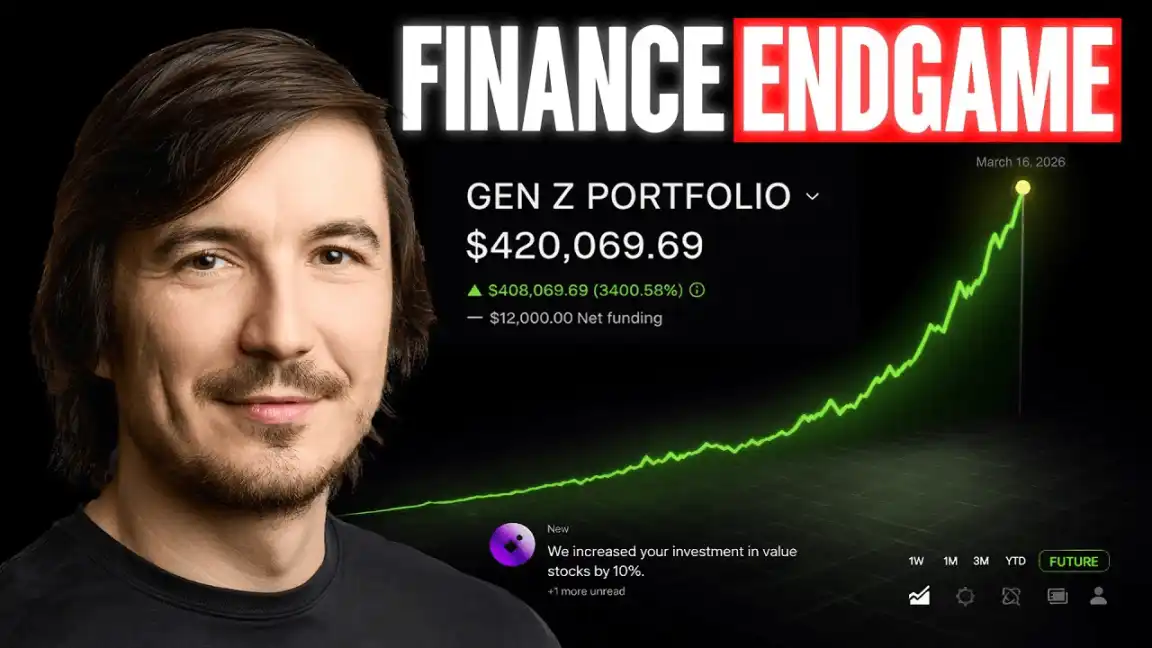
Do you think Generation Z (Gen Z) are just "financial nihilists" squandering their youth on TikTok and blindly speculating in the crypto market? The data from Robinhood founder Vlad Tenev will completely颠覆 your perception. In the latest Bankless interview, Vlad revealed an astonishing fact: Gen Z are the most hardcore long-termists in history, starting to plan for retirement at an average age of 19.

As the序幕拉开 for the $70 trillion "Great Wealth Transfer," this financial giant at the center of the storm is playing a big game: from 24/7 tokenized US stock trading, to plans allowing retail investors to get early access to unicorns like SpaceX and Stripe, to the即将改变游戏规则的 AI financial agents. Vlad not only responded to质疑 about "financial entertainment," but also deeply拆解ed how Robinhood is reshaping traditional banking through a DeFi architecture. This is not just an interview about trading tools, but a roadmap to the future of finance in 2040.

The $70 Trillion "Great Wealth Transfer"

Host: Let's start with the "Great Wealth Transfer." Over the next few decades, as the Baby Boomer and Silent Generations pass their assets down to Gen X, Millennials, and Gen Z, an estimated $70 to $90 trillion in assets are expected to transfer generations in the US. This is the largest wealth transfer in history. To what extent does this massive opportunity guide Robinhood's strategy?

Vlad: We think about it quite a bit. Many companies have started talking about this, but we truly turned it into concrete fintech action, dating back to when we launched Robinhood's banking services at our Gold event last year. Robinhood's core philosophy is: whether individual or institutional, domestic or international, Robinhood should be the place where all your money and assets get the best service. We believe we have a huge opportunity when inheritance events occur for the older generation. We not only serve the younger generation receiving the wealth but also aim to attract the current asset holders—the parents and grandparents—through rich products and features. Through credit and banking services, we can access a large amount of liquid assets held in checking and savings accounts. This year we also launched custodial accounts and trust accounts. We are not just waiting for people to inherit; we are working to make the older generation realize that using other outdated financial platforms today is a disadvantage. This puts us in a favorable position for the peak of the wealth transfer expected in about 8 to 10 years.

Finance in 2040: 24/7 Markets and Asset Tokenization

Host: What will finance look like in 2040? What will remain the same, and what will be彻底改变? Will we have 24/7/365 markets? What role will AI play?

Vlad: I believe 24/7/365 markets are inevitable. We launched 24-hour stock trading in 2022, and now the whole industry is following suit. The technology is ready, and weekend trading will happen sooner than imagined. Tokenization is another core driver. Last year we launched tokenized versions of thousands of US stocks in the EU, even including token giveaways for private companies like OpenAI and SpaceX. It's still early, but I think by the end of this year, tokenized stocks will begin to surpass traditional brokerage accounts in terms of trading advantages. If you can solve the 24/7 liquidity problem for private equity, then basically all assets can achieve全天候 trading.

Tech Stack: The Fusion of CeFi and DeFi

Host: Your Layer 2 chain, Robinhood Chain, just launched on testnet. How do you position this tech stack you are building? Are you challenging the NYSE, or building a new entry point into the crypto world?

Vlad: The tech stack is divided into two parts. One part is the CeFi component, which is the tradability of stock tokens on centralized exchanges like Bitstamp; the other part is the DeFi aspect, where we want users to be able to participate in DeFi protocols on Robinhood Chain or other chains through non-custodial wallets. We don't see ourselves as catching up to traditional providers; this is more like a completely new species. In the crypto ecosystem, many tokens lack underlying utility, but when you bind technological power to real-world assets (RWA) with real fundamental utility, the experience undergoes a qualitative change. As for the US market, although the regulatory environment is changing, the US itself already has a mature structure close to 24/5, so the marginal benefits of tokenization might be less apparent in the short term compared to the EU. But as the technology proves its superiority overseas, it will eventually be移植回 the US.

DeFi Strategy and "Truth Machine" Prediction Markets

Host: Companies like Coinbase and BlackRock are moving towards DeFi. What is Robinhood's decentralized finance strategy? Also, regarding the recently hot "prediction markets," do you think they are good or bad for society?

Vlad: Our strategy is "full-stack." We need to onboard a large number of customers through the Robinhood App and Wallet, while also building infrastructure like Robinhood Chain. The activity on the testnet has exceeded my expectations; developers are very interested. The future core lies in "Curation"—how to help customers filter through thousands of on-chain products to find high-quality choices that match their risk profile. Regarding prediction markets, I believe they are very beneficial to society. They are not just trading venues but "truth machines." The business model of traditional news media sometimes delays the truth in exchange for traffic, while prediction markets fill the primal need people have for "real information."

Host: Will Robinhood strengthen its media and content属性? For example, becoming the homepage for prediction markets, or adding social elements.

Vlad: Absolutely. We are about to launch Robinhood Social. We have a massive amount of assets, and prediction markets will be "first-class citizens" among them. Through user-generated content (UGC), we can capture breaking news faster than manual curation. At the same time, our media division, Sherwood Media, is also outputting high-quality content and integrating prediction market data. In terms of execution, we partner with Kalshi and ForecastX, and in the future, through the acquired Bitstamp, we will also have our own trading venue to provide customers with the optimal experience.

Debunking the Myth of "Financial Entertainment"

Host: Many people believe the younger generation engages in finance for entertainment, even带有 "financial nihilism," thinking they are speculating and gambling. As a platform, how do you view this trend?

Vlad: I have a rather "spicy" take: I don't believe entertainment drives most financial activity. The reality is, no one wants to discuss the boring but important parts on social media. On Twitter, no one posts "my Robinhood retirement account grew again," because it's not sexy and doesn't go viral. But the data tells us that 40% of the assets on the platform are in passive instruments (like ETFs, cash). Even the most active options traders typically have larger passive investment portfolios. People just operate in different accounts for different purposes.

Host: That's a powerful counter-narrative. So Gen Z isn't financially irresponsible, but actually more savvy?

Vlad: Exactly. As I just mentioned, they open accounts very early. Part of the reason is the convenience of access—just a few clicks on Robinhood to open an account. Another part is economic incentives, like our 3% match contribution for Gold members' retirement accounts. Furthermore, young people today are more likely to be independent contractors or gig economy participants, making it harder to rely on traditional employer 401k plans, so they need to actively manage their future more. Currently, our retirement assets have exceeded $25 billion, and the growth is astounding.

Trump Accounts and the Future "Gen Beta"

Host: Let's talk about groups younger than 19. The Trump Accounts mentioned in the recent "Fairness for All Act" have attracted attention; the government would provide a $1000 initial investment fund for newborns. Why do you rate this so highly?

Vlad: This is the first mechanism I can think of that truly "gives money back to the future." Current policies mostly involve debt that mortgages the future. Trump Accounts are automated; they teach children the value of long-term investment. By age 18 or 30, benefiting from compound interest, this money could grow to hundreds of thousands or even millions of dollars. Although newborns won't directly operate phones, these accounts are managed by parents, and we will focus on building a "kids' investment experience" focused on financial education and literacy.

Financial Super App and the Future of Payments

Host: Everyone is running towards a "financial super app." Will Robinhood pack all functions into one app? Also, why haven't you implemented peer-to-peer (P2P) payments between users yet?

Vlad: We will adopt a flexible strategy. The main app will evolve to be more highly personalized, tailored to you like a social media feed. At the same time, we will also retain standalone professional apps, like a dedicated banking app or non-custodial wallet, connected through unified identity verification. Regarding payments, we've experimented. But we found Robinhood users are primarily credit-driven, not the群体 that primarily relies on借记卡 for early paycheck access. Currently, the P2P experience on Venmo and Cash App is already good; we don't want to just pile on mediocre, commoditized features unless we can make significant improvements. Right now, our priority is moving the remaining banking features onto the platform.

Stablecoins and Regulation

Host: What is your view on stablecoins as banking products?

Vlad: Stablecoins face two challenges: First, FDIC insurance. US consumers highly value fund safety, especially after the 2023 banking crisis; the de-pegging risk of stablecoins leaves people wary. Second, competition from cashback on payments. Currently, you can't get 3% cashback like with credit cards when paying with stablecoins. Stablecoins are currently useful for large B2B or cross-border payments, but for consumer scenarios like splitting a bill for pizza, more ecosystem maturity is needed.

Host: Regarding the Clarity Act (crypto regulation bill), how reliant are you on its passage?

Vlad: The Clarity Act can clarify what is a security and what is a commodity, which would save us a lot of legal and compliance costs. More importantly, it can prevent policy flip-flops due to administrative changes. Regardless of whether the bill passes, we will push forward with Robinhood Chain because it is global and permissionless. If clarity is high in the US, we'll push the US market; if clarity is low, we'll prioritize developing international business.

The Next Growth Areas: AI and Private Equity

Host: Looking ahead, what is Robinhood's third big opportunity?

Vlad: There are several directions. First is the launch of Social features; second is the popularization of prediction markets. But the biggest transformation might come from AI. We are thinking: how could an "AI agent," like a family office, run your entire financial life? From automatically managing savings to executing complex trading strategies. Additionally, we are also addressing the issue of retail investors being unable to access growth stocks (like Stripe, SpaceX) through Robinhood Ventures. We allow retail participation in IPOs through IPO Access and use our own capital to invest in late-stage private rounds. In the future, we hope even seed-round financing could include retail investors.

Host: Thank you, Vlad, for sharing. Robinhood has always been a leader in democratizing finance. The above does not constitute financial advice; cryptocurrencies are risky. Thank you for listening to Bankless.


Questions liées

QWhat is the 'Great Wealth Transfer' and how is Robinhood positioning itself for it?

AThe 'Great Wealth Transfer' refers to the projected $70-90 trillion in assets that will be passed down from the Baby Boomer and Silent generations to Gen X, Millennials, and Gen Z in the coming decades. Robinhood is positioning itself by not only serving the younger generations who will inherit the wealth but also by attracting the current asset holders (parents and grandparents) through products like credit and banking services, custodial accounts, and trust accounts. The goal is to become the primary platform for all financial services, making them aware that using outdated platforms is a disadvantage.

QAccording to Vlad Tenev, what are the key drivers for the future of finance by 2040?

AVlad Tenev identifies two key drivers for the future of finance by 2040: 24/7/365 markets and asset tokenization. He believes round-the-clock trading is inevitable and that tokenization is a core driver, noting that tokenized stocks in the EU are on track to surpass traditional brokerage accounts in trading advantages by the end of the year. Solving the 24/7 liquidity problem for private equity would essentially allow all assets to trade continuously.

QHow does Robinhood's strategy for DeFi and its new Robinhood Chain differ from traditional financial infrastructure?

ARobinhood's strategy is 'full-stack,' combining both CeFi and DeFi components. The CeFi component involves making tokenized stocks tradable on centralized exchanges like Bitstamp. The DeFi component aims to let users engage with DeFi protocols through non-custodial wallets on the Robinhood Chain or other chains. Vlad Tenev positions this not as competing with traditional suppliers like the NYSE but as creating a new species of financial infrastructure that combines real-world assets (RWA) with crypto utility, leading to a qualitatively different experience.

QWhat is Vlad Tenev's response to the criticism that Gen Z's engagement in finance is driven by 'entertainment' or 'financial nihilism'?

AVlad Tenev strongly disputes the narrative that Gen Z's finance activity is primarily driven by entertainment. He argues that the 'boring but important' aspects of investing, like passive ETF and cash holdings, don't get discussed on social media because they aren't 'sexy' or viral. Data shows that 40% of assets on the Robinhood platform are in passive instruments. He states that Gen Z is actually more financially responsible, opening investment accounts very early (average age 19) due to ease of access and economic incentives, and are often proactive in managing their future, especially as independent workers.

QWhat are some of the next big growth opportunities for Robinhood, as mentioned by Vlad Tenev?

AThe next big growth opportunities for Robinhood include: 1) The launch of its Social feature and the proliferation of prediction markets. 2) The transformative potential of AI, specifically exploring how an 'AI agent' could autonomously manage a user's entire financial life, from savings to executing complex trading strategies. 3) Democratizing access to private equity for retail investors through initiatives like Robinhood Ventures and IPO Access, aiming to eventually allow散户 investment even in seed-round funding for companies like Stripe and SpaceX.

Lectures associées

Associé d'a16z : Se positionner dans le flux de capitaux, c'est la véritable barrière concurrentielle

L'article soutient que la véritable pérennité d'une entreprise réside dans sa capacité à se positionner au cœur des flux de valeur, où elle peut prélever une partie des transactions qu'elle facilite. Historiquement, des sociétés comme les chemins de fer, Visa, Google, Meta ou AWS ont bâti leur puissance non pas en vendant un produit, mais en devenant des intermédiaires incontournables dans le transport, les paiements, la publicité ou la puissance de calcul. La crypto-monnaie rend ce modèle accessible aux startups. Grâce aux blockchains, aux stablecoins et aux tokens, elles peuvent créer des réseaux ouverts où la valeur circule à la vitesse d'Internet, et où les revenus sont partagés de manière programmable avec les contributeurs. Le secteur financier traditionnel, avec ses frais élevés et ses inefficacités (paiements, transferts internationaux, garde de titres...), constitue une cible prioritaire pour être "reconstruit" de cette manière. L'opportunité ne se limite pas à la finance. Des marchés émergents comme le calcul (GPU), les données d'IA, l'énergie ou les ressources spatiales verront aussi des flux de valeur massifs. Pour tout fondateur, les questions clés sont : mon produit est-il déjà dans un flux de valeur ? Mes revenus augmentent-ils proportionnellement à l'activité du réseau ? Où se trouvent les inefficacités les plus coûteuses à corriger ? L'avenir appartient à ceux qui compresseront les coûts des anciens systèmes pour se placer au centre des nouveaux flux.

marsbitIl y a 17 mins

Associé d'a16z : Se positionner dans le flux de capitaux, c'est la véritable barrière concurrentielle

marsbitIl y a 17 mins

Détection de 15 vulnérabilités zero-day de haut niveau : Le framework de débogage de protocoles de consensus par agents intelligents développé par 0G Lab en collaboration avec NUS, PKU et BUPT

Les protocoles de consensus, fondations critiques des systèmes distribués, sont notoirement difficiles à déboguer en raison de leur complexité. Une équipe de 0G Labs, de l'Université Nationale de Singapour, de l'Université de Pékin et de l'Université des Télécommunications de Pékin a présenté Agora, un cadre innovant d'agents IA multiples pour la détection automatisée de bugs. Agora s'éloigne de l'approche inefficace des modèles de langage monolithiques (comme GPT-5.2 ou Claude 4.5, qui ont échoué) en utilisant trois agents spécialisés : un Orchestrateur pour la coordination globale, un Stratège pour générer des scénarios d'attaque exploitant la connaissance du domaine, et un TestGen pour créer et exécuter des tests. Ce système, intégré à une architecture de test automatisé (Harness) avec une boucle de rétroaction, permet une analyse globale et un débogage en boucle fermée. Les résultats sont impressionnants : Agora a découvert 15 bugs logiques profonds et inconnus (zero-day) dans des protocoles comme Raft, EPaxos et dans des composants d'etcd et de Sui, avec un taux de faux positifs de seulement 26.1%. L'efficacité est remarquable, chaque bug majeur étant trouvé pour environ 40 dollars de coût en tokens. Ce cadre, conçu pour être économique et accessible, démontre la puissance de la collaboration multi-agents spécialisés pour les tâches complexes de vérification. Il est facilement adaptable à d'autres domaines critiques comme le contrôle de la concurrence dans les bases de données, les noyaux de systèmes d'exploitation ou l'audit de contrats intelligents Web3, ouvrant la voie à une nouvelle ère d'audit de sécurité automatisé pour l'infrastructure informatique fondamentale.

marsbitIl y a 18 mins

Détection de 15 vulnérabilités zero-day de haut niveau : Le framework de débogage de protocoles de consensus par agents intelligents développé par 0G Lab en collaboration avec NUS, PKU et BUPT

marsbitIl y a 18 mins

Le partenaire de a16z crypto : Le flux de capitaux est la véritable barrière d'entrée

Partout dans l'histoire du commerce, le succès durable des entreprises repose sur la circulation des capitaux : capter la création et le transfert de valeur au sein d'un écosystème et en prélever une partie. La cryptographie est la première technologie moderne adaptée à cette logique. Les blockchains fonctionnent comme des modèles commerciaux en réseau, bénéficiant d'effets de réseau natifs. Les jetons de réseau, lorsqu'ils sont bien conçus, alignent les intérêts de tous les participants (utilisateurs, développeurs, etc.) vers la croissance du réseau et redistribuent les revenus générés par le protocole. La logique fondamentale reste de trouver et de s'établir au cœur des flux de valeur. Les exemples historiques (chemins de fer, Visa, Jane Street) le démontrent : la combinaison du flux de capitaux et des effets de réseau constitue l'un des modèles commerciaux les plus solides. Aujourd'hui, les profits importants et les inefficacités du secteur financier traditionnel (frais de transaction élevés, règlement T+1) représentent des opportunités. Les entrepreneurs de la cryptographie peuvent construire la prochaine génération d'infrastructures : programmable, par règlement instantané, mondiale et native aux flux de capitaux. Cette opportunité s'étend bien au-delà de la finance : les marchés de la puissance de calcul (GPU), des données d'IA, de l'énergie, des métaux rares, etc., sont prêts pour des flux de valeur globaux massifs que les canaux traditionnels ne peuvent supporter. Ces nouveaux marchés sont des espaces vierges pour des modèles centrés sur la circulation des capitaux via une infrastructure programmable. La question clé pour les entrepreneurs est : votre activité est-elle au cœur d'un flux de valeur essentiel ? Pouvez-vous évoluer avec lui ? Où les marges sont-elles excessives par rapport à la valeur créée ? La réponse indique où se trouve l'opportunité : réduire les coûts, capturer de nouveaux flux et grandir grâce aux effets de réseau.

Foresight NewsIl y a 21 mins

Le partenaire de a16z crypto : Le flux de capitaux est la véritable barrière d'entrée

Foresight NewsIl y a 21 mins

Démystifier le "dieu de la bourse aux cheveux blancs" Serenity : Le remède spirituel des investisseurs particuliers anxieux

L'investisseur anonyme « Serenity », surnommé « le dieu boursier aux cheveux blancs », suscite un vif émoi sur les marchés actions, notamment en Chine. Connu pour sa méthode d'investissement dite des « points de blocage » (« Chokepoint ») ciblant des entreprises en situation de quasi-monopole dans la chaîne de valeur de l'IA, il a gagné une immense popularité auprès des investisseurs particuliers internationaux sur la plateforme X, dépassant même Elon Musk en nombre d'abonnés payants. Entre le 5 et le 9 juin, ses mentions (« call ») de trois actions cotées sur le marché A chinois – LeaderDrive (谐波), Easun (易事特) et Innolight (中际旭创) – ont provoqué des hausses spectaculaires, dont deux montées en flèche de 20% en une journée. Son influence est telle qu'une erreur de traduction AI concernant Innolight a même entraîné une hausse brutale d'une autre société. Face aux médias chinois qui l'accusent de potentielle manipulation de cours (« export-import stock promotion »), Serenity affirme ne détenir aucune de ces actions et agir par simple intérêt, pour offrir une perspective étrangère sur le marché A. Il se présente comme un partisan de la démocratisation de l'information financière, refusant tout partenariat payant hormis un abonnement mensuel symbolique de 1 dollar. La communauté a reconstitué son profil : il s'agirait très probablement d'un anglophone résidant actuellement au Japon, maîtrisant également le chinois et le japonais. Ancien chercheur en IA ayant refusé une offre de Nvidia, il préserve son anonymat après avoir subi des menaces pour ses analyses critiques. Son récit, son succès affiché (un rendement annuel revendiqué de plus de 3600%) et son mystère en font une figure d'identification pour les investisseurs particuliers en pleine euphorie de la bulle IA. Cependant, l'article met en garde contre la tendance du marché à créer puis à détruire des idoles selon les cycles boursiers, soulignant que l'engouement actuel pourrait rapidement se retourner en cas de retournement du marché.

marsbitIl y a 25 mins

Démystifier le "dieu de la bourse aux cheveux blancs" Serenity : Le remède spirituel des investisseurs particuliers anxieux

marsbitIl y a 25 mins

Démystifier le « gourou boursier aux cheveux blancs » Serenity : L’antidote des investisseurs particuliers anxieux

L'investisseur anonyme connu sous le nom de "Serenity" est devenu un phénomène sur les réseaux sociaux, notamment sur X (anciennement Twitter), où ses recommandations boursières provoquent des mouvements de marché significatifs. Présenté comme un ancien scientifique spécialisé en IA, il applique une méthode d'investissement dite des "points de blocage" (Chokepoint) pour identifier de petites entreprises monopolistiques dans la chaîne d'approvisionnement de l'IA. Son compte, qui aurait généré un rendement de plus de 3612% cette année, compte désormais plus d'abonnés que celui d'Elon Musk. Récemment, son attention s'est tournée vers le marché boursier chinois (A-shares). Après avoir exprimé son intérêt pour les actions chinoises, ses posts sur les sociétés LeaderDrive (谐波) et Easpace (易事特) ont entraîné une hausse immédiate de leurs cours de plus de 20%. Serenity a ensuite déclaré que ces mentions étaient issues d'une liste collaborative ("crowdsourced") et non de ses propres recommandations, affirmant ne détenir aucune position dans ces titres. Il justifie ses interventions par le souhait d'apporter une perspective étrangère au marché chinois et par simple divertissement. Son anonymat et ses motivations suscitent des débats. Bien qu'il affirme ne pas faire de promotion payante et prôner la démocratisation de l'information, son service d'abonnement à 1 dollar par mois lui générerait des revenus substantiels. La communauté en ligne, en recoupant ses indications sur sa vie personnelle et ses heures de publication, estime qu'il s'agit très probablement d'un expatrié vivant au Japon. Serenity est perçu par beaucoup comme la figure emblématique de l'engouement actuel pour l'IA en Bourse – un personnage mystérieux et apparemment infaillible qui canalise l'optimisme du marché. Cependant, l'article met en garde contre la tendance à sacraliser de tels individus, notant que les marchés cycliques créent et défont facilement ces "idoles", et que sa véritable identité pourrait devenir secondaire si la tendance s'inverse.

Odaily星球日报Il y a 25 mins

Démystifier le « gourou boursier aux cheveux blancs » Serenity : L’antidote des investisseurs particuliers anxieux

Odaily星球日报Il y a 25 mins

Trading

Spot
Futures
活动图片




