OpenAI Launches Workflow Agent, GPTs Begin Countdown

marsbitPublié le 2026-04-24Dernière mise à jour le 2026-04-24

Résumé

OpenAI has launched Workspace Agents, an evolution of GPTs designed for teams. This new feature allows users to create reusable, shareable agents that automate repetitive workflows. Driven by Codex, these agents operate within their own workspace, can access files, call tools, and run continuously in the background. Users describe a workflow—such as collecting information, making judgments, generating results, and sending outputs—to ChatGPT, which then builds the agent. The entire team can use and refine the agent via ChatGPT or Slack. Once set up, the agent runs autonomously. Workspace Agents are team-shared, code-free, and manageable with predefined permissions and controls. They are suitable for structured, repeatable tasks involving multiple tools and continuous operation, such as software review, feedback整理, report generation, sales follow-up, and risk assessment. The system operates within clear rules, with sensitive actions requiring human confirmation. It aims to transform workflows from being person-dependent to being documented, executable, and reusable—akin to scientific management principles. Competing solutions from Microsoft and Google are also emerging in this space.

OpenAI released Workspace Agents in the early hours, marking the beginning of the countdown for GPTs.
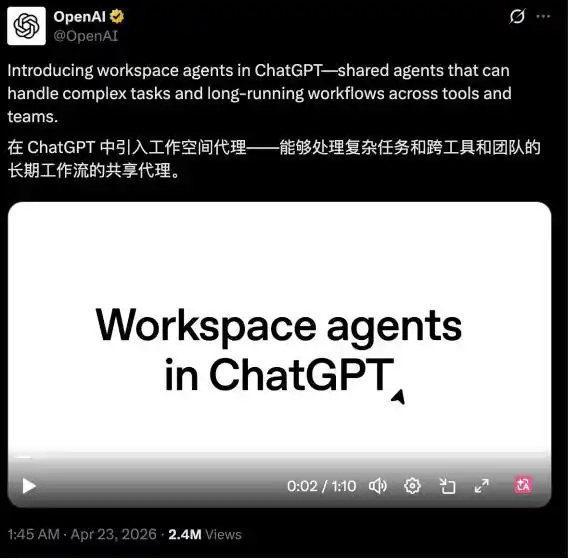
This new product is introduced as an evolved form of GPTs, with a clear positioning: team-oriented, turning a repeatable workflow into a shareable, executable agent.

It is powered by Codex, has its own workspace, can access files, call tools, and execute tasks continuously in the background.

You describe a repetitive workflow to ChatGPT, such as collecting information, making judgments, generating results, and then sending the results out. ChatGPT will then build this process into an Agent, which your entire team can use in ChatGPT or Slack, making adjustments while using it.

Once set up, it will continue running in the background, even when people are away.

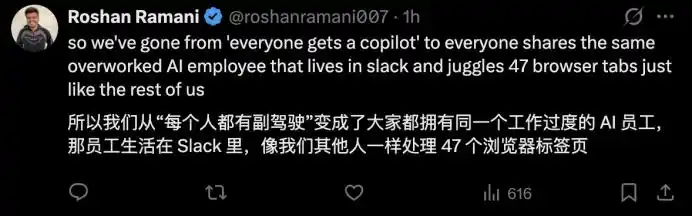
It sounds familiar, like OpenClaw · Team Edition.
01 Team-Shared Agent

As the name suggests, Workspace Agents are for work teams.

This new feature is placed in the sidebar of ChatGPT as a separate entry. Clicking on it reveals a space to build workflows.
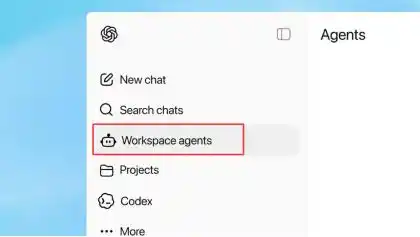
You can create an agent from scratch or modify it based on official templates. The entire process requires no coding; simply describe the workflow in plain language, and the system will break it down step by step: what steps are needed, what tools are used, and what results are output.

The created agent will appear in the team directory, where other members can directly call the same agent or adjust and supplement the workflow during use.
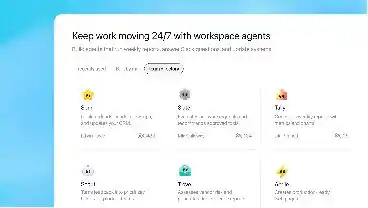
In other words, the workflow becomes a reusable tool for the team. Moreover, it is not fixed; it can be continuously refined during use.

Additionally, Workspace Agents have their own workspace, allowing them to read and save files, call connected tools such as email, calendars, document systems, or other business systems, and execute code when needed.

They can also run continuously, either manually triggered or scheduled. Once the process starts, it will execute step by step without requiring human intervention at each step. As long as the entire process is feasible, you can let it run on its own.

The execution process is controllable. Workspace Agents follow pre-set permissions and control rules.

Each agent's accessible tools and data can be set in advance; operations involving content modification or sending information can require prior approval; administrators can monitor its usage and pause or adjust it when necessary.

Looking back at previous generations of products, this change becomes clearer.

The earliest GPTs were essentially prompt + knowledge base + Actions, configured once for single-user use, without true long-process execution capabilities.

Later, ChatGPT Agent could execute tasks but was more like a one-time call. It ended after completion, with no continuous operation or stable identity.

With Workspace Agents, this type of product has stabilized: it is team-shared, can run long-term, has its own context and memory, executes continuously according to preset processes, and includes permission and management mechanisms.

Based on the official description, this product is suitable for structured, repeatable tasks that rely on multiple tools and require continuous operation. For one-time conversations or temporary tasks, such complexity is likely unnecessary.

Workspace Agents are now available in research preview for ChatGPT Business, Enterprise, Education, and Teacher plans. For Enterprise and Education plans, administrators can manage these agents through role permissions.

02 Simplifying Processes Under Clear Rules

OpenAI provided five typical scenarios covering IT, product, operations, sales, and risk control functions.

None of these scenarios require coding. They share a commonality: the tasks themselves are not complex, but the information is scattered across different places, requiring people to search and organize repeatedly.

The first is software review: after an employee submits a software use or procurement request, the agent checks it against the company's existing tool list and security rules to determine whether the request can be approved, how to proceed, and, if necessary, directly submits the ticket.

The second is product feedback organization: the agent simultaneously checks Slack, customer service channels, and public forums to collect scattered user feedback, categorizes it briefly, identifies which are more important, organizes it into tickets, and outputs a阶段性 summary.

The third is weekly report generation: the agent pulls business data at fixed times, creates charts, writes a summary, and compiles a complete report for the team.

The fourth is sales lead follow-up: the agent checks new customer information, judges whether the customer is worth following up based on team rules, drafts a follow-up email, and syncs relevant content back to the CRM system.

The fifth is third-party risk assessment: the agent checks various information about suppliers, such as whether they are sanctioned, their financial status, and any negative news, then compiles a report according to the company's standards.

These five scenarios point to the same type of task, which is the primary use of Workspace Agents: if a process already exists but requires constant switching between different tools during execution, with results pieced together at the end, Workspace Agents can connect these steps and let them run sequentially.

The question then arises: while it's fine to let it collect information and organize processes, is it appropriate to leave judgment to it?

According to the official design, this issue has not been overlooked.

The "judgment" in Workspace Agents is not free rein; it operates within a set of rules.

For example, in the software review scenario, it checks against the company's existing list and security rules to decide whether to use a certain tool; in the sales lead scenario, it doesn't randomly pick customers but scores them based on pre-set team standards.

For more sensitive actions, such as modifying data, sending external messages, or creating schedules, the system can add a confirmation step by default. The process can run automatically, but critical nodes can still pause for human final decisions.

This actually defines a boundary.

Workspace Agents are more suitable for tasks where the rules are clear and the judgment criteria are already written.

If a task itself requires extensive ad-hoc judgment and constant adjustment based on context, it still needs human leadership.

03 Management Lessons from OpenClaw

From a management perspective, Workspace Agents solve not an efficiency problem but the organizational method of the process itself.

In many teams, workflows exist but are not fully documented.

They are scattered in different places: part in documents, part in systems, and part in the minds of those executing them.

The same task handled by different people may follow different sequences and judgment standards.

This is why many tasks seem simple but are difficult to stabilize.

In the late 19th century, Taylor proposed scientific management, whose core was transforming work from "relying on personal experience" to "steps that can be split, recorded, and repeatedly executed."

First, break down a task: how each step should be done, what standards to judge by, then fix these steps so different people can execute them in the same way.

What Workspace Agents do is very similar to this logic. A process must first be clearly written: when it starts, what data is used, what steps are involved, and what results are produced.

This content directly becomes an executable process. During execution, it no longer relies on someone remembering the next step but follows the defined sequence.

The change is that the process can be separated from people.

In the past, the "most familiar person" in a team often determined whether the process could run smoothly; now, this experience can be written into the process, and other team members can directly use the same approach.

Another important point is that the process must have boundaries: which parts can be automated, which must stop for confirmation, which data can be used, and which cannot—all must be set from the beginning.

From this perspective, Workspace Agents do not change the content of work; they change how the process exists.

The process is no longer just described; it can be run, reused, and continuously adjusted.

Tools like OpenClaw initially followed this direction: they attempted to let systems take over entire operational processes, turning actions that required step-by-step human completion at a computer into automatically executable workflows.

The difference is that Workspace Agents place this in a team environment and add layers of permissions, approvals, and management, making work more controllable.

Similar attempts are not unique to OpenAI.

Microsoft is advancing its Copilot Agents, embedding this capability into Microsoft 365, covering environments employees use daily, from email and documents to collaboration tools.

Google also launched an enterprise-side Agent platform today, focusing on how to manage and schedule large numbers of agents, allowing them to collaborate across different systems.

However, for enterprises, the difference is not just in functionality. The real cost lies in usage: whether employees need to learn new tools and whether processes need to be rebuilt determines whether these systems can truly operate.

The competition continues, but the direction is clear.

This article is from the WeChat public account "Letter AI", author: Yuan Xinyue

Questions liées

QWhat is the main purpose of OpenAI's newly released Workspace Agents?

AWorkspace Agents are designed for teams to create shareable, executable agents that automate repetitive workflows, allowing them to run continuously in the background with access to files, tools, and predefined rules.

QHow do Workspace Agents differ from previous GPTs and ChatGPT Agents?

AUnlike earlier GPTs (prompt + knowledge base + Actions for single users) and ChatGPT Agents (one-time execution without persistence), Workspace Agents are team-shared, have long-running capabilities, stable identities, context memory, and built-in permission management.

QWhat are some typical use cases for Workspace Agents mentioned in the article?

ATypical use cases include software compliance checks, product feedback aggregation, weekly report generation, sales lead follow-ups, and third-party risk assessments—all involving structured, repeatable tasks across multiple tools.

QHow does Workspace Agents handle decision-making and ensure control?

ADecision-making is rule-based, relying on predefined company standards (e.g., security rules or sales criteria). Sensitive actions like data modification or external communications can require human confirmation, and administrators can monitor, pause, or adjust agents.

QWhat management philosophy does Workspace Agents align with, according to the article?

AIt aligns with Taylor's scientific management principles, breaking down workflows into documented, repeatable steps that are detached from individual experience, making processes executable, shareable, and adjustable within teams.

Lectures associées

Humanity s'est fait voler plus de 31 millions de dollars, l'équipe prépare-t-elle le terrain pour un nouveau projet ?

L'écosystème crypto est secoué par un nouveau piratage majeur. Humanity Protocol a subi une attaque entraînant le vol de plus de 31 millions de dollars, provoquant un effondrement de plus de 90% du prix de son jeton H. Le fondateur Terence Kwok a attribué l'incident à la fuite d'une clé privée d'un membre de la fondation. Cependant, l'enquêteur ZachXBT et d'autres membres de la communauté émettent de sérieux doutes. Ils suspectent que cet "incident" pourrait être une manœuvre orchestrée par l'équipe elle-même pour réaliser des profits, plutôt qu'un piratage externe. Cette suspicion est renforcée par les antécédents controversés de plusieurs membres clés de l'équipe Humanity, impliqués dans des affaires passées de mauvaise gestion financière et de pratiques douteuses. Parallèlement, il est révélé que la même équipe est déjà activement impliquée dans le lancement et le financement d'un nouveau projet appelé "Everything". Cela alimente la théorie selon laquelle l'événement actuel pourrait être une stratégie pour abandonner Humanity Protocol et ses détenteurs de jetons, tout en se concentrant sur un nouveau départ. En somme, l'affaire oscille entre une fuite de sécurité classique et un possible "rug pull" déguisé, jetant une lumière crue sur les risques opaques et les conflits d'intérêts potentiels dans l'industrie. Les utilisateurs sont invités à la plus grande prudence.

Odaily星球日报Il y a 1 h

Humanity s'est fait voler plus de 31 millions de dollars, l'équipe prépare-t-elle le terrain pour un nouveau projet ?

Odaily星球日报Il y a 1 h

Le prochain Alibaba qu'attendait Masayoshi Son, ruiné par de belles histoires

**Résumé en français :** Après des années marquées par des échecs retentissants comme WeWork et des pertes colossales pour le Vision Fund, Masayoshi Son, le fondateur de SoftBank, opère un retour en force grâce à l'essor de l'IA. Sa fortune personnelle a dégringolé de 700 milliards de dollars après l'éclatement de la bulle Internet en 2000, avant d'être sauvée par le succès historique d'Alibaba. Cependant, sa stratégie de paris extrêmes sur des startups à la croissance rapide mais non rentables (Uber, Oyo, etc.) l'a conduit à une nouvelle crise profonde en 2022, le poussant à une période de doute et de retrait. Aujourd'hui, Son est à nouveau porté par le marché. Deux investissements visionnaires, effectués bien avant la frénésie actuelle, portent leurs fruits : l'acquisition d'Arm en 2016, dont la valeur a explosé avec la demande en semi-conducteurs pour l'IA, et les investissements massifs dans OpenAI. SoftBank a investi des dizaines de milliards de dollars dans le créateur de ChatGPT, détenant désormais environ 13% du capital, avec des plus-values déjà considérables. Ces actifs liés à l'IA ont fait grimper la valeur de SoftBank et ont ramené Masayoshi Son au sommet du classement des fortunes asiatiques. Son histoire illustre un cycle récurrent : de chutes vertigineuses provoquées par des paris trop audacieux sur des "histoires", il rebondit grâce à quelques coups de maître anticipant les ruptures technologiques majeures, comme l'internet, le mobile, et désormais l'intelligence artificielle.

marsbitIl y a 1 h

Le prochain Alibaba qu'attendait Masayoshi Son, ruiné par de belles histoires

marsbitIl y a 1 h

WeChat Agent lance "l'appel des héros", la moitié de l'internet chinois répond

L'agent IA de WeChat arrive véritablement. La plateforme ouverte de WeChat a publié un guide pour les développeurs concernant l'intégration à son écosystème d'IA. L'objectif est d'offrir des expériences interactives plus intelligentes et de faciliter la découverte des services via les mini-programmes. Deux modes d'intégration sont proposés : automatique (lecture du code source lors de la soumission) et développeur (personnalisation avancée). Déjà, des acteurs majeurs comme Meituan, Ctrip et Tongcheng ont annoncé leur intégration. Cet agent IA, actuellement en test, permettrait d'effectuer des tâches complexes en langage naturel en pilotant les mini-programmes de l'écosystème WeChat (commandes de nourriture, réservations, etc.). Il tirerait parti du contexte riche de WeChat (relations sociales, historique de chat, paiements) pour mieux comprendre les intentions. Techniquement, il s'appuie sur des modèles comme UI-Oceanus pour simuler les interactions et sur une approche de "Co-Design" interne permettant de mutualiser les capacités développées sur d'autres produits IA de Tencent (Yuanbao, WorkBuddy, ima...). Tencent privilégie la voie du protocole A2A (Agent-to-Agent) pour une intégration contrôlée avec les assistants des fabricants de smartphones (comme Honor), rejetant les approches GUI qui simuleraient des clics. La question du coût de traitement pour 1,4 milliard d'utilisateurs mensuels actifs est cruciale. Le récent investissement et le partenariat avec DeepSeek semblent viser à fournir une infrastructure de calcul à bas coût. Pour Tencent, l'IA WeChat n'est pas une course aux benchmarks, mais la recherche d'une "bonne question" : apporter une valeur utilitaire tangible à ses utilisateurs dans leur vie quotidienne, faisant ainsi entrer pleinement le groupe dans la seconde moitié de l'ère de l'IA.

marsbitIl y a 1 h

WeChat Agent lance "l'appel des héros", la moitié de l'internet chinois répond

marsbitIl y a 1 h

MicroStrategy ne mourra pas de cette chute : réflexivité, retour de l’STRC à sa valeur nominale et logique d'auto-sauvetage « vendez des actions, pas du Bitcoin »

Cet article analyse la récente baisse rapide du BTC et ses répercussions sur MicroStrategy (MSTR) et ses actions privilégiées convertibles (STRC). L'auteur y voit une attaque spéculative ciblant MSTR, exploitant les craintes du marché sur sa liquidité après un rachat de dette convertible et la vente de 32 BTC. Ce scénario illustre le principe de réflexivité : la baisse des prix renforce la perception d'une crise, ce qui accentue la pression vendeuse. L'article explique que la chute des STRC, malgré leur structure prioritaire, reflète une prime de risque accrue due aux inquiétudes sur les flux de trésorerie de MSTR. Cependant, en tant qu'obligation à taux flottant, le prix des STRC devrait à terme revenir à sa valeur nominale de 100. Pour résoudre la crise de liquidité perçue, l'auteur soutient que MSTR devrait éviter de vendre ses BTC, ce qui nuirait à son récit stratégique et à sa prime de valeur nette ajustée (mNAV). Au lieu de cela, avec un mNAV supérieur à 1, l'entreprise devrait émettre de nouvelles actions pour renforcer sa trésorerie. Cette approche préserverait la prime, le ratio de BTC par action et améliorerait le taux d'endettement, tout en rassurant les détenteurs de STRC. Vendre des BTC, bien que pouvant apaiser les craintes à court terme, compromettrait le modèle de croissance à long terme et rendrait MSTR plus vulnérable à de futures attaques spéculatives.

marsbitIl y a 2 h

MicroStrategy ne mourra pas de cette chute : réflexivité, retour de l’STRC à sa valeur nominale et logique d'auto-sauvetage « vendez des actions, pas du Bitcoin »

marsbitIl y a 2 h

Trading

Spot
Futures
活动图片