How to Capture the Potential Opportunities of the pump.fun Hackathon?

marsbitPublié le 2026-01-28Dernière mise à jour le 2026-01-28

Résumé

Pump.fun has announced a $3 million hackathon and the launch of its ecosystem venture fund, Pump Fund. Unlike traditional hackathons, this event has no judges or set themes. Instead, 12 winners will each receive $250,000 in funding based on market performance. Key rules require teams to hold at least 10% of their token supply and actively engage with the community via live streams on pump.fun. The hackathon is seen as an evolution of Pump.fun’s earlier GFF initiative, aiming to identify and support high-potential tokens with market caps targeting at least $10 million. It emphasizes stronger tokenomics, broader narratives beyond memes (such as AI, prediction markets, and privacy), and increased use of platform features like live streaming. Notable projects highlighted include $MIA (AI companion), $RAIN (AI prediction market), and $MONEROCHAN (privacy DeFi). Other participants like $LUMEN (evolving AI robot), $GOLD (AI-powered game token), and $PUMPCADE (real-time prediction market) are also in the running. The event reflects Pump.fun’s strategy to diversify content, boost engagement, and foster ecosystem growth through market-driven validation.

On January 20, pump.fun officially announced a hackathon with a prize pool of $3 million, and simultaneously launched the ecosystem venture fund Pump Fund.
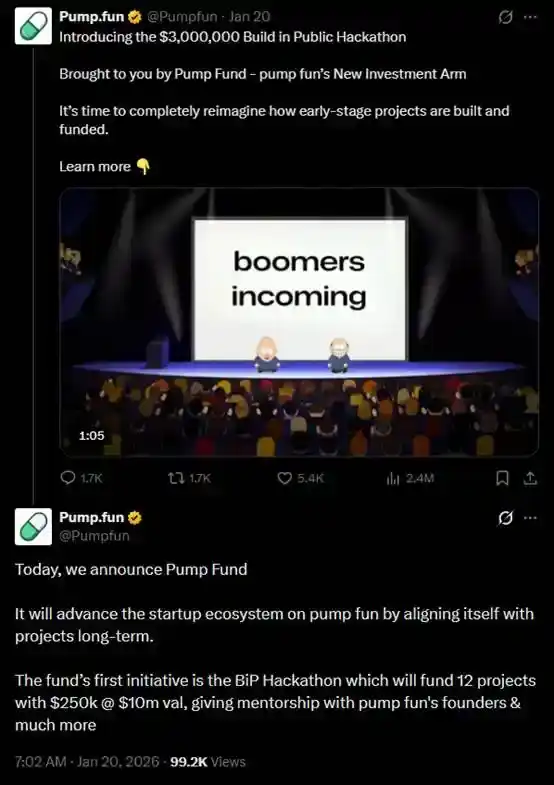
This is a very different hackathon. There are no judges, no theme, and there will be 12 winners, each taking away $250,000. Because of these special rules, before observing the projects, we need to first understand the logic behind this hackathon.

Called a Hackathon, Actually GFF 2.0

According to pump.fun's official statement, this hackathon abandons the traditional model of pleasing judges or investors to win funding, making the market the judge.

In short, it encourages everyone to launch tokens, and then it's up to their own abilities; whoever performs better in the market is more likely to win.

Apart from the requirement that the token must be deployed before the hackathon application deadline, the entire hackathon has almost only two restrictions. First, the team must own at least 10% of the token supply, and priority will be given to teams owning 20% - 50% of the supply. Second, the team must build "publicly," actively sharing their latest progress with the community, and priority will be given to teams that stream live on pump.fun at least 5 times a week.

For the最终 winning tokens, pump.fun will purchase $250,000 worth of tokens at a valuation of $10 million and provide ongoing consulting and incubation support.

This is hard not to remind people of last August, when pump.fun was challenged by the aggressive bonk.fun, they launched GFF (Glass Full Foundation), spending about $1.7 million to buy some well-performing meme coins in their ecosystem.

This hackathon, pump.fun is essentially still "buying coins," but in a more transparent and rule-based way, and the themes are no longer limited to pure meme coins. Based on the above interpretation of the rules, we can speculate on pump.fun's purpose and their understanding of the current market:

- Want to create 12 targets with at least a $10 million market cap

- Without good "control," there won't be new "golden dogs." If it's good control, it's called supply control adapted for long-term development. If it's bad control, it's called bundling.

- Still want to promote their own live streaming feature

- The theme of pure meme coins is too narrow; more narratives are needed for more revenue

At the same time, they have learned from the previous GFF lesson. GFF's promotion was just an announcement, with only a vague goal of "giving back to the ecosystem," and the theme was also limited to pure meme coins. Looking back now, it very much resembles a "wartime product" hastily created to deal with the bonk.fun challenge and the negative public opinion environment.

If following GFF's investments, the coin with the highest return was $neet, which rose over 200% at its peak two months after GFF's purchase, but more GFF holdings spiked instantly and then fell back.

Will this time be different? We cannot predict the future, only learn from history. A cautious strategy might be:

- Focus more on new coins, as new coins can bring more revenue to pump.fun

- Focus more on themes beyond pure meme coins, such as AI, Vibe Coding, or pump.fun live streaming coins

- Focus more on team background and influence, as this is a competition judged by market performance. If the founder is initially unknown, it's not easy to launch in the current market environment.

- Don't be too ambitious and long-term; don't expect pump.fun to do the work of helping those in need.

All of the above tells us that it is not easy to directly bet on "who will be the winner." If a token performs very strongly in the market, it actually doesn't need the official recognition from pump.fun to break through a $10 million market cap. Conversely, if a token needs official recognition from pump.fun as a driving force for its rise, then the token itself might not be that excellent.

Here, we can only look at some projects worth observing based on some available information and personal opinions that do not constitute investment advice.

3 "Case Studies" from the Official

First are the 3 coins that appeared as "case studies" in the official hackathon announcement: $MIA, $RAIN, and $MONEROCHAN.
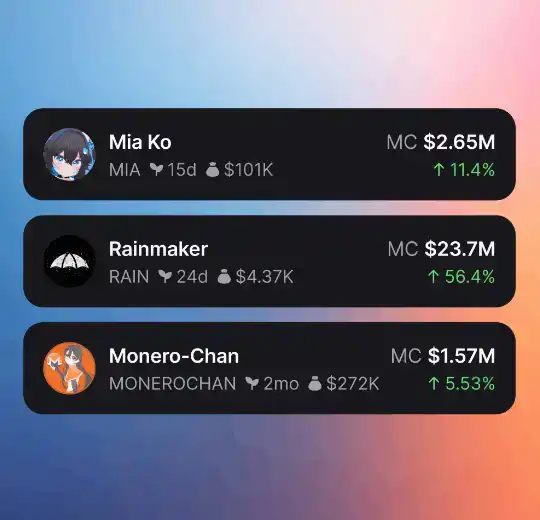
$MIA is building an interactive, multi-platform AI companion with real emotions. $RAIN is building an AI automated prediction market betting platform. $MONEROCHAN is building privacy DeFi on Solana.

$RAIN has a market cap of about $17 million, while $MIA and $MONEROCHAN are both around $1 million. However, none of these 3 tokens have publicly mentioned on their official Twitter whether they have applied to participate in this pump.fun hackathon, and for $MIA and $MONEROCHAN, it is unclear if the teams meet the hackathon's requirement of "the team holding at least 10% of the token supply."

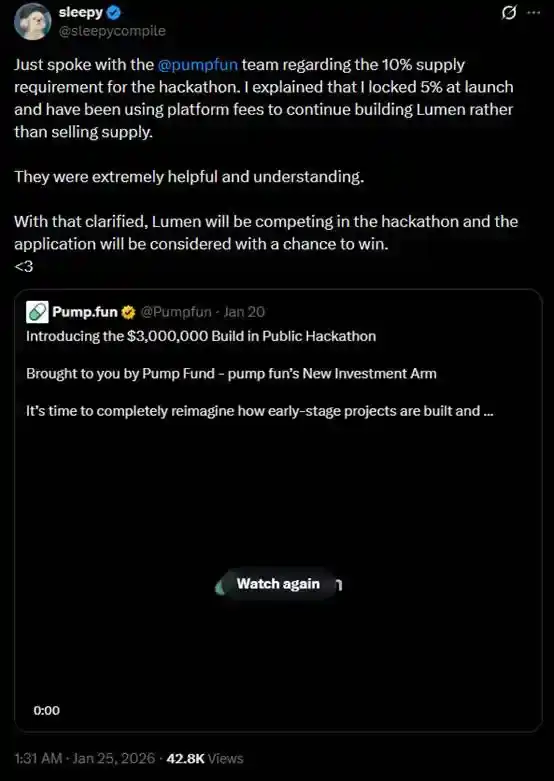
However, according to a tweet from the dev of the $LUMEN token, the requirement of "the team holding at least 10% of the token supply" can be leniently treated with a reasonable explanation.
From the 3 "case studies" given by pump.fun, we can also see that pump.fun might prefer the three sectors of AI, prediction markets, and privacy.

Observations on New Projects That Have Clearly Applied

Lumen Frankenstein($LUMEN)

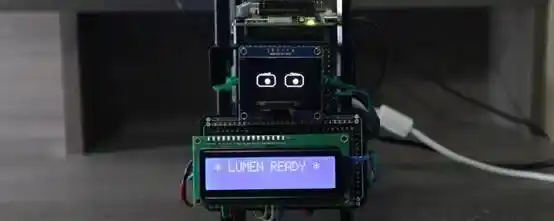
$LUMEN is building a robot that carries a continuously learning and evolving LLM with real emotions. The final product will be delivered to holders, and all delivered products will be connected to a backend cloud server, allowing all robots in the hands of holders to grow synchronously. The current market cap of this token is approximately $1.5 million.
Hyperscape($GOLD)

Under the AI theme, another competitor worth watching is $GOLD. The dev of this token is Shaw, the former founder of elizaOS and ai16z. Although, from TreasureDAO to ai16z, Shaw has issued too many assets and has a poor reputation among players.

$GOLD is the in-game token for the new game Hyperscape being developed by Shaw and his team, where 1 $GOLD = 1 in-game token. As the name suggests, this is a retro-style MMORPG like Runescape, built using AI and incorporating AI Agents powered by elizaOS. The game will be open source.
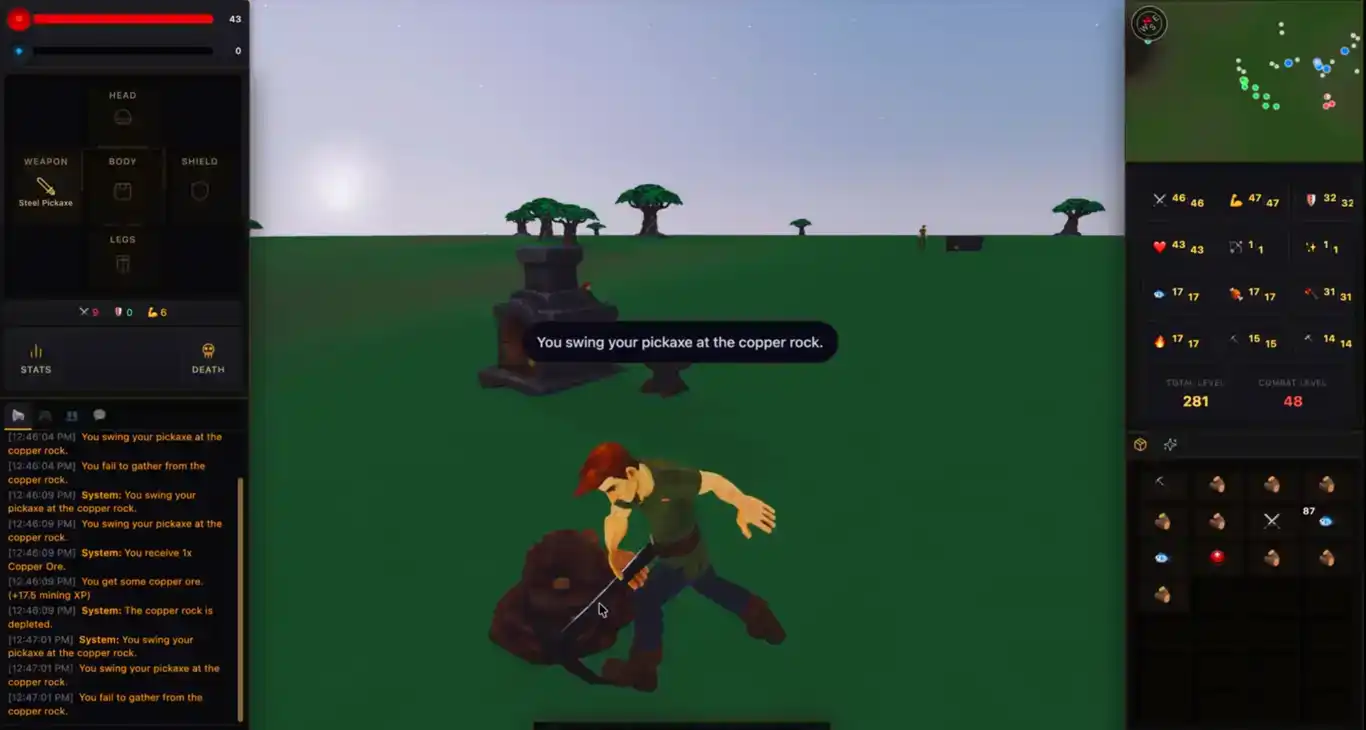
After briefly surging to nearly a $3 million market cap, $GOLD's current market cap is only about $360,000. Many players mock Shaw, but the final outcome is still hard to say.

PUMPCADE($PUMPCADE)

In the prediction market theme, a relatively outstanding competitor worth seeing is $PUMPCADE. This prediction market focuses on real-time betting on short-term volatility. Compared to prediction markets more friendly to medium-to-long-term beliefs, Pumpcade targets users seeking short-term entries and exits. For example, users might bet on the odds change for "Will Trump buy Greenland?" in the next hour, or they have developed a data source plugin for Runescape, allowing users to bet on the real-time收益 situation after killing a Boss, and so on.
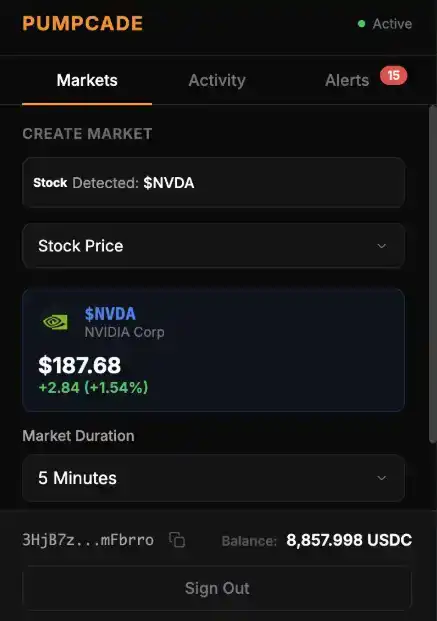
The current market cap of this token is approximately $3 million, having peaked at nearly $15 million.

The 3 non-"case study" projects mentioned above have clearly stated their participation in the pump.fun hackathon, but this is only for market observation and does not constitute investment advice.

Questions liées

QWhat is the total prize pool for the pump.fun hackathon and how many winners will be selected?

AThe total prize pool for the pump.fun hackathon is $3 million, and there will be 12 winners.

QWhat are the two main restrictions for teams participating in the pump.fun hackathon?

ATeams must own at least 10% of the token supply, and they must build publicly by actively sharing progress with the community, with a preference for teams that stream at least 5 times a week on pump.fun.

QWhat does the pump.fun hackathon's winning mechanism suggest about its purpose compared to the previous GFF initiative?

AThe hackathon, acting as GFF 2.0, uses a market-driven approach to select winners by acquiring their tokens at a $10 million valuation, aiming to create successful projects and diversify beyond pure meme coins, unlike the more reactive and meme-focused GFF.

QAccording to the article, what are some of the potential strategies for identifying promising projects in this hackathon?

AStrategies include focusing on new tokens that generate more revenue for pump.fun, prioritizing non-meme coin narratives like AI or prediction markets, evaluating team background and influence for better market performance, and avoiding overly long-term holds.

QName three example projects provided by pump.fun as 'case studies' for the hackathon and their respective focuses.

AThe three example projects are $MIA (an interactive, multi-platform AI companion with real emotions), $RAIN (AI-powered automated prediction market betting), and $MONEROCHAN (privacy-focused DeFi on Solana).

Lectures associées

Qui décide des règles du Bitcoin ? Le BIP-110 déclenche un conflit de gouvernance

L’article aborde la controverse soulevée par la proposition BIP-110, qui vise à réduire temporairement la capacité d’enregistrement de données non financières sur la blockchain Bitcoin via un soft fork. La proposition, initiée par Dathon Ohm, prévoit d’imposer de nouvelles limites au niveau du consensus, notamment sur la taille des scripts et l’utilisation d’OP_RETURN. Elle est activable par un signal minier à 55% sur une période déterminée. Les partisans soutiennent que les inscriptions et les runes surchargent les nœuds et détournent Bitcoin de sa mission monétaire, notant que les politiques de relais par défaut (comme l’ajustement dans Bitcoin Core v30) sont devenues inefficaces face aux canaux privés vers les mineurs. Les opposants, dont Michael Saylor et Adam Back, critiquent fermement l’approche. Saylor y voit un précédent de gouvernance dangereux, avec un seuil d’activation trop bas (55% contre 95% pour BIP-9) et des risques de division de la chaîne. Adam Back défend le principe d’un réseau sans permission, où la lenteur du consensus technique agit comme un système immunitaire contre les modifications non éprouvées. Techniquement, des experts comme Martin Habovštiak montrent que le stockage arbitraire de données pourrait contourner ces restrictions, tandis qu’un client alternatif comme DOG Mode pourrait les neutraliser au niveau du relais. Le débat révèle des tensions plus profondes sur la gouvernance de Bitcoin : les mineurs (divisés, avec des positions variées chez Ocean, Foundry et F2Pool), les opérateurs de nœuds (comme Bitcoin Knots) qui défendent leur souveraineté, les mainteneurs du code, et désormais des acteurs économiques majeurs comme MicroStrategy, dont les réserves de BTC influencent le récit. Un bug potentiel (BlockSlop) lié à l’activation tardive de BIP-110 a également été révélé, ajoutant un risque technique. En définitive, BIP-110 sert de test de pression pour la gouvernance bitcoin, opposant une vision interventionniste visant à préserver la fonction monétaire du réseau à une vision neutraliste défendant son ouverture et son processus de consensus prudent. La question centrale reste : qui a le pouvoir de décider ce qu’est Bitcoin ?

marsbitIl y a 3 mins

Qui décide des règles du Bitcoin ? Le BIP-110 déclenche un conflit de gouvernance

marsbitIl y a 3 mins

Qui décide des règles du Bitcoin ? Le BIP-110 déclenche une divergence de gouvernance

Le débat autour du BIP-110 (Réduction de données par softfork temporaire) a remis en lumière les profondes divergences de gouvernance au sein de la communauté Bitcoin. Cette proposition vise à limiter par consensus les données non financières, comme les inscriptions et les runes, en imposant des restrictions sur la taille des scripts et OP_RETURN. Ses partisans, incluant certains nœuds et mineurs comme Ocean, arguent que ces données parasitaires alourdissent la charge des nœuds et détournent l'objectif monétaire de Bitcoin, et que les politiques de relayage par défaut (comme l'ajustement dans Bitcoin Core v30) sont inefficaces. Les opposants, menés par des figures comme Michael Saylor et Adam Back, contestent vigoureusement l'approche. Ils estiment que modifier les règles de consensus pour interdire des transactions valides est antidémocratique, contraire au principe de neutralité du protocole et crée un précédent dangereux en matière de gouvernance. Back souligne que le processus de consensus technique lent et méticuleux est précisément ce qui protège Bitcoin. Saylor, représentant d'un grand détenteur institutionnel, met en garde contre les risques de division de la chaîne et d'instabilité du marché. La discussion révèle également les limites techniques du BIP-110 : des méthodes alternatives pour encoder des données persistent, et un logiciel client comme "DOG Mode" pourrait contourner les restrictions. De plus, un problème potentiel de consensus ("BlockSlop") a été révélé, exposant les risques techniques d'une telle mise à niveau. Au-delà de la question des données, le conflit pose une question fondamentale : qui décide de ce qu'est Bitcoin ? Les mineurs (avec des divisions internes, comme le montre le vote pondéré de Foundry), les opérateurs de nœuds, les développeurs principaux ou les grands détenteurs de capitaux ? Le BIP-110, qu'il soit activé ou non, sert de test de pression pour le système de gouvernance décentralisé et sans autorité unique de Bitcoin.

链捕手Il y a 14 mins

Qui décide des règles du Bitcoin ? Le BIP-110 déclenche une divergence de gouvernance

链捕手Il y a 14 mins

Un baleine mystérieuse mise 2,5 milliards de dollars sur un Bitcoin au-dessus de 72 000 $ en août, le seuil des 70 000 $ est crucial

Un trader anonyme a effectué une transaction d'options majeure sur Deribit, achetant 20 000 options d'achat (call) Bitcoin avec un prix d'exercice de 70 000 $ et en vendant simultanément 20 000 calls avec un prix d'exercice de 72 000 $. Cette stratégie de "bull call spread", d'une valeur notionnelle d'environ 2,5 milliards de dollars, expire le 31 juillet, soit deux jours après la prochaine décision de la Réserve Fédérale américaine. Avec le Bitcoin négociant autour de 64 289 $, cette position parie sur une hausse d'environ 9% pour franchir le seuil critique de 70 000 $ d'ici l'expiration. Le succès de ce pari ambitieux dépendra de la capacité du marché à surmonter plusieurs résistances clés, notamment la zone de coût de base des acheteurs récents autour de 69 000 $, et d'une reprise soutenue des flux nets vers les ETF spot américains, qui ont récemment montré une volatilité importante. L'analyse plus large du marché présente des perspectives variées : certaines institutions anticipent des corrections potentielles vers 38 000-40 000 $ d'ici octobre, tandis que d'autres maintiennent des objectifs haussiers à long terme (80 000 à 150 000 $). Le résultat de ce spread d'options à court terme servira de test tactique immédiat pour la demande du marché suite à l'annonce de la Fed.

marsbitIl y a 24 mins

Un baleine mystérieuse mise 2,5 milliards de dollars sur un Bitcoin au-dessus de 72 000 $ en août, le seuil des 70 000 $ est crucial

marsbitIl y a 24 mins

Reproduire le "moment DeepSeek" ? Wall Street affirme à l'unisson : Kimi K3 renforce plutôt la demande en puissance de calcul

La publication de Kimi K3 par Moonshot AI, un modèle open-source de 2,8 billions de paramètres, a initialement suscité des craintes d’un « moment DeepSeek 2.0 », laissant présager une pression à la baisse sur la demande en infrastructures de calcul. Cependant, les analyses de plusieurs banques d’investissement (UBS, Nomura, Bank of America, Citi) convergent vers une conclusion inverse : K3, avec sa fenêtre de contexte d’1 million de tokens, son architecture MoE et ses capacités multimodales natives, est un catalyseur de la demande en puissance de calcul, et non son adversaire. Le modèle, performant et proposé à un coût inférieur aux leaders fermés comme Claude ou GPT, suit un « paradoxe de Jevons » : son efficacité accrue et son accessibilité devraient stimuler l’adoption et le volume de traitement (tokens), augmentant ainsi la consommation globale de ressources. Il exige des infrastructures robustes : une pression accrue sur la mémoire (HBM, DDR5, stockage) due au cache KV des longs contextes, des clusters GPU massifs (« super-nœuds ») pour son déploiement, et bénéficie aux fondeurs (TSMC), aux fabricants de puces (NVIDIA), aux réseaux (modules optiques) et aux plateformes cloud. En résumé, loin de menacer la chaîne de valeur du matériel IA, Kimi K3, en poussant les laboratoires frontières à innover davantage et en élargissant l’écosystème des applications, devrait amplifier la demande pour les semi-conducteurs avancés, la mémoire, le stockage et les infrastructures réseaux et data centers.

链捕手Il y a 31 mins

Reproduire le "moment DeepSeek" ? Wall Street affirme à l'unisson : Kimi K3 renforce plutôt la demande en puissance de calcul

链捕手Il y a 31 mins

Le nouveau nœud Zcash, Zakura, est désormais en ligne : les paiements privés peuvent atteindre 50 000 TPS, visant à rivaliser avec Visa et Mastercard

Zcash lance Zakura, un nouveau nœud visant à transformer le réseau en une plateforme de paiement privée et hautement performante. Actuellement limité à environ 1 transaction privée par seconde, l'objectif est d'atteindre 50 000 TPS, rivalisant avec Visa et Mastercard, tout en préservant la confidentialité totale. Développé par Sean Bowe (cofondateur de la cryptographie Zcash) et Dev Ojha, et financé par des donations privées, Zakura est un fork du logiciel Zebra. Il introduit des fonctionnalités clés comme l'élagage ("pruning") et des instantanés de blockchain, réduisant la taille des données à 11 Go et permettant une synchronisation en moins de deux minutes. Pour atteindre ce débit, le projet Tachyon utilise des preuves récursives, réduisant considérablement la quantité de données à vérifier. Parallèlement, le Valar Group travaille sur des techniques de "Private Information Retrieval" (PIR) pour permettre aux portefeuilles de récupérer leurs transactions sans révéler leur identité. Cet effort fait suite à la découverte critique d'une faille dans le pool de confidentialité Orchard en mai, qui aurait permis de créer du ZEC contrefait. La mise à jour "Ironwood" (NU6.3), prévue pour fin juillet, isolera les éventuels ZEC frauduleux pour restaurer la confiance dans l'offre du réseau. Zakura représente ainsi une première étape cruciale pour concilier évolutivité de masse et garanties de vie privée robustes sur Zcash.

marsbitIl y a 35 mins

Le nouveau nœud Zcash, Zakura, est désormais en ligne : les paiements privés peuvent atteindre 50 000 TPS, visant à rivaliser avec Visa et Mastercard

marsbitIl y a 35 mins

Trading

Spot
活动图片