From 7705 RMB Box Office to 46.79 Million USD Meme: The Magical 72 Hours of 'Niu Lai'

Publié le 2026-08-18Dernière mise à jour le 2026-08-18

Résumé

Ugly enough to break the circle, consensus explodes.

Written by: Cathy

August 17, Monday.

The A-share market opened, with Luoniushan, primarily in pig farming, hitting the limit-up, and Jinniu Chemical rising over 6%. On the BSC chain, a meme coin named "Niu Lai" surged to a market cap of 46.79 million USD, hitting a new high.

The source of all this was an animated movie. Ten days before its release, its cumulative box office was 7,705 RMB, with less than 300 viewers.

How did a film on the verge of being kicked out by cinemas transform into an on-chain consensus worth nearly 47 million USD within 72 hours?

A Movie with 3,420 RMB Box Office Goes Viral

"Niu Lai" had 245 screenings on its opening day, grossing 3,420 RMB. By day 10, only 4 screenings remained nationwide.

Its production company was formerly a Dalian-based renovation firm. The creative team consisted of just two people—the director and the screenwriter—a mother and son. Modeling, voice acting, production, and even the end-credits song were handled by this duo. They spent five years making it without any external funding.

The only promotional material before release was a poster in a serene, ink-wash style. Audiences expecting "healing Chinese aesthetics" were met instead with glitchy, laggy 3D animation mocked as "4399 mini-game graphics." Netizens summed it up perfectly: the poster was the buyer's show, the actual film the seller's show.

On August 14, "Niu Lai box office 7352 yuan no ten thousand" trended on social media. The crude footage spread across short-video platforms, and the ridicule began.

Then things spiraled out of control. The next day, its single-day box office skyrocketed to 484,000 RMB, a surge of over 6000%. Screenings exploded from 21 to 359 as cinema managers initiated "passionate scheduling." Some drove 30 kilometers to buy tickets, not to watch the movie, but to "witness history."

Theaters were anything but quiet. Audiences laughed, offered real-time commentary, filmed screens with their phones; some used seat selection patterns on ticketing apps to create fan graphics, sharing the material online in a chain of memes. The cumulative box office soon surpassed 10 million RMB.

After the viral success, questions arose: How did a film of this quality get the Dragon Seal (approval for public release)? An unverified anecdote circulated online, suggesting the renovation company was owed 1 million RMB by a client, who advised making an animated film to receive cultural subsidies.

Industry insiders quickly refuted the rumor, explaining subsidies are allocated based on cost ratios, leaving no room for arbitrage for a solo operation. But the fact that this story spread showed what people were willing to believe.

In reality, the Dragon Seal only enforces a baseline: content compliance and no technical放映 faults are sufficient for approval. The审查 doesn't judge whether a film looks good. "Niu Lai" promotes themes of maternal love and growth, making it as safe as possible.

Thus, the absurdity escalated. The single-day box office soared past 4.85 million RMB, squeezing into the top ten domestic animated films of the year by box office. Predicted total box office was once raised to 18.37 million RMB.

>Who is Paying for the 'Roughness'

Attributing this to mere curiosity is too simplistic.

The current internet is flooded with AI-generated images—flawlessly composed, yet devoid of warmth. Every industry is fiercely competitive; audiences, accustomed to big-budget films with "high expectations, low delivery," are exhausted.

Then comes a work "free of AI": handcrafted by a mother and son, limited in capability, with all its flaws exposed. One netizen put it bluntly and accurately: it's like a naked lunatic running through a formal ball.

A chief strategist at a securities firm offered an explanation: people have aesthetic needs, but also a need for the grotesque; a need to look up, and a need to look down.

Hollywood has long played out this script. "The Room" was panned by critics for two decades, yet worshipped by audiences in midnight screenings, becoming a cult classic. An animation director defined it directly: "Niu Lai" is becoming Gen Z's local cult classic, a public cultural event orchestrated by young people themselves.

The name makes it even better. "Niu Lai" is a homophone for "bull market come." For A-share investors watching the index hover around 4000 points and crypto players enduring years of market cycles, these two words aren't a film title; they're a wishing well.

Stock traders posted movie tickets in forums captioned "Niu Lai, explosive rally." A ticket costing a few dozen RMB buys an offering for macro expectations. As for Luoniushan hitting limit-up on Monday, its main business is pig farming, having nothing to do with the movie.

72 Hours On-Chain

Those who really pulled the trigger were on-chain.

On August 13, before the movie trended, someone deployed a token contract with the same name on BSC. When the热搜 exploded, this coin surged over 150 times in 24 hours, its market cap breaking 15 million USD.

What followed was a textbook playbook. Market cap first broke 20 million USD; then retreated 18.65% within an hour to 13.34 million, as early profit-takers exited.

There was also a rollercoaster ride. According to on-chain data, the market cap plummeted from 29 million USD to 10 million during the day, then V-recovered. The 24-hour trading volume once surged to 37.6 million USD, exceeding the market cap itself.

Of course, high turnover doesn't mean everyone is selling. Some flipped positions repeatedly within minutes, while others diamond-handed from start to finish. But for the flippers, this wasn't holding; it was a gambling table.

By August 17, with rising anticipation for the A-share market open, funds抢先拉升. According to GMGN data, the market cap peaked at 46.79 million USD. At the moment, it still stands above 36 million USD.

Let's do the math. The mother-son duo worked five years for a box office of over 10 million RMB, roughly 1.5 million USD, which they still have to split with theaters. An anonymous deployer writes a string of contract code in minutes, with no copyright, no authorization, no actual business, yet mobilizes a 46.79 million USD market cap.

The issuing address clearly understood the quality of this流量: they趁热接连 launched new tokens, including "Ban Dao Ti" (Stumbling Body) based on movie memes. Milking one fish multiple ways, extracting value without死角.

In the world of Memes, the most important thing is whether the story has传播力. "Niu Lai" checks all boxes: trending热搜, homophone谐音, emotional sentiment, and the A-share market as an external amplifier.

The so-called consensus isn't about believing the movie is valuable, but believing "there will be a next buyer." The content is merely cheap kindling. The real business is instantly tokenizing public sentiment and then harvesting the流动性.

How Long Can This Consensus Last

Citic Securities and Shenwan Hongyuan have already泼了冷水 on the A-share side, warning against emotional speculation. In short, this kind of "bull" has no fundamental backing.

On the chain side, there won't even be research reports.

The judgment其实 isn't complex: this Meme's fundamentals are the热搜 itself. The lifecycle of the热搜 is its lifecycle. No team, no token lock-up, token distribution完全取决于 the deployer's whims. You think you're participating in a cultural event; the庄家 sees you as流动性.

Of course, some确实 made money in the狂欢. Those who entered on the day of contract creation—some with just 99 USD—saw their账面价值 multiply thousands of times.

This is the most alluring aspect of Memes, and also their most deceptive: you see the screenshots of暴富, but not the timing of the exit.

Of course, some Memes do survive as cultural symbols. Dogecoin endured for eight years, transforming from a joke into a信仰. "Niu Lai" has only lived four days; its story isn't finished yet.

For Meme players, what's truly worth remembering isn't this coin, but this machine: any social hotspot can go from trending to contract deployment in minutes. Where attention goes, harvesting follows. When the next "Niu Lai" appears, the script won't change; only the name will.

The film will leave theaters,热搜 will翻页, but the contract will remain on-chain forever. Will it slowly归零, or endure to become the next long-term consensus? The card hasn't been翻开 yet.

After all, Dogecoin started out as just a joke, too.
Lectures associées

Le fondateur d'Uniswap : Pourquoi les AMM pourraient devenir le moteur central des marchés financiers

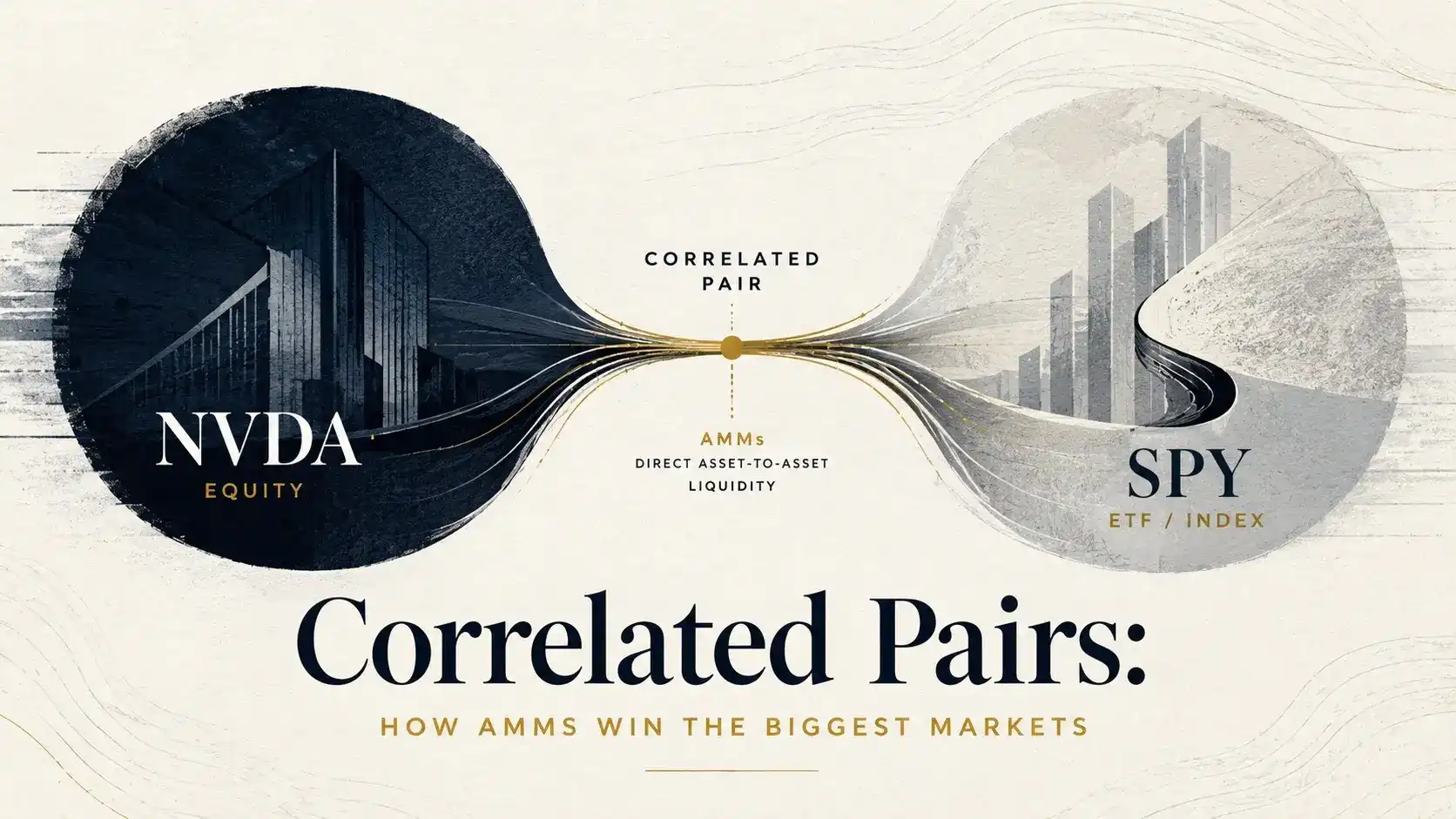
L'auteur, fondateur d'Uniswap, explique pourquoi les Automated Market Makers (AMM) pourraient devenir le moteur central des marchés financiers. Il retrace l'évolution des AMM depuis leur adhésion initiale pour les actifs à longue traîne et les paires de stablecoins, où leur faible coût en capital a supplanté les teneurs de marché traditionnels. Le texte souligne comment la tokenisation et les blockchains démontent l'architecture financière traditionnelle, verticalement intégrée, en rendant chaque couche (exécution, règlement) compétitive et accessible. Cela abaisse les barrières à l'entrée pour le marché-making, permettant à de nouveaux acteurs (comme les émetteurs d'actifs) dont le coût du capital est inférieur de fournir des liquidités. Une idée centrale est l'émergence naturelle de "paires corrélées" (ex: actifs d'un écosystème contre sa crypto-mère, actions contre ETF). Lorsque les actifs d'une paire évoluent de concert, le risque pour le fournisseur de liquidité (LP) est réduit, rendant les stratégies passives des AMM plus compétitives face aux stratégies actives coûteuses. Les marchés "ponts" (comme ETH/USDC) connectent ces grappes de liquidités. L'auteur constate que cette structure se répand déjà avec les actions tokenisées échangées contre des ETF sur Uniswap. En s'inspirant du succès des fonds indiciels (passifs) face aux gestionnaires actifs, il conclut que les liquidités passives des AMM sont à un stade précoce mais pourraient suivre une voie similaire, démocratisant l'accès aux marchés et remodelant fondamentalement la finance.

marsbitIl y a 13 mins

Le fondateur d'Uniswap : Pourquoi les AMM pourraient devenir le moteur central des marchés financiers

marsbitIl y a 13 mins

Les Meilleurs Traders et Investisseurs de l'Inde se Réuniront au Money Expo India 2026

Avec seulement deux semaines avant l'événement, le Money Expo India 2026 est prêt à réunir l'industrie financière au Jio World Convention Centre de Mumbai, les 29 et 30 août 2026. Cette 5e édition accueillera plus de 120 exposants et 100 conférenciers, rassemblant traders, investisseurs, professionnels de la fintech, institutions financières et fournisseurs de technologie. L'événement se concentrera sur les technologies, stratégies et opportunités façonnant les marchés indiens en rapide évolution, notamment le trading en ligne, les marchés boursiers, les paiements numériques et la fintech émergente. Un point fort sera la présence de plus de 100 experts et leaders d'opinion, dont Prasanna Lohar (India Blockchain Forum), Vijay Krishnamurthy (India INX, GIFT City), Niranjan Avasthi (Edelweiss Mutual Fund) et d'autres figures majeures de banques, sociétés de bourse et de gestion d'actifs. Le programme abordera les transformations du trading, comme la gestion du risque sur les marchés dérivés et les critères de choix des courtiers par les traders avertis. Pour les participants, c'est l'occasion d'aller au-delà des conversations en ligne pour dialoguer directement avec les entreprises et experts qui dirigent le secteur, afin de mieux comprendre les marchés, d'échanger des idées et d'identifier de nouvelles opportunités.

TheNewsCryptoIl y a 13 mins

Les Meilleurs Traders et Investisseurs de l'Inde se Réuniront au Money Expo India 2026

TheNewsCryptoIl y a 13 mins

Payward Utilise le Claude Mythos 5 d'Anthropic pour Renforcer la Sécurité des Cryptomonnaies

Payward, société mère de Kraken, collabore avec Anthropic depuis le 17 août dans le cadre du projet Glasswing pour renforcer sa cybersécurité. Ce partenariat accorde à Payward un accès limité à Claude Mythos 5, un modèle d'IA spécialisé d'Anthropic. L'entreprise utilisera cet outil pour effectuer un scan approfondi de son environnement logiciel à la recherche de vulnérabilités, avant que ses experts ne mettent en œuvre les corrections nécessaires. L'accès à Mythos 5 est strictement régulé par Anthropic en raison de ses capacités puissantes à identifier des failles et même à développer des éléments exploitables. Le projet Glasswing, lancé en avril 2026, regroupe environ 150 organisations à travers le monde qui doivent répondre à des normes de sécurité élevées. Les tests d'Anthropic ont déjà permis d'identifier près de 1 600 vulnérabilités dans des projets open source. Payward s'engage à alerter les responsables des logiciels open source tiers si des vulnérabilités valides y sont détectées. Cependant, les délais et la gestion des projets non-répondants restent à préciser. Cette initiative intervient après un incident de sécurité antérieur sur Kraken, soulignant l'importance des processus de test et de communication. Anthropic impose également une rétention de données de 30 jours à ses clients pour la surveillance de sécurité, une mesure dont le périmètre exact chez Payward n'est pas encore détaillé.

TheNewsCryptoIl y a 18 mins

Payward Utilise le Claude Mythos 5 d'Anthropic pour Renforcer la Sécurité des Cryptomonnaies

TheNewsCryptoIl y a 18 mins

5,4 milliards de tokens d'airdrop sur le point d'être confisqués ? Le vote de gouvernance d'OP plongé dans une guerre intestine

L'écosystème Optimism (OP) est en pleine tension autour d'une proposition de gouvernance cruciale. La Fondation Optimisme propose de rediriger environ 546,9 millions de jetons OP restants, initialement prévus pour des airdrops aux utilisateurs, vers un nouveau « Fonds stratégique pour l'écosystème ». Ce fonds serait utilisé pour des partenariats avec des entreprises, des institutions et pour stimuler l'activité sur le réseau principal OP. Le vote, qui se termine le 20 août, est serré. Alors que les votes « pour » mènent, la participation est encore inférieure au quorum requis. Cette proposition a déclenché un vif débat au sein de la communauté. Les critiques y voient un détournement des jetons promis aux utilisateurs ordinaires au profit d'une stratégie institutionnelle, notant que les airdrops et le programme Retro Funding ont déjà pris fin. Un grand électeur, olimpio.eth, a pour la première fois voté contre, symbolisant ce mécontentement. Ce vote s'inscrit dans un contexte de changement stratégique pour Optimism. Le réseau, dont la TVL a significativement baissé, se tourne vers le marché des entreprises et a réduit ses dépenses globales. Si la proposition est adoptée, elle formaliserait un pivot de la distribution large vers une croissance dirigée par les institutions, ce qui pourrait influencer la perception et la valeur du jeton OP à court terme.

marsbitIl y a 27 mins

5,4 milliards de tokens d'airdrop sur le point d'être confisqués ? Le vote de gouvernance d'OP plongé dans une guerre intestine

marsbitIl y a 27 mins

Anthropic, Dario Amodei, et « la dernière entreprise privée »

À propos d’Anthropic et de son fondateur Dario Amodei, deux récits coexistent : celui d’un gardien lucide mettant en garde contre les dangers de l’IA superintelligente, et celui d’un ambitieux accélérant sa venue. Pour Amodei, ces positions ne sont pas contradictoires : si l’IA avancée est inévitable, mieux vaut qu’elle soit développée par des acteurs responsables comme Anthropic. Son expérience personnelle, notamment la perte de son père qui n’a pu bénéficier à temps d’un nouveau traitement, nourrit sa conviction que la science doit avancer vite. Après avoir quitté OpenAI par désaccord sur la gouvernance, il cofonde Anthropic en 2021 avec l’objectif de construire des modèles d’IA puissants tout en veillant à leur sécurité. La société élabore des méthodes comme l’« IA constitutionnelle » pour encadrer le comportement des modèles, et propose des politiques de « développement responsable ». Cependant, Anthropic cumule les rôles : elle crée la technologie, définit les critères de risque, et influence la régulation. Cette concentration de pouvoir interroge, d’autant qu’Amodei plaide pour que les États-Unis et leurs alliés conservent une avance technologique stratégique, au nom de la stabilité mondiale. En 2026, une rumeur affirme qu’Amodei envisagerait qu’Anthropic devienne un jour « la dernière entreprise privée » au monde, aux côtés des gouvernements. Il répond en soulignant la nécessité de régulations équilibrées et en rappelant que la promesse de l’IA est d’apporter des bénéfices concrets, comme guérir le cancer. Son raisonnement repose sur une autorégulation assumée : face aux dangers de l’IA, il estime que les plus conscients des risques – comme lui – doivent garder le contrôle. Ainsi, le gardien qui alerte devient celui qui construit l’avenir qu’il redoute, convaincu que seul son approche peut éviter la catastrophe.

marsbitIl y a 57 mins

Anthropic, Dario Amodei, et « la dernière entreprise privée »

marsbitIl y a 57 mins

Trading

Spot
活动图片