Examining if Story can recover after IP’s 2-month price slump

ambcryptoPublié le 2026-02-28Dernière mise à jour le 2026-02-28

Résumé

Examining if Story (IP) can recover after a 2-month price slump. The crypto market fell over 3.5% amid fears from the Israel-Iran conflict, with IP dropping 12% and trading volume declining 16%. IP has lost over 90% of its value from its peak and is trading within a descending trend channel, now approaching the $0.80 support level. Technical indicators show the RSI is oversold at 17.29, suggesting potential bear exhaustion, but the MACD indicates growing seller momentum. On-chain data reveals a significant decline in active accounts and gas fees spent, indicating weaker network activity. The oversold RSI might attract buyers, but current market fear could push prices lower. The reaction around $0.80 will be critical for IP's next price direction.

The crypto market fell more than 3.5% after Israel’s strike on Iran sparked fresh fears.

At press time, Story[IP] was down over 12%. Daily trading volume also dropped 16% to $43 million, signaling weaker activity for the altcoin amid its two‐month price slump.

IP price action had lost more than 90% of its valuation from its highest cap. Will the altcoin’s price weakness continue?

Analyzing Story’s trend channel in February

Story has been trading within a descending trend channel throughout February. However, since the middle of this month, the altcoin has been trading above the midpoint of the channel.

The altcoin initially showed signs of strength but eventually broke down below support. IP now appears headed toward $0.80, the lower boundary of its channel.

At the time of writing, the MACD signaled growing seller momentum, with its lines trading below neutral. Meanwhile, the RSI registered an oversold reading of 17.29, underscoring the intensity of bearish pressure

With the RSI oversold, bulls could return as the reading signaled potential bear exhaustion. However, the current fear in the markets could see IP prices continue to drop.

But from a technical perspective, the ideal reversal point was around the lower supports of the channel. Hence, IP price was more likely to reverse upon tapping the $0.80 zone if accompanied by buying activity.

In addition to the volume decline and tension from the Israel-Iran war, the altcoin was also experiencing a decline in chain activity.

Network activity extends IP’s overall weakness

The protocol has been losing the number of active accounts since February began.

According to Storyscann, the number of accounts fell from 1,033 to 208 during this period. Projections indicate that this downward trend is continuing.

Additionally, the sum of IP tokens spent on gas fees followed the same trend. The statistics indicated the sum was about 43 IP tokens on January 30th and 1.73 IP as this month came to an end.

Meanwhile, the number of cumulative transactions was rising, reaching 95.10 million at press time.

According to the price action, these transactions could be potential sales activities. Moreover, new transactions were up, suggesting new participants could be shorting the altcoin.

Therefore, the current outlook on the charts and on-chain puts IP on a path likely to hit $0.80. The reaction around this level would shape IP’s next move.


Final Summary

  • IP falls 12% amid tensions from the Israel-Iran war and weak network activity.
  • IP price trades toward $0.80, where its reaction would determine its next move.

Questions liées

QWhat was the immediate impact of Israel's strike on Iran on the crypto market and Story (IP) specifically?

AThe crypto market fell more than 3.5% following the strike. Story (IP) was down over 12% at press time, with its daily trading volume also declining by 16% to $43 million.

QAccording to the technical analysis, what is the significance of the $0.80 price level for IP?

AThe $0.80 level represents the lower boundary of IP's descending trend channel. From a technical perspective, this is identified as the ideal reversal point, where the price is more likely to bounce back if accompanied by increased buying activity.

QWhat did the RSI and MACD indicators suggest about IP's market condition?

AThe RSI registered an oversold reading of 17.29, indicating intense bearish pressure but also signaling potential bear exhaustion. The MACD lines were trading below neutral, signaling growing seller momentum.

QHow has on-chain network activity for Story (IP) changed since February?

ANetwork activity has significantly weakened. The number of active accounts fell from 1,033 to 208, and the amount of IP tokens spent on gas fees dropped from about 43 tokens to 1.73 tokens, indicating a decline in usage.

QWhat are the two main factors, besides technical price action, contributing to IP's price weakness?

AThe two main factors are the overall market fear sparked by the Israel-Iran war and the declining on-chain network activity, which shows reduced user engagement and potential selling pressure.

Lectures associées

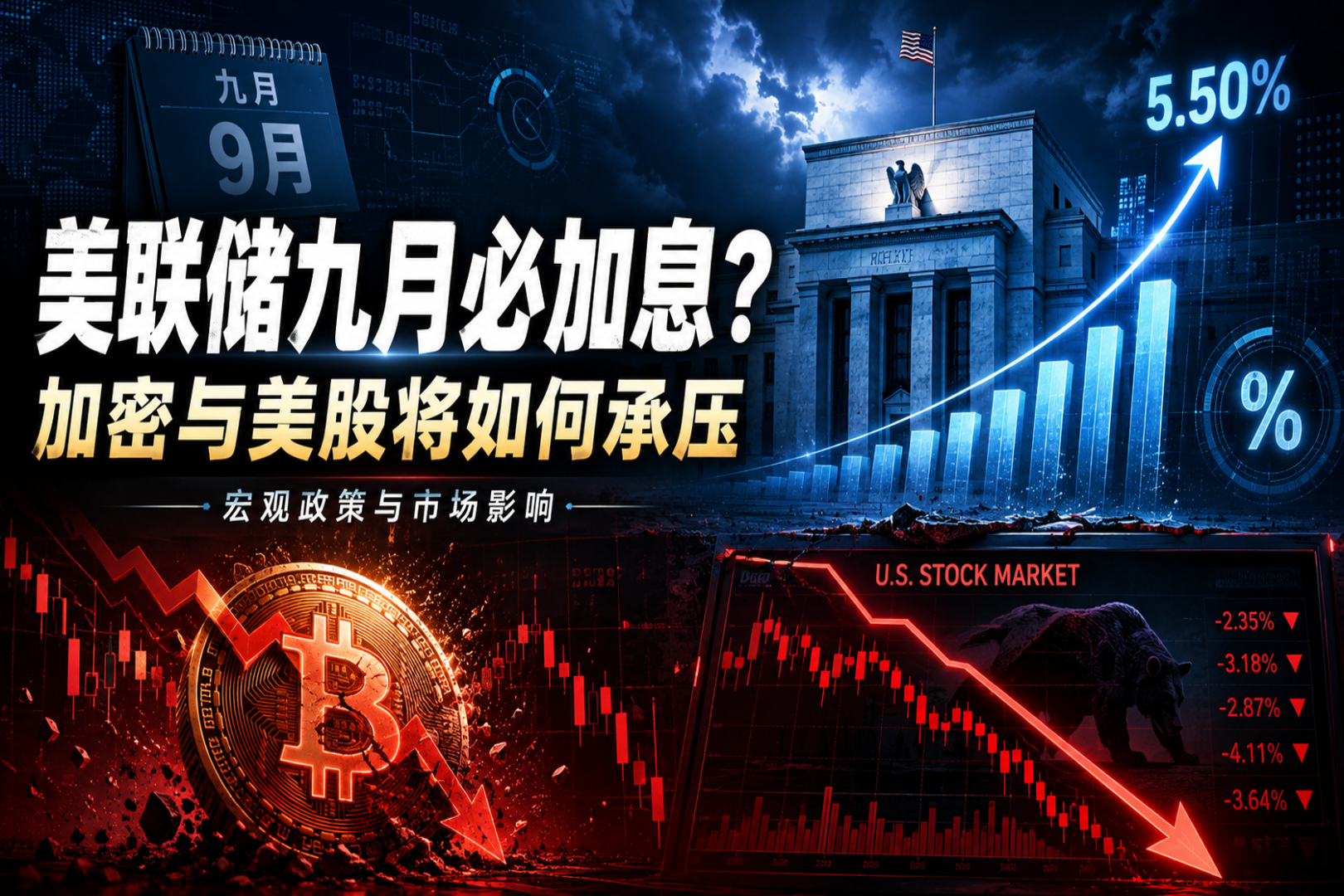
La Fed augmentera-t-elle obligatoirement les taux en septembre ? Comment les crypto-monnaies et les actions américaines pourraient-elles être affectées ?

La probabilité d'une hausse des taux par la Fed en septembre a bondi d'environ 50% à plus de 80% en une semaine. Ce revirement soudain des anticipations du marché est principalement dû à la résurgence des tensions géopolitiques autour du détroit d'Hormuz, qui a entraîné une flambée des prix du pétrole et ravivé les craintes inflationnistes. La récente réunion de la Fed a également révélé des divergences internes, avec trois membres votant pour une hausse immédiate. Pour les actifs cryptographiques comme le Bitcoin, une éventuelle hausse des taux constitue une pression à court terme, car elle accroît le coût d'opportunité de détention de ces actifs non générateurs de revenus. Cependant, l'historique récent montre que l'impact peut être limité si les marchés estiment que cela marque la fin du cycle de resserrement. Les actions liées aux cryptomonnaies, comme Coinbase, pourraient quant à elles subir une volatilité amplifiée. Sur le marché actions américain, les valeurs technologiques à forte capitalisation, déjà sous pression en raison des dépenses d'investissement massives dans l'IA et des attentes élevées en matière de rentabilité, pourraient faire face à une pression supplémentaire sur leur valorisation si les coûts de financement augmentent. Les prochaines publications d'inflation (IPC) et les communications de la Fed seront cruciales pour confirmer ou infirmer cette trajectoire de hausse des taux en septembre.

marsbitIl y a 13 mins

La Fed augmentera-t-elle obligatoirement les taux en septembre ? Comment les crypto-monnaies et les actions américaines pourraient-elles être affectées ?

marsbitIl y a 13 mins

La Fed augmentera-t-elle obligatoirement les taux en septembre ? Comment les cryptos et les actions américaines seront-elles impactées ?

Au cours de la dernière semaine, les paris du marché sur une hausse des taux en septembre par la Fed sont passés de moins de 50 % à plus de 80 %. Ce revirement s'explique par le conflit géopolitique près du détroit d'Or muz, qui a fait grimper le prix du pétrole et ravivé les craintes inflationnistes. La réunion de juillet a montré des divisions internes au sein de la Fed, renforçant cette attente. Le prochain point de repère clé sera la publication des données sur l'inflation (IPC) en juillet le 12 août. Si elles confirment une reprise de l'inflation, la probabilité d'une hausse en septembre augmentera encore. Pour les crypto-actifs comme le Bitcoin, un regain d'attentes de hausse des taux exerce une pression à la baisse, car il renchérit le coût d'opportunité de détention d'actifs non productifs. Toutefois, l'impact historique n'est pas linéaire ; si une hausse est perçue comme la fin du cycle de resserrement, l'effet pourrait être limité et bref. Les actions américaines, en particulier les titres liés aux cryptos (Coinbase, MicroStrategy) et les géants technologiques, sont aussi sensibles. Une hausse des taux augmenterait leur coût de financement et exercerait une pression sur les valorisations. Cette période coïncide avec une saison de résultats où les dépenses d'investissement massives des grandes techs pour l'IA sont scrutées. Le marché évalue désormais si ces investissements généreront des revenus tangibles. Une hausse des taux en septembre pourrait accentuer la volatilité, surtout pour les entreprises à croissance coûteuse et aux flux de trésorerie négatifs.

Odaily星球日报Il y a 18 mins

La Fed augmentera-t-elle obligatoirement les taux en septembre ? Comment les cryptos et les actions américaines seront-elles impactées ?

Odaily星球日报Il y a 18 mins

Un événement de marché « ignoré » : Intervention conjointe États-Unis-Japon-Corée, le Trésor américain « rarement » impliqué, Bessent sauve discrètement le marché ?

Les États-Unis, le Japon et la Corée du Sud ont mené la plus importante intervention coordonnée sur le marché des changes depuis près de trente ans. Cette action vise à soulager la pression sur le yen et le won, et est interprétée comme une mesure des États-Unis pour stabiliser les marchés financiers de leurs alliés et prévenir la contagion des risques. Les autorités japonaises et sud-coréennes ont vendu des dollars pour soutenir leurs devises, tandis que le Trésor américain est intervenu directement sur le yen en vendant des euros via la Réserve fédérale de New York, une première depuis des décennies. Cette intervention a provoqué un rebond significatif des deux monnaies asiatiques. Au-delà de la simple stabilisation des taux de change, cette coordination est perçue comme une opération de "sauvetage" des marchés financiers du Japon et de la Corée du Sud. Ces deux pays sont des acteurs clés de la chaîne d'approvisionnement en semi-conducteurs et en IA, et les États-Unis cherchent ainsi à éviter qu'une instabilité financière ne se propage à ces secteurs stratégiques et ne affecte leurs propres marchés. L'action américaine, utilisant de nouveaux outils comme la "vérification des taux", vise à contenir la volatilité sans nécessairement inverser les tendances de fond. Elle intervient alors que les marchés actions de ces pays, notamment le KOSDAQ en Corée du Sud, subissent des pressions importantes.

marsbitIl y a 18 mins

Un événement de marché « ignoré » : Intervention conjointe États-Unis-Japon-Corée, le Trésor américain « rarement » impliqué, Bessent sauve discrètement le marché ?

marsbitIl y a 18 mins

Trading

Spot
活动图片