Community is Dead, Long Live Community

marsbitPublié le 2026-05-15Dernière mise à jour le 2026-05-15

Résumé

The author, James Richard Fry, laments the degradation of the Web3/crypto community, contrasting its past vitality with its current state. He fondly recalls early days of genuine connection and shared belief on platforms like Clubhouse and Discord, where communities formed around common interests like DeFi and NFTs, fueled by deep conviction and a spirit of building together. He argues that today, the term "community" has been co-opted by "extractors." Most modern Discord communities, he asserts, are filled with members driven solely by the prospect of financial gain from airdrops, leading to artificial engagement that vanishes post-Token Generation Event (TGE), often replaced by hostility. This extractive behavior, he states, has poisoned the ecosystem, creating cheap imitations of the early, belief-driven communities. Using his project, Across Protocol, as an example, he notes its own Discord has succumbed to this dynamic, pushing away genuine supporters. Consequently, he announces the decision to transition the Across Discord to read-only mode as a first step toward shutting it down completely. He concludes with a bittersweet farewell to the platform that once hosted beautiful moments, declaring "The community is dead. Long live the community."

Author:jamesrichardfry, Head of Marketing at Across Protocol

Compiled by: Jiahuan, ChainCatcher

I've been struggling with how to start writing this. Part of me wants to paint everything in a sunny light. Dress it up with marketing talk, make it sound grand, and move on.

But that wouldn't be entirely honest. If you know me, you know I wear my heart on my sleeve and can't hold things in. So, I'll just say it straight.

Community is dead. Of course, it wasn't always like this. That goes without saying, but I'm going to say it out loud anyway.

I still miss the good old days on Clubhouse and Discord channels. When we spent hours 'vibing' with strangers online, talking about magic internet money, the latest NFT drop, the best staking opportunities, commiserating over our fails and losses, dreaming together about the next great project, and actually 'building'.
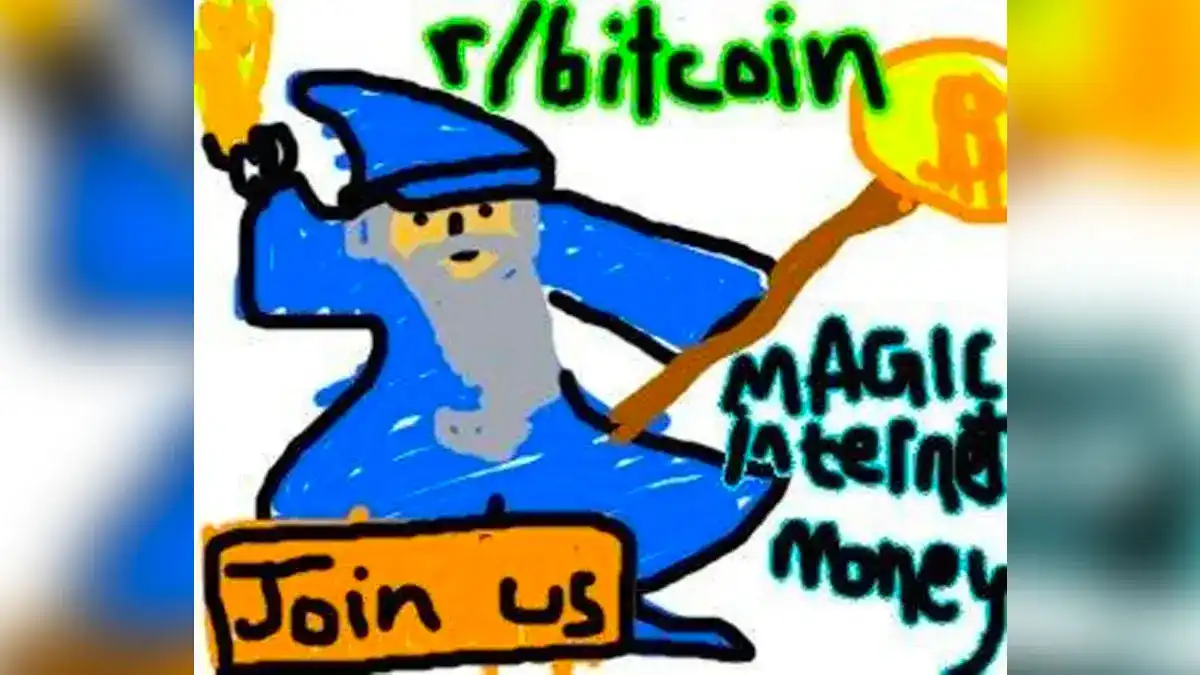
To this day, many of those online strangers are still great friends. Some even became close friends in real life. When community is good, it's truly good. I miss those days.

Zooming out a bit, what exactly is community? In our last all-hands meeting, I rambled on about this for so long I could almost hear my colleagues' eyes rolling.

To share a bit of that with you, here's what I think community is:

Community is a group of people gathered around a common interest. We all have communities in many aspects of our daily lives.

From the school you attended, the sport you played, the religion you follow, the gym you go to, even the grocery store you shop at, communities exist.

Some communities are more shallow. The group of old men I see at the gym Monday to Friday is a community, but it's obviously very different from the friend circle we deliberately spend time with.

Web3 or crypto communities are no different.

We all gather around shared interests. DeFi Summer. NFT Mania. NFT Winter. Every kind of cross-chain interoperability, every ZK proof.

Whatever flavor you're into, there's a group of people going down that rabbit hole with you.

Some are here for financial speculation. Some are here from a deep conviction and commitment to the early cypherpunk movement. Some crypto communities are more superficial or performative.

Others are deep. I mean, really deep. Like religious groups, cultish followings, conviction that sits deep in your gut, put-your-money-where-your-mouth-is deep.

We wear the same 'uniform' (PFP), speak our own language (WAGMI), look absolutely insane to outsiders, and we don't care at all because we believe in what we've gathered around.

Early crypto community was inseparable from conviction.

Not just belief, but deep conviction burning in your gut that gives you the courage to get on stage and talk for hours in front of hundreds of listeners about why you believe in the founder, the project, the roadmap, and why you are the diamond-handed hodler of that project.

Conviction. That's what drove parabolic growth in the early days. Without community, crypto wouldn't be what it is today.

By the way, Across is no exception. Across' early community was a golden era. Vibes were high. Deep conviction existed (yes, I used that word a lot). Excitement and energy, people caring about the project for its innovation, not token price.

We hired many people from the community who still work with us today. There are also those from the early days who are still die-hard community members, sticking with us through thick and thin.

When community is good, it's truly good.

But then, it changed.

Fast forward to today. I'm going to make some broad generalizations now. Please know, I don't mean 'all' community members, 'every' community group, and I'm not painting with a broad brush. But if I'm continuing my blunt style, I do mean most. The overwhelming majority.

The word 'community' has been ruined by the extractors of crypto. In many ways, if you want to know why 'the love of money is the root of all evil', look no further than the endless Discord 'communities'.

Thousands of unread messages per day, staggering daily active users, endless social support, until the Token Generation Event (TGE) arrives. We all know how the script goes.

The pre-TGE vibes mimic the sentiment of early crypto communities. Deep conviction. Fire in the gut. Courage to get on stage. Project profile pictures and tags in bios. Ride or die, diamond-handed, conviction-filled hodlers.

Then, everyone changes.

One night you go to bed, barely able to keep up with Discord notifications.

You wake up the next morning, and it's a ghost town.

Or worse.

You find your loyal 'community' coming at you with pitchforks and torches.

Because of the airdrop.

You see, 'community' is no longer community.

It has devolved into endless AI-generated spam for points, for hope of an airdrop, to immediately dump, then complain about token price, and call the project a scam or rug (to be fair, often also true).

I don't need to finish that long-winded sentence, you know what I mean, right?

'Community' is not community. You all know it, you feel it. The timeline feels off. Discord servers feel off. Podcasts feel off. Twitter Spaces feel off.

It's all wrong, like 'Kangshuaifu' will never be Master Kang. Everyone reading this today knows it in their heart, even if you've never articulated it this clearly before.

Today's 'communities' are just cheap imitations of the early communities that built crypto into what it is today. The common interest of these 'community' members boils down to one thing. Extraction. Quick. Decisive. Extraction. That's the poison that killed what crypto could have and should have been.

Most (again, not all) Discord 'communities' today are made up of a mixed bag of remnants.

Some are truly loyal followers and believers. (To those who still support Across, we wouldn't be here without you. Thank you. You know where to find us, and there will always be a place for you.)

Some, often the majority, are here to extract from the project. I won't belabor the point.

And finally, some only appear to complain. Because in every bear market, these specific types of 'community' members come out to kick you while you're down, as if the bear market has zero impact on each team member, as if we caused it.

Unfortunately, the Across Discord has recently fallen into that 'majority' category. Our 'community' has become unrecognizable.

Those who recognize our incredible achievements, the progress Across has pioneered for the entire industry, and still support us, are also tired of being part of this extractive 'community' and have left Discord.

The few who remain would happily follow us to Twitter and other channels. What's left are the so-called 'communities' I defined above. Yes, I say this with fire in my gut and deep conviction.

Therefore, today, the Across Discord will go read-only.

This is the first step in our plan to shut down the server entirely.

To the community of believers who remain, let's keep building. We have so much more work to do.

To Discord, thank you for hosting some of the good old days of crypto. I'll always cherish it.

Community is dead.

Long live community.

Questions liées

QWhat is the main argument or thesis of the article titled 'The Community is Dead, Long Live the Community'?

AThe article argues that the true spirit of early crypto communities—built on deep belief, shared passion, and genuine collaboration—has been largely destroyed and replaced by a culture of extraction, where most participants are only interested in quick profits from airdrops and token launches, leading to empty, toxic, and transactional online spaces.

QAccording to the author, what characterized the early, authentic crypto communities?

AAccording to the author, early authentic crypto communities were characterized by deep belief (conviction), genuine passion for the technology (like DeFi, NFTs), meaningful connections that turned into real friendships, a sense of shared purpose in 'building' the next big thing, and a culture that wasn't primarily focused on token price.

QWhat specific action is the author announcing regarding the Across Protocol Discord server, and why?

AThe author announces that the Across Protocol Discord server will be set to 'read-only' mode as the first step towards its planned full shutdown. The reason is that the server has degraded into a space dominated by extractive individuals seeking airdrops and complaining, which has driven away the genuine believers and no longer represents a true community.

QWhat does the author mean by stating that today's 'communities' are often just 'extractors'?

AThe author means that the majority of participants in current crypto project 'communities' are not there out of belief or to contribute. Their sole common interest is to 'extract' value—primarily by farming points for a potential airdrop, selling the token immediately upon launch, and then often turning hostile by labeling the project a scam if the price falls.

QHow does the title 'The Community is Dead, Long Live the Community' reflect the article's dual perspective?

AThe title reflects the dual perspective by mourning the death of the original, idealistic form of crypto community ('The Community is Dead') while simultaneously expressing hope and a call to continue for the small remnant of genuine believers who still embody that original spirit ('Long Live the Community').

Lectures associées

Dialogue avec Ray Dalio : Nous sommes actuellement dans une bulle de l'IA, 1% de mon portefeuille est en Bitcoin

Ray Dalio, fondateur de Bridgewater Associates, met en garde contre la bulle actuelle de l'IA, présentant des signes classiques similaires aux précédents krachs financiers. Il explique qu'une combinaison de spéculation excessive, d'endettement et de changements de taux d'intérêt pourrait provoquer son éclatement, entraînant une récession économique. Dalio décrit également un « grand cycle » mondial d'environ 80 ans, caractérisé par des inégalités croissantes, des déficits publics élevés et des tensions géopolitiques. Nous serions actuellement dans une phase de déclin de ce cycle, avec un ordre mondial en transition. Pour protéger leur patrimoine, il conseille aux investisseurs de diversifier leurs actifs (actions, obligations, or, immobilier) plutôt que de détenir uniquement des liquidités. Il mentionne détenir environ 1% de Bitcoin, mais préfère l'or physique pour sa stabilité. Concernant l'IA, Dalio souligne qu'elle remplacera progressivement le travail intellectuel humain, creusant les inégalités. L'avenir appartiendra à ceux qui sauront allier intelligence humaine et collaboration avec l'IA. Enfin, il évoque un monde de plus en plus régionalisé, avec un affaiblissement de la puissance américaine, visible dans des conflits comme celui avec l'Iran, et la montée en puissance d'autres pôles, notamment la Chine.

marsbitIl y a 3 h

Dialogue avec Ray Dalio : Nous sommes actuellement dans une bulle de l'IA, 1% de mon portefeuille est en Bitcoin

marsbitIl y a 3 h

7,2 billions de KRW en une journée, les achats nets des investisseurs étrangers atteignent un record historique ce vendredi ! Wall Street : Les vents contraires sur les flux de capitaux sud-coréens se sont dissipés

Les marchés boursiers sud-coréens montrent des signes tangibles d'amélioration des flux de capitaux. Le 31 juillet, les investisseurs étrangers ont réalisé un achat net record de 7 200 milliards de wons sur une seule journée dans le KOSPI, marquant un renversement de la tendance de sorties massives observée ces derniers mois. En juillet, leurs ventes nettes mensuelles se sont fortement réduites à 9 800 milliards de wons, contre 48 400 et 44 500 milliards en juin et mai respectivement. Parallèlement, les institutions domestiques comme les fonds de pension ont inversé leur tendance, passant à un achat net de 1 000 milliards de wons en juillet. La Commission des services financiers a également resserré l'accès aux ETF à effet de levier sur actions individuelles pour les investisseurs de détail, réduisant ainsi la volatilité du marché. Citigroup Research maintient son objectif pour le KOSPI à 10 000 points, estimant que les vents contraires liés aux flux de capitaux s'atténuent. Des facteurs tels que les fondamentaux solides du secteur des puces mémoire, les faibles valorisations du marché, une économie robuste et un environnement politique favorable devraient soutenir le marché. La possibilité d'interventions des autorités pour stabiliser le marché offre également un filet de sécurité.

marsbitIl y a 3 h

7,2 billions de KRW en une journée, les achats nets des investisseurs étrangers atteignent un record historique ce vendredi ! Wall Street : Les vents contraires sur les flux de capitaux sud-coréens se sont dissipés

marsbitIl y a 3 h

Choc ! La prochaine IA d'OpenAI résout 10 problèmes du calibre de la Médaille Fields

**OpenAI provoque un séisme mathématique avec son nouveau modèle Astra** OpenAI a dévoilé des avancées mathématiques majeures réalisées par son modèle interne Astra, présenté par Sam Altman. L'IA aurait résolu ou fait progresser dix problèmes complexes dans des domaines variés comme la géométrie haute dimension, la théorie des groupes et la complexité quantique. Le résultat le plus marquant est la construction du premier groupe "non sofic" infini et finiment présenté, réfutant une conjecture de Mikhail Gromov vieille de 27 ans. Cette seule découverte est qualifiée de niveau "Prix Fields". Astra a également amélioré une borne fondamentale sur le problème de l'empilement des sphères en haute dimension, stagnant depuis 1978, et a réfuté la conjecture de rigidité d'Alain Connes en construisant une infinité de groupes non isomorphes partageant la même algèbre de von Neumann. Ces résultats, compilés dans un document de 249 pages, sont accompagnés de preuves formelles vérifiées par l'assistant Lean 4. OpenAI précise que le coût total de génération de ces démonstrations aurait été inférieur à 2000 dollars. La communauté mathématique réagit avec stupeur, certains experts y voyant un tournant historique où l'IA démontre une intuition et une capacité de raisonnement pouvant surpasser les meilleurs mathématiciens humains.

marsbitIl y a 4 h

Choc ! La prochaine IA d'OpenAI résout 10 problèmes du calibre de la Médaille Fields

marsbitIl y a 4 h

Grâce aux lancers de dés, les clés Bitcoin sont stockées hors ligne, mais tout le monde ne s'y mettra pas

Le titre « Les clés Bitcoin protégées par des dés, mais la méthode reste marginale » introduit un article sur la génération manuelle de graines de portefeuille Bitcoin à l'aide de dés. L'article explique le concept d'entropie, illustré par Claude Shannon, où un dé à six faces génère environ 2,585 bits d'incertitude. Il aborde le scandale récent de Coldcard, où une vulnérabilité du générateur de nombres aléatoires matériel a compromis des fonds. Les utilisateurs ayant généré leur phrase de récupération avec des dés (environ 99 lancers pour une haute sécurité) n'étaient pas affectés pour leur seed principal. Cependant, l'analyse du chercheur Kevin Loaec montre que d'autres fonctions du portefeuille (clés de copie, portefeuilles papier, mots de passe, etc.) utilisaient ce générateur défectueux et restaient vulnérables. L'article souligne les défis pratiques de la méthode des dés : elle est longue, sujette aux erreurs de saisie, et peu adaptée aux nouveaux utilisateurs qui pourraient mal l'exécuter. Il conclut que si cette méthode manuelle est robuste pour les experts, l'objectif à long terme est d'avoir un matériel et des logiciels générant une entropie fiable de manière simple et sécurisée. Il conseille aux propriétaires de Coldcard de vérifier leur firmware et les fonctions utilisées, et rappelle l'intérêt des solutions multi-signatures avec différents fabricants pour limiter les risques.

cryptonews.ruIl y a 8 h

Grâce aux lancers de dés, les clés Bitcoin sont stockées hors ligne, mais tout le monde ne s'y mettra pas

cryptonews.ruIl y a 8 h

Trading

Spot
活动图片





