Community is Dead, Long Live Community

marsbitPublié le 2026-05-15Dernière mise à jour le 2026-05-15

Résumé

The author, James Richard Fry, laments the degradation of the Web3/crypto community, contrasting its past vitality with its current state. He fondly recalls early days of genuine connection and shared belief on platforms like Clubhouse and Discord, where communities formed around common interests like DeFi and NFTs, fueled by deep conviction and a spirit of building together. He argues that today, the term "community" has been co-opted by "extractors." Most modern Discord communities, he asserts, are filled with members driven solely by the prospect of financial gain from airdrops, leading to artificial engagement that vanishes post-Token Generation Event (TGE), often replaced by hostility. This extractive behavior, he states, has poisoned the ecosystem, creating cheap imitations of the early, belief-driven communities. Using his project, Across Protocol, as an example, he notes its own Discord has succumbed to this dynamic, pushing away genuine supporters. Consequently, he announces the decision to transition the Across Discord to read-only mode as a first step toward shutting it down completely. He concludes with a bittersweet farewell to the platform that once hosted beautiful moments, declaring "The community is dead. Long live the community."

Author:jamesrichardfry, Head of Marketing at Across Protocol

Compiled by: Jiahuan, ChainCatcher

I've been struggling with how to start writing this. Part of me wants to paint everything in a sunny light. Dress it up with marketing talk, make it sound grand, and move on.

But that wouldn't be entirely honest. If you know me, you know I wear my heart on my sleeve and can't hold things in. So, I'll just say it straight.

Community is dead. Of course, it wasn't always like this. That goes without saying, but I'm going to say it out loud anyway.

I still miss the good old days on Clubhouse and Discord channels. When we spent hours 'vibing' with strangers online, talking about magic internet money, the latest NFT drop, the best staking opportunities, commiserating over our fails and losses, dreaming together about the next great project, and actually 'building'.
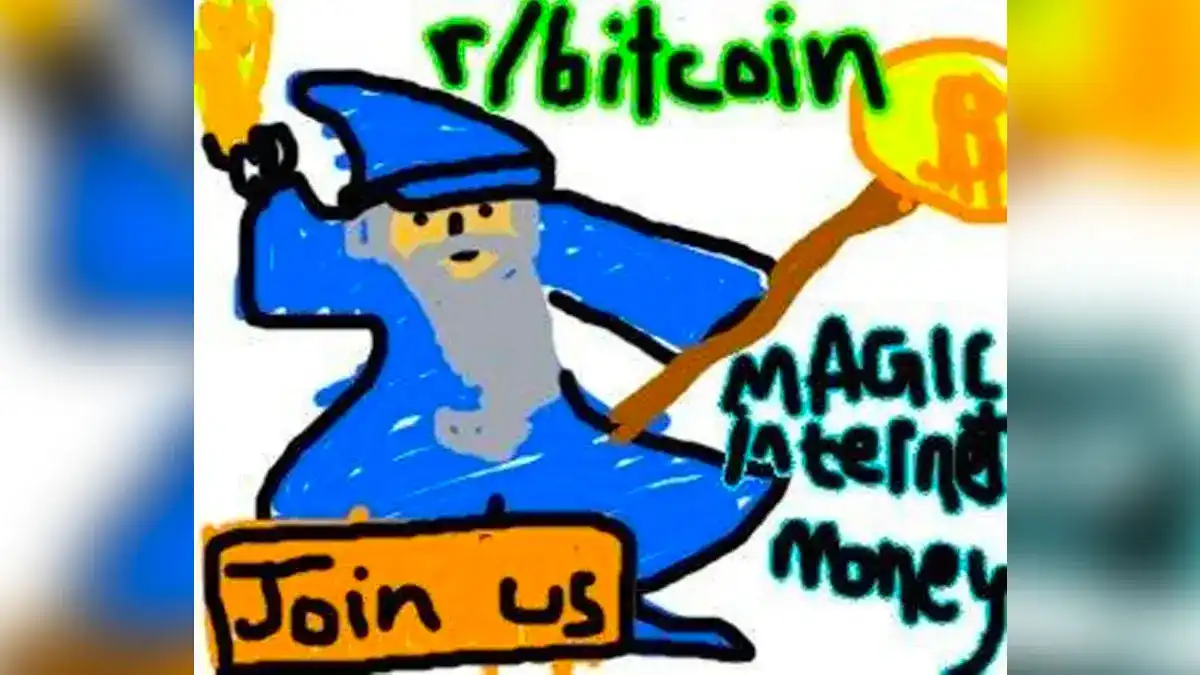
To this day, many of those online strangers are still great friends. Some even became close friends in real life. When community is good, it's truly good. I miss those days.

Zooming out a bit, what exactly is community? In our last all-hands meeting, I rambled on about this for so long I could almost hear my colleagues' eyes rolling.

To share a bit of that with you, here's what I think community is:

Community is a group of people gathered around a common interest. We all have communities in many aspects of our daily lives.

From the school you attended, the sport you played, the religion you follow, the gym you go to, even the grocery store you shop at, communities exist.

Some communities are more shallow. The group of old men I see at the gym Monday to Friday is a community, but it's obviously very different from the friend circle we deliberately spend time with.

Web3 or crypto communities are no different.

We all gather around shared interests. DeFi Summer. NFT Mania. NFT Winter. Every kind of cross-chain interoperability, every ZK proof.

Whatever flavor you're into, there's a group of people going down that rabbit hole with you.

Some are here for financial speculation. Some are here from a deep conviction and commitment to the early cypherpunk movement. Some crypto communities are more superficial or performative.

Others are deep. I mean, really deep. Like religious groups, cultish followings, conviction that sits deep in your gut, put-your-money-where-your-mouth-is deep.

We wear the same 'uniform' (PFP), speak our own language (WAGMI), look absolutely insane to outsiders, and we don't care at all because we believe in what we've gathered around.

Early crypto community was inseparable from conviction.

Not just belief, but deep conviction burning in your gut that gives you the courage to get on stage and talk for hours in front of hundreds of listeners about why you believe in the founder, the project, the roadmap, and why you are the diamond-handed hodler of that project.

Conviction. That's what drove parabolic growth in the early days. Without community, crypto wouldn't be what it is today.

By the way, Across is no exception. Across' early community was a golden era. Vibes were high. Deep conviction existed (yes, I used that word a lot). Excitement and energy, people caring about the project for its innovation, not token price.

We hired many people from the community who still work with us today. There are also those from the early days who are still die-hard community members, sticking with us through thick and thin.

When community is good, it's truly good.

But then, it changed.

Fast forward to today. I'm going to make some broad generalizations now. Please know, I don't mean 'all' community members, 'every' community group, and I'm not painting with a broad brush. But if I'm continuing my blunt style, I do mean most. The overwhelming majority.

The word 'community' has been ruined by the extractors of crypto. In many ways, if you want to know why 'the love of money is the root of all evil', look no further than the endless Discord 'communities'.

Thousands of unread messages per day, staggering daily active users, endless social support, until the Token Generation Event (TGE) arrives. We all know how the script goes.

The pre-TGE vibes mimic the sentiment of early crypto communities. Deep conviction. Fire in the gut. Courage to get on stage. Project profile pictures and tags in bios. Ride or die, diamond-handed, conviction-filled hodlers.

Then, everyone changes.

One night you go to bed, barely able to keep up with Discord notifications.

You wake up the next morning, and it's a ghost town.

Or worse.

You find your loyal 'community' coming at you with pitchforks and torches.

Because of the airdrop.

You see, 'community' is no longer community.

It has devolved into endless AI-generated spam for points, for hope of an airdrop, to immediately dump, then complain about token price, and call the project a scam or rug (to be fair, often also true).

I don't need to finish that long-winded sentence, you know what I mean, right?

'Community' is not community. You all know it, you feel it. The timeline feels off. Discord servers feel off. Podcasts feel off. Twitter Spaces feel off.

It's all wrong, like 'Kangshuaifu' will never be Master Kang. Everyone reading this today knows it in their heart, even if you've never articulated it this clearly before.

Today's 'communities' are just cheap imitations of the early communities that built crypto into what it is today. The common interest of these 'community' members boils down to one thing. Extraction. Quick. Decisive. Extraction. That's the poison that killed what crypto could have and should have been.

Most (again, not all) Discord 'communities' today are made up of a mixed bag of remnants.

Some are truly loyal followers and believers. (To those who still support Across, we wouldn't be here without you. Thank you. You know where to find us, and there will always be a place for you.)

Some, often the majority, are here to extract from the project. I won't belabor the point.

And finally, some only appear to complain. Because in every bear market, these specific types of 'community' members come out to kick you while you're down, as if the bear market has zero impact on each team member, as if we caused it.

Unfortunately, the Across Discord has recently fallen into that 'majority' category. Our 'community' has become unrecognizable.

Those who recognize our incredible achievements, the progress Across has pioneered for the entire industry, and still support us, are also tired of being part of this extractive 'community' and have left Discord.

The few who remain would happily follow us to Twitter and other channels. What's left are the so-called 'communities' I defined above. Yes, I say this with fire in my gut and deep conviction.

Therefore, today, the Across Discord will go read-only.

This is the first step in our plan to shut down the server entirely.

To the community of believers who remain, let's keep building. We have so much more work to do.

To Discord, thank you for hosting some of the good old days of crypto. I'll always cherish it.

Community is dead.

Long live community.

Questions liées

QWhat is the main argument or thesis of the article titled 'The Community is Dead, Long Live the Community'?

AThe article argues that the true spirit of early crypto communities—built on deep belief, shared passion, and genuine collaboration—has been largely destroyed and replaced by a culture of extraction, where most participants are only interested in quick profits from airdrops and token launches, leading to empty, toxic, and transactional online spaces.

QAccording to the author, what characterized the early, authentic crypto communities?

AAccording to the author, early authentic crypto communities were characterized by deep belief (conviction), genuine passion for the technology (like DeFi, NFTs), meaningful connections that turned into real friendships, a sense of shared purpose in 'building' the next big thing, and a culture that wasn't primarily focused on token price.

QWhat specific action is the author announcing regarding the Across Protocol Discord server, and why?

AThe author announces that the Across Protocol Discord server will be set to 'read-only' mode as the first step towards its planned full shutdown. The reason is that the server has degraded into a space dominated by extractive individuals seeking airdrops and complaining, which has driven away the genuine believers and no longer represents a true community.

QWhat does the author mean by stating that today's 'communities' are often just 'extractors'?

AThe author means that the majority of participants in current crypto project 'communities' are not there out of belief or to contribute. Their sole common interest is to 'extract' value—primarily by farming points for a potential airdrop, selling the token immediately upon launch, and then often turning hostile by labeling the project a scam if the price falls.

QHow does the title 'The Community is Dead, Long Live the Community' reflect the article's dual perspective?

AThe title reflects the dual perspective by mourning the death of the original, idealistic form of crypto community ('The Community is Dead') while simultaneously expressing hope and a call to continue for the small remnant of genuine believers who still embody that original spirit ('Long Live the Community').

Lectures associées

Bitcoin à 400 000 $ ? Un analyste utilise un modèle de l'or pour faire une prédiction audacieuse pour 2026

L'analyste Vivek Sen suggère, via un post sur X, que le Bitcoin pourrait atteindre 400 000 dollars d'ici 2026. Cette projection audacieuse s'appuie sur une comparaison visuelle des graphiques, superposant la structure de cassure historique de l'or à la trajectoire actuelle du BTC. L'argument central est que le Bitcoin, souvent présenté comme une réserve de valeur numérique, pourrait suivre un schéma similaire à celui de l'or après son entrée sur les marchés institutionnels via les ETF. Cependant, l'article souligne que cette "superposition" graphique est un outil spéculatif et non un modèle de prévision fiable. Il met en garde contre les différences fondamentales entre les deux actifs : le marché du Bitcoin est plus réfléchi, plus volatile et influencé par des facteurs spécifiques (flux des ETF, leverage crypto, liquidités des exchanges) absents du marché plus établi et macro de l'or. Pour que ce scénario de 400 000 $ reste crédible, plusieurs conditions seraient nécessaires : des entrées institutionnelles soutenues, un environnement macroéconomique favorable aux actifs durs, une demande robuste pour les ETF Bitcoin et le maintien d'une tendance haussière sur le long terme. En conclusion, cette cible très ambitieuse est présentée comme un scénario de marché optimiste tiré d'une analyse sur les réseaux sociaux, et non comme une prédiction probabiliste. Elle illustre le récit haussier mais doit être confrontée aux données réelles de flux et de prix pour avoir une quelconque validité.

bitcoinistIl y a 1 h

Bitcoin à 400 000 $ ? Un analyste utilise un modèle de l'or pour faire une prédiction audacieuse pour 2026

bitcoinistIl y a 1 h

Un Trader de Bitcoin Affirme que les Sommets et les Creux des Cycles Correspondent à des Délais Exactement Identiques

Un trader utilisant le pseudonyme Ryan (@DodysDD) affirme avoir identifié une précision mathématique étonnante dans les cycles de prix du Bitcoin. Selon son analyse, les phases de marché haussier, du plus bas au plus haut (ATH), dureraient exactement 1064 jours, comme observé lors des cycles 2014-2017, 2018-2021 et 2022-2025. De même, les phases baissières (du pic au creux) correspondraient à 364 jours, comme en 2017-2018 et 2021-2022. Ce schéma, s'il se vérifiait, offrirait aux investisseurs un cadre temporel simple pour anticiper les tendances majeures. Cependant, l'article souligne les risques inhérents à ce type de théorie. La précision apparente dépend souvent du choix des points de référence (cours de clôture, sommets intradays...), ce qui peut conduire à une sélection biaisée des données. Il n'existe aucune preuve que le Bitcoin soit régi par un minutage aussi exact, son prix étant influencé par une multitude de facteurs (halvings, conditions macroéconomiques, psychologie des investisseurs...). Malgré ces limites, ce récit cyclique trouve un écho dans la communauté des traders, surtout dans un contexte actuel d'incertitude sur la phase de marché. Il fournit une narration simple face à la complexité. En conclusion, si l'observation sert de cadre d'analyse populaire, elle doit être abordée avec scepticisme et ne peut, à elle seule, prédire les futurs sommets ou creux du marché.

bitcoinistIl y a 6 h

Un Trader de Bitcoin Affirme que les Sommets et les Creux des Cycles Correspondent à des Délais Exactement Identiques

bitcoinistIl y a 6 h

94 billions, le plus grand financement de l'année pour les robots humanoïdes est apparu

Dans le secteur des robots humanoïdes, un tournant majeur est marqué par le financement record de 14 milliards de dollars (environ 94,9 milliards de yuans) levé par l'entreprise allemande Neura. Cette levée de fonds de série C, menée par des investisseurs industriels de renom comme Schaeffler et Bosch, ainsi que des géants technologiques (NVIDIA, Amazon), porte l'évaluation de Neura à environ 70 milliards de dollars. Cet investissement massif signale un changement profond : la filière passe d'une phase de démonstration technologique à une phase d'industrialisation et de déploiement concret en usine. Contrairement aux sociétés axées sur un robot humanoïde "universel" (comme Figure AI), Neura adopte une approche pragmatique, ciblant d'abord des applications industrielles verticales et spécifiques, comme en témoigne son partenariat avec BMW. La conjonction de plusieurs facteurs explique cet afflux de capitaux : les progrès de l'IA (modèles de grande taille) qui améliorent les capacités de perception et de décision des robots, et les pressions structurelles sur le marché du travail (vieillissement, pénurie de main-d'œuvre, coûts salariaux) qui créent une demande croissante dans la fabrication. Les principaux défis pour une adoption massive ne sont plus uniquement techniques. Ils concernent désormais les coûts d'adaptation aux lignes de production existantes, la formation des opérateurs et la mise en place d'un réseau de maintenance fiable. L'entrée en scène de capitaux industriels expérimentés démontre une confiance accrue dans la capacité du secteur à résoudre ces problèmes d'ingénierie et de modèle commercial, achevant ainsi la transition cruciale du laboratoire au sol de l'usine.

marsbitIl y a 11 h

94 billions, le plus grand financement de l'année pour les robots humanoïdes est apparu

marsbitIl y a 11 h

Trading

Spot
Futures
活动图片





