Building the Bright Path While Secretly Crossing Chencang: Is Walsh Paving the Way for a September "Rate Cut"?

marsbitPublié le 2026-06-29Dernière mise à jour le 2026-06-29

Résumé

The title "Building the Plank Road Openly While Secretly Crossing at Chencang: Is Walsh Paving the Way for a September 'Rate Cut'?" suggests Federal Reserve Chair Kevin Walsh's hawkish stance may be a deliberate smokescreen. Academy Securities analyst Peter Tchir argues in a report that markets, currently pricing a 75% chance of a September hike, are missing a potential path to a September rate cut that Walsh himself might be quietly preparing. Tchir posits that Walsh's hawkish rhetoric aims to suppress long-term yield risks (with the 10-year Treasury yield falling recently) while creating room for a narrative shift based on upcoming data. The potential political endgame, according to this view, could be rate cuts in September and October, ahead of the midterm elections. This hinges on a political logic where the Trump administration's preference for lower rates remains unchanged. A core part of Tchir's argument involves redefining inflation metrics. He contends the Fed under Walsh may deprioritize the PCE index, criticizing its lagging components like Owners' Equivalent Rent (OER). Instead, he points to alternative, more real-time indicators like the New Tenant Repeat Rent Index (NTRR) and the Truflation daily index, which shows core inflation around 1.45%. He suggests the Fed could shift its data narrative to justify policy easing. Furthermore, Tchir downplays AI-driven inflation fears. He argues that consumer price sensitivity, evidenced by negative market reactions to ...

Original Author: Zhao Ying

Original Source: Wall Street News

Federal Reserve Chairman Kevin Walsh's hawkish posture might be nothing more than an elaborately designed smokescreen.

In a recent report, Academy Securities analyst Peter Tchir suggests that while the market has currently priced in a 75% probability of a September rate hike and expects a cumulative 1.25 hikes by year-end, it is missing the real path leading to a September rate cut—a path perhaps being quietly laid by Walsh himself.

Tchir points out that Walsh has sent a clear enough signal: suppressing tail-end risks in long-term interest rates through hawkish rhetoric (the 10-year Treasury yield has retreated from 4.46% to 4.37% this week), while reserving space for a subsequent narrative shift based on data. In his view, the end point of this series of maneuvers could be a rate cut in September, another in October, landing just in time before the midterm elections.

This judgment remains a personal opinion for now, and Tchir himself acknowledges its uncertainty. Yet his line of argument is tightly knit, covering the redefinition of inflation data, the battle for narrative control over the neutral rate, and the core premise that the White House's policy goals have never changed.

Hawkishness Just an Act? Political Logic Points to Rate Cuts

The starting point of Tchir's argument is a political-economic interpretation of Walsh's motivations.

He believes the policy objectives of the Trump administration have never fundamentally shifted. The President himself has repeatedly stated his deep understanding of real estate and the importance of low interest rates to the property market. Against this backdrop, it's difficult to imagine Trump being satisfied with his own appointed Fed chairman maintaining a persistently hawkish stance—unless this is itself a negotiated strategy.

Tchir paints a hypothetical scenario: Walsh convinces Trump that sending dovish signals now would be disastrous. Letting him appear hawkish can cap long-term yields, maintain the appearance of Fed independence, while simultaneously pushing Wall Street analysts and the media fully towards hike expectations. Then, as data gradually "cooperates," pivot to rate cuts under the "data-dependent" rationale, and conveniently blame the inflation problem on the previous Fed "using wrong data and acting too late."

He adds that Walsh's father-in-law is a major donor to Trump, a background perhaps not entirely irrelevant.

Taking Aim at Inflation Data: PCE Isn't This Fed's Yardstick

The most substantive part of Tchir's argument is his systemic questioning of the current inflation measurement framework.

He explicitly states, PCE is not the preferred inflation gauge for Walsh's Fed. He believes PCE was more of a Bernanke-era preference, and Walsh does not lose sleep over PCE data at night.

His criticism is particularly sharp regarding the measurement of housing inflation. The "Owners' Equivalent Rent" (OER) in CPI didn't peak until mid-2023, reaching about 8%; whereas Zillow's rental data hit a high near 16% as early as early 2022. He points out that the Cleveland Fed has already developed the "New Tenant Repeat Rent" (NTRR) index, whose trend closely aligns with Zillow's, yet this more realistic indicator has received almost no attention.

His conclusion: The Fed could entirely, without introducing external data, shift to using the indicators developed by the Cleveland Fed itself, thereby providing a data-based justification for rate cuts.

Truflation and "Two-Point-Something Is Good Enough"

Beyond PCE, Tchir also cites Truflation's real-time inflation data. According to his introduction, Truflation constructs a daily inflation index based on massive real-time datasets, with its core inflation rate currently around 1.45%, consistently below 1.8% since February this year.
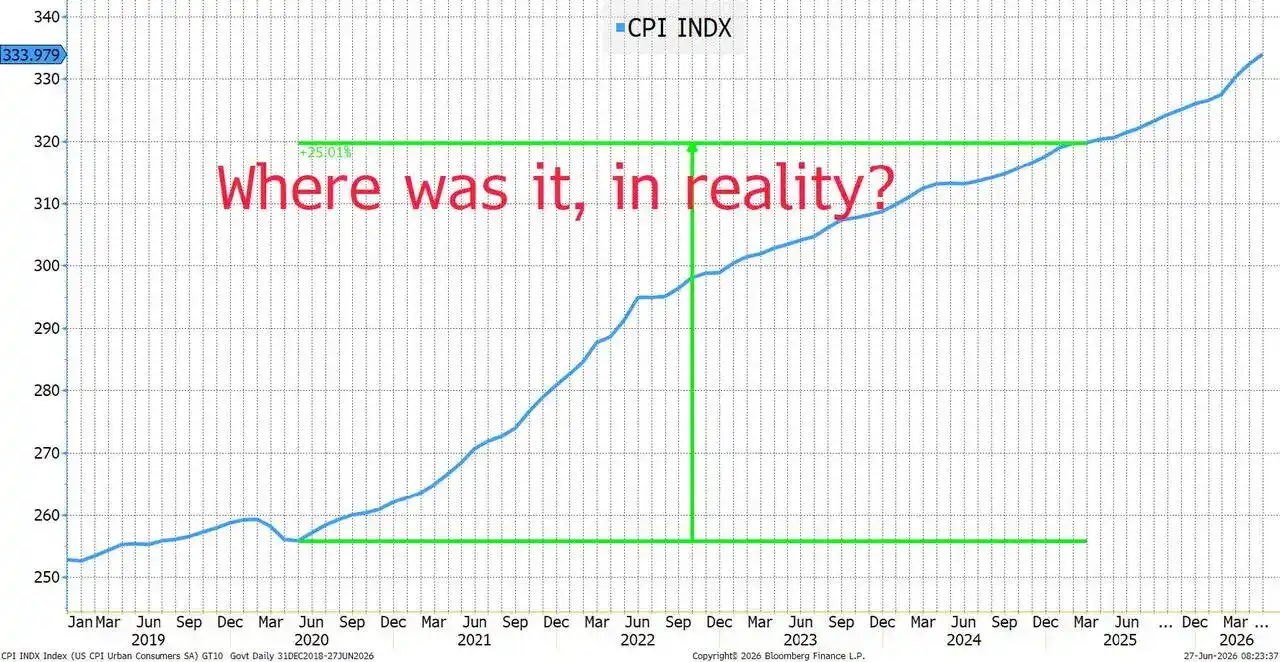
He also notes that Walsh's recent remarks hinted that the "big number" (the integer) of the inflation figure is more important than the precise value. Tchir infers from this that the market may be gradually being "conditioned"—to accept the cognitive framework that "two-point-something" is equivalent to approaching the 2% target. He marks the inflation target line on his chart as 2.9%, not the traditional 2%.

He believes that once the data narrative is switched, the technical barriers to rate cuts will significantly lower.

Tchir also mentions the work of former Fed insider Miran on the neutral rate issue. He believes that while no one in the market is discussing the neutral rate currently, this topic will resurface at an opportune moment.

His logic is: The neutral rate itself is difficult to measure precisely, with a substantial estimation range. If the new Fed leadership can argue that the previous judgment on the neutral rate was too high, then this alone could provide theoretical grounds for 50 to 100 basis points of rate cuts, while assigning blame to the "old Fed's error."

Apple Price Hikes and AI Inflation: Rate Hikes Are Aiming at the Wrong Target

Addressing market concerns about AI-driven inflation, Tchir offers a counter-interpretation.

He points out that Apple (AAPL)'s stock fell after announcing recent price hikes, a market reaction that precisely shows consumer tolerance for price increases is being questioned. If a top consumer brand like Apple struggles to have its price hikes digested by the market, the pricing power of ordinary consumer goods companies would only be weaker—contradicting the narrative of persistent inflation heating up.

He also cites feedback from a chip company: memory prices have not surged due to AI demand, with some products even cheaper than five years ago. He believes that AI and data center construction spending are indeed inflationary, but this is a completely different dimension from the affordability issues faced by ordinary consumers.

More critically, he argues that rate hikes have almost no dampening effect on AI/data center spending—those tech companies trading at 100x multiples are completely insensitive to a 50-basis-point rate move. Those truly hurt by rate hikes are ordinary borrowers with no connection to AI inflation.

Based on the above judgments, he believes the market will begin to reprice rate cut expectations, with the most certain opportunity lying in the short end of the yield curve—going long on short-term Treasuries, betting on lower front-end yields. For the long end, he maintains a neutral to slightly bullish stance, believing Treasury Secretary Bessent wants the 10-year yield back in the "3-handle," and Walsh has already removed tail-end risks for the long end through hawkish rhetoric.

In the equity space, he recommends a significant overweight in the energy sector, especially global nuclear power assets; within the Defense & Security (ProSec) theme, overweight biotech/pharmaceuticals and underweight chips. He is cautious on AI and data center valuations and warns that potential secondary issuance pressure from large tech companies could weigh on their stock prices.

Questions liées

QAccording to the article, what is the analyst Peter Tchir's main argument about Federal Reserve Chairman Kevin Walsh's hawkish stance?

APeter Tchir argues that Federal Reserve Chairman Kevin Walsh's hawkish stance might be a carefully designed smokescreen. He suggests that by making hawkish statements, Walsh aims to suppress the tail risk of long-term interest rates, while also reserving space to shift the data narrative later. Tchir believes the ultimate goal of this strategy could be to pave the way for a potential interest rate cut in September and again in October, coinciding with the timing of the midterm elections.

QWhat is Peter Tchir's key criticism regarding the current inflation measurement system used by the Fed?

APeter Tchir criticizes the Fed's reliance on the PCE index, stating that it is not the preferred inflation gauge for the current Fed leadership under Walsh. He argues that data lags, especially in housing inflation, make metrics like PCE outdated. He points to the Cleveland Fed's 'New Tenant Repeat Rent Index' (NTRR), which aligns more closely with real-time rental data from sources like Zillow, as a more accurate indicator that the Fed could switch to in order to justify rate cuts.

QWhat alternative inflation data does Peter Tchir cite to support the case for lower inflation, and what does it indicate?

APeter Tchir cites Truflation, a real-time inflation index built on massive datasets. According to his report, Truflation's core inflation rate is currently around 1.45% and has consistently stayed below 1.8% since February of this year. This data suggests that inflation is significantly lower than what the official, lagging indicators might imply.

QHow does Peter Tchir dismiss concerns about AI-driven inflation?

APeter Tchir dismisses concerns about AI-driven inflation by making two key points. First, he argues that the inflation from AI and data center construction is a different dimension from the affordability issues faced by general consumers. Second, he contends that interest rate hikes are ineffective at curbing AI/data center spending because the tech companies undertaking these investments are insensitive to small rate changes. Instead, he believes higher rates primarily hurt ordinary borrowers who are unrelated to the AI sector.

QWhat investment recommendations does Peter Tchir make based on his analysis in the report?

ABased on his analysis, Peter Tchir recommends investors re-price their expectations for rate cuts. He sees the most certain opportunity in the short end of the yield curve, suggesting going long on short-term Treasury bonds to bet on falling front-end yields. In equities, he advises a significant overweight in the energy sector (especially global nuclear power assets). Within the Defense & Security (ProSec) theme, he recommends an overweight in biotech/pharma and an underweight in semiconductors. He is cautious about the valuations of AI and data center stocks.

Lectures associées

L'IA balaie le monde, pourquoi la combinaison Crypto + IA est-elle si décevante ?

**Résumé : L'IA domine, mais pourquoi la combinaison Crypto + IA reste terne ?** Alors que l'IA connaît un essor mondial, le secteur blockchain peine à y trouver sa place. Une analyse par segments révèle un décalage structurel entre l'offre et la demande. * **Calcul et stockage décentralisés** : Bien que logiques pour la souveraineté des données ou les coûts, ces solutions ne présentent pas encore un avantage technique suffisant pour justifier le risque de migration des entreprises loin des géants du cloud. * **Validation des modèles et protection de la vie privée** : Des technologies comme le ZKML (Zero-Knowledge Machine Learning) résolvent des problèmes à long terme (audit, confidentialité), mais pas les priorités opérationnelles immédiates des entreprises. Leur adoption massive suivra probablement la réglementation, comme le montre l'Acte européen sur l'IA. * **Infrastructure pour agents IA** : Les projets blockchain développent une infrastructure pour une économie future d'agents autonomes interagissant entre eux. Cependant, le marché actuel se concentre sur l'automatisation des processus internes. La demande n'est pas encore mature. * **Paiement pour agents IA** : C'est le seul segment où la blockchain est sur un pied d'égalité avec la finance traditionnelle, car aucun des deux n'a encore résolu le défi des micropaiements fréquents et en temps réel entre machines. **Le problème fondamental n'est pas la logique de combinaison Crypto+IA, mais une grave inadéquation entre l'offre et la demande.** Les entreprises de l'IA traditionnelle recherchent des gains de performance immédiats et une stabilité à tout prix, tandis que la plupart des projets blockchain mettent l'accent sur des valeurs à plus long terme (décentralisation, transparence, propriété des données), souvent au déficit de la performance. L'absence de cas d'utilisation phare à grande échelle est le principal obstacle à l'adoption et au financement institutionnel. L'avenir du secteur dépendra de sa capacité à s'adapter aux besoins du marché actuel de l'IA tout en préparant l'infrastructure pour sa prochaine phase évolutive.

marsbitIl y a 6 mins

L'IA balaie le monde, pourquoi la combinaison Crypto + IA est-elle si décevante ?

marsbitIl y a 6 mins

"Roi du Hype" Arthur Hayes frappe à nouveau, cette fois il vise Deribit

Le cofondateur de BitMEX, Arthur Hayes, a acheté pour environ 2,2 millions de dollars de tokens SYN via une plateforme OTC, déclarant ensuite sur X que SYN représente l'une des opportunités d'investissement les plus asymétriques qu'il ait vues depuis HYPE. Il a présenté Hypercall, un protocole d'options décentralisé (DEX) construit par l'équipe de Synapse, comme le challenger capable de rivaliser avec le leader centralisé du marché des options, Deribit. Synapse Protocol, lancé en 2021 comme réseau de messagerie inter-chaînes, a évolué pour lancer Hypercall, une plateforme d'options on-chain qui vise à permettre la négociation d'options sur pratiquement tout actif, sans liquidation ni KYC. Bien qu'étant en phase Alpha, elle a enregistré un volume de transactions significatif. Deribit domine le marché des options crypto avec environ 85% de part de marché, grâce à sa liquidité profonde et ses outils professionnels, mais présente les limites inhérentes aux plateformes centralisées (risques de custode, réglementation). Hayes mise sur la montée en puissance des DEX à haut débit comme Hyperliquid pour favoriser l'adoption des options on-chain. Cependant, Hypercall devra développer sa liquidité pour concurrencer sérieusement le réseau établi de Deribit. L'analyse note également que les récents appels de Hayes (HYPE, CARDS) ont eu des résultats mitigés, suscitant des critiques sur leur impact potentiel sur les prix.

marsbitIl y a 28 mins

"Roi du Hype" Arthur Hayes frappe à nouveau, cette fois il vise Deribit

marsbitIl y a 28 mins

L'IA déferle sur le monde, pourquoi la combinaison Crypto + IA est-elle si morose ?

Résumé : Alors que l'IA connaît un essor mondial, la convergence avec la blockchain (Crypto + IA) reste en retrait. L'analyse révèle que le problème n'est pas une contradiction logique, mais un décalage structurel entre l'offre technologique et la demande actuelle du marché. Le secteur traditionnel de l'IA investit massivement pour résoudre des goulots d'étranglement immédiats (performance, coût, stabilité). En revanche, les projets Blockchain+IA se concentrent sur des avantages à long terme comme la propriété des données, la transparence ou la décentralisation, qui ne sont pas des priorités pour les entreprises. Quatre sous-secteurs sont examinés : 1. **Calcul décentralisé & stockage décentralisé** : Malgré une logique valable (coûts, souveraineté), ils manquent d'un avantage technique décisif pour justifier le risque de migration depuis les géants du cloud (AWS, Google Cloud). 2. **Marchés de données sur chaîne & vérification des modèles (ZKML)** : Ces solutions répondent à des besoins (transparence, confidentialité) qui ne sont pas encore des impératifs commerciaux urgents. Leur adoption dépendra probablement de régulations futures, comme l'AI Act de l'UE. 3. **Infrastructure pour agents IA** : La technologie devance la demande. Les entreprises automatisent d'abord des processus internes, tandis que les projets blockchain construisent l'infrastructure pour une économie future d'agents autonomes interagissant entre eux. 4. **Paiement pour agents IA** : C'est le seul sous-secteur où la blockchain est sur un pied d'égalité avec la finance traditionnelle, car aucun système n'a encore résolu le défi des micro-paiements en temps réel entre machines. Le principal obstacle est l'absence de cas d'utilisation à grande échelle et convaincant prouvant la valeur commerciale. La voie à suivre dépendra de la capacité du secteur à s'adapter aux standards actuels de performance ou à persister dans le développement d'une infrastructure pour les besoins futurs de l'IA.

Foresight NewsIl y a 36 mins

L'IA déferle sur le monde, pourquoi la combinaison Crypto + IA est-elle si morose ?

Foresight NewsIl y a 36 mins

Les ETF ont connu des sorties nettes continues, les institutions se retirent-elles ?

Lors des six dernières semaines, les ETF Bitcoin spot américains ont enregistré des sorties nettes d’environ 6 milliards de dollars, soit la plus longue série hebdomadaire de retraits depuis leur lancement en 2024. Le fonds IBIT de BlackRock est particulièrement touché, ayant représenté plus de 70 % des sorties sur une semaine récente. Les données on-chain indiquent que les détenteurs à long terme (plus de 155 jours) ne vendent pratiquement pas, détenant encore environ 83 % de l’offre en circulation. Les ventes proviennent principalement des investisseurs institutionnels ou de configuration ayant acheté via des comptes de courtage, qui utilisent désormais la même facilité pour sortir. Cette vague de ventes ressemble à une réduction des risques face au durcissement de la Fed, à une inflation persistante et à la concurrence d’autres actifs (infrastructure IA, introductions en bourse), plutôt qu’à un rejet du Bitcoin. Les pertes réalisées ont bondi de 78 %, de nombreux vendeurs ayant acheté entre 55 000 et 68 000 dollars. Le rythme des sorties ralentit cependant, passant de 1,72 milliard début juin à 226,8 millions mi-juin, suggérant que la panique de vente pourrait s’épuiser. Néanmoins, la taille d’IBIT en fait une source structurelle de pression : ses sorties pèsent directement sur le marché spot, d’autant plus que les nouveaux acheteurs et les volumes sont actuellement faibles. Les prochaines sessions seront déterminantes : si les sorties d’IBIT se calment et que le Bitcoin dépasse 60 000 dollars, le marché pourrait se stabiliser. En revanche, si les rachats massifs reprennent et que le prix tombe sous 58 000 dollars, la pression de vente institutionnelle devra être absorbée par les acheteurs spot non-ETF, ce qui pourrait marquer un tournant.

marsbitIl y a 1 h

Les ETF ont connu des sorties nettes continues, les institutions se retirent-elles ?

marsbitIl y a 1 h

Introduction au Concept de Modèle du Monde : Une Histoire de la Psychologie à l'AI

Le concept de "modèle du monde" (World Model) est aujourd'hui central en IA, bien que sa définition reste floue. Il s'agit de doter les machines d'un "sandbox mental" interne, capable de prédire et de simuler les conséquences d'actions avant leur exécution réelle, à l'instar de la réflexion humaine. Cette capacité est cruciale pour des applications comme la conduite autonome, la robotique ou la création de contenus. L'idée puise ses racines dans les travaux du psychologue Kenneth Craik (1943) et a été reprise en IA par des pionniers comme Marvin Minsky. Le terme a été remis au goût du jour en 2018 par David Ha et Jürgen Schmidhuber. Aujourd'hui, les approches divergent. Des chercheurs comme Yann LeCun (avec son architecture JEPA) privilégient la prédiction en espace abstrait pour comprendre la physique. D'autres, comme Fei-Fei Li, proposent une taxonomie distinguant les modèles qui *rendent* (pixels), *simulent* (états physiques) ou *planifient* (actions). OpenAI (Sora), Google DeepMind (Genie 3) et NVIDIA (Cosmos) développent des "simulateurs du monde" génératifs basés sur des vidéos. Dans l'industrie, les acteurs chinois (Alibaba, Tencent, constructeurs automobiles) développent leurs propres solutions, souvent centrées sur des cas d'usage concrets comme la conduite autonome. Techniquement, trois voies coexistent : la génération de pixels (comme Sora), la prédiction en espace latent (comme JEPA), et la création d'environnements 3D paramétriques (comme Omniverse). La tendance est à leur convergence vers un modèle unifié. Un paradigme émergent en 2026 est le "World Action Model" (WAM), qui intègre directement la génération d'actions et la prédiction de l'état futur en un seul système, visant une meilleure "unité de la pensée et de l'action" pour les robots. Malgré la confusion des définitions, un consensus se dégage sur l'objectif final : créer pour les machines une représentation interne du monde, exploitable pour raisonner, planifier et agir de manière plus sûre et générale. Cette période de flou terminologique est typique des phases de rupture technologique et signale l'entrée du concept sur le champ de bataille principal de l'IA.

marsbitIl y a 1 h

Introduction au Concept de Modèle du Monde : Une Histoire de la Psychologie à l'AI

marsbitIl y a 1 h

Trading

Spot
活动图片