Blockchain trial on Canton Network tests collateral reuse with tokenized US Treasurys

cointelegraphPublié le 2025-12-09Dernière mise à jour le 2025-12-09

Résumé

Digital Asset and a group of major financial institutions have successfully conducted a second round of onchain US Treasury financing trials on the Canton Network. The test introduced real-time collateral reuse using tokenized US Treasurys and expanded the use of multiple stablecoins, including USDC, to enhance onchain liquidity. This innovation bypasses traditional operational delays associated with rehypothecation. Participants included Bank of America, Citadel Securities, Cumberland DRW, Virtu Financial, Société Générale, Tradeweb, Circle, Brale, and M1X Global. The Canton Network, a blockchain built for institutional finance, continues to grow in the tokenized real-world assets (RWA) space, with over $370 billion represented onchain, leading the market significantly.

Digital Asset and a group of financial institutions have completed a second round of onchain US Treasury financing on the Canton Network, introducing real-time collateral reuse and expanding the number of stablecoins involved.

Five transactions were executed in the newest phase, building on the July pilot, which first demonstrated that US Treasurys and the USDC (USDC) stablecoin could be combined to finance and settle transactions on the blockchain.

In the latest trial, the companies used multiple stablecoins to finance positions against tokenized US Treasurys, widening the pool of onchain liquidity available for financing transactions.

The trial showed that tokenized US Treasurys could be passed between counterparties and reused as collateral in real-time, sidestepping the operational delays that typically accompany rehypothecation in traditional finance.

The effort brought together Bank of America, Citadel Securities, Cumberland DRW, Virtu Financial, Société Générale, Tradeweb, Circle, Brale and M1X Global, which are all a part of the Canton Network’s Industry Working Group.

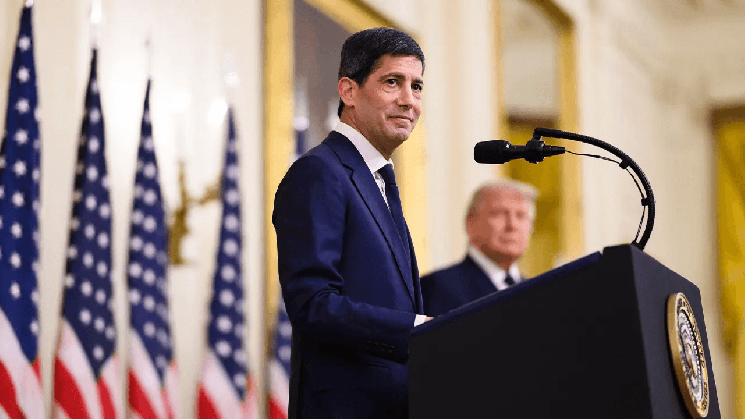
Kelly Mathieson, chief business development officer at Digital Asset — the company behind the Canton Network — said in a statement that the test was “part of a thoughtful progression toward a new market model.”

Justin Peterson, chief technology officer of Tradeweb, added that “demonstrating real-time collateral reuse and expanded stablecoin liquidity isn’t just a technical achievement — it’s a blueprint for what the future of institutional finance can look like.”

Related: ‘We refused to do an ICO’: The truth behind Canton’s tokenomics

Canton Network expands footprint in tokenized RWAs

The Canton Network, a layer-1 blockchain built for institutional finance, has been expanding its presence across the tokenization sector this year.

On Dec. 4, its developer Digital Asset secured roughly $50 million in strategic backing from BNY, iCapital, Nasdaq and S&P Global. The new funding followed a $135 million raise earlier this year and is intended to support the network’s scaling efforts.

In October, asset manager Franklin Templeton said it would migrate its Benji Investments platform — which tokenizes shares of the firm’s flagship US money market fund — to the Canton Network.

Data from RWA.xyz also shows the Canton Network now leads the market for tokenized real-world assets by a wide margin, with more than $370 billion represented onchain, far outpacing popular networks such as Ethereum, Polygon, Solana and other public chains.
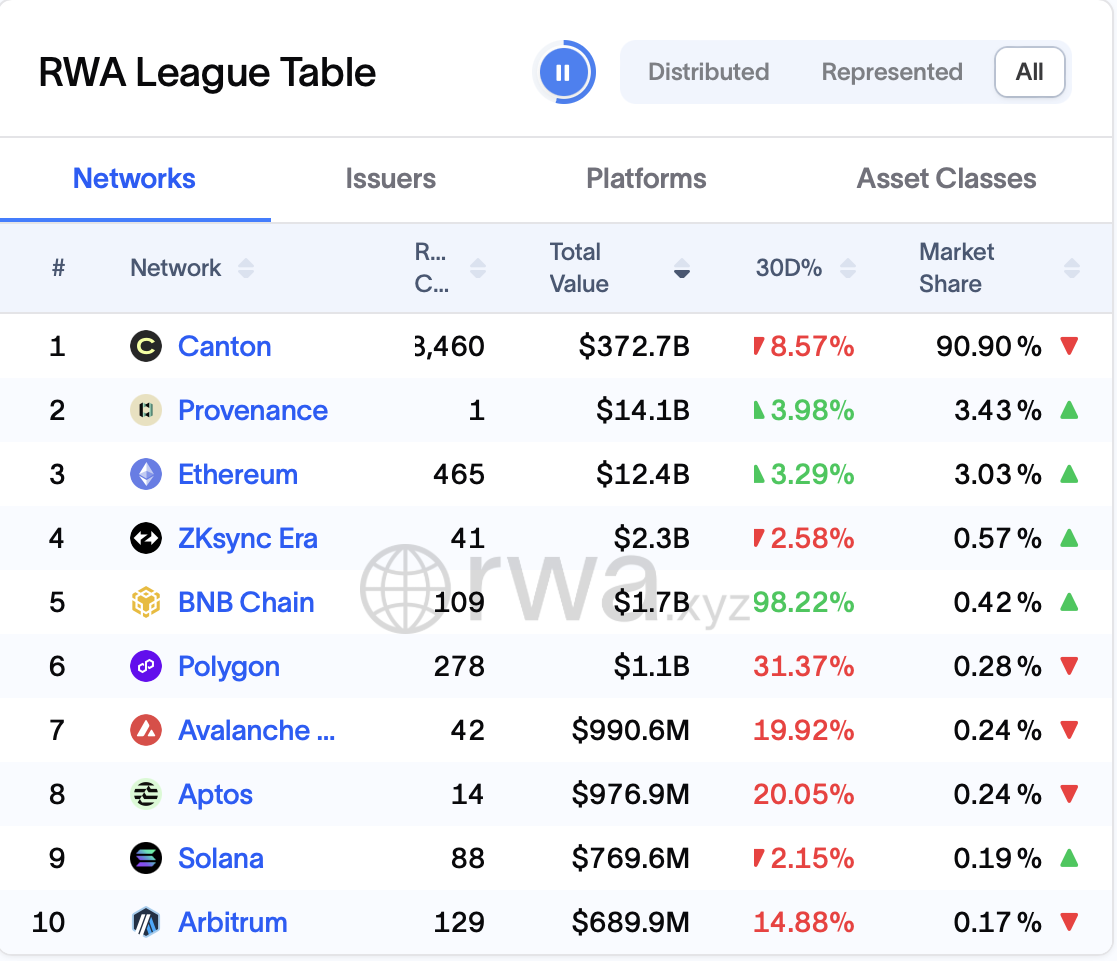
Top blockchains for RWA. Source: RWA.xyz

Magazine: 6 reasons Jack Dorsey is definitely Satoshi... and 5 reasons he’s not
Lectures associées

Les KOL de la cryptomonnaie proposant des communautés payantes et vendant des cours : est-ce illégal ?

Un expert (KOL) de la cryptomonnaie interroge sur la légalité de proposer des communautés payantes et des cours sur les investissements en crypto-actifs. L’avocat Shao Shiwei explique que bien qu’il n’existe pas de régime d’autorisation spécifique pour les crypto-monnaies en Chine, ces activités présentent des risques juridiques significatifs. Les services incluant l’analyse en temps réel des marchés, les prévisions de tendance ou les conseils d’achat/vente (même indirects) peuvent être considérés comme des « conseils en investissement ». Cela expose le KOL à des risques civils (litiges avec les utilisateurs) et pénaux (accusations de fraude ou escroquerie). L’avocat distingue trois niveaux de risque : 1. Contenu éducatif général (risque faible) 2. Analyse avec suggestions implicites (risque modéré à élevé) 3. Recommandations directes de trading (risque pénal élevé) Avertir que les conseils « ne constituent pas une recommandation d’investissement » n’offre aucune protection juridique. Les autorités privilégient l’examen substantiel plutôt que les déclarations formelles. La nature des contenus, leur influence sur les décisions des utilisateurs et le modèle économique sont des facteurs déterminants. Une évaluation au cas par cas est essentielle pour mesurer l’exposition réelle au risque.

marsbitIl y a 12 mins

Les KOL de la cryptomonnaie proposant des communautés payantes et vendant des cours : est-ce illégal ?

marsbitIl y a 12 mins

Adieu Cook, Bienvenue à Ternus : La Rupture et le Redémarrage de l'Empire de 4 000 Milliards de Dollars d'Apple

Tim Cook a officiellement annoncé sa démission en tant que PDG d'Apple, après quinze années à diriger l'entreprise, durant lesquelles sa valorisation est passée de 350 milliards à près de 4 000 milliards de dollars. Il sera remplacé en septembre par John Ternus, 50 ans, un ingénieur issu de la maison, dont la nomination était anticipée. Ternus, dont la carrière chez Apple a été centrée sur le hardware, incarne un virage stratégique vers le renforcement technique. Cette transition s'accompagne d'une réorganisation interne, avec Johny Srouji, responsable des puces Apple Silicon, promu à la tête du hardware. Le défi immédiat de Ternus sera de combler le retard d'Apple en intelligence artificielle, un point faible hérité de l'ère Cook. Malgré des efforts, notamment le recrutement de John Giannandrea en 2018, les projets AI, comme les améliorations de Siri, ont été retardés et fragmentés, conduisant même à un partenariat stratégique avec Google. Apple se trouve à un point d'inflexion : son modèle éprouvé d'écosystème fermé (hardware + OS) est contesté par l'émergence de l'Intelligence Artificielle Générale (AGI/ASI). Son immense parc d'appareils est un atout de distribution, mais aussi une possible contrainte pour une transformation radicale. La prochaine WWDC sera un test crucial pour Ternus, qui devra présenter une stratégie AI convaincante et concise. La question centrale de son mandat sera de redéfinir la raison d'être d'Apple à l'ère de l'IA : non plus simplement vendre des appareils, mais offrir une intelligence de classe mondiale.

marsbitIl y a 1 h

Adieu Cook, Bienvenue à Ternus : La Rupture et le Redémarrage de l'Empire de 4 000 Milliards de Dollars d'Apple

marsbitIl y a 1 h

Trading

Spot
Futures
活动图片