ArkInvest Allocates $32.7M to Robinhood as Bitcoin Hyper Pumps

bitcoinistPublié le 2026-02-03Dernière mise à jour le 2026-02-03

Résumé

Ark Invest has acquired $32.7 million worth of Robinhood (HOOD) shares, signaling a strategic bet on increased retail market participation, which historically precedes crypto activity surges. This influx could cause Bitcoin network congestion, driving interest in scalability solutions. Bitcoin Hyper ($HYPER) is highlighted as a key infrastructure project merging Solana's speed with Bitcoin's security via the Solana Virtual Machine, enabling fast, low-cost transactions. With over $32 million raised in its presale and immediate staking options, it aims to attract developers and handle high-frequency BTC use cases, positioning itself as a solution to upcoming liquidity and scalability challenges.

Ark Invest’s latest filing reveals a chunky $32.7M acquisition of Robinhood (HOOD) shares.

On the surface, it’s an equity play, but dig deeper, and it looks like a derivative bet on the resurgence of crypto market participation. Historically, Robinhood’s volume spikes act as a canary in the coal mine for retail capital, typically preceding major on-chain activity by 3-5 weeks.
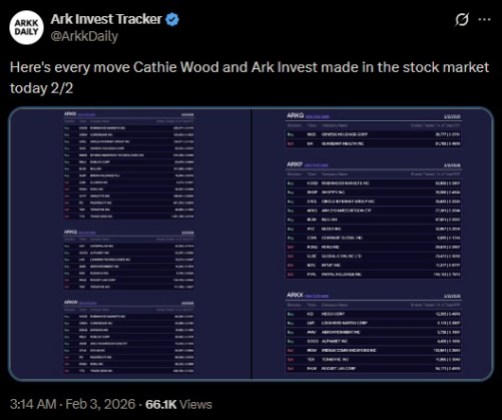
The timing feels deliberate. As the Federal Reserve signals potential rate pauses, risk-on assets are re-pricing. But buying HOOD is just the surface trade. The inevitable second-order effect of a retail influx? Massive Bitcoin network congestion. When millions of new users try to move $BTC, fees don’t just rise; they skyrocket, making the base layer practically unusable for anyone moving less than six figures.

That bottleneck is exactly why institutional eyes are drifting toward infrastructure that can handle the coming liquidity shock. While Wall Street buys exchange stocks, on-chain capital is positioning into scalability protocols.

Specifically, smart money appears to be front-running the congestion narrative by accumulating Bitcoin Hyper ($HYPER), the first protocol to weld the Solana Virtual Machine (SVM) directly onto a Bitcoin Layer 2.

Buy $HYPER here.

Solving the Velocity Problem: Bitcoin Meets SVM Speed

The thesis here is simple mechanics. Bitcoin is secure but slow; Solana is fast but has faced centralization headaches. By fusing these architectures, Bitcoin Hyper ($HYPER) attempts a ‘best of both worlds’ environment to solve the trilemma plaguing current Layer 2s.

Most existing Bitcoin L2s still feel sluggish compared to modern DeFi standards. Bitcoin Hyper bypasses the lag by using the Solana Virtual Machine (SVM) for execution. The result? Sub-second transaction finality and costs that are fractions of a cent, all while anchoring state to the Bitcoin L1.
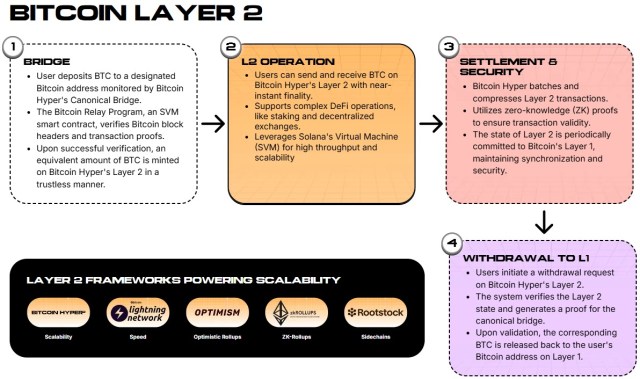
That matters because it finally unlocks high-frequency use cases for $BTC, think gaming, real-time payments, and complex DeFi swaps, that were previously impossible (or just too expensive) on the base layer.

Developers are eyeing the Rust-based environment too. The protocol offers a Developer SDK and API in Rust, meaning the massive pool of Solana devs can port their dApps to the Bitcoin ecosystem without rewriting their codebase. This isn’t just about building a chain; it’s about importing an entire developer economy.

You can buy $HYPER here.

Presale Data Signals Institutional Accumulation

The market’s appetite for high-performance infrastructure shows up in the hard numbers. According to the official presale page, Bitcoin Hyper ($HYPER) has raised over $32M, a figure that frankly outpaces most comparable infrastructure rounds this cycle. The token sits at $0.013675, a valuation that looks modest relative to the utility proposition.
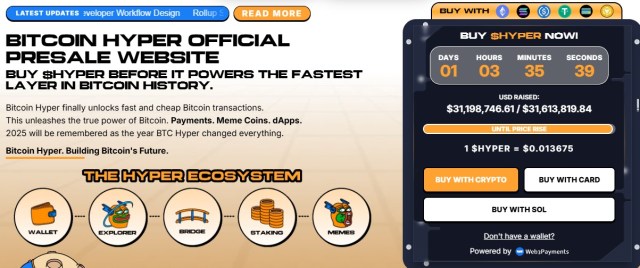
The incentives seem structured to keep that liquidity sticky. Staking opens immediately after the Token Generation Event (TGE), with a 7-day vesting period for presale participants. That lock-up mechanism helps prevent immediate sell-offs, aiming to create a stable floor at launch.

For investors watching Ark Invest buy the ‘shovels’ (Robinhood), Bitcoin Hyper represents the ‘ground’ where the actual digging happens.

Visit the official $HYPER presale here.

The content provided in this article is for informational purposes only and does not constitute financial advice. Cryptocurrency investments, including presales and stocks like Robinhood, carry high risks. Always conduct your own due diligence before investing.


Questions liées

QWhat is the significance of Ark Invest's $32.7M acquisition of Robinhood shares according to the article?

AThe article suggests that while it appears to be an equity play on the surface, it is actually a derivative bet on the resurgence of crypto market participation. Historically, Robinhood's trading volume spikes act as an early indicator (a 'canary in the coal mine') for retail capital entering the market, typically preceding major on-chain activity by 3-5 weeks.

QWhat problem does the Bitcoin Hyper ($HYPER) protocol aim to solve?

ABitcoin Hyper aims to solve the blockchain trilemma for Bitcoin Layer 2s by combining the security of Bitcoin with the speed of Solana. It welds the Solana Virtual Machine (SVM) directly onto a Bitcoin L2 to provide sub-second transaction finality and extremely low costs, thereby solving the 'velocity problem' and enabling high-frequency use cases like gaming and real-time payments on Bitcoin.

QHow does the article connect a potential influx of retail users to Bitcoin network congestion?

AThe article states that an influx of retail users, signaled by increased activity on platforms like Robinhood, leads to massive Bitcoin network congestion. When millions of new users try to move BTC, transaction fees don't just rise but 'skyrocket,' making the base layer practically unusable for transactions under six figures.

QWhat advantage does Bitcoin Hyper's Rust-based development environment provide?

ABy offering a Developer SDK and API in Rust, Bitcoin Hyper allows the massive existing pool of Solana developers to easily port their decentralized applications (dApps) to the Bitcoin ecosystem without having to rewrite their entire codebase, effectively importing an entire developer economy.

QWhat does the presale data for Bitcoin Hyper ($HYPER) indicate, as mentioned in the article?

AThe presale data indicates strong institutional accumulation, having raised over $32 million, which the article states outpaces most comparable infrastructure rounds in the current market cycle. The token's valuation is considered modest relative to its utility, and its staking and vesting mechanisms are designed to create liquidity stability post-launch.

Lectures associées

Le marché actions A sacrifié : résilience, anticipations et fondamentaux

**Résumé :** En juillet, le secteur technologique des actions A a été affecté par la contagion du risque lié aux ventes forcées sur les marchés coréen et mondiaux. Cependant, cette correction est principalement due à des facteurs externes plutôt qu'à un renversement de la dynamique fondamentale du secteur technologique chinois. Contrairement au marché coréen, très concentré sur les puces mémoire, le secteur technologique A est diversifié, avec des récits d'investissement tant sur les chaînes d'approvisionnement mondiales de l'IA que sur la substitution aux importations. Les autorités ("l'équipe nationale") sont intervenues massivement pour soutenir le marché, avec des engagements d'achats substantiels d'actions et d'ETF, signalant un soutien politique fort et un plancher potentiel du marché. Parallèlement, le marché dans son ensemble bénéficie d'une dynamique de récupération endogène dans trois domaines clés : la consommation (amélioration des prix à la consommation, reprise potentielle des spiritueux), les matières premières cycliques comme l'aluminium (profits élevés, perspectives de hausse des prix, faibles valorisations) et la finance (actifs à dividendes stables, valorisations basses). Ces trois piliers, combinés à la solidité sous-jacente de la technologie, confèrent au marché A une résilience importante, suggérant que le retour à la stabilité n'est peut-être pas loin.

marsbitIl y a 33 mins

Le marché actions A sacrifié : résilience, anticipations et fondamentaux

marsbitIl y a 33 mins

Où sera le champ de bataille principal du prochain bull market ? La réponse se cache dans ces deux types d'actifs

Le marché des cryptomonnaies montre des signes de reprise. Le prochain cycle haussier sera probablement axé sur la fusion entre la finance traditionnelle et la finance décentralisée (DeFi), notamment via l'adoption des stablecoins, la tokenisation d'actifs et des infrastructures de négociation 24h/24 et 7j/7. Cette évolution, soutenue par une valeur utilitaire réelle, vise le marché financier mondial. Deux actifs illustrent cette convergence : **Hyperliquid (HYPE)**, une blockchain de dérivés perpétuels qui étend son offre aux actifs traditionnels comme le pétrole, et **Robinhood (HOOD)**, un courtier traditionnel qui a lancé sa propre blockchain pour la négociation d'actions tokenisées. Pour en tirer parti, deux types d'investissements se distinguent : 1. Les applications DeFi natives avec des revenus réels et un modèle économique robuste, comme Hyperliquid, qui utilise la majorité de ses revenus pour racheter et brûler son token. 2. Les entreprises financières traditionnelles qui déploient activement des infrastructures blockchain à grande échelle, comme Robinhood, Coinbase ou BlackRock. La prochaine étape majeure sera l'intégration invisible de la blockchain au cœur du système financier. Les investisseurs ont intérêt à se positionner dès maintenant sur cette tendance de fond.

Foresight NewsIl y a 48 mins

Où sera le champ de bataille principal du prochain bull market ? La réponse se cache dans ces deux types d'actifs

Foresight NewsIl y a 48 mins

Kalshi contre Polymarket : la guerre commerciale entre fondateurs est bien plus féroce qu'il n'y paraît

En novembre 2024, le fondateur de Polymarket, Shayne Coplan, a été perquisitionné par le FBI. Derrière cette enquête se cache une rivalité féroce avec son concurrent Kalshi, dirigé par Tarek Mansour. Les deux plateformes de marchés prédictifs, bien que leaders du secteur, s'affrontent bien au-delà de la concurrence commerciale habituelle. Le conflit oppose leurs approches radicalement différentes. Kalshi privilégie une voie strictement réglementée aux États-Unis, tandis que Polymarket a opéré depuis l'étranger, restant accessible aux utilisateurs américains via un VPN, ce qui a attiré les foudres des régulateurs. Mansour considère les pratiques de Polymarket comme "illégales et contraires à l'éthique". Coplan, de son côté, est convaincu que Kalshi tente de l'éliminer par tous les moyens. La guerre s'étend à tous les domaines : batailles pour des investisseurs (comme l'Intercontinental Exchange), tentatives de saboter des acquisitions, sponsoring concurrentiel (Kalshi avec le Madison Square Garden), et campagnes médiatiques agressives. Des allégations de dénonciations aux autorités et de manipulation de l'opinion publique parsèment leur histoire. Aujourd'hui, Kalshi semble en tête avec une valorisation et un volume d'échanges plus élevés, mais Polymarket a finalement obtenu une licence américaine via une acquisition. Alors que le secteur explose, attirant une surveillance réglementaire accrue, l'animosité personnelle entre les deux fondateurs continue d'alimenter une lutte qui façonne l'avenir des marchés prédictifs.

marsbitIl y a 1 h

Kalshi contre Polymarket : la guerre commerciale entre fondateurs est bien plus féroce qu'il n'y paraît

marsbitIl y a 1 h

Trading

Spot
活动图片