After 500 Rejections, I Started Building Products That People Actually Use

marsbitPublié le 2025-12-30Dernière mise à jour le 2025-12-30

Résumé

After 500 rejections and years of failed infrastructure projects in crypto, the author shifted focus to building consumer-facing products that people actually use and pay for. Key lessons from transitioning to Solana and launching a consumer app include: Target younger users (ages 13-21) who are more open to adopting new technologies and sharing them socially. Design products that are inherently shareable to reduce marketing costs, as organic virality is critical in a low-trust, high-cost acquisition environment. Prioritize rapid user feedback—fix bugs within hours and implement requested features in days to build trust and habit formation. Choose simple, memorable app names to ease word-of-mouth sharing. Engage users directly through cold DMs (despite low reply rates) to gather honest feedback and build early supporter communities. Iterate quickly—observe user behavior rather than relying solely on feedback, and be willing to pivot radically. Simplify onboarding and avoid assumptions about user knowledge; make the product intuitive within seconds. Ultimately, speed, user-centricity, and distribution matter more than technical perfection in consumer crypto.

Editor's Note: In the crypto industry, discussions about 'whether to build infrastructure' and 'whether technical complexity equals competitive moat' have never ceased. But this article offers a counterexample from a frontline entrepreneur: from consecutive failures in betting on infra to pivoting towards consumer products that people are willing to use and pay for, the author uses personal experience to复盘 the real difficulty of 'building products' in the crypto industry.

Compared to technical complexity and grand narratives, the article focuses more on users, distribution, and execution details. In the consumer crypto space, value is not 'proven' but 'used into existence'.

The following is the original text:

As a first-time founder, I spent years working on three infrastructure protocols, all of which ultimately failed. By 2025, I began shifting to building a consumer product that people actually want to use. This piece shares the lessons I learned about user growth and fundraising 'after stepping into pitfalls'.

I've been in this industry for about 4 years.

In 2023, I started my venture in the EVM ecosystem, right when 'account abstraction' was the hottest topic. Almost everyone was developing SDKs for account abstract wallets. Meanwhile, the Rollup ecosystem heated up rapidly. Optimism, Arbitrum, and various RaaS projects dominated the mainstream view.

As someone who loves math, I was deeply attracted to ZK, believing it would change the world (I still believe it eventually will).

A core mistake I made back then was: equating 'complexity' with 'credibility'.

When VCs asked me about use cases, I would confidently list directions like zkML, zk identity, zk voting — yet in reality, almost none of these are actually used today. I mistook 'the technology looks impressive' for 'this is a useful product'.

As time went on, I even started to believe: the more complex the idea, the higher the probability of startup success.

Many investors also told me that in the crypto industry, only infrastructure has a chance to succeed. It wasn't until nearly two years and over 500 rejections later that I realized: this path wasn't for me.

So, I entered the Solana ecosystem.

For me, this was a whole new world. People here care about practical use cases. Even if it's memes, revenue matters. Speed matters. Distribution matters. (Special thanks to @superteamin for the help along the way.)

So far, we've been building consumer applications in this ecosystem for nearly 7 months. During the private testing phase, we've already processed over $12 million in transaction volume. Below are some of the lessons I've summarized:

1. Build for Young Users Willing to Try New Things

Aim to design products for a demographic that is naturally more receptive to new products.

In consumer crypto products, this usually means 'trenchers' or younger users, many concentrated in the 13–21 age range.

A 2024 study by the Consumer Technology Association (CTA) on Gen Z (11–26 years old) showed: 86% of Gen Z believe technology is an indispensable part of life, a higher proportion than any older group. They adopt new technologies earlier, with an average household owning 13 devices, using about 6 of them daily, for nearly 12 hours.

Gen Z is also more likely to personally own emerging tech products, such as crypto apps (e.g., 58% own game consoles, a significantly higher than older groups). They have a stronger willingness to spend on new technology, subscribe to more services, and their habits change and adapt noticeably faster than Millennials, Gen X, or Boomers.

They are more willing to try new apps, experiment, and quickly change usage habits.

In contrast, older users (in many cases, 25+) are generally less willing to change established workflows unless the incentives are very strong. Side note: this conclusion might not apply if you're building for institutions.

Multiple studies also show clear behavioral differences: younger users engage in social communication with more people daily, meaning they are more likely to share 'interesting products they discover' with friends. Around ages 20–21, social messaging activity typically peaks, largely related to college or being in school.
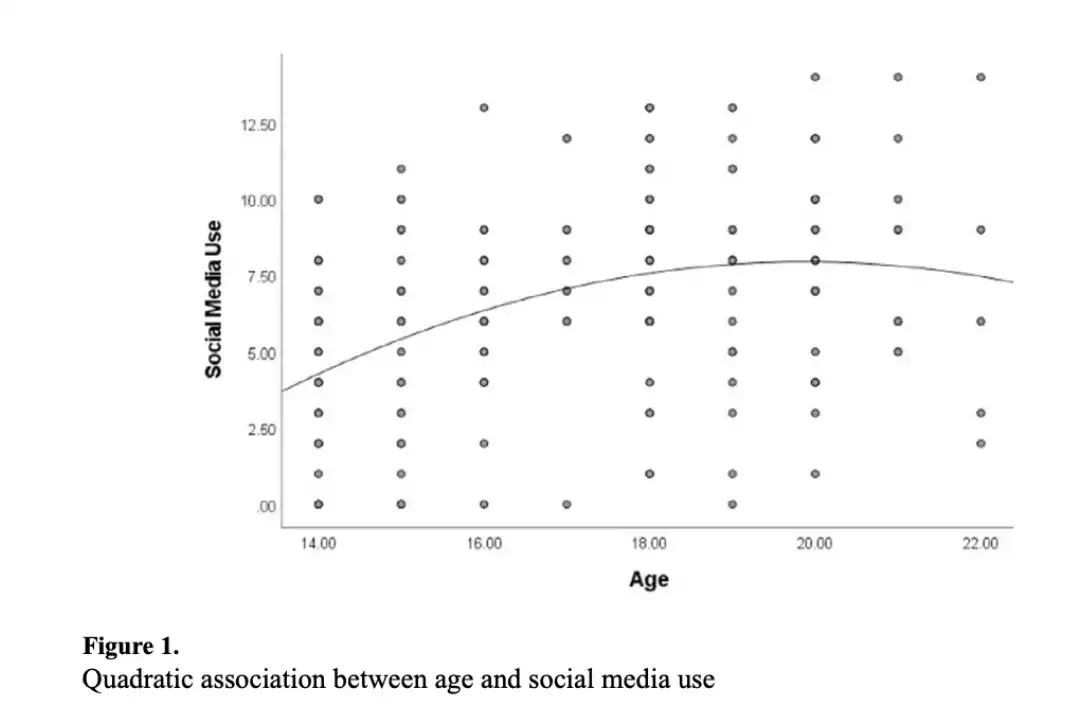
This trend leads to a very direct implication: products designed for younger users naturally have stronger virality.

2. Make the Product Itself Shareable to Reduce Marketing Costs

If you don't have ample marketing or advertising budgets, then your product itself must serve as the 'distribution channel'.

In other words, the product is the marketing, the product is the propagation.
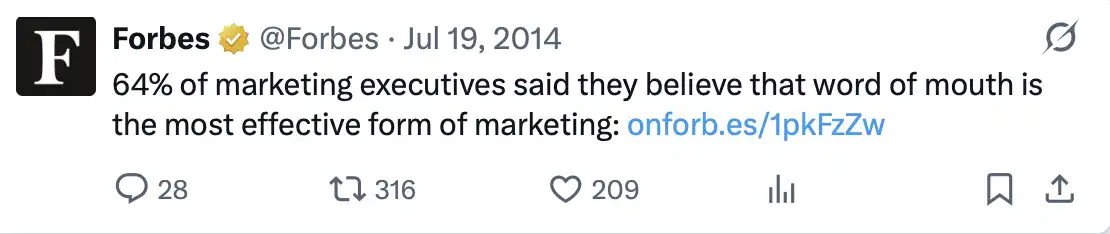
A highly shareable product can significantly reduce marketing costs.

This is especially important in the crypto industry because:

· KOL marketing is expensive

· User trust is generally low

· Most users expect rewards or incentives before participating

In such an environment, relying on traditional marketing methods is often inefficient, while organic propagation driven by the product itself is more sustainable.
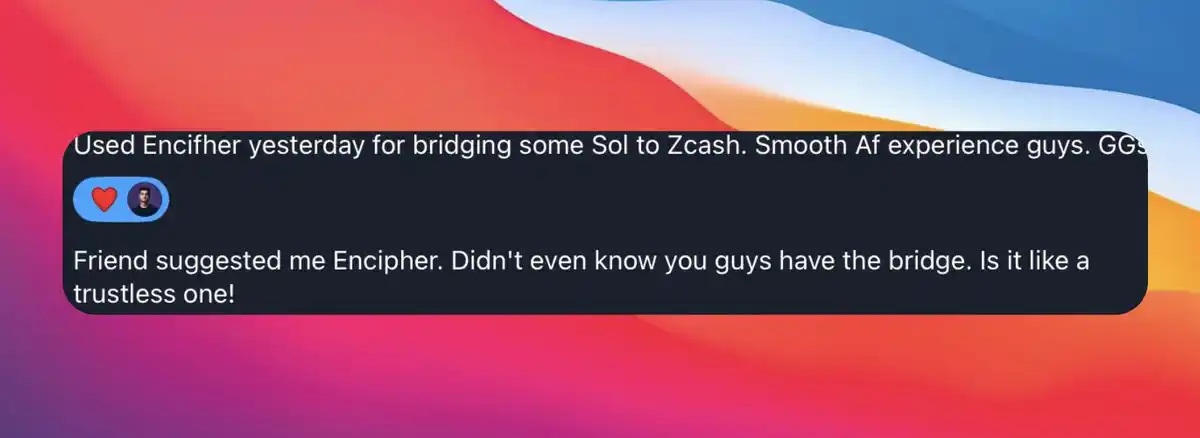
If your product can give users a reason to share spontaneously, whether with friends, groups, or communities, you can achieve distribution without burning大量资金.

This isn't easy to do in crypto, but optimizing for it from day one is very worthwhile in the long run.

3. Respond to User Feedback ASAP

When users report issues with the experience, or encounter poor interactions, fix them immediately, especially those that directly block the usage flow.

My previous approach was to save bug fixes for the end of the day. But once, a user DM'd me saying: 'Your App doesn't have this feature yet, I'll use Y for now.'

I said I understood, but the result was, the user kept using product Y afterwards. I tried multiple times via DMs to win them back, but it was very difficult — they had already formed a habit of using Y.

Ultimately, once users establish habits on another product, the cost of switching them back becomes extremely high.

Therefore, try to: resolve bugs within 2–5 hours.

If multiple users repeatedly request a new feature that is very important to them and technically feasible:

· Develop and launch it within 2–3 days

· Clearly tell them it was launched based on their feedback

·甚至可以给予一定的经济激励 (this might turn them into your product's most active evangelists)
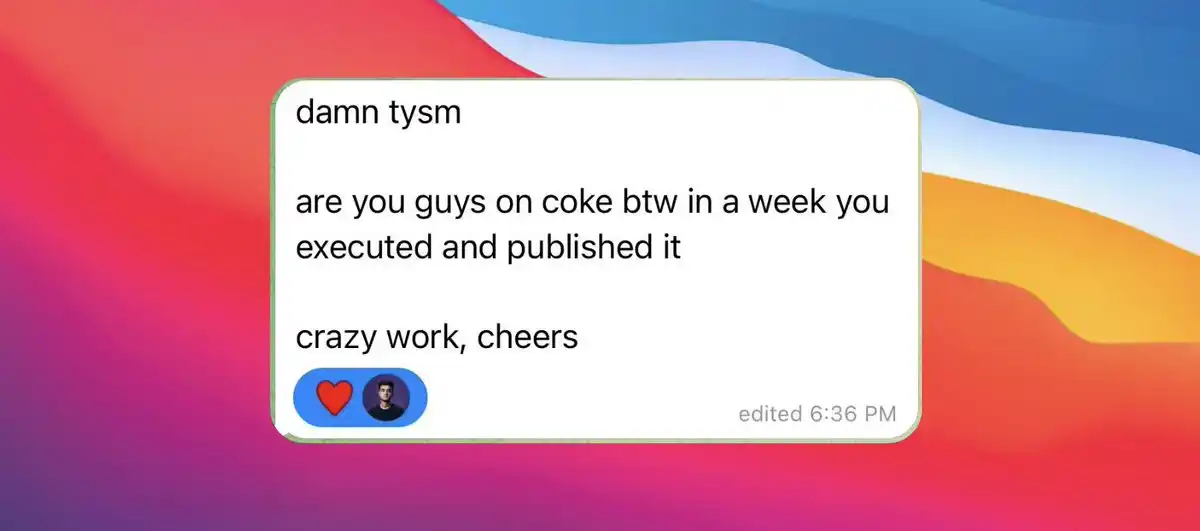
Delivering features around user needs does three things: directly improves the product, increases user frequency, and builds deep trust.

When users see their feedback taken seriously and actually turned into product features, they start to feel: this product is 'partly theirs'.

This emotional sense of 'ownership' is extremely important and powerful in early-stage consumer products.

4. The App's Name is Very Important

This might sound basic, but many people — including myself — have made serious mistakes at this step.

Your App's name must be highly memorable and easy enough to relay and share. Otherwise, you'll frequently receive messages like this (users want to recommend it but can't remember what it's called).
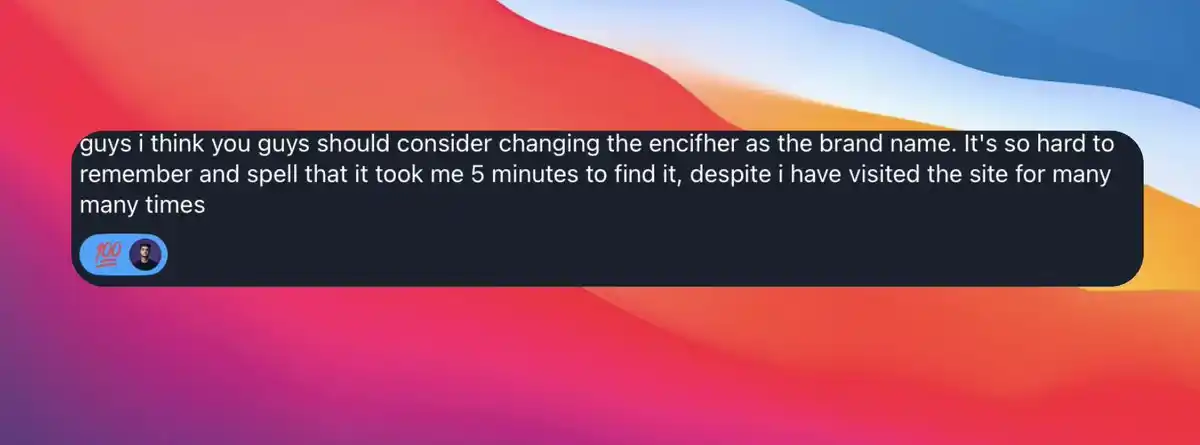
The truth is indeed so — the name 'encifher' itself was hard to remember, I really can't blame users for that.

There were even many group chats created by investors or partners where the product name was misspelled, something I can only苦笑 about now.
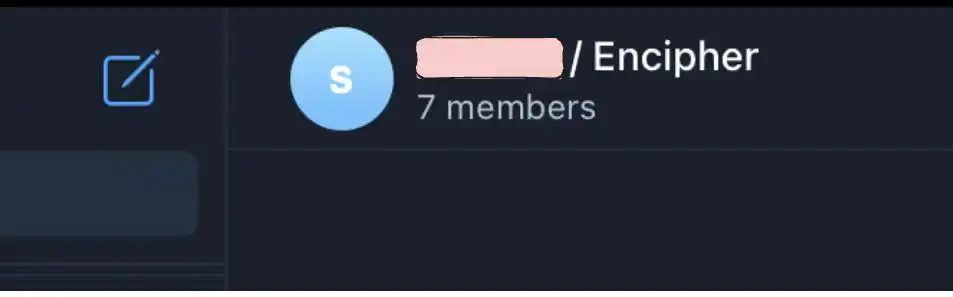
Because of this, we later changed the name to encrypt.trade.


There are plenty of existing methods and resources online for how to choose a 'memorable and shareable' name.

5. Talking to Users is Hard, But Non-Negotiable

Finding users and actually talking to them is inherently very difficult, especially when your direction isn't within the current mainstream narrative.

When I first started working on privacy-related products, it wasn't a popular niche. Although many retail users had real privacy needs, they were scattered and hard to find.

So I did something most people actively avoid: during the idea validation phase, I proactively cold-DM'd nearly 1000 people.

If lucky, about 10 out of 100 people might reply; and among those replies, only maybe 3–4 might give you useful feedback.
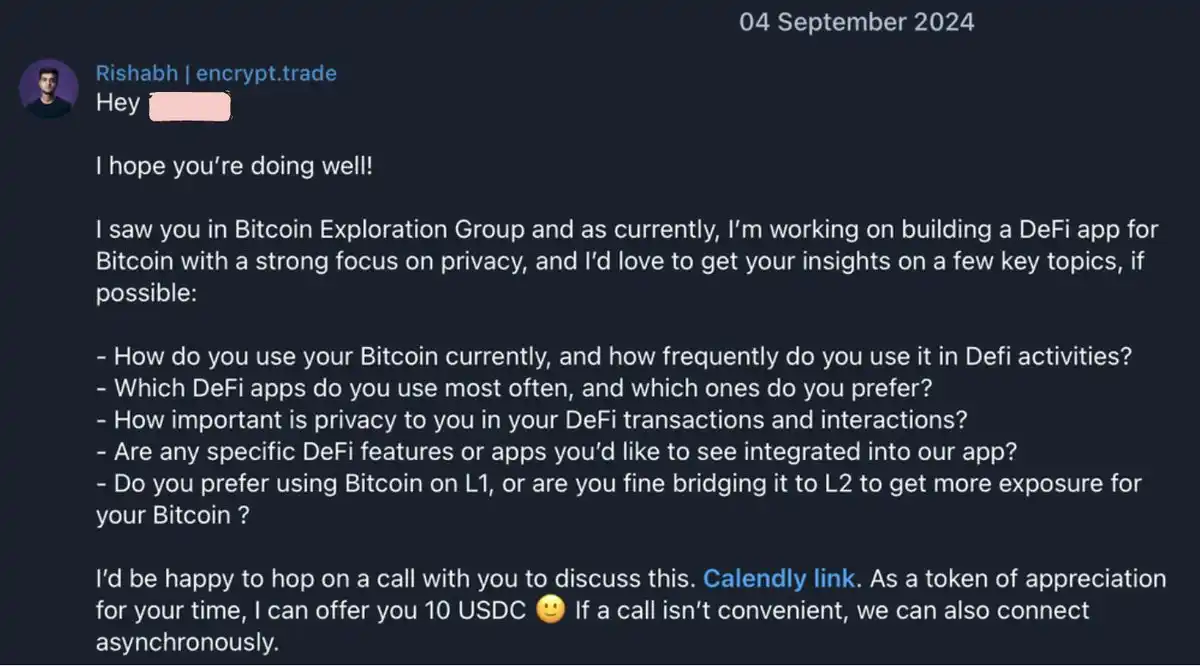
In practice, whenever someone showed even the slightest interest, I would have in-depth conversations with them, iterating on the product while communicating with users.

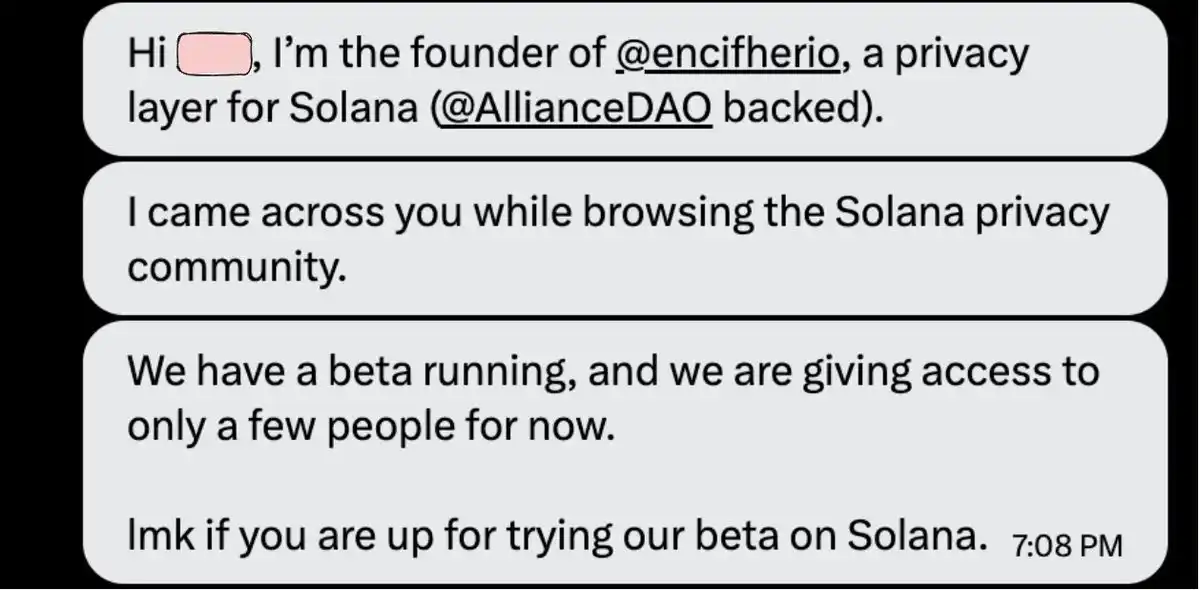
In fact, cold DMing itself is a process that needs constant iteration. When writing and sending cold DMs, there are several key points to note: try to start with a relatively 'soft' opener, put the most substantial information first (e.g., funding status, transaction volume processed, etc.), mention where you saw or learned about them, maintain a friendly, non-intrusive call-to-action (CTA), and definitely follow up, don't just send once and stop.

There is no such thing as a 'perfect cold DM'. You need to constantly A/B test different versions to find out which ones actually work for your target users.

Below is a high-quality cold DM template (thanks to @realsimon, from @alliance), which you can refer to directly:
But it's important to be clear: this process is slow and psychologically draining.

In crypto, very few people are willing to reply to cold DMs because scams are everywhere. Low response rates are the norm (it is indeed a bit discouraging).

But even so, you still must do it.

At this stage, your goal is not to get 1000 users. Your goal is 10–20 early users who have the following characteristics: genuinely care about the problem you're solving, are willing to try your product, and can give honest, direct feedback.

These early users will gradually become your support system. Early products will almost certainly have frequent problems, and it is these users who help you through the most vulnerable stages.

6. Iterate Quickly

The pace of the crypto industry is extremely fast. Narratives change rapidly, and user attention spans are even shorter.

If the product you build has no real value, it's inherently hard to get attention; even if you briefly gain attention without value, that focus won't last.

It might bring a short burst of hype at best, but the product itself cannot survive long-term.

This is toly's advice for developers at Breakpoint 2025.

The core meaning is just three points: ship fast, iterate frequently, be willing to pivot radically

I also learned one very important thing: users won't always directly tell you what to do next.

You need to judge by observing their behavior: what are they doing repeatedly? What workarounds or detours are they using? What are they already willing to pay for?

Many ideas sound reasonable, but most users might not be willing to pay for them.

7. Please Make Your Website 'Idiot-Proof'

I don't know why this needs to be emphasized repeatedly, but it must be said: 'Do not make any assumptions about users.'

If you think users should understand, you are wrong. Things that are obvious to us developers who have spent hundreds of hours building the product are completely foreign to users encountering it for the first time.
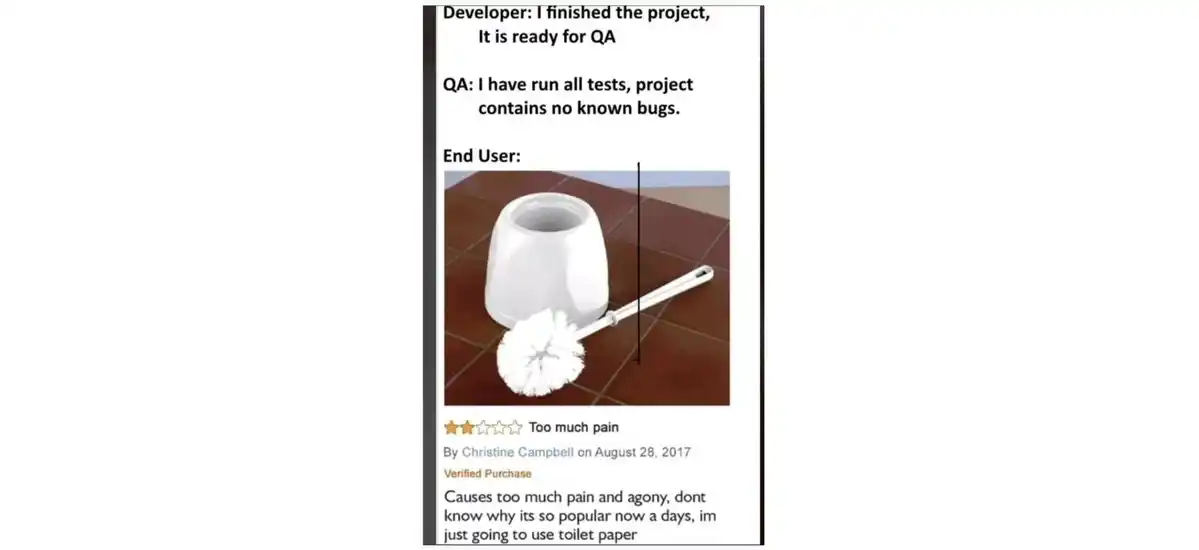
Don't introduce any new concepts or workflows. Only use simple, familiar things that genuinely make users' lives easier. The click path should be as streamlined as possible; users should be able to see, understand, or perceive the product's value within 5 seconds of entering the app (this is something we are still continuously optimizing).

I can't attach screenshots, but I've received many DMs where users completely misunderstood the purpose of a feature.

Conclusion

Building consumer crypto products is both fun and challenging.


Speed, extreme focus on users, and distribution capability are often more important than 'perfect technology'.

This is very different from B2B products, but I still believe it was the right choice we made.

This piece is already long enough; I'll save the lessons on fundraising for the next post. Finally, just use encrypt.trade :)

If this content resonates with you, or if you're also building consumer crypto products and want to chat about GTM, distribution, or the product itself, feel free to DM me.
I'm always happy to talk with other founders and developers.


Questions liées

QWhat was the author's key mistake when building infrastructure protocols in the crypto space?

AThe author's key mistake was equating 'complexity' with 'credibility'—believing that technically impressive ideas (like zkML, zk identity, zk voting) would naturally translate to useful products, when in reality, they were rarely adopted by users.

QWhy does the author recommend building for younger users (ages 13-21) in consumer crypto products?

AYounger users (Z世代) are more likely to adopt new technologies, change habits quickly, share products with friends, and spend on emerging tech, making them ideal early adopters for consumer crypto applications.

QHow can a crypto product reduce marketing costs according to the author?

ABy designing the product itself to be highly shareable, so it acts as its own distribution channel—users naturally share it with others, reducing reliance on expensive KOL marketing or ads.

QWhat is the author's advice for handling user feedback and bug fixes?

AFix critical bugs within 2-5 hours to prevent users from switching to competitors. Implement highly requested features in 2-3 days, acknowledge user contributions, and offer incentives to turn users into advocates.

QWhy is the name of an app important for consumer crypto products?

AA memorable and easily shareable name is crucial for word-of-mouth growth. Complex or hard-to-spell names (like 'encifher') hinder users from recommending the product, reducing organic distribution.

Lectures associées

Bitcoin monte, mais les institutions en veulent-elles moins ? Un cadre de Coinbase donne son avis

Selon John D’Agostino, responsable de la stratégie institutionnelle chez Coinbase, les institutions ayant acheté du Bitcoin à des niveaux élevés (100 000 $ et 125 000 $) montrent un intérêt encore plus marqué depuis que le prix est redescendu autour de 60 000 $. Dans une interview récente avec CNBC, il a indiqué qu'aucun signe de vente de panique n'était observé parmi les grands acteurs. Au contraire, de nombreux investisseurs institutionnels, tels que des family offices, des fonds souverains et des entités gouvernementales du Moyen-Orient, voient la récente correction comme une opportunité d'achat à des prix plus bas. D’Agostino souligne que ces institutions ont passé des années à étudier le Bitcoin et ont tendance à s'intéresser davantage à l'actif lorsque son prix baisse. Malgré le repli récent du Bitcoin, qui a chuté sous les 60 000 $ après avoir dépassé 70 000 $, l'exposition via les ETF spot Bitcoin reste élevée, avec plus de 750 milliards de dollars. Selon lui, tant les investisseurs de détail qu'institutionnels considèrent le Bitcoin comme un actif à long terme. Il reconnaît que des facteurs tels qu'un environnement de aversion au risque, la rotation des capitaux, des taux d'intérêt élevés et des incertitudes géopolitiques ont pu peser sur le cours, mais estime que ces fluctuations sont normales pour une classe d'actifs se comportant comme une matière première. L'infrastructure de marché améliorée et le cadre réglementaire en évolution rendent, selon lui, l'environnement actuel plus solide que lors des précédents replis.

bitcoinistIl y a 3 mins

Bitcoin monte, mais les institutions en veulent-elles moins ? Un cadre de Coinbase donne son avis

bitcoinistIl y a 3 mins

Bitmine continue d'accumuler de l'Ethereum de manière agressive tandis que les autres réduisent la voilure

La société de trésorerie Bitmine a poursuivi son accumulation agressive d'Ethereum (ETH) la semaine dernière, achetant 126 971 ETH. Son portefeuille total comprend désormais 5,54 millions d'ETH (évalués à 1 630 $ chacun), représentant 4,59% de l'offre totale. Dans un récent rapport, Bitmine a détaillé des actifs de 9,6 milliards de dollars, incluant également 203 Bitcoin, des participations dans Beast Industries et Eightco Holdings, ainsi que 247 millions de dollars en cash. Malgré le récent repli du marché, le président Thomas 'Tom' Lee y voit le début du "printemps crypto", anticipant une demande accrue pour des réseaux décentralisés comme Ethereum avec l'avancée des systèmes d'IA. La société a également indiqué avoir mis en jeu (stake) environ 4,72 millions d'ETH (environ 7,7 milliards de dollars), générant un rendement de 2,99% sur sept jours et un revenu annuel estimé à 230 millions de dollars. Contrairement à de nombreux autres trésoreries d'actifs numériques qui ont cessé d'accumuler ou ont vendu, Bitmine continue ses acquisitions. Elle possède désormais la deuxième plus grande trésorerie mondiale de crypto-monnaies et la plus grande en ETH. La société a également annoncé un projet d'émission d'actions privilégiées pour lever des fonds destinés à acheter davantage d'ETH, à réaliser des investissements stratégiques et à développer son infrastructure de staking.

TheNewsCryptoIl y a 1 h

Bitmine continue d'accumuler de l'Ethereum de manière agressive tandis que les autres réduisent la voilure

TheNewsCryptoIl y a 1 h

Apple convoite l'IA embarquée, et un outsider émerge : le premier modèle cognitif voit le jour, 4B paramètres rivalisent avec GPT-5.4

Apple a mis en avant une renaissance de Siri propulsée par l’IA lors de la WWDC, tandis qu’Amazon a dû freiner l’utilisation interne de modèles volumineux en raison de coûts de calcul explosifs. Face à ce défi des “tokens”, Andrej Karpathy a suggéré de créer un “noyau cognitif” — un modèle déchargé des connaissances factuelles mais conservant des capacités de raisonnement. La société chinoise Nextie a concrétisé cette vision avec **Alpha**, un **modèle cognitif de 4B paramètres** qui, dans des tâches d’intelligence collective (débat, réflexion, vote), atteint des performances équivalentes à celles de modèles de milliers de milliards de paramètres comme GPT-5.4. Conçu pour être déployé en périphérie (sur MacBook ou robots embarqués), Alpha réduit radicalement les coûts de calcul et ouvre la voie à des agents **proactifs** capables d’agir de manière autonome, au lieu de simples réponses aux requêtes. L’équipe, issue de Microsoft XiaoIce, s’était déjà distinguée avec un petit modèle performant. Nextie se positionne sur le créneau des systèmes multi-agents, un domaine validé par des investissements récents comme celui d’OpenAI dans Isara. En résumé, ce modèle cognitif ne change pas seulement l’échelle des paramètres, mais aussi **l’équation économique** de l’IA, rendant viable une intelligence continue et proactive à faible coût.

marsbitIl y a 2 h

Apple convoite l'IA embarquée, et un outsider émerge : le premier modèle cognitif voit le jour, 4B paramètres rivalisent avec GPT-5.4

marsbitIl y a 2 h

Hoskinson affirme que Cardano peut surpasser Bitcoin en résolvant le problème de confiance des cryptos

Charles Hoskinson, fondateur de Cardano, affirme que la plateforme vise bien plus qu'une simple part du marché des cryptomonnaies : elle ambitionne de devenir l'infrastructure mondiale de la confiance. Lors d'un livestream, il a présenté l'objectif à long terme d'ADA comme étant la réduction de la dépendance aux tiers de confiance dans le commerce mondial, un secteur qui génère des coûts annuels de centaines de milliards de dollars. La solution proposée est la "réflexivité vérifiable", où chaque transaction ou élément porte sa propre preuve de validité, éliminant le besoin d'un intermédiaire. Hoskinson explique que les blockchains servent de couche de stockage pour ces transactions, tandis que les contrats intelligents et les preuves à connaissance nulle en permettent l'utilité. Il met en avant les atouts de Cardano pour y parvenir : le protocole Ouroboros pour une décentralisation accrue, le modèle UTXO étendu pour la détermination locale, Hydra pour la mise à l'échelle, et une approche modulaire via des chaînes partenaires comme Midnight. Le défi majeur reste la gouvernance, nécessaire pour créer un système autonome capable de survivre, même en cas de perte de confiance en son fondateur. Si Cardano réussit à construire ce système de confiance vérifiable, Hoskinson estime que sa cryptomonnaie pourrait devenir "la monnaie de la confiance mondiale" et dépasser un jour Bitcoin. Au moment de la publication, ADA s'échangeait à 0,16 dollar.

bitcoinistIl y a 2 h

Hoskinson affirme que Cardano peut surpasser Bitcoin en résolvant le problème de confiance des cryptos

bitcoinistIl y a 2 h

Arthur Hayes dans un nouvel article : La bulle de l'IA approche de son éclatement, le marché crypto sous pression à court terme

Arthur Hayes, cofondateur de BitMEX, analyse dans cet article les tensions géopolitiques actuelles et leurs implications sur les marchés financiers. Il estime que la hausse des prix du pétrole, liée au conflit entre les États-Unis et l'Iran autour du détroit d'Hormuz, exercera une pression inflationniste et influencera la campagne présidentielle américaine de novembre. Pour reconquérir les électeurs préoccupés par le coût de la vie, Hayes prédit que Donald Trump pourrait adopter un discours critique envers l'industrie de l'intelligence artificielle, promettant régulation et taxation. Une telle rhétorique, même tactique, pourrait provoquer un éclatement de la bulle des actions AI, d'autant plus que le secteur est déjà vulnérable à la hausse des coûts énergétiques et à l'introduction en bourse massive prévue de SpaceX, Anthropic et OpenAI. Hayes explique que la liquidité monétaire récente a été entièrement absorbée par le boom de l'IA, laissant peu de capitaux pour le bitcoin. Une correction sévère des actions AI entraînerait donc probablement une pression vendeuse sur l'ensemble des actifs risqués, y compris les cryptomonnaies. En conséquence, son fonds, Maelstrom, a vendu ses actions AI, réduit ses positions cryptos secondaires et se concentre désormais sur le pétrole et le gaz, ainsi que sur le bitcoin et l'ether en vue d'une reprise future après un éventuel krach et une nouvelle réponse monétaire accommodante des banques centrales.

marsbitIl y a 3 h

Arthur Hayes dans un nouvel article : La bulle de l'IA approche de son éclatement, le marché crypto sous pression à court terme

marsbitIl y a 3 h

Trading

Spot
Futures

Articles tendance

Comment acheter PEOPLE

Bienvenue sur HTX.com ! Nous vous permettons d'acheter ConstitutionDAO (PEOPLE) de manière simple et pratique. Suivez notre guide étape par étape pour commencer votre parcours crypto.Étape 1 : Création de votre compte HTXUtilisez votre adresse e-mail ou votre numéro de téléphone pour ouvrir un compte sur HTX gratuitement. L'inscription se fait en toute simplicité et débloque toutes les fonctionnalités.Créer mon compteÉtape 2 : Choix du mode de paiement (rubrique Acheter des cryptosCarte de crédit/débit : utilisez votre carte Visa ou Mastercard pour acheter instantanément ConstitutionDAO (PEOPLE).Solde :utilisez les fonds du solde de votre compte HTX pour trader en toute simplicité.Prestataire tiers :pour accroître la commodité d'utilisation, nous avons ajouté des modes de paiement populaires tels que Google Pay et Apple Pay.P2P :tradez directement avec d'autres utilisateurs sur HTX.OTC (de gré à gré) : nous offrons des services personnalisés et des taux de change compétitifs aux traders.Étape 3 : stockage de vos ConstitutionDAO (PEOPLE)Après avoir acheté vos ConstitutionDAO (PEOPLE), stockez-les sur votre compte HTX. Vous pouvez également les envoyer ailleurs via un transfert sur la blockchain ou les utiliser pour trader d'autres cryptos.Étape 4 : tradez des ConstitutionDAO (PEOPLE)Tradez facilement ConstitutionDAO (PEOPLE) sur le marché Spot de HTX. Il vous suffit d'accéder à votre compte, de sélectionner la paire de trading, d'exécuter vos trades et de les suivre en temps réel. Nous offrons une expérience conviviale aux débutants comme aux traders chevronnés.

556 vues totalesPublié le 2024.12.12Mis à jour le 2026.06.02

Comment acheter PEOPLE

Discussions

Bienvenue dans la Communauté HTX. Ici, vous pouvez vous tenir informé(e) des derniers développements de la plateforme et accéder à des analyses de marché professionnelles. Les opinions des utilisateurs sur le prix de PEOPLE (PEOPLE) sont présentées ci-dessous.

活动图片