A New Scaling Variable for Text-to-Image Generation, Discovered by ByteDance's Seed Team

marsbitPublié le 2026-08-12Dernière mise à jour le 2026-08-12

Résumé

ByteDance's SEED team investigated a crucial but often overlooked scaling variable in text-to-image diffusion models: the amount of image-grounded information in training captions. They found that simply increasing caption length with natural language does not improve model performance, as it often adds redundancy without new, usable visual supervision. The core discovery is that the final training loss of a diffusion model can be predicted by the *information content* of its text condition, measured by two complementary metrics: Grounded Perplexity Gain (GPG) and Effective Detailness (ED). This establishes a scaling relationship for text conditioning. To systematically increase information content, the team proposed **Structured Prompt (SP)**, a JSON-based representation that organizes visual variables (global scene, object attributes, spatial relationships) into clear fields, enhancing **Diffusability**—the model's ability to learn from captions. For inference, an LLM **Prompter** is trained to convert user queries into detailed SP instances, defining **Promptability**. The overall generation quality is viewed as a product of Diffusability and Promptability. A three-stage training strategy (SFT, cold-start reasoning distillation, and verifier-guided reinforcement) significantly improves the prompter's capability. The structured format also enables efficient iterative refinement through a *refine-render-judge* loop. In matched-control experiments using the same Qwen-Imag...

Text-to-image models have consistently scaled along dimensions of model size, data, and compute. However, the amount of information contained in the Captions paired with training images has rarely been systematically studied as an independent variable. ByteDance's Seed team discovered that longer natural language captions do not necessarily provide more usable visual supervision to the model; compared to length, the amount of information bound to the image within a caption is a better predictor of the final training loss a diffusion model can achieve.

Based on this finding, the team proposed Structured Prompt, aiming to enhance text conditioning from both sides of Diffusability and Promptability. This approach led to significant improvements on tasks involving complex composition, reasoning, and world knowledge generation.
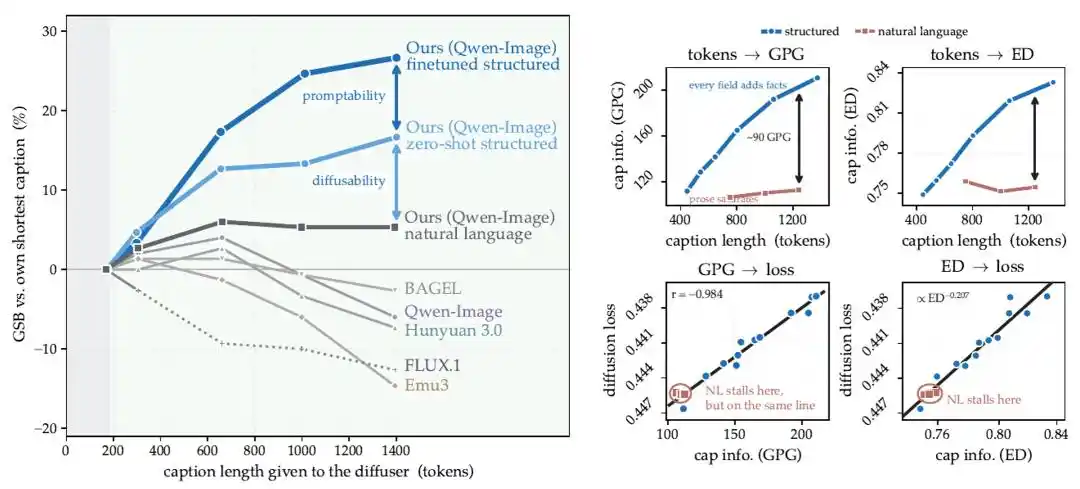
Figure 1 from the paper | Natural language length saturates quickly; structured conditioning continues to increase image information and consistently lowers the diffusion training loss along a unified relationship.

In recent years, the advancement of text-to-image models has largely followed a familiar path: larger models, more data, and increased training compute.

However, there is an easily overlooked difference between text-to-image models and language models. Language models can learn directly from text sequences via self-supervision; text-to-image models rely on image-caption pairs to learn "what kind of text corresponds to what kind of visual content." An image may contain numerous objects, attributes, positions, actions, and relations, but only the parts that are accurately described and clearly bound in the caption can be passed to the model as text-conditioned supervision.

Thus, a fundamental question arises: Beyond scaling up models, data, and compute, can we improve the learning of generation models by increasing the image information carried by captions?

In this new work, ByteDance's Seed team investigated this question. The core conclusion can be summarized in one sentence:

What truly scales with text conditioning is not the number of tokens in a caption, but the image information within it that can be utilized by the model.
  • Paper Title: Scaling Properties of Text Conditioning in Visual Generation
  • Authors: Zilong Chen, Chaorui Deng, Kunchang Li, Hongyi Yuan, Haoqi Fan Affiliation: ByteDance Seed
  • Paper: https://arxiv.org/abs/2607.29679
  • Project Page: https://heheyas.github.io/context-scaling
  • Code: https://github.com/heheyas/context-scaling
  • Models: https://huggingface.co/collections/heheyas/context-scaling
  • Online Demo: https://heheyas-context-scaling.hf.space/
  • Hugging Face Paper: https://huggingface.co/papers/2607.29679

Why Don't Models Get Stronger When Prompts Get Longer?

An intuitive approach is to write training captions or user prompts longer and in more detail. More tokens seem like they should mean more supervision and help the model generate more complex images.

However, experiments gave a different answer. On various existing open-source text-to-image systems, natural language prompts quickly saturated with increasing length, with final performance even falling below that of their respective shortest prompts. Even training diffusion models specifically on the same set of long-text captions yielded limited benefits.

To observe this phenomenon more clearly, the team designed an image reconstruction experiment with a fixed backbone network. For the same reference image, the team generated four natural language captions of progressively increasing detail from the same set of complete annotations, then used the same Qwen-Image model and random seed to attempt to reconstruct the image. These captions described the same entities and relations, with later versions mainly adding length by supplementing and expanding the natural language expressions.

Surprisingly, although the captions became significantly longer, the quality of image reconstruction hardly improved. The added prose mostly explained, rephrased, or connected already present content, rather than continuously adding new, stably usable visual variables.
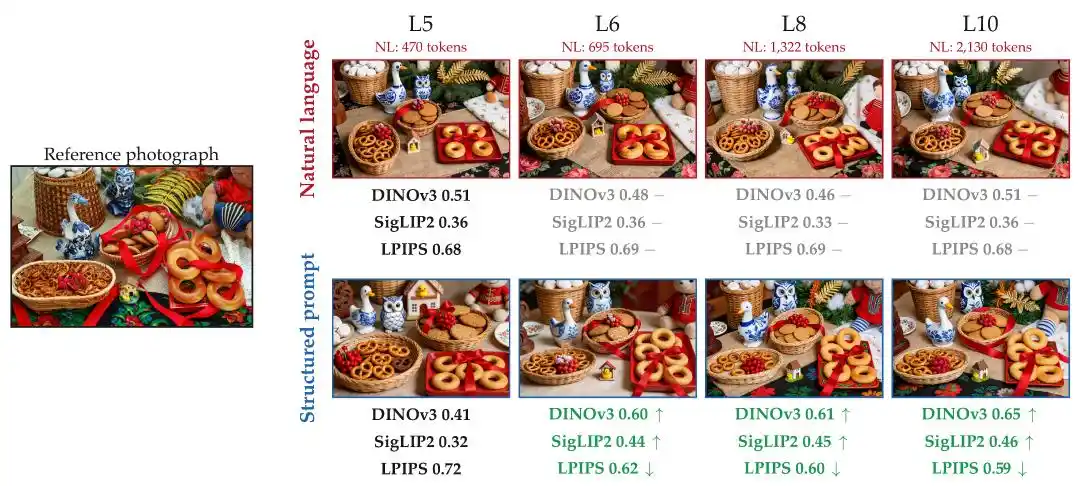
Figure 3 from the paper | Fixed-backbone reconstruction experiment: Reconstruction plateaus as NL Caption continues to lengthen, but gradually restoring SP fields yields continuous improvement.

This indicates that caption length is only a weak proxy variable. A text can be very long yet still fail to clearly specify which attribute belongs to which object, what relation exists between two objects, their respective locations, and their front-back order in the scene.

How to Measure the True Image Information in a Caption?

If token count is insufficient to gauge supervision strength, we need to directly measure the information bound to the image within a caption. For this purpose, the team adapted two complementary metrics from existing work: Grounded Perplexity Gain (GPG) and Effective Detailness (ED).

GPG: How much does the image make the caption "more predictable"?

GPG is a white-box metric that requires reading model token probabilities. For the same caption, the team separately had a frozen vision-language model see and not see the paired image, and calculated the increase in log-likelihood for the caption's content tokens after the image was presented. If the caption contains a large amount of information tightly bound to that image, seeing the image should significantly enhance the model's predictive ability for those tokens.

ED: How many reliable image attributes does the caption cover?

ED is a black-box semantic metric that does not rely on token probabilities. It extracts attributes with entity contexts from the image and the caption separately, then calculates the accuracy of caption attributes and the recall of image attributes. It finally uses F0.5, which places more weight on accuracy, applying stronger penalties to descriptions in the caption without visual grounding.

The two metrics approach the same problem from different angles: GPG focuses on the statistical dependency between image and text, while ED focuses on whether the caption accurately covers verifiable visual content.
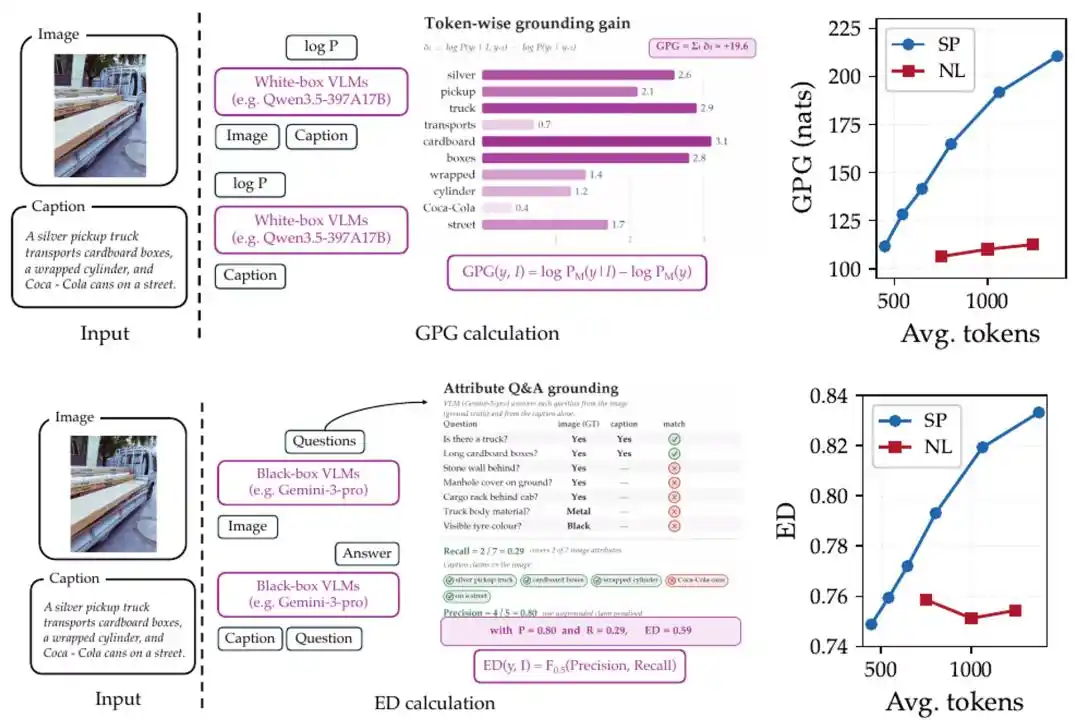
Figure 6 from the paper | Definitions and measurement trends of GPG and ED.

Caption Information Content Can Predict Diffusion Model Training Loss

Next, the team fixed the images, model architecture, initialization method, optimization configuration, and training budget, varying only the training captions. The entire experiment included 15 caption configurations: three natural language versions of different lengths, six Structured Prompt versions gradually restoring fields, and six variants with spatial expression or field masking. Each configuration started from the same BAGEL continued-training checkpoint and independently trained a diffusion model.

The results showed no consistent relationship between the token count of natural language captions and training outcomes. However, when the x-axis was changed to caption information content, configurations of different formats and detail levels fell onto highly regular curves:

  • The converged diffusion loss had an approximately linear relationship with GPG, Pearson r = -0.984.
  • The converged diffusion loss followed a power-law trend with ED, with Pearson r = -0.971 in log-log space.
  • GPG and ED also showed high consistency in ranking different caption configurations, Spearman ρ = 0.96.

The team refers to this as the scaling properties of text conditioning. It is not a theoretical law holding for all models, but an empirical calibration obtained under fixed architecture and training recipe. However, it provides two immediate benefits.

First, it transforms caption information content from a vague "data quality" concept into a trainable variable that can be controlled and measured: when model, images, and compute are fixed, information content can predict the final training loss the model achieves.

Second, after performing one calibration, candidate caption schemes can be compared using GPG or ED under the same training recipe before deciding whether to invest in expensive diffusion model training. For six caption variants not involved in the fitting, the two metrics still accurately predicted their convergence loss.
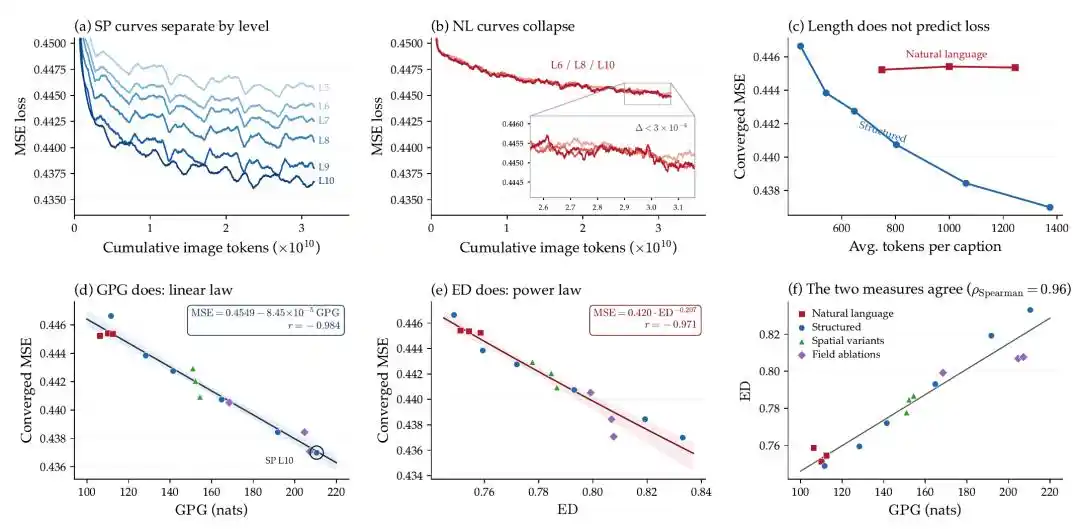
Figure 7 from the paper | Under a fixed training recipe, the convergence loss shows a stable relationship with caption information content.

Structured Prompt: Making Information Not Just More, But Easier for the Model to Use

The earlier experiments reveal a crucial point: merely adding natural language prose is not enough; the new information also needs to be organized in a stable and unambiguous manner.

Therefore, the team proposes Structured Prompt (SP), using structured JSON to represent the visual variables in an image. It consists of three layers:

  • Global Layer: Scene intent, setting, atmosphere, style, lighting, and photographic information.
  • Element Layer: Each subject's identity, attributes, actions, position, optional depth, and local photographic information.
  • Relation Layer: Positional, occlusion, interaction, and semantic relations between different elements.

Compared to free text, the key of SP is not just the "JSON" appearance, but placing different visual variables into stable named fields, reducing ambiguity in attribute assignment, spatial relations, and object binding. In the fixed-backbone reconstruction experiment, reconstruction quality continuously improved as SP fields were gradually restored; in the full training sweep, increased field coverage also consistently raised GPG, ED, and lowered the converged diffusion loss.
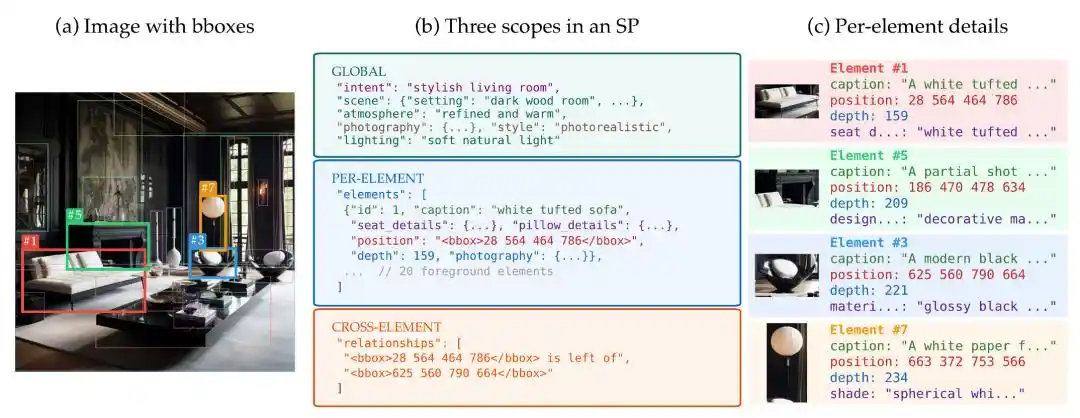
Figure 5 from the paper | Structured Prompt organizes global, element-level, and cross-element visual variables into named fields.

To generate complete SP for large-scale training data, the team constructed an image-to-SP annotation pipeline. A general VLM handles global semantics and local content, Sapiens supplements human pose evidence, DepthAnything V2 provides relative depth, SAM 2.1 provides masks and occlusion cues, and finally a VLM unifies this information into a consistent, complete SP.
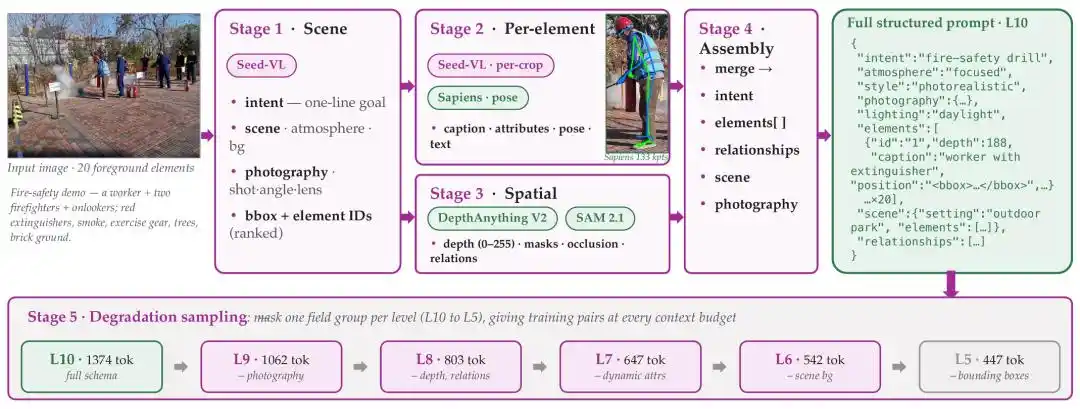
Figure 8 from the paper | VLM and experts for pose, depth, and segmentation collaboratively construct a complete Structured Prompt.

The team terms the ability of a caption representation to expose and organize image supervision for a diffusion model as Diffusability. SP enhances precisely this aspect: without changing the diffusion model architecture, it allows the model to learn more and clearer visual variables from the text condition.

Promptability: With a Good Structure, You Still Need an LLM to Fill It Well

During training, complete SP can be extracted from paired images, but during actual generation, only the user's sentence is available—there is no reference image or oracle annotation. The system also requires an LLM prompter to expand the user request into a detailed, coherent SP that does not violate the original constraints.

The team calls this ability to instantiate structured conditions from user requests Promptability. End-to-end generation quality depends on the joint effect of both sides:

Generation Quality = Diffusability × Promptability

The multiplication sign here is an organizational perspective, not a mathematically derived formula: Diffusability describes what the diffusion model can learn from the caption representation, and Promptability describes whether the LLM can truly produce a high-quality caption instance during inference.
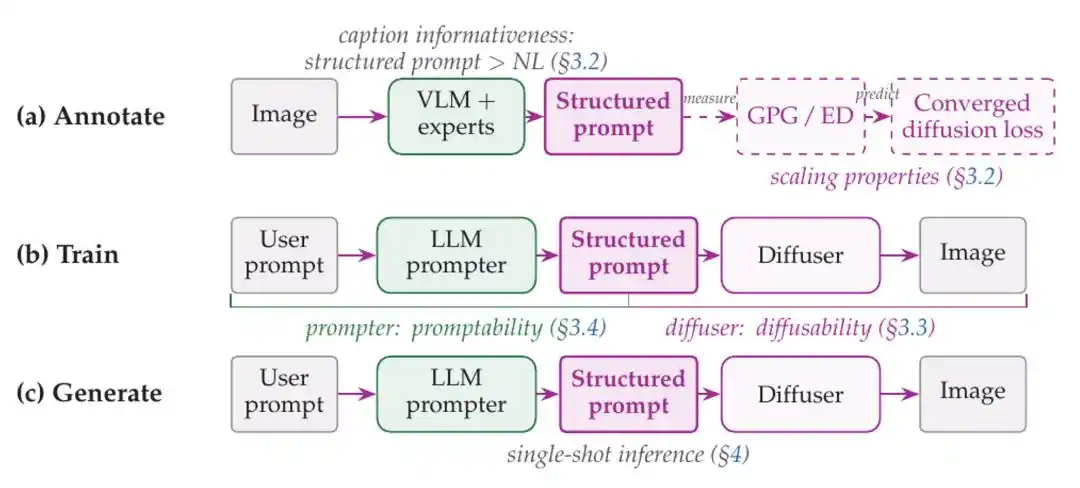
Figure 4 from the paper | Structured Prompt connects annotation, measurement, diffuser training, prompter training, and final generation.

First, the team fixed the SP schema and Qwen-Image diffuser, only replacing the zero-shot LLM prompter. As Qwen3.5 scaled from 0.8B to 397B, GenEval++ score in thinking mode improved from 46.4% to 86.8%. Apart from the smallest model which tended to repeat during thinking and failed to output valid JSON, chain-of-thought provided further improvements at other scales. This indicates that the model capability and reasoning ability of general LLMs can be directly translated into better image generation results through the caption interface.

However, zero-shot LLMs still tend to generate SP lacking in information and with relatively simple composition. To further improve Promptability, the team adopted three-stage training:

SFT learns the distribution of SP content expected by the diffusion model, not just the JSON format.

Cold-start distills "how to deduce SP solely from user requests" from privileged reasoning traces paired with images.

RFT continues optimization on rollouts generated and rendered by the prompter itself, where a verifier selects high-confidence trajectories, and then provides dense token supervision through on-policy self-distillation from an image-conditioned teacher.

Ablation experiments show the three stages serve different purposes: SFT brings the largest single-stage structural improvement, cold-start strengthens the deduction from user requests to SP, and verifier-gated OPSD achieves the strongest results within the prompter's own distribution.
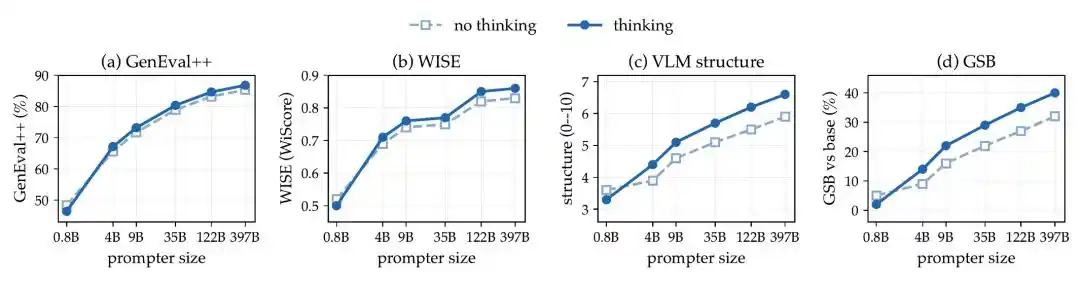
Figure 9 from the paper | With fixed schema and diffuser, generation quality improves with LLM prompter scale and reasoning mode.
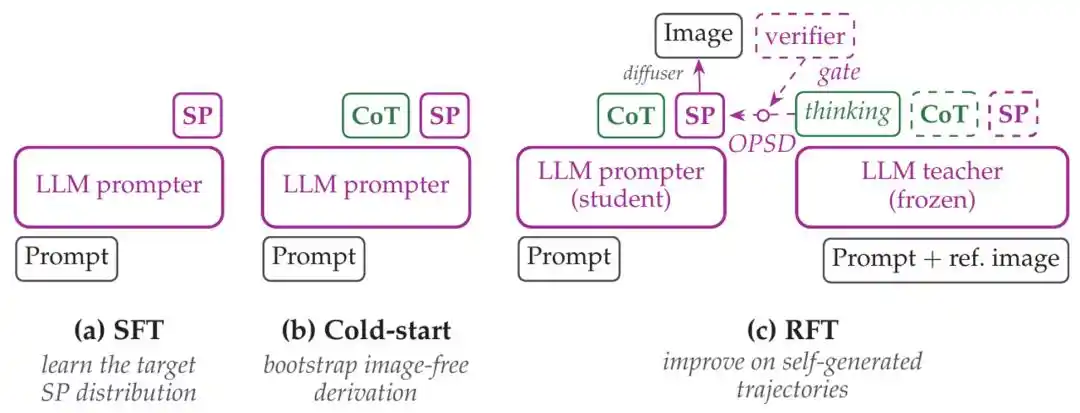
Figure 10 from the paper | Three-stage prompter training: SFT, cold-start, and verifier-gated RFT.

Structured Representation Also Makes the Generation Process Easier to Iteratively Correct

Another natural advantage of SP's field-based representation is that when errors appear in the generated image, the system can locate and modify the corresponding object, attribute, relation, or layout fields, rather than rewriting the entire natural language prompt.

Based on this, the team built a refine-render-judge loop. In each round, the prompter generates or revises SP based on user request and historical feedback, the fixed diffuser renders an image, and an online judge provides PASS/FAIL decisions along with specific issues regarding prompt adherence, structure, and visual quality. If it fails, the next round only needs adjustments around the relevant fields.

Experiments show that increasing iteration budget can further improve structural alignment, adherence, and GSB performance; however, effective reasoning length is not long. For the trained prompter, even when allowed up to 8 rounds, an average of only 2.31 rounds were used; increasing Tmax from 4 to 8 yielded minimal additional benefit. This indicates that text-to-image generation does benefit from iterative error correction, but under the current setup, does not require very long prompt-side reasoning trajectories: after fixing major specification errors, additional rounds saturate quickly.

Figure 14 from the paper | Agentic reasoning loop of refine-render-judge.

Figure 15 from the paper | The loop can correct issues with object splitting, relations, and overall layout.

How Much Improvement Does the Structured Interface Bring to the Same Qwen-Image Base?

The final system consists of an SP-trained diffuser and a trained LLM prompter. It outperforms all compared open-weight models on almost every reported metric and reaches or surpasses most compared closed-source systems on the majority of evaluations, with advantages particularly pronounced on composition, reasoning, and world knowledge tasks.

More crucially, the matched control. To rule out explanations like "it just trained more," the team trained an additional system using the exact same Qwen-Image architecture, training images, training stages, and budget, but consistently using free natural language captions. The results are as follows:
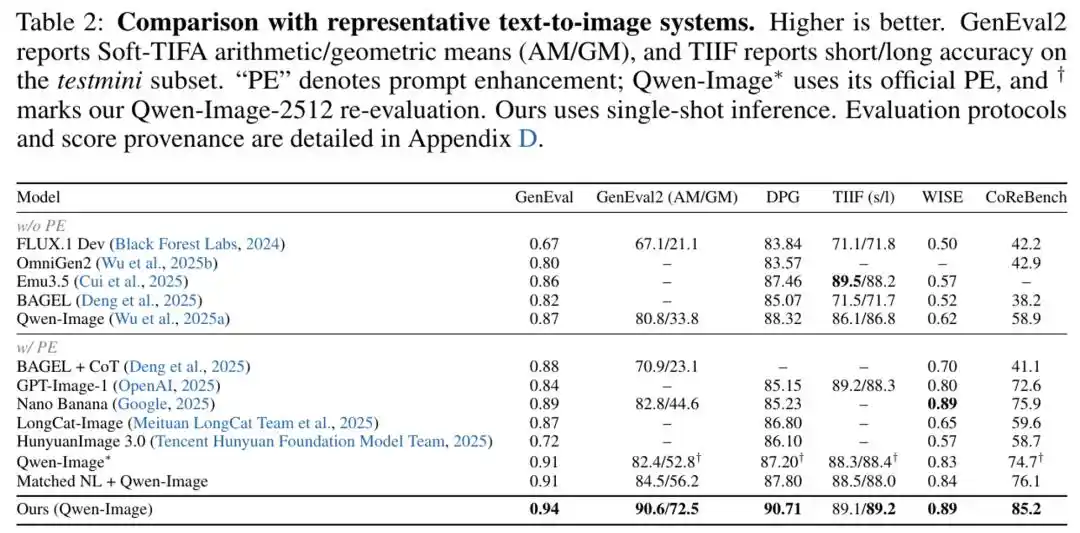
Table 2 from the paper | Complete comparison with representative text-to-image systems. Screenshot retains evaluation definitions, bold text, and footnotes from the paper.

The additional training for the matched NL system indeed brought some improvements, but far from enough to replicate the SP system's results. This indicates that the gains cannot be simply attributed to a larger backbone or more training but are closely related to the structured caption interface used between the prompter and diffuser.

Figure 11 from the paper | Qualitative comparison on complex spatial relations, quantities, and attribute binding.

The Next Step is Not Just to Scale the Model, But Also to Scale the Condition Itself

The starting point of this work is simple: For text-to-image models, captions are not irrelevant metadata, but the primary interface through which image content enters text-conditioned learning.

When captions merely become longer, the new tokens may just rephrase and elaborate; when image information is accurately extracted, clearly bound, and stably organized, the same generation model can learn more from it. GPG and ED make this information a measurable variable, Structured Prompt improves Diffusability, and LLM scaling, post-training, and short-range agentic refinement improve Promptability.

Therefore, the next step in scaling text-to-image should not only focus on "how large the rendering model is" but also ask:

How much image information—information it can truly learn and use—is the text condition passed to the model actually carrying?

This article is from the WeChat official account "Machine Heart"

Cryptos en tendance

Questions liées

QWhat is the key finding of ByteDance Seed team regarding text caption length and its effect on text-to-image model training?

AThe team found that increasing the length of natural language captions does not necessarily provide more usable visual supervision. Instead, the amount of image-grounded information in the caption, measured by metrics like Grounded Perplexity Gain (GPG) and Effective Detailness (ED), is a better predictor of the final training loss a diffusion model can achieve.

QWhat two complementary metrics did the researchers propose to measure the image-grounded information in a caption?

AThe researchers proposed two complementary metrics: 1) **Grounded Perplexity Gain (GPG)**: A white-box metric measuring how much an image makes a caption more predictable for a frozen Vision-Language Model. 2) **Effective Detailness (ED)**: A black-box semantic metric measuring how accurately a caption covers verifiable visual attributes from the image.

QWhat is Structured Prompt (SP) and how does it address the limitations of natural language captions?

AStructured Prompt (SP) is a JSON-based representation that organizes visual variables into hierarchical fields: a global layer (intent, scene, style), an element layer (identity, attributes, position of subjects), and a relation layer (interactions between elements). It addresses natural language ambiguity by stably assigning attributes, spatial relations, and object bindings to specific named fields, thereby increasing the amount of usable visual information (Diffusability) for the model.

QHow does the concept of 'Promptability' relate to the overall generation quality in the proposed system?

APromptability refers to the ability of a Large Language Model (LLM) prompter to instantiate a high-quality Structured Prompt (SP) from a user's simple request during inference. The overall generation quality is viewed as depending on both Diffusability (how much the diffusion model can learn from the caption representation) and Promptability. Enhancing the LLM prompter's capabilities through scaling and multi-stage training directly improves the generation results.

QWhat experimental evidence supports the claim that the gains from Structured Prompt are not simply due to more training data or compute?

AA matched control experiment was conducted. Using the exact same Qwen-Image architecture, training images, stages, and budget, a separate system was trained using only free-form natural language captions. While this matched NL system showed some improvement, its performance was far below that of the SP-based system. This demonstrates that the gains are primarily due to the structured caption interface itself, not merely from extra training of the backbone model.

Lectures associées

DECTA s'associe à OpenPayd pour améliorer ses opérations de trésorerie mondiale

DECTA, une société multinationale de technologie de paiement, s'est associée à OpenPayd pour moderniser et améliorer ses opérations de trésorerie mondiales. Ce partenariat permettra à DECTA d'utiliser l'infrastructure régulée et agnostique d'OpenPayd pour des règlements opérationnels plus rapides et efficaces. La plateforme fournira une infrastructure de monnaie fiduciaire intégrée, des conversions de gré à gré et des configurations de paiement hybrides, visant à optimiser la gestion de la trésorerie. Les dirigeants des deux entreprises soulignent les avantages pratiques. Pour OpenPayd, les stablecoins deviennent un outil de trésorerie viable pour les entreprises internationales, offrant rapidité et contrôle. DECTA y voit un moyen de rendre ses propres opérations financières plus rapides, simples et résilientes, tout en maintenant une gouvernance stricte, essentielle pour soutenir sa croissance et les services qu'elle propose à ses clients. Cette initiative reflète l'adoption croissante des stablecoins par les institutions pour améliorer la gestion des liquidités et les opérations transfrontalières. Il est précisé que la solution est destinée exclusivement aux opérations de trésorerie internes de DECTA et non à des services clients en cryptomonnaies. DECTA fournit une gamme de services de paiement (acquisition, traitement, porte-monnaie numérique, etc.) à des centaines d'entreprises dans 32 pays, grâce à des intégrations directes avec de nombreux réseaux de paiement et une certification avec UnionPay International.

TheNewsCryptoIl y a 29 mins

DECTA s'associe à OpenPayd pour améliorer ses opérations de trésorerie mondiale

TheNewsCryptoIl y a 29 mins

La proposition de frais parrainés sur le XRP Ledger pourrait rendre le XRP moins visible pour certains utilisateurs

Une proposition d'amendement du registre XRP, appelée XLS-68, permettrait à des sponsors de prendre en charge les frais de transaction et les réserves pour d'autres utilisateurs. Ainsi, certaines interactions avec des portefeuilles pourraient avoir lieu sans que l'utilisateur final ne détienne directement de XRP. Cette fonctionnalité, qui fait partie d'un mouvement plus large vers l'abstraction des frais et une intégration utilisateur plus fluide, vise à réduire les frictions lors de l'onboarding. Actuellement, la nécessité de détenir l'actif natif (XRP) pour payer les frais complique l'expérience pour les nouveaux utilisateurs. Si elle est adoptée, cette proposition pourrait rendre XRP moins visible dans certains parcours utilisateurs, notamment pour les applications grand public ou d'entreprise où un tiers gérerait les frais en arrière-plan. Cela soulève un débat sur l'impact potentiel sur la demande de XRP. Cependant, l'argument inverse existe : en simplifiant l'expérience, le réseau pourrait attirer plus d'applications et de transactions, augmentant potentiellement l'activité globale. L'impact final dépendra de l'adoption, du comportement des sponsors et de la façon dont les applications mettront en œuvre cette fonctionnalité. L'amendement nécessite encore l'approbation des validateurs du réseau avant toute activation.

bitcoinistIl y a 57 mins

La proposition de frais parrainés sur le XRP Ledger pourrait rendre le XRP moins visible pour certains utilisateurs

bitcoinistIl y a 57 mins

Trading

Spot

Articles tendance

Qu'est ce que $S$

Comprendre SPERO : Un aperçu complet Introduction à SPERO Alors que le paysage de l'innovation continue d'évoluer, l'émergence des technologies web3 et des projets de cryptomonnaie joue un rôle central dans la façon dont se dessine l'avenir numérique. Un projet qui a attiré l'attention dans ce domaine dynamique est SPERO, désigné comme SPERO,$$s$. Cet article vise à rassembler et à présenter des informations détaillées sur SPERO, afin d'aider les passionnés et les investisseurs à comprendre ses fondations, ses objectifs et ses innovations dans les domaines du web3 et de la crypto. Qu'est-ce que SPERO,$$s$ ? SPERO,$$s$ est un projet unique dans l'espace crypto qui cherche à tirer parti des principes de décentralisation et de la technologie blockchain pour créer un écosystème qui favorise l'engagement, l'utilité et l'inclusion financière. Le projet est conçu pour faciliter les interactions entre pairs de nouvelles manières, offrant aux utilisateurs des solutions et des services financiers innovants. Au cœur de SPERO,$$s$, l'objectif est d'autonomiser les individus en fournissant des outils et des plateformes qui améliorent l'expérience utilisateur dans l'espace des cryptomonnaies. Cela inclut la possibilité de méthodes de transaction plus flexibles, la promotion d'initiatives dirigées par la communauté et la création de voies pour des opportunités financières via des applications décentralisées (dApps). La vision sous-jacente de SPERO,$$s$ tourne autour de l'inclusivité, visant à combler les lacunes au sein de la finance traditionnelle tout en exploitant les avantages de la technologie blockchain. Qui est le créateur de SPERO,$$s$ ? L'identité du créateur de SPERO,$$s$ reste quelque peu obscure, car il existe peu de ressources publiques fournissant des informations détaillées sur son ou ses fondateurs. Ce manque de transparence peut découler de l'engagement du projet envers la décentralisation—une éthique que de nombreux projets web3 partagent, privilégiant les contributions collectives plutôt que la reconnaissance individuelle. En centrant les discussions autour de la communauté et de ses objectifs collectifs, SPERO,$$s$ incarne l'essence de l'autonomisation sans désigner des individus spécifiques. Ainsi, comprendre l'éthique et la mission de SPERO reste plus important que d'identifier un créateur unique. Qui sont les investisseurs de SPERO,$$s$ ? SPERO,$$s$ est soutenu par une diversité d'investisseurs allant des capital-risqueurs aux investisseurs providentiels dédiés à favoriser l'innovation dans le secteur crypto. L'objectif de ces investisseurs s'aligne généralement avec la mission de SPERO—priorisant les projets qui promettent des avancées technologiques sociétales, l'inclusivité financière et la gouvernance décentralisée. Ces fondations d'investisseurs s'intéressent généralement à des projets qui non seulement offrent des produits innovants, mais qui contribuent également positivement à la communauté blockchain et à ses écosystèmes. Le soutien de ces investisseurs renforce SPERO,$$s$ en tant que concurrent notable dans le domaine en rapide évolution des projets crypto. Comment fonctionne SPERO,$$s$ ? SPERO,$$s$ utilise un cadre multifacette qui le distingue des projets de cryptomonnaie conventionnels. Voici quelques-unes des caractéristiques clés qui soulignent son unicité et son innovation : Gouvernance décentralisée : SPERO,$$s$ intègre des modèles de gouvernance décentralisée, permettant aux utilisateurs de participer activement aux processus de décision concernant l'avenir du projet. Cette approche favorise un sentiment de propriété et de responsabilité parmi les membres de la communauté. Utilité du token : SPERO,$$s$ utilise son propre token de cryptomonnaie, conçu pour servir diverses fonctions au sein de l'écosystème. Ces tokens permettent des transactions, des récompenses et la facilitation des services offerts sur la plateforme, améliorant ainsi l'engagement et l'utilité globaux. Architecture en couches : L'architecture technique de SPERO,$$s$ supporte la modularité et l'évolutivité, permettant une intégration fluide de fonctionnalités et d'applications supplémentaires à mesure que le projet évolue. Cette adaptabilité est primordiale pour maintenir la pertinence dans le paysage crypto en constante évolution. Engagement communautaire : Le projet met l'accent sur des initiatives dirigées par la communauté, utilisant des mécanismes qui incitent à la collaboration et aux retours d'expérience. En cultivant une communauté forte, SPERO,$$s$ peut mieux répondre aux besoins des utilisateurs et s'adapter aux tendances du marché. Accent sur l'inclusion : En proposant des frais de transaction bas et des interfaces conviviales, SPERO,$$s$ vise à attirer une base d'utilisateurs diversifiée, y compris des individus qui n'ont peut-être pas engagé auparavant dans l'espace crypto. Cet engagement envers l'inclusion s'aligne avec sa mission globale d'autonomisation par l'accessibilité. Chronologie de SPERO,$$s$ Comprendre l'histoire d'un projet fournit des aperçus cruciaux sur sa trajectoire de développement et ses jalons. Voici une chronologie suggérée cartographiant les événements significatifs dans l'évolution de SPERO,$$s$ : Phase de conceptualisation et d'idéation : Les idées initiales formant la base de SPERO,$$s$ ont été conçues, s'alignant étroitement avec les principes de décentralisation et de concentration sur la communauté au sein de l'industrie blockchain. Lancement du livre blanc du projet : Suite à la phase conceptuelle, un livre blanc complet détaillant la vision, les objectifs et l'infrastructure technologique de SPERO,$$s$ a été publié pour susciter l'intérêt et les retours de la communauté. Construction de la communauté et engagements précoces : Des efforts de sensibilisation actifs ont été entrepris pour construire une communauté d'adopteurs précoces et d'investisseurs potentiels, facilitant les discussions autour des objectifs du projet et recueillant du soutien. Événement de génération de tokens : SPERO,$$s$ a organisé un événement de génération de tokens (TGE) pour distribuer ses tokens natifs aux premiers soutiens et établir une liquidité initiale au sein de l'écosystème. Lancement de la première dApp : La première application décentralisée (dApp) associée à SPERO,$$s$ a été mise en ligne, permettant aux utilisateurs d'interagir avec les fonctionnalités principales de la plateforme. Développement continu et partenariats : Des mises à jour et des améliorations continues des offres du projet, y compris des partenariats stratégiques avec d'autres acteurs de l'espace blockchain, ont façonné SPERO,$$s$ en un acteur compétitif et évolutif sur le marché crypto. Conclusion SPERO,$$s$ se dresse comme un témoignage du potentiel du web3 et de la cryptomonnaie pour révolutionner les systèmes financiers et autonomiser les individus. Avec un engagement envers la gouvernance décentralisée, l'engagement communautaire et des fonctionnalités conçues de manière innovante, il ouvre la voie vers un paysage financier plus inclusif. Comme pour tout investissement dans l'espace crypto en rapide évolution, les investisseurs et utilisateurs potentiels sont encouragés à mener des recherches approfondies et à s'engager de manière réfléchie avec les développements en cours au sein de SPERO,$$s$. Le projet illustre l'esprit d'innovation de l'industrie crypto, invitant à une exploration plus approfondie de ses nombreuses possibilités. Bien que le parcours de SPERO,$$s$ soit encore en cours, ses principes fondamentaux pourraient en effet influencer l'avenir de nos interactions avec la technologie, la finance et entre nous dans des écosystèmes numériques interconnectés.

300 vues totalesPublié le 2024.12.17Mis à jour le 2024.12.17

Qu'est ce que $S$

Qu'est ce que AGENT S

Agent S : L'avenir de l'interaction autonome dans Web3 Introduction Dans le paysage en constante évolution de Web3 et des cryptomonnaies, les innovations redéfinissent constamment la manière dont les individus interagissent avec les plateformes numériques. Un projet pionnier, Agent S, promet de révolutionner l'interaction homme-machine grâce à son cadre agentique ouvert. En ouvrant la voie à des interactions autonomes, Agent S vise à simplifier des tâches complexes, offrant des applications transformantes dans l'intelligence artificielle (IA). Cette exploration détaillée plongera dans les subtilités du projet, ses caractéristiques uniques et les implications pour le domaine des cryptomonnaies. Qu'est-ce qu'Agent S ? Agent S se présente comme un cadre agentique ouvert révolutionnaire, spécifiquement conçu pour relever trois défis fondamentaux dans l'automatisation des tâches informatiques : Acquisition de connaissances spécifiques au domaine : Le cadre apprend intelligemment à partir de diverses sources de connaissances externes et d'expériences internes. Cette approche double lui permet de construire un riche répertoire de connaissances spécifiques au domaine, améliorant ainsi sa performance dans l'exécution des tâches. Planification sur de longs horizons de tâches : Agent S utilise une planification hiérarchique augmentée par l'expérience, une approche stratégique qui facilite la décomposition et l'exécution efficaces de tâches complexes. Cette fonctionnalité améliore considérablement sa capacité à gérer plusieurs sous-tâches de manière efficace et efficiente. Gestion d'interfaces dynamiques et non uniformes : Le projet introduit l'Interface Agent-Ordinateur (ACI), une solution innovante qui améliore l'interaction entre les agents et les utilisateurs. En utilisant des Modèles de Langage Multimodaux de Grande Taille (MLLMs), Agent S peut naviguer et manipuler sans effort diverses interfaces graphiques. Grâce à ces fonctionnalités pionnières, Agent S fournit un cadre robuste qui aborde les complexités impliquées dans l'automatisation de l'interaction humaine avec les machines, préparant le terrain pour d'innombrables applications en IA et au-delà. Qui est le créateur d'Agent S ? Bien que le concept d'Agent S soit fondamentalement innovant, des informations spécifiques sur son créateur restent insaisissables. Le créateur est actuellement inconnu, ce qui souligne soit le stade naissant du projet, soit le choix stratégique de garder les membres fondateurs sous le radar. Quoi qu'il en soit, l'accent reste mis sur les capacités et le potentiel du cadre. Qui sont les investisseurs d'Agent S ? Étant donné qu'Agent S est relativement nouveau dans l'écosystème cryptographique, des informations détaillées concernant ses investisseurs et soutiens financiers ne sont pas explicitement documentées. Le manque d'aperçus publiquement disponibles sur les fondations d'investissement ou les organisations soutenant le projet soulève des questions sur sa structure de financement et sa feuille de route de développement. Comprendre le soutien est crucial pour évaluer la durabilité du projet et son impact potentiel sur le marché. Comment fonctionne Agent S ? Au cœur d'Agent S se trouve une technologie de pointe qui lui permet de fonctionner efficacement dans divers environnements. Son modèle opérationnel est construit autour de plusieurs caractéristiques clés : Interaction homme-ordinateur semblable à l'humain : Le cadre offre une planification IA avancée, s'efforçant de rendre les interactions avec les ordinateurs plus intuitives. En imitant le comportement humain dans l'exécution des tâches, il promet d'élever l'expérience utilisateur. Mémoire narrative : Utilisée pour tirer parti des expériences de haut niveau, Agent S utilise la mémoire narrative pour suivre les historiques de tâches, améliorant ainsi ses processus de prise de décision. Mémoire épisodique : Cette fonctionnalité fournit aux utilisateurs un accompagnement étape par étape, permettant au cadre d'offrir un soutien contextuel au fur et à mesure que les tâches se déroulent. Support pour OpenACI : Avec la capacité de fonctionner localement, Agent S permet aux utilisateurs de garder le contrôle sur leurs interactions et flux de travail, s'alignant avec l'éthique décentralisée de Web3. Intégration facile avec des API externes : Sa polyvalence et sa compatibilité avec diverses plateformes IA garantissent qu'Agent S peut s'intégrer sans effort dans des écosystèmes technologiques existants, en faisant un choix attrayant pour les développeurs et les organisations. Ces fonctionnalités contribuent collectivement à la position unique d'Agent S dans l'espace crypto, alors qu'il automatise des tâches complexes en plusieurs étapes avec un minimum d'intervention humaine. À mesure que le projet évolue, ses applications potentielles dans Web3 pourraient redéfinir la manière dont les interactions numériques se déroulent. Chronologie d'Agent S Le développement et les jalons d'Agent S peuvent être encapsulés dans une chronologie qui met en évidence ses événements significatifs : 27 septembre 2024 : Le concept d'Agent S a été lancé dans un document de recherche complet intitulé “Un cadre agentique ouvert qui utilise les ordinateurs comme un humain”, présentant les bases du projet. 10 octobre 2024 : Le document de recherche a été rendu publiquement disponible sur arXiv, offrant une exploration approfondie du cadre et de son évaluation de performance basée sur le benchmark OSWorld. 12 octobre 2024 : Une présentation vidéo a été publiée, fournissant un aperçu visuel des capacités et des caractéristiques d'Agent S, engageant davantage les utilisateurs et investisseurs potentiels. Ces jalons dans la chronologie illustrent non seulement les progrès d'Agent S, mais indiquent également son engagement envers la transparence et l'engagement communautaire. Points clés sur Agent S Alors que le cadre Agent S continue d'évoluer, plusieurs attributs clés se distinguent, soulignant sa nature innovante et son potentiel : Cadre innovant : Conçu pour offrir une utilisation intuitive des ordinateurs semblable à l'interaction humaine, Agent S propose une approche nouvelle de l'automatisation des tâches. Interaction autonome : La capacité d'interagir de manière autonome avec les ordinateurs via une interface graphique signifie un bond vers des solutions informatiques plus intelligentes et efficaces. Automatisation des tâches complexes : Avec sa méthodologie robuste, il peut automatiser des tâches complexes en plusieurs étapes, rendant les processus plus rapides et moins sujets aux erreurs. Amélioration continue : Les mécanismes d'apprentissage permettent à Agent S de s'améliorer grâce à ses expériences passées, améliorant continuellement sa performance et son efficacité. Polyvalence : Son adaptabilité à travers différents environnements d'exploitation comme OSWorld et WindowsAgentArena garantit qu'il peut servir un large éventail d'applications. Alors qu'Agent S se positionne dans le paysage Web3 et crypto, son potentiel à améliorer les capacités d'interaction et à automatiser les processus représente une avancée significative dans les technologies IA. Grâce à son cadre innovant, Agent S incarne l'avenir des interactions numériques, promettant une expérience plus fluide et efficace pour les utilisateurs à travers divers secteurs. Conclusion Agent S représente un saut audacieux en avant dans le mariage de l'IA et de Web3, avec la capacité de redéfinir notre interaction avec la technologie. Bien qu'il soit encore à ses débuts, les possibilités de son application sont vastes et convaincantes. Grâce à son cadre complet abordant des défis critiques, Agent S vise à mettre les interactions autonomes au premier plan de l'expérience numérique. À mesure que nous plongeons plus profondément dans les domaines des cryptomonnaies et de la décentralisation, des projets comme Agent S joueront sans aucun doute un rôle crucial dans la façon dont la technologie et la collaboration homme-machine évolueront à l'avenir.

1.1k vues totalesPublié le 2025.01.14Mis à jour le 2025.01.14

Qu'est ce que AGENT S

Comment acheter S

Bienvenue sur HTX.com ! Nous vous permettons d'acheter Sonic (S) de manière simple et pratique. Suivez notre guide étape par étape pour commencer votre parcours crypto.Étape 1 : Création de votre compte HTXUtilisez votre adresse e-mail ou votre numéro de téléphone pour ouvrir un compte sur HTX gratuitement. L'inscription se fait en toute simplicité et débloque toutes les fonctionnalités.Créer mon compteÉtape 2 : Choix du mode de paiement (rubrique Acheter des cryptosCarte de crédit/débit : utilisez votre carte Visa ou Mastercard pour acheter instantanément Sonic (S).Solde :utilisez les fonds du solde de votre compte HTX pour trader en toute simplicité.Prestataire tiers :pour accroître la commodité d'utilisation, nous avons ajouté des modes de paiement populaires tels que Google Pay et Apple Pay.P2P :tradez directement avec d'autres utilisateurs sur HTX.OTC (de gré à gré) : nous offrons des services personnalisés et des taux de change compétitifs aux traders.Étape 3 : stockage de vos Sonic (S)Après avoir acheté vos Sonic (S), stockez-les sur votre compte HTX. Vous pouvez également les envoyer ailleurs via un transfert sur la blockchain ou les utiliser pour trader d'autres cryptos.Étape 4 : tradez des Sonic (S)Tradez facilement Sonic (S) sur le marché Spot de HTX. Il vous suffit d'accéder à votre compte, de sélectionner la paire de trading, d'exécuter vos trades et de les suivre en temps réel. Nous offrons une expérience conviviale aux débutants comme aux traders chevronnés.

2.2k vues totalesPublié le 2025.01.15Mis à jour le 2026.06.02

Comment acheter S

Discussions

Bienvenue dans la Communauté HTX. Ici, vous pouvez vous tenir informé(e) des derniers développements de la plateforme et accéder à des analyses de marché professionnelles. Les opinions des utilisateurs sur le prix de S (S) sont présentées ci-dessous.

活动图片