Crypto makes history in 2022: Five instances of governments embracing digital assets

CointelegraphPublié le 2023-01-02Dernière mise à jour le 2023-01-02

Résumé

Even amid the market breakdown and repetitive public attacks on the industry, some of the officials found the courage to embrace the innovation.

The year 2022 wasn’t the best one in terms of crypto reputation among regulators and policymakers. However, even amid the market breakdown and repetitive public attacks on the industry, some of the officials found the courage to embrace the innovation. Some of the names are not new, while others showed progress significant enough to include them in this listicle. The United Arab Emirates and El Salvador continued to push their crypto agenda and the United Kingdom showed great effort to lay the regulatory foundation, while Brazil and the Central African Republic legally recognized the cryptocurrencies. 

“”
Brazil

“”
2021 might have been a year of mass adoption in Brazil, but it was 2022 when the country finally got its own regulatory framework. Before leaving his office, Jair Bolsonaro, the former president of Brazil, signed a bill legalizing the use of crypto as a payment method within the country. The bill doesn’t make cryptocurrencies legal tender, as in El Salvador, but it still introduces the legal definition of digital currencies and establishes a licensing regime for virtual asset service providers.

“”

The bill came in about time. The number of companies holding cryptocurrency in Brazil has reached new record highs — the country’s taxation authority recorded 12,053 unique organizations declaring crypto on their balance sheets in August 2022.

“”

In May, Brazilian Stock Exchange confirmed its intention to launch the first official product aimed at the cryptocurrency market — Bitcoin futures trading. In contrast to the United States, currently, institutional and retail investors trade 11 exchange-traded funds (ETFs) with exposure to cryptocurrencies on Brazilian Exchange.

“”
The United Kingdom

“”
Great Britain surely didn’t have an easy year. In 2022, Queen Elizabeth II passed away after serving the nation for 70 years. Two Prime ministers — Boris Johnson and Liz Truss — resigned. But when it comes to crypto, the turbulent government never stopped working on regulation. And even if the fruits of this work could be more impressive, the United Kingdom still makes an important case for a national regulatory framework.

“”
The Financial Services and Markets Bill, introduced in July, reasserted the U.K.’s intention to become a global cryptocurrency hub. It broadened regulations of stablecoins and coined a new term — Digital Settlement Assets (DSA). The bill will authorize the Treasury to regulate DSAs, including payments, service providers and insolvency arrangements. The Economic Crime and Corporate Transparency Bill, introduced in May, proposed “creating powers to more quickly and easily seize and recover crypto assets” to mitigate risks for individuals targeted by ransomware attacks.

“”
This year, the British Web3 community celebrated an important legal precedent. The High Court of Justice in London, the closest analog to the United States Supreme Court, has ruled that nonfungible tokens (NFT) represent “private property.”

“”

In a time when everyone is poking on unhosted wallets, Treasury scaled back its requirements for gathering data from both the senders and recipients of crypto sent to unhosted wallets unless the transaction poses “an elevated risk of illicit finance.” And, by the end of the year, it made a great present to all the investors by qualifying the transactions of “designated crypto assets” for the Investment Manager Exemption.

“”
El Salvador

“”
The nation of El Salvador, whose main breakthrough occurred in 2021, deserves to be included in this listicle, at least for its persistence. Once revealing the plan to issue “Bitcoin bonds,” the government of Nayib Bukele has been trying to execute it ever since. The first delay came in March, then repeated in September. In November, economy minister Maria Luisa Hayem Brevé introduced a bill confirming the government’s plan to raise $1 billion and invest them into the construction of a “Bitcoin city.” However, no news about the success of the bill has occurred since.

“”
Still, the country remains a crucial laboratory for Bitcoin adoption. According to Salvadoran Tourism Minister Morena Valdez, the tourism industry in El Salvador has surged more than 30% since the adoption of the Bitcoin law in September 2021. At the beginning of 2022, a study conducted by the National Bureau of Economic Research (NBER) showed that 20% of businesses have started accepting BTC as a payment method.

“”

In May, El Salvador welcomed 44 central bankers from developing countries around the world to tackle financial inclusion and discuss Bitcoin at a three-day conference. The event was visited by central bank delegates from Ghana to Burundi, Jordan to the Maldives and Pakistan to Costa Rica.

“”
The Central African Republic

“”
In April, the 5-million-populated Central African Republic (CAR) became the first nation on the continent to legalize the use of cryptocurrencies in the financial markets. The cryptocurrency bill, unanimously approved by lawmakers, allowed traders and businesses to make crypto payments and also make way for tax payments in crypto through authorized entities. In July, the local central bank digital currency (CBDC), Sango Coin, was launched to raise nearly $1 billion over the next year. So far, however, only $1.66 million worth of the coin has been sold.

“”

The country had also announced a plan to allow foreign investors to buy citizenship for $60,000 worth of Sango Coins. However, this initiative was blocked as unconstitutional by the CAR’s top court.

Mamadou Moustapha Ly explains Sango Coin to Cointelegraph's Joseph Hall

“”

Adoption drew pushback from the Bank of Central African States (BEAC), which warned about the “substantial negative impact” that the legislation will have on the monetary union of Central Africa.

“”
United Arab Emirates

“”
The United Arab Emirates took a strategic approach to crypto and moved steadily to create a regulatory environment and attract global investors. Perhaps that’s why the country makes it to the Cointelegraph listicle for the second time in a row.

“”
In March, Dubai established a legal framework for crypto aimed at protecting investors and “designing much-warranted international standards” for industry governance. A newly formed Dubai Virtual Asset Regulatory Authority (VARA) got enforcement powers in the Emirate’s special development and free zones with the exception of the Dubai International Financial Centre. The now-bankrupt crypto exchange FTX was among the first to obtain the same license.

“”

Another emirate, Abu Dhabi, came up with draft recommendations for NFT trading. They marked NFTs as intellectual property rather than “specified investments or financial instruments” and allowed multilateral trading facilities (MTFs) and Virtual Asset Custodians (VAC) to operate NFT marketplaces.

“”
In July, Dubai launched the Dubai Metaverse Strategy, which aimed to turn the Emirate into one of the world’s top 10 metaverse economies. It includes research and development (R&D) collaborations to enhance the metaverse’s economic contributions, utilizing accelerators and incubators to attract companies and projects from abroad, and providing support in metaverse education aimed at developers, content creators and users.

“”

The country even opened its first city in Metaverse. Dubbed Sharjahverse, it was described as a “photorealistic, physics-accurate” metaverse that encompasses the emirate’s 1,000 square-mile surface area. The virtual city will support the local tourism industry and potentially create new metaverse jobs.

“”
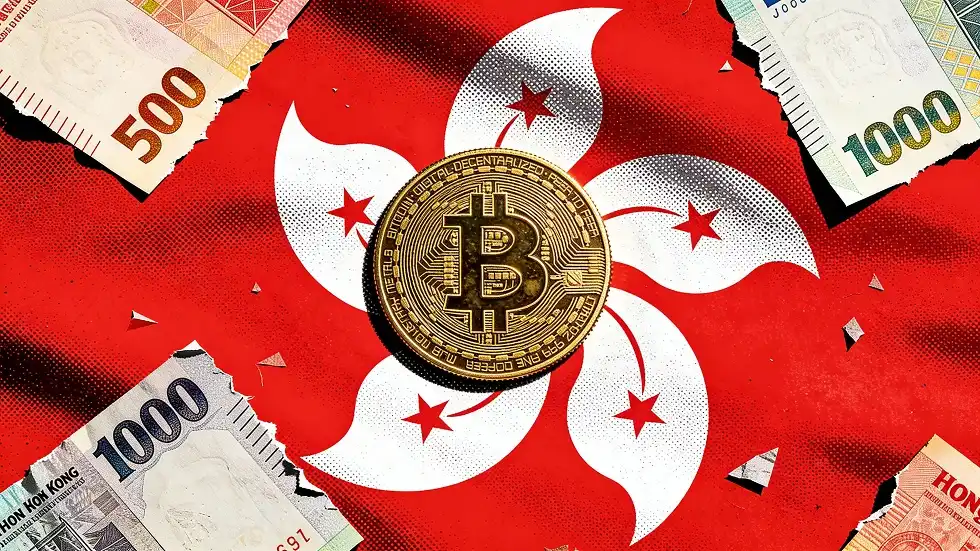
All in all, 2022 wasn’t so bad in terms of friendly regulation. And the next year is going to be even more interesting, with the race to the first comprehensive crypto framework in the U.S. and potential liberalization in Hong Kong and South Korea.

Lectures associées

Le fondateur d'IOSG : L'Ethereum n'a pas besoin d'une nouvelle foi technologique, il a besoin d'un compromis à la Musk

Auteur : Jocy, Fondateur d'IOSG L'opinion centrale : Ethereum n'a pas besoin d'une nouvelle foi technologique, mais d'un compromis à la manière d'Elon Musk. L’annonce récente d’ETHLabs, financé par des entités majeures détentrices d’ETH comme BitMine et Lubin, révèle une perte de confiance du marché envers la gouvernance « petite et décentralisée » de l’Ethereum Foundation (EF). Ce n’est pas Vitalik Buterin qui initie ce changement, mais l’écosystème lui-même, signalant un besoin de réorientation. La différence clé entre Musk et Vitalik réside dans leur approche. Musk comprend d’abord les réalités commerciales et s’adapte, tandis que Vitalik part de principes techniques purs en espérant que les applications émergent d’elles-mêmes. Cette dernière méthode a fonctionné par le passé (ICO, DeFi, NFT), mais aujourd’hui, la concurrence est féroce et le temps presse. Ethereum manque cruellement d’une application phare, de type Starlink, et d’une orientation commerciale claire. Cela nécessite un engagement pratique dans le monde réel, pas simplement une feuille de route technique. Le vrai défi n’est pas stratégique, mais organisationnel, comme le souligne la fuite des talents de l’EF. Le nouveau modèle de gouvernance, avec des nœuds indépendants comme ETHLabs, tente de décentraliser la prise de décision. Cependant, distribuer les responsabilités est plus facile que de maintenir une cohésion et une direction communes. Cette cohésion ne peut venir que de la valeur partagée de l’ETH en tant qu’actif de référence, mais elle nécessite d’abord un récit réaliste et convaincant pour l’écosystème. Par ailleurs, l’indépendance déclarée de ces nouvelles structures reste à prouver dans la pratique, car les financeurs et les bénéficiaires sont souvent les mêmes acteurs. La confiance se construira sur des années de transparence. La menace ultime pour Ethereum n’est pas Solana, mais la migration de l’attention vers l’IA. La fenêtre pour réagir est étroite (12 à 18 mois). Seul un engagement concret, tourné vers des applications réelles et capable d’attirer les meilleurs talents, peut contrer cette tendance. En conclusion, l’idéal de Vitalik doit désormais s’ancrer dans la réalité par un engagement pratique et urgent. Le temps est l’adversaire le plus impitoyable.

marsbitIl y a 34 mins

Le fondateur d'IOSG : L'Ethereum n'a pas besoin d'une nouvelle foi technologique, il a besoin d'un compromis à la Musk

marsbitIl y a 34 mins

Jingdong et Mira Murati, ancienne CTO d'Open AI, misent sur la même piste de l'IA

Imaginez un scénario où un système d’IA perçoit et réagit en temps réel aux événements du monde physique sans attendre de demande explicite. C’est la promesse du modèle JoyAI-VL-Interaction, récemment rendu open source par JD.com. Il s’agit du premier modèle d’interaction visio-linguistique en temps réel entièrement open source, capable d’analyser un flux vidéo continu pour décider quand intervenir, quand rester silencieux ou quand déléguer une tâche complexe à un autre modèle. Contrairement aux assistants classiques fonctionnant en "tour par tour" (question-réponse), cette approche permet à l’IA d’être proactive dans des situations où l’utilisateur n’a pas le temps ou la capacité de formuler une requête : aide aux personnes âgées, assistance aux malvoyants, commentaire sportif automatique, surveillance industrielle ou robotique. JD.com n’est pas seul à explorer cette voie : Mira Murati, ancienne CTO d’OpenAI, et son laboratoire Thinking Machines Lab promeuvent une vision similaire des "modèles d’interaction". La particularité de JD.com est de placer la vision (plutôt que la voix) au cœur de la prise de décision, et de s’appuyer sur ses vastes données issues de scénarios réels (logistique, vente au détail, santé) pour entraîner le modèle. Le modèle, léger (8B paramètres) et conçu pour être déployé sur du matériel accessible (comme une carte graphique RTX 3090), est accompagné de son système d’inférence, de jeux de données et d’une documentation technique complets. JD.com ouvre ainsi la voie à une adoption large par les développeurs, visant à faire de l’IA proactive un élément central de l’intégration du numérique dans le monde physique.

marsbitIl y a 48 mins

Jingdong et Mira Murati, ancienne CTO d'Open AI, misent sur la même piste de l'IA

marsbitIl y a 48 mins

Google commence à vendre ses TPU, les géants cherchent à produire des "jetons à bas prix" avec des puces IA

Google commence désormais à vendre directement ses puces TPU (Tensor Processing Unit) et ses solutions matérielles de calcul IA aux centres de données tiers et aux clients. Ces puces, conçues spécifiquement pour les opérations mathématiques de tenseurs et de matrices, sont au cœur du fonctionnement des grands modèles d'IA. Auparavant, les TPU n'étaient accessibles que via la location dans les centres de données cloud de Google. Cette stratégie permet à Google de proposer une alternative à l'écosystème NVIDIA (GPU, CUDA), non pas en se positionnant sur la puissance brute, mais sur l'efficacité et la réduction des coûts, notamment pour l'inférence des modèles. L'objectif est de produire des "tokens" à moindre coût, un facteur clé pour démocratiser l'utilisation de l'IA à grande échelle. Google, à l'instar des grands fournisseurs de cloud comme Huawei Cloud et Alibaba Cloud, ne vend pas seulement du matériel. Il propose un écosystème complet intégrant puces, clusters, logiciels et services, transformant la puissance de calcul en une "productivité" directement utilisable. Cela reflète une évolution du marché : la compétition ne porte plus seulement sur la puissance des puces, mais sur la capacité à offrir une "meilleure puissance de calcul" – c'est-à-dire la solution la plus efficace et la plus économique pour des besoins variés. Ainsi, le marché de l'infrastructure IA évolue d'une "guerre des puces" vers une "guerre des systèmes". Si NVIDIA conserve sa position dominante pour l'entraînement des modèles et son écosystème mature, la montée en puissance de ces alternatives centrées sur le coût et l'efficacité opérationnelle redessine le paysage concurrentiel.

marsbitIl y a 52 mins

Google commence à vendre ses TPU, les géants cherchent à produire des "jetons à bas prix" avec des puces IA

marsbitIl y a 52 mins

Analyse de rapport : Le secteur des semi-conducteurs a bondi de 155 %, Bernstein estime que NVDA et AVGO sont "absurdement bon marché"

Résumé : Le cabinet Bernstein a publié son analyse trimestrielle du secteur des semi-conducteurs. Le point central est que l'IA est désormais le principal moteur de croissance, portant l'indice SOX à une hausse de 155% sur un an. La hausse est jugée fondamentalement saine. Bernstein souligne une divergence forte au sein du secteur. Malgré des valorisations globalement élevées pour le secteur (P/E de 34,1x), l'analyste estime que les leaders clés de la chaîne d'approvisionnement en IA, NVIDIA (NVDA) et Broadcom (AVGO), sont "absurdement bon marché". Cela s'explique par leurs perspectives de croissance à long terme (p.ex. Blackwell pour NVDA) et leurs positions dominantes. Les deux sociétés sont notées « Surperformance ». Le cabinet a amélioré sa recommandation sur AMD à "Surperformance", citant des opportunités à la fois dans l'IA/GPU et dans les CPU. En revanche, il reste prudent sur Qualcomm (QCOM, "Égalité avec le marché"), en raison des pressions sur le marché des smartphones. Les équipementiers semi-conducteurs restent favorisés. Pour les semi-conducteurs analogiques, la valorisation est jugée élevée malgré la reprise. Bernstein met en garde contre deux risques principaux : un niveau de participation historiquement élevé des investisseurs dans le secteur et une montée des niveaux d'inventaire qui pourrait peser sur les prix si la demande faiblissait. L'analyse conclut qu'en dépit de la solide demande d'IA, la sélectivité est désormais cruciale.

marsbitIl y a 1 h

Analyse de rapport : Le secteur des semi-conducteurs a bondi de 155 %, Bernstein estime que NVDA et AVGO sont "absurdement bon marché"

marsbitIl y a 1 h

Trading

Spot
Futures
活动图片