Ether price experienced an 11.9% decline from Nov. 20 to Nov. 22, bottoming at $1,074 — the lowest level seen since July. Currently, investors have reason to be concerned after crypto lending company Genesis reportedly faced difficulties raising money, triggering rumors of insolvency on Nov. 21.
However, a spokesperson for Genesis told Cointelegraph that there were no plans for imminent bankruptcy because the company continues to hold discussions with its creditors.
Unease about the centralization of decentralized finance (DeFi) surfaced after Uniswap Labs changed the privacy policy on Nov. 17, revealing that it collects publicly-available blockchain data, users' browser information, operating systems data and interactions with its service providers.
Adding to the fracas, the hacker behind the FTX exchange theft of $447 million has been spotted moving their Ether funds. On Nov. 20, the attacker transferred 50,000 ETH to a separate wallet and converted it to Bitcoin using two renBTC bridges.
Traders fear that the hacker might be suppressing Ether's price to profit using leveraged short bets. The rumor was raised by @kundunsan on Nov. 15, even though the Twitter post did not gain exposure.

Let's look at Ether derivatives data to understand if the worsening market conditions have impacted crypto investors' sentiment.
Pro traders have been in panic mode since Nov. 10
Retail traders usually avoid quarterly futures due to their price difference from spot markets, but they are professional traders' preferred instruments because they prevent the fluctuation of funding rates that often occurs in a perpetual futures contract.
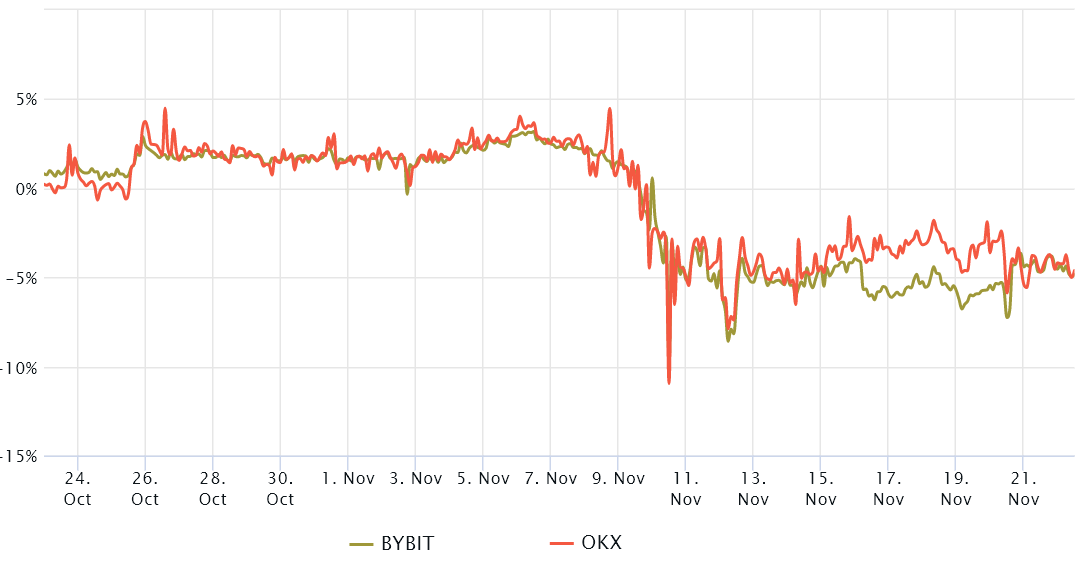
The three-month futures annualized premium should trade between +4% to +8% in healthy markets to cover costs and associated risks. The chart above shows that derivatives traders have been bearish since Nov. 10 since the Ether futures premium was negative.
Currently there is backwardation in the contracts and this situation is atypical and usually deemed bearish. The metric did not improve after ETH rallied 5% on Nov. 22, reflecting professional traders' unwillingness to add leveraged long (bull) positions.
Traders should also analyze Ether's options markets to exclude externalities specific to the futures instrument.
Options traders fear additional crashes
The 25% delta skew is a telling sign when market makers and arbitrage desks are overcharging for upside or downside protection.
In bear markets, options investors give higher odds for a price dump, causing the skew indicator to rise above 10%. On the other hand, bullish markets tend to drive the skew indicator below -10%, meaning the bearish put options are discounted.
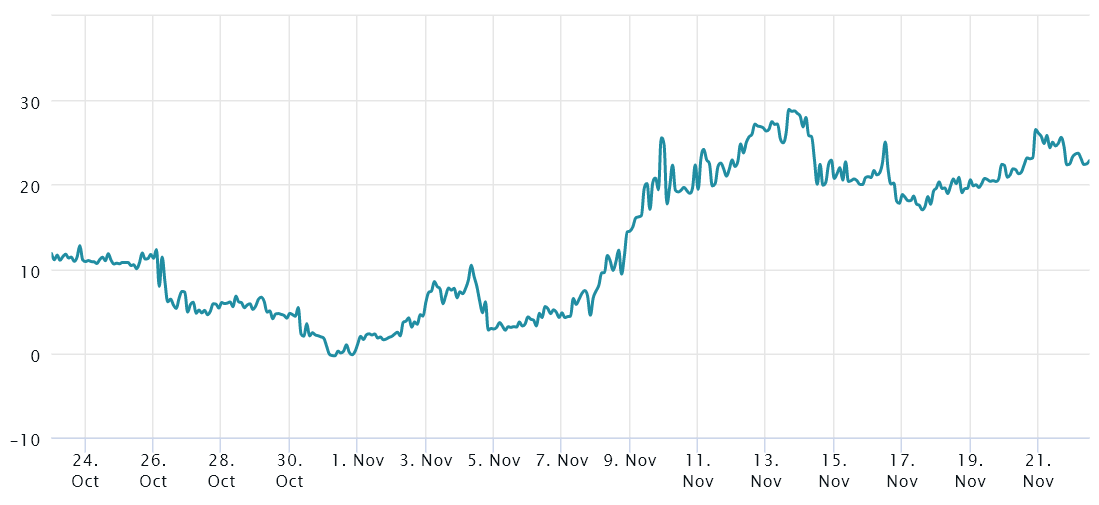
The delta skew has been above the 10% threshold since Nov. 9, signaling that options traders were less inclined to offer downside protection. The situation worsened over the following days as the delta skew indicator surged above 20%.
The 60-day delta skew currently stands at 23%, so whales and market makers are pricing higher odds of price dumps for Ether. Consequently, derivatives data shows low confidence right as Ether struggles to hold the $1,100 support.
According to the data, Ether bulls should not throw in the towel just yet because these metrics tend to be backward-looking. The panic that followed FTX's bankruptcy and the subsequent liquidity issues at Genesis might dissipate quickly if exchanges public proof of reserves and institutional investors addingBitcoin exposure during the dip are interpreted as positives by market participants.
With that said, at the moment Ether bears still have the upper hand according to ETH derivatives metrics.